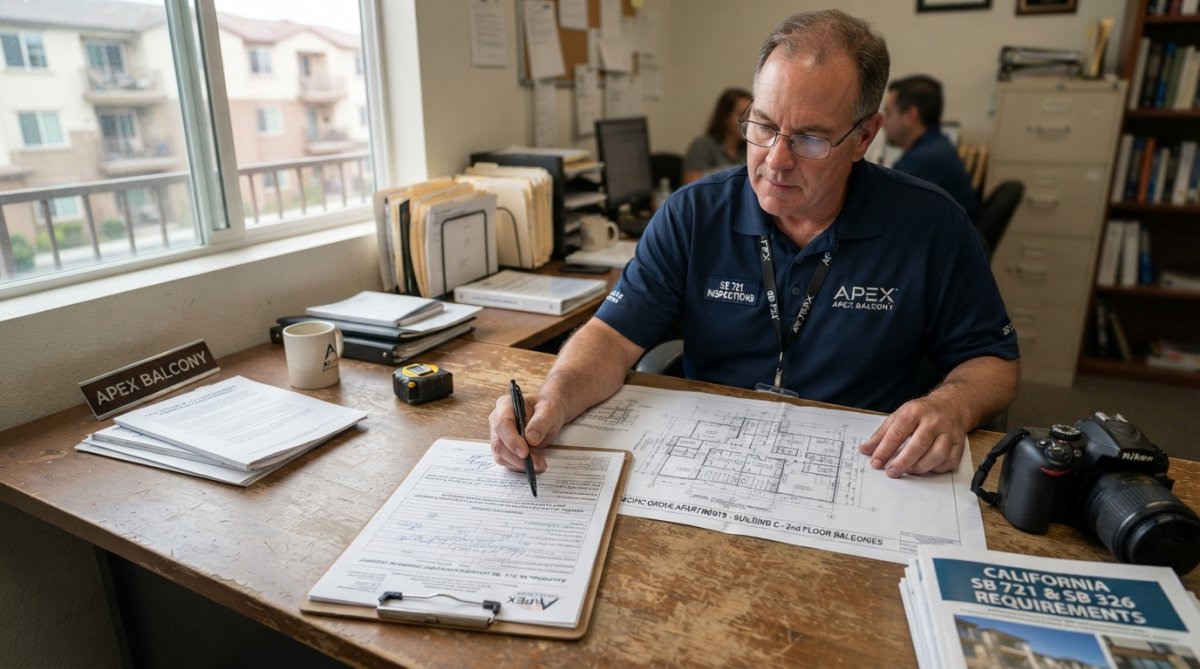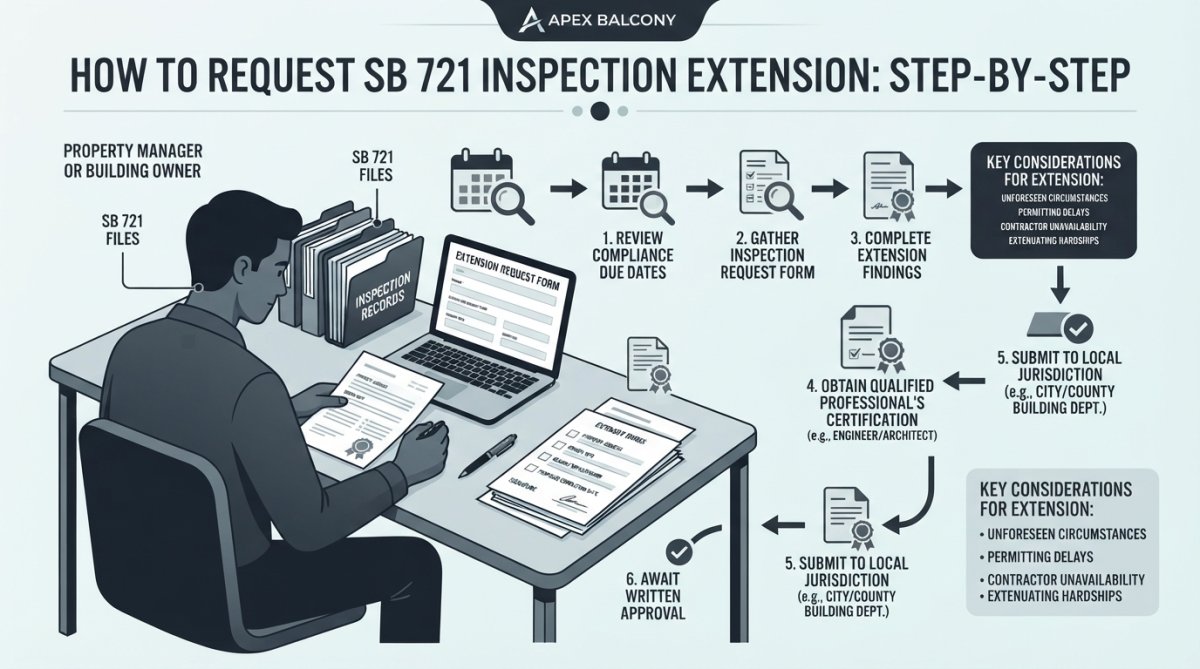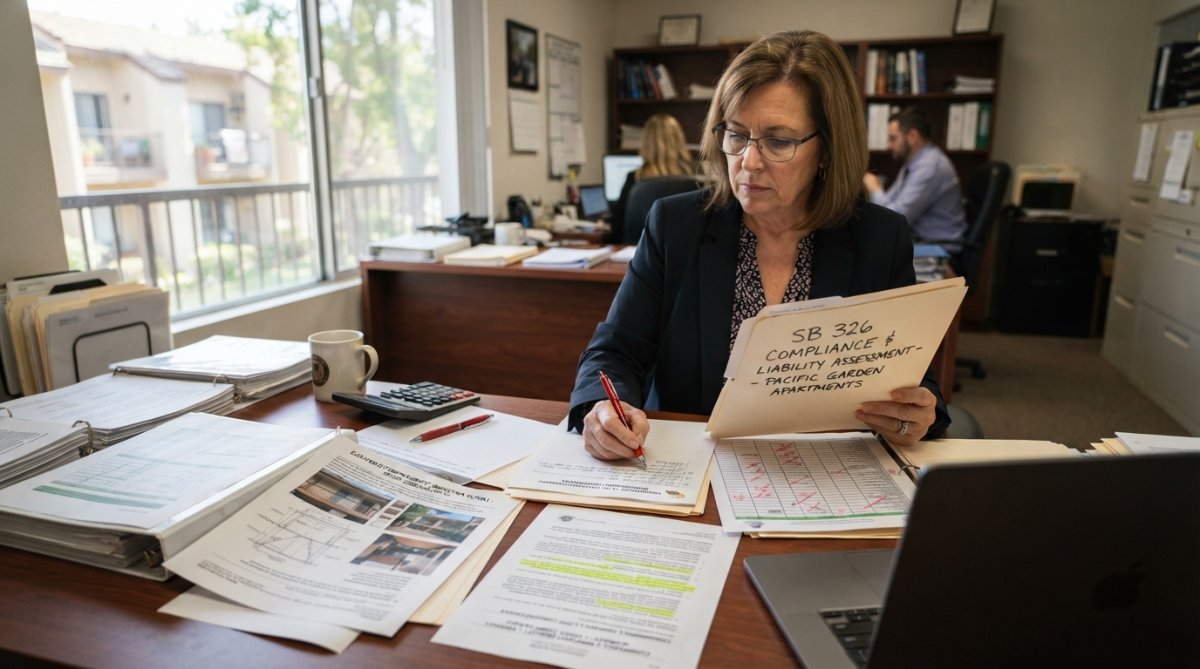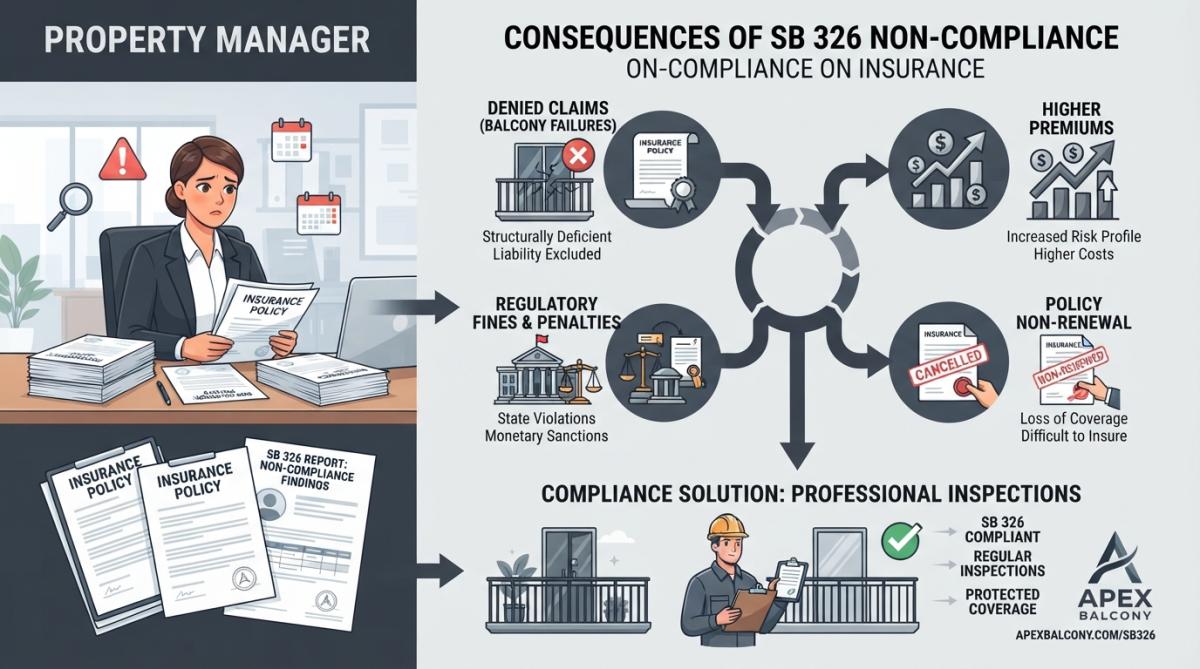
Logo
  • Balcony Law
  • About us
  • Inspection services
  • FAQ
  • Blog
  • Call us ‪+1 818-806-7885
  • Book now

Month: July 2026

How to Interpret Balcony Inspection Reports: A 2026 Guide

Posted on July 31, 2026 by Apex Balcony admin
How to Interpret Balcony Inspection Reports: A 2026 Guide

Table of Contents

  • Understanding California Balcony Inspection Laws
    • SB 326 vs. SB 721: Which applies to your property
  • What Inspectors Look For: Exterior Elevated Elements Explained
    • Load-bearing connections and structural integrity
    • Water intrusion, corrosion, and deterioration signs
  • Decoding Balcony Inspection Report Terminology
    • Visual glossary of technical terms and findings
  • Common Balcony Inspection Issues and What They Mean
    • Moisture penetration, dry rot, and fungal growth
    • Structural hazards and load capacity concerns
  • Reading a Real Balcony Inspection Report Sample
    • Key components and what each section tells you
  • How to Interpret Balcony Inspection Reports: Step-by-Step Process
    • Step 1: Verify inspector qualifications and compliance documentation
    • Step 2: Identify statistically significant findings and severity ratings
    • Step 3: Understand repair timelines and remediation priorities
    • Step 4: Review maintenance plans and service life expectations
  • Common Mistakes When Interpreting Reports and How to Avoid Them
    • Ignoring non-destructive evaluation findings
    • Confusing cosmetic issues with safety hazards
    • Delaying action on liability reduction opportunities
  • Post-Report Action Checklist for Property Managers and HOA Boards
    • Immediate steps after receiving your inspection report
    • Dispute resolution and second-opinion protocols

Last Updated: July 31, 2026

Understanding California’s balcony inspection laws is essential for protecting your residents and avoiding costly fines. At Apex Balcony, we’ve guided hundreds of California property owners through the inspection process. This guide breaks down the technical language, explains what matters most, and shows you exactly how to read your inspection report like a professional.

A 2015 balcony collapse in Berkeley killed six people, and a 2021 incident in Malibu reinforced how quickly structural failure can turn tragic. California responded with two critical laws: SB 326 and SB 721. If you own a residential building with three or more units in California, one of these laws almost certainly applies to you.

Understanding California Balcony Inspection Laws

California’s balcony safety laws mandate specialized inspections focused specifically on balconies, decks, stairs, and similar structures that pose the highest risk.

SB 326 applies to residential buildings with three or more units built before January 1, 2008, requiring initial inspections by January 1, 2025, with subsequent inspections every six years. SB 721, which took effect in 2019, applies to buildings built on or after January 1, 2008, and requires inspections every nine years.

Watch Out
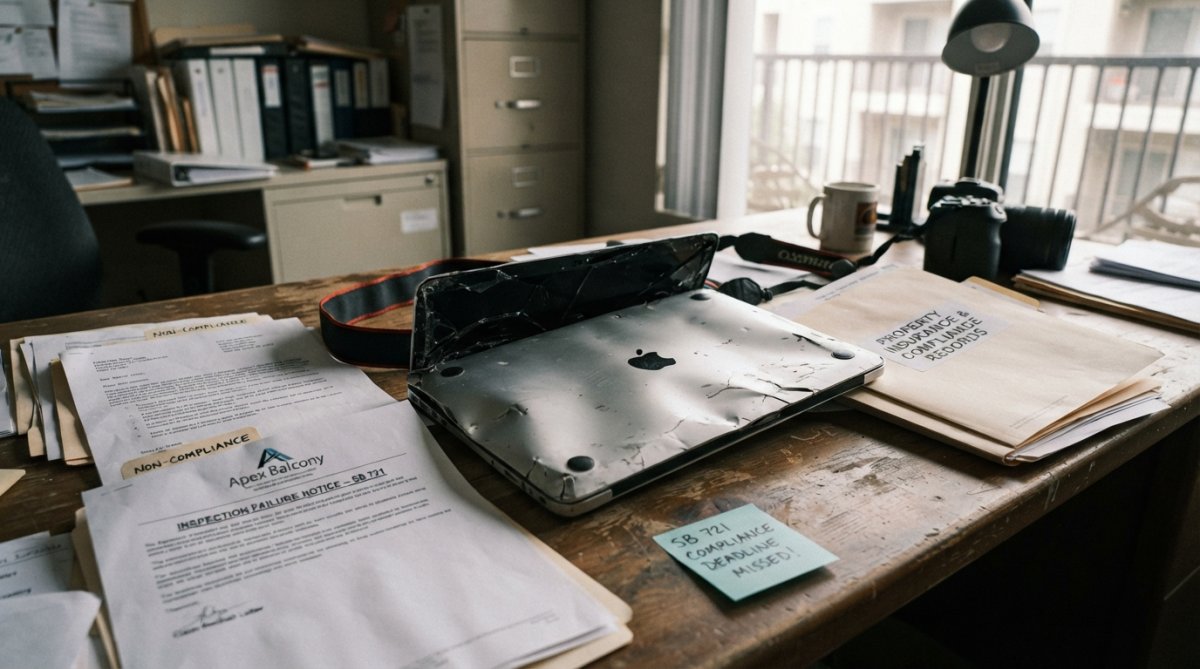
Missing an SB 326 deadline creates immediate legal exposure. Local building departments conduct compliance sweeps, and fines start at $500 per day of non-compliance. A six-month delay can cost $90,000 before you even address repairs.

These laws differ from standard building code compliance by focusing specifically on exterior elevated elements. An SB 326/SB 721 inspection evaluates load-bearing connections, moisture penetration patterns, structural integrity of fasteners, and early signs of deterioration that could lead to failure.

What Inspectors Look For: Exterior Elevated Elements Explained

Exterior elevated elements (EEEs) are the specific structures that trigger inspection requirements: balconies, decks, exterior stairs, fire escapes, and any other elevated platform attached to the building that residents use.
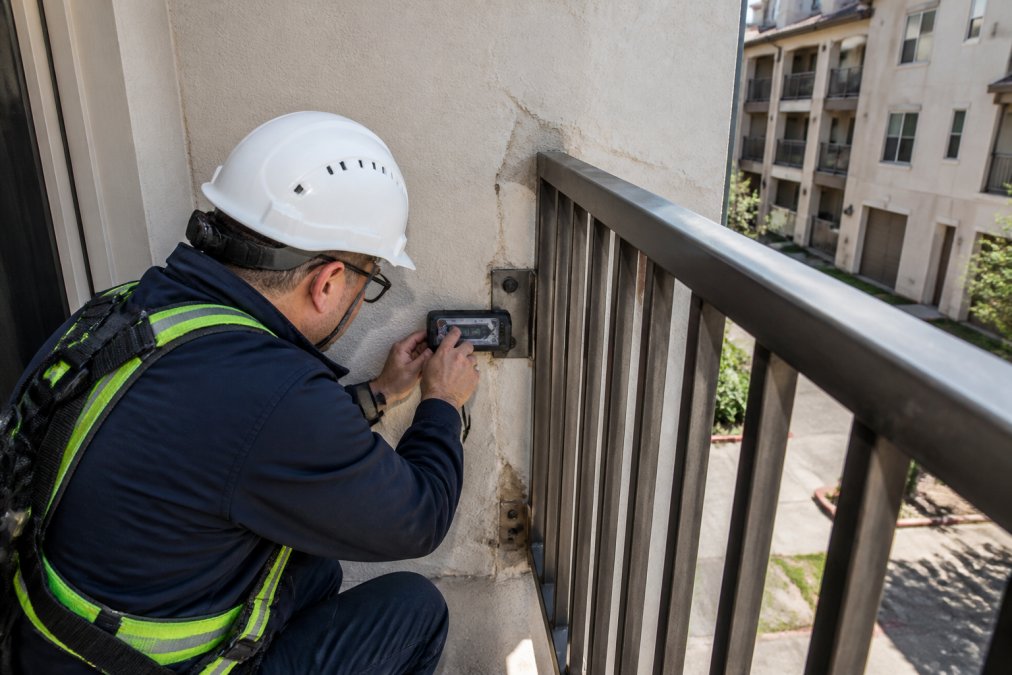
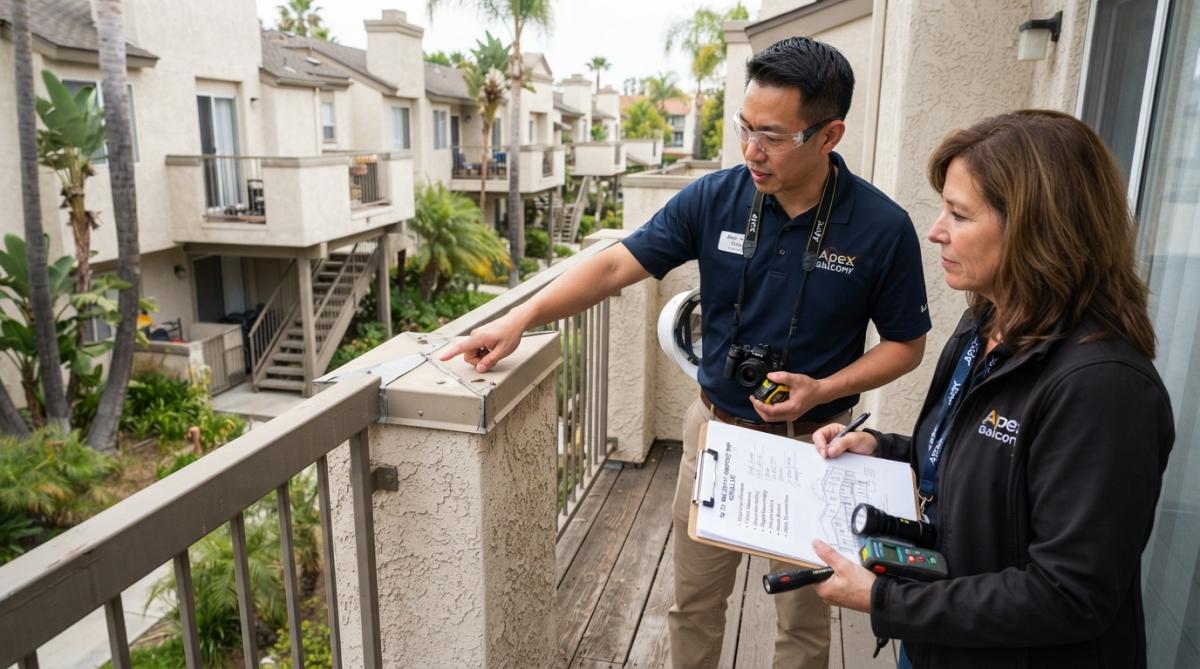
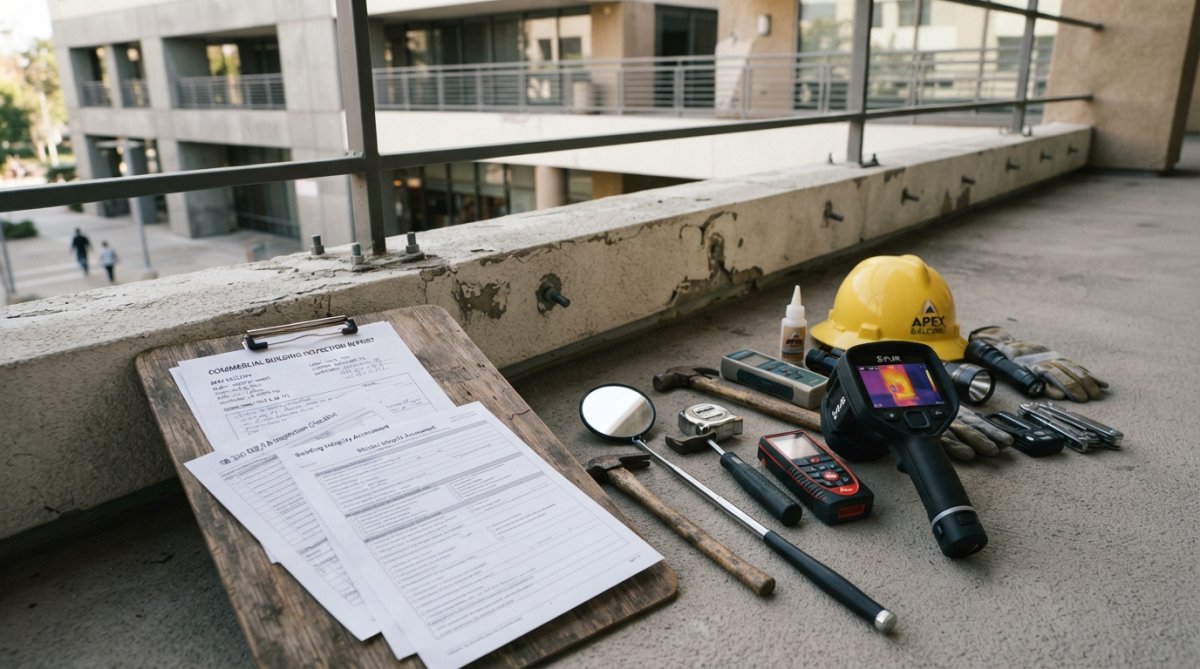
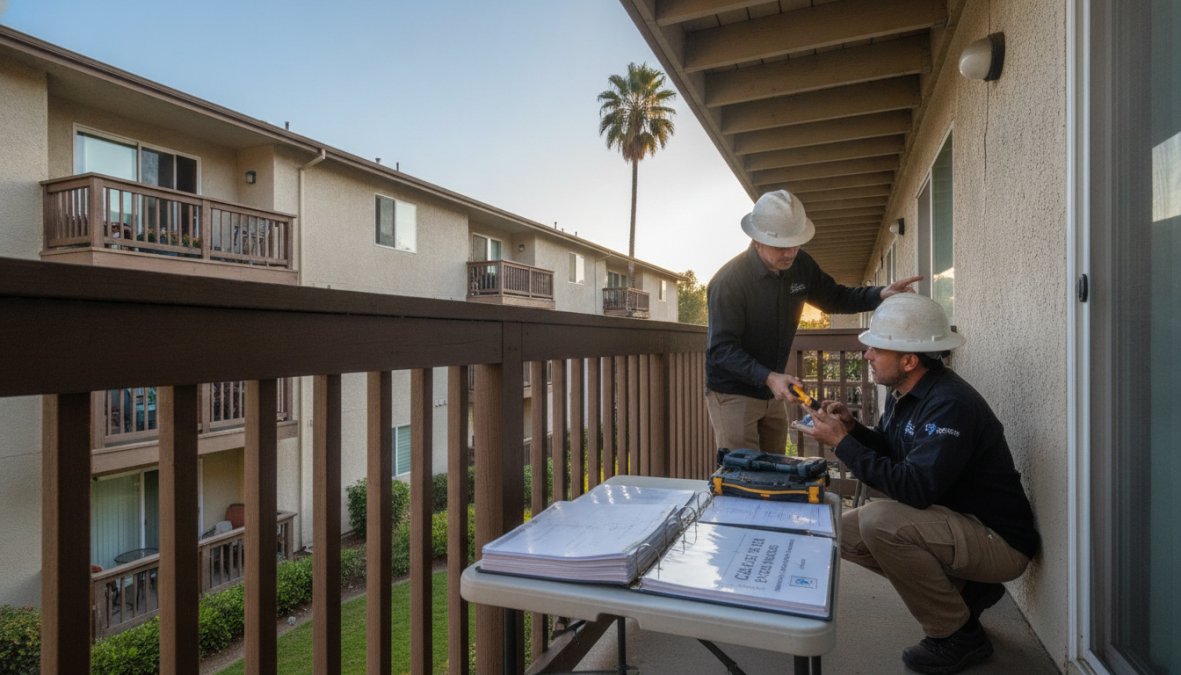
Licensed balcony inspector using non-destructive testing equipment to examine load-bearing connections on a residential concrete balcony, checking fasteners and structural components with professional tools in natural daylight

The key distinction is "elevated." A ground-level patio doesn’t require SB 326/SB 721 inspection. A second-story balcony does. Elevated elements experience different stresses, wind loads, repeated freeze-thaw cycles, and concentrated loads that accelerate deterioration.

Load-bearing connections and structural integrity

Load-bearing connections are where the balcony physically attaches to the building, transferring weight back into the main building frame. When these connections fail, the entire balcony can separate from the building.

Inspectors evaluate several connection types: bolted connections (steel bolts through the rim joist or ledger beam), welded connections (steel plates welded to the building frame), and embedded connections (metal connectors set into concrete). A common finding is "fastener corrosion with loss of thread engagement," meaning bolts have rusted so much they’ve lost their ability to hold load.

Structural integrity also includes the balcony’s primary beams and joists. Inspectors use non-destructive evaluation techniques, probing with specialized tools, moisture meters, and sometimes infrared imaging, to assess wood condition without cutting into the structure.

Water intrusion, corrosion, and deterioration signs

Water intrusion is the root cause of nearly every balcony failure in California. When water penetrates the building envelope and reaches structural components, it triggers corrosion in steel and decay in wood.

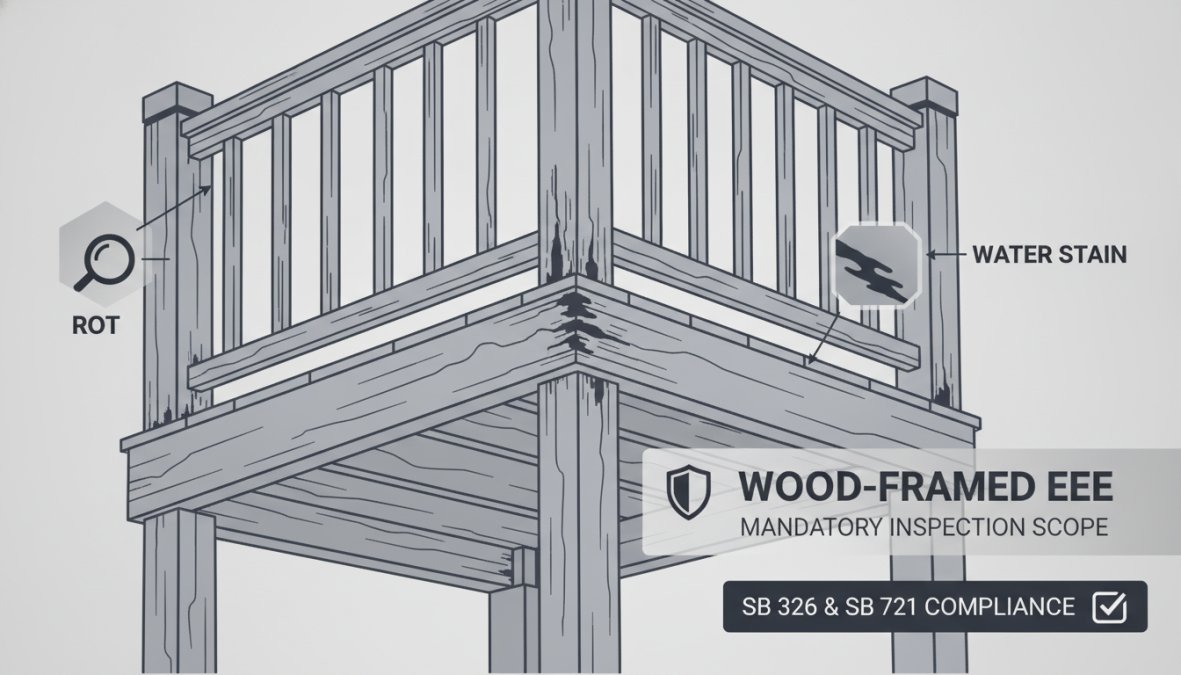
Inspectors look for visible signs of moisture penetration: staining on ceilings below balconies, efflorescence (white powder deposits on concrete), paint bubbling or peeling, and soft spots in wood when probed. They examine the balcony’s waterproofing system, membrane, sealants, and drainage details.

A critical finding is "statistically significant water intrusion," meaning the inspector found water damage in multiple locations, suggesting a systemic problem rather than a single isolated issue. This changes the repair timeline significantly.

Decoding Balcony Inspection Report Terminology

Inspection reports use specific language that confuses most property owners. Understanding these terms transforms a dense technical document into actionable information.

Visual glossary of technical terms and findings

Non-destructive evaluation (NDE): Testing methods that assess structural condition without damaging the component, including visual inspection, moisture meters, wood hardness testing, and infrared thermography.

Load-bearing components: Structural elements that carry weight. When an inspector flags a "deteriorated load-bearing component," they’re identifying something that’s supposed to be strong but is weakening.

Service life: The expected lifespan of a material or assembly under normal conditions. A waterproofing membrane might have a 15-year service life. If your membrane is 20 years old, it’s past service life and likely failing.

Remediation: The repair work required to fix the problem.

Invasive testing: When the inspector cuts into the structure to examine interior conditions, providing more thorough assessment than non-destructive testing.

Dry rot: Wood decay caused by fungus that breaks down cellulose. Despite the name, it requires moisture to develop. Once dry, the fungus dies, but the damage remains.

Fungal growth: Visible mold or mildew on surfaces, indicating moisture problems that will eventually cause structural damage.

Statistically significant sample: When the inspector finds similar problems in multiple locations, it indicates a pattern rather than an isolated issue.

Key Takeaway
When you see “statistically significant” in your report, it means the problem is widespread and requires comprehensive repair, not just patching the most visible spots.

Common Balcony Inspection Issues and What They Mean

Moisture penetration is almost always present in older balconies. An inspector might note "moisture detected in rim joist at ledger connection." This is serious because the rim joist is a primary load-bearing component. Water there accelerates decay and weakens the connection.

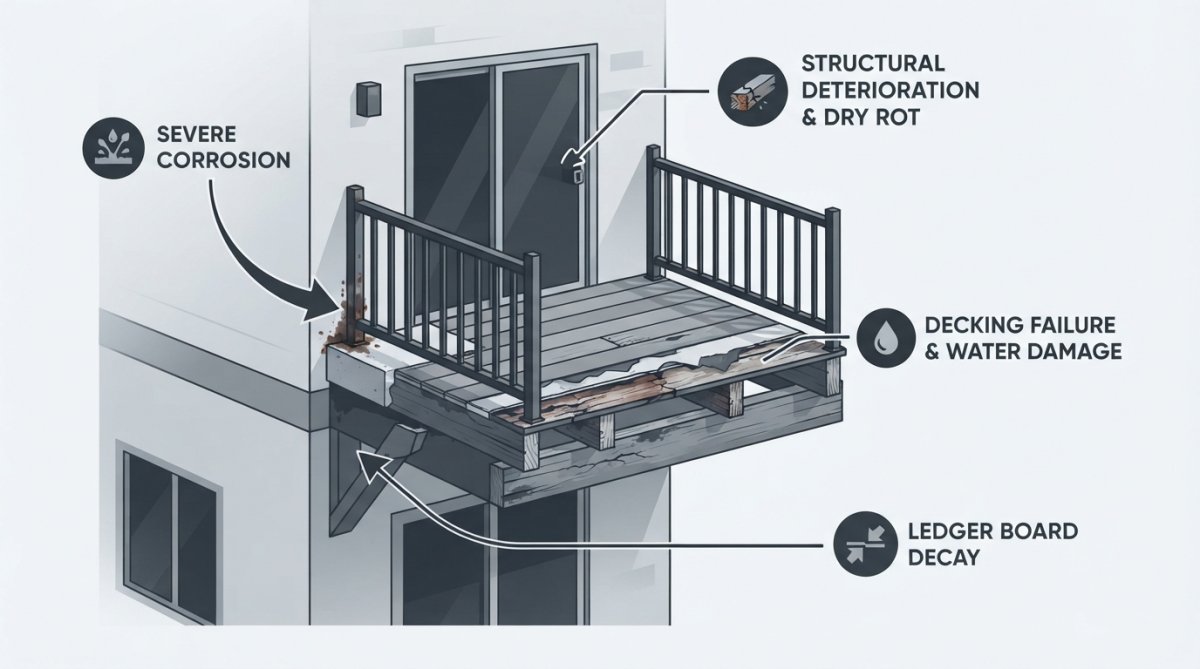
Dry rot findings trigger immediate concern. Unlike surface fungal growth, dry rot has already destroyed wood’s structural capacity. An inspector might describe "advanced dry rot in ledger board with estimated 40% loss of cross-section." This means the ledger is only 60% as strong as it should be.

Fungal growth on surfaces often accompanies moisture problems. It’s visible and alarming, but it’s sometimes less critical than hidden moisture in structural components. However, visible fungal growth signals that moisture conditions are right for decay to develop in hidden areas.

A load capacity concern means the inspector calculated that the remaining structural material may not safely support expected loads. When an inspector notes "load capacity concern," the safety factor has dropped below acceptable levels.

Structural hazards are more immediate. These include visible separation between the balcony and building, cracked beams, bent fasteners, or deterioration so advanced that failure is likely without repair.

Reading a Real Balcony Inspection Report Sample

A typical SB 326/SB 721 inspection report contains standard sections that convey information in a consistent format. The report opens with property information, inspection date, inspector credentials, and scope of work. The findings section describes what the inspector observed, organized by location or component type. The report concludes with recommendations identifying which elements need repair, which need further evaluation, and which are acceptable.

Report SectionWhat It Tells YouKey Questions to Ask
Inspector CredentialsWhether the inspector is qualifiedIs the inspector licensed? Do they have SB 326/SB 721 specific certification?
Property InformationScope of inspectionWhich buildings were inspected? Which units?
Findings by LocationCondition of each balcony/elementWhat’s the severity? Is it widespread or isolated?
Severity RatingsPriority for repairsWhat needs immediate attention vs. routine maintenance?
RecommendationsRequired next stepsWhat repairs are necessary? What needs further evaluation?
Photos & DocumentationVisual evidence of conditionsCan I see the problems the inspector describes?

How to Interpret Balcony Inspection Reports: Step-by-Step Process

Step 1: Verify inspector qualifications and compliance documentation

Before trusting the findings, confirm the inspector is qualified to conduct SB 326/SB 721 inspections. California requires inspectors to be licensed architects, structural engineers, or registered engineers with specific training in balcony inspection.

Check the inspector’s credentials in the report header for a Professional Engineer (PE) license number, Architect license number, or specific SB 326/SB 721 certification. Verify the inspection scope matches your building and check the inspection date against the legal deadline.

Pro Tip
Request a copy of the inspector’s PE license or certification before paying for the inspection. A qualified inspector will provide this immediately.

Step 2: Identify statistically significant findings and severity ratings

Scan the findings section for severity language and frequency patterns. Look for words like "widespread," "multiple locations," "statistically significant," or "throughout the building."

Count how many findings fall into each severity category. Pay particular attention to findings affecting load-bearing components. A "cosmetic crack in concrete decking" is less urgent than "moisture and corrosion in ledger fasteners."

Look for patterns in the findings. If every balcony has moisture intrusion at the same location, it suggests a building-wide design or installation flaw.

Step 3: Understand repair timelines and remediation priorities

The inspection report should indicate repair timelines. "Immediate Attention Required" findings typically need repair within 30-90 days. "Needs Repair Within 12 Months" findings can be scheduled during normal maintenance cycles. "Monitor and Reassess" findings require follow-up inspection but not immediate repair.

Inspection findings don’t automatically specify repair methods. An inspector identifies that a ledger connection has corroded fasteners and moisture intrusion. An engineer then designs the repair. Prioritize based on structural safety first, then water intrusion patterns, then cosmetic issues.

Step 4: Review maintenance plans and service life expectations

Quality inspection reports include recommendations for ongoing maintenance: annual sealant inspection, drain cleaning, waterproofing reapplication schedules, or specific monitoring protocols.

Service life information tells you when components will need replacement regardless of current condition. A waterproofing membrane with a 15-year service life installed in 2015 is nearing end of life in 2026, even if it’s not currently failing.

Common Mistakes When Interpreting Reports and How to Avoid Them

The first mistake is ignoring non-destructive evaluation findings. When an inspector notes "moisture detected via meter at rim joist" or "wood hardness reduced indicating decay," they’re describing hidden damage that visual inspection alone would miss.

The second mistake is confusing cosmetic issues with safety hazards. Visible fungal growth on a railing looks alarming but might be less critical than invisible moisture in a load-bearing ledger.

The third mistake is delaying action on liability reduction opportunities. Once you have an inspection report, you have documented knowledge of conditions. If you don’t act on critical findings and someone is injured, that documentation becomes evidence of negligence.

A fourth mistake is treating all "Needs Repair Within 12 Months" findings as equally urgent. Prioritize based on structural impact, not just severity rating.

Post-Report Action Checklist for Property Managers and HOA Boards

Immediate Actions (within 7 days):

  • Distribute the report to your board, ownership, or management team
  • Identify any "Immediate Attention Required" findings
  • Contact a structural engineer for findings involving load capacity concerns
  • Photograph and document current conditions for your records
  • Create a timeline for addressing critical findings

Short-term Actions (within 30 days):

  • Obtain repair estimates for critical findings from licensed contractors
  • Schedule invasive testing or engineering evaluation if recommended
  • Review your building insurance policy for adequate balcony liability coverage
  • Assess your reserve fund to determine if special assessments are needed
  • Communicate with residents about findings and repair timeline

Medium-term Actions (within 90 days):

  • Complete repairs on all "Immediate Attention Required" findings
  • Develop a detailed maintenance plan based on inspection recommendations
  • Document all repair work with photos and contractor invoices
  • Update your building’s maintenance records

Long-term Actions (within 12 months):

  • Complete all "Needs Repair Within 12 Months" findings
  • Implement the maintenance plan with documented annual inspections
  • Schedule the next full SB 326/SB 721 inspection (6 years for SB 326, 9 years for SB 721)
  • Review and update your reserve fund study to account for balcony repair needs

Interpreting your balcony inspection report accurately is the foundation for protecting your residents and managing liability. The technical language and severity ratings might seem overwhelming at first, but breaking them down systematically reveals a clear picture of your building’s condition and what needs attention.

At Apex Balcony, our team of licensed inspectors doesn’t just identify problems, we help you understand what they mean and develop repair strategies that protect your residents while respecting your budget. We’ve worked with hundreds of California property owners navigating SB 326 and SB 721 compliance. Book an inspection with Apex Balcony today and get clarity on your building’s actual condition and the most cost-effective path to compliance and safety.

Frequently Asked Questions

What's the difference between SB 326 and SB 721, and which one applies to my California property?

SB 326 applies to residential buildings with three or more units built before January 1, 2008, requiring visual inspections of balconies and exterior elevated elements every six years. SB 721 applies to buildings built on or after January 1, 2008, with the same inspection requirements. If your building has three or more residential units and includes balconies, decks, or elevated stairways, at least one of these laws applies. Check your building's construction date and unit count to determine which statute governs your property.

What are the most common balcony inspection issues found in California residential buildings?

The most frequently identified issues include water intrusion and moisture penetration in the building envelope, dry rot in wood components, corrosion of metal load-bearing connections, and fungal growth on structural elements. Inspectors also commonly find deterioration risks related to the service life of materials, compromised load-bearing components, and weatherproofing failures. These findings vary by building age, climate zone, and maintenance history. Understanding whether findings are cosmetic or pose genuine safety hazards is critical to prioritizing remediation.

How do I know if a balcony inspection report is thorough and credible?

A credible report includes detailed compliance documentation, clearly identifies the inspector's qualifications and certifications, documents both visual inspection and non-destructive evaluation findings, and provides a statistically significant sample of tested components. The report should explain severity ratings, specify repair timelines, reference building code compliance standards, and include photographs or diagrams. Verify that the inspector holds appropriate state licensing and has experience with SB 326 and SB 721 requirements. If findings are unclear or lack supporting detail, request clarification before approving repairs.

What should I do immediately after receiving a balcony inspection report?

First, review the report for clarity and verify inspector credentials. Second, categorize findings by severity and statutory deadline, some repairs may be required within 30 days, others within one year. Third, obtain repair quotes from qualified contractors and assess cost-benefit implications for your reserve fund. Fourth, document all findings and communicate them to your HOA board, property management team, or legal counsel. Finally, establish a maintenance plan and remediation timeline. If you disagree with findings, consider a second opinion from another licensed inspector before proceeding with costly repairs.
Posted in BlogLeave a Comment on How to Interpret Balcony Inspection Reports: A 2026 Guide

Is Structural Balcony Certification Necessary? A 2026 Guide

Posted on July 30, 2026 by Apex Balcony admin
Is Structural Balcony Certification Necessary? A 2026 Guide

Table of Contents

  • Is Structural Balcony Certification Necessary? Understanding Your Legal Obligations
    • Why This Question Matters for California Property Owners
  • California SB 721 and SB 326: What You Need to Know
    • SB 721: The Original Mandate
    • SB 326: Extended Requirements for Multi-Family Housing
  • Balcony Inspection Requirements in the US: Federal and State Frameworks
    • Building Code Compliance and Structural Integrity Standards
    • Periodic Inspection Schedules and Compliance Deadlines
  • Who Can Certify a Balcony: Qualified Inspectors and Professional Standards
    • Licensed Structural Engineers and Architects
    • Professional Liability and Certification Standards
  • Balcony Inspection Cost: Budget Planning and What Affects Pricing
    • Factors That Influence Inspection Fees
    • Cost Breakdown: Visual Inspection vs. Invasive Testing
  • Consequences of Non-Compliance: Legal and Safety Risks
    • Enforcement Actions and Fines
    • Liability Exposure and Risk Mitigation
  • Remediation Steps After a Failed Inspection: Your Action Plan
    • Understanding the Inspection Report
    • Prioritizing Repairs and Managing the Remediation Timeline
  • Building Owner Responsibilities: Taking Action on Structural Certification
    • Maintenance Schedule and Documentation
    • Communicating with Your HOA and Residents

Last Updated: July 30, 2026

Is Structural Balcony Certification Necessary? Understanding Your Legal Obligations

When is structural balcony certification necessary for your California property? The answer depends on what you own, when it was built, and where it’s located. If you own a multi-family residential building in California with three or more units, structural balcony certification is almost certainly necessary. The legal requirements, inspection timelines, and remediation obligations are complex enough that guessing wrong can expose you to fines, liability, and worse. This guide covers exactly what you need to know to stay compliant, protect your residents, and avoid costly mistakes.

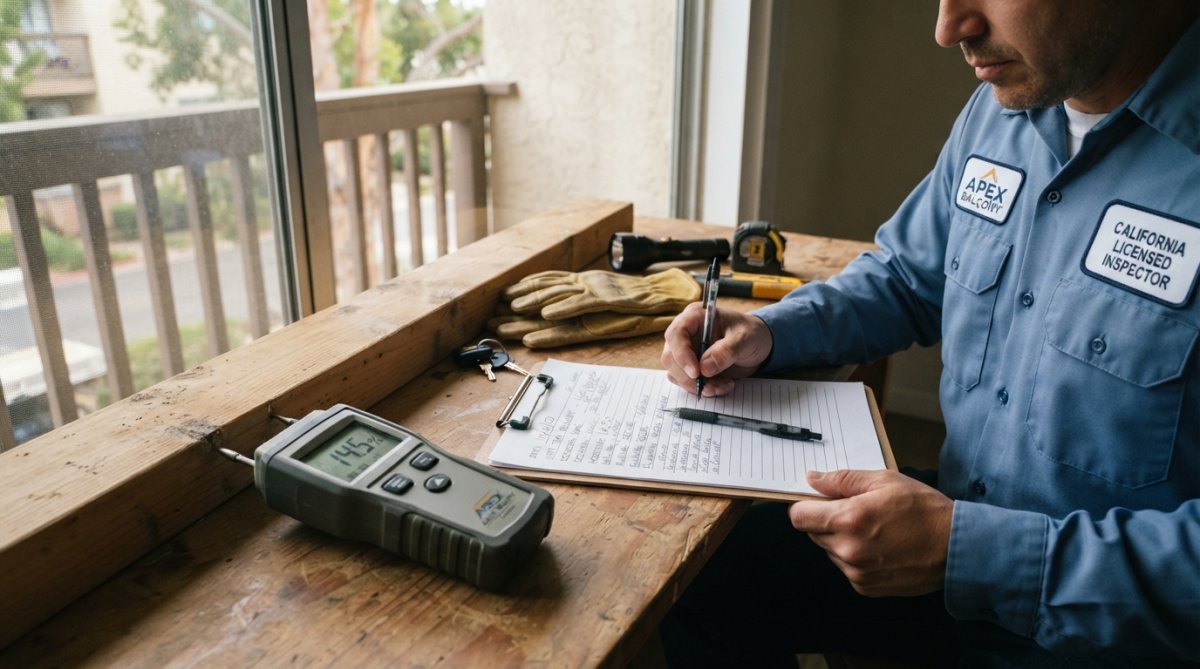
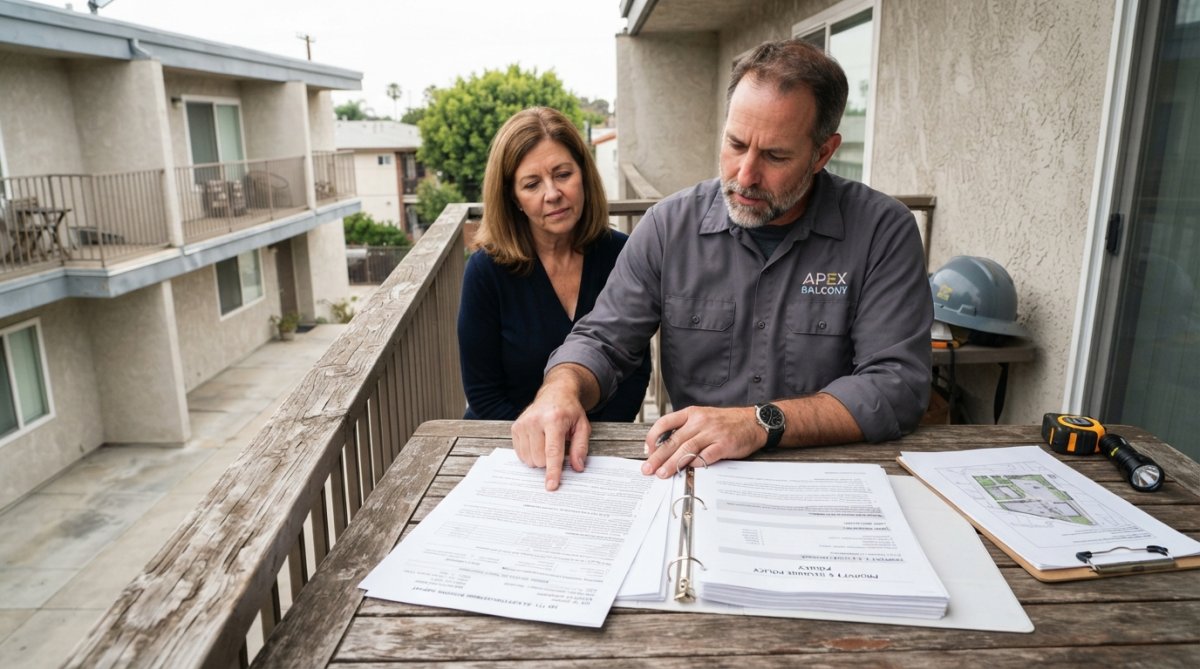
Licensed structural engineer conducting hands-on balcony inspection using specialized testing equipment and taking detailed notes on clipboard in residential building

Why This Question Matters for California Property Owners

California’s balcony inspection laws have become stricter. Two landmark statutes, SB 721 and SB 326, created hard compliance deadlines that have already caught many property owners off guard. Missing these deadlines results in enforcement actions from local building departments, fines that run into tens of thousands of dollars, and personal liability for board members.

The rules differ depending on your building type, construction date, and location. A 15-unit condominium in San Diego faces different requirements than a 12-unit apartment building in Los Angeles. The only way to know for certain whether structural balcony certification is necessary for your specific property is to understand which law applies to you and act on it.

California SB 721 and SB 326: What You Need to Know

SB 721: The Original Mandate

Senate Bill 721, signed into law in 2018, requires owners of condominium projects with three or more units to conduct visual inspections of exterior elevated elements, including balconies, decks, and stairways. According to California Department of Housing and Community Development guidance, SB 721 requires periodic inspections at least every six years.

The scope includes visual inspection of wood framing, connections, railings, waterproofing, and signs of deterioration like dry rot, corrosion, or load-bearing capacity concerns. If visual inspection reveals potential safety issues, invasive testing may be required.

For buildings constructed before January 1, 2018, the first inspection deadline was January 1, 2025. For buildings constructed on or after January 1, 2018, the first inspection was due by January 1, 2024. If your building missed these deadlines, you’re already out of compliance.

SB 326: Extended Requirements for Multi-Family Housing

Senate Bill 326, which took effect in 2022, extended balcony certification requirements to multi-family rental housing with three or more units. This expansion brought apartment buildings, townhome complexes, and other rental properties under the same inspection mandate.

Under SB 326, the first inspection deadline was January 1, 2025 for most buildings. Buildings with 16 or more units had an earlier deadline of January 1, 2024. The periodic inspection requirement is the same as SB 721: at least once every six years. Both require professional certification by a licensed structural engineer or architect and require building owners to maintain documentation and communicate findings to residents.

Balcony Inspection Requirements in the US: Federal and State Frameworks

Building Code Compliance and Structural Integrity Standards

The International Building Code (IBC), adopted by most states including California, establishes minimum standards for load-bearing capacity, waterproofing, and material durability for elevated exterior elements. According to International Code Council building standards, structures must be designed and maintained to safely support design loads and resist deterioration from environmental exposure.

In California, the California Building Standards Code incorporates the IBC and adds state-specific amendments. Local building departments enforce these codes and have authority to conduct inspections, issue violation notices, and pursue enforcement actions against property owners who fail to maintain structures in compliance.

Periodic Inspection Schedules and Compliance Deadlines

The inspection schedule under both SB 721 and SB 326 is at least once every six years. For buildings that completed their first inspection on or before January 1, 2025, the next inspection is due by January 1, 2031. If an inspection identifies defects requiring repair, a follow-up inspection is required within 180 days of completion to verify that structural integrity has been restored.

Who Can Certify a Balcony: Qualified Inspectors and Professional Standards

Not every contractor or engineer can legally perform a balcony certification inspection under SB 721 or SB 326. The law specifies who is qualified to perform inspections.

Licensed Structural Engineers and Architects

The law requires that balcony inspections be performed by a licensed structural engineer or architect registered in California. A licensed structural engineer has completed four years of undergraduate engineering education, passed the Fundamentals of Engineering (FE) exam, gained four years of professional experience under a licensed engineer, and passed the Professional Engineer (PE) exam in the structural specialty. An architect must hold a California architecture license, which requires a professional degree, internship, and passing the Architect Registration Examination (ARE).

Both professionals carry professional liability insurance, which means if an inspection is negligent or misses a critical safety issue, there’s a path to recovery. Always verify that your inspector holds an active California PE or architecture license.

Professional Liability and Certification Standards

When a licensed professional performs an inspection, they issue a formal inspection report that documents their findings, conclusions about structural integrity, and recommendations for repair or further investigation. This report becomes part of the building’s permanent record and must be maintained for at least six years.

The inspection report must include:

  • Description of the elements inspected
  • Visual findings, including photographs where appropriate
  • Assessment of structural integrity
  • Identification of any defects or areas of concern
  • Recommendations for repair or invasive testing
  • Certification statement by the licensed professional

This documentation demonstrates to residents that a qualified professional has assessed safety, provides the basis for any repair work, and protects the building owner by showing due diligence.

Balcony Inspection Cost: Budget Planning and What Affects Pricing

Factors That Influence Inspection Fees

The cost of a balcony inspection is driven by the number of balconies, the complexity of the structures, the building’s accessibility, and whether invasive testing is required. A 12-unit building with simple attached balconies will cost less to inspect than a 50-unit complex with cantilever decks and multiple stairways.

Building age and condition also matter. Older buildings often have more complex structural systems and more signs of deterioration, requiring longer inspection times and potentially more detailed investigation. Accessibility affects cost too, if balconies require scaffolding, lifts, or rope access, costs increase.

Cost Breakdown: Visual Inspection vs. Invasive Testing

A visual inspection, the baseline requirement under SB 721 and SB 326, examines the condition of visible structural elements, connections, railings, waterproofing, and signs of deterioration. Invasive testing goes deeper, including probe testing to check for hidden wood decay, moisture meters to assess water infiltration, and fastener testing to verify connection integrity.

Many building owners are surprised to learn that visual inspection often identifies defects requiring invasive testing to quantify. For example, if an inspector sees signs of wood discoloration on a balcony beam, they can’t determine how deep the rot extends without probing.

Inspection TypeScopeTypical OutcomeTimeline
Visual Inspection OnlySurface condition, visible defects, waterproofingIdentifies most issues; may recommend invasive testing1-2 weeks
Visual + Limited Invasive TestingProbing of suspect areas, moisture assessmentQuantifies defects, informs repair scope2-4 weeks
Comprehensive Invasive TestingExtensive probing, fastener testing, material samplingComplete assessment; ready for repair planning4-8 weeks

Budget planning should account for the possibility that visual inspection will recommend invasive testing.

Consequences of Non-Compliance: Legal and Safety Risks

Enforcement Actions and Fines

Local building departments have authority to enforce SB 721 and SB 326 compliance. If your building misses the inspection deadline, the city can issue a violation notice. Many jurisdictions have already begun enforcement actions against property owners who failed to complete inspections by the January 1, 2025 deadline.

A violation notice typically gives the property owner 30-60 days to cure the violation by scheduling an inspection. If the inspection isn’t completed within that timeframe, the city can impose administrative fines ranging from hundreds to thousands of dollars per day of non-compliance. Some jurisdictions also have authority to place a stop-work order on the building, preventing any renovation or improvement work until the inspection is completed.

Non-compliance creates a liability cloud. If a balcony fails or causes injury and the property owner failed to conduct the required inspection, that failure becomes evidence of negligence, strengthening any legal claim and potentially resulting in punitive damages.

Liability Exposure and Risk Mitigation

The real cost of non-compliance is the liability exposure if someone is injured because of a structural failure that an inspection would have caught. Risk mitigation starts with compliance. Getting your balconies inspected, documenting the inspection, and addressing any defects identified in the report demonstrates due diligence.

Additionally, many property insurance policies now require proof of SB 721 or SB 326 compliance as a condition of coverage. If your building is out of compliance, your insurance could be voided, leaving you completely exposed.

Remediation Steps After a Failed Inspection: Your Action Plan

Understanding the Inspection Report

The inspection report is your roadmap for repairs. It identifies specific defects, describes their location and severity, and recommends whether repair, replacement, or further investigation is needed.

Defects are typically categorized by urgency. Immediate safety concerns require urgent repair. Moderate defects might be scheduled within a few months. Minor issues can be included in the next planned maintenance cycle. Review the report carefully with your building’s maintenance team or engineer. If you disagree with a recommendation, get a second opinion from another licensed professional, but document this process.

Prioritizing Repairs and Managing the Remediation Timeline

Prioritization depends on safety risk, budget constraints, and practical considerations like weather and resident disruption. A severely deteriorated beam gets priority. A minor waterproofing issue can wait longer.

Once repairs are completed, the law requires a follow-up inspection within 180 days to verify that work was done properly. Many property owners underestimate the timeline for remediation. A simple repair might take weeks. A major structural repair could take months. Budget planning should account for this, and it’s better to address repairs promptly, even if it means staggering the work across multiple phases.

Building Owner Responsibilities: Taking Action on Structural Certification

Maintenance Schedule and Documentation

You must maintain a schedule of inspections and keep documentation of all inspection reports for at least six years. Additionally, you’re responsible for maintaining the balconies and other elevated exterior elements in safe condition between inspections. Many property owners establish a maintenance log where staff document any issues observed during routine building maintenance or resident complaints.

Communicating with Your HOA and Residents

Transparency builds trust and reduces panic. When you schedule an inspection, inform residents in advance. Explain what the inspection involves and what to expect. If the inspection identifies defects requiring repair, communicate the findings and the remediation plan.

For HOA-managed buildings, the board should present inspection findings and remediation plans at board meetings and in writing to all unit owners. Document these communications.


Balcony safety is an ongoing responsibility that requires professional inspection, careful documentation, and timely remediation when defects are found. If you own multi-family residential property in California with three or more units, structural balcony certification is almost certainly necessary.

At Apex Balcony, we help building owners and HOAs navigate this process. Our licensed inspectors identify early signs of structural failure before they become emergencies. We provide clear, detailed reports that guide remediation decisions and support you through follow-up inspections to verify repairs are complete. Book inspection with Apex Balcony and ensure your residents are protected and your property remains compliant with California law.

Frequently Asked Questions

Is structural balcony certification necessary for all residential buildings in California?

Yes, structural balcony certification is necessary for most California multi-family residential buildings. SB 721 and SB 326 require periodic inspections of elevated exterior elements on condominium projects and apartment buildings. The specific requirements depend on your building's age, number of units, and construction type. If your building has three or more units with balconies or decks, you likely fall under these mandates. Contact a licensed structural engineer to confirm your property's classification and compliance deadline.

Who can certify a balcony and what qualifications do they need?

Only a licensed structural engineer or architect can certify a balcony in California. These professionals must hold a valid California license and carry professional liability insurance. They assess structural integrity, load-bearing capacity, waterproofing, and signs of corrosion or dry rot. Some inspectors may also employ invasive testing to evaluate hidden damage. Verify your inspector's credentials with the California Department of Consumer Affairs before hiring.

What happens if I don't comply with balcony inspection requirements?

Non-compliance with SB 721 and SB 326 can result in significant consequences. Building owners face enforcement actions, substantial fines from local authorities, and potential liability if a resident is injured due to unaddressed structural defects. Additionally, failure to certify may complicate insurance claims and expose your property to legal action. The 2015 Berkeley balcony collapse and 2021 Malibu incident demonstrate the real-world risks of delaying inspections and repairs.

What does a balcony structural inspection typically include?

A comprehensive balcony inspection includes visual assessment of all elevated exterior elements, balconies, decks, stairs, and railings. The inspector evaluates structural integrity, load-bearing capacity, waterproofing systems, fasteners, and visible signs of corrosion or dry rot. Depending on findings, invasive testing may be performed to assess hidden damage. The inspection results in a certification report detailing any defects, their severity, and recommended remediation steps for building code compliance.

How often do balconies need to be inspected under California law?

California law requires periodic inspections based on your building's classification. SB 721 mandates inspections every six years for condominium projects, with a first deadline of January 1, 2025. SB 326 applies stricter timelines for apartments built before 1995. Your specific compliance deadline depends on your property's age and structure. A licensed structural engineer can confirm your inspection schedule and help you stay on track with statutory requirements.

Posted in BlogLeave a Comment on Is Structural Balcony Certification Necessary? A 2026 Guide

How to Prepare for SB 721 Site Visit: A 2026 Checklist

Posted on July 29, 2026 by Apex Balcony admin
How to Prepare for SB 721 Site Visit: A 2026 Checklist

Table of Contents

  • Understanding SB 721 and Your Obligations
    • What is SB 721?
    • Buildings Subject to SB 721 Inspection
  • Key Deadlines and Compliance Dates for SB 721
  • Pre-Inspection Maintenance Checklist: How to Prepare for SB 721
    • Document Current Conditions
    • Address Obvious Safety Hazards
    • Ensure Inspector Access
  • Vetting and Selecting Qualified SB 721 Inspectors
    • Verify Credentials and Licensing
    • Ask the Right Questions
  • Common Issues Found During SB 721 Inspections
    • Structural and Material Defects
    • Waterproofing and Moisture Problems
  • SB 721 Repair Timelines and Next Steps After Inspection
    • Understanding the Compliance Report
    • Planning Repairs Based on Hazard Level
  • Tenant Communication and Minimizing Disruption
  • Budgeting and Cost Estimation for Inspections and Repairs

How to Prepare for SB 721 Site Visit: A 2026 Checklist

Last Updated: July 29, 2026

California property owners managing multifamily buildings face an urgent compliance deadline. SB 721 requires comprehensive inspections of exterior elevated elements by January 1, 2026. Learning how to prepare for SB 721 site visit is essential to avoid fines and protect residents. At Apex Balcony, we’ve guided hundreds of building owners through this process. The difference between a smooth inspection and a chaotic one comes down to preparation.

Understanding SB 721 and Your Obligations

SB 721 is California’s requirement that all multifamily residential buildings with exterior elevated elements undergo a mandatory structural safety inspection. Passed in response to high-profile balcony collapses, including the tragic 2015 Berkeley incident that killed six people, this law mandates that property owners ensure balconies, decks, stairways, and other elevated components meet safety standards. The law applies to buildings with three or more residential units.

The regulation targets Exterior Elevated Elements (EEE): any balcony, deck, stairway, or similar structure attached to a building that is elevated above ground level. The inspection focuses on structural integrity, waterproofing, and early signs of failure like dry rot, termite damage, and corrosion.

California Civil Code Section 5551 defines the requirements in detail. Property owners who fail to comply face potential fines from local building departments and legal liability if someone is injured due to a structural failure that could have been identified during inspection.

Buildings Subject to SB 721 Inspection

The law applies to multifamily residential buildings with three or more units that have exterior elevated elements. Single-family homes, duplexes, and commercial buildings are exempt. Condominiums, apartment complexes, mixed-use buildings with residential units, and HOA-governed properties all fall within scope.

Key Deadlines and Compliance Dates for SB 721

The compliance deadline is January 1, 2026. This is a hard legal deadline. After the initial inspection, repair timelines depend on severity. Immediate safety hazards must be addressed urgently, sometimes within days. Significant defects typically require repairs within 180 days.

Many property owners wait until November or December 2025 to schedule inspections, creating a bottleneck. Schedule now to ensure your inspection happens well before the deadline.

Pre-Inspection Maintenance Checklist: How to Prepare for SB 721

Preparing your property before the inspector arrives makes the inspection process efficient and minimizes disruption to residents.

Licensed building inspector performing visual inspection of residential balcony, using moisture meter and taking detailed notes on clipboard, natural daylight

Document Current Conditions

Take photographs and videos of all exterior elevated elements from multiple angles. Capture overall condition, close-ups of visible cracks, staining, or deterioration, and document railings, fasteners, and connections. Walk through your building with a checklist and note obvious issues: peeling paint, water stains, loose boards, missing caulk, or visible rust. Create a simple spreadsheet listing each balcony by unit number with known issues or maintenance history.

Address Obvious Safety Hazards

Remove stored items, grills, or furniture from balconies that might obstruct the inspector’s access. Clear debris, leaves, and standing water. Check that all balcony doors and gates can be opened without force. Ensure adequate lighting and clear any vegetation growing against or under balconies.

Ensure Inspector Access

Provide clear, unobstructed access to all exterior elevated elements. Coordinate with building management to ensure doors are unlocked and pathways are clear. Brief your residents ahead of time with a notice explaining the mandatory safety inspection. If your building has restricted access areas, arrange for a staff member to accompany the inspector.

Vetting and Selecting Qualified SB 721 Inspectors

Choosing the wrong professional can result in an incomplete inspection, missed defects, or a report that doesn’t satisfy local building departments.

Verify Credentials and Licensing

A qualified SB 721 inspector must be a licensed architect or licensed engineer in California. Verify the inspector’s license with the California Architects Board or the California Professional Engineers Board before hiring. Ask for proof of insurance, including general liability and workers’ compensation coverage. Request references from other building owners in your area.

At Apex Balcony, our team consists of licensed professionals with decades of combined construction and design experience. We specialize in SB 721 and SB 326 compliance and use specialized equipment, moisture meters, infrared cameras, and other diagnostic tools, to identify defects that visual inspection alone might miss.

Ask the Right Questions

How many SB 721 inspections have you completed? You want someone with practical experience with this specific requirement.

What equipment do you use? A thorough inspection requires moisture meters to detect hidden water intrusion, infrared cameras to identify temperature anomalies, and potentially other diagnostic tools.

How do you determine sample size and testing methodology? SB 721 requires a statistically significant sample with 95% confidence level.

What’s included in your report? The compliance report must satisfy your local building department. Ask for a sample report so you can see the level of detail, including photographs, specific findings, and clear repair recommendations.

What’s your timeline and cost? Get a clear estimate for the inspection fee.

Watch Out
A common mistake is hiring the cheapest inspector available. Saving a few hundred dollars on the inspection fee can cost you tens of thousands if critical defects are missed. Invest in a qualified professional.

Common Issues Found During SB 721 Inspections

Understanding what inspectors typically find helps you prepare mentally and financially for potential repairs.

Structural and Material Defects

Dry rot is the most common finding in California multifamily buildings. Wood balconies and decks are vulnerable to moisture intrusion, and once rot begins, it spreads silently inside the structure. A moisture meter can detect rot before it becomes visible.

Corroded fasteners and connections are another frequent issue. Bolts, lag screws, and metal brackets exposed to weather corrode over time, weakening the structural connection between the balcony and the building.

Cracked or spalling concrete is common in older buildings. Concrete balconies develop cracks that allow water to penetrate, leading to rebar corrosion and structural deterioration.

Waterproofing and Moisture Problems

Failed waterproofing membranes are endemic. Water seeps through cracks, around fasteners, and under flashing, creating hidden moisture that rots wood, corrodes metal, and damages the structure beneath the balcony.

Improper drainage is related but distinct. Even if waterproofing is intact, if the balcony surface doesn’t slope properly or if drainage holes are blocked, water pools and eventually penetrates joints and connections.

Termite damage is particularly insidious because it’s invisible until extensive. Termites tunnel through wood, leaving hollow galleries that weaken structural members.

Pro Tip
Before your inspection, clear any vegetation touching or growing under balconies. Termites and carpenter ants use plants as highways to reach wood structures.

SB 721 Repair Timelines and Next Steps After Inspection

Once the inspection is complete, you’ll receive a compliance report detailing all findings.

Understanding the Compliance Report

The report will categorize findings by severity: immediate hazards, significant defects, and minor issues. Immediate hazards pose imminent risk to safety and must be addressed urgently. Significant defects require repair but don’t pose immediate danger and typically have a 180-day repair timeline. Minor issues have longer timelines.

Planning Repairs Based on Hazard Level

Immediate hazards require action before the property can be considered compliant. Contact a licensed contractor immediately and begin repair work. Document all repairs with photographs and receipts.

For significant defects, develop a repair plan and timeline. Keep detailed records of all repair work. When repairs are complete, have your contractor provide a completion report that references the original inspection findings.

Tenant Communication and Minimizing Disruption

Send residents a notice at least two weeks before the inspection explaining what will happen. Include the date, time window, and which units will be affected. Provide residents with a contact number or email in case they have questions. If repairs are needed, communicate the timeline clearly.

Budgeting and Cost Estimation for Inspections and Repairs

Inspection costs depend on building size, complexity, and the inspector’s experience level. Request quotes from multiple inspectors. Repair costs vary widely depending on your building’s age, condition, and repair scope. Budget conservatively; it’s better to overestimate and be pleasantly surprised than to face unexpected expenses.

Some property owners delay inspections because they fear the repair bill. This is a mistake. Delaying inspection doesn’t prevent problems from worsening; it only postpones the inevitable and increases liability risk. Consider whether your building’s reserve fund can cover anticipated repairs. If not, explore financing options; some lenders offer construction loans specifically for building repairs.

Key Takeaway
SB 721 compliance is not optional, and January 1, 2026 is not flexible. The best time to prepare is now: schedule your inspection, ensure your property is ready, and plan for repairs based on what the inspection finds. Apex Balcony specializes in helping property owners navigate this process with licensed inspectors who understand the regulatory requirements and can deliver a thorough, compliant report that satisfies local building departments.

Balcony safety failures have tragic consequences. The 2015 Berkeley collapse and the 2021 Malibu incident demonstrated that structural failure can happen without warning. SB 721 exists to prevent these tragedies by requiring regular, professional inspection of exterior elevated elements. Apex Balcony has helped hundreds of building owners complete compliant inspections using licensed architects and engineers with decades of construction and design experience. Our inspectors identify early signs of structural failure using specialized diagnostic equipment, and we deliver comprehensive compliance reports that satisfy local building departments. Don’t wait until the last minute. Book an inspection with Apex Balcony today and ensure your building is safe and compliant before the January 1, 2026 deadline.


Data Summary Table

Preparation TaskTimelineFrequencyImpact
Document current conditions with photos/video1-2 daysOnce before inspectionProvides baseline; protects against disputes
Clear balconies and ensure access3-5 daysBefore inspectionEnables efficient inspection; reduces delays
Verify inspector credentials and licensing1-2 weeksBefore hiringEnsures compliance quality; reduces liability
Receive and review compliance report1-2 weeks after inspectionOnce per inspection cycleClarifies repair scope and timeline
Address immediate hazardsDays to 1 weekAs neededPrevents safety liability
Complete significant defect repairs180 daysPer inspection findingsMaintains compliance status
Submit repair documentation1-2 weeks after completionPer repair cycleProves compliance to building department

Frequently Asked Questions

What is an SB 721 site visit and who needs one?

An SB 721 site visit is a mandatory inspection of exterior elevated elements (EEE), including balconies, decks, stairways, and walkways, in multifamily residential buildings. California Civil Code Section 5551 requires property owners of buildings with three or more units to conduct inspections. The inspection must be performed by a licensed architect or engineer and examines structural integrity, waterproofing, and load-bearing components to identify safety hazards before they become dangerous.

What qualifications should a qualified SB 721 inspector have?

A qualified SB 721 inspector must hold a valid California license as either a licensed architect or licensed engineer. They should have specialized experience with multifamily building inspections and familiarity with the California Building Code and local building department requirements. Ask prospective inspectors about their experience with selective demolition, moisture meters, infrared cameras, and statistically significant sampling at the 95% confidence level, these are standard tools and methodologies for thorough EEE assessment.

What common issues are found during SB 721 inspections?

Common issues identified during SB 721 inspections include dry rot, termite damage, failed waterproofing membranes, rust in steel components, wood deterioration, cracked concrete, and compromised fasteners. Moisture damage is particularly prevalent due to failed sealants and flashing. Many inspectors discover that load-bearing components have been weakened by water infiltration over time. Understanding these typical findings helps property owners budget for repairs and prioritize maintenance before the inspection occurs.

What are the SB 721 repair timelines after inspection?

SB 721 repair timelines depend on the severity of identified hazards. Immediate safety hazards must be addressed urgently to prevent resident injury, while non-critical issues typically have 90 days to one year for remediation depending on local building department guidance. The compliance report will categorize findings by urgency level. Property owners must document all repairs and submit proof to the local building department within the required timeframe to maintain compliance and avoid enforcement action.


EXTERNAL SOURCES CITED:

[EXTERNAL_LINK: California Civil Code Section 5551 requirements for balcony inspections | leginfo.legislature.ca.gov]

[EXTERNAL_LINK: California Building Standards Commission guidance on SB 721 compliance | cbsc.bca.ca.gov]

[EXTERNAL_LINK: National Association of Home Builders standards for exterior elevated elements | nahb.org]

Posted in BlogLeave a Comment on How to Prepare for SB 721 Site Visit: A 2026 Checklist

Emergency Balcony Repairs for HOAs: A Compliance Guide

Posted on July 28, 2026 by Apex Balcony admin
Emergency Balcony Repairs for HOAs: A Compliance Guide

Table of Contents

  • What Qualifies as an Emergency Balcony Repair for HOAs
    • Signs of Immediate Structural Failure
    • When to Close Off Elevated Exterior Elements
  • SB 326 Compliance for HOAs and Emergency Situations
    • Inspection Frequency and Deadline Requirements
    • SB 326 vs. SB 721: Which Law Applies to Your Emergency
  • Emergency Repair Protocols HOA Boards Must Follow
    • Immediate Steps When a Balcony Defect Is Discovered
    • Engaging Licensed Professionals for Assessment
  • HOA Balcony Repair Responsibility: Legal Obligations
    • Common Interest Development Liability
    • Liability Protection Through Proper Documentation
  • HOA Emergency Reserve Funds for Balcony Repairs
    • Cost Estimation and Budget Planning
    • Special Assessments vs. Reserve Fund Allocation
  • Inspection and Reporting Requirements for Emergency Repairs
    • Who Is Qualified to Perform Emergency Inspections
    • Documentation Standards and Compliance Records
  • Consequences of Delaying Emergency Balcony Repairs
    • Non-Compliance Penalties and Legal Exposure
    • Resident Safety and Liability Risk
  • Conclusion

Last Updated: July 28, 2026

What Qualifies as an Emergency Balcony Repair for HOAs

Emergency balcony repairs address structural defects posing immediate risk to resident safety or violating California building codes. The 2015 Berkeley balcony collapse that killed six residents remains a stark reminder of what happens when HOAs delay addressing structural problems. This guide covers what qualifies as an emergency, when to act, and how to protect your residents and your board’s liability.

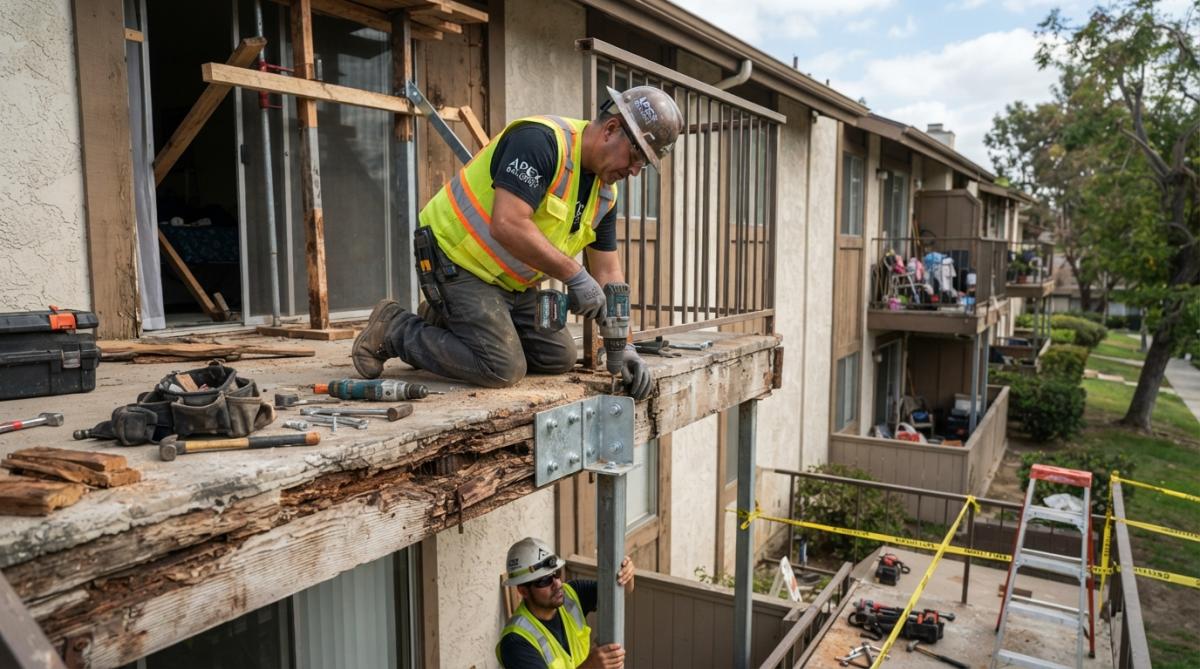
Close-up of a deteriorating balcony showing visible dry rot in wooden support beams, rust-streaked concrete, and corroded metal railings under direct sunlight

Signs of Immediate Structural Failure

Visible dry rot, water damage penetrating the building envelope, and corrosion of load-bearing components are structural emergencies. Residents seeing daylight through railing gaps, cracking or spalling deck surfaces, and significant rust on metal fasteners are red flags. Load-bearing element failures are most dangerous, if a balcony ledger board is pulling away from the building or support posts are visibly deteriorating, the entire structure could fail without warning. Water damage is particularly insidious because it works from the inside out; by the time visible damage appears, rot or corrosion may be far more extensive than surfaces suggest.

When to Close Off Elevated Exterior Elements

The moment you identify a potential structural defect, you have a legal and moral obligation to prevent resident access. Rope off the balcony, post warning notices, and document everything. California Civil Code requires that HOAs maintain common areas in safe condition. Allowing residents to use a defective balcony after discovering the problem opens your board to liability far beyond repair costs.

Watch Out
Allowing residents to use a balcony after discovering defects can result in personal injury lawsuits, regulatory fines, and board member personal liability. Document the date you discovered the issue and the date you restricted access. This timeline is critical evidence if a legal challenge arises.

SB 326 Compliance for HOAs and Emergency Situations

SB 326 applies to condominium projects and common interest developments built before January 1, 2018, requiring periodic inspection of elevated exterior elements with strict compliance timelines. If your building is subject to SB 326 and you discover a defect during normal operations, you must treat it as an emergency regardless of inspection cycles.

Inspection Frequency and Deadline Requirements

Under SB 326, HOAs must inspect buildings at least once every nine years. If a defect poses immediate safety threat, it must be addressed immediately or the area must be closed off. An emergency discovery resets these timelines, you must notify the board, notify residents, engage a qualified inspector or structural engineer, and begin remediation.

According to California Civil Code Section 5551 guidance, boards must document all communication regarding identified defects and repair timelines. This documentation is your primary defense if a resident is injured or regulators audit your compliance.

Pro Tip
Create a defect log tracking the date each issue was discovered, who discovered it, what action was taken, and when repairs were completed or scheduled. This simple document is invaluable evidence of your board’s diligence.

SB 326 vs. SB 721: Which Law Applies to Your Emergency

SB 721 applies to buildings constructed on or after January 1, 2018, with similar inspection requirements but different timelines. SB 326 covers older properties; SB 721 covers newer ones. Both laws require immediate action on defects posing safety threats.

RequirementSB 326SB 721
Applies toPre-2018 construction2018+ construction
Inspection frequencyEvery 9 yearsEvery 6 years initially, then 9 years
Emergency timelineImmediate or closureImmediate or closure
Qualified inspectorsStructural engineer, architect, civil engineerSame requirements
Report filingTo board and residentsTo board and residents
Key Takeaway
Don’t get caught up in which statute applies to your building. Focus on the core requirement: if there’s a safety threat, close it off immediately and get a professional assessment within days, not weeks.

Emergency Repair Protocols HOA Boards Must Follow

The moment a resident reports a structural defect or your maintenance team discovers one, your board enters emergency mode.

Immediate Steps When a Balcony Defect Is Discovered

First: secure the area by roping off the balcony, posting warning signs, and preventing resident access. Document the date, time, and nature of the defect with photos. Second: notify your board president and property manager immediately. Third: contact a qualified structural engineer or architect within 24 hours. Fourth: notify residents in writing that the area is closed and an assessment is underway. Fifth: follow up with your insurance carrier to report the potential claim.

This sequence takes less than a day to complete. Document every action: names of people contacted, dates and times of contact, and what was communicated. This paper trail protects your board if a resident later claims they weren’t notified or if a regulator questions your response time.

Engaging Licensed Professionals for Assessment

California law requires that balcony inspections be performed by a structural engineer, licensed architect, or civil engineer with appropriate experience. You cannot use a general contractor or property manager. The professional must be licensed in California and have demonstrated expertise in building envelope and structural issues.

When you contact a professional, be specific about the defect. Describe what you’ve observed, provide photos, and explain when it was discovered. Ask about availability and turnaround time for a written report. Most qualified engineers can provide preliminary assessment within days and detailed reports within two weeks. Expect to budget between $1,500 and $5,000 for an emergency assessment depending on building size and complexity.

HOA Balcony Repair Responsibility: Legal Obligations

HOA balcony repair responsibility is non-negotiable under California law. Your board has a fiduciary duty to maintain common areas in safe condition, including elevated exterior elements, regardless of how they’re classified in your CC&Rs. The law supersedes private agreements when public safety is at stake.

Common Interest Development Liability

A common interest development is any residential property with shared common areas and an HOA responsible for maintenance. Balconies are common areas unless exclusively attached to a single unit with explicit CC&R assignment to that unit owner. Even then, the HOA retains liability for structural integrity and safety code compliance.

California courts have consistently held that HOAs cannot escape liability for common area defects by delegating responsibility to residents. If a balcony collapses and injures someone, the injured party will sue the HOA, board members, property manager, and potentially the structural engineer. Your board’s best defense is demonstrating that you acted with urgency and competence the moment you became aware of a defect.

Watch Out
Board members can face personal liability if the board fails to act on known defects. Your personal homeowner’s insurance does not cover this exposure. Many boards carry directors and officers liability insurance specifically to protect against this risk.

Liability Protection Through Proper Documentation

The single most effective liability protection is documentation. When you discover a defect, document it. When you notify the board, document it. When you engage a professional, document it. When you receive the assessment report, document your board’s response. When you schedule repairs, document the timeline and scope of work. When repairs are completed, document the final inspection and sign-off.

This documentation demonstrates to regulators that your board acted in good faith and with appropriate urgency. It protects individual board members by showing they voted to address the issue promptly. Keep all documents, emails, photos, inspection reports, repair bids, contracts, and completion certificates in a centralized file accessible to your property manager and board president.

According to California Department of Consumer Affairs guidance on HOA responsibilities, boards that maintain detailed records of maintenance decisions and safety assessments are significantly less likely to face regulatory action or litigation.

HOA Emergency Reserve Funds for Balcony Repairs

Emergency balcony repairs can cost anywhere from $10,000 for minor structural work to $500,000 or more for comprehensive remediation. Most HOAs don’t have this level of cash on hand, which is why reserve planning is critical.

Cost Estimation and Budget Planning

The cost of emergency repairs depends on the scope of the defect. Small dry rot areas might cost $5,000 to $15,000. Complete balcony replacement for a multi-unit building could cost $200,000 to $500,000. Before you can budget, you need a professional assessment. The structural engineer’s report will identify the scope of work required and often provide repair cost estimates.

Once you have the scope and estimate, your board has several options: fund the repair from existing reserves, conduct a special assessment, or phase repairs over multiple years. Most boards choose a combination: use available reserves to address the most critical safety issues immediately, then fund the remainder through a special assessment or multi-year plan. Transparency is key, residents need to understand why the repair is necessary, what it will cost, and how the board plans to fund it.

Special Assessments vs. Reserve Fund Allocation

A special assessment is a one-time charge to residents to fund a specific repair. A reserve fund allocation is money already collected through regular dues and held for future maintenance. If your reserve study shows full funding, you may cover emergency repairs without assessment. If reserves are underfunded, you’ll likely need to assess residents.

Before proposing a special assessment, check your CC&Rs and state law. California law requires that HOAs provide residents with specific information about any proposed special assessment, including the reason, total cost, and amount per unit. Communicate early and often about the defect, safety implications, repair timeline, cost estimates, and funding options.

Pro Tip
Request a reserve study update specifically focused on balcony and elevated exterior element maintenance. This gives your board a baseline for planning and helps justify special assessments to residents and regulators.

Inspection and Reporting Requirements for Emergency Repairs

California law requires that all balcony inspections be documented in a written report provided to the board and residents.

Who Is Qualified to Perform Emergency Inspections

A structural engineer, licensed architect, or civil engineer with appropriate experience can perform the inspection. The professional must be licensed in California and have demonstrated expertise in building envelope issues, waterproofing, and structural assessment. When you contact potential inspectors, ask about their background, experience with residential buildings, balcony assessments, and familiarity with your building’s construction type and SB 326/SB 721 compliance.

The inspector assesses the current condition of elevated exterior elements, identifies defects, estimates severity, and recommends repairs. They should provide enough detail that a contractor can develop a repair plan based on their findings.

Documentation Standards and Compliance Records

The inspection report must include property identification, inspection date, scope of inspection, and inspector’s qualifications. It must describe each defect found, including location, apparent cause, and estimated severity, with photos or visual documentation of significant defects. For emergency situations, the report should clearly state whether the defect poses immediate safety threat.

Keep the inspection report in your permanent file. Provide a copy to residents as required by law. Attach it to board meeting minutes. The report is the foundation document for everything that follows.

According to California Homeowner Association Law requirements for inspection documentation, boards must retain all inspection reports and related correspondence for at least seven years.

Consequences of Delaying Emergency Balcony Repairs

The consequences of delaying emergency repairs extend far beyond repair costs. Boards that fail to act quickly face regulatory penalties, resident lawsuits, and in the worst cases, criminal liability.

Non-Compliance Penalties and Legal Exposure

If your board fails to comply with SB 326 or SB 721 inspection and repair requirements, the California Department of Consumer Affairs can impose fines reaching $500 to $1,000 per day for continued non-compliance. Residents can file complaints with local building departments or the state attorney general’s office, triggering investigations and enforcement actions.

More immediately, residents can sue the HOA for breach of fiduciary duty. If a resident is injured on a defective balcony that the board knew about but failed to repair, the HOA is liable for damages including medical expenses, lost wages, pain and suffering, and punitive damages if the board’s conduct was particularly egregious. Individual board members can also face personal liability.

Resident Safety and Liability Risk

The most serious consequence of delay is resident injury or death. A balcony collapse can cause multiple injuries or fatalities. Beyond catastrophic events, smaller injuries accumulate, a resident slips on deteriorated surface, another is hit by falling debris, a child’s arm goes through a gap in the railing. Each incident creates liability and could have been prevented if the board had acted on known defects.

The risk multiplies if your board received complaints about a defect and failed to act. A resident who reported a loose railing six months ago, whose complaint was ignored, and who is now injured on that railing, faces a much stronger lawsuit than one where the defect was recently discovered and immediately addressed.


Emergency balcony repairs for HOAs are not optional. They’re a legal requirement and fundamental responsibility of board membership. The moment you discover a structural defect in an elevated exterior element, close off the area immediately, engage a qualified professional within 24 hours, and move toward remediation with urgency. Apex Balcony provides professional inspections that identify structural defects early, helping your board avoid emergency situations altogether. Our licensed inspectors deliver detailed reports that document defects, assess severity, and recommend repairs, giving your board the clarity and credibility needed to act decisively. Book an inspection today and protect your residents and your board from the liability exposure that comes with delay.

Frequently Asked Questions

Who is responsible for emergency balcony repairs in an HOA?

HOA boards are typically responsible for repairs to common area balconies and elevated exterior elements under California Civil Code. The HOA must maintain these structures in a safe, habitable condition. Individual unit owners may be responsible only if the balcony is exclusive to their unit and designated as owner-maintained in the governing documents. Consult your CC&Rs and engage a licensed professional to clarify responsibility for your specific property.

What is the difference between SB 326 and SB 721 for emergency balcony repairs?

SB 326 applies to condominiums and common interest developments with three or more units built before January 1, 2020, requiring visual inspections of elevated exterior elements every nine years. SB 721 applies to residential buildings with six or more units built before January 1, 2008, with stricter inspection timelines. Both mandate periodic inspections and remediation of defects like waterproofing failures and load-bearing damage. Your emergency repair obligations depend on which law governs your property.

How should an HOA fund emergency balcony repairs?

HOAs can fund emergency repairs through existing reserve funds, special assessments, or a combination of both. A reserve study helps project future costs and guide budgeting. For true emergencies requiring immediate closure of balconies, boards may need to levy a special assessment to cover costs quickly. Consult your reserve study and financial advisor to determine the most appropriate funding mechanism while protecting the HOA's financial stability.

What steps should an HOA take immediately after discovering a balcony defect?

First, restrict resident access to the affected balcony or elevated exterior element to prevent injury. Second, notify residents and document the discovery in writing. Third, engage a licensed structural engineer, architect, or civil engineer to perform a visual inspection and assessment. Fourth, obtain a detailed inspection report documenting the defect, its severity, and recommended remediation. Finally, develop a timeline for repairs and communicate the plan to residents. Prompt action protects resident safety and demonstrates compliance with California Civil Code obligations.

Posted in BlogLeave a Comment on Emergency Balcony Repairs for HOAs: A Compliance Guide

Commercial Building Inspection: Complete Guide to Compliance

Posted on July 27, 2026 by Apex Balcony admin
Commercial Building Inspection: Complete Guide to Compliance

Table of Contents

  • What Is a Commercial Building Inspection?
    • How It Differs From Residential Inspections
  • What Do Commercial Inspectors Look For?
    • Major Building Systems and Components
  • Property Condition Assessment (PCA) and ASTM E2018 Standards
  • Commercial Property Inspection Checklist for Property Owners
    • Pre-Inspection Preparation Steps
  • Commercial Inspection Cost Breakdown and ROI Analysis
    • Understanding Pricing and Hidden Costs
    • Post-Inspection Negotiation Strategies
  • Commercial Building Code Violations and Risk Assessment
    • Common Defects and Safety Compliance Issues
  • Environmental and Specialized Add-On Inspections
  • How to Prepare for Your Commercial Building Inspection
    • Documentation and Access Requirements

Commercial Building Inspection: Complete Guide to Compliance

Last Updated: July 27, 2026

A commercial building inspection is a comprehensive assessment of a property’s structural integrity, mechanical systems, and code compliance, critical for protecting occupants and assets. Whether you’re purchasing, leasing, or managing a commercial property, understanding what inspectors evaluate and how to prepare can mean the difference between discovering costly problems early or facing expensive surprises after closing. This guide from Apex Balcony covers the full spectrum of commercial property inspections, from what inspectors look for to cost considerations and negotiation strategies.

ASTM International standards for property condition assessments

What Is a Commercial Building Inspection?

A commercial building inspection is a detailed visual examination of a property’s physical condition, performed by a licensed professional to identify defects, safety hazards, and code violations. Unlike residential inspections, commercial assessments evaluate larger, more complex building systems and must comply with specific standards like ASTM E2018.

The inspection typically covers the building envelope, structural components, HVAC systems, electrical panels, plumbing infrastructure, roofing systems, and fire safety systems. The inspector documents findings in a comprehensive Property Condition Report (PCR) or Property Condition Assessment (PCA), which becomes the foundation for negotiation, repair planning, and due diligence. Commercial inspections verify marketability, identify deferred maintenance, assess capital expenditure requirements, and ensure safety compliance. Many transactions require inspections before financing approval.

How It Differs From Residential Inspections

Commercial building inspections operate under different standards and scope than residential inspections. Key differences include:

  • Scope and complexity: Commercial properties have multiple HVAC zones, larger electrical systems, sophisticated fire suppression systems, and elevator infrastructure
  • Standards and regulations: Commercial inspections follow ASTM E2018 standards and address ADA compliance, building code violations, and commercial-specific safety requirements
  • Report depth: Commercial PCRs typically run 50-100+ pages; residential reports average 20-30 pages
  • Cost and timeline: Commercial inspections cost significantly more and take 1-3 days; residential inspections typically complete in 3-4 hours
  • Specialization: Commercial inspectors often hold additional certifications in specific systems and possess decades of construction experience

What Do Commercial Inspectors Look For?

Licensed commercial inspectors evaluate dozens of building components across multiple systems. Their primary mission is identifying defects that affect safety, functionality, or property value.

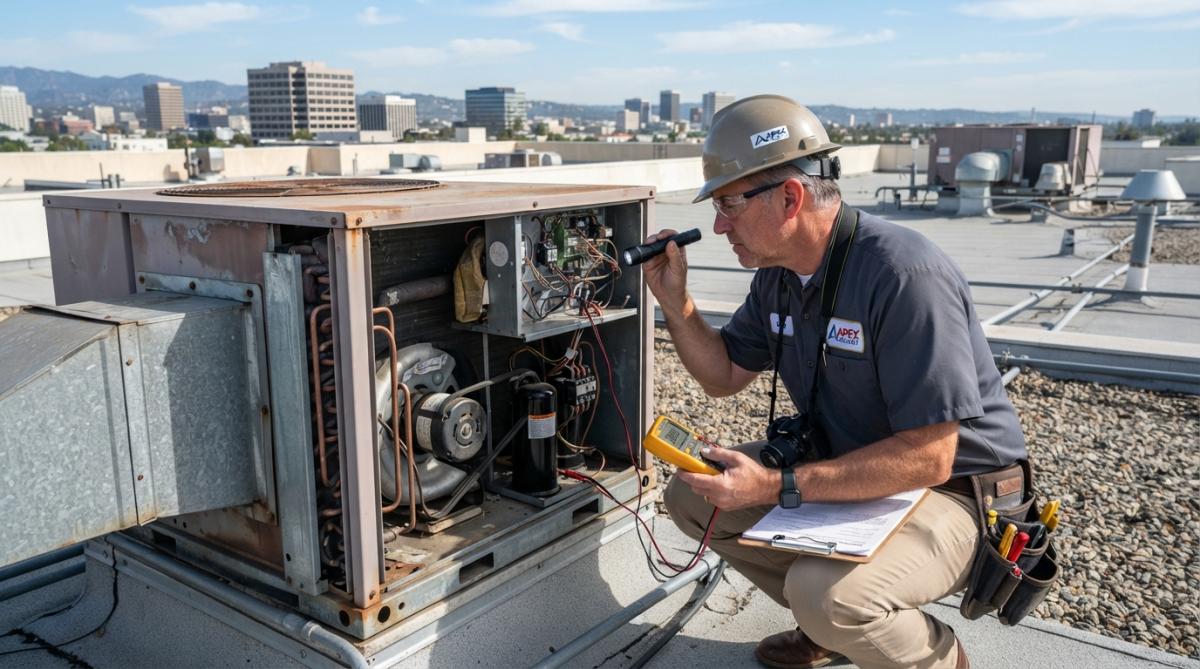
Licensed commercial building inspector using thermal imaging camera and moisture meter to examine HVAC systems and electrical panels in commercial property

The inspection begins with the building envelope, exterior walls, windows, doors, and roof that protect the interior. Inspectors assess for water intrusion, cracks, deterioration, and proper drainage. They examine the foundation for settling, cracks, or structural movement. Mechanical systems receive detailed scrutiny, including HVAC operation, electrical panel safety, and plumbing integrity.

Major Building Systems and Components

HVAC Systems: Age, maintenance history, capacity, refrigerant type, ductwork condition, and energy efficiency. Aging HVAC units often represent the largest capital expenditure.

Electrical Systems: Panel amperage, circuit breaker condition, grounding, bonding, code compliance, and capacity. Outdated panels create fire hazards and expensive upgrade requirements.

Roofing Systems: Material type, age, remaining useful life, flashing condition, gutters, and drainage. Roof condition directly impacts insurance costs and structural integrity.

Plumbing Infrastructure: Water supply lines, drain systems, hot water heaters, backflow prevention, and code compliance. Cast iron drain lines in older buildings frequently require replacement.

Fire Safety Systems: Sprinkler systems, fire alarms, emergency exits, egress pathways, and ADA accessibility. Code violations can result in occupancy restrictions.

Building Envelope: Exterior walls, windows, doors, insulation, and moisture barriers. Water intrusion is one of the costliest problems in commercial properties.

Structural Components: Foundation, load-bearing walls, columns, beams, and connections. Visible cracks or corrosion indicate serious concerns.

Property Condition Assessment (PCA) and ASTM E2018 Standards

A Property Condition Assessment follows the ASTM E2018 standard, which defines how professional inspectors evaluate commercial buildings. This standard ensures consistency, thoroughness, and defensibility of inspection findings.

ASTM E2018 divides building components into three categories: major building systems, site and grounds, and building envelope. Inspectors assess each component’s condition on a five-point scale: good, minor defects, major defects, failed, or not evaluated. The resulting Property Condition Report typically includes an executive summary, component-by-component assessment, estimated useful life for major systems, capital expenditure projections, photographs, and recommendations for further evaluation.

Many lenders and institutional investors require PCAs conducted to ASTM E2018 standards before approving financing. The report becomes a critical negotiation tool for requesting repair credits, rent reductions, or price adjustments.

ASTM E2018 standard specifications for property condition assessments

Commercial Property Inspection Checklist for Property Owners

Property owners preparing for a commercial building inspection should ensure access to all areas and have documentation ready. A thorough inspection typically requires 1-3 days depending on property size and complexity.

Pre-Inspection Preparation Steps

1. Provide building access and documentation (Complete 1 week before inspection)

  • Ensure inspectors can access the roof, basement, mechanical rooms, and all tenant spaces
  • Provide building blueprints, mechanical system manuals, and maintenance records
  • Supply a list of recent repairs, renovations, or system replacements

2. Notify tenants and facility staff (Complete 3-5 days before inspection)

  • Inform tenants of the inspection date and expected timeline
  • Coordinate with building engineers or maintenance staff
  • Arrange for someone to accompany the inspector and unlock spaces

3. Clear inspection areas (Complete 1-2 days before inspection)

  • Remove clutter from mechanical rooms, basement, and roof access points
  • Ensure electrical panels, HVAC units, and other major systems are visible and accessible

4. Compile system information (Complete before inspection)

  • Gather maintenance records for HVAC, electrical, plumbing, and roofing systems
  • Document recent capital improvements or repairs with dates and contractor information
  • Provide any previous inspection reports or engineering studies

5. Address obvious hazards (Complete 1 week before inspection)

  • Fix broken stairs, handrails, or egress pathway obstructions
  • Repair active leaks or water damage visible to inspectors
Preparation TaskTimelineOwner Responsibility
Provide access and documentation1 week beforeBuilding owner/manager
Notify tenants and staff3-5 days beforeBuilding manager
Clear inspection areas1-2 days beforeMaintenance staff
Compile system informationBefore inspectionOwner/property manager
Address obvious hazards1 week beforeMaintenance staff

Commercial Inspection Cost Breakdown and ROI Analysis

Commercial building inspection costs vary significantly based on property size, age, complexity, and location. Understanding pricing helps property owners budget appropriately and evaluate inspector qualifications.

Understanding Pricing and Hidden Costs

Inspection fees typically range based on building square footage. Smaller commercial properties (5,000-25,000 sq ft) cost less than large office buildings or multi-unit complexes. Age and condition also influence pricing, as older buildings with multiple systems require longer inspection time.

The real value lies in catching major defects before purchase. A $3,000-$5,000 inspection that identifies a $50,000 roof replacement need represents exceptional ROI. A thorough commercial building inspection takes time, typically 8-16 hours for mid-size properties. Additional costs to budget for include specialized inspections (mold testing, asbestos surveys, Phase I environmental assessments) at $1,000-$5,000 each and drone roof inspections for buildings over 5 stories.

Post-Inspection Negotiation Strategies

The Property Condition Report becomes your negotiation tool immediately after inspection. Buyers and tenants use documented defects to request concessions from sellers or landlords.

For buyers: Request a price reduction equal to 50-75% of estimated repair costs. For major systems nearing end of useful life (HVAC, roof, electrical panel), negotiate replacement allowances rather than price reductions.

For tenants: Use PCA findings to negotiate rent reductions or require landlords to complete repairs before lease commencement. Document deferred maintenance and safety violations to strengthen your negotiating position.

Prioritization strategy: Focus negotiations on major systems and safety-critical items: HVAC replacement timelines, roof condition, electrical safety, plumbing reliability, and structural integrity.

Commercial Building Code Violations and Risk Assessment

Building code violations represent legal and financial risk. Inspectors identify violations during assessment, which become leverage in negotiations and may trigger mandatory remediation.

Common Defects and Safety Compliance Issues

Fire safety violations rank among the most serious. Blocked egress pathways, missing or non-functional fire alarms, inadequate signage, or non-compliant sprinkler systems can result in occupancy restrictions or closure orders.

Electrical violations include improper grounding, overcrowded panels, missing disconnect switches, and non-compliant wiring. Older buildings frequently have electrical systems that don’t meet current code standards.

ADA compliance issues affect accessibility for people with disabilities. Missing ramps, inadequate handrails, inaccessible restrooms, or improper door widths constitute violations requiring legal remediation.

Structural defects include foundation cracks, settling, corrosion of load-bearing members, or connections that don’t meet current standards. Structural issues require professional engineering evaluation.

Water intrusion and moisture problems lead to mold growth, rot, and structural deterioration. Inspectors use moisture meters and thermal imaging to document these defects.

HVAC and ventilation inadequacies affect occupant comfort and indoor air quality. Undersized systems or improper ductwork create operational and health concerns.

Many building code violations can be corrected cost-effectively, but some require significant capital investment. The inspection report should specify which violations are mandatory (life safety) versus recommended improvements.

Environmental and Specialized Add-On Inspections

Standard commercial building inspections don’t include environmental assessment or specialized system evaluations. Property owners should consider add-on inspections based on property age, history, and intended use.

Phase I Environmental Site Assessment (ESA) evaluates the property’s environmental history and identifies potential contamination from previous industrial use or hazardous materials. Phase I assessments cost $1,500-$3,000 and are essential for any property with industrial history.

Asbestos surveys are critical for buildings constructed before 1980. Professional surveys identify asbestos-containing materials and assess removal or encapsulation needs. Surveys typically cost $800-$1,500.

Mold testing and assessment evaluate moisture conditions and identify mold growth. Testing costs $500-$2,000.

Radon testing measures radioactive gas levels in basements and lower levels. Testing costs $150-$500 and is recommended for properties in high-radon areas.

Lead paint assessment identifies lead-based paint in buildings constructed before 1978. Professional assessment and abatement planning cost $500-$2,000.

Structural engineering evaluation provides detailed analysis of foundations, load-bearing systems, and structural integrity. These specialized evaluations cost $2,000-$10,000 but provide confidence in structural soundness.

At Apex Balcony, we understand that comprehensive building assessment requires evaluating all systems. For California properties, specialized inspections often reveal compliance issues with SB 326 and SB 721 balcony safety laws, which require separate professional assessment of elevated exterior elements including balconies, decks, and stairways.

How to Prepare for Your Commercial Building Inspection

Successful inspections require coordination, access, and advance planning. Property owners and managers who prepare thoroughly get more thorough, accurate assessments.

Documentation and Access Requirements

Provide complete building access at least one week before the inspection date. Inspectors need access to roof areas, basement and crawl spaces, mechanical rooms, electrical panels, all tenant spaces, parking areas, and fire suppression system components.

Compile system documentation including original building blueprints, mechanical system manuals and warranties, maintenance records for HVAC, electrical, plumbing, and roofing, previous inspection reports, documentation of recent repairs or capital improvements, and permits and certificates of occupancy.

Prepare a building summary that includes year of construction and major renovations, square footage and number of units/tenants, major systems and their approximate age, known issues or areas of concern, and recent capital expenditures.

Schedule sufficient inspection time. A thorough commercial building inspection requires 8-16 hours for mid-size properties (25,000-100,000 sq ft) and 1-3 days for large or complex buildings.

Pro Tip
Provide inspectors with a detailed site map showing mechanical room locations, electrical panel access, roof access points, and utility shut-offs. This reduces inspection time and ensures no systems are missed.

Coordinate with building staff. Ensure maintenance personnel or facility managers are available to unlock mechanical rooms, demonstrate HVAC system operation, show electrical panel locations, explain recent repairs, and provide access to building systems documentation.

Notify tenants in advance. For multi-tenant buildings, provide written notice that inspectors will access tenant spaces. Most inspectors coordinate access to minimize disruption.

Address safety hazards. While inspectors expect to find defects, ensure basic safety by clearing pathways to inspection areas, ensuring roof access is safe, fixing broken stairs or handrails, and ensuring adequate lighting in mechanical spaces.

Watch Out
Delaying your commercial building inspection until after purchase or lease signing is a costly mistake. Once you’re legally obligated, you lose negotiating leverage and may be stuck with expensive repairs. Schedule inspections during the due diligence period when you still have options.

A thorough commercial building inspection protects your investment and identifies problems before they become crises. Whether you’re buying, leasing, or managing a commercial property, understanding the inspection process and preparing properly ensures you get accurate, actionable findings.

Apex Balcony specializes in comprehensive building assessments that go beyond standard inspections. Our licensed inspectors bring decades of construction and design experience to identify early signs of structural failure and safety compliance issues. For California properties, we provide specialized expertise in SB 326 and SB 721 balcony compliance, critical requirements that protect residents and prevent costly violations. Book an inspection with Apex Balcony today and get the detailed assessment your property deserves.

Frequently Asked Questions

What is included in a commercial building inspection?

A commercial building inspection covers structural integrity, HVAC systems, roofing, electrical panels, plumbing infrastructure, building envelope, fire safety systems, and ADA compliance. Inspectors perform visual assessments of all major building systems and components to identify defects and deferred maintenance. The scope depends on property type and whether you request specialized add-ons like environmental testing or balcony inspections per SB 326 or SB 721.

How much does a commercial building inspection cost?

Commercial inspection cost varies based on property size, age, complexity, and location. Factors affecting pricing include building square footage, number of units, system accessibility, and whether specialized inspections are needed. For accurate pricing tailored to your specific property, contact a certified inspector directly for a quote. Many inspectors offer free initial consultations to assess your property's needs.

Why is a Property Condition Assessment (PCA) important for commercial properties?

A Property Condition Assessment (PCA) provides a comprehensive Property Condition Report (PCR) documenting the current state of all building systems and identifying capital expenditure (CapEx) needs. This due diligence protects buyers and lenders by revealing deferred maintenance, safety risks, and structural issues before purchase. A PCA following ASTM E2018 standards ensures consistent, professional evaluation across all properties.

What are common commercial building code violations found during inspections?

Common violations include inadequate fire safety systems, electrical panel deficiencies, ADA non-compliance, structural integrity issues, and deferred maintenance on roofing or HVAC systems. Building code violations can result in fines, liability exposure, and costly emergency repairs. A certified inspector identifies these issues early, allowing property owners to plan repairs and maintain safety compliance before violations escalate.

How can I prepare my property for a commercial building inspection?

Provide inspectors with access to all areas including mechanical rooms, attics, and basements. Gather maintenance records, building permits, and previous inspection reports. Clear pathways and ensure utilities are accessible. Document any known issues or recent repairs. Having building systems accessible and documentation ready streamlines the inspection process and helps inspectors provide a thorough, accurate assessment of your commercial property.

Posted in BlogLeave a Comment on Commercial Building Inspection: Complete Guide to Compliance

Does Insurance Cover SB 721 Inspections? A 2026 Guide

Posted on July 26, 2026 by Apex Balcony admin
Does Insurance Cover SB 721 Inspections? A 2026 Guide

Table of Contents

  • Does Insurance Cover SB 721 Inspections?
    • Standard Homeowners and Commercial Policies
    • What Insurance Companies Actually Cover
  • How Non-Compliance Affects Your Insurance Coverage
    • Coverage Exclusions and Policy Language
    • Claims Denial Scenarios
  • SB 721 Compliance and Insurance Premiums
    • Risk Assessment and Underwriting Requirements
  • SB 721 Inspection Cost and Insurance Deductibles
    • What You’ll Pay Out of Pocket
  • SB 721 Deadlines and Insurance Policy Renewal
    • Missing Deadlines and Coverage Impact
  • SB 721 Penalties and Liability Exposure
    • Negligence Per Se and Insurance Liability
  • Actionable Checklist for Property Owners and Insurance Brokers
    • Steps to Protect Your Coverage
  • Conclusion

Does Insurance Cover SB 721 Inspections? A 2026 Guide

Last Updated: July 26, 2026

The question of whether insurance covers SB 721 inspections is one that building owners, property managers, and HOA boards face with increasing urgency. Most standard homeowners and commercial insurance policies do not cover the cost of SB 721 inspections themselves, though they may cover certain repairs that result from inspection findings. Understanding this distinction is critical because it directly affects your budget, timeline, and compliance strategy.

SB 721 inspections are a legal mandate in California requiring building owners to conduct comprehensive inspections of all exterior elevated elements, balconies, decks, stairways, and similar structures, every nine years. The inspection cost typically falls on the property owner. However, the relationship between these inspections and your insurance coverage is where confusion often begins.

Does Insurance Cover SB 721 Inspections? Standard Homeowners and Commercial Policies

Your homeowners or commercial general liability policy almost certainly does not cover the cost of the SB 721 inspection itself. Insurance companies view inspections as a preventative compliance measure and a cost of property ownership, not a covered peril or service.

What insurance may cover is the repair work that an inspection uncovers. If an inspector identifies dry rot, structural damage, water intrusion, or other defects in your balcony or deck, your policy may cover the cost to repair that damage, but only if the damage itself is a covered peril under your specific policy. The inspection fee is your responsibility. The repairs may be partially or fully covered, depending on what caused the damage and what your policy includes.

Standard commercial general liability policies typically exclude coverage for repairs related to building code violations or deferred maintenance. Since SB 721 repairs often involve correcting long-standing structural issues, insurers may deny claims on the grounds that the damage pre-existed the policy period or resulted from poor maintenance rather than a sudden, covered event.

What Insurance Companies Actually Cover

Insurance covers repairs to exterior elevated elements when the damage results from a sudden, accidental event that your policy specifically includes. A wind-driven rain event causing water intrusion into a balcony structure might be covered under your wind and water damage provisions. A tree falling on a deck might be covered under your property damage section. But if an inspector finds that your balcony’s ledger board has been slowly rotting for years because of poor waterproofing, that’s considered maintenance-related damage, and most insurers will deny the claim.

The language in your policy matters enormously. Many commercial policies contain explicit exclusions for structural defects, code violations, and maintenance-related repairs. Some policies exclude coverage for balconies and elevated structures altogether. A few insurers have begun adding specific SB 721 exclusions to new policies or renewals.

According to California Department of Consumer Affairs guidance on building safety laws, property owners are fully responsible for compliance costs. Read your policy carefully and look for specific language about balconies, decks, exterior structures, and maintenance exclusions.

How Non-Compliance Affects Your Insurance Coverage

Non-compliance with SB 721 doesn’t just expose you to legal penalties, it can directly jeopardize your insurance coverage entirely.

If your building fails an SB 721 inspection and you do not complete required repairs within the mandated timeline, your insurance company has grounds to deny future claims related to those defects. If an accident occurs on a non-compliant balcony and it comes to light that you knew about the defect and failed to repair it, your insurer can deny coverage outright and potentially pursue a bad-faith claim against you.

Professional illustration showing reviewing and property and manager concepts for insurance cover SB 721

Insurance companies conduct underwriting reviews periodically, especially at renewal time. If they discover that your property has outstanding SB 721 violations, they may refuse to renew your policy, increase your premiums significantly, or add exclusions that eliminate coverage for exterior elevated elements entirely.

Coverage Exclusions and Policy Language

Many insurers now include clauses stating that coverage is void if the property is not in compliance with applicable building codes. SB 721 is a building code requirement in California, which means non-compliance can trigger this exclusion. Some policies use language like "We will not pay for loss or damage resulting from failure to maintain the property in a safe condition" or "Coverage is excluded for any structure that violates local building codes."

A few insurers have begun requiring SB 721 compliance as a condition of coverage for multi-family residential properties. They may request a copy of your inspection report and proof of repairs before renewing your policy. If you cannot provide evidence of compliance, they will either decline to renew or exclude balconies and decks from your coverage entirely.

Claims Denial Scenarios

A building owner discovers water damage in a unit below a balcony and files a claim. The insurer investigates and finds an outstanding SB 721 violation on that balcony with an unrepaired compromised ledger board. The insurer denies the claim on the grounds that the damage resulted from a known code violation and deferred maintenance, not a sudden covered event.

Another scenario: a tenant is injured when balcony decking gives way. The insurer discovers during investigation that the building failed its SB 721 inspection two years prior and repairs were never completed. The insurer denies coverage under the policy’s exclusion for claims arising from code violations.

SB 721 Compliance and Insurance Premiums

Non-compliance directly affects your insurance costs. Insurers use risk assessment models that factor in building code violations, deferred maintenance, and structural defects. A property with an outstanding SB 721 violation is higher-risk in the eyes of underwriters.

Risk Assessment and Underwriting Requirements

When your policy comes up for renewal, your insurer will review your property’s risk profile. If SB 721 compliance is outstanding, this is a red flag. Underwriters will either decline to renew, add exclusions to your policy, or increase your premiums to reflect the elevated risk.

We’ve seen cases where property owners faced 15-30% premium increases simply because they had an outstanding SB 721 violation. In some cases, the increase was tied to a specific requirement: "We will renew your policy only if you complete SB 721 repairs within 90 days and provide proof of completion."

Conversely, completing your SB 721 inspection and repairs on schedule can actually improve your insurance standing. Some insurers offer modest discounts to properties that demonstrate proactive compliance with building codes. The key is timing: complete your inspection and any required repairs well in advance of your renewal date.

SB 721 Inspection Cost and Insurance Deductibles

If an inspection uncovers damage and your insurance covers the repairs, your insurance deductible applies to any covered repair claim. If your deductible is $2,500 and your insurance approves a $15,000 repair claim for balcony structural damage, you pay the first $2,500 and insurance covers the remaining $12,500. However, if the damage is deemed maintenance-related or a code violation, the entire claim is denied.

What You’ll Pay Out of Pocket

The real out-of-pocket costs for SB 721 compliance fall into three categories: the inspection itself, the repairs, and any insurance-related costs.

The inspection cost varies based on your property’s size and complexity. A small residential building might cost $1,500 to $3,000 for a complete inspection. These costs are 100% your responsibility.

Repair costs depend entirely on what the inspection finds. Some properties need minor repairs: re-caulking, waterproofing updates, or fastener replacements. Others need major structural work: ledger board replacement, deck rebuilding, or balcony reinforcement. Repair costs can range from a few thousand dollars to hundreds of thousands for large buildings.

If insurance covers a portion of repair costs, your deductible reduces the insurer’s payment. For example, if repairs cost $20,000 and insurance covers $18,000 (after determining that $2,000 was due to pre-existing maintenance issues), and your deductible is $2,500, you would pay $2,500 plus the $2,000 insurance won’t cover, for a total of $4,500 out of pocket.

SB 721 Deadlines and Insurance Policy Renewal

The timeline for SB 721 compliance and your insurance renewal are often misaligned, which creates a dangerous gap.

Missing Deadlines and Coverage Impact

SB 721 requires inspections to be conducted every nine years. The first cycle deadline for most properties was January 1, 2025. Subsequent inspections are due nine years later.

Your insurance policy renewal date is independent of your SB 721 deadline. The safest approach is to complete your SB 721 inspection and any required repairs at least 60-90 days before your policy renewal date. This gives your insurer time to update their records and factor compliance into their underwriting decision.

For properties with multiple buildings or units, managing deadlines becomes more complex. Keep detailed records of when each building’s inspection is due and when repairs must be completed. Communicate these dates to your insurance agent so they can anticipate any compliance-related underwriting changes.

SB 721 Penalties and Liability Exposure

Beyond insurance coverage, non-compliance with SB 721 carries direct legal and financial penalties.

Negligence Per Se and Insurance Liability

California courts recognize "negligence per se", if you violate a statute or building code, you are presumed negligent as a matter of law. SB 721 is a statute, so failure to comply can establish negligence automatically in a court proceeding.

If someone is injured on a non-compliant balcony and they sue you, the plaintiff’s attorney will argue that your failure to comply with SB 721 constitutes negligence per se. This makes your liability case much harder to defend. Your liability insurance may not cover claims arising from negligence per se, especially if the policy includes exclusions for code violations.

Local building departments can issue fines for SB 721 non-compliance, ranging from hundreds to thousands of dollars per violation. If a balcony collapse or serious injury occurs and it’s discovered that you knew about SB 721 violations and failed to address them, you could face criminal charges in extreme cases.

Actionable Checklist for Property Owners and Insurance Brokers

Steps to Protect Your Coverage

1. Know your SB 721 deadline
Determine when your property’s first SB 721 inspection was due. If your building was constructed before January 1, 2016, your deadline likely passed in 2025. If you missed it, schedule an inspection immediately.

2. Schedule your inspection 6-12 months before your insurance renewal
Getting ahead of the deadline gives you breathing room and ensures your insurer has time to update their records before renewal.

3. Review your insurance policy for SB 721 exclusions
Contact your insurance agent and ask specifically about coverage for balconies, decks, and exterior elevated elements. Ask whether your policy includes any exclusions related to building code violations or maintenance-related damage. Get the answer in writing.

4. Request a pre-inspection consultation with Apex Balcony
Before you commit to repairs, understand exactly what needs to be fixed and what the scope of work entails. This information helps you communicate more effectively with your insurance company and budget appropriately.

5. Document all inspection and repair work
Keep detailed records of your SB 721 inspection report, all repair invoices, contractor certifications, and any permits or sign-offs from your local building department. This documentation is proof of compliance.

6. Notify your insurance agent of compliance completion
Proactively send your agent a copy of your inspection report and proof of repairs. This signals good faith and gives your insurer a chance to update their underwriting file before renewal.

7. For multi-family properties, create a compliance calendar
If your property has multiple buildings with staggered inspection schedules, create a master calendar showing when each building’s inspection is due and when repairs must be completed.

8. Review your policy annually for changes
Review your policy documents annually to ensure you understand what’s covered and what’s not, especially as it relates to building code compliance.

StepTimelineResponsibilityInsurance Impact
Schedule inspection12 months before renewalProperty owner/managerDemonstrates proactive compliance
Complete inspection6-9 months before renewalLicensed inspectorIdentifies repairs needed
Arrange repairs3-6 months before renewalProperty owner/contractorReduces underwriting risk
Document completion60-90 days before renewalProperty ownerProvides proof of compliance
Notify insurer30-60 days before renewalInsurance agent/brokerUpdates underwriting file
Policy renewalOn scheduleInsurance companyReflects current compliance status

Conclusion

The answer to "does insurance cover SB 721 inspections" is no, the inspection cost is your responsibility. But non-compliance can void your coverage, trigger claim denials, increase your premiums, or result in policy non-renewal. Compliance demonstrates responsible property management and can actually improve your insurance standing.

The best strategy is to treat SB 721 compliance as an insurance issue, not just a regulatory issue. Schedule your inspection well before your policy renewal date, complete any required repairs, and communicate your compliance status to your insurer. This proactive approach protects your coverage and your residents.

Frequently Asked Questions

Does homeowners or commercial insurance cover the cost of SB 721 inspections?

Most standard homeowners and commercial property insurance policies do not cover the cost of SB 721 inspections. Inspections are typically considered a compliance obligation of the property owner or HOA, not an insurable loss. However, some property insurance carriers may cover repairs identified during inspections if structural damage is deemed a covered peril. Contact your insurance broker to review your specific policy language regarding inspection costs and repair coverage eligibility.

How does non-compliance with SB 721 affect my insurance premiums and coverage?

Non-compliance with SB 721 can significantly impact your insurance. Carriers may deny claims related to balcony or exterior elevated element failures if you failed to complete required inspections or repairs. Some insurers will increase premiums for non-compliant properties, refuse to renew policies, or exclude balcony-related coverage entirely. During underwriting, insurers assess SB 721 compliance status as part of their risk evaluation. Demonstrating completed inspections and timely repairs improves your underwriting profile and may help maintain or reduce premiums.

What happens if my building fails an SB 721 inspection, will my insurance cover the repairs?

Insurance coverage for repairs identified in an SB 721 inspection depends on the cause and your policy terms. If damage is from a covered peril (fire, wind, etc.), repairs may be covered after your deductible. However, if damage results from deferred maintenance, dry rot, termite damage, or structural deterioration, coverage is often excluded. More importantly, if your insurer discovers you knew about the damage and failed to repair it, they may deny the entire claim and cite negligence. Always disclose inspection findings to your broker and document your remediation timeline.

Can I use my insurance deductible to pay for SB 721 inspection and repair costs?

No, your insurance deductible applies only to covered claims (damage from specific perils). SB 721 inspection costs are a separate compliance expense paid directly by the property owner or HOA and cannot be claimed under your insurance policy. Repair costs may be eligible for insurance coverage only if the underlying damage qualifies as a covered loss. For budgeting purposes, treat inspection and preventive repair costs as separate line items from your insurance deductible. Consult your insurance broker to clarify which specific repairs might qualify for coverage under your policy.


SB 721 compliance protects your building, your residents, and your insurance coverage. At Apex Balcony, our licensed inspectors have decades of combined construction and design experience to identify structural defects early and guide you through the repair process. We help property owners in California stay compliant with SB 721 while minimizing disruption and cost. Book your inspection today and protect your property’s future.

Posted in BlogLeave a Comment on Does Insurance Cover SB 721 Inspections? A 2026 Guide

How to Request SB 721 Inspection Extension: Step-by-Step

Posted on July 25, 2026 by Apex Balcony admin
How to Request SB 721 Inspection Extension: Step-by-Step

Table of Contents

  • What is SB 721 and Why Extensions Matter
  • Understanding SB 721 Inspection Deadlines
    • The Six-Year Compliance Cycle
    • Why You Might Need an Extension
  • Step-by-Step: How to Request SB 721 Inspection Extension
    • Step 1: Verify Your Local Enforcement Agency
    • Step 2: Document Your Hardship Criteria
    • Step 3: Complete SB 721 Forms and Documentation
    • Step 4: Submit Your Extension Request
    • Step 5: Follow Up and Track Status
  • SB 721 Inspection Process and Timeline
    • What Happens During the Inspection
    • How Inspection Results Affect Extension Requests
  • Hardship Criteria: What Qualifies for an Extension
    • Financial Hardship
    • Permitting and Construction Delays
    • Other Documented Circumstances
  • SB 721 Penalties for Non-Compliance
    • Notice of Violation and Fines
    • Legal Liability and Tenant Rights
  • Appeals Process for Denied Extensions
    • How to File an Appeal
    • What Evidence Strengthens Your Appeal
  • Common Mistakes to Avoid When Requesting an Extension

Last Updated: July 25, 2026

What is SB 721 and Why Extensions Matter

SB 721 is California legislation requiring inspections of exterior elevated elements, balconies, decks, stairwells, and walkways, in residential buildings. The law mandates a rigorous inspection cycle to identify structural defects before they become safety hazards. Property managers often discover too late that requesting an extension requires specific documentation and timing. Missing the deadline carries serious consequences: fines, legal liability, and tenant rights violations.

The real challenge isn’t understanding the law itself. It’s managing the inspection process within compressed timelines while juggling construction permits, contractor availability, and financial constraints. Extensions exist precisely because these real-world obstacles are common, but they’re not automatic, you must request them properly with documented justification.

Key Takeaway
SB 721 extensions require formal requests submitted to your local enforcement agency before the deadline passes. Property owners who wait until the last moment often find their requests denied, leaving them in violation.

Understanding SB 721 Inspection Deadlines

The Six-Year Compliance Cycle

California’s SB 721 operates on a strict six-year inspection cycle. After your initial inspection, you must complete subsequent inspections every six years without fail. By year four or five, when you should be scheduling your next inspection, other priorities consume your attention. Contractors get booked months in advance. Permitting takes longer than expected. Before you realize it, you’re approaching the deadline with no inspection scheduled.

Why You Might Need an Extension

Several documented circumstances justify extension requests. Financial hardship is one: if your building has already incurred significant repair costs from a previous inspection cycle, requesting funds for a new inspection may legitimately strain your reserves. Permitting delays represent another valid reason, if your local building department has delayed issuing permits for corrective work from your last inspection, that delays your ability to complete the new inspection cycle.

Construction delays are common. A contractor may have backed out. Materials may be unavailable. Weather may have halted work on required repairs. The key distinction: an extension isn’t granted because you forgot or deprioritized the inspection. It’s granted because documented circumstances beyond your reasonable control prevented you from meeting the deadline.

Watch Out
Claiming hardship without documentation will result in denial. Your local enforcement agency requires proof: financial statements, contractor correspondence, permitting records.

Step-by-Step: How to Request SB 721 Inspection Extension

Step 1: Verify Your Local Enforcement Agency

Identify which agency enforces SB 721 in your jurisdiction. Enforcement is decentralized, your city or county building department handles it. Call your city’s planning or building department and ask specifically: "Who handles SB 721 inspection deadline extensions?" Get a name, department, and direct contact method.

Once you’ve identified the correct department, request their extension request form or procedure. Ask for the specific documentation they require with your request.

Property manager or building owner sitting at a desk reviewing SB 721 inspection documents and extension request forms with a laptop and file folders visible

Step 2: Document Your Hardship Criteria

This step determines whether your extension request succeeds or fails. You need written evidence supporting your claim.

For financial hardship, gather: your building’s reserve fund balance, invoices from your previous inspection cycle showing repair costs, quotes for the proposed inspection and corrective work, board meeting minutes discussing financial constraints, and any correspondence with lenders or insurers about financial limitations.

For permitting delays, collect: your original permit applications with submission dates, correspondence from the building department showing requests for additional information, inspection reports from your previous SB 721 cycle listing required corrective work, contractor letters explaining why permits are still pending, and timelines showing when permits were submitted versus when you expect approval.

For construction delays, document: original contractor agreements with completion dates, correspondence showing contractor withdrawal, new contractor bids and proposed timelines, material shortage documentation from suppliers, and weather reports if applicable.

Step 3: Complete SB 721 Forms and Documentation

Your local enforcement agency will specify which forms to complete. Regardless of format, your submission must include: your property address and assessor’s parcel number, current inspection cycle deadline date, specific reason for the extension request, how long you’re requesting (typically 90 to 180 days), attached supporting documentation, signature of property owner or authorized agent, and contact information for follow-up.

Write clearly and specifically. Instead of "we’re experiencing hardship," write: "Our building’s reserve fund balance is $47,000. Our previous SB 721 inspection cycle required $180,000 in corrective work. The proposed new inspection and corrective work will cost an estimated $165,000." Include dates, dollar amounts, and specific circumstances.

Step 4: Submit Your Extension Request

Submit your request well before your deadline, ideally 60 to 90 days in advance. Late submissions are often denied automatically.

Verify the submission method your agency accepts: email, in-person delivery, certified mail, or online portal. When you submit, request written confirmation of receipt. Use certified mail with return receipt requested if submitting by mail. Keep copies of everything you submit and document the submission date and method.

Step 5: Follow Up and Track Status

After submission, contact the enforcement agency seven days later to confirm receipt and ask about the expected decision timeline. Get a specific date when you can expect a response.

If you don’t receive a decision by the promised date, contact the agency again. Follow up in writing, creating a documented record of your attempts.

Once you receive a decision, if approved, get written confirmation of your new deadline. If denied, request specific reasons in writing.

Pro Tip
Many property owners miss follow-up deadlines because they assume an approved extension automatically extends everything. Your new deadline is binding. Mark it in your calendar and set reminders months in advance.

SB 721 Inspection Process and Timeline

What Happens During the Inspection

A qualified inspector, typically a structural engineer or architect licensed in California, will conduct a comprehensive visual inspection of all exterior elevated elements including balconies, decks, stairwells, and railings. The inspection takes several hours for most buildings. The inspector visually examines wood framing, connections, fasteners, waterproofing, and signs of deterioration, looking for wood decay, rust, loose connections, water intrusion, and structural movement.

The inspector will document findings with photographs and measurements, identifying defects and categorizing them by severity.

How Inspection Results Affect Extension Requests

If your previous inspection identified corrective work, your new inspection will assess whether that work was completed properly. Incomplete or inadequate corrective work from your last cycle will factor into your current extension request decision.

If you’re requesting an extension partly because you’re still completing corrective work from your previous inspection cycle, the enforcement agency will want to see evidence of that ongoing work. Contractor invoices, progress photos, and permit records help demonstrate active progress.

Hardship Criteria: What Qualifies for an Extension

Financial Hardship

Financial hardship is the most commonly cited reason for extensions and the most scrutinized. Claiming hardship without documentation gets denied immediately.

Your local enforcement agency evaluates financial hardship based on your building’s reserve fund status and the cost of inspection and corrective work relative to your reserves. If your reserve fund is depleted from previous inspection cycles or if completing the inspection would prevent you from maintaining required emergency reserves, you have legitimate financial hardship.

Document your building’s financial position with your latest reserve study or financial audit, showing the relationship between your reserve balance and estimated inspection and repair costs.

Permitting and Construction Delays

If your local building department is delaying permits for corrective work from your previous inspection cycle, you have grounds for an extension. Document all communication with the building department, showing dates when you submitted permit applications and current status.

Construction delays also qualify. If your contractor backed out, if you can’t find a qualified contractor, or if material shortages are preventing work completion, get written confirmation from contractors or suppliers explaining the delay.

Other Documented Circumstances

Extensions may be granted for other documented circumstances such as significant property damage from natural disaster or a major structural defect discovered during the inspection process that requires engineering analysis before corrective work can begin.

SB 721 Penalties for Non-Compliance

Notice of Violation and Fines

If you miss your inspection deadline without an approved extension, your local building department will issue a Notice of Violation, typically providing 15 to 30 days to cure the violation by scheduling your inspection.

If you don’t respond within the specified timeframe, the building department can impose fines ranging from several hundred to several thousand dollars per violation. Some jurisdictions impose daily fines that accumulate until compliance is achieved. Non-compliance also creates a record with your local building department affecting future permit applications and inspections.

Legal Liability and Tenant Rights

Non-compliance with SB 721 creates significant legal exposure. If a tenant is injured due to a defect in an exterior elevated element that should have been identified during an inspection, your failure to conduct that inspection on schedule strengthens the tenant’s liability claim.

Tenants can request inspection records and corrective work documentation. In some cases, tenants can file complaints with local enforcement agencies. Failure to maintain safe conditions violates California’s implied warranty of habitability, exposing your property to tenant lawsuits and mandatory repairs ordered by courts.

Appeals Process for Denied Extensions

How to File an Appeal

If your extension request is denied, you typically have the right to appeal that decision. Your local enforcement agency should provide appeal procedures in their denial letter.

Appeals usually involve submitting additional documentation to a higher authority within the building department or to a hearing officer. Address the specific reasons given for denial with stronger evidence.

What Evidence Strengthens Your Appeal

The strongest appeals include evidence directly contradicting the reason for denial. If denied because your hardship claim lacked documentation, submit comprehensive financial statements, reserve fund audits, and contractor correspondence.

If denied because the agency believed your circumstances were within your control, submit evidence showing external factors beyond your control. Consider including a letter from your property management company, board president, or legal counsel explaining the circumstances.

Common Mistakes to Avoid When Requesting an Extension

Submitting your request too close to the deadline is the most common mistake. Submissions arriving within 30 days of the deadline are often denied automatically.

Another frequent error is insufficient documentation. Vague claims get rejected. Many property owners also request extensions without identifying the correct agency or submitting to the right department. Before you submit anything, confirm you’re sending it to the correct department.

Failing to follow up after submission is critical. Silence doesn’t mean approval. You need written confirmation of your decision. Some property owners also request extensions without understanding what they’re requesting, specify the extension period you need and why that timeframe is necessary.

Finally, don’t assume an approved extension is permanent. Your new deadline is firm. You must complete your inspection by that new date or face the same penalties as missing the original deadline.


Requesting an SB 721 inspection extension requires careful planning, thorough documentation, and precise timing. The process isn’t complicated, but it demands attention to detail. Missing deadlines or submitting incomplete requests creates compliance violations that expose your property to fines, legal liability, and tenant disputes.

At Apex Balcony, our team of licensed inspectors helps property owners stay compliant with California’s SB 721 requirements. We conduct comprehensive inspections of all exterior elevated elements, identify structural defects early, and provide clear documentation for your records and your enforcement agency. Book your SB 721 inspection today and protect your property and residents.

Frequently Asked Questions

What is the deadline for SB 721 inspections, and can it be extended?

SB 721 requires exterior elevated element (EEE) inspections on a six-year cycle for multifamily rental properties. Yes, extensions are possible if you meet hardship criteria such as financial constraints, permitting delays, or documented construction complications. Contact your local enforcement agency to request an extension before your deadline passes. Extensions typically provide additional time to complete inspections and corrective work while maintaining compliance with building standards.

What hardship criteria qualify for an SB 721 inspection extension?

Common hardship criteria include significant financial hardship affecting your ability to fund inspections or repairs, delays in obtaining permits or approval from contractors, natural disasters or emergency circumstances, and documented structural complications requiring specialized engineering assessment. Your local enforcement agency evaluates each request individually. Document your specific circumstances thoroughly in your extension application, including financial statements, permit timelines, or contractor correspondence. Vague requests are more likely to be denied.

What are the penalties for not complying with SB 721 inspection deadlines?

Non-compliance with SB 721 inspection deadlines can result in notices of violation, civil penalties, and potential legal liability. Property owners face increasing fines if violations persist, and tenants may have grounds for legal action if safety hazards in exterior elevated elements cause injury. Building departments can escalate enforcement actions, and your property may face restrictions on new permits or certifications. Requesting an extension proactively is far less costly than facing penalties and potential litigation.

What forms and documentation do I need to submit for an SB 721 inspection extension request?

Required documentation typically includes a formal extension request letter addressed to your local enforcement agency, proof of hardship (financial statements, permit correspondence, contractor estimates), current property ownership documentation, and a detailed timeline explaining when you expect to complete the inspection. Some jurisdictions provide specific SB 721 forms and documentation templates on their websites. Contact your city or county building department directly to confirm their exact requirements, as forms vary by enforcement agency and jurisdiction.

Posted in BlogLeave a Comment on How to Request SB 721 Inspection Extension: Step-by-Step

SB 326 Non-Compliance: Insurance Implications Explained

Posted on July 24, 2026 by Apex Balcony admin
SB 326 Non-Compliance: Insurance Implications Explained

Table of Contents

  • Insurance Implications of SB 326 Non-Compliance: What You Need to Know
    • How Non-Compliance Affects Your Coverage
    • Premium Increases and Underwriting Risk
  • SB 326 Penalties and Risks for Property Owners
    • Daily Civil Fines and Escalating Liability
    • Negligence Claims and Third-Party Lawsuits
  • Coverage Exclusions: What Your Insurance Won’t Cover
    • Policy Language and Statutory Violations
    • Claims Denial Due to Non-Compliance
  • SB 326 Inspection Requirements and Deadlines
    • Inspection Timeline and Compliance Deadline
    • Licensed Structural Engineer and Architect Requirements
  • SB 326 Repair Costs and Financial Impact on Insurance
    • Reserve Fund Depletion and Financing Challenges
    • Impact on HOA and Condo Financing and Loan Approval
  • SB 326 Compliance Checklist for HOA Boards
    • Step-by-Step Compliance Actions
    • Documentation and Indemnification Strategy
  • Individual Unit Owner Insurance: HO-6 Policy Implications
  • Protecting Your Property: Risk Management and Remediation
    • Waterproofing and Structural Integrity Assessment
    • Remediation Planning and Lien Prevention

Last Updated: July 24, 2026

California’s SB 326 balcony inspection law creates complex compliance obligations for property owners and HOAs. Non-compliance doesn’t just expose you to fines, it can void coverage, trigger claims denials, and leave your property and residents at serious legal risk. This guide covers the real financial and legal consequences of SB 326 non-compliance through the lens of insurance risk.

How Non-Compliance Affects Your Coverage

Insurance companies treat SB 326 compliance as a material underwriting factor. When you apply for or renew general liability or property insurance, underwriters ask whether your building meets current safety codes and statutory requirements. Non-compliance raises a red flag because it signals unverified structural integrity in elevated exterior elements.

If your policy includes exclusions for statutory violations or negligent maintenance, non-compliance gives insurers explicit grounds to deny claims related to balcony failures. A balcony collapse or injury occurring while your building violates SB 326 may fall outside your coverage entirely.

Property manager reviewing insurance policy documents and SB 326 inspection reports at desk with concerned expression, natural office lighting
Watch Out
Failing to disclose SB 326 non-compliance on an insurance application can be treated as material misrepresentation, giving insurers grounds to cancel coverage retroactively and deny all related claims.

Premium Increases and Underwriting Risk

Once non-compliance is discovered, insurance costs rise sharply. Underwriters classify non-compliant properties as higher risk, translating to premium increases of 15-25% at renewal. Some insurers decline to renew coverage altogether, forcing you into the residual market where rates are significantly higher and coverage is more limited.

Insurers now conduct their own investigations into SB 326 status, sometimes hiring third-party inspectors to verify compliance before issuing or renewing policies. If they discover violations not disclosed in your application, they may cancel coverage retroactively or deny claims based on material misrepresentation.

For HOAs, this compounds the problem. If your building loses standard market coverage, individual unit owners’ HO-6 policies may also face coverage gaps, since those policies often exclude coverage for negligent HOA maintenance decisions.

SB 326 Penalties and Risks for Property Owners

SB 326 non-compliance carries escalating statutory penalties that compound over time. Daily civil fines start at $100 per day for failure to conduct required inspections by the statutory deadline. Fines escalate to $500 per day once a structural engineer or architect has identified hazardous conditions requiring repair. These penalties appear in public records, affecting your property’s marketability, refinancing ability, and insurance underwriting profile.

Negligence Claims and Third-Party Lawsuits

The real financial exposure comes from third-party liability. If someone is injured due to a balcony failure and your building was in violation of SB 326, you’re defending a negligence claim with a massive credibility problem. A plaintiff’s attorney will argue you had a statutory duty to inspect and maintain balconies, knew about that duty, and failed to fulfill it. If your insurance claim is denied due to non-compliance, you’re defending the negligence claim with no insurance coverage. Damages come directly from your building’s reserves or personal liability.

Coverage Exclusions: What Your Insurance Won’t Cover

Insurance policies contain specific exclusions for statutory violations. Most commercial general liability policies exclude coverage for claims arising from violations of law or regulation. SB 326 is a statute, if your building violates it and someone is injured as a result, the insurer can invoke this exclusion to deny coverage.

Some policies also include specific exclusions for "failure to maintain" or "deferred maintenance." Non-compliance with SB 326 inspection and repair requirements falls squarely within these exclusions.

Pro Tip
Review your commercial general liability policy specifically for language about statutory compliance, code violations, and maintenance failures. Request clarification from your broker about how SB 326 compliance status affects your coverage before a claims situation arises.

Claims Denial Due to Non-Compliance

When a claim is submitted and the insurer discovers your building was in violation of SB 326 at the time of loss, the denial process typically follows a predictable pattern. The insurer investigates the building’s compliance status by requesting inspection reports and remediation records. If those records don’t exist or show violations, the insurer’s claims counsel reviews the policy language and applies the statutory violation exclusion, issuing a reservation of rights letter. If the claim involves injury or property damage plausibly connected to the non-compliant condition, the insurer denies the claim, citing the statutory violation exclusion. At this point, you have limited recourse.

SB 326 Inspection Requirements and Deadlines

Understanding SB 326’s inspection timeline is essential because missing deadlines triggers both penalties and insurance complications.

Inspection Timeline and Compliance Deadline

SB 326 requires all buildings with exterior elevated elements (balconies, decks, stairways) to undergo structural inspection by a licensed structural engineer or architect. The inspection deadline depends on construction date:

  • Buildings constructed before January 1, 2018: First inspection required by January 1, 2025
  • Buildings constructed between January 1, 2018, and January 1, 2020: First inspection required by January 1, 2026
  • Buildings constructed after January 1, 2020: First inspection required by January 1, 2027

Subsequent inspections are required every six years from the most recent inspection date. Once hazards are identified, the property owner must notify residents and begin remediation planning. The law does not specify a repair deadline, but once hazards are identified, the daily civil fine escalates to $500 per day until repairs are complete.

Licensed Structural Engineer and Architect Requirements

SB 326 specifies that inspections must be conducted by a licensed structural engineer or architect. An unlicensed inspector’s report carries no legal weight and does not satisfy the statutory requirement. The inspector must prepare a written report describing each exterior elevated element, its current condition, and any structural hazards. The report must be signed and stamped by the licensed professional and becomes part of your building’s permanent record, discoverable in any subsequent litigation.

SB 326 Repair Costs and Financial Impact on Insurance

Once an inspection identifies deficiencies, repair costs accumulate rapidly. The financial impact extends beyond direct repair costs to affect your building’s financing, reserve fund, and insurance profile.

Reserve Fund Depletion and Financing Challenges

Balcony repairs are expensive. Waterproofing, structural reinforcement, and component replacement can cost thousands of dollars per unit. For a 50-unit building, total remediation costs can easily exceed $500,000. HOAs typically fund repairs through special assessments or reserve fund withdrawals. If your building has inadequate reserves, you’ll need to impose a special assessment on unit owners. Reserve fund depletion creates a secondary problem: buildings with depleted reserves struggle to obtain financing.

Impact on HOA and Condo Financing and Loan Approval

Lenders now include SB 326 compliance as a condition of loan approval. When an HOA applies for financing, the lender requires proof of SB 326 compliance. If your building is non-compliant, the lender will deny the application or require completion of all outstanding inspections and repairs before funding is released. For individual unit owners seeking to purchase or refinance, the building’s SB 326 status affects their ability to obtain financing. Breaking this cycle requires taking action on inspections and remediation.

SB 326 Compliance Checklist for HOA Boards

Compliance requires systematic action. The following checklist outlines key steps your HOA board should take to meet SB 326 requirements and minimize insurance risk.

Step-by-Step Compliance Actions

  1. Determine your inspection deadline. Review your building’s construction date and confirm which SB 326 deadline applies. Mark the deadline on your board calendar and set a reminder at least 90 days before.

  2. Obtain quotes from licensed inspectors. Contact multiple licensed structural engineers or architects with SB 326 experience. Request itemized quotes including scope, timeline, and deliverables.

  3. Schedule the inspection. Book well in advance of your deadline. Licensed professionals often have full schedules, and waiting until the last minute may result in missed deadlines.

  4. Prepare for the inspection. Ensure all exterior elevated elements are accessible. Remove obstacles, stored items, or debris that might prevent thorough inspection.

  5. Receive and review the inspection report. Obtain a copy of the signed report. Review findings with your board and legal counsel. Understand which conditions are classified as hazardous.

  6. Develop a remediation plan. For identified hazards, create a written plan specifying repairs needed, estimated cost, timeline, and funding mechanism. Communicate this plan to residents.

  7. Obtain repair quotes. Contact licensed contractors specializing in balcony and deck repairs. Obtain multiple quotes and compare pricing, timeline, and warranty terms.

  8. Complete repairs and document compliance. Once repairs are complete, obtain signed certifications from the contractor and licensed professional. Maintain copies in your building’s permanent record.

Compliance StepTimelineResponsible PartyDocumentation
Determine deadlineImmediatelyBoard SecretaryBoard resolution confirming deadline
Obtain inspector quotes90 days before deadlineProperty ManagerWritten quotes from 3+ inspectors
Schedule inspection60 days before deadlineProperty ManagerInspection agreement and confirmation
Conduct inspectionBy statutory deadlineLicensed ProfessionalSigned inspection report
Review findingsWithin 2 weeks of reportBoard + Legal CounselBoard meeting minutes documenting review
Develop remediation planWithin 30 days of reportBoard + ContractorWritten remediation plan with cost estimates
Complete repairsWithin 6-12 monthsLicensed ContractorContractor certification and lien release
Document complianceUpon completionProperty ManagerMaster file with all inspection and repair records

Documentation and Indemnification Strategy

Documentation is your defense. In any claims situation or regulatory inquiry, your paper trail proves you acted reasonably and in good faith to comply with SB 326.

Maintain a master file that includes: board resolutions authorizing the inspection and repairs, copies of the inspection agreement and inspection report, all contractor quotes and selection rationale, repair contracts and change orders, completion certifications and lien releases, proof of special assessments or reserve fund withdrawals, and resident communications about the inspection and repairs.

Consider obtaining an indemnification agreement from your contractor specifying that the contractor is responsible for any defects in workmanship or materials and will defend and indemnify the HOA for any claims arising from the contractor’s work.

Individual Unit Owner Insurance: HO-6 Policy Implications

Individual unit owners in condominiums carry HO-6 insurance covering personal property, personal liability, and unit improvements. However, HO-6 policies typically exclude coverage for claims arising from HOA-level negligence or breach of statutory duty. If your HOA fails to comply with SB 326 and a resident is injured as a result, the resident’s HO-6 policy will likely deny coverage for any personal liability claim arising from the HOA’s negligence. Individual unit owners need to understand that the HOA’s SB 326 compliance directly affects their personal insurance coverage and liability exposure.

Protecting Your Property: Risk Management and Remediation

Beyond compliance, a proactive risk management approach minimizes the likelihood of catastrophic failures and the insurance complications that follow.

Waterproofing and Structural Integrity Assessment

Balcony failures often begin with water intrusion. Water penetrates the concrete or wood structure, corrodes reinforcing steel, and compromises structural integrity. Waterproofing maintenance is preventive and far less expensive than structural repair. A licensed structural engineer can assess the current condition of waterproofing systems and recommend maintenance or replacement. Incorporating waterproofing maintenance into your building’s annual maintenance budget is cost-effective risk management.

Remediation Planning and Lien Prevention

Once repairs are identified, timely remediation is essential. Delays increase costs, compound liability exposure, and trigger escalating SB 326 penalties. Develop a realistic remediation timeline accounting for contractor availability, financing, and resident coordination. Protect your building from mechanic’s liens by ensuring contractors are paid promptly and lien releases are obtained before final payment. Keep your insurer informed of the remediation plan and progress to demonstrate good faith and help preserve coverage if a claim arises during remediation.


SB 326 compliance isn’t optional, and the insurance implications of non-compliance are severe. The combination of coverage exclusions, claims denials, premium increases, and statutory penalties creates financial and legal exposure far exceeding the cost of compliance. Apex Balcony provides professional inspection services that identify structural hazards early, document compliance for your insurer, and give you a clear roadmap for necessary repairs. Our licensed inspectors have decades of combined construction and design experience and specialize in helping HOA boards and property owners navigate the SB 326 inspection process with confidence. Book an inspection today and protect your property, your residents, and your insurance coverage.

Frequently Asked Questions

What are the penalties for SB 326 non-compliance?

California law imposes daily civil fines ranging from $100 to $500 per day for non-compliance with SB 326. These fines accumulate continuously until the property achieves compliance. Beyond financial penalties, non-compliance exposes HOAs and property owners to negligence liability if balconies or exterior elevated elements fail, potentially resulting in third-party lawsuits. Insurance coverage may also be denied if claims stem from statutory violations, leaving owners personally liable for damages.

Can SB 326 non-compliance lead to increased insurance premiums?

Yes. Insurance underwriting explicitly considers SB 326 compliance status during policy renewal or new applications. Non-compliant properties are viewed as higher risk, leading to premium increases, stricter coverage terms, or policy cancellations. Lenders and financial gatekeepers also flag non-compliance during loan approval processes, which can trigger additional insurance requirements or denial of financing. Compliance demonstrates risk management and can help stabilize or reduce premium costs.

Will my HOA's insurance cover damages if we are not SB 326 compliant?

General liability insurance policies often include exclusions for claims arising from statutory violations or negligence related to building code non-compliance. If a balcony collapse or injury occurs and your property is not SB 326 compliant, insurers may deny coverage based on policy language that excludes liability for violations of law. This leaves your HOA and individual unit owners personally responsible for repair costs, medical claims, and legal fees, potentially reaching hundreds of thousands of dollars.

What should my HOA do to ensure SB 326 compliance and protect insurance coverage?

Begin with a professional inspection by a licensed structural engineer or architect to assess all exterior elevated elements. Document the inspection report and share findings with your insurer to demonstrate due diligence. Develop a remediation plan with timelines and budget estimates. Notify your insurance carrier of compliance efforts, this signals active risk management and may prevent coverage denials. Maintain detailed records of all inspections, repairs, and communications. Consult your property management company and legal counsel to ensure CC&R compliance and proper indemnification clauses in contracts.

Posted in BlogLeave a Comment on SB 326 Non-Compliance: Insurance Implications Explained

What Happens If HOA Misses Deadline: Legal Consequences

Posted on July 23, 2026 by Apex Balcony admin
What Happens If HOA Misses Deadline: Legal Consequences

Table of Contents

  • What Happens When an HOA Misses a Deadline
    • Types of HOA Deadlines That Matter
  • HOA Legal Obligations Regarding Deadlines
    • Statutory Requirements and Governing Documents
    • Board Responsibility vs. Property Management Company Role
  • Immediate Consequences When Deadlines Are Missed
    • Delayed Inspections and Safety Compliance Issues
    • Financial and Operational Impacts
  • Homeowner Rights Against HOA for Missed Deadlines
    • Right to Demand Transparency and Accounting Records
    • Right to Due Process and Notice
  • HOA Dispute Resolution: Steps to Address Missed Deadlines
    • Informal Resolution and Board Communication
    • Formal Complaint and Mediation Options
  • Statute of Limitations for HOA Deadline Violations
  • Preventative Measures: How to Protect Your Property
    • Staying Informed and Monitoring HOA Compliance
    • Mandatory Inspections and Early Action
  • Conclusion

What Happens If HOA Misses Deadline: Legal Consequences

Last Updated: July 23, 2026

When an HOA misses a critical deadline, the consequences ripple through the entire community. Missing HOA deadlines isn’t just a paperwork problem, it can trigger cascading legal obligations, expose the association to lawsuits, damage homeowner credit, and compromise resident safety. At Apex Balcony, we understand how compliance deadlines, especially those related to safety inspections like California’s SB 326 and SB 721 requirements, directly impact property owners and homeowners alike.

What Happens When an HOA Misses a Deadline

The impact of a missed HOA deadline depends on which deadline was missed. Some deadlines are administrative, like filing annual reports. Others are safety-critical, like completing mandatory building inspections. When an HOA misses safety compliance deadlines, the stakes become considerably higher than a late fee.

The most serious consequences occur when an HOA fails to meet statutory inspection deadlines. In California, SB 326 and SB 721 require building owners to conduct balcony and elevated exterior element inspections on specific timelines. Failure to complete these inspections by the deadline can result in fines, loss of insurance coverage, and personal liability for board members. A missed inspection deadline also delays necessary repairs, leaving residents in potentially unsafe conditions.

Watch Out
If your HOA misses a safety inspection deadline, you’re now operating in violation of state law. This creates personal liability for board members and can result in fines up to several thousand dollars per day of non-compliance.

Common HOA deadline misses include failure to deliver financial statements to homeowners, missing deadlines to respond to homeowner record requests, failure to provide proper notice before special assessments, missing property tax filing deadlines, and neglecting to renew insurance policies before expiration.

Types of HOA Deadlines That Matter

Not all HOA deadlines carry equal weight. Understanding which deadlines are truly critical helps you know when to escalate concerns to your board.

Statutory Deadlines are mandated by state law or local ordinance and are non-negotiable. In California, SB 326 and SB 721 deadlines for balcony and structural inspections are statutory requirements. Missing these deadlines means the HOA is operating in violation of state law.

Governing Document Deadlines are established in your HOA’s CC&Rs (Covenants, Conditions, and Restrictions), bylaws, and rules. These might include when the board must hold annual meetings or when homeowners must receive notice of rule changes. Violating these deadlines can expose the association to claims of breach of contract.

Contractual Deadlines are created through agreements between the HOA and vendors or contractors. Missing a deadline to approve contractor work or pay for services can result in liens or work stoppages.

Administrative Deadlines include filing annual reports with the state, renewing licenses, or submitting tax documents. Missing them can result in penalties or loss of corporate standing.

Key Takeaway
The most dangerous missed deadlines are safety-related statutory requirements. These carry potential for fines, personal liability for board members, and resident harm, making them the highest priority for any HOA to track.

HOA Legal Obligations Regarding Deadlines

The HOA board has a fiduciary duty to the community, including managing deadlines responsibly and ensuring that statutory, contractual, and governing document obligations are met. When an HOA misses deadline requirements, the board has breached this fiduciary duty, exposing individual board members to personal liability.

According to California Department of Consumer Affairs guidance on HOA responsibilities, HOA boards are required to maintain records, provide financial transparency, and comply with all applicable state and local laws.

Statutory Requirements and Governing Documents

State law sets the floor for HOA obligations. In California, the Davis-Stirling Common Interest Development Act establishes minimum standards for HOA operations, including deadlines for providing financial statements, responding to homeowner requests, and conducting required inspections. Your HOA’s CC&Rs and bylaws may add additional deadlines on top of state requirements. The more restrictive deadline applies.

Board Responsibility vs. Property Management Company Role

Many HOAs hire property management companies to handle day-to-day operations, including tracking deadlines. However, hiring a property manager does NOT transfer the board’s legal responsibility. The board remains accountable for all missed deadlines, even if the property manager failed to track them. If your property management company causes an HOA to miss deadline obligations, the board can pursue a negligence claim against the management company, but homeowners can still sue the board for the consequences.

Pro Tip
If you suspect your property management company is responsible for a missed deadline, request a written timeline of when the deadline was due, when it was discovered to be missed, and what actions were taken. Document everything, this evidence will be critical if you need to pursue a claim later.

Immediate Consequences When Deadlines Are Missed

The moment an HOA misses a deadline, consequences begin accumulating.

Delayed Inspections and Safety Compliance Issues

When an HOA misses the deadline for mandatory safety inspections, residents remain in potentially unsafe conditions. In California, if an HOA fails to complete SB 326 or SB 721 inspections by the deadline, the association cannot legally allow residents to occupy those units until the inspection is complete and any necessary repairs are made. If an accident occurs, such as a balcony collapse, the failure to meet the inspection deadline becomes evidence of negligence. Delayed inspections also delay identification of problems that need repair, and the cost difference between routine maintenance and emergency repairs can easily be hundreds of thousands of dollars.

Financial and Operational Impacts

Missing financial reporting deadlines creates immediate legal problems. If an HOA misses the deadline to provide homeowners with annual financial statements, the association is in violation of state law. Homeowners can file complaints with the state attorney general, and the board can face personal liability.

Missing assessment payment deadlines or assessment collection deadlines also carries consequences. If the HOA misses the deadline to send out assessment notices, the assessment itself may become invalid. If the HOA misses the deadline to place a lien on a property for unpaid assessments, the HOA may lose its right to collect that debt entirely.

Insurance deadlines are critical. If an HOA misses the deadline to renew its liability insurance policy, the association is operating uninsured. If an accident occurs during the uninsured period, the HOA and board members are personally liable for all damages.

Homeowner Rights Against HOA for Missed Deadlines

When an HOA misses deadline obligations, homeowners have legal recourse.

Right to Demand Transparency and Accounting Records

State law gives homeowners the right to inspect HOA financial records and accounting documents. If the HOA fails to provide these records within the deadline specified by law (typically 10 business days), homeowners can file a complaint and potentially pursue legal action. Homeowners have the right to know whether the HOA is meeting its obligations and what liability the HOA is incurring by delays.

Right to Due Process and Notice

Before the HOA can impose penalties for a missed deadline, homeowners have the right to due process. However, this right applies primarily to homeowner violations, not HOA violations. When the HOA itself misses a deadline, homeowners must pursue their remedies through legal action.

California Civil Code Section 5200 on HOA member rights establishes baseline rights for HOA members, including the right to inspect records and attend meetings. When an HOA misses deadline obligations that prevent homeowners from exercising these rights, the violation is particularly serious.

HOA Dispute Resolution: Steps to Address Missed Deadlines

If your HOA has missed a critical deadline, you have several options for addressing the situation.

Process diagram showing steps for hoa misses deadline

Informal Resolution and Board Communication

The first step is to communicate directly with the board. Write a letter to the board president clearly stating which deadline was missed, when it was due, what it required, what consequences the missed deadline is creating, and what action you’re requesting. Keep this letter factual and professional. Many boards miss deadlines because they simply didn’t realize the deadline existed or didn’t understand its importance.

Pro Tip
Send your letter to the board via certified mail, not email. Certified mail creates a documented record that the board received your letter on a specific date. This matters if you later need to prove the board had notice of the problem.

Formal Complaint and Mediation Options

If informal communication doesn’t work, you can file a formal complaint with the state attorney general or your state’s Department of Consumer Affairs. Many states offer mediation services specifically designed to resolve HOA disputes. Mediation is typically faster and less expensive than litigation. A neutral third party helps both sides communicate and reach a resolution.

Statute of Limitations for HOA Deadline Violations

How long do you have to pursue a claim against your HOA for missing a deadline? For contract-based violations (missed deadlines in the CC&Rs or bylaws), the statute of limitations is typically 3-4 years from the date you discover the violation. For statutory violations, the statute of limitations varies by state but is often 2-4 years.

Don’t wait. The longer you wait to pursue a claim, the harder it becomes to prove damages. If the HOA misses a safety inspection deadline, the longer the delay, the greater the potential for resident harm. Some deadlines have "revival" provisions. If an HOA misses a deadline to file a lien for unpaid assessments, the deadline to file that lien may pass entirely, and the HOA loses its right to collect the debt.

Preventative Measures: How to Protect Your Property

The best way to deal with missed HOA deadlines is to prevent them from happening in the first place.

Staying Informed and Monitoring HOA Compliance

Request a copy of the HOA’s deadline calendar from the board or property manager. This calendar should list all state-mandated deadlines, deadlines in the CC&Rs and bylaws, contractual deadlines with vendors, and renewal dates for insurance and licenses. Review this calendar quarterly. Attend board meetings regularly and request copies of board meeting minutes and financial statements as soon as they’re available.

Mandatory Inspections and Early Action

For safety-related deadlines like building inspections, don’t wait for the HOA to act. If your building is subject to SB 326 or SB 721 requirements in California, track the inspection deadline yourself. If the HOA appears to be falling behind on an inspection deadline, contact a qualified inspection company early. At Apex Balcony, we work with hundreds of building owners managing compliance with California’s balcony and structural safety requirements. Early planning ensures inspections are completed on time, problems are identified before they become emergencies, and repairs can be scheduled efficiently.

Don’t assume the HOA is handling the inspection. Many HOAs discover too late that they’ve missed the deadline entirely. By the time you find out, you may be in violation of state law, facing fines, and unable to occupy certain units. Taking the initiative to confirm the inspection is scheduled and tracking progress protects you and your neighbors.

California SB 326 and SB 721 compliance requirements establish specific timelines for balcony inspections. These deadlines are non-negotiable, and the consequences of missing them are serious. If your HOA hasn’t scheduled an inspection yet and the deadline is approaching, contact a professional inspection company immediately.

Deadline TypeTypical ConsequenceWho Bears CostPrevention Method
Safety inspection (SB 326/721)Fines, liability, unsafe conditionsHOA and residentsTrack deadline, hire inspector early
Financial reportingHomeowner complaints, state investigationBoard members personallyMaintain accounting system, hire bookkeeper
Assessment collectionLoss of lien rights, uncollected debtHOA (reduced funds)Send notices on schedule, track deadlines
Insurance renewalUninsured liability exposureBoard members personallyCalendar renewal dates, set reminders
Record provisionHomeowner legal claimsBoard and HOAEstablish document management system

Conclusion

When an HOA misses deadline obligations, the consequences extend far beyond paperwork. Safety inspection deadlines directly affect resident well-being. Financial reporting deadlines determine whether homeowners have transparency into how their money is being spent. Assessment collection deadlines determine whether the HOA can fund necessary repairs.

If your building is facing a compliance deadline, especially for safety inspections required by California law, don’t wait for the HOA to act. Apex Balcony specializes in helping building owners and HOAs complete SB 326 and SB 721 inspections on schedule, with licensed inspectors who identify early signs of structural failure and provide clear, actionable repair recommendations. Our team has worked with hundreds of properties to ensure compliance, prevent liability, and protect resident safety.

Book an inspection with Apex Balcony today and ensure your property stays compliant with California’s balcony and structural safety requirements.

Frequently Asked Questions

What are the main legal consequences when an HOA misses a deadline?

When an HOA misses a deadline, consequences depend on the deadline type. For inspection deadlines (such as those required under state balcony safety laws), missed deadlines can result in regulatory fines, loss of liability protection, and exposure to lawsuits if injuries occur. For assessment or financial deadlines, homeowners may face delayed services, reserve fund depletion, and potential special assessments. The HOA's governing documents and state statutory requirements define specific penalties and remedies available to homeowners.

What homeowner rights against HOA violations exist for missed deadlines?

Homeowners have several rights when an HOA misses deadlines. These include the right to demand transparency and access to accounting records, the right to receive proper notice before enforcement actions, and the right to due process in dispute resolution. Depending on state law and the governing documents, homeowners may file complaints with regulatory agencies, pursue mediation, or take legal action for breach of fiduciary duty. Many states allow homeowners to recover attorney fees and damages if the HOA acted in bad faith or violated statutory requirements.

How long do homeowners have to pursue HOA dispute resolution for missed deadlines?

The statute of limitations for HOA deadline violations varies by state and the type of violation. Generally, homeowners have between two to four years from the date of the missed deadline or discovery of the violation to file a claim. However, statutes of limitations differ for breach of contract, negligence, and statutory violations. It is critical to consult local HOA law or an attorney in your state to determine the applicable deadline for your specific situation, as waiting too long can bar your legal remedies.

Can an HOA be held liable for failing to schedule required safety inspections on time?

Yes, an HOA can be held liable for failing to meet inspection deadlines, particularly for mandatory safety inspections required by state law (such as balcony inspections under SB 326 or SB 721 in California). If the HOA's missed deadline results in injury, property damage, or regulatory fines, homeowners and injured parties may pursue claims for negligence, breach of fiduciary duty, or violation of statutory duties. The HOA's liability insurance may or may not cover such failures, depending on policy terms. Homeowners should document all missed deadlines and their consequences to support potential claims.

Posted in BlogLeave a Comment on What Happens If HOA Misses Deadline: Legal Consequences

Why Balcony Inspections Are Mandatory in California: 2026 Guide

Posted on July 22, 2026 by Apex Balcony admin
Why Balcony Inspections Are Mandatory in California: 2026 Guide

Table of Contents

  • Why Balcony Inspections Are Mandatory in California: The Legal Foundation
    • The Berkeley Balcony Collapse: The Catalyst for SB 721 and SB 326
    • How These Laws Protect Residents and Property Owners
  • SB 721 vs SB 326 California: Understanding Which Law Applies to Your Property
    • SB 721: Multifamily Rental Properties and Condominium Associations
    • SB 326: HOAs and Common Interest Developments
    • Determining Which Law Governs Your Building
  • Exterior Elevated Elements (EEEs) and Mandatory Inspection Scope
    • What Qualifies as an EEE Under California Law
    • Structural Integrity and Common Defects: Dry Rot, Corrosion, and Water Intrusion
  • Balcony Inspection Checklist California: What Inspectors Evaluate
    • Visual Inspection vs. Destructive Testing: Methodology and Standards
    • Licensed Professionals: Who Can Perform Inspections
    • Load-Bearing Components and Waterproofing Systems Assessment
  • Inspection Deadlines and Recurring Compliance Requirements
    • Initial Inspection Deadlines: When Your Building Must Be Inspected
    • Recurring Inspection Frequency and Long-Term Planning
  • Cost of Balcony Inspection California and Long-Term Financial Planning
    • Factors Affecting Inspection Pricing and Budget Considerations
    • Reserve Study Integration and Repair Cost Projection
    • Managing Inspection Damage and Minimizing Disruption
  • Consequences of Non-Compliance California Balcony Inspection: Fines, Liability, and Insurance
    • Regulatory Penalties and Local Building Department Enforcement
    • Legal Liability and Insurance Coverage Implications
    • Real-World Impact: The Malibu Balcony Collapse and Lessons Learned
  • Building Compliance for Smaller Properties and Self-Managed HOAs
    • Scaled Inspection Approaches for 12-Unit and Mid-Size Buildings
    • Documentation and Reporting Standards That Hold Up to Audit

Last Updated: July 22, 2026

Why Balcony Inspections Are Mandatory in California: The Legal Foundation

In 2015, a balcony collapse in Berkeley killed six people, exposing a critical gap in California’s regulation of elevated exterior structures. That tragedy prompted two landmark laws, SB 721 and SB 326, requiring property owners to inspect, document, and maintain balconies, decks, and other elevated elements. California’s balcony inspection laws are enforceable legal requirements with real consequences: substantial fines, potential criminal liability, and voided insurance coverage. These laws exist because balconies fail silently, water intrusion, dry rot, and corrosion damage load-bearing components invisibly for years until catastrophic failure occurs.

The Berkeley Balcony Collapse: The Catalyst for SB 721 and SB 326

On June 16, 2015, a wooden balcony on the fourth floor of a Berkeley apartment building collapsed during a birthday party, killing six people and injuring seven. Investigation revealed the balcony’s wood-framed structure had been rotting for years, invisible to residents and landlords. Water had penetrated the waterproofing system, and no inspection had ever been conducted. Within months, legislators introduced bills to mandate regular inspections. SB 721 passed in 2016, followed by SB 326 in 2018. A second tragedy, the Malibu balcony collapse in May 2021, reinforced the urgency.

How These Laws Protect Residents and Property Owners

Mandatory inspections create a documented record of structural condition. If an inspection is conducted, documented, and repairs are made in good faith, a property owner has legal protection. If an inspection is never conducted or findings are ignored, the property owner has no defense. Courts view non-compliance as gross negligence. Inspections also identify problems early, when repair costs are manageable. A balcony with early-stage dry rot caught during inspection might cost $15,000 to repair. The same balcony left unchecked for five years could require complete reconstruction at $80,000 or more.


SB 721 vs SB 326 California: Understanding Which Law Applies to Your Property

Determining which law governs your building is the first critical step in compliance. SB 721 and SB 326 target different property types, have different inspection timelines, and impose different requirements.

SB 721: Multifamily Rental Properties and Condominium Associations

SB 721 applies to multifamily residential rental buildings with five or more units constructed before January 1, 2008. The law requires a visual inspection of all exterior elevated elements, balconies, decks, walkways, stairways, and landings, by January 1, 2025. After the initial inspection, SB 721 requires recurring inspections every six years. Documentation must be thorough and filed with the local building department. If defects are found, the property owner must notify residents in writing and provide a repair timeline.

SB 326: HOAs and Common Interest Developments

SB 326 applies to common interest developments, HOAs, condominiums, and planned communities, focusing on common area balconies and elevated elements. The initial inspection deadline was January 1, 2025, for buildings constructed before January 1, 2008. Recurring inspections are required every six years. A critical difference: SB 326 requires the HOA to reserve funds for repairs. If the inspection identifies structural defects, the HOA cannot defer repairs indefinitely.

Determining Which Law Governs Your Building

Is the building a rental property (landlord owns units, tenants rent)? If yes, SB 721 applies.

Is the building a common interest development (HOA, condo, planned community)? If yes, SB 326 applies.

Does the building have five or more residential units? Both laws apply only to multifamily properties. Single-family homes and duplexes are exempt.

When was the building constructed? Both laws apply to buildings constructed before January 1, 2008.

Building TypeApplicable LawInitial DeadlineRecurring FrequencyResponsible Party
Multifamily rental (5+ units)SB 721Jan 1, 2025Every 6 yearsBuilding owner/property manager
Condo/HOA common areasSB 326Jan 1, 2025Every 6 yearsHOA board
Single-family/duplexNeitherN/AN/ALocal code may apply
Buildings constructed after 2008SB 721 or SB 326Extended timelineEvery 6 yearsOwner/HOA

If your building has passed the initial deadline without an inspection, you are out of compliance. Code enforcement can issue citations, and fines accumulate rapidly.


Exterior Elevated Elements (EEEs) and Mandatory Inspection Scope

Exterior elevated elements (EEEs) include balconies, decks, patios, porches, stairs, landings, and walkways attached to residential buildings and elevated above ground level. They also include railings, guards, and safety barriers. EEEs include not just visible surfaces but also structural components hidden behind walls and finishes, the ledger board, joist connections, fasteners, and support structure. Waterproofing systems, membranes, sealants, flashing, and drainage, are also part of the EEE definition.

Structural Integrity and Common Defects: Dry Rot, Corrosion, and Water Intrusion

Dry rot is the silent killer of wooden balconies in California. The fungus thrives in wood that is consistently damp but not saturated. By the time visual signs appear, structural capacity may already be severely compromised. Corrosion of metal components is equally insidious. Steel fasteners and structural connections corrode when exposed to moisture and salt air. A connection rated for 10,000 pounds of load-bearing capacity might retain only 40% of that capacity after years of corrosion.

Water intrusion is the root cause of both dry rot and corrosion. Inspection protocols require assessment of waterproofing membranes, sealant integrity, flashing condition, and drainage systems. A failed sealant joint or flashing gap that is only one-quarter inch wide can allow enough water penetration to trigger structural failure within five to ten years.

Close-up of wooden balcony railing showing dark staining and soft, deteriorated wood grain indicating dry rot damage, with metal flashing visible above

Balcony Inspection Checklist California: What Inspectors Evaluate

Visual Inspection vs. Destructive Testing: Methodology and Standards

A visual inspection is the foundation of every balcony assessment. The inspector examines visible surfaces, checks sealants and flashing, looks for signs of water staining or discoloration, and assesses railings, fasteners, and attachment points. Destructive testing involves opening finished surfaces to inspect hidden components, cutting drywall to examine the ledger board attachment, or removing decking to inspect joist connections. Destructive testing is more expensive but provides definitive information about structural condition.

The inspection report documents findings using a standardized format. Defects are categorized as "immediate threat to public safety" (requiring urgent repair), "significant structural defect" (requiring repair within a specified timeframe), or "minor defect" (requiring repair but not urgent).

Licensed Professionals: Who Can Perform Inspections

California law specifies that the inspector must be a licensed architect, licensed engineer, or a general contractor with an A, B, or C-5 license. This requirement ensures the person conducting the inspection has formal training in structural assessment and understands load-bearing principles and failure modes.

Load-Bearing Components and Waterproofing Systems Assessment

The inspection protocol requires assessment of all load-bearing components. For wood-framed balconies, this includes the ledger board, joists, rim joist, and all fasteners and connections. The inspector must determine whether these components can support the design load, typically 40 pounds per square foot for residential balconies. Waterproofing system assessment includes evaluation of membranes, sealants, flashing, and drainage.


Inspection Deadlines and Recurring Compliance Requirements

Missing an inspection deadline is a legal violation that triggers enforcement action, fines, and potential building closure.

Initial Inspection Deadlines: When Your Building Must Be Inspected

The initial inspection deadline for most buildings was January 1, 2025. This applied to multifamily rental buildings with five or more units (SB 721) and to common interest developments (SB 326) constructed before January 1, 2008. If your building met these criteria and has not yet conducted an inspection, you are currently out of compliance. Code enforcement agencies are issuing citations and fines to non-compliant buildings.

Buildings constructed after January 1, 2008, have extended timelines but are still subject to inspection requirements. The deadline for these buildings varies by jurisdiction, but most are required to complete inspections by January 1, 2026, or 2027.

Recurring Inspection Frequency and Long-Term Planning

After the initial inspection, both SB 721 and SB 326 require recurring inspections every six years. A building that completed its initial inspection in 2024 must schedule its next inspection by 2030. Recurring inspections follow the same protocol as the initial inspection. Defects identified in the initial inspection must be tracked and repaired on schedule. Failure to complete repairs between inspections is a compliance violation.


Cost of Balcony Inspection California and Long-Term Financial Planning

The cost of a balcony inspection varies based on building size, complexity, and the extent of destructive testing required. Rather than focus on the inspection fee alone, property managers should view inspections as part of a comprehensive financial strategy that includes reserve planning and repair budgeting.

Factors Affecting Inspection Pricing and Budget Considerations

The primary cost driver is the number of balconies and the complexity of the structure. A 12-unit building with simple, ground-level balconies costs less to inspect than a 50-unit building with multiple levels and complex wood-framed structures. Property owners should not make inspection decisions based solely on cost. A qualified, experienced inspector might cost more upfront but provides a thorough, defensible report that protects the property owner legally.

Reserve Study Integration and Repair Cost Projection

The inspection report should feed directly into the building’s reserve study. If an inspection identifies a significant structural defect requiring $100,000 in repairs within five years, the reserve study must allocate funding to cover that repair. HOAs are required by law to maintain adequate reserves. For rental properties, the inspection findings inform maintenance budgeting.

Managing Inspection Damage and Minimizing Disruption

Destructive testing creates temporary damage to finished surfaces that must be repaired after the inspection. Property owners should budget for restoration costs and plan to minimize disruption to residents. Advance notice to residents is essential, and the inspection contractor should be required to clean up after destructive testing.


Consequences of Non-Compliance California Balcony Inspection: Fines, Liability, and Insurance

The consequences of non-compliance are severe and escalate quickly.

Regulatory Penalties and Local Building Department Enforcement

Local building departments are actively enforcing balcony inspection requirements. A building that has not conducted a required inspection is subject to code violation citations. The initial fine might be $250 to $500 per violation. However, fines escalate if the violation is not corrected. Many jurisdictions impose daily fines, $100 to $500 per day, for each day the building remains out of compliance. A building that missed the January 1, 2025, deadline and has not yet conducted an inspection could accumulate fines of $3,000 to $15,000 per month.

Legal Liability and Insurance Coverage Implications

A property owner who knew about a structural defect and failed to repair it faces personal liability if someone is injured. A property owner or HOA board member can be personally sued and held personally liable for negligence. Insurance coverage becomes problematic for non-compliant buildings. Many insurance companies now require proof of balcony inspection compliance as a condition of coverage renewal. Some insurance policies include explicit exclusions for balcony-related claims if the property owner failed to comply with SB 721 or SB 326 requirements.

Real-World Impact: The Malibu Balcony Collapse and Lessons Learned

In May 2021, a residential deck in Malibu collapsed, killing one person and injuring others. The property owner had not conducted any balcony inspection. The deck had significant structural defects that would have been identified by a qualified inspector. A relatively modest deck repair cost of $30,000 to $50,000 if identified early would have prevented the collapse. Instead, the property owner faced criminal charges, civil litigation, and financial ruin.


Building Compliance for Smaller Properties and Self-Managed HOAs

Smaller property owners and self-managed HOAs often feel overwhelmed by compliance requirements. However, compliance is not optional, and smaller buildings face the same legal requirements as larger ones.

Scaled Inspection Approaches for 12-Unit and Mid-Size Buildings

A 12-unit building requires the same inspection protocol as a 100-unit building, but the inspection can be more efficient due to simpler structure and fewer balconies. A qualified inspector can typically complete an inspection of a 12-unit building in one to two days. For smaller buildings, the inspection cost is lower in absolute terms but represents a larger percentage of the building’s operating budget. Smaller property owners should plan ahead by setting aside $500 to $800 per unit annually for inspection and repair reserves.

For self-managed HOAs, the board should hire a professional property management company or inspector to conduct the inspection. Attempting to conduct a balcony inspection without a qualified professional is illegal and creates liability.

Documentation and Reporting Standards That Hold Up to Audit

The inspection report is a critical legal document. A proper inspection report should include the date and scope of inspection, inspector credentials, detailed findings for each balcony, photographs documenting condition and defects, recommendations for repair or monitoring, categorization of defects by urgency, and timeline for required repairs. The property owner or HOA should maintain the inspection report in a central file, along with documentation of any repairs completed in response to the report.


Frequently Asked Questions

What is the difference between SB 721 and SB 326?

SB 721 applies to multifamily rental properties and condominium associations, requiring inspections of exterior elevated elements like balconies and decks. SB 326 governs homeowners associations and common interest developments. Both mandate regular inspections to identify structural defects, water intrusion, dry rot, and corrosion. The specific deadlines and compliance requirements differ based on property type, so determining which law applies is critical for your balcony inspections mandatory schedule.

How often are balcony inspections required in California?

Initial inspections must be completed by specific deadlines set by SB 721 and SB 326, depending on your property type and when it was constructed. After the initial inspection, recurring inspections are typically required every 6 years for wood-framed balconies and decks. However, if significant defects are found, more frequent inspections or immediate repairs may be mandated. Your licensed architect or engineer will recommend the appropriate inspection frequency based on structural integrity findings.

What happens if you don't comply with California balcony inspection laws?

Non-compliance with balcony inspection requirements can result in significant fines from local building departments, legal liability if injuries occur, and potential insurance coverage denial. Property owners face escalating penalties for delayed inspections and unrepaired defects. In worst-case scenarios, like the 2015 Berkeley balcony collapse that killed six residents, failure to address structural issues leads to catastrophic consequences. Compliance protects residents, avoids legal exposure, and maintains your property's insurability and value.

Can I hire any contractor to perform a balcony inspection in California?

No. California law requires that balcony inspections be performed by licensed professionals: a licensed architect, licensed engineer, or general contractor with an A, B, or C-5 license. These professionals have the expertise to assess load-bearing components, waterproofing systems, and structural integrity using both visual inspection and destructive testing methods. Using an unqualified inspector puts your property at legal risk and may not satisfy compliance requirements. Always verify credentials before hiring.

Posted in BlogLeave a Comment on Why Balcony Inspections Are Mandatory in California: 2026 Guide

Posts navigation

Older posts

Recent Posts

  • 7 Signs Your Home Needs a Structural Engineering Inspection
  • Definition of a Balcony: Types, Codes & Safety
  • Cantilever Beam Deck Construction: Code Rules
  • Third Party Inspection: A Guide for Property Owners
  • Alternatives to Traditional Balcony Wood Sealing

Recent Comments

No comments to show.

Archives

  • September 2026
  • August 2026
  • July 2026
  • June 2026

Categories

  • Blog
Logo
Created by Unilime.Group
  • Balcony Law
  • About us
  • Inspection services
  • FAQ
  • Blog

Call us ‪+1 818-806-7885‬
License: CSLB #1101305

Apex Balcony Inspection
‪+1 818-806-7885‬
[email protected]
4645 Van Nuys Blvd #201
Sherman Oaks CA 91403

Created by Unilime.Group