SB 326 Compliance: What You Need to Know
SB 326 compliance explained: deadlines, inspection requirements, affected buildings, and how to stay legally compliant. Learn what property owners must do.
Table of Contents
- What Is SB 326 Compliance and Why It Matters
- Understanding Exterior Elevated Elements (EEE) Under SB 326
- SB 326 vs SB 721 Differences: What Owners Need to Understand
- Inspection Requirements and the 9-Year Compliance Cycle
- How to Find an SB 326 Inspector and Vet Your Vendor
- California Balcony Inspection Law Checklist: What to Expect
- Liability for Non-Compliance with SB 326: Consequences for HOAs
- Budgeting and Cost Estimation for SB 326 Compliance
Last Updated: July 9, 2026
What Is SB 326 Compliance and Why It Matters
SB 326 is California’s mandatory inspection and maintenance law for residential buildings with exterior elevated elements like balconies, decks, stairs, and walkways. The Balcony Inspection and Repair Act emerged from documented structural failures that caused injuries and deaths. Buildings must have their exterior elevated elements inspected by a licensed structural engineer or architect within specific timeframes. Non-compliance exposes property owners to liability, fines, and potential loss of insurance coverage. According to research from California Department of Consumer Affairs, structural failures in residential buildings have increased significantly in recent years, particularly in older properties where waterproofing and load-bearing components deteriorate over time.
The Balcony Bill: California’s Response to Safety Failures
California enacted SB 326 in response to balcony collapses and structural failures that injured residents. The law targets a specific problem: many residential buildings built in the 1970s through 1990s lack adequate maintenance and inspection protocols. The legislation recognizes that visual inspection alone isn’t sufficient. Buildings require systematic assessment by qualified professionals who can identify early signs of dry rot, corrosion, waterproofing failures, and structural compromise before catastrophic failures occur.
Who Must Comply with SB 326
The law applies to common interest developments, HOAs, condominiums, and planned communities with exterior elevated elements. Single-family homes with detached decks are generally exempt, but attached structures and multi-unit residential buildings fall under the requirement. Building owners and HOA boards bear compliance responsibility, coordinating inspections, funding repairs, and maintaining records. The January 1, 2025 deadline marked the initial compliance cutoff for many properties, with ongoing inspections required every nine years thereafter.
Understanding Exterior Elevated Elements (EEE) Under SB 326
Exterior elevated elements are structural components extending beyond a building’s main structure and elevated above ground level, including balconies, decks, stairs, walkways, and railings. The definition is intentionally broad to capture all components where structural failure poses safety risks.
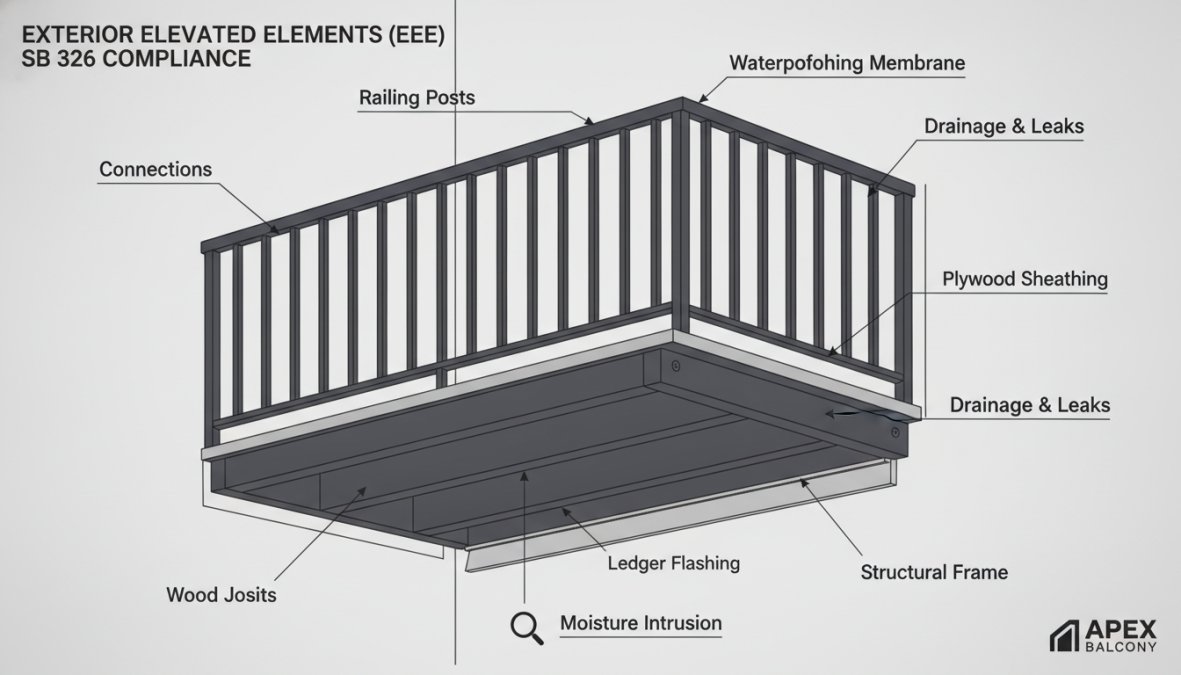
EEEs are particularly vulnerable to deterioration because they’re exposed to weather, temperature fluctuations, and moisture. Wood components develop dry rot when water seeps into structural members. Metal connections corrode from salt air and moisture. Waterproofing membranes degrade over time, allowing water to penetrate load-bearing structures beneath the surface. The inspection process focuses on identifying these failure modes before they compromise structural integrity, examining visible components, railings, fasteners, deck boards, stairs, and assessing underlying structural systems.
SB 326 vs SB 721 Differences: What Owners Need to Understand
Many property owners confuse SB 326 with SB 721, an earlier law addressing similar concerns. SB 721, enacted in 2018, required initial inspection of exterior elevated elements. SB 326, passed in 2021, established the ongoing compliance framework with specific inspection cycles. The key difference is timing: SB 721 was a one-time inspection mandate, while SB 326 created a recurring obligation requiring inspections every nine years from the initial SB 721 inspection date. SB 326 also introduced stricter qualification requirements for inspectors and more detailed reporting standards. For property managers and HOA boards, SB 721 compliance does not automatically satisfy SB 326 requirements, the newer law layered additional obligations on top.
Inspection Requirements and the 9-Year Compliance Cycle
The inspection framework operates on a nine-year cycle. Buildings that completed their initial SB 721 inspection must schedule the next inspection within nine years from that date. This creates a predictable timeline for budgeting and planning, though the specific deadline depends on when each building first underwent inspection.
Scope of Visual Inspection and Load-Bearing Structural Assessment
The inspection covers two distinct components: visual assessment and structural evaluation. Visual inspection examines accessible surfaces, railings, fasteners, deck boards, stairs, and waterproofing membranes for signs of deterioration, corrosion, or damage. The structural assessment evaluates load-bearing capacity and integrity of underlying systems, including connections, fasteners, and structural members that may not be directly visible. The inspection report must specify which components are in adequate condition and which require repair or replacement. This distinction affects both urgency and cost of remediation.
Many property managers mistake a visual inspection for a complete structural assessment. The law requires both. A qualified inspector will document surface conditions and perform deeper structural evaluation. Budget for the full scope.
January 1 2025 Deadline and Ongoing Frequency
The January 1, 2025 deadline applied to buildings that completed their initial SB 721 inspection by January 1, 2016. However, the nine-year cycle begins from each building’s individual SB 721 inspection date, creating a rolling schedule across the state. For buildings that missed the deadline, compliance becomes urgent. After the initial deadline passes, the next inspection becomes due nine years from the previous inspection’s completion date. Property owners should mark the inspection due date in their building’s maintenance calendar at least six months in advance.
How to Find an SB 326 Inspector and Vet Your Vendor
Finding a qualified inspector requires understanding what qualifications matter and what questions to ask. Not every engineer or architect can perform SB 326 inspections, the law specifies particular credentials and experience requirements.
Qualifications: Licensed Structural Engineer or Architect
The law requires inspections be performed by a licensed structural engineer (SE) or licensed architect (RA) in California. The inspector’s license number must appear on the inspection report, and their professional liability insurance must be current. A structural engineer brings specific expertise in load-bearing systems, material properties, and failure analysis. Either credential is acceptable, but verify current California licensure and professional liability insurance. Experience matters as much as credentials, look for inspectors with demonstrated experience in residential structures, exterior elements, and failure modes common in your building’s age and climate zone.
Vendor Vetting Checklist for Inspection Services
Use this checklist when evaluating inspection vendors:
- Current California structural engineer or architect license (verify via California Department of Consumer Affairs License Lookup)
- Minimum 5 years of residential inspection experience
- Professional liability insurance with minimum $1M coverage
- References from at least 3 previous HOA or building owner clients
- Written scope of work specifying what will be inspected and how findings will be reported
- Clear pricing structure with no hidden fees
- Timeline for completing inspection and delivering report
- Experience with your building’s construction type
- Familiarity with local climate conditions and common failure modes
- Willingness to explain findings in plain language
- Verifiable references
The vetting process should take 1-2 weeks. Contact multiple vendors and compare responses. A vendor who seems evasive about qualifications or pricing is a red flag. The cheapest option isn’t always best, an inspector who misses critical findings creates far greater costs than inspection fees.
Never hire an inspector who cannot produce a current California professional license or who claims they can perform inspections without a structural engineer or architect credential. This violates SB 326 requirements and creates liability for your building.
California Balcony Inspection Law Checklist: What to Expect
Understanding what happens during and after an inspection helps you prepare and evaluate results.
Inspection Report and Compliance Certification Requirements
The inspection report is the critical document determining compliance status. It must include detailed assessment of each exterior elevated element, photographs of areas of concern, repair recommendations, and the inspector’s professional opinion on structural integrity. The report should clearly identify which components are in adequate condition and which require repair, specifying the nature of deficiencies, recommended remediation, and urgency level. Compliance certification means the inspection was performed by a qualified professional and findings were documented properly, it’s not a guarantee the building is "safe," but that requirements were met. The report becomes part of your building’s permanent record and must be provided to residents as required by law.
Maintenance Plan and Repair Documentation
SB 326 requires a maintenance plan addressing identified deficiencies, specifying necessary repairs, timelines, and estimated costs. The plan should distinguish between emergency repairs (imminent safety hazards), necessary repairs (structural deficiencies), and recommended maintenance (deterioration not yet posing safety risks). When repairs are completed, contractors should provide detailed reports describing work performed, materials used, and how deficiencies were addressed. Many buildings create tracking spreadsheets listing each deficiency, recommended repair, completion date, and contractor, this transparency helps residents understand findings and building response.
Liability for Non-Compliance with SB 326: Consequences for HOAs
Non-compliance carries serious consequences including legal exposure, financial penalties, and potential loss of insurance coverage.
Legal and Financial Exposure for Association Boards
HOA boards have a fiduciary duty to maintain safe conditions and comply with applicable laws. Failure to schedule required inspections or address identified safety hazards breaches this duty. Residents injured from structural failures in uninspected or unrepaired components have grounds for liability claims. The California Department of Consumer Affairs can impose fines on non-compliant buildings. For HOA boards, liability is personal, board members can be held individually liable for negligent decisions regarding building safety. Proper documentation of inspections, reports, maintenance plans, and repair invoices demonstrates the board acted responsibly.
Insurance Implications and Coverage Gaps
Insurance carriers increasingly require proof of SB 326 compliance before issuing or renewing coverage. Buildings unable to demonstrate current inspection and compliance with repair recommendations may face policy cancellation or premium increases. Some insurance policies include exclusions for claims arising from non-compliance with building safety laws. If a resident is injured due to structural failure in a component that should have been inspected or repaired, the insurer may deny coverage, leaving the HOA personally liable. Property managers should contact their insurance broker to understand how SB 326 compliance affects coverage.
Budgeting and Cost Estimation for SB 326 Compliance
The cost of SB 326 compliance varies widely depending on building size, age, construction type, and deterioration extent. Budgeting requires understanding cost drivers and planning for both inspection and repair expenses.
Factors That Affect Inspection and Repair Costs
Inspection costs depend primarily on building size and complexity. A small 20-unit building might require 8-12 hours of inspection work, while a large 200-unit complex might require 40+ hours. Building age and construction type significantly affect repair costs. Older wood-frame buildings commonly show dry rot and waterproofing failures requiring labor-intensive repairs. The extent of deterioration drives the largest cost variations. Many property managers budget conservatively, allocating 15-25% of annual HOA dues for balcony repair and maintenance, adjusting downward if inspection findings are less severe.
The inspection itself is a relatively modest expense compared to potential repair costs. Budgeting $5,000-$15,000 for professional inspection is reasonable. Budgeting $50,000-$200,000+ for repairs is realistic for older buildings with identified deficiencies.
Maintenance vs. Inspection: Understanding the Difference
Inspection is the professional assessment performed by a licensed structural engineer or architect identifying deficiencies and recommending remediation on a nine-year schedule. Maintenance is ongoing care and repair work performed by contractors to preserve building components, including caulking, repainting, replacing fasteners, and sealing waterproofing membranes. Inspection identifies what maintenance is needed, and maintenance prevents deterioration from reaching the point where structural repairs become necessary. Many buildings create maintenance schedules based on inspection findings. Property managers should communicate this distinction clearly to residents.
Key Takeaways
SB 326 compliance is an ongoing obligation requiring understanding of inspection requirements, finding qualified professionals, budgeting for repairs, and maintaining documentation. Buildings that approach compliance proactively, scheduling inspections early, addressing findings promptly, and maintaining components between cycles, protect residents and minimize long-term costs. The nine-year cycle creates predictability. Mark your building’s inspection due date now, begin vendor outreach six months before the deadline, use inspection findings to develop a realistic maintenance and repair plan, and document everything. This systematic approach transforms SB 326 compliance from a source of anxiety into a manageable building management responsibility.
Frequently Asked Questions
What is SB 326 compliance and why do property owners need it?
SB 326 compliance refers to meeting California's legal requirements for inspecting and maintaining exterior elevated elements (balconies, decks, stairways, and railings) on residential buildings. Property owners and HOAs must ensure these structures are inspected by qualified professionals, documented in compliance reports, and repaired as needed to prevent structural failure. Non-compliance can result in significant liability exposure and legal penalties.
What are the key differences between SB 326 and SB 721?
SB 326 (the Balcony Bill) applies to residential buildings with three or more units and requires visual inspections of exterior elevated elements on a 9-year cycle. SB 721 is a broader law that addresses building envelope safety and applies to a wider range of structures. Both laws mandate compliance by January 1, 2025, but they have different scopes. SB 326 focuses specifically on balconies, decks, and similar structures, while SB 721 encompasses the entire building exterior.
How do I find a qualified SB 326 inspector for my property?
Look for inspectors who are licensed structural engineers or architects with specific experience in California SB 326 compliance. Verify their credentials through the California Department of Consumer Affairs, ask for references from other HOAs or property owners, and request proof of liability insurance. A reputable inspector should provide a detailed scope of work, explain their inspection methodology, and deliver a comprehensive compliance report with clear findings and recommendations.
What happens if an HOA fails to comply with SB 326?
Non-compliance with SB 326 exposes HOAs to significant legal and financial liability. If a structural failure occurs on uninspected or unrepaired elements, the association may face lawsuits from injured residents, regulatory fines, and increased insurance costs or coverage denials. Association boards can also face personal liability. Additionally, failure to complete inspections by the January 1, 2025 deadline and maintain ongoing compliance on the 9-year cycle violates California Civil Code requirements and can result in enforcement action.
Get started with Apex Balcony and ensure your building remains compliant with SB 326 while protecting your residents and assets. Our licensed inspectors provide comprehensive assessments, clear reporting, and expert guidance through the repair process. Book inspection