How to Request SB 721 Inspection Extension: Step-by-Step
Request SB 721 inspection extension: Learn how to request an SB 721 inspection extension. Step-by-step process, hardship criteria, forms, and appeals.
Table of Contents
- What is SB 721 and Why Extensions Matter
- Understanding SB 721 Inspection Deadlines
- Step-by-Step: How to Request SB 721 Inspection Extension
- SB 721 Inspection Process and Timeline
- Hardship Criteria: What Qualifies for an Extension
- SB 721 Penalties for Non-Compliance
- Appeals Process for Denied Extensions
- Common Mistakes to Avoid When Requesting an Extension
Last Updated: July 25, 2026
What is SB 721 and Why Extensions Matter
SB 721 is California legislation requiring inspections of exterior elevated elements, balconies, decks, stairwells, and walkways, in residential buildings. The law mandates a rigorous inspection cycle to identify structural defects before they become safety hazards. Property managers often discover too late that requesting an extension requires specific documentation and timing. Missing the deadline carries serious consequences: fines, legal liability, and tenant rights violations.
The real challenge isn’t understanding the law itself. It’s managing the inspection process within compressed timelines while juggling construction permits, contractor availability, and financial constraints. Extensions exist precisely because these real-world obstacles are common, but they’re not automatic, you must request them properly with documented justification.
SB 721 extensions require formal requests submitted to your local enforcement agency before the deadline passes. Property owners who wait until the last moment often find their requests denied, leaving them in violation.
Understanding SB 721 Inspection Deadlines
The Six-Year Compliance Cycle
California’s SB 721 operates on a strict six-year inspection cycle. After your initial inspection, you must complete subsequent inspections every six years without fail. By year four or five, when you should be scheduling your next inspection, other priorities consume your attention. Contractors get booked months in advance. Permitting takes longer than expected. Before you realize it, you’re approaching the deadline with no inspection scheduled.
Why You Might Need an Extension
Several documented circumstances justify extension requests. Financial hardship is one: if your building has already incurred significant repair costs from a previous inspection cycle, requesting funds for a new inspection may legitimately strain your reserves. Permitting delays represent another valid reason, if your local building department has delayed issuing permits for corrective work from your last inspection, that delays your ability to complete the new inspection cycle.
Construction delays are common. A contractor may have backed out. Materials may be unavailable. Weather may have halted work on required repairs. The key distinction: an extension isn’t granted because you forgot or deprioritized the inspection. It’s granted because documented circumstances beyond your reasonable control prevented you from meeting the deadline.
Claiming hardship without documentation will result in denial. Your local enforcement agency requires proof: financial statements, contractor correspondence, permitting records.
Step-by-Step: How to Request SB 721 Inspection Extension
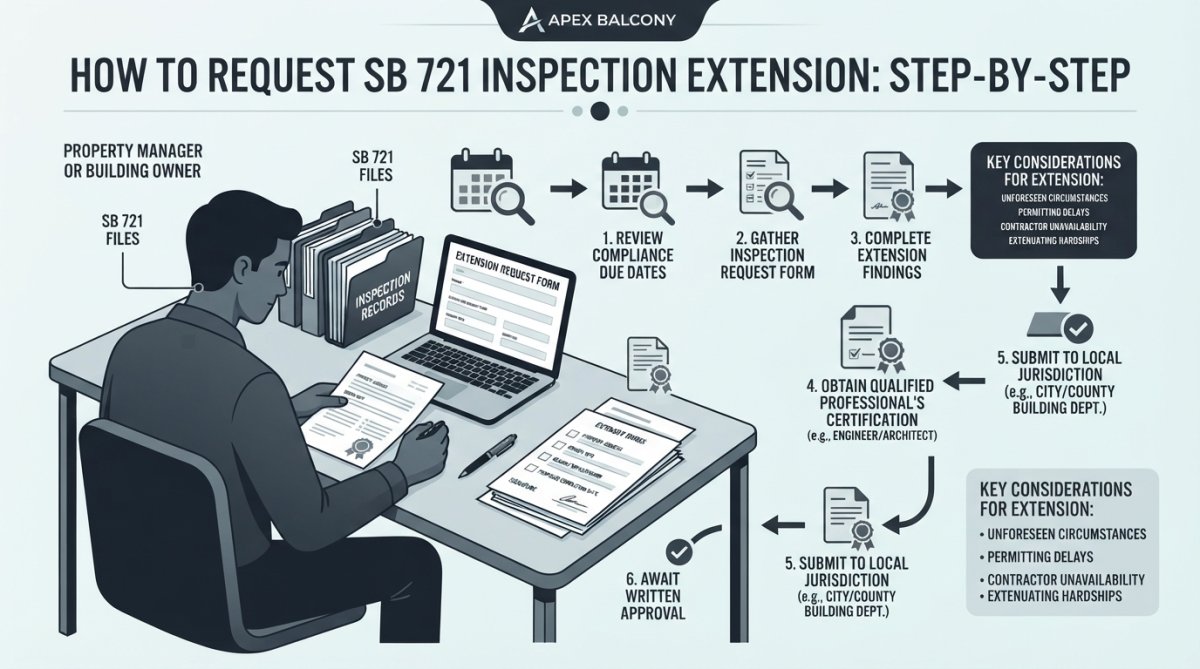
Step 1: Verify Your Local Enforcement Agency
Identify which agency enforces SB 721 in your jurisdiction. Enforcement is decentralized, your city or county building department handles it. Call your city’s planning or building department and ask specifically: "Who handles SB 721 inspection deadline extensions?" Get a name, department, and direct contact method.
Once you’ve identified the correct department, request their extension request form or procedure. Ask for the specific documentation they require with your request.
Step 2: Document Your Hardship Criteria
This step determines whether your extension request succeeds or fails. You need written evidence supporting your claim.
For financial hardship, gather: your building’s reserve fund balance, invoices from your previous inspection cycle showing repair costs, quotes for the proposed inspection and corrective work, board meeting minutes discussing financial constraints, and any correspondence with lenders or insurers about financial limitations.
For permitting delays, collect: your original permit applications with submission dates, correspondence from the building department showing requests for additional information, inspection reports from your previous SB 721 cycle listing required corrective work, contractor letters explaining why permits are still pending, and timelines showing when permits were submitted versus when you expect approval.
For construction delays, document: original contractor agreements with completion dates, correspondence showing contractor withdrawal, new contractor bids and proposed timelines, material shortage documentation from suppliers, and weather reports if applicable.
Step 3: Complete SB 721 Forms and Documentation
Your local enforcement agency will specify which forms to complete. Regardless of format, your submission must include: your property address and assessor’s parcel number, current inspection cycle deadline date, specific reason for the extension request, how long you’re requesting (typically 90 to 180 days), attached supporting documentation, signature of property owner or authorized agent, and contact information for follow-up.
Write clearly and specifically. Instead of "we’re experiencing hardship," write: "Our building’s reserve fund balance is $47,000. Our previous SB 721 inspection cycle required $180,000 in corrective work. The proposed new inspection and corrective work will cost an estimated $165,000." Include dates, dollar amounts, and specific circumstances.
Step 4: Submit Your Extension Request
Submit your request well before your deadline, ideally 60 to 90 days in advance. Late submissions are often denied automatically.
Verify the submission method your agency accepts: email, in-person delivery, certified mail, or online portal. When you submit, request written confirmation of receipt. Use certified mail with return receipt requested if submitting by mail. Keep copies of everything you submit and document the submission date and method.
Step 5: Follow Up and Track Status
After submission, contact the enforcement agency seven days later to confirm receipt and ask about the expected decision timeline. Get a specific date when you can expect a response.
If you don’t receive a decision by the promised date, contact the agency again. Follow up in writing, creating a documented record of your attempts.
Once you receive a decision, if approved, get written confirmation of your new deadline. If denied, request specific reasons in writing.
Many property owners miss follow-up deadlines because they assume an approved extension automatically extends everything. Your new deadline is binding. Mark it in your calendar and set reminders months in advance.
SB 721 Inspection Process and Timeline
What Happens During the Inspection
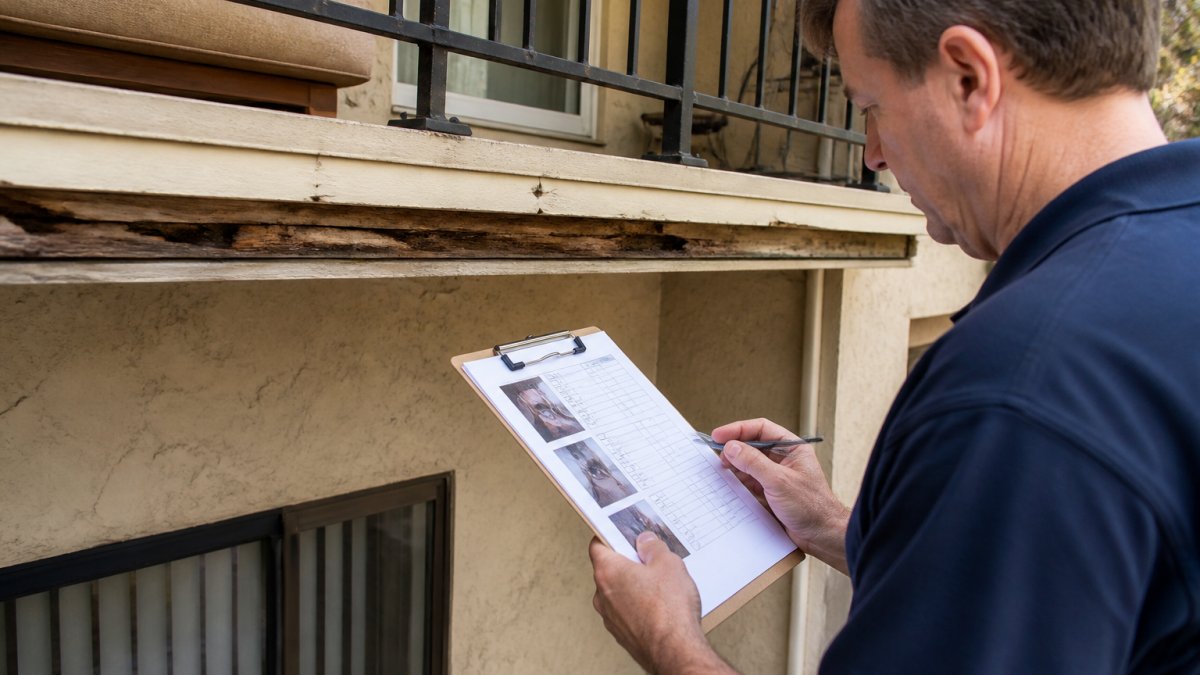
A qualified inspector, typically a structural engineer or architect licensed in California, will conduct a comprehensive visual inspection of all exterior elevated elements including balconies, decks, stairwells, and railings. The inspection takes several hours for most buildings. The inspector visually examines wood framing, connections, fasteners, waterproofing, and signs of deterioration, looking for wood decay, rust, loose connections, water intrusion, and structural movement.
The inspector will document findings with photographs and measurements, identifying defects and categorizing them by severity.
How Inspection Results Affect Extension Requests
If your previous inspection identified corrective work, your new inspection will assess whether that work was completed properly. Incomplete or inadequate corrective work from your last cycle will factor into your current extension request decision.
If you’re requesting an extension partly because you’re still completing corrective work from your previous inspection cycle, the enforcement agency will want to see evidence of that ongoing work. Contractor invoices, progress photos, and permit records help demonstrate active progress.
Hardship Criteria: What Qualifies for an Extension
Financial Hardship
Financial hardship is the most commonly cited reason for extensions and the most scrutinized. Claiming hardship without documentation gets denied immediately.
Your local enforcement agency evaluates financial hardship based on your building’s reserve fund status and the cost of inspection and corrective work relative to your reserves. If your reserve fund is depleted from previous inspection cycles or if completing the inspection would prevent you from maintaining required emergency reserves, you have legitimate financial hardship.
Document your building’s financial position with your latest reserve study or financial audit, showing the relationship between your reserve balance and estimated inspection and repair costs.
Permitting and Construction Delays
If your local building department is delaying permits for corrective work from your previous inspection cycle, you have grounds for an extension. Document all communication with the building department, showing dates when you submitted permit applications and current status.
Construction delays also qualify. If your contractor backed out, if you can’t find a qualified contractor, or if material shortages are preventing work completion, get written confirmation from contractors or suppliers explaining the delay.
Other Documented Circumstances
Extensions may be granted for other documented circumstances such as significant property damage from natural disaster or a major structural defect discovered during the inspection process that requires engineering analysis before corrective work can begin.
SB 721 Penalties for Non-Compliance
Notice of Violation and Fines
If you miss your inspection deadline without an approved extension, your local building department will issue a Notice of Violation, typically providing 15 to 30 days to cure the violation by scheduling your inspection.
If you don’t respond within the specified timeframe, the building department can impose fines ranging from several hundred to several thousand dollars per violation. Some jurisdictions impose daily fines that accumulate until compliance is achieved. Non-compliance also creates a record with your local building department affecting future permit applications and inspections.
Legal Liability and Tenant Rights
Non-compliance with SB 721 creates significant legal exposure. If a tenant is injured due to a defect in an exterior elevated element that should have been identified during an inspection, your failure to conduct that inspection on schedule strengthens the tenant’s liability claim.
Tenants can request inspection records and corrective work documentation. In some cases, tenants can file complaints with local enforcement agencies. Failure to maintain safe conditions violates California’s implied warranty of habitability, exposing your property to tenant lawsuits and mandatory repairs ordered by courts.
Appeals Process for Denied Extensions
How to File an Appeal
If your extension request is denied, you typically have the right to appeal that decision. Your local enforcement agency should provide appeal procedures in their denial letter.
Appeals usually involve submitting additional documentation to a higher authority within the building department or to a hearing officer. Address the specific reasons given for denial with stronger evidence.
What Evidence Strengthens Your Appeal
The strongest appeals include evidence directly contradicting the reason for denial. If denied because your hardship claim lacked documentation, submit comprehensive financial statements, reserve fund audits, and contractor correspondence.
If denied because the agency believed your circumstances were within your control, submit evidence showing external factors beyond your control. Consider including a letter from your property management company, board president, or legal counsel explaining the circumstances.
Common Mistakes to Avoid When Requesting an Extension
Submitting your request too close to the deadline is the most common mistake. Submissions arriving within 30 days of the deadline are often denied automatically.
Another frequent error is insufficient documentation. Vague claims get rejected. Many property owners also request extensions without identifying the correct agency or submitting to the right department. Before you submit anything, confirm you’re sending it to the correct department.
Failing to follow up after submission is critical. Silence doesn’t mean approval. You need written confirmation of your decision. Some property owners also request extensions without understanding what they’re requesting, specify the extension period you need and why that timeframe is necessary.
Finally, don’t assume an approved extension is permanent. Your new deadline is firm. You must complete your inspection by that new date or face the same penalties as missing the original deadline.
Requesting an SB 721 inspection extension requires careful planning, thorough documentation, and precise timing. The process isn’t complicated, but it demands attention to detail. Missing deadlines or submitting incomplete requests creates compliance violations that expose your property to fines, legal liability, and tenant disputes.
At Apex Balcony, our team of licensed inspectors helps property owners stay compliant with California’s SB 721 requirements. We conduct comprehensive inspections of all exterior elevated elements, identify structural defects early, and provide clear documentation for your records and your enforcement agency. Book your SB 721 inspection today and protect your property and residents.
Frequently Asked Questions
What is the deadline for SB 721 inspections, and can it be extended?
SB 721 requires exterior elevated element (EEE) inspections on a six-year cycle for multifamily rental properties. Yes, extensions are possible if you meet hardship criteria such as financial constraints, permitting delays, or documented construction complications. Contact your local enforcement agency to request an extension before your deadline passes. Extensions typically provide additional time to complete inspections and corrective work while maintaining compliance with building standards.
What hardship criteria qualify for an SB 721 inspection extension?
Common hardship criteria include significant financial hardship affecting your ability to fund inspections or repairs, delays in obtaining permits or approval from contractors, natural disasters or emergency circumstances, and documented structural complications requiring specialized engineering assessment. Your local enforcement agency evaluates each request individually. Document your specific circumstances thoroughly in your extension application, including financial statements, permit timelines, or contractor correspondence. Vague requests are more likely to be denied.
What are the penalties for not complying with SB 721 inspection deadlines?
Non-compliance with SB 721 inspection deadlines can result in notices of violation, civil penalties, and potential legal liability. Property owners face increasing fines if violations persist, and tenants may have grounds for legal action if safety hazards in exterior elevated elements cause injury. Building departments can escalate enforcement actions, and your property may face restrictions on new permits or certifications. Requesting an extension proactively is far less costly than facing penalties and potential litigation.
What forms and documentation do I need to submit for an SB 721 inspection extension request?
Required documentation typically includes a formal extension request letter addressed to your local enforcement agency, proof of hardship (financial statements, permit correspondence, contractor estimates), current property ownership documentation, and a detailed timeline explaining when you expect to complete the inspection. Some jurisdictions provide specific SB 721 forms and documentation templates on their websites. Contact your city or county building department directly to confirm their exact requirements, as forms vary by enforcement agency and jurisdiction.