Does Insurance Cover SB 721 Inspections? A 2026 Guide
Insurance cover SB 721: Learn whether insurance covers SB 721 inspections, how non-compliance affects premiums, and what property owners need to know.
Table of Contents
- Does Insurance Cover SB 721 Inspections?
- How Non-Compliance Affects Your Insurance Coverage
- SB 721 Compliance and Insurance Premiums
- SB 721 Inspection Cost and Insurance Deductibles
- SB 721 Deadlines and Insurance Policy Renewal
- SB 721 Penalties and Liability Exposure
- Actionable Checklist for Property Owners and Insurance Brokers
- Conclusion
Does Insurance Cover SB 721 Inspections? A 2026 Guide
Last Updated: July 26, 2026
The question of whether insurance covers SB 721 inspections is one that building owners, property managers, and HOA boards face with increasing urgency. Most standard homeowners and commercial insurance policies do not cover the cost of SB 721 inspections themselves, though they may cover certain repairs that result from inspection findings. Understanding this distinction is critical because it directly affects your budget, timeline, and compliance strategy.
SB 721 inspections are a legal mandate in California requiring building owners to conduct comprehensive inspections of all exterior elevated elements, balconies, decks, stairways, and similar structures, every nine years. The inspection cost typically falls on the property owner. However, the relationship between these inspections and your insurance coverage is where confusion often begins.
Does Insurance Cover SB 721 Inspections? Standard Homeowners and Commercial Policies
Your homeowners or commercial general liability policy almost certainly does not cover the cost of the SB 721 inspection itself. Insurance companies view inspections as a preventative compliance measure and a cost of property ownership, not a covered peril or service.
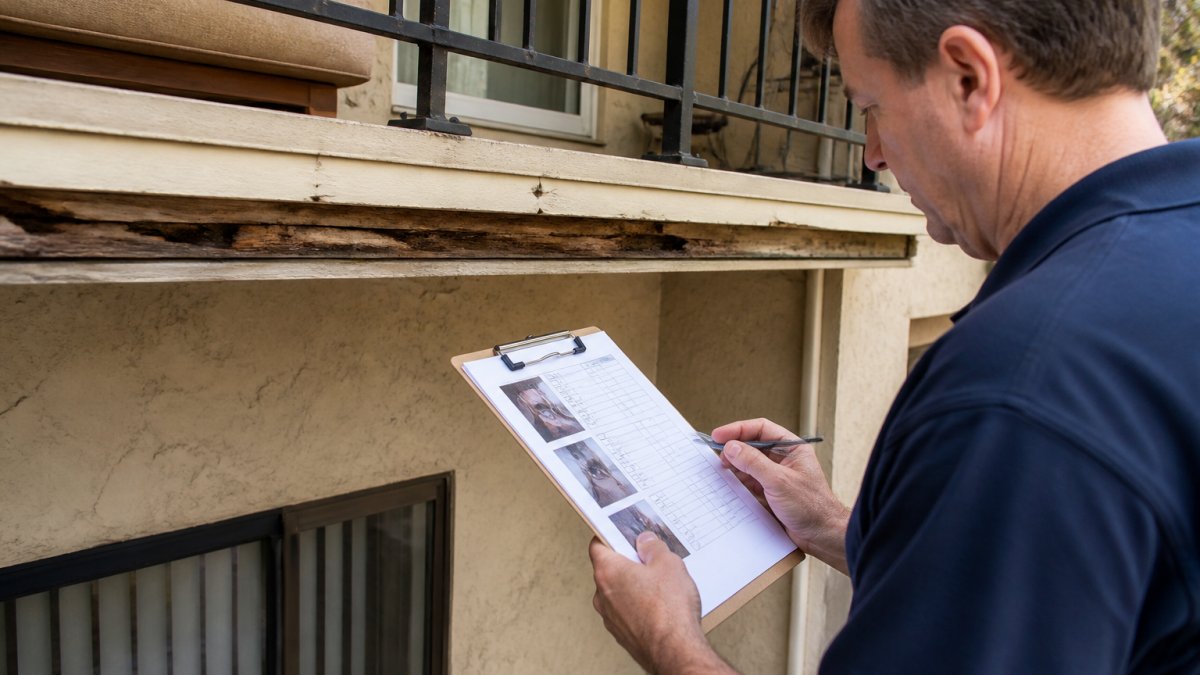
What insurance may cover is the repair work that an inspection uncovers. If an inspector identifies dry rot, structural damage, water intrusion, or other defects in your balcony or deck, your policy may cover the cost to repair that damage, but only if the damage itself is a covered peril under your specific policy. The inspection fee is your responsibility. The repairs may be partially or fully covered, depending on what caused the damage and what your policy includes.
Standard commercial general liability policies typically exclude coverage for repairs related to building code violations or deferred maintenance. Since SB 721 repairs often involve correcting long-standing structural issues, insurers may deny claims on the grounds that the damage pre-existed the policy period or resulted from poor maintenance rather than a sudden, covered event.
What Insurance Companies Actually Cover
Insurance covers repairs to exterior elevated elements when the damage results from a sudden, accidental event that your policy specifically includes. A wind-driven rain event causing water intrusion into a balcony structure might be covered under your wind and water damage provisions. A tree falling on a deck might be covered under your property damage section. But if an inspector finds that your balcony’s ledger board has been slowly rotting for years because of poor waterproofing, that’s considered maintenance-related damage, and most insurers will deny the claim.
The language in your policy matters enormously. Many commercial policies contain explicit exclusions for structural defects, code violations, and maintenance-related repairs. Some policies exclude coverage for balconies and elevated structures altogether. A few insurers have begun adding specific SB 721 exclusions to new policies or renewals.
According to California Department of Consumer Affairs guidance on building safety laws, property owners are fully responsible for compliance costs. Read your policy carefully and look for specific language about balconies, decks, exterior structures, and maintenance exclusions.
How Non-Compliance Affects Your Insurance Coverage
Non-compliance with SB 721 doesn’t just expose you to legal penalties, it can directly jeopardize your insurance coverage entirely.
If your building fails an SB 721 inspection and you do not complete required repairs within the mandated timeline, your insurance company has grounds to deny future claims related to those defects. If an accident occurs on a non-compliant balcony and it comes to light that you knew about the defect and failed to repair it, your insurer can deny coverage outright and potentially pursue a bad-faith claim against you.

Insurance companies conduct underwriting reviews periodically, especially at renewal time. If they discover that your property has outstanding SB 721 violations, they may refuse to renew your policy, increase your premiums significantly, or add exclusions that eliminate coverage for exterior elevated elements entirely.
Coverage Exclusions and Policy Language
Many insurers now include clauses stating that coverage is void if the property is not in compliance with applicable building codes. SB 721 is a building code requirement in California, which means non-compliance can trigger this exclusion. Some policies use language like "We will not pay for loss or damage resulting from failure to maintain the property in a safe condition" or "Coverage is excluded for any structure that violates local building codes."
A few insurers have begun requiring SB 721 compliance as a condition of coverage for multi-family residential properties. They may request a copy of your inspection report and proof of repairs before renewing your policy. If you cannot provide evidence of compliance, they will either decline to renew or exclude balconies and decks from your coverage entirely.
Claims Denial Scenarios
A building owner discovers water damage in a unit below a balcony and files a claim. The insurer investigates and finds an outstanding SB 721 violation on that balcony with an unrepaired compromised ledger board. The insurer denies the claim on the grounds that the damage resulted from a known code violation and deferred maintenance, not a sudden covered event.
Another scenario: a tenant is injured when balcony decking gives way. The insurer discovers during investigation that the building failed its SB 721 inspection two years prior and repairs were never completed. The insurer denies coverage under the policy’s exclusion for claims arising from code violations.
SB 721 Compliance and Insurance Premiums
Non-compliance directly affects your insurance costs. Insurers use risk assessment models that factor in building code violations, deferred maintenance, and structural defects. A property with an outstanding SB 721 violation is higher-risk in the eyes of underwriters.
Risk Assessment and Underwriting Requirements
When your policy comes up for renewal, your insurer will review your property’s risk profile. If SB 721 compliance is outstanding, this is a red flag. Underwriters will either decline to renew, add exclusions to your policy, or increase your premiums to reflect the elevated risk.
We’ve seen cases where property owners faced 15-30% premium increases simply because they had an outstanding SB 721 violation. In some cases, the increase was tied to a specific requirement: "We will renew your policy only if you complete SB 721 repairs within 90 days and provide proof of completion."
Conversely, completing your SB 721 inspection and repairs on schedule can actually improve your insurance standing. Some insurers offer modest discounts to properties that demonstrate proactive compliance with building codes. The key is timing: complete your inspection and any required repairs well in advance of your renewal date.
SB 721 Inspection Cost and Insurance Deductibles
If an inspection uncovers damage and your insurance covers the repairs, your insurance deductible applies to any covered repair claim. If your deductible is $2,500 and your insurance approves a $15,000 repair claim for balcony structural damage, you pay the first $2,500 and insurance covers the remaining $12,500. However, if the damage is deemed maintenance-related or a code violation, the entire claim is denied.
What You’ll Pay Out of Pocket
The real out-of-pocket costs for SB 721 compliance fall into three categories: the inspection itself, the repairs, and any insurance-related costs.
The inspection cost varies based on your property’s size and complexity. A small residential building might cost $1,500 to $3,000 for a complete inspection. These costs are 100% your responsibility.
Repair costs depend entirely on what the inspection finds. Some properties need minor repairs: re-caulking, waterproofing updates, or fastener replacements. Others need major structural work: ledger board replacement, deck rebuilding, or balcony reinforcement. Repair costs can range from a few thousand dollars to hundreds of thousands for large buildings.
If insurance covers a portion of repair costs, your deductible reduces the insurer’s payment. For example, if repairs cost $20,000 and insurance covers $18,000 (after determining that $2,000 was due to pre-existing maintenance issues), and your deductible is $2,500, you would pay $2,500 plus the $2,000 insurance won’t cover, for a total of $4,500 out of pocket.
SB 721 Deadlines and Insurance Policy Renewal
The timeline for SB 721 compliance and your insurance renewal are often misaligned, which creates a dangerous gap.
Missing Deadlines and Coverage Impact
SB 721 requires inspections to be conducted every nine years. The first cycle deadline for most properties was January 1, 2025. Subsequent inspections are due nine years later.
Your insurance policy renewal date is independent of your SB 721 deadline. The safest approach is to complete your SB 721 inspection and any required repairs at least 60-90 days before your policy renewal date. This gives your insurer time to update their records and factor compliance into their underwriting decision.
For properties with multiple buildings or units, managing deadlines becomes more complex. Keep detailed records of when each building’s inspection is due and when repairs must be completed. Communicate these dates to your insurance agent so they can anticipate any compliance-related underwriting changes.
SB 721 Penalties and Liability Exposure
Beyond insurance coverage, non-compliance with SB 721 carries direct legal and financial penalties.
Negligence Per Se and Insurance Liability
California courts recognize "negligence per se", if you violate a statute or building code, you are presumed negligent as a matter of law. SB 721 is a statute, so failure to comply can establish negligence automatically in a court proceeding.
If someone is injured on a non-compliant balcony and they sue you, the plaintiff’s attorney will argue that your failure to comply with SB 721 constitutes negligence per se. This makes your liability case much harder to defend. Your liability insurance may not cover claims arising from negligence per se, especially if the policy includes exclusions for code violations.
Local building departments can issue fines for SB 721 non-compliance, ranging from hundreds to thousands of dollars per violation. If a balcony collapse or serious injury occurs and it’s discovered that you knew about SB 721 violations and failed to address them, you could face criminal charges in extreme cases.
Actionable Checklist for Property Owners and Insurance Brokers
Steps to Protect Your Coverage
1. Know your SB 721 deadline
Determine when your property’s first SB 721 inspection was due. If your building was constructed before January 1, 2016, your deadline likely passed in 2025. If you missed it, schedule an inspection immediately.
2. Schedule your inspection 6-12 months before your insurance renewal
Getting ahead of the deadline gives you breathing room and ensures your insurer has time to update their records before renewal.
3. Review your insurance policy for SB 721 exclusions
Contact your insurance agent and ask specifically about coverage for balconies, decks, and exterior elevated elements. Ask whether your policy includes any exclusions related to building code violations or maintenance-related damage. Get the answer in writing.
4. Request a pre-inspection consultation with Apex Balcony
Before you commit to repairs, understand exactly what needs to be fixed and what the scope of work entails. This information helps you communicate more effectively with your insurance company and budget appropriately.
5. Document all inspection and repair work
Keep detailed records of your SB 721 inspection report, all repair invoices, contractor certifications, and any permits or sign-offs from your local building department. This documentation is proof of compliance.
6. Notify your insurance agent of compliance completion
Proactively send your agent a copy of your inspection report and proof of repairs. This signals good faith and gives your insurer a chance to update their underwriting file before renewal.
7. For multi-family properties, create a compliance calendar
If your property has multiple buildings with staggered inspection schedules, create a master calendar showing when each building’s inspection is due and when repairs must be completed.
8. Review your policy annually for changes
Review your policy documents annually to ensure you understand what’s covered and what’s not, especially as it relates to building code compliance.
| Step | Timeline | Responsibility | Insurance Impact |
|---|---|---|---|
| Schedule inspection | 12 months before renewal | Property owner/manager | Demonstrates proactive compliance |
| Complete inspection | 6-9 months before renewal | Licensed inspector | Identifies repairs needed |
| Arrange repairs | 3-6 months before renewal | Property owner/contractor | Reduces underwriting risk |
| Document completion | 60-90 days before renewal | Property owner | Provides proof of compliance |
| Notify insurer | 30-60 days before renewal | Insurance agent/broker | Updates underwriting file |
| Policy renewal | On schedule | Insurance company | Reflects current compliance status |
Conclusion
The answer to "does insurance cover SB 721 inspections" is no, the inspection cost is your responsibility. But non-compliance can void your coverage, trigger claim denials, increase your premiums, or result in policy non-renewal. Compliance demonstrates responsible property management and can actually improve your insurance standing.
The best strategy is to treat SB 721 compliance as an insurance issue, not just a regulatory issue. Schedule your inspection well before your policy renewal date, complete any required repairs, and communicate your compliance status to your insurer. This proactive approach protects your coverage and your residents.
Frequently Asked Questions
Does homeowners or commercial insurance cover the cost of SB 721 inspections?
Most standard homeowners and commercial property insurance policies do not cover the cost of SB 721 inspections. Inspections are typically considered a compliance obligation of the property owner or HOA, not an insurable loss. However, some property insurance carriers may cover repairs identified during inspections if structural damage is deemed a covered peril. Contact your insurance broker to review your specific policy language regarding inspection costs and repair coverage eligibility.
How does non-compliance with SB 721 affect my insurance premiums and coverage?
Non-compliance with SB 721 can significantly impact your insurance. Carriers may deny claims related to balcony or exterior elevated element failures if you failed to complete required inspections or repairs. Some insurers will increase premiums for non-compliant properties, refuse to renew policies, or exclude balcony-related coverage entirely. During underwriting, insurers assess SB 721 compliance status as part of their risk evaluation. Demonstrating completed inspections and timely repairs improves your underwriting profile and may help maintain or reduce premiums.
What happens if my building fails an SB 721 inspection, will my insurance cover the repairs?
Insurance coverage for repairs identified in an SB 721 inspection depends on the cause and your policy terms. If damage is from a covered peril (fire, wind, etc.), repairs may be covered after your deductible. However, if damage results from deferred maintenance, dry rot, termite damage, or structural deterioration, coverage is often excluded. More importantly, if your insurer discovers you knew about the damage and failed to repair it, they may deny the entire claim and cite negligence. Always disclose inspection findings to your broker and document your remediation timeline.
Can I use my insurance deductible to pay for SB 721 inspection and repair costs?
No, your insurance deductible applies only to covered claims (damage from specific perils). SB 721 inspection costs are a separate compliance expense paid directly by the property owner or HOA and cannot be claimed under your insurance policy. Repair costs may be eligible for insurance coverage only if the underlying damage qualifies as a covered loss. For budgeting purposes, treat inspection and preventive repair costs as separate line items from your insurance deductible. Consult your insurance broker to clarify which specific repairs might qualify for coverage under your policy.
SB 721 compliance protects your building, your residents, and your insurance coverage. At Apex Balcony, our licensed inspectors have decades of combined construction and design experience to identify structural defects early and guide you through the repair process. We help property owners in California stay compliant with SB 721 while minimizing disruption and cost. Book your inspection today and protect your property’s future.