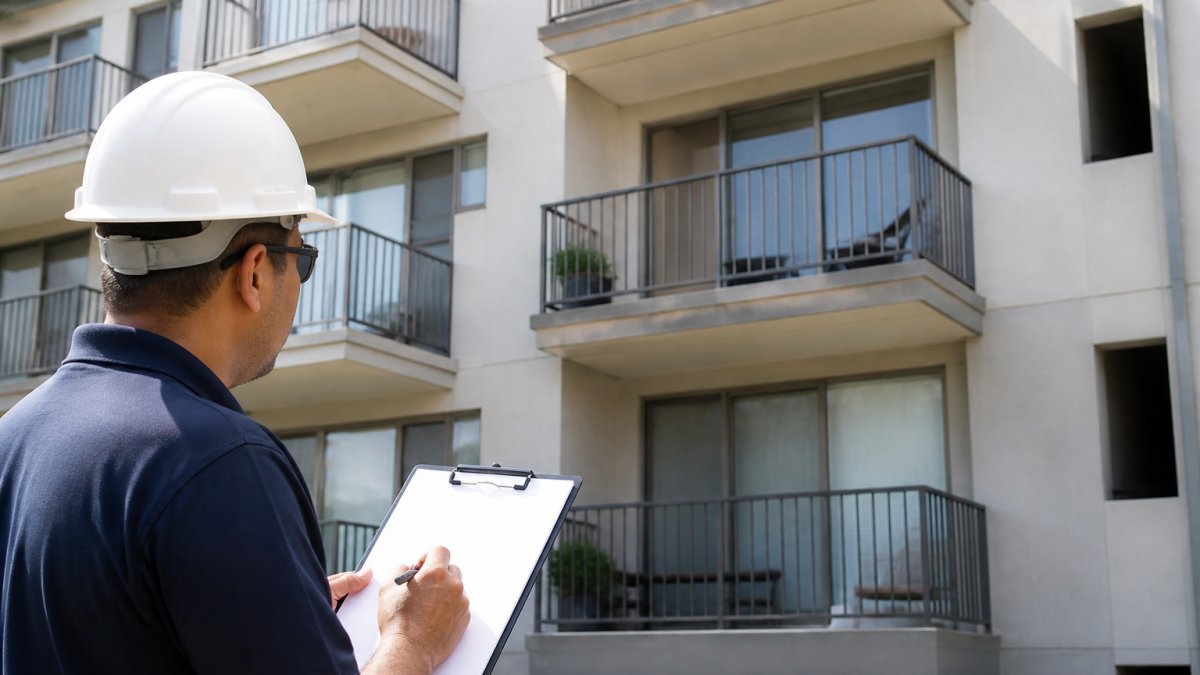
Is Structural Balcony Certification Necessary? A 2026 Guide
Is structural balcony certification necessary? Learn California SB 721 and SB 326 requirements, who must inspect, and why compliance protects your.
Table of Contents
- Is Structural Balcony Certification Necessary? Understanding Your Legal Obligations
- California SB 721 and SB 326: What You Need to Know
- Balcony Inspection Requirements in the US: Federal and State Frameworks
- Who Can Certify a Balcony: Qualified Inspectors and Professional Standards
- Balcony Inspection Cost: Budget Planning and What Affects Pricing
- Consequences of Non-Compliance: Legal and Safety Risks
- Remediation Steps After a Failed Inspection: Your Action Plan
- Building Owner Responsibilities: Taking Action on Structural Certification
Last Updated: July 30, 2026
Is Structural Balcony Certification Necessary? Understanding Your Legal Obligations
When is structural balcony certification necessary for your California property? The answer depends on what you own, when it was built, and where it’s located. If you own a multi-family residential building in California with three or more units, structural balcony certification is almost certainly necessary. The legal requirements, inspection timelines, and remediation obligations are complex enough that guessing wrong can expose you to fines, liability, and worse. This guide covers exactly what you need to know to stay compliant, protect your residents, and avoid costly mistakes.
Why This Question Matters for California Property Owners
California’s balcony inspection laws have become stricter. Two landmark statutes, SB 721 and SB 326, created hard compliance deadlines that have already caught many property owners off guard. Missing these deadlines results in enforcement actions from local building departments, fines that run into tens of thousands of dollars, and personal liability for board members.
The rules differ depending on your building type, construction date, and location. A 15-unit condominium in San Diego faces different requirements than a 12-unit apartment building in Los Angeles. The only way to know for certain whether structural balcony certification is necessary for your specific property is to understand which law applies to you and act on it.
California SB 721 and SB 326: What You Need to Know
SB 721: The Original Mandate
Senate Bill 721, signed into law in 2018, requires owners of condominium projects with three or more units to conduct visual inspections of exterior elevated elements, including balconies, decks, and stairways. According to California Department of Housing and Community Development guidance, SB 721 requires periodic inspections at least every six years.
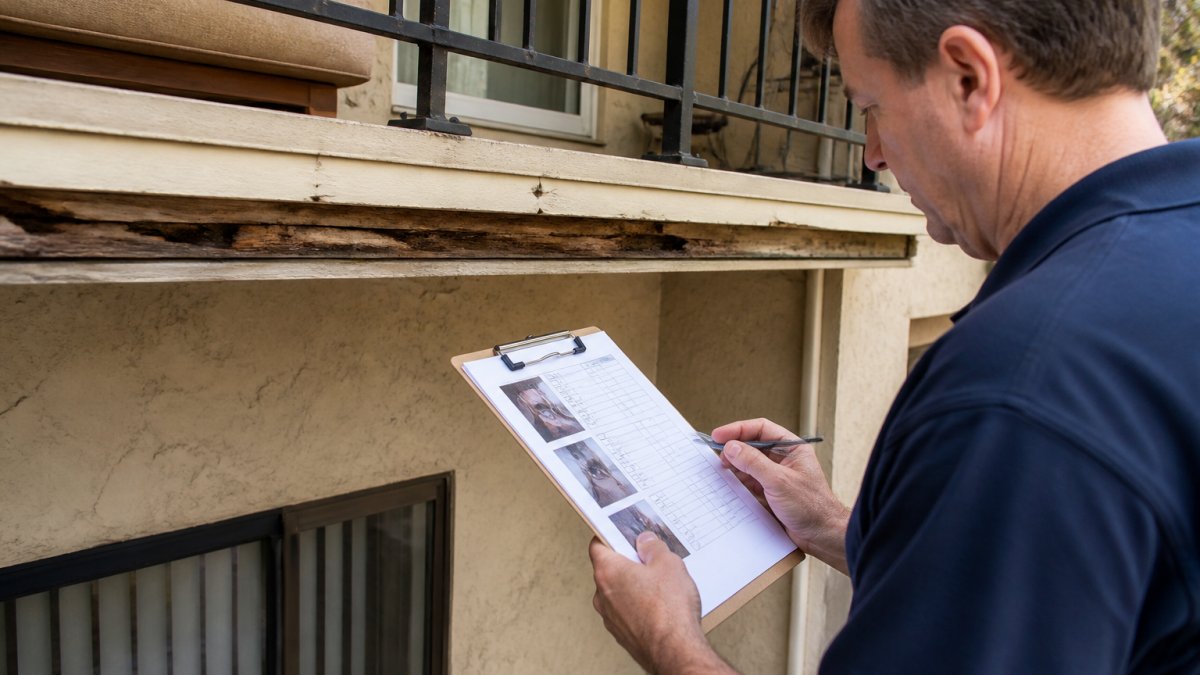
The scope includes visual inspection of wood framing, connections, railings, waterproofing, and signs of deterioration like dry rot, corrosion, or load-bearing capacity concerns. If visual inspection reveals potential safety issues, invasive testing may be required.
For buildings constructed before January 1, 2018, the first inspection deadline was January 1, 2025. For buildings constructed on or after January 1, 2018, the first inspection was due by January 1, 2024. If your building missed these deadlines, you’re already out of compliance.
SB 326: Extended Requirements for Multi-Family Housing
Senate Bill 326, which took effect in 2022, extended balcony certification requirements to multi-family rental housing with three or more units. This expansion brought apartment buildings, townhome complexes, and other rental properties under the same inspection mandate.
Under SB 326, the first inspection deadline was January 1, 2025 for most buildings. Buildings with 16 or more units had an earlier deadline of January 1, 2024. The periodic inspection requirement is the same as SB 721: at least once every six years. Both require professional certification by a licensed structural engineer or architect and require building owners to maintain documentation and communicate findings to residents.
Balcony Inspection Requirements in the US: Federal and State Frameworks
Building Code Compliance and Structural Integrity Standards
The International Building Code (IBC), adopted by most states including California, establishes minimum standards for load-bearing capacity, waterproofing, and material durability for elevated exterior elements. According to International Code Council building standards, structures must be designed and maintained to safely support design loads and resist deterioration from environmental exposure.
In California, the California Building Standards Code incorporates the IBC and adds state-specific amendments. Local building departments enforce these codes and have authority to conduct inspections, issue violation notices, and pursue enforcement actions against property owners who fail to maintain structures in compliance.
Periodic Inspection Schedules and Compliance Deadlines
The inspection schedule under both SB 721 and SB 326 is at least once every six years. For buildings that completed their first inspection on or before January 1, 2025, the next inspection is due by January 1, 2031. If an inspection identifies defects requiring repair, a follow-up inspection is required within 180 days of completion to verify that structural integrity has been restored.
Who Can Certify a Balcony: Qualified Inspectors and Professional Standards
Not every contractor or engineer can legally perform a balcony certification inspection under SB 721 or SB 326. The law specifies who is qualified to perform inspections.
Licensed Structural Engineers and Architects
The law requires that balcony inspections be performed by a licensed structural engineer or architect registered in California. A licensed structural engineer has completed four years of undergraduate engineering education, passed the Fundamentals of Engineering (FE) exam, gained four years of professional experience under a licensed engineer, and passed the Professional Engineer (PE) exam in the structural specialty. An architect must hold a California architecture license, which requires a professional degree, internship, and passing the Architect Registration Examination (ARE).
Both professionals carry professional liability insurance, which means if an inspection is negligent or misses a critical safety issue, there’s a path to recovery. Always verify that your inspector holds an active California PE or architecture license.
Professional Liability and Certification Standards
When a licensed professional performs an inspection, they issue a formal inspection report that documents their findings, conclusions about structural integrity, and recommendations for repair or further investigation. This report becomes part of the building’s permanent record and must be maintained for at least six years.
The inspection report must include:
- Description of the elements inspected
- Visual findings, including photographs where appropriate
- Assessment of structural integrity
- Identification of any defects or areas of concern
- Recommendations for repair or invasive testing
- Certification statement by the licensed professional
This documentation demonstrates to residents that a qualified professional has assessed safety, provides the basis for any repair work, and protects the building owner by showing due diligence.
Balcony Inspection Cost: Budget Planning and What Affects Pricing
Factors That Influence Inspection Fees
The cost of a balcony inspection is driven by the number of balconies, the complexity of the structures, the building’s accessibility, and whether invasive testing is required. A 12-unit building with simple attached balconies will cost less to inspect than a 50-unit complex with cantilever decks and multiple stairways.
Building age and condition also matter. Older buildings often have more complex structural systems and more signs of deterioration, requiring longer inspection times and potentially more detailed investigation. Accessibility affects cost too, if balconies require scaffolding, lifts, or rope access, costs increase.
Cost Breakdown: Visual Inspection vs. Invasive Testing
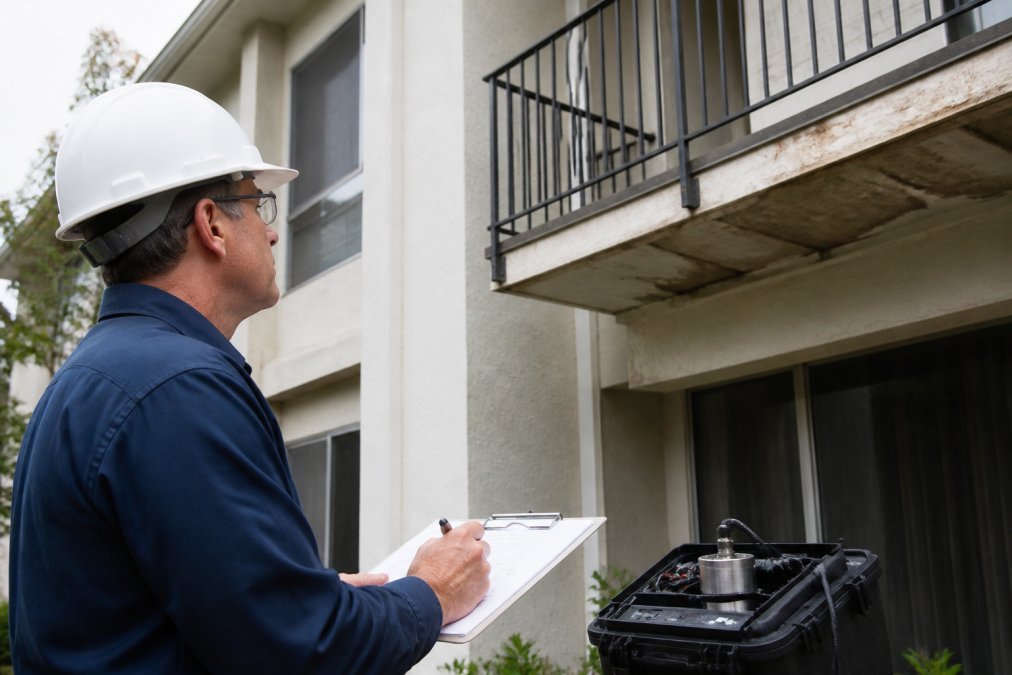
A visual inspection, the baseline requirement under SB 721 and SB 326, examines the condition of visible structural elements, connections, railings, waterproofing, and signs of deterioration. Invasive testing goes deeper, including probe testing to check for hidden wood decay, moisture meters to assess water infiltration, and fastener testing to verify connection integrity.
Many building owners are surprised to learn that visual inspection often identifies defects requiring invasive testing to quantify. For example, if an inspector sees signs of wood discoloration on a balcony beam, they can’t determine how deep the rot extends without probing.
| Inspection Type | Scope | Typical Outcome | Timeline |
|---|---|---|---|
| Visual Inspection Only | Surface condition, visible defects, waterproofing | Identifies most issues; may recommend invasive testing | 1-2 weeks |
| Visual + Limited Invasive Testing | Probing of suspect areas, moisture assessment | Quantifies defects, informs repair scope | 2-4 weeks |
| Comprehensive Invasive Testing | Extensive probing, fastener testing, material sampling | Complete assessment; ready for repair planning | 4-8 weeks |
Budget planning should account for the possibility that visual inspection will recommend invasive testing.
Consequences of Non-Compliance: Legal and Safety Risks
Enforcement Actions and Fines
Local building departments have authority to enforce SB 721 and SB 326 compliance. If your building misses the inspection deadline, the city can issue a violation notice. Many jurisdictions have already begun enforcement actions against property owners who failed to complete inspections by the January 1, 2025 deadline.
A violation notice typically gives the property owner 30-60 days to cure the violation by scheduling an inspection. If the inspection isn’t completed within that timeframe, the city can impose administrative fines ranging from hundreds to thousands of dollars per day of non-compliance. Some jurisdictions also have authority to place a stop-work order on the building, preventing any renovation or improvement work until the inspection is completed.
Non-compliance creates a liability cloud. If a balcony fails or causes injury and the property owner failed to conduct the required inspection, that failure becomes evidence of negligence, strengthening any legal claim and potentially resulting in punitive damages.
Liability Exposure and Risk Mitigation
The real cost of non-compliance is the liability exposure if someone is injured because of a structural failure that an inspection would have caught. Risk mitigation starts with compliance. Getting your balconies inspected, documenting the inspection, and addressing any defects identified in the report demonstrates due diligence.
Additionally, many property insurance policies now require proof of SB 721 or SB 326 compliance as a condition of coverage. If your building is out of compliance, your insurance could be voided, leaving you completely exposed.
Remediation Steps After a Failed Inspection: Your Action Plan
Understanding the Inspection Report
The inspection report is your roadmap for repairs. It identifies specific defects, describes their location and severity, and recommends whether repair, replacement, or further investigation is needed.
Defects are typically categorized by urgency. Immediate safety concerns require urgent repair. Moderate defects might be scheduled within a few months. Minor issues can be included in the next planned maintenance cycle. Review the report carefully with your building’s maintenance team or engineer. If you disagree with a recommendation, get a second opinion from another licensed professional, but document this process.
Prioritizing Repairs and Managing the Remediation Timeline
Prioritization depends on safety risk, budget constraints, and practical considerations like weather and resident disruption. A severely deteriorated beam gets priority. A minor waterproofing issue can wait longer.
Once repairs are completed, the law requires a follow-up inspection within 180 days to verify that work was done properly. Many property owners underestimate the timeline for remediation. A simple repair might take weeks. A major structural repair could take months. Budget planning should account for this, and it’s better to address repairs promptly, even if it means staggering the work across multiple phases.
Building Owner Responsibilities: Taking Action on Structural Certification
Maintenance Schedule and Documentation
You must maintain a schedule of inspections and keep documentation of all inspection reports for at least six years. Additionally, you’re responsible for maintaining the balconies and other elevated exterior elements in safe condition between inspections. Many property owners establish a maintenance log where staff document any issues observed during routine building maintenance or resident complaints.
Communicating with Your HOA and Residents
Transparency builds trust and reduces panic. When you schedule an inspection, inform residents in advance. Explain what the inspection involves and what to expect. If the inspection identifies defects requiring repair, communicate the findings and the remediation plan.
For HOA-managed buildings, the board should present inspection findings and remediation plans at board meetings and in writing to all unit owners. Document these communications.
Balcony safety is an ongoing responsibility that requires professional inspection, careful documentation, and timely remediation when defects are found. If you own multi-family residential property in California with three or more units, structural balcony certification is almost certainly necessary.
At Apex Balcony, we help building owners and HOAs navigate this process. Our licensed inspectors identify early signs of structural failure before they become emergencies. We provide clear, detailed reports that guide remediation decisions and support you through follow-up inspections to verify repairs are complete. Book inspection with Apex Balcony and ensure your residents are protected and your property remains compliant with California law.
Frequently Asked Questions
Is structural balcony certification necessary for all residential buildings in California?
Yes, structural balcony certification is necessary for most California multi-family residential buildings. SB 721 and SB 326 require periodic inspections of elevated exterior elements on condominium projects and apartment buildings. The specific requirements depend on your building's age, number of units, and construction type. If your building has three or more units with balconies or decks, you likely fall under these mandates. Contact a licensed structural engineer to confirm your property's classification and compliance deadline.
Who can certify a balcony and what qualifications do they need?
Only a licensed structural engineer or architect can certify a balcony in California. These professionals must hold a valid California license and carry professional liability insurance. They assess structural integrity, load-bearing capacity, waterproofing, and signs of corrosion or dry rot. Some inspectors may also employ invasive testing to evaluate hidden damage. Verify your inspector's credentials with the California Department of Consumer Affairs before hiring.
What happens if I don't comply with balcony inspection requirements?
Non-compliance with SB 721 and SB 326 can result in significant consequences. Building owners face enforcement actions, substantial fines from local authorities, and potential liability if a resident is injured due to unaddressed structural defects. Additionally, failure to certify may complicate insurance claims and expose your property to legal action. The 2015 Berkeley balcony collapse and 2021 Malibu incident demonstrate the real-world risks of delaying inspections and repairs.
What does a balcony structural inspection typically include?
A comprehensive balcony inspection includes visual assessment of all elevated exterior elements, balconies, decks, stairs, and railings. The inspector evaluates structural integrity, load-bearing capacity, waterproofing systems, fasteners, and visible signs of corrosion or dry rot. Depending on findings, invasive testing may be performed to assess hidden damage. The inspection results in a certification report detailing any defects, their severity, and recommended remediation steps for building code compliance.
How often do balconies need to be inspected under California law?
California law requires periodic inspections based on your building's classification. SB 721 mandates inspections every six years for condominium projects, with a first deadline of January 1, 2025. SB 326 applies stricter timelines for apartments built before 1995. Your specific compliance deadline depends on your property's age and structure. A licensed structural engineer can confirm your inspection schedule and help you stay on track with statutory requirements.