Table of Contents
- How to Prepare for a Balcony Inspection: A Step-by-Step Overview
- Signs of Balcony Water Damage Every Property Owner Should Know
- Your Balcony Safety Inspection Checklist Before the Inspector Arrives
- How Long Does a Balcony Inspection Take?
- Hiring a Balcony Inspector: What to Look for in California
- What Happens After the Inspection: Remediation, Costs, and Next Steps
- How to Prepare for a Balcony Inspection: Tenant Communication Templates
- Conclusion
Last Updated: June 11, 2026
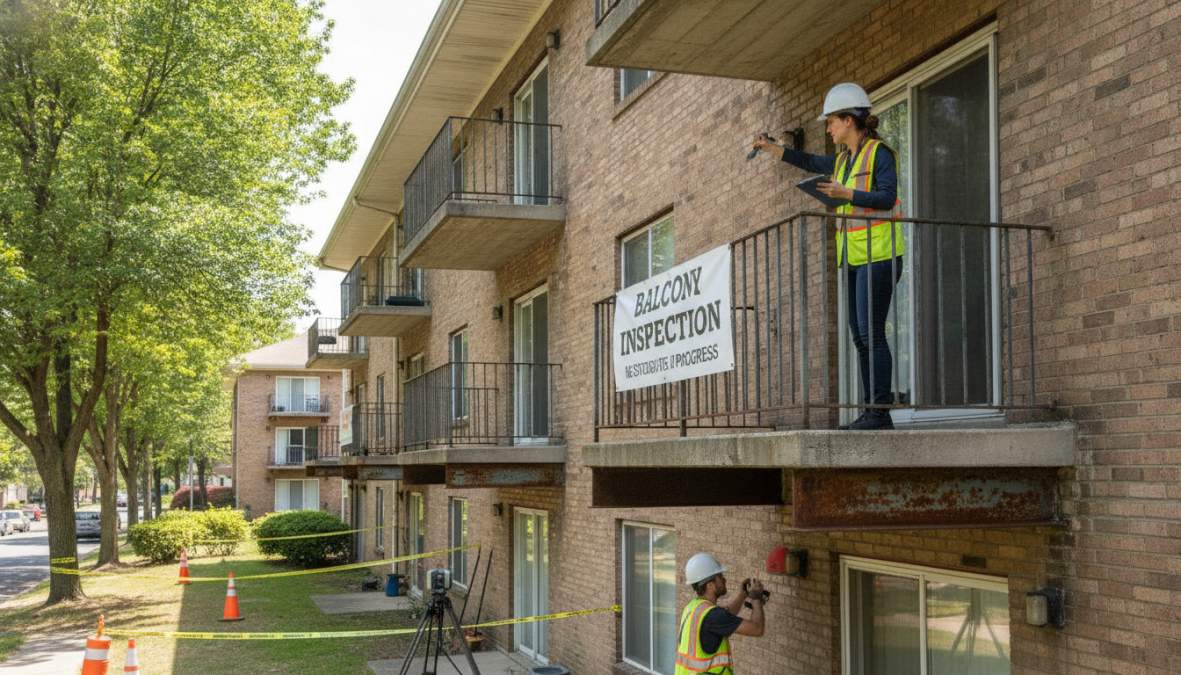
Knowing how to prepare for balcony inspection is the difference between a smooth compliance process and a costly scramble. At Apex Balcony, we’ve guided hundreds of California building owners and HOAs through this process, and the pattern is consistent: properties that prepare systematically pass faster, cost less to remediate, and carry far less legal exposure.
A balcony inspection is a formal structural safety assessment of exterior elevated elements (EEEs), including balconies, decks, stairways, and walkways, conducted by a licensed inspector to verify compliance with California building code and safety standards.
The properties that sail through inspections have been maintaining documented records, addressing moisture intrusion proactively, and keeping access points clear long before any inspector shows up.
How to Prepare for a Balcony Inspection: A Step-by-Step Overview
Preparing for a balcony inspection requires four distinct actions, each building on the last. Skip one and you risk a failed inspection or a surprise remediation bill.
Step 1: Review Applicable Regulations (SB 326 and SB 721)
California law draws a clear line between two inspection regimes, and confusing them is a common and expensive mistake.
SB 326 applies to condominium associations governed by an HOA. It requires inspection of all EEEs more than six feet above grade and supported by wood or wood-based products, at least once every nine years (first deadline: January 2025). The inspector must be a licensed architect or structural or civil engineer.
SB 721 applies to multi-family residential buildings with three or more units not governed by an HOA. Inspector qualifications are broader: licensed contractors, architects, civil or structural engineers, or building inspectors with specific credentials all qualify.
According to California Legislative Information on SB 721, property owners who fail to complete required inspections face mandatory repair orders and potential civil liability. Knowing which law governs your property determines your timeline, inspector qualifications, and reporting obligations.
Pull your building’s original permit records before the inspector arrives. If your property was built before 2000, the deck framing details may not match current code, knowing this in advance lets you address it proactively.
Step 2: Clear and Secure All Access Points
Inspectors need unobstructed access to every EEE on the property. Clear all furniture, planters, grills, and storage from balcony surfaces at least 48 hours before the inspection, anything blocking access delays the assessment and can force a return visit. For multi-family dwellings, coordinate access with every tenant unit; California law typically requires a minimum 24-hour written notice before entry.
Step 3: Gather Documented History and Prior Repair Records
A documented maintenance history is one of the strongest signals of due diligence you can present. Gather the following before the inspection:
- Original construction permits and approved plans
- Any prior inspection reports
- Records of waterproofing applications and dates
- Receipts and scopes of work for balcony or deck repairs
- HOA maintenance logs (if applicable)
- Manufacturer warranties for decking materials or waterproofing membranes
If records are incomplete, note the gaps honestly. A complete paper trail demonstrates active property management and matters in any subsequent liability review.
Step 4: Complete Pre-Inspection Maintenance Tasks
The week before an inspection is not the time for major repairs, significant structural work immediately beforehand can complicate the assessment, since inspectors need to evaluate actual conditions, not freshly patched surfaces. Do address obvious cosmetic and drainage issues: clear debris from drains, remove standing water, clean visible mold or mildew, and tighten loose railing hardware.
Signs of Balcony Water Damage Every Property Owner Should Know
Moisture intrusion is the leading cause of structural failure in exterior elevated elements. Understanding what to look for before the inspector arrives gives you a head start on remediation.
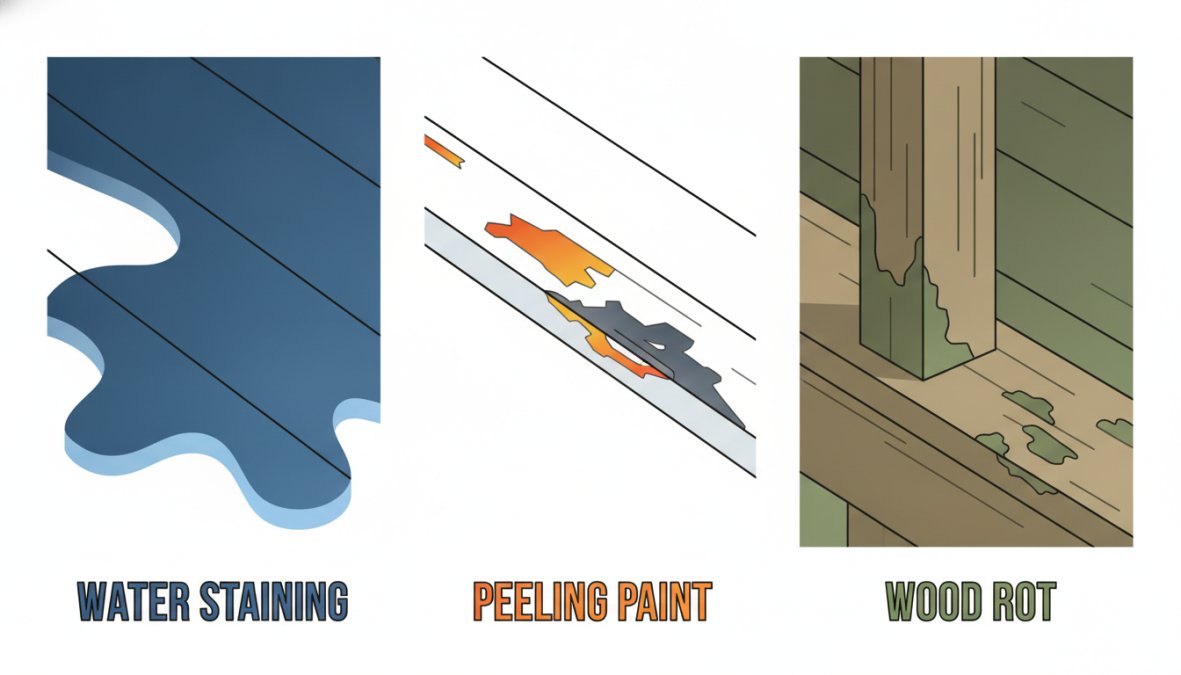
Visual Identification Guide for Non-Experts
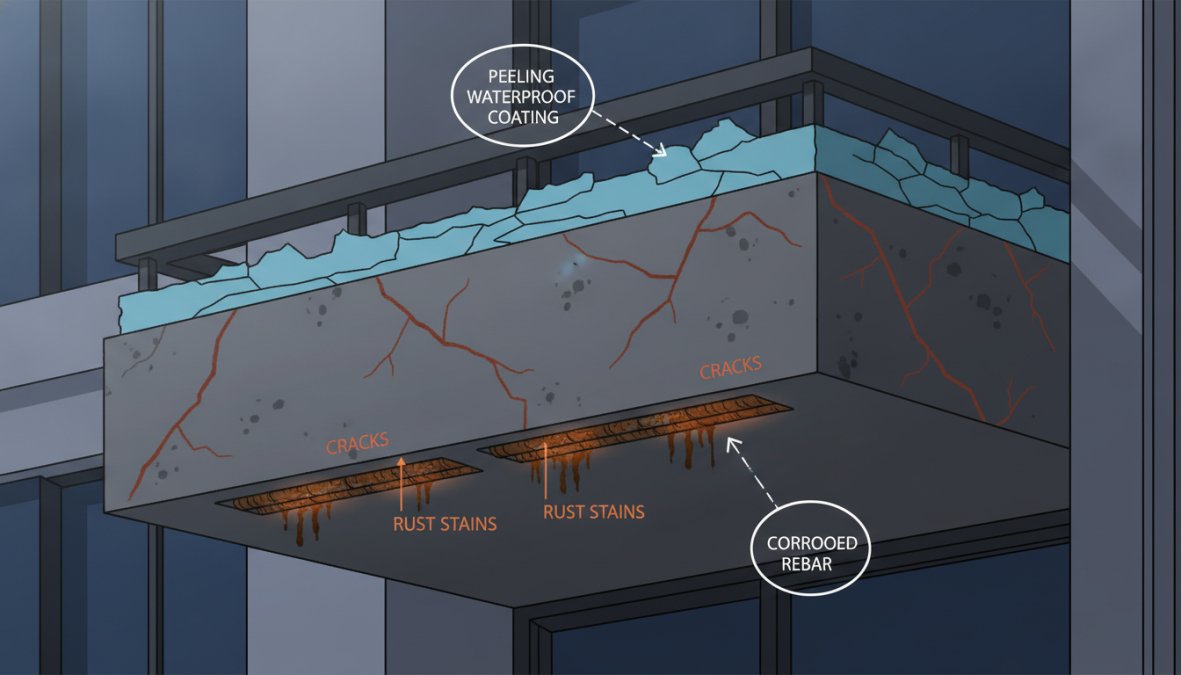
Staining and discoloration: Dark streaks or rust-colored stains on the deck surface or the ceiling below a balcony indicate water moving through the assembly, often the first sign of flashing failure.
Soft or spongy spots underfoot: Any area that flexes or feels soft when pressed suggests dry rot in the substructure. This is a structural concern, not a cosmetic one.
Peeling paint or bubbling coatings: Bubbling or peeling waterproofing membranes signal that moisture is trapped beneath them and the membrane has already been breached.
Rust stains at fastener locations: Rust streaks around screws, bolts, or post bases indicate water is reaching structural connections, directly affecting railing safety.
Gaps or cracks in caulking and flashing: Flashing at the ledger board is the most critical waterproofing point on any deck. Any visible gap or missing caulk at this junction should be flagged immediately.
Efflorescence on concrete decks: White chalky deposits indicate water is moving through the slab, carrying salts to the surface as it evaporates.
Do not attempt to seal over active water damage with caulk or deck coating before an inspection. Covering deteriorated material without addressing the underlying cause will not pass a non-invasive inspection and may be flagged as an attempt to conceal defects.
Your Balcony Safety Inspection Checklist Before the Inspector Arrives
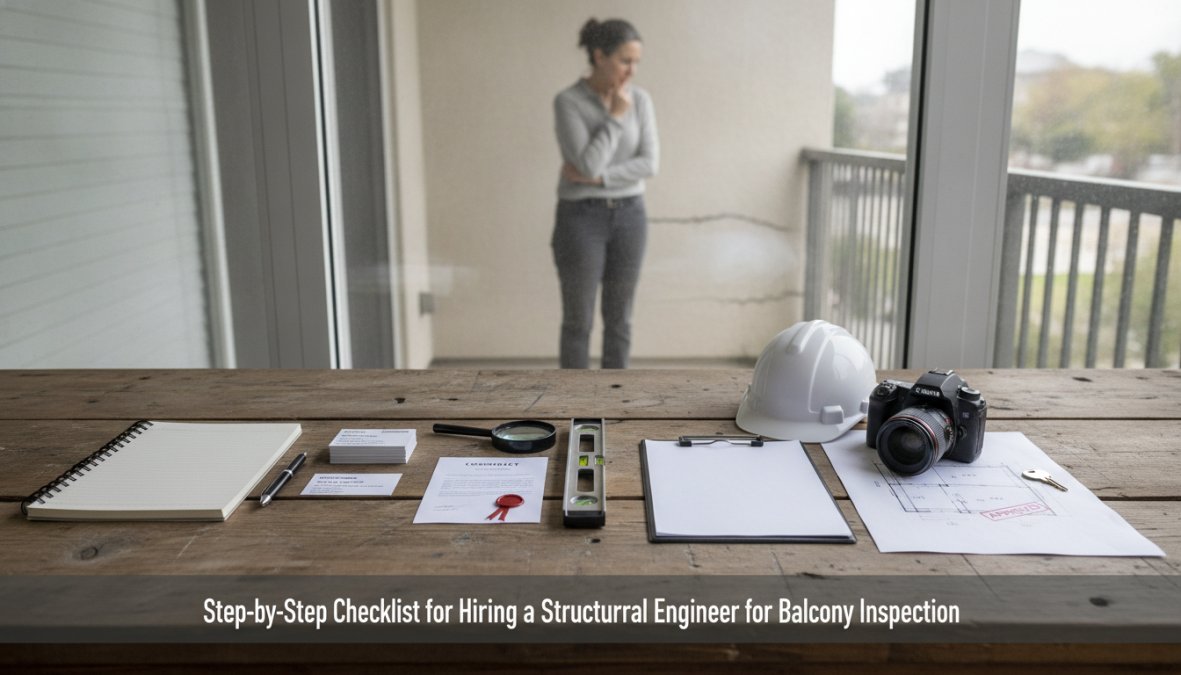
Use this checklist to confirm your property is ready. This balcony safety inspection checklist covers the most common preparation gaps that cause re-inspections.
Documentation:
- Confirm which law applies: SB 326 (HOA/condo) or SB 721 (multi-family rental)
- Locate original building permits and approved construction drawings
- Compile all prior repair records, waterproofing logs, and inspection reports
- Confirm inspector credentials match the requirements for your property type
Physical Preparation:
- Remove all furniture, planters, and personal items from all balcony surfaces
- Clear debris from all deck drains and scuppers
- Confirm underside access is unobstructed (ladders, hatches, or crawl spaces)
- Tighten any visibly loose railing hardware
- Document visible water staining, soft spots, or flashing gaps with photos
Tenant Coordination:
- Deliver written 24-hour (minimum) notice to all affected units
- Confirm inspection date and access window with tenants
- Provide tenants with a brief written explanation of the inspection purpose
Post-Inspection Readiness:
- Identify a licensed contractor for potential remediation work
- Have a preliminary budget range ready for common repair scenarios
- Confirm your property insurance covers structural repair claims
How Long Does a Balcony Inspection Take?
A balcony inspection typically takes one to four hours for a standard multi-family property. A single building with six to twelve units and straightforward access usually runs one to two hours; larger complexes with multiple buildings or limited underside access can take a full day or require multiple visits.
The timeline also depends on whether the inspector is conducting a non-invasive visual assessment or invasive probing of suspect areas. Under SB 326 and SB 721, the initial inspection is non-invasive; if concerns arise, the inspector may recommend targeted invasive testing, which requires a separate appointment and additional cost. Plan for roughly 15-30 minutes per balcony or deck element.
Hiring a Balcony Inspector: What to Look for in California
The inspector you hire determines the quality of your compliance documentation, and not all inspectors are equal.
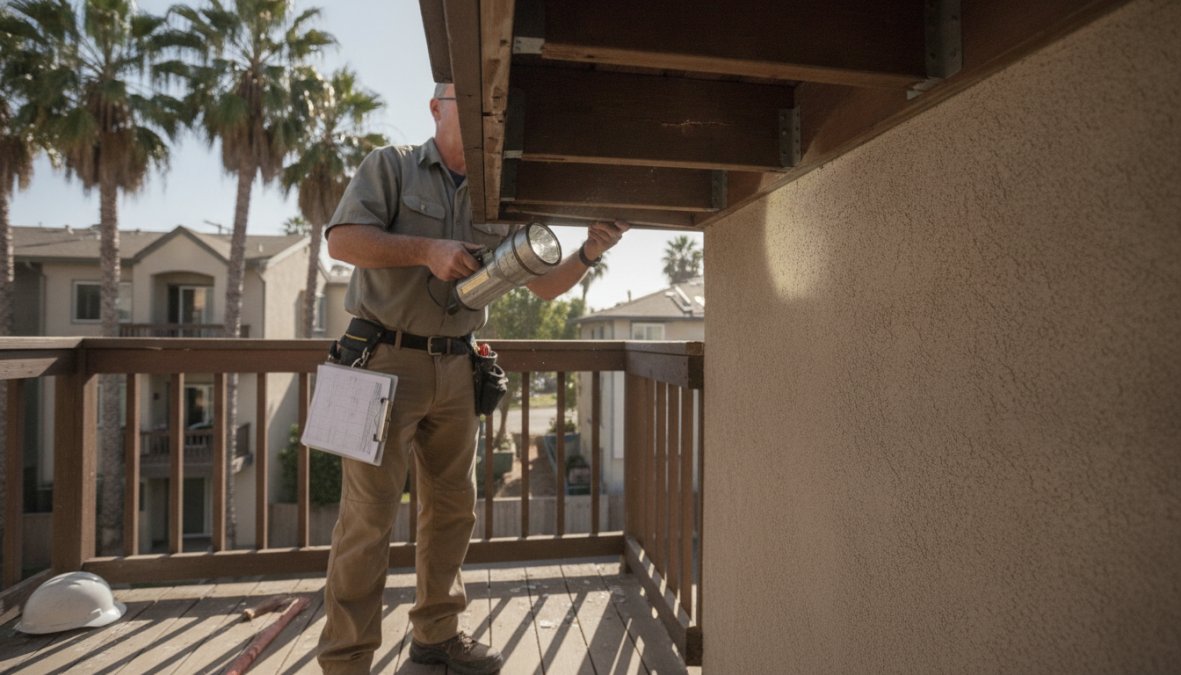
California law specifies who can conduct EEE inspections. For SB 721 properties, eligible inspectors include licensed general contractors (B license), architects, civil or structural engineers, and building inspectors with specific certifications. For SB 326 properties, only licensed architects or licensed structural or civil engineers qualify.
Beyond legal credentials, look for:
- Specific EEE experience: Ask how many SB 326 or SB 721 inspections the inspector has completed.
- Familiarity with local building codes: An inspector who regularly works in your county will know local amendments and enforcement patterns.
- Clear written reporting: Ask for a sample report before hiring to confirm it meets legal documentation standards.
- Insurance and licensing verification: Confirm the inspector’s license is current through the California Contractors State License Board license lookup.
Apex Balcony’s licensed inspectors bring decades of combined construction and design experience focused on California EEE compliance, handling the full inspection scope for both SB 326 and SB 721 properties and delivering reports that satisfy legal requirements and provide a direct path to any necessary repairs.
What Happens After the Inspection: Remediation, Costs, and Next Steps
The inspection report is not the end of the process, for many properties, it’s the beginning of a repair workflow that needs careful management to stay compliant and cost-effective.
Post-Inspection Remediation Workflow
A structured remediation workflow prevents the most common post-inspection mistake: rushing into repairs without a clear scope of work, which leads to incomplete fixes and repeat failures.
Follow this sequence:
- Review the inspection report in detail. Categorize findings into three buckets: immediate safety hazards (emergency action required), code deficiencies (repair within the legally mandated timeline), and maintenance recommendations (best-practice improvements without a legal deadline).
- Obtain multiple repair bids. For any structural repair involving load-bearing capacity, deck framing, or waterproofing, get at least three bids from licensed contractors using the same scope of work.
- Prioritize by safety, then by legal deadline. Address immediate hazards first, then sequence remaining repairs by statutory deadline under SB 326 or SB 721.
- Document all repairs with permits and inspections. Structural repairs to EEEs typically require a building permit. Unpermitted repairs can void compliance documentation and create liability exposure.
- Schedule a follow-up inspection if required. Under SB 721, if the inspector identifies a condition requiring repair, owners must complete repairs and have the work inspected within 120 days. Track this deadline precisely.
The remediation workflow is where most property owners lose time and money. Treating the inspection report as a prioritized repair schedule, not just a list of problems, keeps the process on track and on budget.
Budgeting and Cost Estimation for Balcony Repairs
Low-severity findings (surface coating failure, minor caulking gaps, hardware tightening): Maintenance-level costs handled by a property maintenance contractor, typically without a structural permit.
Moderate-severity findings (waterproofing membrane replacement, flashing repair, localized dry rot): Require a licensed contractor and building permit. Scope expands if dry rot has spread into deck framing or the ledger board connection.
High-severity findings (significant structural failure, compromised load-bearing capacity, widespread dry rot): Major repair projects that may require partial or full deck replacement, scaling with the size of the affected area.
Budget conservatively, experienced property managers generally allocate a 20-30% contingency above the initial repair bid for EEE work, because moisture damage rarely stops exactly where it appears on the surface.
According to California Department of Housing and Community Development guidance on building maintenance, property owners who address structural deficiencies proactively face significantly lower total repair costs than those who defer maintenance until a mandatory inspection forces action.
How to Prepare for a Balcony Inspection: Tenant Communication Templates
Tenant communication is one of the most overlooked parts of inspection preparation. Done poorly, it creates confusion and delays access. California law requires written notice to tenants before an inspector accesses a unit or its associated balcony, the minimum is 24 hours, but 48-72 hours is better practice for multi-unit properties.
Use these templates as a starting point:
Template 1: Initial Inspection Notice
Dear [Resident Name],
We are writing to inform you that [Property Name] will be undergoing a mandatory balcony and exterior elevated element safety inspection required under California law (SB 326/SB 721). This inspection is scheduled for [Date] between [Time] and [Time].
To complete the inspection, the inspector will need access to your balcony/deck area. No entry into your living space is required. Please remove all furniture, planters, and personal items from your balcony surface before [Date/Time].
If you have questions or scheduling concerns, please contact [Property Manager Name] at [Contact Information].
Thank you for your cooperation.
[Property Management Name]
Template 2: Reminder Notice (24 Hours Before)
Dear [Resident Name],
This is a reminder that the mandatory balcony safety inspection is scheduled for tomorrow, [Date], between [Time] and [Time].
Please ensure your balcony is cleared of all personal items before the inspector arrives. If you have not yet done so, please complete this today.
Contact [Property Manager Name] at [Contact Information] with any questions.
[Property Management Name]
Template 3: Post-Inspection Update (if repairs are required)
Dear [Resident Name],
Thank you for your cooperation during the recent balcony safety inspection. The inspection has been completed, and [we are pleased to report no significant deficiencies were found / we have identified repairs that are required to ensure continued safety and compliance].
[If repairs are needed:] We will be scheduling repair work beginning [estimated date]. We will provide advance notice before any work begins that affects your unit or balcony access.
We are committed to maintaining safe conditions for all residents. Please contact [Property Manager Name] at [Contact Information] with any questions.
[Property Management Name]
Keep copies of all tenant notices with delivery confirmation (email read receipts, certified mail, or signed acknowledgment). This documentation is part of your due diligence record and protects you in any subsequent liability dispute.
For property managers handling inspections across multiple buildings, the California Apartment Association’s tenant notice resources offers additional guidance on notice requirements and best practices for multi-family dwellings.
Balcony inspections under SB 326 and SB 721 carry real legal and safety consequences, and preparation is not optional. Apex Balcony works with building owners and HOAs across California to handle the full inspection process: from initial compliance review through licensed EEE inspection to a clear, documented path for any required repairs. Our team’s decades of combined construction and design experience means we identify early signs of structural failure that generalist inspectors miss. Book your inspection with Apex Balcony and get the compliance documentation your property needs, backed by inspectors who know California law and structural failure modes in equal measure.
Frequently Asked Questions
What do inspectors look for during a balcony inspection?
During a balcony inspection, licensed inspectors assess exterior elevated elements for structural integrity, moisture intrusion, dry rot, waterproofing failures, railing safety, and load-bearing capacity. They examine deck framing, flashing, and connections between the balcony and the main structure. Under California law (SB 326 and SB 721), the inspection must evaluate whether the EEE can safely support expected loads and identify any conditions that pose a risk of structural failure.
How often are balcony inspections required in California?
Under SB 721, inspections of exterior elevated elements on multi-family dwellings with three or more units are required every six years. SB 326 applies to HOA-governed common interest developments and mandates inspections every nine years. Property owners should track their documented history of inspections carefully to remain in HOA compliance and meet California law deadlines, as missed inspections can create significant liability exposure.
What are common balcony safety violations found during inspections?
Common violations include inadequate waterproofing, deteriorated flashing, dry rot in deck framing, loose or unstable railings, and compromised load-bearing capacity. Moisture intrusion is one of the most frequent issues because it often goes undetected until structural damage is advanced. Inspectors also flag missing or improper drainage, corroded fasteners, and gaps in building code compliance. Addressing these issues early through preventative maintenance is far less costly than emergency repairs after structural failure.
How long does a balcony inspection take, and do I need to be present?
A standard balcony safety inspection typically takes between one and three hours per building, depending on the number of exterior elevated elements, their accessibility, and the complexity of the structure. Larger multi-family dwellings with many units may take longer. Property managers or owners are not required to be present for every element, but ensuring all access points are cleared and unlocked in advance helps the licensed inspector complete a thorough, non-invasive inspection efficiently.
What happens if my balcony fails inspection?
If an exterior elevated element fails inspection, California law requires the property owner to restrict access immediately and begin repairs within a specified timeframe. Your licensed inspector will provide a written report detailing each deficiency. From there, you should obtain contractor bids, prioritize repairs by severity, and document all remediation work. Once repairs are complete, a follow-up inspection confirms the structure meets safety certification standards. Notifying tenants promptly and in writing is both a legal requirement and a liability reduction best practice.
How much does a balcony inspection cost in California?
Balcony inspection costs vary based on building size, number of exterior elevated elements, and location. While specific pricing depends on the inspector and scope of work, property managers should budget separately for the inspection itself and any subsequent repairs. Getting multiple quotes from licensed inspectors, reviewing their experience with SB 326 and SB 721 compliance, and factoring in potential repair costs during annual budgeting cycles are all part of sound due diligence and preventative maintenance planning.