California Balcony Laws: A Compliance Guide for 2026
Learn how to comply with California balcony laws (SB 326 & SB 721). Step-by-step guide for inspections, deadlines, costs, and penalties. Get compliant.
Table of Contents
- Understanding How to Comply with California Balcony Laws
- SB 721 vs SB 326: Key Differences Explained
- Inspection Deadlines and Compliance Timeline
- Balcony Inspection Checklist: What Inspectors Look For
- Balcony Inspection Cost Breakdown and Budget Planning
- Penalties for Non-Compliance and Legal Consequences
- HOA and Property Owner Responsibilities
- Step-by-Step Compliance Action Plan for Your Property
California Balcony Laws: A Compliance Guide for 2026
Last Updated: June 29, 2026
Understanding how to comply with California balcony laws is a legal mandate with serious consequences for non-compliance. California’s SB 721 and SB 326 have fundamentally changed what’s required to keep residents safe and buildings legally sound. Properties that fail inspections face liability exposure, insurance complications, and potential legal action. Compliance isn’t just about passing an inspection, it’s about understanding structural requirements, knowing your timeline, and having a clear plan to remediate issues before they become emergencies.
Understanding How to Comply with California Balcony Laws
Compliance starts with knowing what you’re dealing with. These laws exist because balcony failures have caused injuries and deaths. They require systematic inspection and maintenance of exterior elevated elements to prevent deterioration before it becomes dangerous.
California’s balcony safety regulations apply to residential buildings with three or more units. The laws cover all elevated exterior elements: balconies, decks, stairs, and walkways that extend from the building.
What Are Exterior Elevated Elements (E3)?
Exterior Elevated Elements (E3) are any structural components that extend from a building and support occupant loads, including balconies, decks, exterior stairs, and fire escapes. E3s fail for predictable reasons: water intrusion, dry rot in wood components, corrosion in metal connections, and structural decay in concrete.
Common E3 components include cantilever balconies, deck systems, exterior stairs and landings, enclosed balconies, and fire escapes. Understanding what constitutes an E3 is critical because the law’s scope is broader than many property owners realize.
Structural Integrity and Safety Hazards
Structural integrity depends on three main factors: load-bearing connections, waterproofing systems, and absence of material deterioration. A balcony that looks fine may have serious hidden problems: rusted fasteners, rotted ledger boards, or water damage inside the structure.
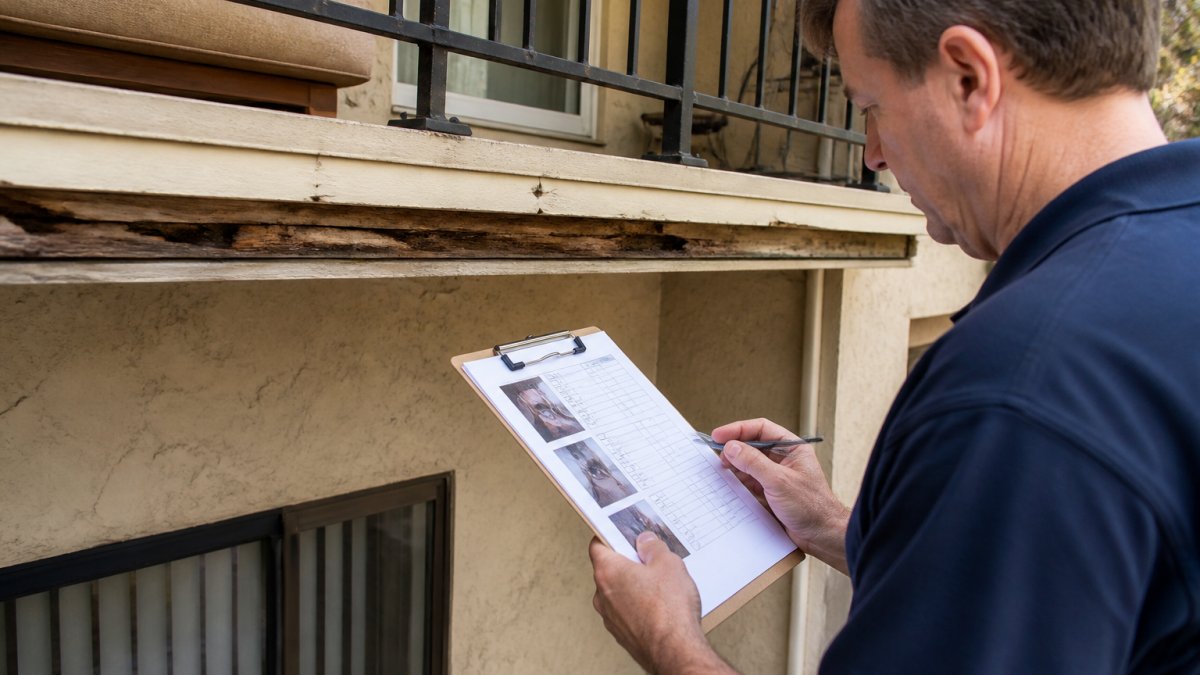
Safety hazards fall into two categories. First, visible problems: cracking concrete, spalling surfaces, visible corrosion, or obvious movement. Second, hidden problems that only invasive testing reveals: moisture trapped behind finishes, structural decay in concealed framing, or fastener corrosion.
Hidden problems often precede visible ones. By the time a balcony shows obvious signs of failure, structural damage may be advanced. This is why California law requires both visual and invasive inspection.
A balcony that passes visual inspection can still have serious structural problems. Water intrusion travels along the inside of structures, damaging framing and connections long before the surface shows damage. Invasive testing reveals this hidden deterioration before failure occurs.
SB 721 vs SB 326: Key Differences Explained
SB 721 (effective January 1, 2019) applies to residential buildings with three or more units. It requires inspection of all exterior elevated elements by a licensed structural engineer or architect. The law covers both new construction and existing buildings on a one-time or cyclical basis depending on the building’s status.
SB 326 (effective January 1, 2022) expanded the scope to include condominiums, planned communities, and other shared-ownership properties. It added stricter requirements for HOAs, including mandatory reserve studies that account for balcony repair costs and clearer disclosure requirements when selling units.
The key difference: SB 721 focuses on inspection and reporting, while SB 326 adds financial planning and disclosure requirements. A property subject to both laws must comply with both sets of requirements.
SB 721 requires the inspection; SB 326 requires the financial planning and disclosure. Both apply to most multifamily and condominium properties in California. Understanding which law applies to your property determines your specific deadlines and reporting obligations.
Inspection Deadlines and Compliance Timeline
Missing inspection deadlines creates immediate legal liability. For buildings constructed before January 1, 2008, the deadline for the initial SB 721 inspection was January 1, 2025. Properties constructed between January 1, 2008 and December 31, 2013 had until January 1, 2026. Buildings constructed after January 1, 2014 must complete their first inspection within nine years of occupancy.
After the initial inspection, buildings enter a cyclical schedule. Buildings with no significant structural defects move to a nine-year inspection cycle. Buildings with defects requiring repair move to a three-year cycle until repairs are completed and verified.
Initial Inspection Cycles and Frequency
The inspection cycle is determined by the building’s condition. A building with no significant defects enters a nine-year cycle. A building where inspectors identify defects requiring repair enters a three-year cycle. You must complete repairs and have them verified within three years, then schedule another full inspection.
Defects are categorized by severity. Minor surface deterioration might not trigger repair requirements, but structural defects affecting load-bearing capacity must be repaired. The inspector’s report specifies which defects require remediation.
Statutory Requirements and Certification
Every inspection must produce a written report signed by a licensed structural engineer or licensed architect. The report must document the condition of all exterior elevated elements, identify any defects, specify whether defects are significant structural defects, and recommend repair timelines.
The certification requirement means you cannot use a general contractor or unlicensed inspector. The professional must hold an active California license and have liability insurance. The report becomes part of your building’s permanent record and must be disclosed to prospective buyers. For HOAs, the report must be provided to the board and included in reserve studies.
Balcony Inspection Checklist: What Inspectors Look For
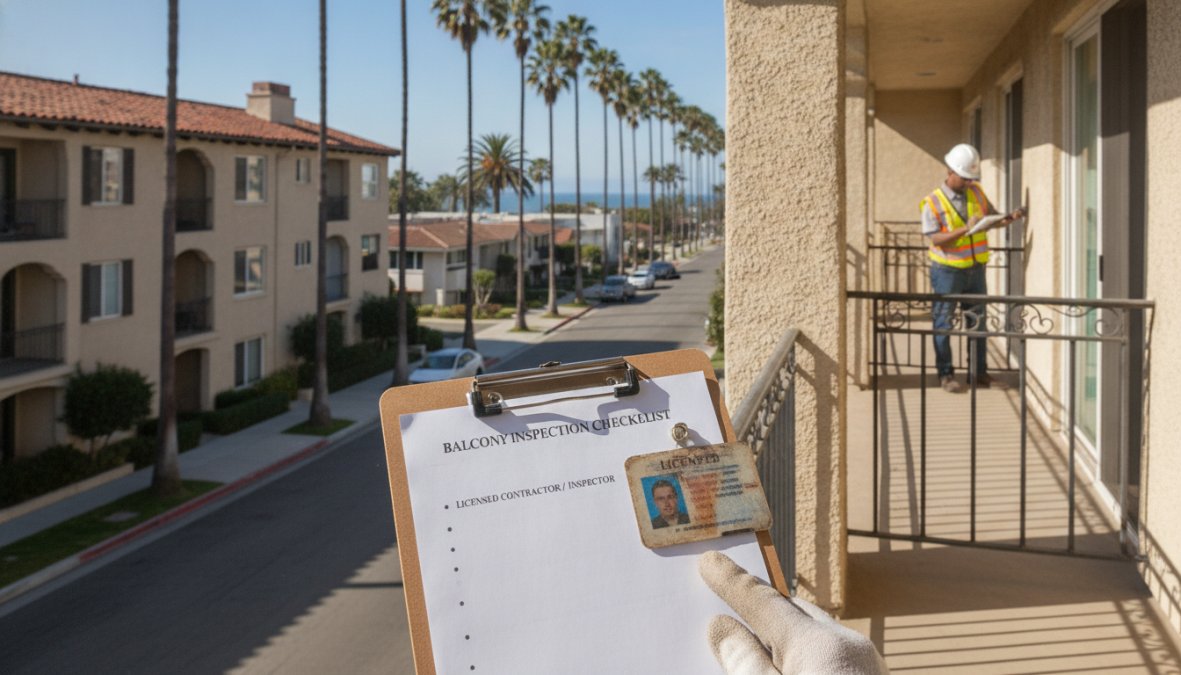
A professional inspection is systematic and comprehensive. Understanding what inspectors evaluate helps you prepare and identify obvious problems before the formal inspection.
Visual and Invasive Testing Standards
The inspection process combines visual inspection and invasive testing. Visual inspection documents the condition of surfaces, finishes, and visible components. Invasive testing involves removing or opening finishes to examine hidden components, such as drilling test holes to check for moisture or removing trim to inspect ledger board connections.
Common inspection findings include water intrusion at balcony-to-building connections, rust and corrosion on metal fasteners, dry rot or wood decay in framing members, cracking or spalling in concrete, deteriorated caulking or sealants, failed waterproofing membranes, separation between balcony and building structure, and movement or deflection in structural members.
The inspector rates each defect by severity. Significant structural defects affecting load-bearing capacity require repair. Minor surface deterioration may be acceptable depending on building code standards.
Licensed Structural Engineers and Architects
Only licensed structural engineers or licensed architects can conduct SB 721 inspections. This professional requirement ensures consistent standards and creates accountability.
When selecting an inspector, verify their license through the California Department of Consumer Affairs. Check their professional liability insurance. Ask about their experience with SB 721 inspections specifically.
Request references from the inspector’s recent clients. Ask about their thoroughness, communication style, and whether they identified problems that needed repair. A good inspector explains their findings clearly and doesn’t rush through the process.
Balcony Inspection Cost Breakdown and Budget Planning
Inspection costs vary based on building size, complexity, and condition. A typical inspection for a small multifamily building (5-20 units) costs between $3,000 and $8,000. A mid-size building (20-50 units) typically costs $8,000 to $15,000. Large buildings (50+ units) can exceed $20,000 depending on complexity.
Cost variation depends on building size, complexity, and condition. A modern building with standard balcony construction takes less time than an older building with unusual designs or multiple addition phases.
Vendor Vetting Criteria and Selection
Selecting the right inspector is critical because their findings determine your repair obligations and timeline.
Experience with SB 721 compliance: Ask how many inspections they’ve conducted under SB 721 specifically.
Building type familiarity: If your building is a condo conversion, mid-rise, or garden apartment, ask if they’ve inspected similar buildings.
Insurance and licensing verification: Confirm their professional liability insurance is current and adequate. Check their license status on the California Department of Consumer Affairs website.
Communication style: Do they explain findings clearly? Will they answer questions about repair options?
Timeline and availability: Can they schedule the inspection within your required timeframe?
Cost transparency: Do they provide a clear estimate upfront?
Penalties for Non-Compliance and Legal Consequences
A building that fails to complete an inspection by the deadline is in violation of state law. The property owner can be cited by local building departments, face fines starting at $100 per day of non-compliance, and be subject to legal action by residents.
If an inspection is completed but defects aren’t repaired within required timelines, the building remains in violation. The owner faces continued fines, potential liability if someone is injured on a defective balcony, and disclosure requirements that impact property value.
Liability and Insurance Implications
Non-compliance creates direct liability exposure. If someone is injured on a defective balcony and the building owner knew or should have known about the defect, the owner faces personal injury liability. Insurance companies may deny claims if the building violated state safety requirements.
For HOAs, non-compliance creates fiduciary liability. Board members can be personally liable if they failed to ensure compliance with state law. Some insurers now require proof of SB 721 compliance as a condition of coverage. If your building can’t demonstrate compliance, you may face coverage denial or cancellation.
The financial exposure is real. A single injury claim on a defective balcony could exceed a million dollars. Regulatory fines accumulate quickly, $100 per day adds up to $36,500 per year. The cost of inspection and repair is far less than the cost of non-compliance.
HOA and Property Owner Responsibilities
For properties with HOAs, the board has primary responsibility for ensuring compliance. This includes hiring inspectors, maintaining inspection records, and ensuring repairs are completed. The board must also disclose inspection findings to unit owners and address repair costs in the reserve study.
For rental properties, the owner bears full responsibility. Residents have the right to request copies of inspection reports and to be informed of significant defects.
Maintenance Plans and Remediation Requirements
Once an inspection identifies defects, a maintenance plan must be created specifying which defects require repair, timelines for completion, and the method of repair. For significant structural defects, the timeline is typically 180 days from the inspection date.
Remediation involves fixing the immediate problem and preventing recurrence. If water intrusion caused dry rot, the repair must address both the rot and the water intrusion source. After repairs are completed, the building owner must obtain verification from a licensed professional that repairs were done properly.
Step-by-Step Compliance Action Plan for Your Property
Step 1: Determine Your Compliance Status
Identify when your building was constructed and whether it’s already been inspected under SB 721. Check your building records for any existing SB 721 inspection reports. If reports exist, note the inspection date and any defects identified.
Step 2: Hire a Licensed Inspector
Select a licensed structural engineer or architect with SB 721 experience. Get multiple quotes and check references. Schedule the inspection within 30 days if possible.
Step 3: Review the Inspection Report
Review the report carefully. Understand what defects were identified and whether they’re classified as significant structural defects requiring repair. Ask the inspector to explain findings you don’t understand.
Step 4: Develop a Repair Plan
For buildings with significant defects, create a detailed repair plan specifying what will be repaired, by whom, and on what timeline. Get cost estimates from qualified contractors. For buildings in nine-year inspection cycles with no significant defects, document this status and create a reminder for the next inspection.
Step 5: Complete Repairs
Execute the repair plan on schedule. For buildings with significant defects, the 180-day deadline is firm. Document all repair work with photographs and contractor certifications.
Step 6: Obtain Verification
Once repairs are complete, hire a licensed professional to verify that repairs were done properly and that defects have been resolved.
Step 7: Update Records and Plan for Next Inspection
File the inspection report, repair documentation, and verification report in your building records. Create a calendar reminder for your next required inspection. For HOAs, disclose the inspection findings and repair status to unit owners.
Common Mistakes to Avoid During Compliance
Hiring an unqualified inspector: Always verify licensing before hiring.
Ignoring minor defects: Address them during the repair phase rather than waiting for them to worsen.
Delaying repairs: The 180-day timeline for significant structural defects is not flexible. Start repairs immediately after the inspection.
Incomplete repairs: If water intrusion caused the damage, the repair must include waterproofing improvements.
Poor documentation: Keep detailed records of inspections, repairs, and verifications.
Failing to disclose findings: For HOAs and rental properties, disclosure of inspection findings is legally required.
The most expensive mistake is waiting until the last moment to start the compliance process. If your building is approaching a deadline and you haven’t hired an inspector, you’re already behind. Start planning now, not when the deadline is weeks away.
Compliance with California balcony laws is not optional, but it doesn’t have to be overwhelming. The key is understanding your obligations, hiring qualified professionals, and following a clear timeline. Start your inspection today and take the first step toward securing your building’s safety and legal standing.
Frequently Asked Questions
What is the difference between SB 721 and SB 326?
SB 721 applies to residential common interest developments (condominiums and HOAs) and mandates inspection of balconies and exterior elevated elements every nine years. SB 326 covers multifamily residential buildings with five or more units and requires similar inspections on a different timeline. Both laws aim to identify structural deterioration, waterproofing failures, and safety hazards before they become critical. Understanding which law applies to your property is essential for compliance.
How often are balcony inspections required in California?
Inspection frequency depends on which law governs your property. SB 721 (common interest developments) typically requires inspections every nine years, with the first cycle deadline based on your building's age. SB 326 (multifamily buildings) follows a separate timeline. After initial inspection, if significant deterioration is found, more frequent inspections or interim assessments may be required. Licensed structural engineers determine if additional cycles are needed based on findings.
What are the penalties for non-compliance with California balcony laws?
Penalties for non-compliance include civil liability, fines, and potential legal action from residents. Property owners and HOAs can face lawsuits if injuries occur due to uninspected or unrepaired balconies. Additionally, failure to comply may result in building code violations and permit denials for future projects. Insurance implications are significant, many policies exclude coverage for non-compliant structures. Timely inspections and remediation protect your property and residents from legal and financial risk.
Who is qualified to perform a California balcony inspection?
Only licensed structural engineers or licensed architects with appropriate credentials can perform California balcony inspections. These professionals must be registered in California and have expertise in identifying structural integrity issues, load-bearing deterioration, dry rot, corrosion, and waterproofing failures. They certify inspection reports, which are required for compliance. Hiring qualified professionals ensures your inspection meets statutory requirements and provides legally defensible documentation of your property's condition.