California Balcony Safety Law Deadlines: SB 326 vs SB 721
California balcony safety law deadlines explained. Learn SB 326 vs SB 721 requirements, inspection cycles, penalties, and compliance steps. Start your.
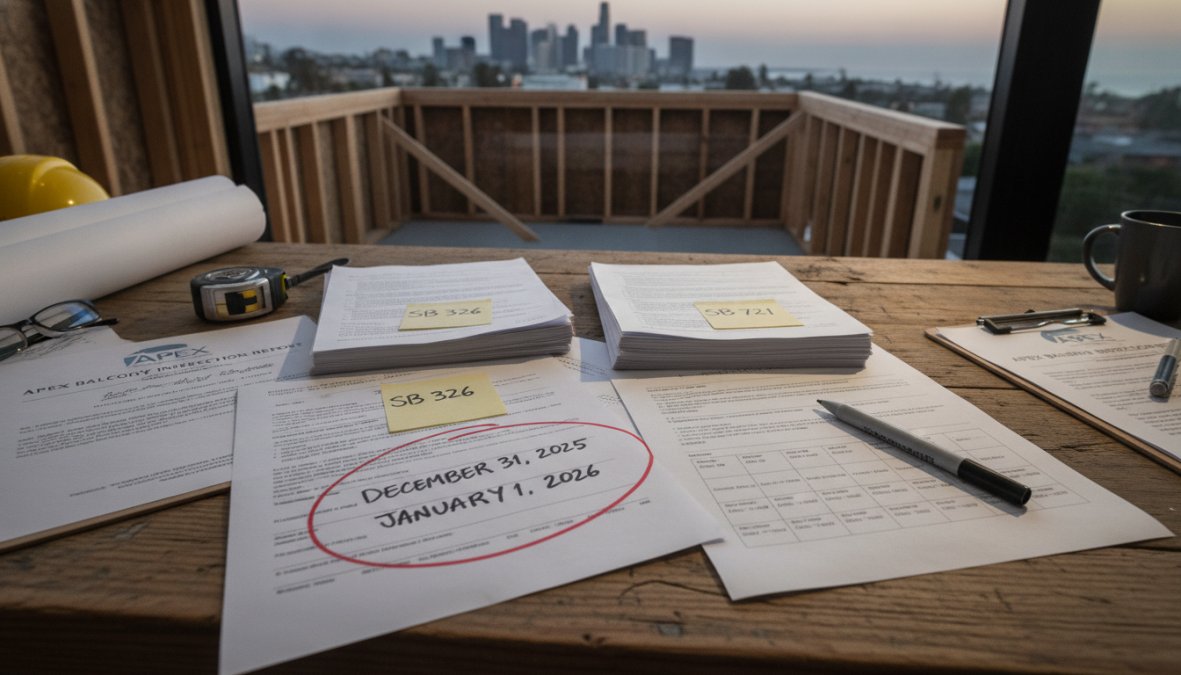
Table of Contents
- SB 326 vs SB 721: Understanding California’s Balcony Safety Laws
- Critical Deadlines and Extension Dates for Compliance
- Who Must Comply: Property Types and Exemptions
- SB 721 Inspection Requirements and Scope
- Inspection Frequency: 6-Year vs 9-Year Cycles
- California Balcony Inspection Penalties for Non-Compliance
- Cost of Balcony Safety Inspection in California
- Hiring a Structural Engineer for Balcony Inspection
Last Updated: July 12, 2026
Understanding California balcony safety law deadlines is critical for property owners, HOA boards, and building managers. California’s two major balcony safety laws, SB 326 and SB 721, create confusion about what’s required, when it’s due, and what happens if you miss the deadline. This guide provides the exact timeline, requirements, and next steps to stay compliant.
SB 326 vs SB 721: Understanding California’s Balcony Safety Laws
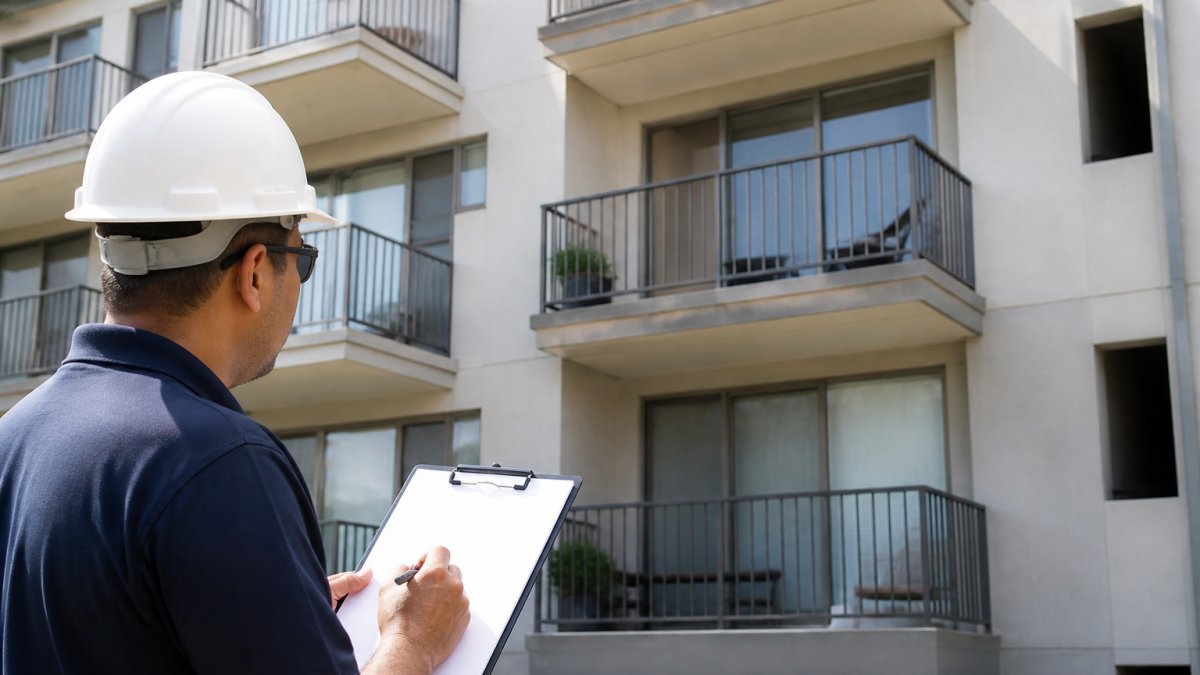
SB 326 (passed in 2018) requires visual inspections of exterior elevated elements in residential buildings three or more stories tall. Inspections must happen every six years and be signed off by a licensed architect or structural engineer. Non-compliance triggers daily fines starting at $100 per day.
SB 721 (passed in 2022) expanded requirements by lowering the threshold to buildings two or more stories and broadening what qualifies as an "exterior elevated element." It adds invasive testing requirements and extends the inspection cycle to nine years for some properties. Daily fines reach $200 or more, plus potential liability exposure.
The critical distinction: SB 326 focuses on visual assessment and basic structural integrity. SB 721 demands deeper investigation, including invasive testing for wood deterioration, waterproofing failures, and load-bearing component failures.
| Law | Year Passed | Building Height | Inspection Cycle | Testing Type | Daily Fine |
|---|---|---|---|---|---|
| SB 326 | 2018 | 3+ stories | 6 years | Visual only | $100+ |
| SB 721 | 2022 | 2+ stories | 9 years | Visual + invasive | $200+ |
Critical Deadlines and Extension Dates for Compliance
SB 326 Deadline Timeline
The original SB 326 compliance deadline was January 1, 2025, extended to January 1, 2026 for buildings actively working toward compliance. If your building completed an SB 326 inspection between January 1, 2018 and December 31, 2024, your next inspection is due six years from the completion date. Track your inspection completion date carefully, the six-year clock starts when the licensed professional signed the report.
SB 721 Deadline Timeline
SB 721 created a compliance schedule based on building height and location. The first wave of inspections was due by January 1, 2025 for buildings in specified regions; the second wave followed on January 1, 2026. The state extended deadlines by six months for properties that submitted requests by specific cutoff dates, but these extensions are no longer available as of mid-2026. If you haven’t started your SB 721 inspection, you’re now in violation and accruing daily fines.
Going forward, SB 721 inspections are due every nine years from completion date, using a rolling cycle rather than a fixed calendar deadline.
Who Must Comply: Property Types and Exemptions
Properties that MUST comply:
- Condominiums (all sizes)
- Apartment complexes with 2 or more stories (SB 721) or 3 or more stories (SB 326)
- Mixed-use residential buildings with residential units above ground level
- Townhomes and row houses with shared balconies or elevated walkways
Properties that are EXEMPT:
- Single-family homes (unless part of a planned community with shared elements)
- Buildings under two stories (SB 721 exemption only)
- Commercial buildings without residential units
- Mobile home parks (different regulations apply)
When SB 721 lowered the threshold from three stories to two stories, two-story buildings became newly subject to compliance. If your building is exactly two stories and hasn’t conducted an SB 721 inspection, you’re now in violation.
If you own a two-story residential building and haven’t conducted an SB 721 inspection, you’re now in violation. The state began enforcement in 2026, and property owners are receiving notices of violation with daily fines accruing retroactively to January 1, 2026.
SB 721 Inspection Requirements and Scope
An SB 721 inspection is a systematic, documented evaluation of every exterior elevated element with specific testing protocols and professional requirements.
Defining Exterior Elevated Elements (EEEs)
Exterior Elevated Elements (EEEs) include balcony decking and framing, deck boards and support systems, exterior stairways and landings, railings and guardrails, connections between elevated structures and the main building, waterproofing membranes and flashing, underlying support beams and columns, and ledger boards connecting decks to the building. If a component supports weight or prevents failure of an elevated element, it’s an EEE and must be inspected.
Visual vs. Invasive Testing Requirements
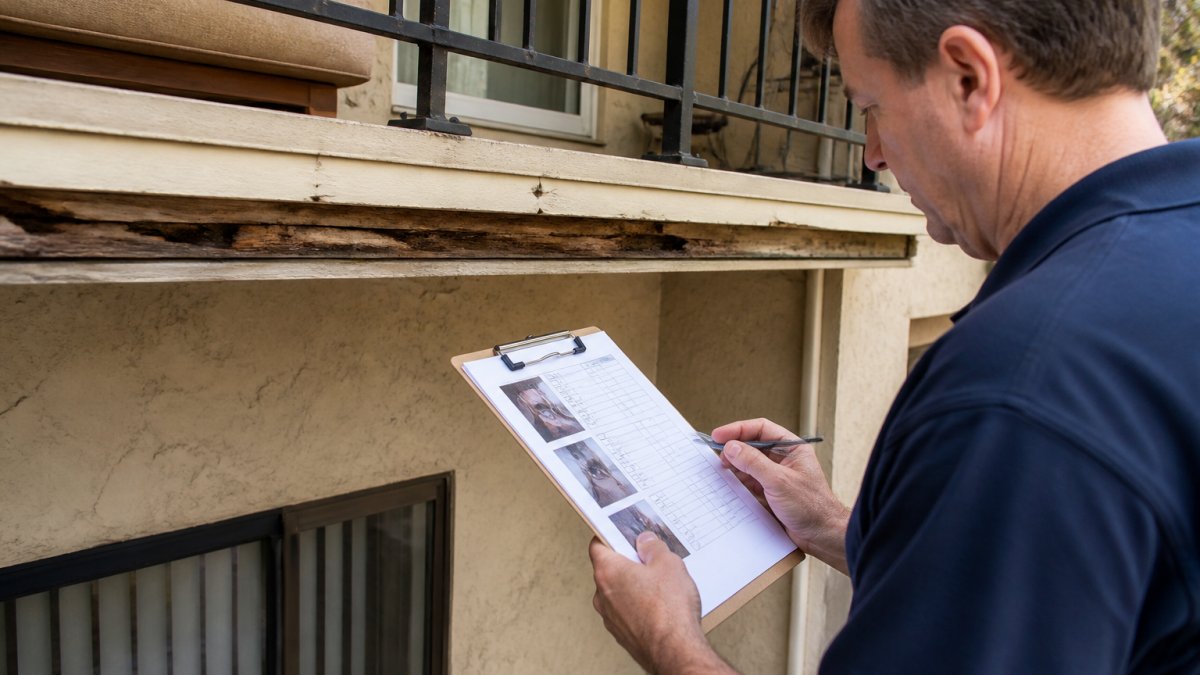
An SB 721 inspection starts with visual assessment. The licensed professional documents visible signs of deterioration: cracks, rot, rust, loose fasteners, failed waterproofing, and movement or settling.
If visual assessment reveals signs of decay, moisture intrusion, or structural compromise, invasive testing is required. This includes probing wood with moisture meters and decay detectors, removing fasteners to inspect hidden surfaces, testing waterproofing membranes for breaches, and measuring beam deflection. Invasive testing adds significant time and cost, a visual-only assessment might take one day, while an inspection requiring invasive testing can take three to five days.
The inspector must document all findings in a written report signed by a licensed architect or structural engineer, identifying defects, rating severity, and recommending repairs or further investigation.
Inspection Frequency: 6-Year vs 9-Year Cycles
SB 326 requires inspections every six years with no flexibility based on condition. SB 721 uses a nine-year cycle starting from when you complete your first SB 721 inspection. If you’re currently doing your first SB 721 inspection in 2026, your next one won’t be due until 2035.
Don’t assume that completing an SB 326 inspection satisfies SB 721 requirements. An SB 721 inspection can replace an SB 326 inspection, but not vice versa. If you’re subject to SB 721, you need an inspection meeting SB 721 standards, including invasive testing where required.
California Balcony Inspection Penalties for Non-Compliance
Daily Fines and Liability Exposure
Under SB 326, property owners face fines of $100 to $200 per day beginning on the deadline date and continuing until inspection is completed. Under SB 721, daily fines are higher: $200 to $400 per day. A building missing the SB 721 deadline by 30 days could accrue $6,000 to $12,000 in fines before inspection is even scheduled.
If a balcony failure causes injury or death and the property owner hadn’t completed a required inspection, that failure becomes evidence of negligence. Insurance may not cover the liability claim, and the property owner could face personal liability for damages.
Property Owner Liability and Insurance
Most standard commercial general liability policies exclude balcony and elevated element failures if the property owner is out of compliance with local building codes and safety laws. This creates double financial exposure: the liability claim itself and legal defense costs because the insurance company denies coverage based on non-compliance.
Cost of Balcony Safety Inspection in California
Budget Planning and Cost Variables
A visual-only inspection of a small apartment building (4-8 units) costs $2,000 to $4,000. A mid-size complex (20-40 units) with invasive testing runs $8,000 to $15,000. Large complexes (100+ units) with significant deterioration can exceed $30,000.
Cost variables include building age and condition, balcony complexity, accessibility requirements, geographic location, and testing requirements. Older buildings with visible deterioration require more invasive testing, which increases cost. Buildings requiring scaffolding or lifts add $2,000 to $5,000.
Budget for invasive testing as a standard cost, not a contingency. Most California buildings built before 2000 will require invasive testing under SB 721. Plan for 30-50% higher costs than a visual-only inspection.
Property Manager Compliance Checklist
- Identify which law applies to your building (SB 326, SB 721, or both)
- Determine your building’s inspection deadline based on height, location, and law
- Calculate when your next inspection is due
- Set a calendar reminder 90 days before the deadline to begin vendor selection
- Request proposals from at least three licensed structural engineers or architects
- Verify each vendor’s experience with SB 326 and SB 721 compliance
- Confirm insurance coverage and bonding before signing a contract
- Schedule the inspection at least 60 days in advance
- Prepare building access and notify residents of inspection dates
- Review the completed inspection report for defects and recommendations
- File the inspection report with the local building department by the required deadline
- If defects are identified, create a repair timeline and budget
- Document all repairs and obtain sign-offs from the licensed professional
- Store inspection reports and repair documentation for at least 10 years
- Set a reminder for your next inspection cycle
Hiring a Structural Engineer for Balcony Inspection
Licensed Professional Requirements
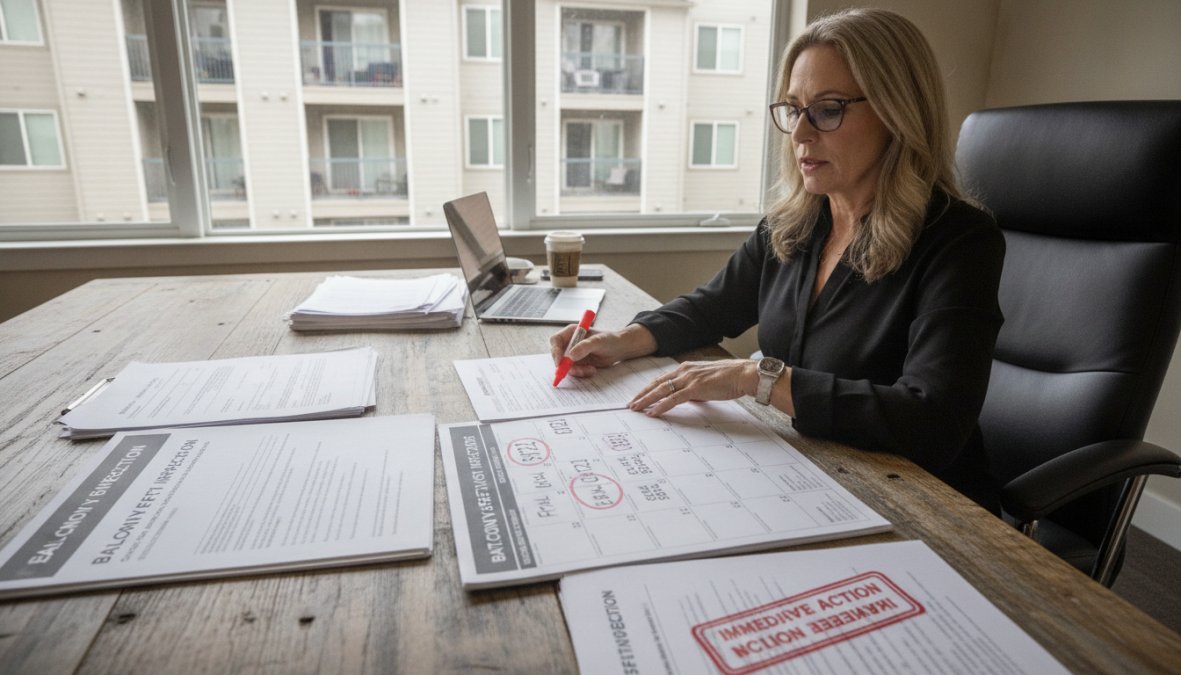
California law requires that the inspection report be signed by a licensed architect (LA) or professional engineer (PE) with structural engineering credentials. The licensed professional must carry errors and omissions (E&O) insurance and maintain a current license with the California Department of Consumer Affairs. Verify the professional’s license status on the state’s online license verification system before hiring.
The professional must have experience with balcony and elevated element inspection. Look for professionals who can demonstrate previous SB 326 or SB 721 inspections and provide references from other property owners or HOA boards.
Vendor Selection Criteria and Questions to Ask
When evaluating vendors, ask: How many SB 326 and SB 721 inspections have you completed? (Look for at least 20-30.) What is your process for invasive testing? What is your timeline and cost estimate? Request a sample report that includes photographs, specific defect locations, severity ratings, and repair recommendations. Vague reports are not acceptable.
Missing California balcony safety law deadlines creates cascading problems: daily fines, liability exposure, and the stress of managing an aging building with unaddressed defects. The solution is straightforward: get your inspection done now, understand what repairs are needed, and build a maintenance plan to prevent future failures. Book an inspection today and take control of your building’s safety and compliance.
Frequently Asked Questions
What is the difference between SB 721 and SB 326 California balcony safety laws?
SB 326 applies to residential buildings with three or more units built before January 1, 2020, and requires initial exterior elevated elements inspections by January 1, 2025. SB 721, which amended SB 326, expanded the scope to include additional building types and created stricter inspection frequency requirements. SB 721 requires reinspection every 6 years for buildings with balconies showing signs of failure, or every 9 years for those in good condition. Both laws mandate compliance with California Civil Code requirements for structural integrity and safety of balconies, decks, and stairways.
What are the penalties for missing California balcony inspection deadlines?
Property owners face daily civil penalties for non-compliance with SB 721 inspection requirements. Penalties accumulate each day the property remains non-compliant, creating significant financial liability. Beyond fines, property owners face increased insurance risk and potential liability exposure if a structural failure occurs on an uninspected balcony. Cities enforce compliance through building and safety departments, and failure to file required inspection reports with local authorities can result in citations and legal action. Early compliance protects your property and residents from both financial penalties and safety hazards.
How much does a balcony safety inspection cost in California?
Balcony safety inspection costs vary based on property size, number of exterior elevated elements, building complexity, and whether invasive testing is needed. Factors affecting pricing include the square footage of balconies, accessibility of elements, and whether the property has experienced previous structural issues. For an accurate cost estimate tailored to your specific property, contact a licensed inspection firm to discuss your building's unique characteristics. Many firms offer free initial consultations to help you understand your obligations and budget for compliance work.
Do I need a licensed structural engineer or architect to perform balcony inspections?
Yes, California law requires that balcony inspection reports be signed by a licensed architect or structural engineer to ensure compliance with SB 721 requirements. While visual inspections can be conducted by qualified contractors, the final written evaluation must bear the stamp of a licensed professional. When hiring an inspector, verify their credentials and experience with California balcony safety laws. Ask about their familiarity with EEE (Exterior Elevated Elements) requirements, waterproofing assessment, and structural integrity evaluation to ensure thorough, compliant inspections.