SB 721 Penalties for Non-Compliance Explained
SB 721 penalties for non-compliance range from $100–$500 daily. Learn deadlines, fines, and how to avoid enforcement action. Get compliant today.
Table of Contents
- What Is SB 721 and Why Penalties Matter
- SB 721 Penalty Structure: Daily Fines and Enforcement
- SB 721 Deadlines: Critical Inspection and Compliance Timelines
- SB 721 Property Owner Responsibilities and What Triggers Non-Compliance
- How to Avoid SB 721 Penalties: Compliance Checklist and Action Plan
- Consequences of Non-Compliance Beyond Daily Fines
- Conclusion: Protecting Your Property and Residents
Last Updated: July 18, 2026
What Is SB 721 and Why Penalties Matter
California Senate Bill 721 requires property owners to inspect exterior elevated elements (EEEs) like balconies, decks, and stairways for structural safety. Violations carry escalating daily fines, stop-use orders, and serious liability exposure. The law emerged from high-profile balcony collapses, including a 2015 Berkeley balcony collapse that killed 6 people that spurred lawmakers to establish mandatory inspection standards.
SB 721 applies to residential buildings with three or more units built before January 1, 2020. Property owners who delay or ignore these requirements face financial penalties, building liens, stop-use orders that prevent resident occupancy, and potential criminal liability if someone is injured.
Many property managers assume their building is exempt because it’s small or recently renovated. Check your building’s construction date and unit count directly, these are the only factors that determine SB 721 applicability. A 12-unit building constructed in 2019 is subject to SB 721, even if it underwent recent repairs.
SB 721 vs. SB 326: Which Law Applies to Your Property
SB 326 and SB 721 address similar issues but apply to different building types and timelines. SB 326 covers residential buildings with three or more units built before January 1, 2018, requiring inspections of common area balconies and decks. SB 721 applies to buildings built before January 1, 2020, and expands the scope to include exterior stairways, walkways, and other elevated elements that pose fall risks.
If your building was constructed before January 1, 2018, you likely fall under SB 326 first. If it was built between January 1, 2018, and December 31, 2019, SB 721 applies. Some older buildings must comply with both laws.
| Building Construction Date | Applicable Law | Inspection Scope | Deadline Status |
|---|---|---|---|
| Before January 1, 2018 | SB 326 | Balconies, decks in common areas | Deadline passed (2020) |
| January 1, 2018 – December 31, 2019 | SB 721 | All EEEs including stairs, walkways | Ongoing compliance required |
| January 1, 2020 and later | Neither law | Standard building code applies | Standard maintenance only |
Property owners who completed SB 326 inspections should not assume they’re SB 721 compliant. The newer law’s expanded scope means additional elements require evaluation.
Confusing SB 326 and SB 721 timelines is a common mistake that leads to missed deadlines. If you’re unsure which law applies, assume SB 721 and verify with your local building department.
SB 721 Penalty Structure: Daily Fines and Enforcement
SB 721 penalties escalate based on how long a violation persists. Understanding this structure is essential because penalties compound daily, turning a delayed inspection into a five-figure liability within weeks.

The penalty structure operates as follows:
First violation period (days 1-30): $100 per day for each violation
Second violation period (days 31-60): $200 per day for each violation
Third violation period (days 61+): $500 per day for each violation
A single building with three EEEs requiring inspection faces three simultaneous violations if inspections aren’t completed. That means $300 daily fines in the first month, $600 daily in the second month, and $1,500 daily thereafter. A property that misses a deadline by 90 days accumulates roughly $54,000 in fines before corrective action even begins.
Local enforcement agencies issue violation notices after inspections are overdue. The notice specifies which elements require inspection and sets a compliance deadline.
The cost of penalties often exceeds the cost of inspection and initial repairs combined. A $3,000 inspection fee paid on time is dramatically cheaper than $1,500 daily fines accumulating over months.
Beyond Fines: Stop-Use Orders and Building Liens
Daily fines are only the beginning. SB 721 non-compliance triggers additional enforcement mechanisms that can paralyze a building’s operations.
Stop-use orders prevent residents from accessing the affected element. If a balcony inspection reveals structural deficiencies, the city can issue an order prohibiting resident use until repairs are completed and re-inspected.
Building liens attach to the property when owners fail to pay penalties or comply with corrective action orders. A lien clouds the property’s title, complicating refinancing, sale, or loan modification. A property worth $2 million becomes unmarketable if a $50,000 SB 721 lien is recorded against it.
Corrective action orders mandate specific repairs within defined timelines. If a qualified inspector identifies water damage, wood rot, or structural cracks, the city issues an order requiring repairs by a licensed contractor.
SB 721 Deadlines: Critical Inspection and Compliance Timelines
For buildings constructed before January 1, 2020, the initial inspection deadline was January 1, 2025. This deadline has now passed, meaning any property that has not completed its first SB 721 inspection is currently in violation and accruing daily penalties.
After the initial inspection, follow-up inspections are required every six years. If an inspection identifies deficiencies requiring corrective action, re-inspection deadlines may be sooner, typically within one year of repair completion.
The January 1, 2025 initial inspection deadline has passed. If your property hasn’t been inspected yet, you’re in violation as of today. Contact a qualified SB 721 inspector immediately to begin the compliance process.
SB 721 Property Owner Responsibilities and What Triggers Non-Compliance
Property owners bear legal responsibility for SB 721 compliance, regardless of whether they manage the building directly or hire a property management company.
Non-compliance occurs when:
- A required inspection is not completed by the deadline
- An inspection is completed but documentation is not submitted to the local building department
- Corrective action orders are issued but repairs are not completed by the specified deadline
- Re-inspections required after repairs are not scheduled or completed
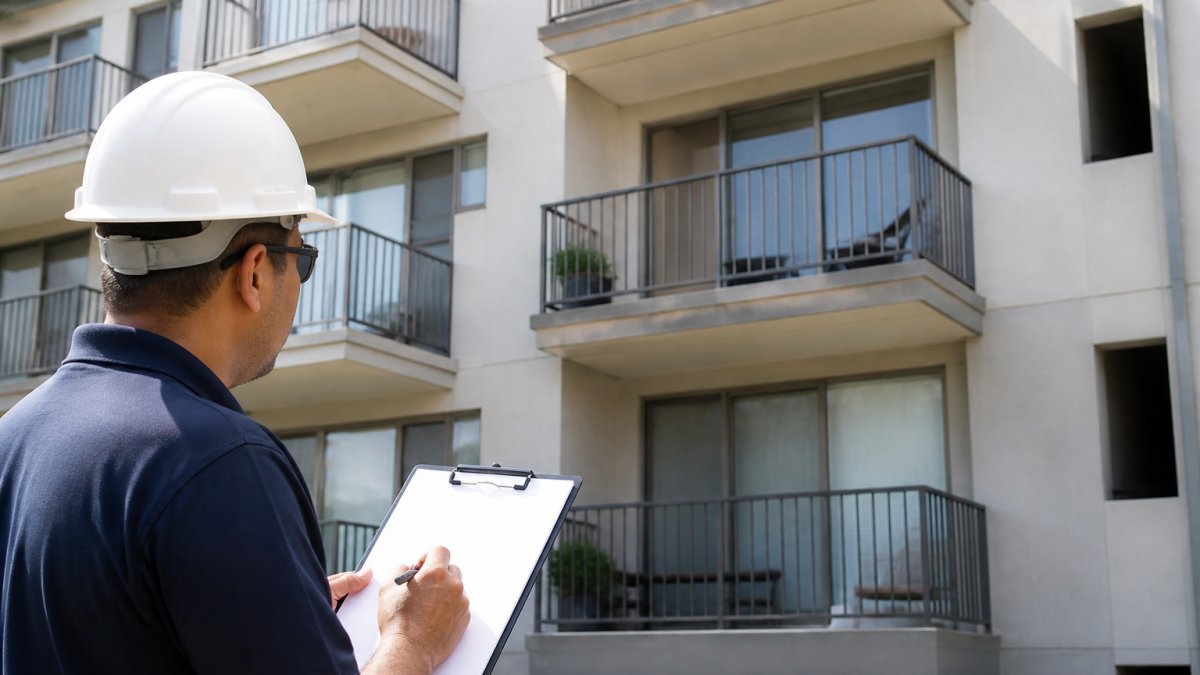
Qualified inspectors must be licensed structural engineers or certified building inspectors with specific SB 721 training. Using an unqualified inspector invalidates the inspection and leaves the property in violation.
Exterior Elevated Elements (EEEs) You Must Inspect
SB 721 defines exterior elevated elements broadly. EEEs include balconies and decks attached to residential units, exterior stairways and landings, walkways and elevated platforms, guardrails and railings on elevated surfaces, and any structural component more than 30 inches above grade that poses a fall risk.
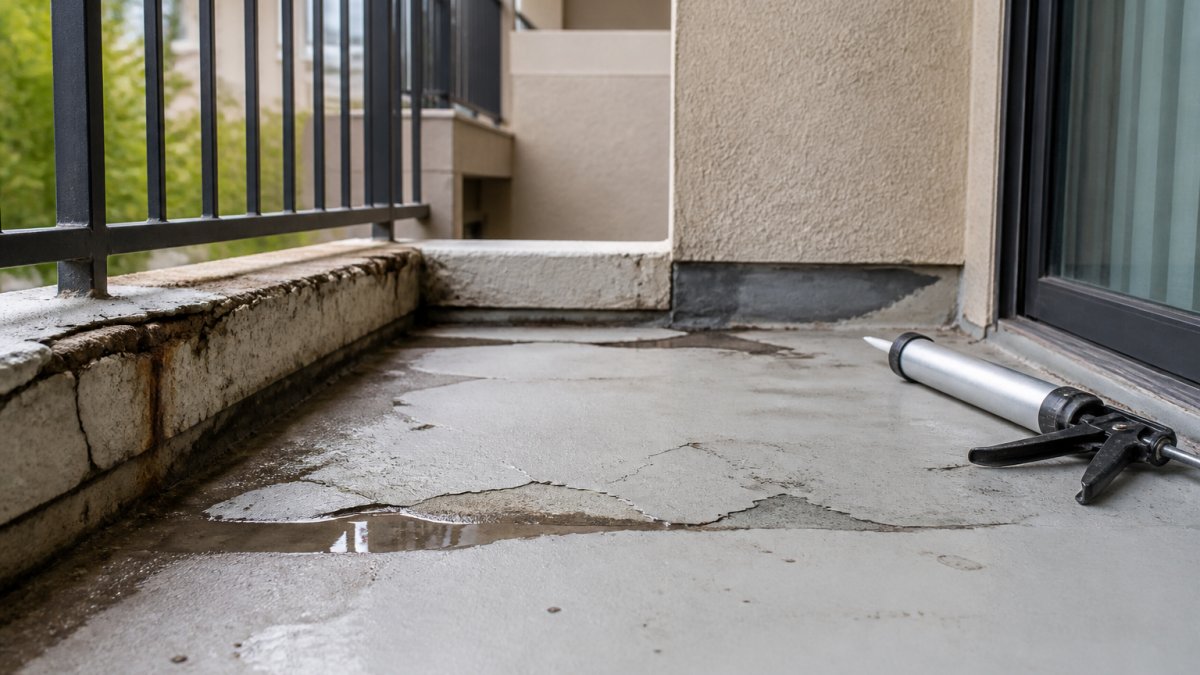
Inspectors evaluate these elements for structural integrity, waterproofing, load-bearing capacity, and safety hazards. Common deficiencies include wood rot from water intrusion, corroded fasteners, cracked welds on steel components, and deteriorated concrete. A qualified SB 721 inspector examines not just the visible surface but also the structural frame, connection points, and underlying support systems.
How to Avoid SB 721 Penalties: Compliance Checklist and Action Plan
Avoiding SB 721 penalties requires a systematic approach.
Step 1: Verify your building’s SB 721 status. Contact your local building department and confirm your building’s construction date and unit count. Request any existing inspection records or compliance documentation.
Step 2: Hire a qualified SB 721 inspector. Verify that your inspector holds a current structural engineering license or SB 721 certification. Request references from other property managers.
Step 3: Schedule the inspection and notify residents. Provide at least 48 hours’ notice to residents that inspection access will be required.
Step 4: Complete the inspection and receive the report. A thorough inspection typically takes one to three days depending on building size.
Step 5: Submit inspection documentation to the city. Request written confirmation that the city received the documentation. Keep copies for your records.
Step 6: If deficiencies are identified, obtain repair estimates. Contact licensed contractors experienced in balcony and structural repairs. Obtain multiple estimates to understand repair scope and cost.
Step 7: Complete repairs and schedule re-inspection. Once repairs are finished, schedule a follow-up inspection to verify that work meets SB 721 standards.
Step 8: Schedule future inspections. Document your six-year reinspection deadline in your property management calendar.
Step-by-Step Checklist for Property Managers
- Confirm building construction date and unit count with city records
- Request existing SB 721 inspection documentation from previous owner or management
- Identify all exterior elevated elements requiring inspection
- Verify inspector’s SB 721 qualification and licensing
- Schedule inspection with 48-hour resident notice
- Attend inspection to document findings and ask clarifying questions
- Receive final inspection report and review deficiency list
- Obtain written confirmation that city received inspection documentation
- If deficiencies exist, request repair cost estimates from three contractors
- Submit corrective action plan to city if required
- Complete repairs on schedule
- Schedule and complete re-inspection after repairs
- Submit re-inspection documentation to city
- Document six-year reinspection deadline in property management system
- Create annual compliance reminder 12 months before next inspection due date
Working with Qualified SB 721 Inspectors
Qualified inspectors hold either a current Professional Engineer (PE) license with structural engineering credentials or a California Building Inspector certification with SB 721 training. When evaluating inspectors, ask about years of SB 721 experience, familiarity with your local building department’s requirements, insurance coverage, typical inspection timeline and cost, and whether the inspector is willing to attend city meetings if questions arise about the inspection report.
Ask potential inspectors for references from other property managers in your city. Local inspectors familiar with your building department’s specific expectations often produce reports that require fewer follow-up questions.
Consequences of Non-Compliance Beyond Daily Fines
Resident safety liability: If a resident is injured on a defective balcony or stairway that should have been inspected, the property owner faces personal injury lawsuits. Insurance may deny coverage if the property was in violation of SB 721 at the time of injury.
Difficulty selling or refinancing: Properties with unresolved SB 721 violations are difficult to sell or refinance. Lenders require proof of compliance before funding.
Insurance complications: Some insurers decline to renew policies for properties in SB 721 violation. Others increase premiums substantially. Properties in violation typically experience insurance premium increases of 10-25%, depending on the severity of deficiencies and the duration of non-compliance.
Resident complaints and turnover: Residents who discover their building is in violation may file complaints with local authorities, request rent reductions, or break leases.
Conclusion: Protecting Your Property and Residents
SB 721 compliance is not optional, it’s a legal requirement with serious financial and safety consequences. Property owners who understand the penalty structure, deadlines, and compliance process can avoid the escalating fines, liens, and liability exposure that plague unprepared buildings.
The path forward is straightforward: verify your building’s SB 721 status, hire a qualified inspector, submit documentation to your local building department, and address any deficiencies identified in the inspection report. This proactive approach costs significantly less than managing violations, penalties, and emergency repairs after structural failure occurs.
Protecting your residents and your property’s financial stability requires expert guidance through California’s complex balcony safety requirements. Apex Balcony provides professional inspection services with licensed inspectors who have decades of combined construction and design experience. We identify early signs of structural failure, deliver comprehensive inspection reports that satisfy local enforcement requirements, and guide you through corrective action planning. Book an inspection today and take control of your SB 721 obligations.
Frequently Asked Questions
What are the daily fines for SB 721 non-compliance?
SB 721 penalties for non-compliance range from $100 to $500 per day, depending on violation severity and local enforcement agency discretion. Fines accumulate daily until corrective action is completed and verified by a licensed contractor or structural engineer. Property owners cannot avoid these penalties by ignoring inspection deadlines or delaying repairs, violations compound quickly, potentially reaching thousands of dollars within weeks.
What happens if I miss the SB 721 inspection deadline?
Missing the SB 721 inspection deadline triggers immediate non-compliance status and daily fines begin accruing. Local enforcement agencies issue violation notices, and property owners face escalating penalties until inspections are completed and documented. Beyond fines, delayed compliance can result in stop-use orders on affected exterior elevated elements (EEEs), building liens, and potential legal liability if structural failure causes injury or property damage.
Does SB 721 non-compliance affect my property insurance?
Yes. Insurance carriers monitor SB 721 compliance status and may increase premiums, reduce coverage limits, or non-renew policies if violations are discovered during underwriting or claims investigation. Buildings with documented non-compliance or stop-use orders face higher liability exposure, making insurers reluctant to provide standard coverage. Maintaining compliance protects your insurance rates and ensures full coverage protection for residents and the property.
What is the difference between SB 721 and SB 326?
SB 326 applies to multi-family residential buildings with three or more units and requires mandatory balcony inspections every six years. SB 721 expands requirements to include all exterior elevated elements (balconies, decks, stairways, walkways) and applies to a broader range of properties. Both laws carry similar penalty structures, but SB 721 is more comprehensive in scope. Determine which law applies to your property based on unit count and element type, then comply with the applicable deadlines and inspection requirements.