Logo
  • Balcony Law
  • About us
  • Inspection services
  • FAQ
  • Blog
  • Call us ‪+1 818-806-7885
  • Book now

Tag: balcony inspection checklist

7 Ways to Prevent Balcony Wood Rot Under SB 721

Posted on October 31, 2026October 31, 2026 by Apex Balcony admin
7 Ways to Prevent Balcony Wood Rot Under SB 721

Last Updated: October 30, 2026

Quick Summary

To prevent balcony wood rot, keep water off the wood and let anything that gets in dry out fast by clearing drainage paths, re-sealing joints annually, checking flashing at wall junctions, keeping sprinklers off the structure, trimming vegetation back, fixing ponding fast, and repairing small cracks now. Flashing that pulls away from the wall, dried and split sealant, and clogged drains cause most rot. Routine maintenance reduces the chance that balcony wood rot reaches the framing, but it does not replace the qualified SB 721 inspection.

  • Three failure points cause most rot: flashing pulling away from the wall, dried and split sealant, and clogged drains.
  • Use a seasonal checklist twice a year, ideally before and after the rainy season, and keep dated records.
  • A walk-through is a visual monitoring tool, not an SB 721 inspection, and does not satisfy the statutory obligation.
  • Early wood rot shows up as discoloration, softness, peeling paint, and a musty smell you can spot from the surface.
  • Probing too hard with a tool can puncture waterproofing and create the leak you were checking for.

Table of Contents

  • Why Balcony Wood Rot Is an SB 721 Problem, Not Just a Maintenance Issue
  • SB 721 Balcony Inspection Requirements Every Owner Should Know
    • Which Buildings and Exterior Elevated Elements Are Covered
    • How SB 326 Differs From SB 326
    • What the Inspection Actually Requires
    • The Six-Year Clock and Why the Start Date Matters
    • Repair Obligations After the Report
  • How to Prevent Dry Rot on a Balcony: Seven Moisture-Control Steps
    • Where Water Gets In: Flashing, Sealants, and Drainage
  • Your Seasonal Balcony Inspection Checklist
    • What a Walk-Through Can and Cannot Do
    • The Seasonal Checklist
    • Where Water Actually Gets In
    • Prevention Versus the Statutory Inspection
  • Early Warning Signs of Wood Decay You Can Spot Safely
  • The SB 721 Inspection Repair Timeline, From Report to Sign-Off
  • Book an SB 721 Inspection Before Rot Reaches the Framing
  • Frequently Asked Questions

Why Balcony Wood Rot Is an SB 721 Problem, Not Just a Maintenance Issue

A soft board is a warning. When water reaches the framing behind it, the balcony can stop carrying the load it was designed for.

That is exactly the scenario SB 721 exists to catch.

Insurance coverage for long-term decay varies by policy, so review your own policy language before assuming a claim will help.

Weighing inspection against repair exposure is part of the decision.

SB 721 Balcony Inspection Requirements Every Owner Should Know

SB 721 requires periodic inspection of balconies, decks, stairways, and walkways on covered multifamily buildings by a qualified licensed professional. Owners should confirm the current statutory cycle and reporting requirements with the official text of the law or a qualified professional.

Apex Balcony provides licensed balcony inspectors who assess elevated exterior elements.

Which Buildings and Exterior Elevated Elements Are Covered

Coverage hinges on three factors: unit count, construction, and element type. All three have to line up before the inspection obligation attaches.

  • Three or more units: the building may be in scope. Confirm with the statute.
  • Wood-framed construction: a construction type that may fall within the statute’s scope. Confirm with the statute.
  • Exterior elevated elements: balconies, decks, stairways, walkways, and similar structures that extend beyond the exterior wall.

When in doubt about whether an element is covered, get a written opinion from a qualified professional before skipping an inspection.

Watch Out
A building that is exempt from SB 721 is not automatically safe. Local building codes, insurance requirements, and the general duty of care still apply, and a collapse on an exempt structure is still a collapse.

How SB 326 Differs From SB 326

SB 326 covers homeowner associations; SB 721 covers the rest of multifamily housing. Same inspection idea, different responsible party.

HOAs handle SB 326 inspections. Apartment owners and landlords handle SB 721. Both require a qualified inspector and a documented report. The two statutes share the same six-year cycle and the same focus on exterior elevated elements, which is why owners sometimes assume one inspection satisfies both.

What the Inspection Actually Requires

A qualified inspection goes beyond a visual walk-by. Ask any inspector you consider how they assess load-bearing components and connections.

A written report should identify each elevated exterior element, describe the condition of its load-bearing components, and recommend specific repairs where deterioration is found.

The Six-Year Clock and Why the Start Date Matters

Confirm the current inspection cycle against the statute, and keep a record of the date of your last completed inspection report so the next inspection can be scheduled in time.

Repair Obligations After the Report

When a report identifies deterioration, schedule repairs with a licensed contractor and document the completed work so the file shows the finding was addressed.

For the full owner-facing timeline, see our SB 721 inspection timeline guide for owners.

How to Prevent Dry Rot on a Balcony: Seven Moisture-Control Steps

To prevent dry rot on a balcony, keep water off the wood and let anything that gets in dry out fast. Seven steps cover most of it.
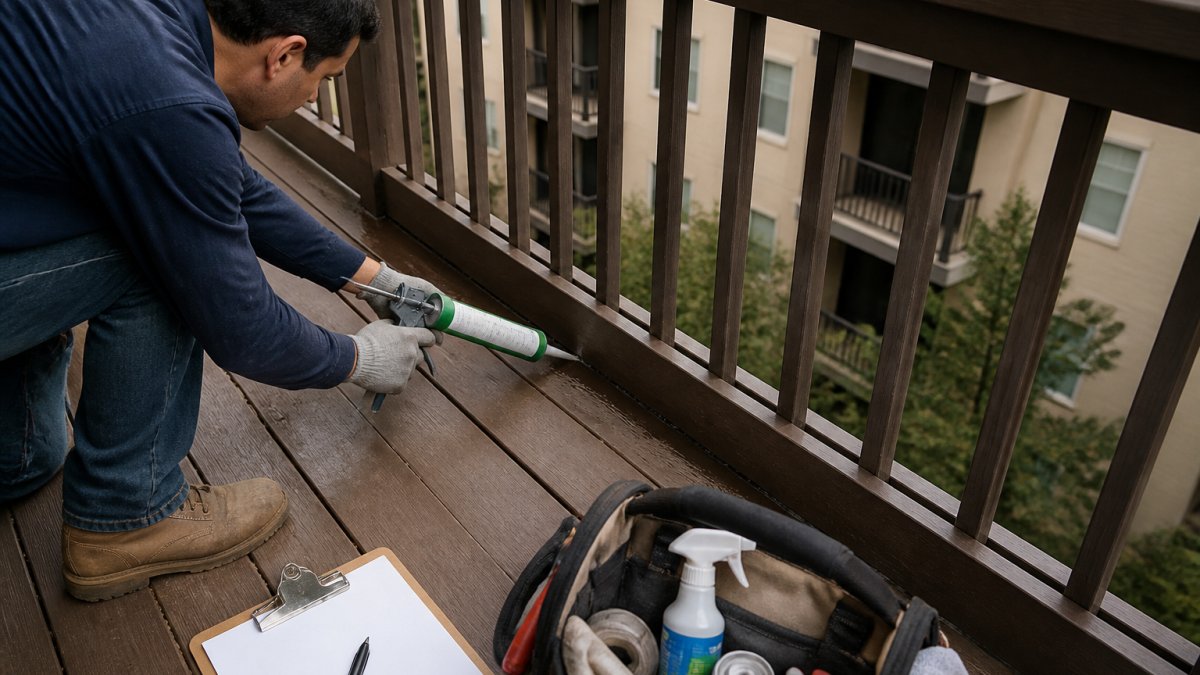
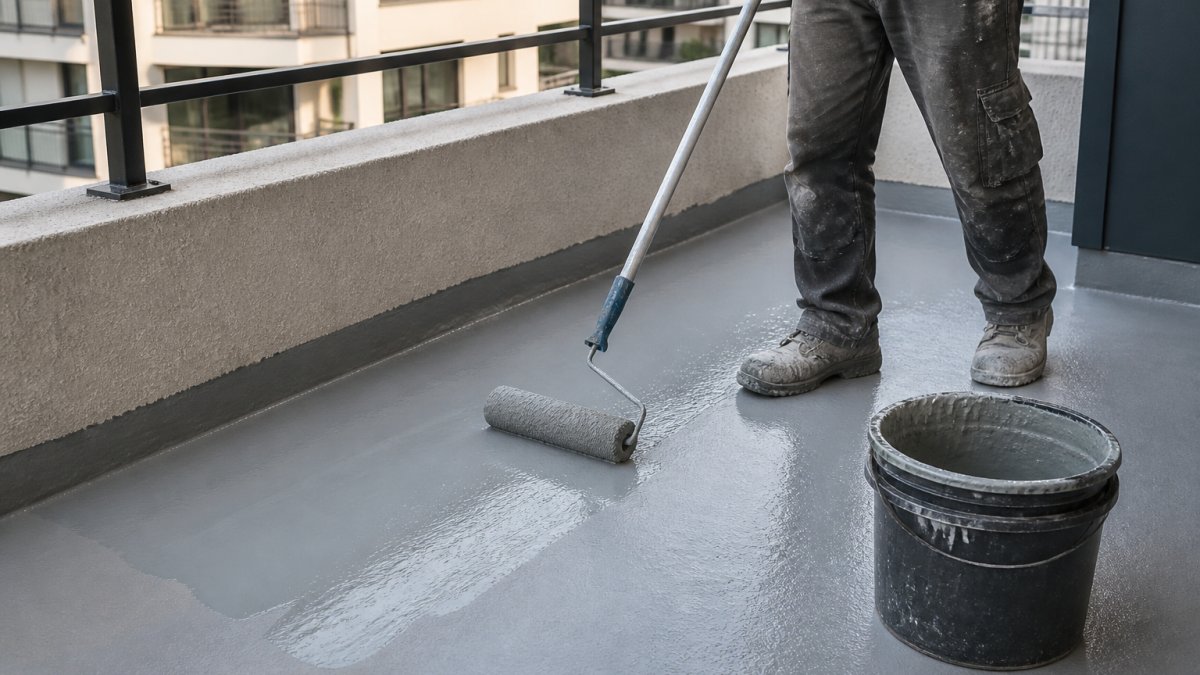
Maintenance worker applying sealant to a railing to prevent balcony wood rot on an apartment building

Consistent application of these protective measures ensures long-term structural integrity, though more extensive restoration efforts may eventually become necessary when renovating wood decks.

  1. Clear drainage paths. Blocked drains hold water against the deck.
  2. Re-seal joints annually. Sealant cracks as it ages and sun-cures.
  3. Check flashing at wall junctions. This is the top leak source we find.
  4. Keep sprinklers off the structure. Irrigation spray soaks wood daily.
  5. Trim vegetation back. Shade keeps wood damp for hours longer.
  6. Fix ponding fast. Standing water means the slope is wrong.
  7. Repair small cracks now. A hairline crack becomes a moisture pathway.

Where Water Gets In: Flashing, Sealants, and Drainage

Three failure points cause most rot: flashing that pulls away from the wall, sealant that has dried and split, and drains clogged with debris. Waterproofing only works when all three hold. Our guide to balcony waterproofing and structural integrity explains how each layer protects the framing.

Seven moisture-control steps cover most balcony wood rot prevention.

StepWhat to doWhy it matters
1Clear drainage pathsBlocked drains hold water against the deck
2Re-seal joints annuallySealant cracks as it ages and sun-cures
3Check flashing at wall junctionsTop leak source found
4Keep sprinklers off the structureIrrigation spray soaks wood daily
5Trim vegetation backShade keeps wood damp for hours longer
6Fix ponding fastStanding water means the slope is wrong
7Repair small cracks nowA hairline crack becomes a moisture pathway

Your Seasonal Balcony Inspection Checklist

A seasonal walk-through catches moisture problems before they spread. Use this balcony inspection checklist twice a year, ideally before and after the rainy season, and keep a dated record of what you find. The record is what turns a walk-through into evidence that you were monitoring the building.

Book inspection →

What a Walk-Through Can and Cannot Do

A walk-through is a visual monitoring tool. It is not an SB 721 inspection, and it does not satisfy the statutory obligation. The distinction matters because owners sometimes assume a maintenance log replaces a qualified inspection, and it does not. What the walk-through does is surface the conditions that make a qualified inspection worth scheduling early rather than on the deadline.

Key Takeaway
A seasonal checklist is prevention. An SB 721 inspection is compliance. Do both, and keep the records separate so neither one is mistaken for the other.

The Seasonal Checklist

  • Look for water stains or dark streaks on wood, especially below railing posts and at deck-to-wall junctions
  • Note any soft spots you notice, without probing or prying
  • Check sealant lines at joints, penetrations, and the base of railings for cracks or gaps

Watch out: probing too hard with a tool can puncture waterproofing and create the leak you were checking for. Press lightly and stop at the first soft spot. Residents should report what they see and should not probe, pry, or dismantle any structural component.

Where Water Actually Gets In

Rot is a moisture problem before it is a wood problem. Four pathways account for most of the decay we see on multifamily balconies:

  1. Failed waterproofing at the walking surface. A coating or membrane that has cracked, blistered, or worn through lets water sit directly on the decking and framing.
  2. Clogged drains and scuppers. Water that cannot drain ponds at the low point, and the low point is usually where the framing meets the wall.
  3. Unsealed penetrations. Railing posts, fasteners, and any hole drilled through the deck or wall is a direct path for water into the framing.
  4. Poor or missing flashing at wall junctions. This is the top leak source we find. Flashing that has pulled away, was never installed correctly, or was covered over during a repair lets water run behind the siding and into the connection.

Water trapped at connections is the most damaging version of the problem because the connection is where the load transfers. A deck board that stays wet is a maintenance item. A connection that stays wet is a structural item.

Prevention Versus the Statutory Inspection

Routine maintenance and visual monitoring reduce the chance that rot reaches the framing. They do not replace the qualified inspection SB 721 requires, and they do not produce the written report the law expects. The practical split is:

  • Owner or manager, seasonally: clear debris, check sealant, photograph changes, log findings
  • Licensed contractor, as needed: re-seal joints, repair flashing, correct ponding, replace deteriorated surface material
  • Qualified inspector, on the statutory cycle: examine load-bearing components, use destructive testing where needed, issue the written report

Keeping those three roles separate is what keeps a building both dry and compliant. Our guide to balcony waterproofing and structural integrity explains how each layer protects the framing.

Early Warning Signs of Wood Decay You Can Spot Safely

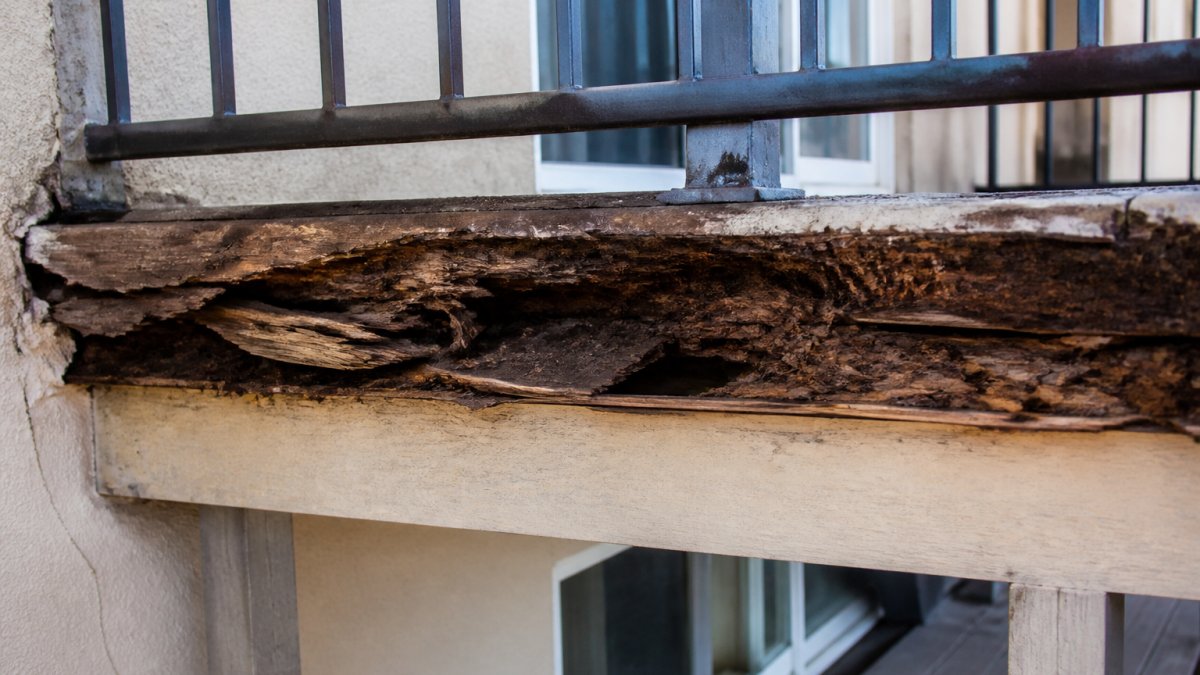
Early wood rot shows up as discoloration, softness, peeling paint, and a musty smell. You can spot most of it from the surface.

Signs worth reporting:

  • Spongy decking underfoot
  • Paint that bubbles or flakes in patches
  • Dark staining near fasteners and joints
  • Rusty nails backing out of the wood

Surface signs of rot often appear after moisture has been present for some time, which is why regular checks matter.

The SB 721 Inspection Repair Timeline, From Report to Sign-Off

Owners should act on inspection findings rather than file the report without follow-up.

The sequence:

  1. Inspector performs the visual examination, with destructive testing where needed
  2. Written report issued with findings and repair requirements
  3. Owner schedules repairs with a licensed contractor
  4. Repairs completed and documented
  5. Sign-off confirms the work meets the standard

For the full owner-facing timeline, see our SB 721 inspection timeline guide for owners.

Book an SB 721 Inspection Before Rot Reaches the Framing

Early detection of moisture problems is generally less costly than repairs after decay reaches load-bearing components.

A licensed inspection can identify moisture intrusion early, and a written report can give your board a clear repair path. When you’re ready to act, you can find balcony repair contractors in California.

Apex Balcony inspectors are licensed and bring decades of combined construction and design experience. Contact us for details on what an inspection includes.

Frequently Asked Questions

How can you prevent wood rot on a balcony?

Keep water away from the wood. Check and refresh sealants annually, confirm flashing sheds water away from the building envelope, clear drains and scuppers so water cannot pool, and repair cracked boards before moisture reaches the framing. A simple seasonal routine of cleaning, sealing, and inspecting can help reduce moisture-related wood decay.

What causes wood rot on balconies?

Moisture intrusion is the root cause. Common pathways include failed sealants at rail posts, worn flashing where the deck meets the wall, clogged drainage, and sprinkler overspray that keeps wood damp. In wood-framed multifamily buildings, small leaks feed dry rot for months before anything is visible. Wood decay can weaken structural members without obvious signs, which is one reason periodic inspection of exterior elevated elements is important.

Does waterproofing prevent balcony rot?

Waterproofing slows moisture intrusion but does not stop rot on its own. Coatings and membranes wear out, and water often enters through joints, post bases, and flashing that waterproofing does not cover. Treat waterproofing as one layer in a broader strategy: sound flashing, working drainage, sealed penetrations, and regular inspections. If existing wood decay is already present, recoating the surface traps the problem instead of fixing it.

What should property owners do after an SB 721 inspection finds damage?

Review the inspection report’s repair requirements with a licensed professional, prioritize anything affecting load-bearing components, and get the work scheduled promptly. Document every repair with photos and invoices for your records. Track inspection deadlines across the whole building, and consider restricting access to any balcony or stairway a report flags as a safety hazard until repairs are complete.


Rot does not wait for the next inspection cycle, and neither should you. Apex Balcony provides licensed inspections for SB 721 and SB 326 compliance, early detection of structural failure, and a clear path to the repairs your building needs. Get started with Apex Balcony and protect your residents, your reserve fund, and your liability position.

Book inspection

GoogleAdd apexbalcony.com as a preferred source on Google →
Posted in BlogTagged balcony inspection checklist, balcony wood rot, how to prevent dry rot on a balcony, preventing balcony wood rot sb 721, sb 721 balcony inspection requirements, sb 721 inspection repair timelineLeave a Comment on 7 Ways to Prevent Balcony Wood Rot Under SB 721

How to Choose a Balcony Inspection Company

Posted on October 24, 2026 by Apex Balcony admin
How to Choose a Balcony Inspection Company

Last Updated: October 23, 2026

Quick Summary

To choose a balcony inspection company, first confirm which statute governs your building (SB 326 for condo associations, SB 721 for multifamily rentals), then verify the inspector holds a license as an architect, civil engineer, structural engineer, or credentialed building contractor. Ask for a sample report, proof of insurance, and written confirmation of the statute before you sign.

  • SB 326 covers condo associations; SB 721 covers multifamily rentals with three or more dwelling units.
  • Verify each inspector’s license number through the state licensing board before shortlisting anyone.
  • Require general and professional liability insurance naming your association as an additional insured.
  • Ask how the inspector examines the underside of cantilevered balconies and documents hidden connections.
  • A compliant report carries the inspector’s stamp, license number, dates, and photographs of every defect.

Table of Contents

  • Start With the Legal Requirements for Balcony Inspections
    • Which Law Applies to Your Building: SB 326 vs. SB 721
  • Who Is Qualified to Perform a Balcony Inspection
  • Balcony Inspector Questions to Ask Before You Sign
    • A Vetting Checklist for Inspectors
    • How to Interview Each Candidate
    • Red Flags in a Proposal
  • What a Balcony Inspection Checklist Should Cover
  • Balcony Inspection Cost: What Drives the Quote
  • What a Balcony Inspection Report Must Contain
  • After the Inspection: Remediation, Permits, and Insurance
    • From Report to Remediation Plan
    • Permits and Building Department Review
    • Insurance Implications of the Report
  • Conclusion
  • Frequently Asked Questions

Start With the Legal Requirements for Balcony Inspections

Choosing a balcony inspection company starts with knowing which law governs your building.

Balcony inspection is the process of examining elevated exterior elements, including balconies, decks, stairways, and walkways, for structural defects that could lead to collapse.

The stakes are not theoretical. The 2015 Berkeley balcony collapse that killed six people and the 2021 Malibu collapse both reshaped how regulators treat elevated exterior elements.

Which Law Applies to Your Building: SB 326 vs. SB 721

The dividing line is building type, not size alone. SB 326 applies to condominium associations and other multi-unit residential associations. SB 721 applies to multifamily rental buildings with three or more dwelling units.

For a direct, side-by-side breakdown of obligations under each statute, read our comparison of SB 326 vs. SB 721 requirements. Confirm the classification with your legal counsel before you solicit bids.

Who Is Qualified to Perform a Balcony Inspection

Only a licensed architect, civil engineer, structural engineer, or building contractor with the right credentials can perform a statutory balcony inspection in California.

Ask for the license number and verify it through the state licensing board before you shortlist anyone. That document protects no one.

What most guides miss is the difference between a visual inspection and invasive testing.

The statute names the professions that can perform a statutory balcony inspection, and the inspection type determines how far the examination goes.

ItemValueNote
Licensed architectQualifies to inspectNamed specifically in the statute
Civil engineerQualifies to inspectNamed specifically in the statute
Structural engineerQualifies to inspectNamed specifically in the statute
Building contractor with right credentialsQualifies to inspectCredentials must be verified
General handyman with a ladderDoes not qualifyNo matter how many balconies walked
Visual inspectionCovers what is visible and reachableNo opening of the building envelope
Invasive testingMay open stucco or flashingChecks water intrusion, dry rot, corrosion

Balcony Inspector Questions to Ask Before You Sign

The right questions separate a qualified inspector from a fast quote. Ask them in the same order every time, and treat vague answers as a disqualifier. A firm that cannot tell you which statute applies to your building before you hire it is guessing.

A Vetting Checklist for Inspectors

Use this as a scoring sheet, not a wish list. A candidate that fails any starred item should be removed from the shortlist regardless of price.

  • * License number provided and verified through the state licensing board’s public lookup
  • * Written confirmation of which statute applies to your building (SB 326 vs. SB 721) and why
  • * Certificate of insurance showing both general liability and professional liability (errors and omissions), with your association named as an additional insured

How to Interview Each Candidate

Do not email the checklist and accept written answers alone. A 20-minute call reveals more than a proposal packet. Work through these questions in order and note whether the answers are specific or rehearsed.

  1. “Which statute governs my building, and what is the filing deadline?” A qualified inspector answers within a minute and explains the building-type distinction. Hesitation here is the single strongest warning sign.
  2. “Walk me through how you inspect the underside of a cantilevered balcony.” Listen for access method, probe locations, and how the inspector documents connections that are hidden behind finishes. An answer that stays at the railing level is a template answer.
  3. “When would you recommend invasive testing, and who pays for it?” The inspector should describe the trigger conditions (water staining, soft wood at probe points, corrosion at hangers) and whether testing is inside or outside the base fee.
  4. “Who signs and stamps the report?” The name on the proposal should match the name on the stamp. Subcontracted engineering is common, but you should know about it before you sign.
  5. “What does your report look like when a defect is ambiguous?” Ask for the exact language. “Monitor” without a timeline or trigger is not a finding.
  6. “What happens if the building department rejects the report?” A firm that stands behind its deliverable will describe a correction process at no additional fee.

Red Flags in a Proposal

  • A quote issued without a site visit or a building-plans review
  • A per-unit price that is identical across radically different building types
  • No named inspector, or a sales contact who cannot answer technical questions

For a fuller walkthrough of verifying credentials and insurance, use our guide on how to choose a qualified balcony inspector. The checklist above is the short version; that page covers what each credential actually proves.

Watch Out
Skipping the insurance question is the most common and most expensive mistake. If an inspector misses a defect and someone is later injured, an uninsured firm may leave your association holding the liability. Ask for the certificate before the contract, not after.

What a Balcony Inspection Checklist Should Cover

A proper inspection covers every elevated exterior element, not just the visible deck surface.

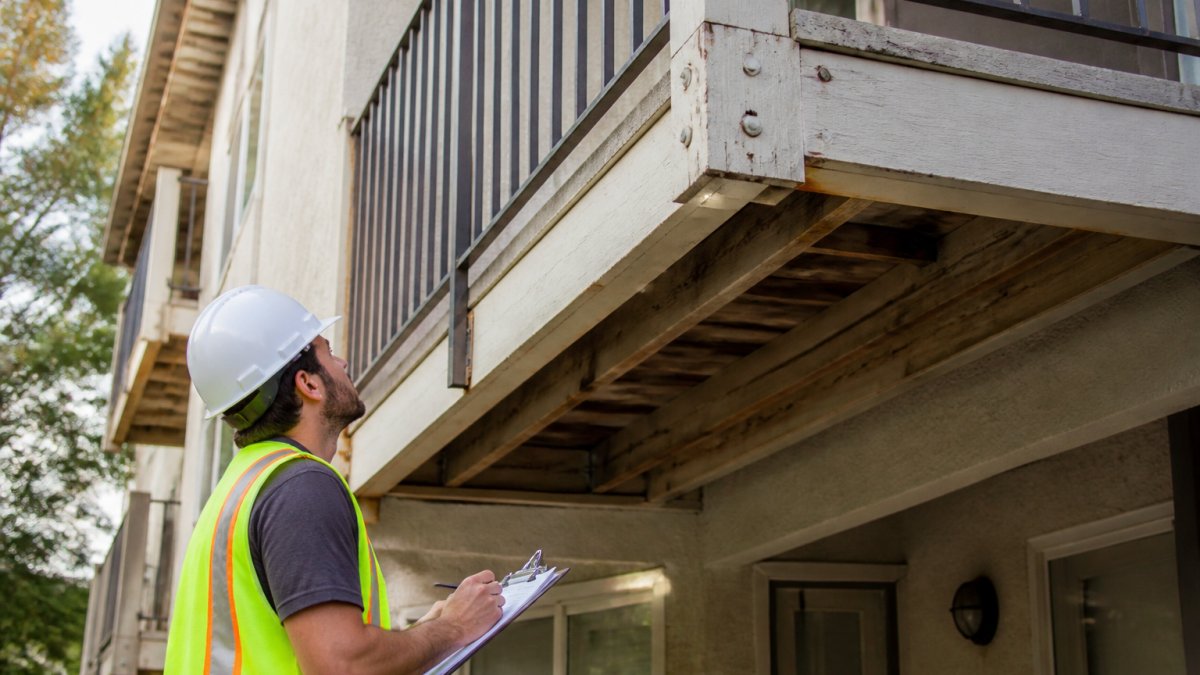
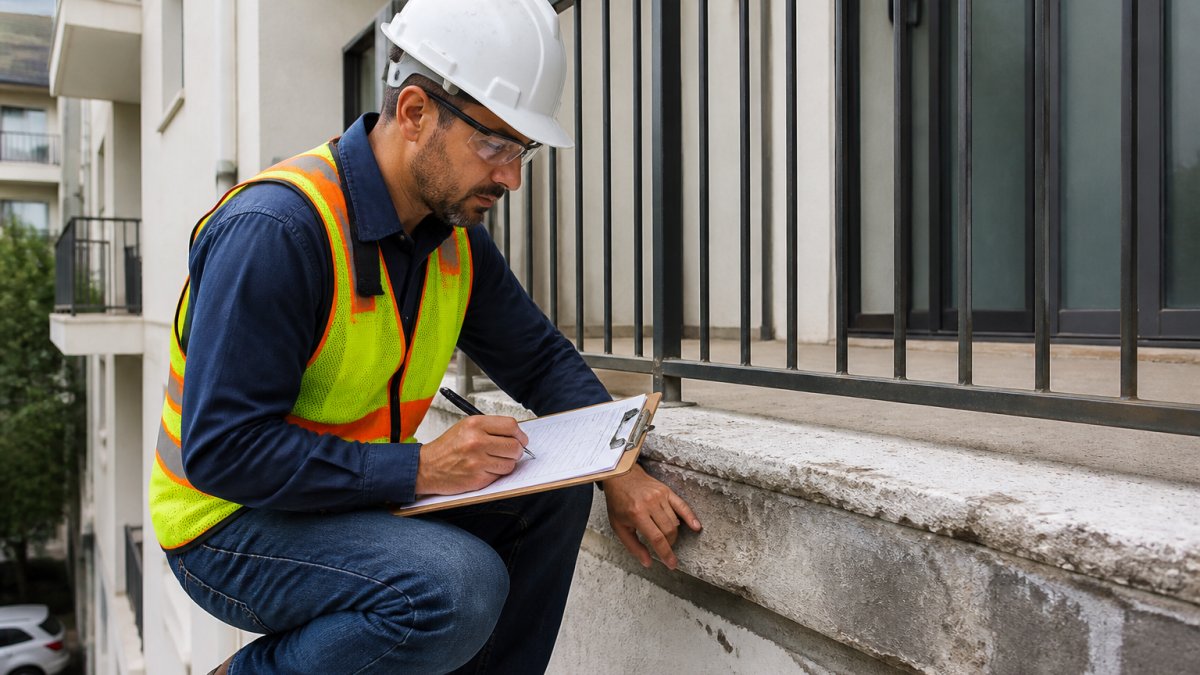
A licensed inspector in a hard hat and safety vest examining the underside of an elevated exterior balcony on a multi-story residential building, clipboard in hand, daylight, close view of railing and deck connections

A common mistake is hiring a firm that photographs the railing and stops there. The failure points are usually underneath: corroded joist hangers, rotted ledger boards, and failed flashing that lets water sit against framing for years.

Balcony Inspection Cost: What Drives the Quote

Balcony inspection pricing depends on building size, the number of elevated elements, access difficulty, and whether invasive testing is required. A single-story walkway building with six units is a different job from a four-story complex with forty balconies and limited ladder access.

We do not publish flat fees, and we would be wary of any firm that does. For a fuller cost breakdown, see our guide to SB 326 inspection cost.

Book inspection →

Pro Tip
Ask whether the fee includes a follow-up site visit after repairs. Some firms charge a second full inspection to confirm remediation was done correctly. Knowing that before you sign prevents a surprise line item mid-project.

What a Balcony Inspection Report Must Contain

A compliant report identifies each inspected element, describes its condition, flags any safety hazard, and states whether repair or further testing is needed.

The report is the document your building department, insurer, and attorney will read. Vague language like “monitor condition” without specifics will not survive scrutiny.

Detailed requirements for the deliverable, including deadlines and inspector qualifications, are covered in our guide to balcony inspection report requirements.

After the Inspection: Remediation, Permits, and Insurance

Findings are the beginning of the work, not the end. The gap between a report and a completed repair is where most boards lose time and money, and most guides stop at the inspection. This section covers the three things that happen next: sequencing the repairs, confirming permits, and protecting insurance coverage.

From Report to Remediation Plan

A report lists findings; a remediation plan sequences them. The board’s job is to convert one into the other before soliciting repair bids. A workable plan does four things:

  1. Sorts findings by safety priority. Immediate hazards (loose guardrails, corroded connections at load-bearing points) get temporary measures first, even before permanent repairs are designed.
  2. Groups repairs by trade and access. Scaffolding, stucco removal, and waterproofing are separate scopes; bundling them into one bid usually lowers the total cost and the number of site mobilizations.
  3. Sets a design threshold. Findings that involve structural connections typically need an engineer’s repair detail before a contractor can bid. Findings limited to surface wear may not.
  4. Maps to the reserve fund and assessment calendar. A repair that exceeds the reserve balance forces an assessment or a loan, and that decision has a lead time the board must build into the compliance schedule.

A common pattern is for the inspection firm to offer repair design or construction as a separate engagement. That can be efficient, but confirm the scope is separately priced and that the board retains the right to bid the work to other contractors. Ask each inspection candidate up front whether they perform repairs and how they handle that conflict.

Permits and Building Department Review

Structural repairs to balconies, stairways, and their connections usually require a building permit and inspection by the local building department. The permit process runs on its own timeline, separate from the statutory inspection deadline, and the two are easy to conflate.

Ask the repair contractor, not the inspector, which permits apply and who pulls them. A contractor who proposes to start structural work without a permit is a liability, not a bargain.

Insurance Implications of the Report

Carriers increasingly ask for proof of inspection compliance at renewal and at claim time. A missed statutory deadline can affect coverage or premiums when a loss occurs, and the effect can follow a property for years.

Before the board files the report, confirm with the association’s insurance broker how the carrier wants to receive it and whether any findings trigger a disclosure obligation. Our overview of the insurance implications of SB 326 non-compliance explains how a missed deadline can follow a property for years.

Pro Tip
Ask the inspection firm whether they will provide a short cover letter summarizing compliance status for the carrier. Some will; some charge for it. Knowing before you sign prevents a scramble at renewal.
Key Takeaway
The cheapest inspection is the one that produces a report your insurer and building department accept without a second opinion. Price the deliverable, not the site visit.

Conclusion

The hardest part of this process is not finding an inspector. It is finding one whose report holds up when a building department, an insurer, or a plaintiff’s attorney reads it closely.

Our licensed inspectors bring decades of combined construction and design experience to every site, we specialize in SB 326 and SB 721 compliance, and we inspect all elevated exterior elements, including balconies, decks, and stairways.

Book an inspection with Apex Balcony and get a report your board can act on with confidence.

Frequently Asked Questions

What qualifications should a balcony inspection company have?

Under SB 326 and SB 721, inspections must be performed by a licensed architect, civil or structural engineer, or a building contractor holding the appropriate license. Ask for the individual inspector’s license number, not just the firm’s, and confirm it is active with the state licensing board. Also ask whether the company carries errors and omissions coverage and general liability insurance, and request a sample report so you can see the depth of documentation before you commit.

How much does a balcony inspection cost, and what changes the price?

Balcony inspection cost depends on the number of elevated exterior elements, building height and access difficulty, the percentage of units sampled, and whether invasive testing is required. A 12-unit building with simple access sits at the low end; a large condominium association with many decks and stairways sits higher. Ask each firm to itemize what the quote includes, especially report delivery, photo documentation, and any follow-up visit, so you are comparing the same scope rather than the same headline number.

How do I compare balcony inspection quotes from different companies?

Line up the quotes against the same scope: number of balconies, decks, and stairways inspected, sample size, invasive versus non-invasive methods, photo documentation, report format, and turnaround time. A quote that is thousands lower often inspects fewer units or skips destructive testing. Ask each firm what they would do if they found dry rot, corrosion, or water intrusion at a load-bearing connection, and confirm the report will be signed and sealed by a licensed professional who can stand behind it in a building department review.

What happens if the inspection misses something and a problem is found later?

Ask about professional liability coverage before you hire anyone. A signed report from a licensed architect, civil engineer, or structural engineer carries professional accountability, and errors and omissions insurance is what responds if a defect is missed. Request a certificate of insurance naming your association or ownership entity, and confirm the inspector who signs the report is the one who actually performed the visual inspection. Keep the report on file: it is your record of compliance and your defense in a liability dispute.


Sources and further reading: California Legislature SB 326 and SB 721 statutory text, California Department of Consumer Affairs license verification, U.S. Consumer Product Safety Commission outdoor structural safety guidance

Book inspection

GoogleAdd apexbalcony.com as a preferred source on Google →
Posted in BlogTagged balcony inspection, balcony inspection checklist, balcony inspection cost, balcony inspection report, balcony inspector questions to ask, how to choose a balcony inspection company

Balcony Waterproofing and Structural Integrity

Posted on October 10, 2026 by Apex Balcony admin
Balcony Waterproofing and Structural Integrity

Table of Contents

  • How Balcony Waterproofing Protects Structural Integrity
  • Common Causes of Balcony Water Intrusion and Damage
  • Signs of Balcony Structural Damage You Cannot Ignore
  • Balcony Waterproofing Methods and Material Options
    • Membrane Systems
    • Protective Coatings and Sealants
  • Balcony Drainage Problems and Prevention
  • Balcony Inspection Checklist for Property Owners
    • Visual Inspection Steps
    • Distinguishing Cosmetic Damage from Structural Concern
    • Documentation and Testing
    • When to Stop and Call a Professional
  • Repair and Remediation: When to Call a Professional
    • Assessing Repair Scope and Feasibility
    • Material Selection and Substrate Compatibility
    • Substrate Repair and Preparation
    • Professional Assessment and Execution
  • Compliance and Long-Term Maintenance
  • Frequently Asked Questions

Last Updated: October 10, 2026

How Balcony Waterproofing Protects Structural Integrity

Balcony waterproofing is the process of applying protective barriers to prevent water from entering the structural framing and decking materials beneath the surface. Water intrusion is the leading cause of balcony failure. When moisture penetrates concrete, wood, or steel, it triggers structural problems that can cost tens of thousands to repair or create safety hazards for residents.

Water migrates downward through capillary action, finding microscopic cracks and gaps, triggering rust in steel reinforcement and rot in wood components.

Key Takeaway
Waterproofing is not optional maintenance, it’s the foundation of balcony safety. A failed waterproofing system can turn a minor water intrusion into a structural failure that endangers residents.

Common Causes of Balcony Water Intrusion and Damage

Cracks in concrete are the most common entry point.

Flashing failures at the connection between the balcony and building frame are critical vulnerabilities. When flashing corrodes, separates, or was installed incorrectly, water flows directly into the framing cavity.

Deteriorated sealants allow water to seep into expansion joints and corners, degrading from UV exposure and temperature cycling.

Membrane punctures and tears introduce water directly into the waterproofing system through foot traffic, maintenance work, or weather damage.

Watch Out
Ignoring water stains on a ceiling below a balcony is a serious mistake. Those stains indicate active water migration into the structural framing. Delaying repair allows the damage to spread deeper into the building envelope, turning a surface-level fix into a structural remediation project.

Signs of Balcony Structural Damage You Cannot Ignore

Visible cracks wider than 1/8 inch, especially horizontal cracks parallel to the building face, indicate water damage and rust expansion in reinforcing steel and warrant immediate inspection.

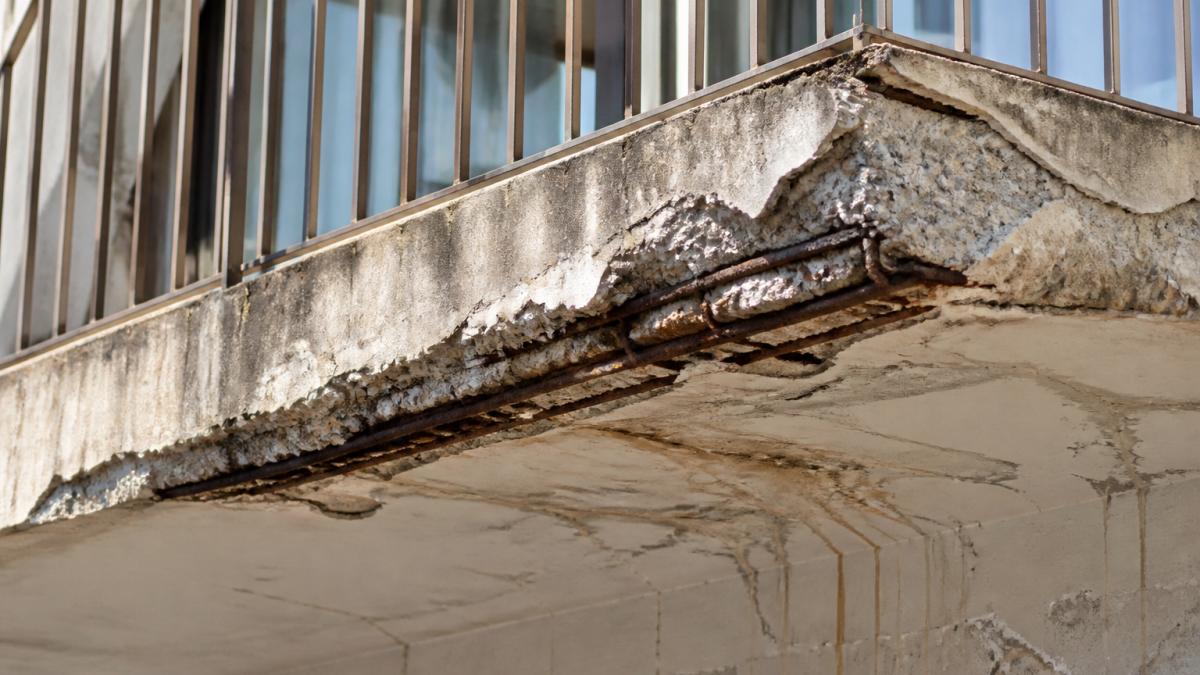
Concrete balcony surface with cracks and exposed steel needing balcony waterproofing repairs.

Spalling concrete exposes reinforcing steel, which rusts rapidly when exposed to moisture and oxygen, accelerating deterioration.

Water stains on the ceiling or walls below the balcony indicate active water penetration and migration through the building envelope.

Soft or spongy areas suggest rot in wood or advanced concrete deterioration.

Rust streaks indicate corroding reinforcing steel.

Sagging or deflection of the balcony deck indicates the structural framing has lost capacity and the balcony is unsafe.

Balcony Waterproofing Methods and Material Options

Membrane Systems

Liquid-applied membranes are brushed or sprayed onto the deck surface and cure to form a seamless, flexible barrier ideal for irregular surfaces. They offer complete coverage with no seams but require careful surface preparation and proper curing conditions.

Sheet membranes are rolled out and sealed at overlaps and edges. They’re durable and easy to inspect but require proper sealing at all joints and penetrations.

Reinforced membranes combine fabric with waterproofing coating for additional puncture resistance, ideal for high-traffic balconies.

Protective Coatings and Sealants

Elastomeric coatings bridge small cracks and flex with temperature changes, offering good protection for balconies in good condition.

Polyurethane sealants fill gaps and expansion joints at the balcony-frame junction and require reapplication every 3-5 years.

Penetrating sealers soak into concrete or wood, reducing water absorption, and work best on balconies in good condition without major cracks.

Pro Tip
Don’t assume one waterproofing method works for all situations. A balcony with active cracks needs a flexible membrane that can bridge the movement. A balcony with poor drainage needs a sloped surface or integrated drainage system. A professional assessment determines the right solution for each balcony.

Balcony Drainage Problems and Prevention

Proper slope and drainage prevent water from pooling and penetrating the waterproofing.

Balconies should slope toward the outer edge at a minimum 2% grade to direct water away from the building. Many older balconies were built flat or with inadequate slope.

Drip edges prevent water from flowing back toward the building face, and interior drains or scuppers must be kept clear of debris.

Balcony Inspection Checklist for Property Owners

Visual Inspection Steps

Check the sealant at the balcony-frame joint for cracks, gaps, or separation.

Inspect the railing and connections for rust, movement, or loose fasteners.

Look underneath the balcony for water stains, efflorescence, or visible moisture on the soffit or fascia, indicating active water migration.

Check for debris accumulation in corners, at drains, and in depressions, as it blocks drainage and traps water.

Note the balcony’s orientation, as sun exposure, wind direction, and proximity to trees affect water intrusion risk.

Distinguishing Cosmetic Damage from Structural Concern

Cosmetic or Low-Urgency Issues (Can defer professional inspection 6-12 months if no water stains below):

  • Hairline cracks (less than 1/16 inch wide) with no water stains or rust
  • Minor sealant cracks at joints (less than 1/8 inch wide)
  • Surface dirt, algae, or minor discoloration
  • Small areas of paint peeling or coating wear
  • Isolated small spalls (less than 1 inch diameter) with no exposed steel

Moderate Issues (Schedule professional inspection within 1-3 months):

  • Cracks 1/8 inch to 1/4 inch wide, especially if horizontal or parallel to the building
  • Sealant separation or gaps wider than 1/8 inch
  • Spalling concrete exposing reinforcing steel (any size)
  • Water stains on the ceiling or walls directly below the balcony
  • Rust streaks running down the balcony face or building wall
  • Soft or spongy areas in the deck surface
  • Clogged or non-functioning drains

Critical Issues (Restrict balcony use and call a professional immediately):

  • Cracks wider than 1/4 inch
  • Visible sagging, deflection, or settlement of the deck
  • Large areas of spalling (more than 2 inches diameter) or exposed reinforcing steel
  • Active water leaks or water flowing through the structure
  • Rust stains accompanied by visible corrosion or loss of concrete around reinforcing steel
  • Soft spots that yield to hand pressure or tool pressure
  • Any sign of movement, separation, or instability in the railing or structural connections
  • Efflorescence or continuous moisture on the underside

If you observe any critical-level issue, do not allow occupants on the balcony until a licensed structural engineer or professional balcony inspector has assessed the damage.

Documentation and Testing

Take clear, dated photographs of damage, cracks, water stains, or rust, including a scale object and multiple angles if extensive.

Book inspection →

Document the location using compass directions, date, time, and recent weather.

Flood testing confirms waterproofing compromise by applying water to a localized area and monitoring for leaks below:

  • Setup: Isolate a test area (4 feet × 4 feet) using a temporary dam or tape barrier.
  • Application: Apply water slowly using a hose or watering can, maintaining a shallow pool 1-2 inches deep.
  • Duration: Maintain the water level for 24-48 hours.
  • Monitoring: Check the ceiling and walls below every 4-6 hours for new water stains, drips, or moisture.
  • Documentation: Photograph any leaks and note the time they appear.
  • Acceptable results: No water should appear below the balcony during or within 24 hours after the test ends.

Moisture meters measure moisture content in concrete (above 4-5%) or wood (above 12-15%), indicating water intrusion even without visible stains.

Keep detailed records of inspections, repairs, maintenance, and testing to identify patterns and document compliance.

When to Stop and Call a Professional

Contact a licensed structural engineer or professional balcony inspector if your inspection reveals moderate or critical issues. Do not attempt repairs on balconies with active water intrusion, exposed steel, or structural movement.

Repair and Remediation: When to Call a Professional

Assessing Repair Scope and Feasibility

The repair path depends on the extent of damage, age of the existing system, and substrate condition.

Localized Repairs (Suitable for isolated defects):
Localized repairs suit isolated defects like punctures or failed sealant joints.

Localized repairs work best when the membrane is less than 10 years old, the substrate is sound, and the failure is isolated.

Full Membrane Replacement (Necessary for widespread failure):
Full membrane replacement is necessary for widespread failure, multiple cracks, extensive sealant failure, large spalling areas, or active intrusion at multiple locations.

Full replacement is more expensive but eliminates the risk of hidden failures.

Material Selection and Substrate Compatibility

The choice of waterproofing membrane depends on the substrate, the extent of existing damage, and the balcony’s exposure.

Liquid-Applied Membranes (Polyurethane, Acrylic, or Bituminous):

  • Best for: Concrete balconies with minor cracks or irregular surfaces
  • Substrate prep: Concrete must be clean, dry (less than 4% moisture), and free of loose material. Cracks wider than 1/4 inch should be filled.
  • Application: Brushed or sprayed in two coats, 60-80 mils total thickness. Curing time: 24-72 hours.
  • Durability: 10-15 years with maintenance; UV-resistant topcoats extend life.
  • Cost: Lower than sheet membranes but labor-intensive if surface prep is extensive.

Sheet Membranes (EPDM, TPO, or PVC):

  • Best for: Large, flat concrete or wood balconies
  • Substrate prep: Substrate must be smooth, dry, and free of sharp protrusions.
  • Installation: Rolled out and overlapped at seams (minimum 6 inches), sealed with adhesive or fasteners.
  • Durability: 15-25 years; seams are the weak point.
  • Cost: Higher material cost but faster installation on sound substrates.

Reinforced Membranes (Fabric-Reinforced Polyurethane or Bituminous):

  • Best for: High-traffic balconies where puncture resistance is critical
  • Application: Fabric layer embedded in first coat, sealed with second coat.
  • Durability: 12-18 years; fabric adds crack-bridging ability.
  • Cost: Higher than standard liquid membranes.

Penetrating Sealers (Siloxane or Silane):

  • Best for: Balconies in good condition with no major cracks or active water intrusion
  • Application: Applied by brush, spray, or roller; soaks into concrete.
  • Mechanism: Fills microscopic voids, reducing water absorption without creating a surface barrier.
  • Durability: 3-7 years.
  • Cost: Lowest cost option; suitable for maintenance.
  • Limitation: Not suitable for balconies with active cracks, spalling, or water stains.

Substrate Repair and Preparation

Before any new waterproofing membrane is installed, the underlying substrate must be sound.

Concrete Repair:

  • Cracks: Hairline cracks can be sealed. Cracks 1/16 to 1/4 inch wide should be filled with repair compound or epoxy injection. Cracks wider than 1/4 inch may indicate structural movement.
  • Spalling: Chip out to sound concrete, clean, and patch with repair mortar or epoxy.
  • Exposed steel: Clean rust, treat with rust converter or epoxy primer, and seal before membrane application.
  • Slope and drainage: Re-slope flat or inward-sloping balconies to a minimum 2% grade toward the outer edge or drains.

Wood Repair:

  • Rot: Replace rotted framing.
  • Moisture: Dry wood to less than 15% moisture content before waterproofing.
  • Substrate: Wood balconies often require a rigid substrate layer to prevent deflection.

Steel Repair:

  • Corrosion: Clean to bare metal, treat with rust converter or epoxy primer, and seal.
  • Fasteners: Replace corroded bolts with stainless steel or galvanized equivalents.

Professional Assessment and Execution

Call a licensed structural engineer or professional balcony inspector if you observe cracks wider than 1/8 inch, spalling with exposed steel, rust stains, water damage below, sagging, or uncertainty about damage extent.

A professional assessment determines whether the balcony can be safely repaired or requires structural remediation before waterproofing. Early intervention costs far less than waiting until structural failure is imminent.

Compliance and Long-Term Maintenance

Professional inspection determines condition and enables effective repair and maintenance planning.

Long-term maintenance includes annual visual inspections, resealing joints every 3-5 years, clearing debris from drains, addressing small damage promptly, and monitoring for water stains below.

Preventive maintenance extends waterproofing life and prevents catastrophic failures, avoiding costly emergency repairs.


Water damage to balconies is preventable by understanding water infiltration, recognizing early warning signs, and taking action before structural failure.

Book an inspection with Apex Balcony and get a clear picture of your balcony’s condition.

Frequently Asked Questions

How does balcony waterproofing protect structural integrity?

Balcony waterproofing prevents water from penetrating concrete, framing, and structural elements. Water intrusion causes concrete spalling, steel corrosion, wood rot, and freeze-thaw damage that weakens the balcony’s load-bearing capacity. A properly installed waterproofing membrane or coating creates a barrier that directs water away from the structure, preserving the balcony’s ability to safely support occupants and furniture.

What are the signs of balcony structural damage?

Watch for visible cracks wider than 1/8 inch, spalling or flaking concrete, rust stains indicating corroded reinforcement, soft or spongy areas when tapped, gaps between the balcony and building frame, and water pooling or drainage failure. Sagging or uneven surfaces, crumbling edges, and exposed rebar are critical warning signs. If you notice any of these, professional inspection is urgent to assess whether the damage affects load-bearing capacity.

How often should a balcony be inspected?

Annual visual inspections are recommended for most balconies, with closer attention after heavy rain, freeze-thaw cycles, or visible damage. California SB 326 and SB 721 require formal structural inspections at specific intervals depending on the building’s age and prior inspection history. Professional inspections should occur at least every 6 years for most buildings, or sooner if preliminary signs of deterioration appear.

What is the best waterproofing method for balconies?

The best method depends on climate, substrate condition, and budget. Liquid-applied membranes work well for complex shapes and repairs. Sheet membranes provide durable protection on flat surfaces. Protective coatings offer cost-effective maintenance. Proper surface preparation, adequate slope for drainage, and flashing details are equally important as the membrane itself. Professional assessment helps ensure the chosen system matches your balcony’s specific exposure and structural condition.

Book inspection

Posted in BlogTagged balcony drainage problems, balcony inspection checklist, balcony waterproofing, balcony waterproofing and structural integrity, balcony waterproofing methods, signs of balcony structural damage

Recent Posts

  • 7 Ways to Prevent Balcony Wood Rot Under SB 721
  • What Does an SB 721 Inspection Actually Cost Versus Repairs?
  • 7 Balcony Collapse Causes and How to Prevent Them
  • What Does Preventative Maintenance for EEE Compliance Require?
  • 7 Steps to Document Balcony Inspections for SB 326 Compliance

Recent Comments

No comments to show.

Archives

  • October 2026
  • September 2026
  • August 2026
  • July 2026
  • June 2026

Categories

  • Blog
Logo
Created by Unilime.Group
  • Balcony Law
  • About us
  • Inspection services
  • FAQ
  • Blog

Call us ‪+1 818-806-7885‬
License: CSLB #1101305

Apex Balcony Inspection
‪+1 818-806-7885‬
[email protected]
4645 Van Nuys Blvd #201
Sherman Oaks CA 91403

Created by Unilime.Group