Logo
  • Balcony Law
  • About us
  • Inspection services
  • FAQ
  • Blog
  • Call us ‪+1 818-806-7885
  • Book now

Tag: sb 721 balcony inspection requirements

7 Ways to Prevent Balcony Wood Rot Under SB 721

Posted on October 31, 2026November 13, 2026 by Apex Balcony admin
7 Ways to Prevent Balcony Wood Rot Under SB 721

Last Updated: October 30, 2026

Quick Summary

To prevent balcony wood rot, keep water off the wood and let anything that gets in dry out fast by clearing drainage paths, re-sealing joints annually, checking flashing at wall junctions, keeping sprinklers off the structure, trimming vegetation back, fixing ponding fast, and repairing small cracks now. Flashing that pulls away from the wall, dried and split sealant, and clogged drains cause most rot. Routine maintenance reduces the chance that balcony wood rot reaches the framing, but it does not replace the qualified SB 721 inspection.

  • Three failure points cause most rot: flashing pulling away from the wall, dried and split sealant, and clogged drains.
  • Use a seasonal checklist twice a year, ideally before and after the rainy season, and keep dated records.
  • A walk-through is a visual monitoring tool, not an SB 721 inspection, and does not satisfy the statutory obligation.
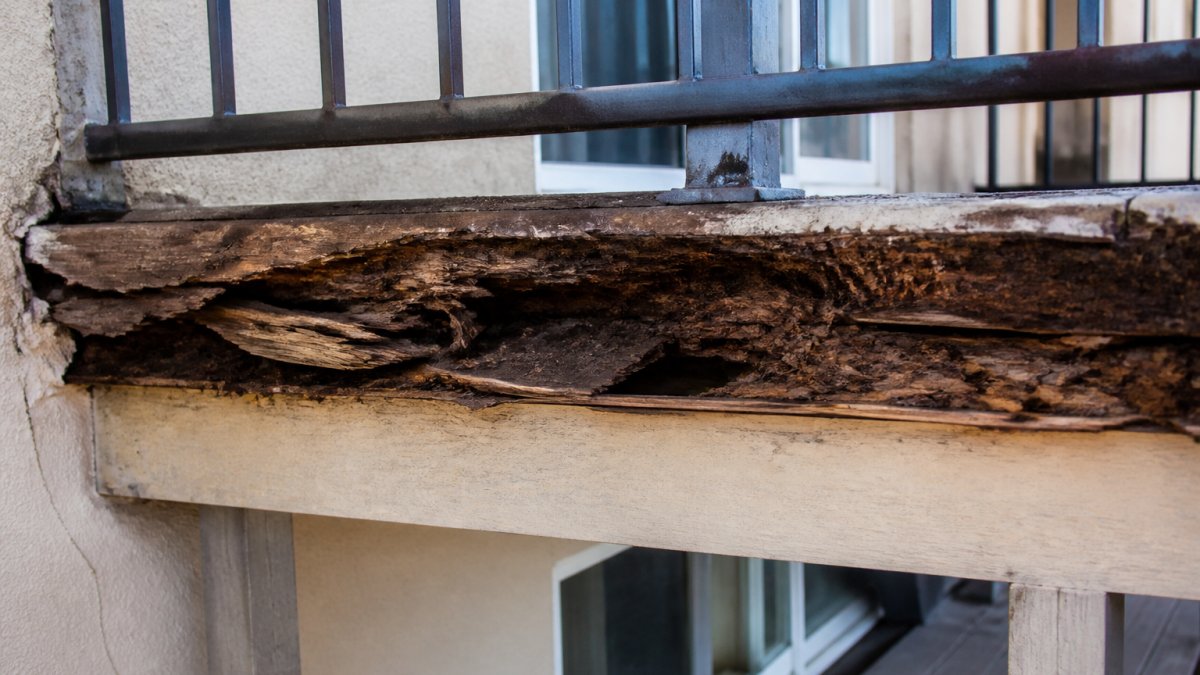
  • Early wood rot shows up as discoloration, softness, peeling paint, and a musty smell you can spot from the surface.
  • Probing too hard with a tool can puncture waterproofing and create the leak you were checking for.

Table of Contents

  • Why Balcony Wood Rot Is an SB 721 Problem, Not Just a Maintenance Issue
  • SB 721 Balcony Inspection Requirements Every Owner Should Know
    • Which Buildings and Exterior Elevated Elements Are Covered
    • How SB 326 Differs From SB 326
    • What the Inspection Actually Requires
    • The Six-Year Clock and Why the Start Date Matters
    • Repair Obligations After the Report
  • How to Prevent Dry Rot on a Balcony: Seven Moisture-Control Steps
    • Where Water Gets In: Flashing, Sealants, and Drainage
  • Your Seasonal Balcony Inspection Checklist
    • What a Walk-Through Can and Cannot Do
    • The Seasonal Checklist
    • Where Water Actually Gets In
    • Prevention Versus the Statutory Inspection
  • Early Warning Signs of Wood Decay You Can Spot Safely
  • The SB 721 Inspection Repair Timeline, From Report to Sign-Off
  • Book an SB 721 Inspection Before Rot Reaches the Framing
  • Frequently Asked Questions

Why Balcony Wood Rot Is an SB 721 Problem, Not Just a Maintenance Issue

A soft board is a warning. When water reaches the framing behind it, the balcony can stop carrying the load it was designed for.

That is exactly the scenario SB 721 exists to catch.

Insurance coverage for long-term decay varies by policy, so review your own policy language before assuming a claim will help.

Weighing inspection against repair exposure is part of the decision.

SB 721 Balcony Inspection Requirements Every Owner Should Know

SB 721 requires periodic inspection of balconies, decks, stairways, and walkways on covered multifamily buildings by a qualified licensed professional. Owners should confirm the current statutory cycle and reporting requirements with the official text of the law or a qualified professional.

Apex Balcony provides licensed balcony inspectors who assess elevated exterior elements.

Which Buildings and Exterior Elevated Elements Are Covered

Coverage hinges on three factors: unit count, construction, and element type. All three have to line up before the inspection obligation attaches.

  • Three or more units: the building may be in scope. Confirm with the statute.
  • Wood-framed construction: a construction type that may fall within the statute’s scope. Confirm with the statute.
  • Exterior elevated elements: balconies, decks, stairways, walkways, and similar structures that extend beyond the exterior wall.

When in doubt about whether an element is covered, get a written opinion from a qualified professional before skipping an inspection.

Watch Out
A building that is exempt from SB 721 is not automatically safe. Local building codes, insurance requirements, and the general duty of care still apply, and a collapse on an exempt structure is still a collapse.

How SB 326 Differs From SB 326

SB 326 covers homeowner associations; SB 721 covers the rest of multifamily housing. Same inspection idea, different responsible party.

HOAs handle SB 326 inspections. Apartment owners and landlords handle SB 721. Both require a qualified inspector and a documented report. The two statutes share the same six-year cycle and the same focus on exterior elevated elements, which is why owners sometimes assume one inspection satisfies both.

What the Inspection Actually Requires

A qualified inspection goes beyond a visual walk-by. Ask any inspector you consider how they assess load-bearing components and connections.

A written report should identify each elevated exterior element, describe the condition of its load-bearing components, and recommend specific repairs where deterioration is found.

The Six-Year Clock and Why the Start Date Matters

Confirm the current inspection cycle against the statute, and keep a record of the date of your last completed inspection report so the next inspection can be scheduled in time.

Repair Obligations After the Report

When a report identifies deterioration, schedule repairs with a licensed contractor and document the completed work so the file shows the finding was addressed.

For the full owner-facing timeline, see our SB 721 inspection timeline guide for owners.

How to Prevent Dry Rot on a Balcony: Seven Moisture-Control Steps

To prevent dry rot on a balcony, keep water off the wood and let anything that gets in dry out fast. Seven steps cover most of it.
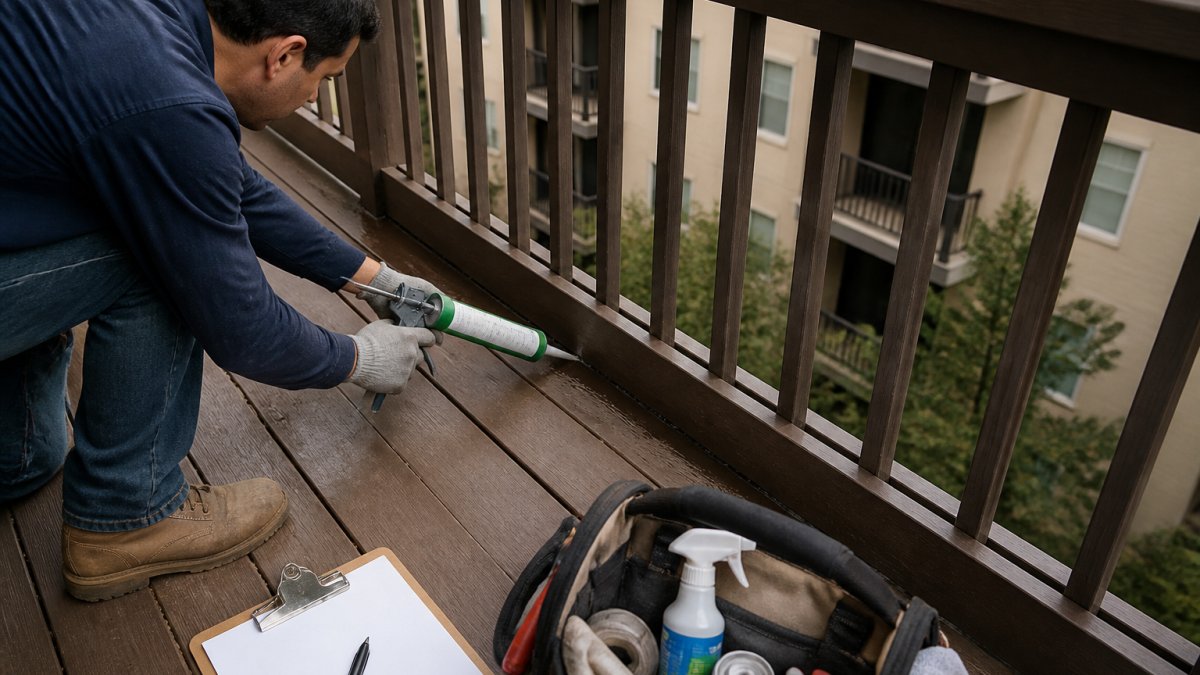
Maintenance worker applying sealant to a railing to prevent balcony wood rot on an apartment building

Consistent application of these protective measures ensures long-term structural integrity, though more extensive restoration efforts may eventually become necessary when renovating wood decks.

  1. Clear drainage paths. Blocked drains hold water against the deck.
  2. Re-seal joints annually. Sealant cracks as it ages and sun-cures.
  3. Check flashing at wall junctions. This is the top leak source we find.
  4. Keep sprinklers off the structure. Irrigation spray soaks wood daily.
  5. Trim vegetation back. Shade keeps wood damp for hours longer.
  6. Fix ponding fast. Standing water means the slope is wrong.
  7. Repair small cracks now. A hairline crack becomes a moisture pathway.

Where Water Gets In: Flashing, Sealants, and Drainage

Three failure points cause most rot: flashing that pulls away from the wall, sealant that has dried and split, and drains clogged with debris. Waterproofing only works when all three hold. Our guide to balcony waterproofing and structural integrity explains how each layer protects the framing.

Seven moisture-control steps cover most balcony wood rot prevention.

StepWhat to doWhy it matters
1Clear drainage pathsBlocked drains hold water against the deck
2Re-seal joints annuallySealant cracks as it ages and sun-cures
3Check flashing at wall junctionsTop leak source found
4Keep sprinklers off the structureIrrigation spray soaks wood daily
5Trim vegetation backShade keeps wood damp for hours longer
6Fix ponding fastStanding water means the slope is wrong
7Repair small cracks nowA hairline crack becomes a moisture pathway

Your Seasonal Balcony Inspection Checklist

A seasonal walk-through catches moisture problems before they spread. Use this balcony inspection checklist twice a year, ideally before and after the rainy season, and keep a dated record of what you find. The record is what turns a walk-through into evidence that you were monitoring the building.

Book inspection →

What a Walk-Through Can and Cannot Do

A walk-through is a visual monitoring tool. It is not an SB 721 inspection, and it does not satisfy the statutory obligation. The distinction matters because owners sometimes assume a maintenance log replaces a qualified inspection, and it does not. What the walk-through does is surface the conditions that make a qualified inspection worth scheduling early rather than on the deadline.

Key Takeaway
A seasonal checklist is prevention. An SB 721 inspection is compliance. Do both, and keep the records separate so neither one is mistaken for the other.

The Seasonal Checklist

  • Look for water stains or dark streaks on wood, especially below railing posts and at deck-to-wall junctions
  • Note any soft spots you notice, without probing or prying
  • Check sealant lines at joints, penetrations, and the base of railings for cracks or gaps

Watch out: probing too hard with a tool can puncture waterproofing and create the leak you were checking for. Press lightly and stop at the first soft spot. Residents should report what they see and should not probe, pry, or dismantle any structural component.

Where Water Actually Gets In

Rot is a moisture problem before it is a wood problem. Four pathways account for most of the decay we see on multifamily balconies:

  1. Failed waterproofing at the walking surface. A coating or membrane that has cracked, blistered, or worn through lets water sit directly on the decking and framing.
  2. Clogged drains and scuppers. Water that cannot drain ponds at the low point, and the low point is usually where the framing meets the wall.
  3. Unsealed penetrations. Railing posts, fasteners, and any hole drilled through the deck or wall is a direct path for water into the framing.
  4. Poor or missing flashing at wall junctions. This is the top leak source we find. Flashing that has pulled away, was never installed correctly, or was covered over during a repair lets water run behind the siding and into the connection.

Water trapped at connections is the most damaging version of the problem because the connection is where the load transfers. A deck board that stays wet is a maintenance item. A connection that stays wet is a structural item.

Prevention Versus the Statutory Inspection

Routine maintenance and visual monitoring reduce the chance that rot reaches the framing. They do not replace the qualified inspection SB 721 requires, and they do not produce the written report the law expects. The practical split is:

  • Owner or manager, seasonally: clear debris, check sealant, photograph changes, log findings
  • Licensed contractor, as needed: re-seal joints, repair flashing, correct ponding, replace deteriorated surface material
  • Qualified inspector, on the statutory cycle: examine load-bearing components, use destructive testing where needed, issue the written report

Keeping those three roles separate is what keeps a building both dry and compliant. Our guide to balcony waterproofing and structural integrity explains how each layer protects the framing.

Early Warning Signs of Wood Decay You Can Spot Safely

Early wood rot shows up as discoloration, softness, peeling paint, and a musty smell. You can spot most of it from the surface.

Signs worth reporting:

  • Spongy decking underfoot
  • Paint that bubbles or flakes in patches
  • Dark staining near fasteners and joints
  • Rusty nails backing out of the wood

Surface signs of rot often appear after moisture has been present for some time, which is why regular checks matter.

The SB 721 Inspection Repair Timeline, From Report to Sign-Off

Owners should act on inspection findings rather than file the report without follow-up.

The sequence:

  1. Inspector performs the visual examination, with destructive testing where needed
  2. Written report issued with findings and repair requirements
  3. Owner schedules repairs with a licensed contractor
  4. Repairs completed and documented
  5. Sign-off confirms the work meets the standard

For the full owner-facing timeline, see our SB 721 inspection timeline guide for owners.

Book an SB 721 Inspection Before Rot Reaches the Framing

Early detection of moisture problems is generally less costly than repairs after decay reaches load-bearing components.

A licensed inspection can identify moisture intrusion early, and a written report can give your board a clear repair path. When you’re ready to act, you can find balcony repair contractors in California.

Apex Balcony inspectors are licensed and bring decades of combined construction and design experience. Contact us for details on what an inspection includes.

Frequently Asked Questions

How can you prevent wood rot on a balcony?

Keep water away from the wood. Check and refresh sealants annually, confirm flashing sheds water away from the building envelope, clear drains and scuppers so water cannot pool, and repair cracked boards before moisture reaches the framing. A simple seasonal routine of cleaning, sealing, and inspecting can help reduce moisture-related wood decay.

What causes wood rot on balconies?

Moisture intrusion is the root cause. Common pathways include failed sealants at rail posts, worn flashing where the deck meets the wall, clogged drainage, and sprinkler overspray that keeps wood damp. In wood-framed multifamily buildings, small leaks feed dry rot for months before anything is visible. Wood decay can weaken structural members without obvious signs, which is one reason periodic inspection of exterior elevated elements is important.

Does waterproofing prevent balcony rot?

Waterproofing slows moisture intrusion but does not stop rot on its own. Coatings and membranes wear out, and water often enters through joints, post bases, and flashing that waterproofing does not cover. Treat waterproofing as one layer in a broader strategy: sound flashing, working drainage, sealed penetrations, and regular inspections. If existing wood decay is already present, recoating the surface traps the problem instead of fixing it.

What should property owners do after an SB 721 inspection finds damage?

Review the inspection report’s repair requirements with a licensed professional, prioritize anything affecting load-bearing components, and get the work scheduled promptly. Document every repair with photos and invoices for your records. Track inspection deadlines across the whole building, and consider restricting access to any balcony or stairway a report flags as a safety hazard until repairs are complete.


Rot does not wait for the next inspection cycle, and neither should you. Apex Balcony provides licensed inspections for SB 721 and SB 326 compliance, early detection of structural failure, and a clear path to the repairs your building needs. Get started with Apex Balcony and protect your residents, your reserve fund, and your liability position.

Book inspection

GoogleAdd apexbalcony.com as a preferred source on Google →
Posted in BlogTagged balcony inspection checklist, balcony wood rot, how to prevent dry rot on a balcony, preventing balcony wood rot sb 721, sb 721 balcony inspection requirements, sb 721 inspection repair timeline

Structural Inspection Requirements for Apartment Balconies

Posted on October 22, 2026 by Apex Balcony admin
Structural Inspection Requirements for Apartment Balconies

Table of Contents

  • Why Structural Inspections for Apartment Balconies Are Non-Negotiable
  • SB 721 Balcony Inspection Requirements: What Apartment Owners Must Know
  • SB 326 Balcony Inspection Requirements: HOA and Condo Compliance
  • Balcony Inspection Frequency and Deadlines: A State-by-State View
    • The four-layer test every owner should run
    • What the state-level rules actually look like
    • How to confirm your own deadline
  • Apartment Balcony Inspection Checklist: What a Qualified Inspector Examines
    • Step 1: Records review before anyone climbs a ladder
    • Step 2: Access and sampling plan
    • Step 3: Visual survey from below
    • Step 4: Walking surface and guardrails
    • Step 5: Moisture and material condition
    • Step 6: Structural integrity and load path
    • What a visual inspection cannot tell you
  • How to Read the Inspection Report and Prioritize Repairs
  • Frequently Asked Questions

Last Updated: October 21, 2026

Why Structural Inspections for Apartment Balconies Are Non-Negotiable

A balcony can look fine from the ground and still be months from failure.

Two events changed how owners think about this work.

The core problem: apartment balconies fail from the inside out. You cannot inspect them with a glance from the parking lot.

Below, we break down the rules that apply, what inspectors actually check, and how to read the report you get back.

Watch Out
The biggest mistake we see is treating a fresh coat of paint as evidence of sound structure. Paint hides corrosion and fills hairline cracks. It tells you nothing about the wood behind it.

SB 721 Balcony Inspection Requirements: What Apartment Owners Must Know

SB 721 is the California law requiring periodic inspection of exterior elevated elements on multifamily apartment buildings. It applies to buildings with three or more dwelling units and targets balconies, decks, stairs, walkways, and porches more than six feet above ground.

The law sets out a specific sequence:

  1. Identify every covered element. Not just balconies. Stairs, landings, and walkways count when they are elevated.
  2. Hire a qualified inspector. The law defines who qualifies, and a general contractor without the right credentials does not.
  3. Complete the inspection within the statutory window. Deadlines run from the certificate of occupancy date, not from when the owner learned about the law.
  4. File the report with the local enforcement agency. The report is a public record in most jurisdictions.
  5. Keep records. Owners must retain inspection reports and evidence of repairs.

A critical point most owners miss: SB 721 requires inspection of a sample of covered elements, not all of them. The inspector examines a statistically valid portion and extrapolates; if the sample shows problems, the scope expands.

Pro Tip
Pull your certificate of occupancy date before you call anyone. It sets your deadline, and it is the first thing a qualified inspector will ask for.

SB 326 Balcony Inspection Requirements: HOA and Condo Compliance

SB 326 covers the same category of elements but applies to homeowners associations rather than individual apartment owners. It requires HOAs to inspect exterior elevated elements, completing a visual survey plus a structural review of a sample of components.

The practical difference matters: under SB 326, the association carries the obligation, not the individual unit owner. The board budgets for it, schedules it, and answers to members when it is late.

A few things HOAs get wrong:

  • Assuming SB 721 covers them. It does not. Different law, different responsible party.
  • Treating the reserve study as an inspection. A reserve study estimates replacement costs. It does not evaluate structural condition.
  • Skipping the repair follow-through. The inspection is the start of a process, not the end of one.
Key Takeaway
The report is a legal document. If an association inspects and then ignores a flagged deficiency, that report becomes evidence of knowledge in any later claim.

Balcony Inspection Frequency and Deadlines: A State-by-State View

Most owners searching this topic are handed a California statute and left to guess whether it applies to them. Only a handful of states impose a balcony-specific inspection mandate, and those that do use very different triggers, building age, height, occupancy type, or a local ordinance layered on top of state law. The practical answer is a stack of four questions, and the statute is only the first.

The four-layer test every owner should run

  1. Is there a state statute? A statewide mandate sets the floor. California is a state with balcony inspection mandates, but each state defines the covered buildings differently.
  2. Is there a local ordinance? Many cities and counties add facade, balcony, or rental-housing inspection programs that are stricter than the state rule. A property can be exempt under state law and still be covered by a city program.
  3. Does the insurer require it? Carriers increasingly ask for documented inspection and repair records at renewal, regardless of statute. A policy condition is a requirement even when no law compels the work.
  4. Does the building’s own governing document require it? HOA CC&Rs, ground leases, and loan covenants sometimes impose inspection cycles that no regulator would.

Run those four layers before you budget anything. The strictest applicable layer controls the schedule.

What the state-level rules actually look like

StateInstrumentTriggerRecurring cycleResponsible party
CaliforniaSB 721 (apartments) and SB 326 (HOAs)Buildings with three or more dwelling units; exterior elevated elements more than six feet above groundStatutory cycle keyed to the certificate of occupancy date, then recurringOwner or HOA board
FloridaMilestone inspection and structural integrity reserve study provisionsBuildings at defined age thresholds, with a second phase at a later thresholdSet by statute at age milestonesBuilding owner or association
New JerseyStructural inspection requirements for certain multifamily buildingsDefined categories of multifamily buildingsPeriodic, set by regulationBuilding owner
New YorkFacade inspection programBuildings above a height thresholdPeriodic cycleBuilding owner
Most other statesNo statewide balcony-specific mandateLocal code and insurer requirements governSet locally or by policyOwner, association, or local authority

Two patterns stand out. First, triggers cluster around age and height: older and taller buildings get inspected more often, and scope widens as the building ages. Second, the responsible party is almost always whoever controls the common elements, which is why HOAs and apartment owners end up under different statutes for the same physical balcony.

How to confirm your own deadline

The certificate of occupancy date is the single most important document in this process. In California, SB 721 and SB 326 deadlines run from that date, not from when the owner learned about the law, and not from the last repair.

Outside a mandate state, the deadline is whatever the strictest of the four layers says it is. A city rental-housing program, an insurer’s renewal questionnaire, or a lender’s reserve requirement can each create a binding date no statute mentions.

Do not assume a neighboring state’s rules apply to you, and do not assume your state has no rules. Local ordinances and insurance requirements change faster than statutes, and a liability claim will not care whether an inspection was legally required.

When you request records from the building department, ask for the full permit history, not just the certificate of occupancy. Alterations, re-roofs, and prior balcony repairs often reset the clock or change which elements are covered.

Book inspection →

The statute is the floor, not the ceiling. The controlling deadline is the strictest of the state rule, the local ordinance, the insurance condition, and the governing document.

Apartment Balcony Inspection Checklist: What a Qualified Inspector Examines

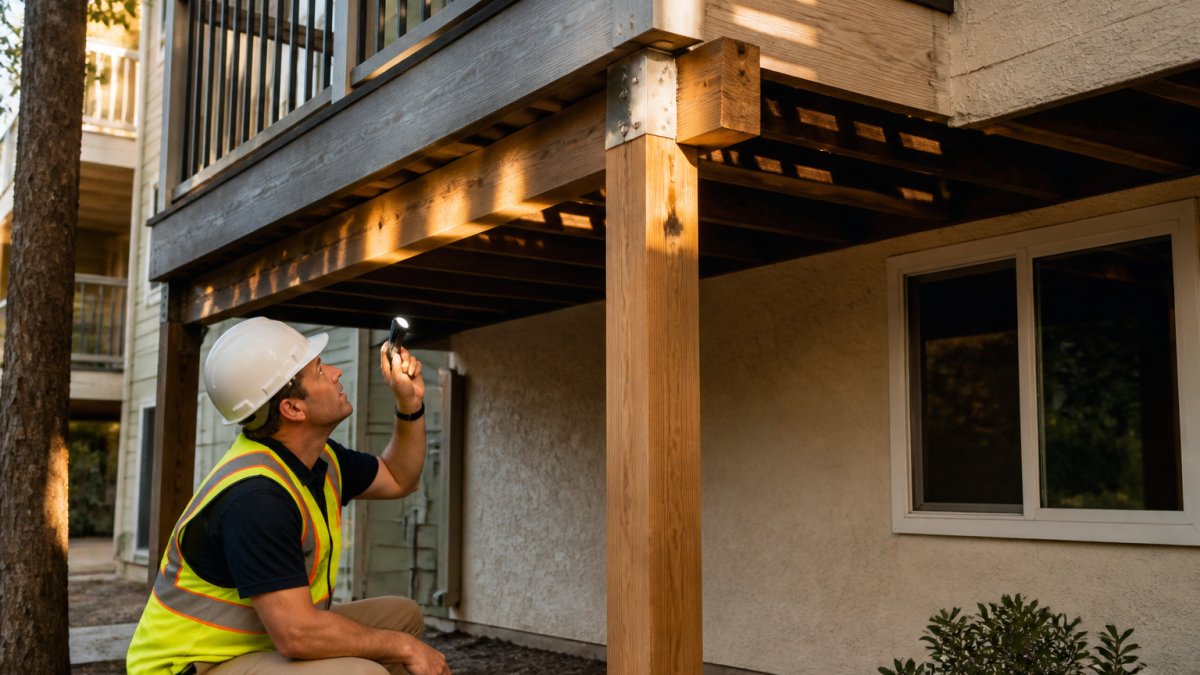
A licensed inspector in a hard hat and safety vest crouched beneath a multi-story apartment balcony, shining a flashlight up at the ledger connection and support posts, late afternoon light filtering through the deck boards

A checklist is only useful if it tells you what the inspector does, in what order, and what the finding means. The list below is organized as a workflow, not a component inventory, because that is how a qualified inspector moves through a property.

Step 1: Records review before anyone climbs a ladder

  • Structural drawings, original permit set, and the certificate of occupancy
  • Prior inspection reports, repair scopes, and close-out documentation
  • Water-intrusion complaints, work orders, and any history of leaks at the balcony line
  • Alteration permits that may have changed the structure or the waterproofing

The records review tells the inspector which elements are original, which have been repaired, and where to look hardest. Skipping it is the most common cause of a report that misses the actual problem.

Step 2: Access and sampling plan

Most statutes and standards require inspection of a sample of covered elements, not every balcony. The inspector selects a statistically valid portion, weighted toward the elements most likely to fail: the oldest, most exposed, previously repaired, and longest spans.

Access is the constraint that drives cost and schedule. Inspectors need to get below the deck, which may mean ladders, lifts, or entry through a lower unit.

Step 3: Visual survey from below

  • Ledger connection and fasteners. Look for corrosion, missing or backed-out fasteners, and separation between the ledger and the building face.
  • Support posts and footings. Check for rot at the base, footing movement, and post-to-beam connections.
  • Joist ends and rim board. These are the first members to stay wet and the first to decay.
  • Ground clearance. Insufficient clearance traps moisture and accelerates decay.

Step 4: Walking surface and guardrails

  • Deck board condition, spacing, and fastener condition
  • Guardrail height, attachment, and post anchorage
  • Handrail security on stairs and landings
  • Unevenness, trip hazards, and ponding on the walking surface

Step 5: Moisture and material condition

  • Waterproof membrane integrity at the deck-to-wall junction
  • Drainage paths, scuppers, and standing water
  • Wood decay and dry rot at connection points, probed rather than eyeballed
  • Corrosion on fasteners, hangers, and metal hardware
  • Cracks in concrete or stucco, and whether they are active

Step 6: Structural integrity and load path

  • Load-bearing components under actual load
  • Condition of previously repaired sections and whether the repair is holding
  • Signs of deflection, movement, or distress that suggest a load-path problem

What a visual inspection cannot tell you

A visual inspection is a condition assessment, not a laboratory test. It cannot confirm the remaining capacity of a corroded fastener, the depth of decay behind paint, or the condition of embedded steel without invasive testing. When the survey finds distress that could be structural, the next step is a specialist evaluation, invasive probing, moisture mapping, or a structural engineer’s analysis.

The biggest mistake we see is treating a fresh coat of paint as evidence of sound structure. Paint hides corrosion and fills hairline cracks. It tells you nothing about the wood behind it.

Photograph every finding with a reference point, unit number, elevation, and a tape measure in frame. A finding without a location is a finding the contractor cannot bid on.

How to Read the Inspection Report and Prioritize Repairs

The report should separate findings into three buckets: safety hazards requiring immediate action, deterioration needing repair within a defined window, and items to monitor at the next cycle.

Prioritize in this order:

  1. Anything flagged as an immediate safety hazard. Close or barricade the element until it is repaired.
  2. Structural items. Ledger connections, posts, and load-bearing members come before cosmetics.
  3. Waterproofing and drainage. These cause the structural damage, so fixing them stops the clock on everything else.
  4. Cosmetic and surface items. Deck boards and paint last.

Get a repair scope in writing before you solicit bids. Three contractors will give three different interpretations of a vague report; a clear scope fixes that.


Every inspection cycle ends the same way: with a list of things to fix and a board or owner deciding what to fund first.

Frequently Asked Questions

Are balconies considered structural?

Yes. Apartment balconies are structural elements because they carry people and must transfer loads safely to the building frame. Key load-bearing components include the ledger connection, support posts, joists, and the walking surface. When any of these deteriorate through wood decay or corrosion, the balcony can fail. That is why structural inspection requirements for apartment balconies focus on these components and why states like California mandate periodic inspections by qualified professionals.

How often do apartment balconies need to be inspected in California?

Under SB 721, apartment building owners must have exterior elevated elements inspected every six years by a licensed architect, civil or structural engineer, or certified building inspector. The first inspection was due by January 1, 2025, for buildings with three or more dwelling units. SB 326 applies to HOAs and condominiums, requiring inspections every nine years with the first completed by January 1, 2025. Your local jurisdiction may set stricter deadlines, so confirm with your city or county building department.

Who is qualified to inspect an apartment balcony?

A qualified inspector for apartment balconies must be a licensed architect, a licensed civil or structural engineer, or a certified building inspector with specific experience in exterior elevated elements. Some states require additional certification. The inspector must be able to evaluate structural integrity, load-bearing components, waterproofing, and drainage. Always ask for proof of licensure and insurance before booking an inspection, and confirm the inspector carries errors and omissions coverage.

What should property owners do after an inspection identifies a safety concern?

If an inspection flags a safety concern, act immediately. Restrict access to the affected balcony or stairway, then hire a licensed contractor to make repairs based on the inspector’s written recommendations. Keep detailed records of the inspection report, repair permits, and completion photos. For SB 721 and SB 326 compliance, you may need to file a report with your local building department and schedule a reinspection. Prioritize repairs that affect load-bearing components or waterproofing to prevent further deterioration.

Book inspection

Posted in BlogTagged apartment balconies, sb 326 balcony inspection requirements, sb 721 balcony inspection requirements, structural inspection requirements for apartment balconies

Recent Posts

  • Are Hidden Balcony Framing Problems Showing Up in Your Building?
  • Apartment Building Maintenance Budget: A Step-by-Step Guide
  • Is Your Older Balcony Safe? A Structural Assessment Guide
  • 5 SB 326 Inspection Penalty Risks California HOAs Miss
  • What Are the Structural Retrofit Options for Apartment Buildings?

Recent Comments

No comments to show.

Archives

  • November 2026
  • October 2026
  • September 2026
  • August 2026
  • July 2026
  • June 2026

Categories

  • Blog
Logo
Created by Unilime.Group
  • Balcony Law
  • About us
  • Inspection services
  • FAQ
  • Blog

Call us ‪+1 818-806-7885‬
License: CSLB #1101305

Apex Balcony Inspection
‪+1 818-806-7885‬
[email protected]
4645 Van Nuys Blvd #201
Sherman Oaks CA 91403

Created by Unilime.Group