Logo
  • Balcony Law
  • About us
  • Inspection services
  • FAQ
  • Blog
  • Call us ‪+1 818-806-7885
  • Book now

Tag: balcony waterproofing

7 Steps to Repair Balcony Structural Damage Safely

Posted on November 9, 2026November 9, 2026 by Apex Balcony admin
7 Steps to Repair Balcony Structural Damage Safely

Last Updated: November 7, 2026

Quick Summary

To repair balcony structural damage, restrict access and document the condition, then get a licensed structural inspection before any work begins. Prepare the surface, treat exposed rebar, patch with structural repair material, resurface and seal, and verify drainage with a follow-up inspection at 12 months.

  • Close the balcony and photograph every crack, spall, and rust stain before work starts.
  • A structural engineer or qualified inspector confirms whether the slab, beams, and connections are sound.
  • Clean rust from exposed rebar before patching, since corrosion left in place keeps expanding.
  • Allow each repair layer to cure fully, because rushing the cure can trap moisture.
  • Water causes most balcony structural damage, so fix the water path and root cause.
Is your balcony safe to use today?Apex Balcony inspects balconies, decks, and stairways for structural damage and compliance.

Book a Balcony Inspection

Table of Contents

  • Start With Safety: When to Restrict Balcony Use
  • Spotting Balcony Structural Damage: Signs That Demand Action
    • Cracks, Spalling, and Exposed Rebar in Concrete Balconies
    • Rotted Framing, Loose Railings, and Sagging Decks
  • Why Balcony Inspections Come Before Any Repair
  • Triage the Damage: Matching Repair Methods to Severity
  • Step-by-Step: How to Repair Balcony Structural Damage
  • Balcony Repair Without Replacing: What Can Be Saved
  • Balcony Waterproofing and Drainage That Prevent Repeat Damage
  • What Balcony Structural Damage Repair Cost Really Depends On
  • Frequently Asked Questions

Start With Safety: When to Restrict Balcony Use

A balcony with visible structural damage is not a storage area and not a place to test your luck. Close it until a qualified inspector says otherwise. This guide walks you through how to repair balcony structural damage the right way, starting with the step most owners skip: keeping people off the structure while you figure out what is wrong.

Here is the hard truth. Balcony failures are not slow, polite events. The 2015 Berkeley collapse killed six people when a balcony gave way during a party (Water-absorbent material caused fatal balcony collapse, state says). The 2021 Malibu incident showed a similar pattern of hidden decay and sudden failure.

So before you pick up a trowel, ask one question: is this balcony safe to stand on right now?

Restrict use immediately if you see any of these:

  • A crack you can slide a coin into
  • Concrete that sounds hollow when tapped
  • Rust stains bleeding from the concrete
  • A railing that moves when you push it
  • Any sag or slope that was not there before

Cordon off the area. Post a notice. Tell residents in writing. A closed balcony costs nothing. A collapse costs everything.

Spotting Balcony Structural Damage: Signs That Demand Action

Balcony structural damage often shows warning signs before it fails. The problem is that most people do not know what to look for.
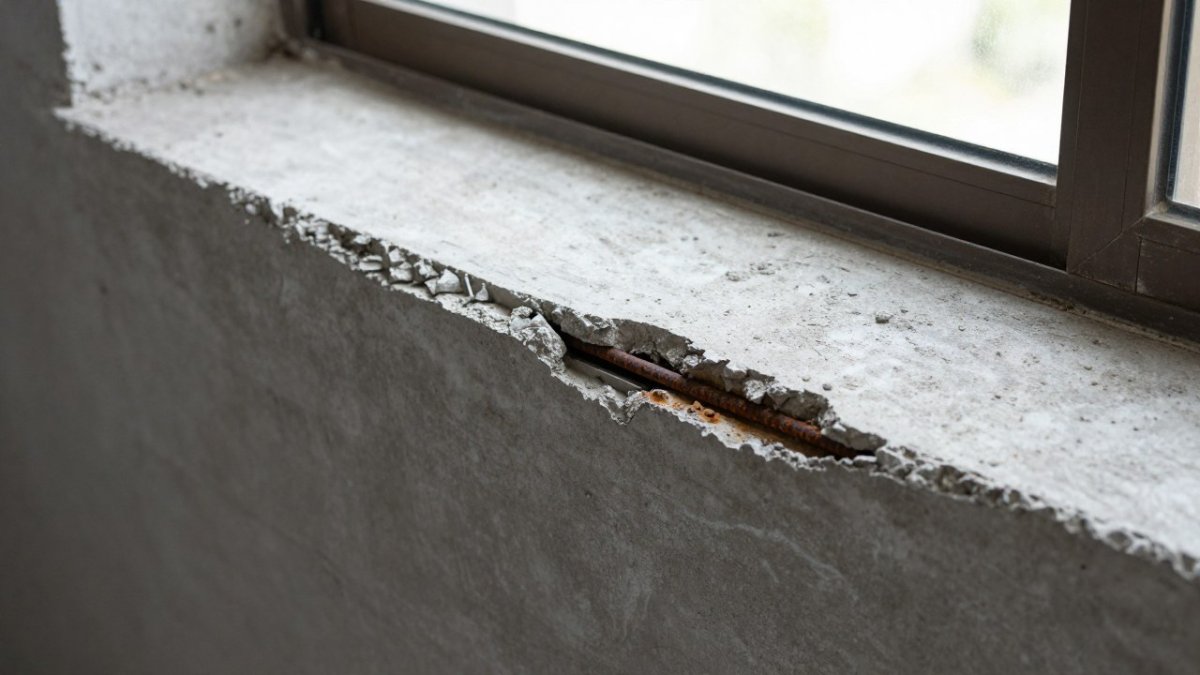
Diagram illustrating signs of balcony structural damage including concrete cracks and exposed rusted rebar.

Cracks, Spalling, and Exposed Rebar in Concrete Balconies

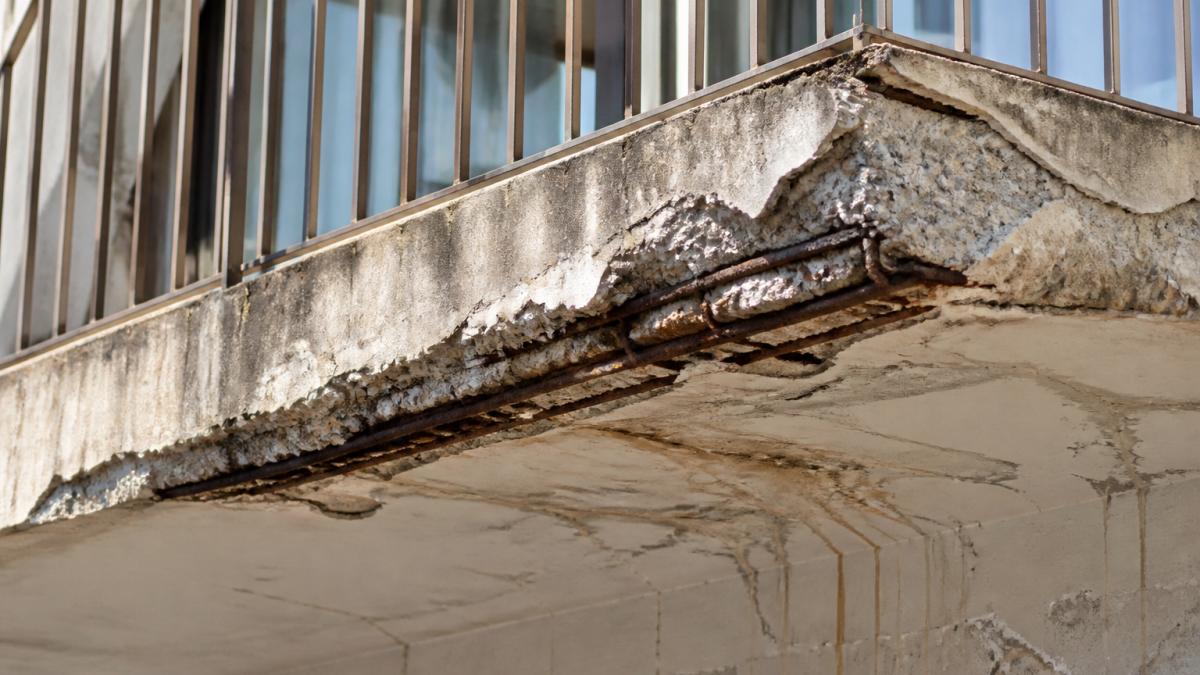
Spalling is the breaking away of concrete from the surface of a balcony slab or beam. To understand what this damage means before deciding on repairs, see concrete spalling and why it matters. It usually starts as a small chip and grows into a crater that exposes the steel inside.

Hairline cracks in concrete are often cosmetic. Deep cracks are not. The difference matters:

  • Hairline cracks under the width of a credit card are usually surface shrinkage
  • Deep cracks that run through the slab or follow the rebar line are structural
  • Spalling concrete with exposed rebar means corrosion is already underway
  • Delamination shows as a hollow sound when you tap the surface

Once reinforcement bars are exposed, moisture reaches the steel. Corrosion expands the metal, which pushes off more concrete, which exposes more steel. That cycle does not stop on its own.

Rotted Framing, Loose Railings, and Sagging Decks

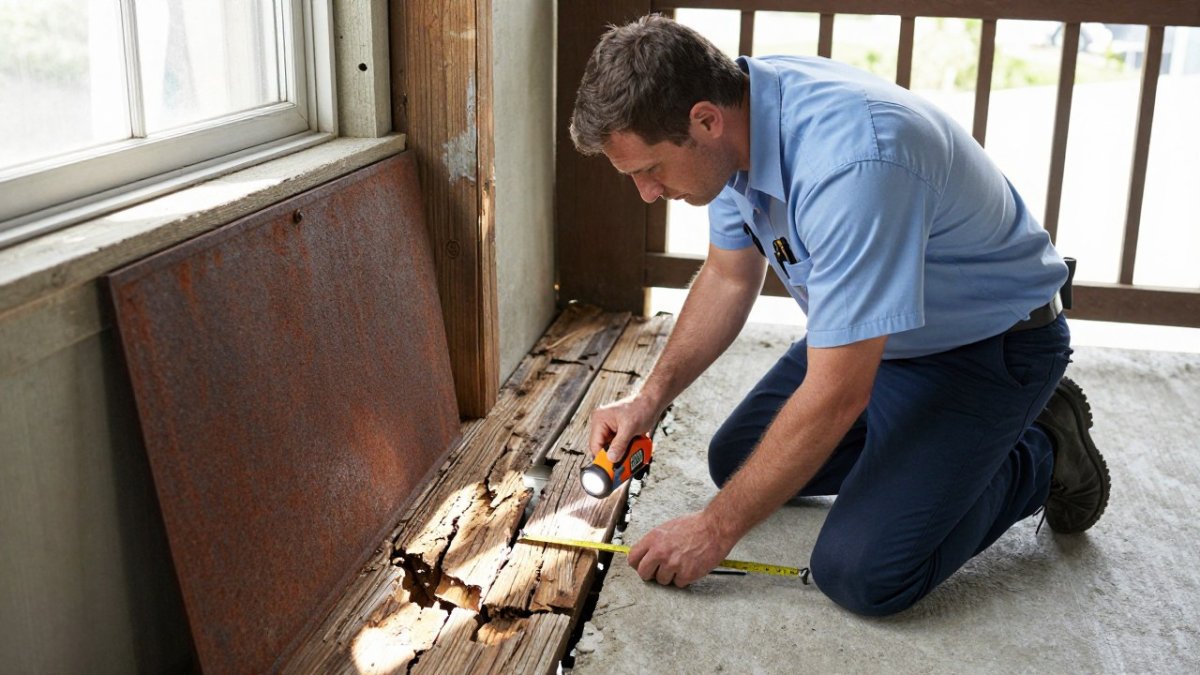
Wood-framed balconies fail differently. Look for rotted framing, especially where the ledger board meets the building. Pressure-treated lumber resists rot, but it does not last forever.

Check the railing connections first. Loose bolts and wobbly posts are the cheapest problem to fix and the most common cause of falls. A sagging deck or an uneven surface means the framing below has lost strength.

Why Balcony Inspections Come Before Any Repair

An inspection is not paperwork. It is the difference between fixing the right problem and hiding the wrong one.

Repair assessment starts with understanding load-bearing elements, drainage paths, and how far the damage has spread. A cosmetic patch over a corroded slab looks fine for a season and fails the next.

If you are unsure whether you need a licensed structural engineer or a specialized inspector, our guide on hiring a structural engineer for deck safety explains when each one is required.

A proper structural inspection covers:

  • The balcony slab, beams, and lintel
  • Railing height and anchorage
  • Waterproofing and drainage
  • Connection points to the building façade
  • Any prior patches or repairs

Watch out: skipping the inspection to save time can be a costly shortcut in this process. Repairs are harder to plan well when the damage has not been diagnosed.

Triage the Damage: Matching Repair Methods to Severity

Not every problem needs the same fix. Triage by material and severity before you spend a dollar.

SeverityTypical SignsLikely Repair Path
MinorHairline cracks, small chipsSealant, patching, protective coating
ModerateSpalling, exposed rebar, worn waterproofingRebar cleaning, structural mortar, resurfacing
SevereDeep cracks, sagging, failed connectionsEngineer assessment, possible replacement

Severe damage changes the conversation. Sagging decks, failed railing anchorage, and cracks through the slab need an engineer, not a handyman.

Step-by-Step: How to Repair Balcony Structural Damage

Here is a general repair sequence used across the industry. Each step depends on the one before it, and skipping a step is how a repair can fail later.

1. Restrict access and document the condition. Close the balcony, notify occupants in writing, and photograph every crack, spall, and rust stain before anyone touches the surface. Those photos become your baseline for tracking whether the damage is active or dormant.

2. Get a licensed inspection. A structural engineer or a qualified inspector documents severity, maps the extent of corrosion, and confirms whether the slab, beams, and connections are sound. Ask your local building department whether a permit is required for the planned repair.

3. Prepare the surface. Remove all loose concrete, dirt, old sealant, and failed coating. Sound concrete is removed with a chipping hammer or grinder until you reach firm material, and the edges of the repair area are squared so the patch does not feather to nothing.

4. Treat the steel. Exposed rebar should be cleaned of rust before any patch is applied, since corrosion that is left in place can keep expanding under the repair.

5. Patch and rebuild. Apply structural repair material according to the manufacturer’s instructions, allowing each layer to cure fully before the next stage, since rushing the cure can trap moisture.

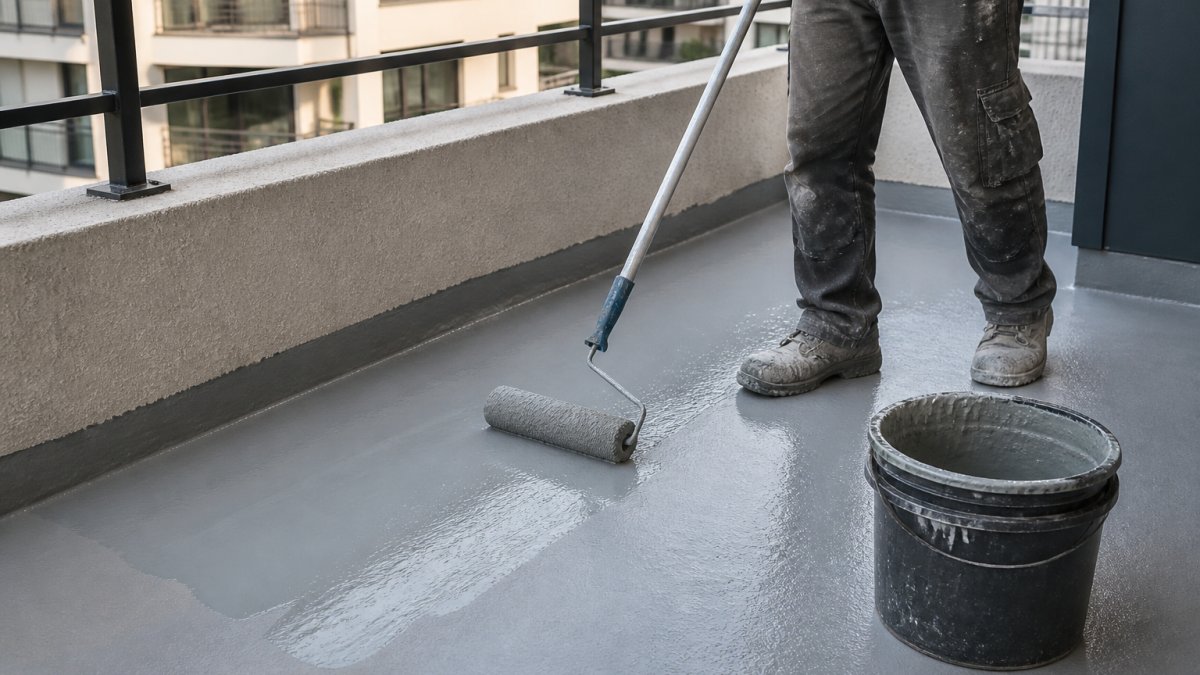
7. Resurface and seal. Restore the protective coating and waterproofing layer, making sure the waterproofing ties into the wall flashing and drain details so water cannot enter at the wall junction.

8. Verify and document. Confirm drainage works by water-testing the surface, check that no ponding remains, and keep photos, product data sheets, and the engineer’s report. Schedule a follow-up inspection at 12 months to confirm the repair is holding.

For minor cracks that do not need full replacement, our guide on repairing minor balcony cracks walks through the patching method in detail.

Watch out: patching over wet concrete or uncured repair mortar can trap moisture and lead to a repeat failure, so allow each layer to cure before the next.

Balcony Repair Without Replacing: What Can Be Saved

Most damaged balconies can be repaired rather than replaced. The question is whether the repair restores structural integrity or just hides the problem.

Balcony repair without replacing works when the slab and framing are sound and the damage is surface-level. It fails when corrosion has eaten into the reinforcement bars or the connections have lost strength.

If you are weighing repair against replacement, our breakdown of balcony repair alternatives to full replacement covers the cost and compliance trade-offs.

What usually can be saved:

  • Cracked but stable slabs
  • Spalling edges with intact rebar
  • Railings with sound anchorage
  • Waterproofing that can be renewed

What usually cannot:

  • Slabs with through-cracks
  • Framing with rot at the ledger
  • Any balcony that has already sagged

Balcony Waterproofing and Drainage That Prevent Repeat Damage

Water causes most balcony structural damage. Fix the water path and you fix the root cause.

Balcony waterproofing is the protective layer that keeps moisture out of the slab and framing. Drainage is how that water leaves the balcony. Both must work together.

  • Slope the surface away from the building
  • Keep drains and scuppers clear
  • Seal joints and penetrations with flexible sealant
  • Recoat the protective coating on schedule
  • Check caulking every year

If you are comparing systems, our guide to the best waterproofing systems for elevated decks breaks down the options.

What Balcony Structural Damage Repair Cost Really Depends On

Repair costs vary widely, and anyone who quotes a firm number before inspecting is guessing. But refusing to give any range is just as unhelpful. What you can do is understand the cost drivers so you can read a bid intelligently and spot the line items that balloon.

The main drivers that affect repair cost:

  • Scope of damage. A cosmetic patch on a hairline crack is generally far less costly than a slab with through-cracks, delamination, and exposed rebar, which is a different project with a much larger scope.
  • Access. Ground-floor work is cheap. Upper-floor work needs scaffolding, swing stages, or lift access, and that equipment can rival the repair cost itself on a high-rise. A balcony that cannot be reached safely from inside the unit adds mobilization cost before a single patch is applied.
  • Material. Concrete repair carries material and cure-time costs; wood-framed balconies carry demolition and replacement costs when rot reaches the ledger. The two are not comparable line for line.
  • Engineering and permits. A licensed structural engineer’s assessment and stamped drawings are a real line item, and permit fees vary by jurisdiction. Skipping this step to save money is the most common false economy in balcony repair, an unpermitted structural repair can complicate a future sale or insurance claim.
  • Documentation and warranty. Reports that hold up to audit, photo logs, and a written warranty add cost up front and save cost at resale and at claim time.

How to read a bid. Ask for the bid to separate labor, materials, engineering, permits, and access equipment. A single lump sum hides which of those is driving the price. Ask whether the bid includes rebar treatment and crack repair or only surface patching, since that difference determines whether the work addresses the underlying problem. Ask what cure schedule and inspection interval the contractor assumes.

What you should not do: accept a quote given over the phone without an on-site inspection. No legitimate contractor can price structural repair without seeing the extent of corrosion and the condition of the connections.

For current inspection pricing and a scope-specific estimate, contact Apex Balcony for a quote.

Frequently Asked Questions

How can you tell if a balcony has structural damage?

Look for deep or widening cracks, spalling concrete, rust stains, exposed rebar, sagging slabs, uneven walking surfaces, loose bolts at railing connections, and soft or rotted framing. Water stains and failed sealant around the balcony edge and lintel also point to moisture damage. Hairline cracks alone are often cosmetic, but any crack you can fit a coin into, or one that has grown since last season, needs a professional balcony inspection before the balcony is used again.

Can balcony structural damage be repaired without replacing the balcony?

Often yes. Balcony repair without replacing is realistic when damage is caught early and the repair scope is determined by a qualified inspector. Full replacement becomes the safer option when the balcony slab has lost significant section, reinforcement is extensively corroded, or the framing has failed. A licensed inspector or structural engineer should make that call based on damage severity, not a contractor with a repair quote to sell.

Who should inspect a structurally damaged balcony?

Use a licensed inspector with specific experience in elevated exterior elements, and bring in a structural engineer when damage is moderate to severe or repair scope is unclear. In California, SB 326 and SB 721 are relevant to balcony inspections for many multifamily buildings and HOAs, so the report should document damage severity, load-bearing elements affected, and recommended repair methods. Ask for proof of insurance before work begins.

Is a leaking balcony a structural defect?

Not always, but it is a leading cause of one. Water intrusion through failed sealant, clogged drainage, or worn protective coating reaches the balcony slab and reinforcement bars, driving corrosion and spalling concrete over time. Treat any leak as an early warning: fix the waterproofing and drainage first, then have the structure inspected for moisture damage and delamination. Ignoring a leak is how a cheap caulking job turns into a balcony structural damage repair cost you did not budget for.

GoogleAdd apexbalcony.com as a preferred source on Google →
Posted in BlogTagged balcony inspections, balcony repair without replacing, balcony structural damage, balcony structural damage repair cost, balcony waterproofing, how to repair balcony structural damageLeave a Comment on 7 Steps to Repair Balcony Structural Damage Safely

Balcony Waterproofing and Structural Integrity

Posted on October 10, 2026 by Apex Balcony admin
Balcony Waterproofing and Structural Integrity

Table of Contents

  • How Balcony Waterproofing Protects Structural Integrity
  • Common Causes of Balcony Water Intrusion and Damage
  • Signs of Balcony Structural Damage You Cannot Ignore
  • Balcony Waterproofing Methods and Material Options
    • Membrane Systems
    • Protective Coatings and Sealants
  • Balcony Drainage Problems and Prevention
  • Balcony Inspection Checklist for Property Owners
    • Visual Inspection Steps
    • Distinguishing Cosmetic Damage from Structural Concern
    • Documentation and Testing
    • When to Stop and Call a Professional
  • Repair and Remediation: When to Call a Professional
    • Assessing Repair Scope and Feasibility
    • Material Selection and Substrate Compatibility
    • Substrate Repair and Preparation
    • Professional Assessment and Execution
  • Compliance and Long-Term Maintenance
  • Frequently Asked Questions

Last Updated: October 10, 2026

How Balcony Waterproofing Protects Structural Integrity

Balcony waterproofing is the process of applying protective barriers to prevent water from entering the structural framing and decking materials beneath the surface. Water intrusion is the leading cause of balcony failure. When moisture penetrates concrete, wood, or steel, it triggers structural problems that can cost tens of thousands to repair or create safety hazards for residents.

Water migrates downward through capillary action, finding microscopic cracks and gaps, triggering rust in steel reinforcement and rot in wood components.

Key Takeaway
Waterproofing is not optional maintenance, it’s the foundation of balcony safety. A failed waterproofing system can turn a minor water intrusion into a structural failure that endangers residents.

Common Causes of Balcony Water Intrusion and Damage

Cracks in concrete are the most common entry point.

Flashing failures at the connection between the balcony and building frame are critical vulnerabilities. When flashing corrodes, separates, or was installed incorrectly, water flows directly into the framing cavity.

Deteriorated sealants allow water to seep into expansion joints and corners, degrading from UV exposure and temperature cycling.

Membrane punctures and tears introduce water directly into the waterproofing system through foot traffic, maintenance work, or weather damage.

Watch Out
Ignoring water stains on a ceiling below a balcony is a serious mistake. Those stains indicate active water migration into the structural framing. Delaying repair allows the damage to spread deeper into the building envelope, turning a surface-level fix into a structural remediation project.

Signs of Balcony Structural Damage You Cannot Ignore

Visible cracks wider than 1/8 inch, especially horizontal cracks parallel to the building face, indicate water damage and rust expansion in reinforcing steel and warrant immediate inspection.

Concrete balcony surface with cracks and exposed steel needing balcony waterproofing repairs.

Spalling concrete exposes reinforcing steel, which rusts rapidly when exposed to moisture and oxygen, accelerating deterioration.

Water stains on the ceiling or walls below the balcony indicate active water penetration and migration through the building envelope.

Soft or spongy areas suggest rot in wood or advanced concrete deterioration.

Rust streaks indicate corroding reinforcing steel.

Sagging or deflection of the balcony deck indicates the structural framing has lost capacity and the balcony is unsafe.

Balcony Waterproofing Methods and Material Options

Membrane Systems

Liquid-applied membranes are brushed or sprayed onto the deck surface and cure to form a seamless, flexible barrier ideal for irregular surfaces. They offer complete coverage with no seams but require careful surface preparation and proper curing conditions.

Sheet membranes are rolled out and sealed at overlaps and edges. They’re durable and easy to inspect but require proper sealing at all joints and penetrations.

Reinforced membranes combine fabric with waterproofing coating for additional puncture resistance, ideal for high-traffic balconies.

Protective Coatings and Sealants

Elastomeric coatings bridge small cracks and flex with temperature changes, offering good protection for balconies in good condition.

Polyurethane sealants fill gaps and expansion joints at the balcony-frame junction and require reapplication every 3-5 years.

Penetrating sealers soak into concrete or wood, reducing water absorption, and work best on balconies in good condition without major cracks.

Pro Tip
Don’t assume one waterproofing method works for all situations. A balcony with active cracks needs a flexible membrane that can bridge the movement. A balcony with poor drainage needs a sloped surface or integrated drainage system. A professional assessment determines the right solution for each balcony.

Balcony Drainage Problems and Prevention

Proper slope and drainage prevent water from pooling and penetrating the waterproofing.

Balconies should slope toward the outer edge at a minimum 2% grade to direct water away from the building. Many older balconies were built flat or with inadequate slope.

Drip edges prevent water from flowing back toward the building face, and interior drains or scuppers must be kept clear of debris.

Balcony Inspection Checklist for Property Owners

Visual Inspection Steps

Check the sealant at the balcony-frame joint for cracks, gaps, or separation.

Inspect the railing and connections for rust, movement, or loose fasteners.

Look underneath the balcony for water stains, efflorescence, or visible moisture on the soffit or fascia, indicating active water migration.

Check for debris accumulation in corners, at drains, and in depressions, as it blocks drainage and traps water.

Note the balcony’s orientation, as sun exposure, wind direction, and proximity to trees affect water intrusion risk.

Distinguishing Cosmetic Damage from Structural Concern

Cosmetic or Low-Urgency Issues (Can defer professional inspection 6-12 months if no water stains below):

  • Hairline cracks (less than 1/16 inch wide) with no water stains or rust
  • Minor sealant cracks at joints (less than 1/8 inch wide)
  • Surface dirt, algae, or minor discoloration
  • Small areas of paint peeling or coating wear
  • Isolated small spalls (less than 1 inch diameter) with no exposed steel

Moderate Issues (Schedule professional inspection within 1-3 months):

  • Cracks 1/8 inch to 1/4 inch wide, especially if horizontal or parallel to the building
  • Sealant separation or gaps wider than 1/8 inch
  • Spalling concrete exposing reinforcing steel (any size)
  • Water stains on the ceiling or walls directly below the balcony
  • Rust streaks running down the balcony face or building wall
  • Soft or spongy areas in the deck surface
  • Clogged or non-functioning drains

Critical Issues (Restrict balcony use and call a professional immediately):

  • Cracks wider than 1/4 inch
  • Visible sagging, deflection, or settlement of the deck
  • Large areas of spalling (more than 2 inches diameter) or exposed reinforcing steel
  • Active water leaks or water flowing through the structure
  • Rust stains accompanied by visible corrosion or loss of concrete around reinforcing steel
  • Soft spots that yield to hand pressure or tool pressure
  • Any sign of movement, separation, or instability in the railing or structural connections
  • Efflorescence or continuous moisture on the underside

If you observe any critical-level issue, do not allow occupants on the balcony until a licensed structural engineer or professional balcony inspector has assessed the damage.

Documentation and Testing

Take clear, dated photographs of damage, cracks, water stains, or rust, including a scale object and multiple angles if extensive.

Book inspection →

Document the location using compass directions, date, time, and recent weather.

Flood testing confirms waterproofing compromise by applying water to a localized area and monitoring for leaks below:

  • Setup: Isolate a test area (4 feet × 4 feet) using a temporary dam or tape barrier.
  • Application: Apply water slowly using a hose or watering can, maintaining a shallow pool 1-2 inches deep.
  • Duration: Maintain the water level for 24-48 hours.
  • Monitoring: Check the ceiling and walls below every 4-6 hours for new water stains, drips, or moisture.
  • Documentation: Photograph any leaks and note the time they appear.
  • Acceptable results: No water should appear below the balcony during or within 24 hours after the test ends.

Moisture meters measure moisture content in concrete (above 4-5%) or wood (above 12-15%), indicating water intrusion even without visible stains.

Keep detailed records of inspections, repairs, maintenance, and testing to identify patterns and document compliance.

When to Stop and Call a Professional

Contact a licensed structural engineer or professional balcony inspector if your inspection reveals moderate or critical issues. Do not attempt repairs on balconies with active water intrusion, exposed steel, or structural movement.

Repair and Remediation: When to Call a Professional

Assessing Repair Scope and Feasibility

The repair path depends on the extent of damage, age of the existing system, and substrate condition.

Localized Repairs (Suitable for isolated defects):
Localized repairs suit isolated defects like punctures or failed sealant joints.

Localized repairs work best when the membrane is less than 10 years old, the substrate is sound, and the failure is isolated.

Full Membrane Replacement (Necessary for widespread failure):
Full membrane replacement is necessary for widespread failure, multiple cracks, extensive sealant failure, large spalling areas, or active intrusion at multiple locations.

Full replacement is more expensive but eliminates the risk of hidden failures.

Material Selection and Substrate Compatibility

The choice of waterproofing membrane depends on the substrate, the extent of existing damage, and the balcony’s exposure.

Liquid-Applied Membranes (Polyurethane, Acrylic, or Bituminous):

  • Best for: Concrete balconies with minor cracks or irregular surfaces
  • Substrate prep: Concrete must be clean, dry (less than 4% moisture), and free of loose material. Cracks wider than 1/4 inch should be filled.
  • Application: Brushed or sprayed in two coats, 60-80 mils total thickness. Curing time: 24-72 hours.
  • Durability: 10-15 years with maintenance; UV-resistant topcoats extend life.
  • Cost: Lower than sheet membranes but labor-intensive if surface prep is extensive.

Sheet Membranes (EPDM, TPO, or PVC):

  • Best for: Large, flat concrete or wood balconies
  • Substrate prep: Substrate must be smooth, dry, and free of sharp protrusions.
  • Installation: Rolled out and overlapped at seams (minimum 6 inches), sealed with adhesive or fasteners.
  • Durability: 15-25 years; seams are the weak point.
  • Cost: Higher material cost but faster installation on sound substrates.

Reinforced Membranes (Fabric-Reinforced Polyurethane or Bituminous):

  • Best for: High-traffic balconies where puncture resistance is critical
  • Application: Fabric layer embedded in first coat, sealed with second coat.
  • Durability: 12-18 years; fabric adds crack-bridging ability.
  • Cost: Higher than standard liquid membranes.

Penetrating Sealers (Siloxane or Silane):

  • Best for: Balconies in good condition with no major cracks or active water intrusion
  • Application: Applied by brush, spray, or roller; soaks into concrete.
  • Mechanism: Fills microscopic voids, reducing water absorption without creating a surface barrier.
  • Durability: 3-7 years.
  • Cost: Lowest cost option; suitable for maintenance.
  • Limitation: Not suitable for balconies with active cracks, spalling, or water stains.

Substrate Repair and Preparation

Before any new waterproofing membrane is installed, the underlying substrate must be sound.

Concrete Repair:

  • Cracks: Hairline cracks can be sealed. Cracks 1/16 to 1/4 inch wide should be filled with repair compound or epoxy injection. Cracks wider than 1/4 inch may indicate structural movement.
  • Spalling: Chip out to sound concrete, clean, and patch with repair mortar or epoxy.
  • Exposed steel: Clean rust, treat with rust converter or epoxy primer, and seal before membrane application.
  • Slope and drainage: Re-slope flat or inward-sloping balconies to a minimum 2% grade toward the outer edge or drains.

Wood Repair:

  • Rot: Replace rotted framing.
  • Moisture: Dry wood to less than 15% moisture content before waterproofing.
  • Substrate: Wood balconies often require a rigid substrate layer to prevent deflection.

Steel Repair:

  • Corrosion: Clean to bare metal, treat with rust converter or epoxy primer, and seal.
  • Fasteners: Replace corroded bolts with stainless steel or galvanized equivalents.

Professional Assessment and Execution

Call a licensed structural engineer or professional balcony inspector if you observe cracks wider than 1/8 inch, spalling with exposed steel, rust stains, water damage below, sagging, or uncertainty about damage extent.

A professional assessment determines whether the balcony can be safely repaired or requires structural remediation before waterproofing. Early intervention costs far less than waiting until structural failure is imminent.

Compliance and Long-Term Maintenance

Professional inspection determines condition and enables effective repair and maintenance planning.

Long-term maintenance includes annual visual inspections, resealing joints every 3-5 years, clearing debris from drains, addressing small damage promptly, and monitoring for water stains below.

Preventive maintenance extends waterproofing life and prevents catastrophic failures, avoiding costly emergency repairs.


Water damage to balconies is preventable by understanding water infiltration, recognizing early warning signs, and taking action before structural failure.

Book an inspection with Apex Balcony and get a clear picture of your balcony’s condition.

Frequently Asked Questions

How does balcony waterproofing protect structural integrity?

Balcony waterproofing prevents water from penetrating concrete, framing, and structural elements. Water intrusion causes concrete spalling, steel corrosion, wood rot, and freeze-thaw damage that weakens the balcony’s load-bearing capacity. A properly installed waterproofing membrane or coating creates a barrier that directs water away from the structure, preserving the balcony’s ability to safely support occupants and furniture.

What are the signs of balcony structural damage?

Watch for visible cracks wider than 1/8 inch, spalling or flaking concrete, rust stains indicating corroded reinforcement, soft or spongy areas when tapped, gaps between the balcony and building frame, and water pooling or drainage failure. Sagging or uneven surfaces, crumbling edges, and exposed rebar are critical warning signs. If you notice any of these, professional inspection is urgent to assess whether the damage affects load-bearing capacity.

How often should a balcony be inspected?

Annual visual inspections are recommended for most balconies, with closer attention after heavy rain, freeze-thaw cycles, or visible damage. California SB 326 and SB 721 require formal structural inspections at specific intervals depending on the building’s age and prior inspection history. Professional inspections should occur at least every 6 years for most buildings, or sooner if preliminary signs of deterioration appear.

What is the best waterproofing method for balconies?

The best method depends on climate, substrate condition, and budget. Liquid-applied membranes work well for complex shapes and repairs. Sheet membranes provide durable protection on flat surfaces. Protective coatings offer cost-effective maintenance. Proper surface preparation, adequate slope for drainage, and flashing details are equally important as the membrane itself. Professional assessment helps ensure the chosen system matches your balcony’s specific exposure and structural condition.

Book inspection

Posted in BlogTagged balcony drainage problems, balcony inspection checklist, balcony waterproofing, balcony waterproofing and structural integrity, balcony waterproofing methods, signs of balcony structural damage

Recent Posts

  • Are Hidden Balcony Framing Problems Showing Up in Your Building?
  • Apartment Building Maintenance Budget: A Step-by-Step Guide
  • Is Your Older Balcony Safe? A Structural Assessment Guide
  • 5 SB 326 Inspection Penalty Risks California HOAs Miss
  • What Are the Structural Retrofit Options for Apartment Buildings?

Recent Comments

No comments to show.

Archives

  • November 2026
  • October 2026
  • September 2026
  • August 2026
  • July 2026
  • June 2026

Categories

  • Blog
Logo
Created by Unilime.Group
  • Balcony Law
  • About us
  • Inspection services
  • FAQ
  • Blog

Call us ‪+1 818-806-7885‬
License: CSLB #1101305

Apex Balcony Inspection
‪+1 818-806-7885‬
[email protected]
4645 Van Nuys Blvd #201
Sherman Oaks CA 91403

Created by Unilime.Group