Concrete Spalling: What It Is and Why It Matters
Concrete spalling weakens structural integrity and can lead to serious damage.
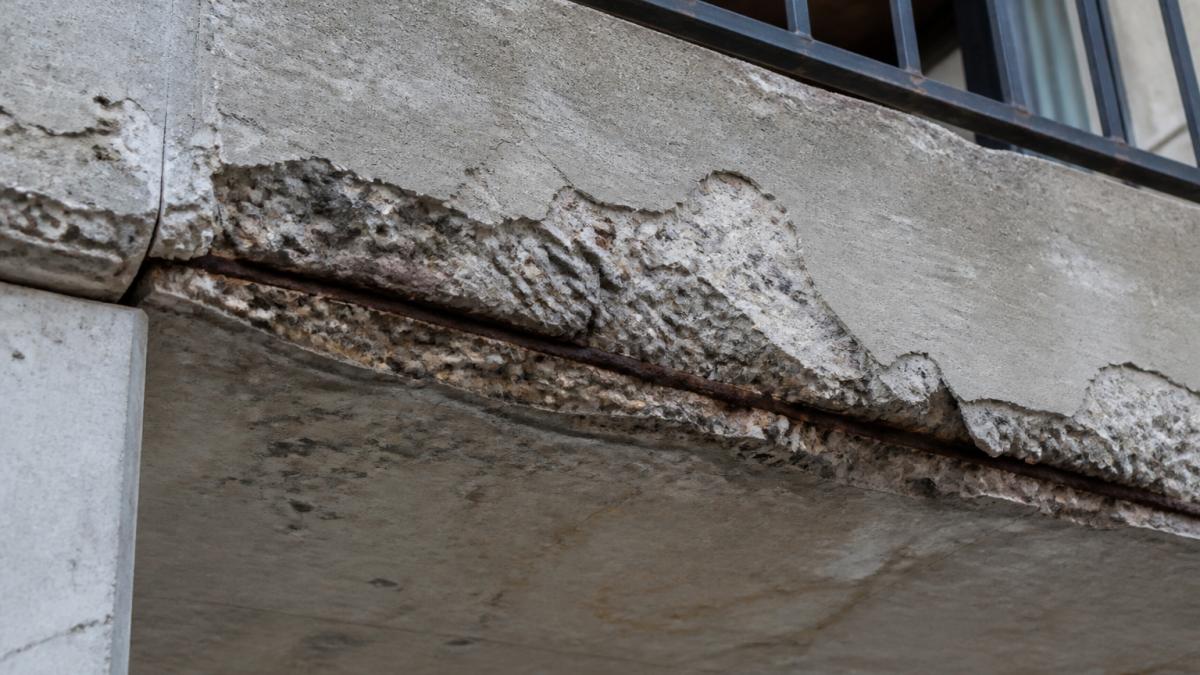
Table of Contents
- What Is Concrete Spalling
- Primary Causes of Concrete Spalling
- Signs of Structural Concrete Failure You Should Not Ignore
- Why Concrete Spalling Matters for Structural Integrity
- SB 326 Balcony Inspection Requirements and Spalling Detection
- Concrete Spalling Repair Cost and Your Options
- Frequently Asked Questions
Last Updated: October 1, 2026
What Is Concrete Spalling
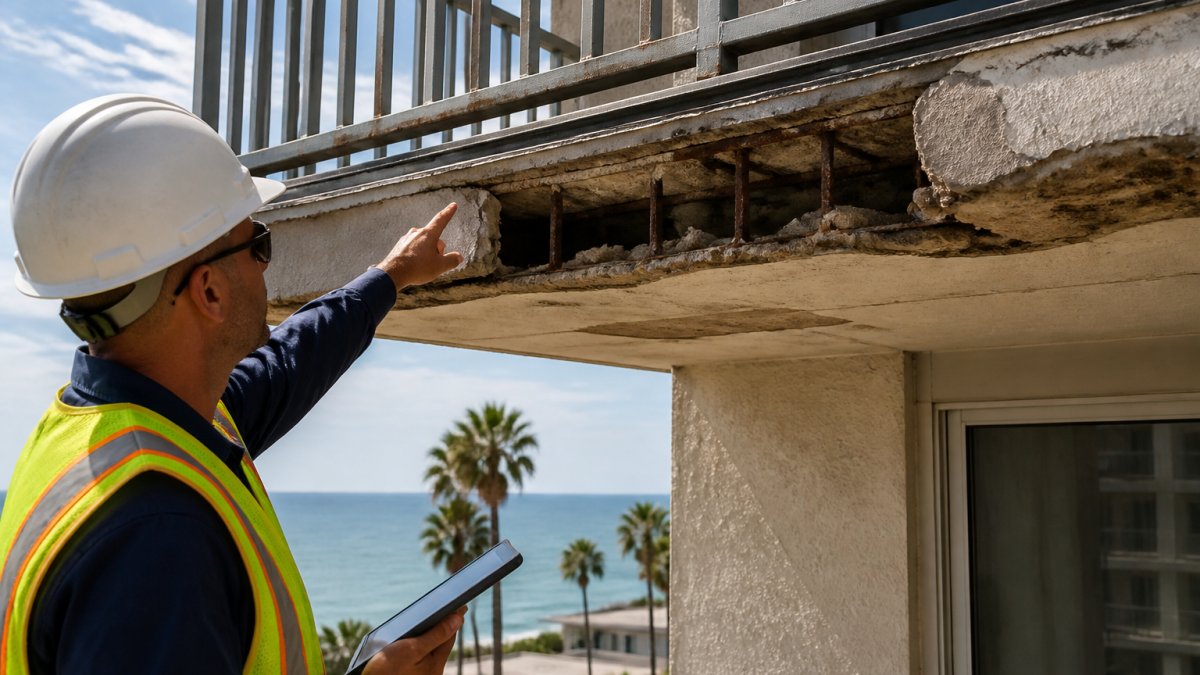
Concrete spalling is the process where the surface layer of concrete breaks away, exposing the underlying material and reinforcement beneath. When concrete spalls, chunks of the outer surface flake, chip, or peel off in fragments ranging from small surface pits to large chunks that compromise structural integrity.
Once spalling begins, it accelerates: water penetrates deeper, freeze-thaw cycles intensify damage, and exposed reinforcement steel corrodes, creating a deterioration cycle that affects the entire structural system.
Concrete spalling is an early warning sign of serious structural problems. Many property owners confuse it with normal aging, allowing water to penetrate deep into the structure, corroding rebar and compromising load-bearing capacity.
How Spalling Differs from Other Concrete Damage
Delamination occurs when concrete layers separate internally without visible surface damage, detected by hollow sounds when tapping. Surface scaling is thin-sheet loss from salt exposure or improper curing.
Spalling exposes aggregate and reinforcement, penetrating inches deep, unlike scaling’s millimeter-level loss or delamination’s hidden internal separation. This visibility enables early detection.
Repair strategy differs: scaling requires protective coating, delamination needs epoxy injection, and spalling demands immediate intervention to prevent rapid reinforcement corrosion.
Primary Causes of Concrete Spalling
Concrete spalling results from specific environmental stresses and construction defects. Understanding root causes enables preventative maintenance before repairs become expensive.
Freeze-Thaw Cycles and Moisture Infiltration
The most common cause in winter climates is the freeze-thaw cycle. Water enters through cracks and pores, then expands roughly 9% when frozen, creating internal pressure that forces the surface to break away.
Water enters through surface cracks, poor sealants, inadequate drainage, and capillary action. Trapped in concrete pores, it expands with each freeze cycle and penetrates deeper with each thaw, causing cumulative damage visible as spalling.
Spalling appears most frequently on horizontal surfaces like balconies, decks, and stairs that collect and hold water. Severity depends on concrete porosity and water access to reinforcement.
Reinforcement Corrosion and Rebar Oxidation
Steel reinforcement is protected by concrete’s alkaline environment, which creates a protective oxide layer. When water and oxygen reach the rebar through cracks or spalling, corrosion begins immediately.
Rebar oxidation produces rust occupying three to four times the original steel volume. This expansion forces concrete outward, creating a self-reinforcing cycle: spalling exposes more rebar, which corrodes faster, causing more spalling.
In dry climates, corrosion progresses slowly. In coastal areas or regions using deicing salts, chloride ions accelerate rebar corrosion dramatically. Once visible spalling appears, reinforcement is often already significantly compromised.
Poor Installation and Curing Techniques
Concrete mixed with excess water, a common shortcut, has higher porosity and lower strength, absorbing water readily and failing faster under freeze-thaw stress.
Improper curing, drying too quickly, removing blankets early, or exposing concrete to temperature swings, creates weak, porous concrete. Poor finishing techniques also create weak surface layers prone to spalling.
Inadequate air entrainment is another common defect. Properly entrained concrete contains air bubbles that provide expansion space during freeze-thaw cycles. Without them, concrete is extremely vulnerable to spalling.
Signs of Structural Concrete Failure You Should Not Ignore
Spalling progresses in visible stages. Early detection matters because repair costs escalate sharply once corrosion of the reinforcement begins. The signs start subtle and become unmistakable if you know what to look for.
Surface flaking and small chips are first indicators, light-colored fragments or small pits signal water penetration and early freeze-thaw stress.
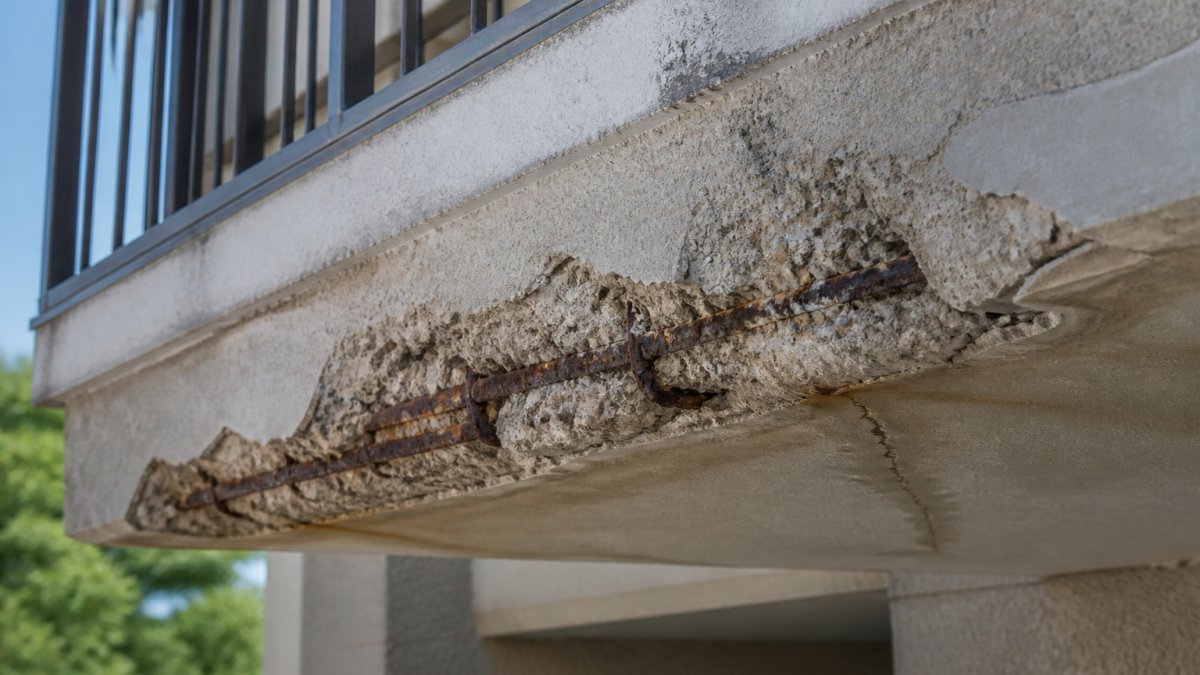
Advanced spalling shows larger chunks missing, visible aggregate, rust staining indicating rebar corrosion, soft or crumbly substrate, and radiating cracks suggesting active internal pressure.
Hollow sounds when tapping indicate internal delamination. Combined with visible spalling, this suggests advanced deterioration. Water damage around adjacent windows or doors indicates water penetration into the building interior.
These signs demand professional assessment. Surface spalling that’s limited to a few small areas might be addressed with patching and sealing. Spalling that covers large areas, exposes significant rebar, or shows signs of active corrosion typically requires concrete removal and replacement or epoxy injection of the damaged area.
Why Concrete Spalling Matters for Structural Integrity
Spalling isn’t just an aesthetic problem. It directly compromises the structural system that holds the building safe. The concrete substrate provides the primary load path for balconies, decks, and elevated elements. Once spalling exposes and corrodes the reinforcement, load-bearing capacity decreases.
The structural concern escalates quickly. A small spalled area reduces load capacity locally. Multiple spalled areas or spalling that extends across a significant portion of a structural element can reduce the element’s capacity below the loads it actually carries. This creates a safety risk: the balcony or deck may no longer safely support the weight of occupants and furnishings.
Water infiltration through spalled concrete also affects adjacent structural elements. Water running through a spalled balcony can saturate the concrete floor slab behind it, corroding reinforcement in the floor system itself. Water can penetrate into the building interior, damaging insulation, finishes, and creating conditions for mold growth. The structural damage extends beyond the visible spalling.
Progressive deterioration accelerates once spalling begins. Each season of freeze-thaw cycles, each rainfall, each exposure to moisture worsens the damage. Repair costs that might have been modest when spalling was first detected become substantial once corrosion has progressed significantly.
Progressive Deterioration and Safety Risk
The danger of spalling is that it’s progressive. Unlike a single structural failure event, spalling develops gradually, and the damage compounds. Initial surface spalling might seem minor. But if left unaddressed, that small area becomes the entry point for water penetration that corrodes reinforcement across a much larger area of the structure.
Safety risk emerges when structural capacity drops below actual loads. A balcony designed to safely support 40 pounds per square foot of occupant load might, after significant spalling and corrosion, safely support only 25 pounds per square foot. This creates a latent hazard: the balcony appears functional but is no longer safe.
The 2015 Berkeley balcony collapse and the May 2021 Malibu incident demonstrated the consequences of unaddressed spalling and corrosion. These failures didn’t happen suddenly, they resulted from years of water infiltration, rebar corrosion, and progressive concrete deterioration. By the time visible failure occurred, the structural damage was catastrophic.
SB 326 Balcony Inspection Requirements and Spalling Detection
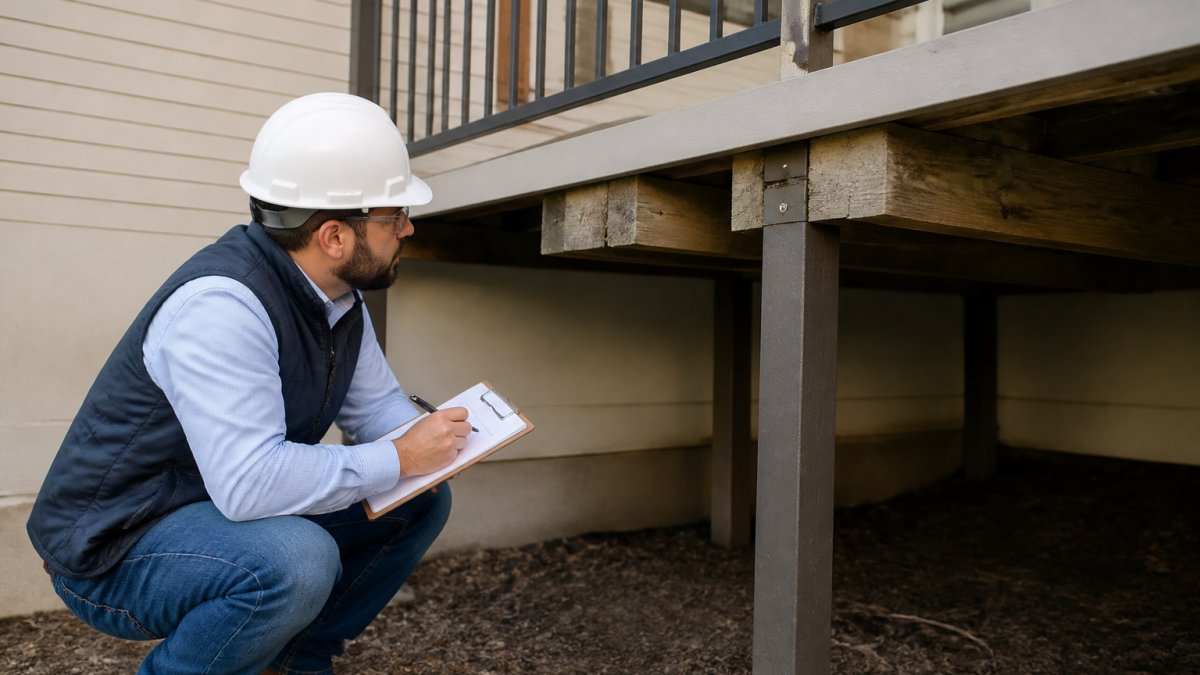
California’s SB 326 law requires that buildings with three or more units have balconies, decks, and exterior stairs inspected by a licensed structural engineer or architect. The inspection must assess structural integrity and identify defects that affect safety. Spalling is one of the primary defects that triggers repair requirements under SB 326.
The law mandates that any element found to be in a state of disrepair must be repaired or replaced. Spalling that exposes reinforcement is considered a state of disrepair. Even spalling that hasn’t yet exposed rebar must be evaluated for the extent of water penetration and corrosion risk. The inspection process identifies which spalled areas require immediate repair and which can be monitored.
Property owners have specific timelines under SB 326. Structural defects must be reported to residents, and a repair plan must be submitted to the local building department. Repairs must be completed within the timeframe specified by the local jurisdiction, typically 6 to 24 months depending on severity. Non-compliance can result in fines and liability for injuries resulting from the defective condition. Proactive property management requires a consistent inspection protocol to identify structural defects before they escalate into costly legal or safety liabilities.
SB 326 compliance requires professional assessment by someone qualified to evaluate concrete deterioration and structural implications. This is where professional inspection services become essential. A qualified inspector can distinguish between cosmetic surface damage and structural defects requiring repair, assess the extent of reinforcement corrosion, and recommend appropriate repair strategies.
Concrete Spalling Repair Cost and Your Options
Repair costs for concrete spalling vary dramatically based on the extent of damage, the area affected, and the repair method chosen. A small spalled area on one balcony might cost a few hundred dollars to patch. Spalling that affects multiple units or requires removal and replacement of concrete sections can easily exceed tens of thousands of dollars.
The repair cost depends on several factors: whether the spalling is limited to surface areas or extends deep into the concrete, whether reinforcement is exposed and corroded, the size of the affected area, and accessibility for repair work.
DIY vs. Professional Repair Threshold
Small surface spalling might seem like a DIY project. Cleaning out the damaged concrete, applying a concrete patching compound, and sealing the repair is straightforward work. However, DIY repair of concrete spalling carries real risks.
Preventative Maintenance Schedule
Preventing spalling is far more cost-effective than repairing it. A preventative maintenance program addresses the root causes: moisture infiltration and freeze-thaw stress.
Frequently Asked Questions
What is the most common cause of concrete spalling?
Freeze-thaw cycles combined with moisture infiltration cause the majority of concrete spalling cases. Water enters the concrete through cracks or poor curing, then freezes and expands during winter months, creating internal pressure that forces the surface to break away. In buildings with steel reinforcement, chloride ion penetration and rebar oxidation also trigger spalling as the expanding rust pushes against the concrete substrate.
How serious is concrete spalling and does it lead to structural failure?
Concrete spalling progresses from a cosmetic issue to a structural concern if left untreated. Early surface pitting and flaking may seem minor, but as spalling deepens, it exposes rebar and compromises compressive strength. In elevated elements like balconies, this deterioration accelerates structural failure risk. The 2015 Berkeley balcony collapse and 2021 Malibu incident underscore how spalling left unaddressed can have fatal consequences.
Can concrete spalling be fixed, and what does repair typically involve?
Yes, concrete spalling can be repaired, but the approach depends on severity and location. Surface scaling and minor pitting may respond to patching compound or concrete repair mortar applied to the damaged area. Deeper spalling affecting reinforcement may require epoxy injection, bonding failure correction, or removal and replacement of the affected section. Professional assessment determines whether repair is sufficient or if replacement is necessary.
What should I look for when inspecting my property for signs of structural concrete failure?
Watch for surface flaking, exposed aggregate, visible rebar, water staining, and cracks radiating from spalled areas. On balconies and decks, pay close attention to edges, undersides, and areas near railings where water tends to collect. Soft or crumbling concrete when probed, efflorescence (white powder deposits), and uneven surfaces are all warning signs. If you suspect spalling, a licensed structural inspector can provide a detailed assessment.