
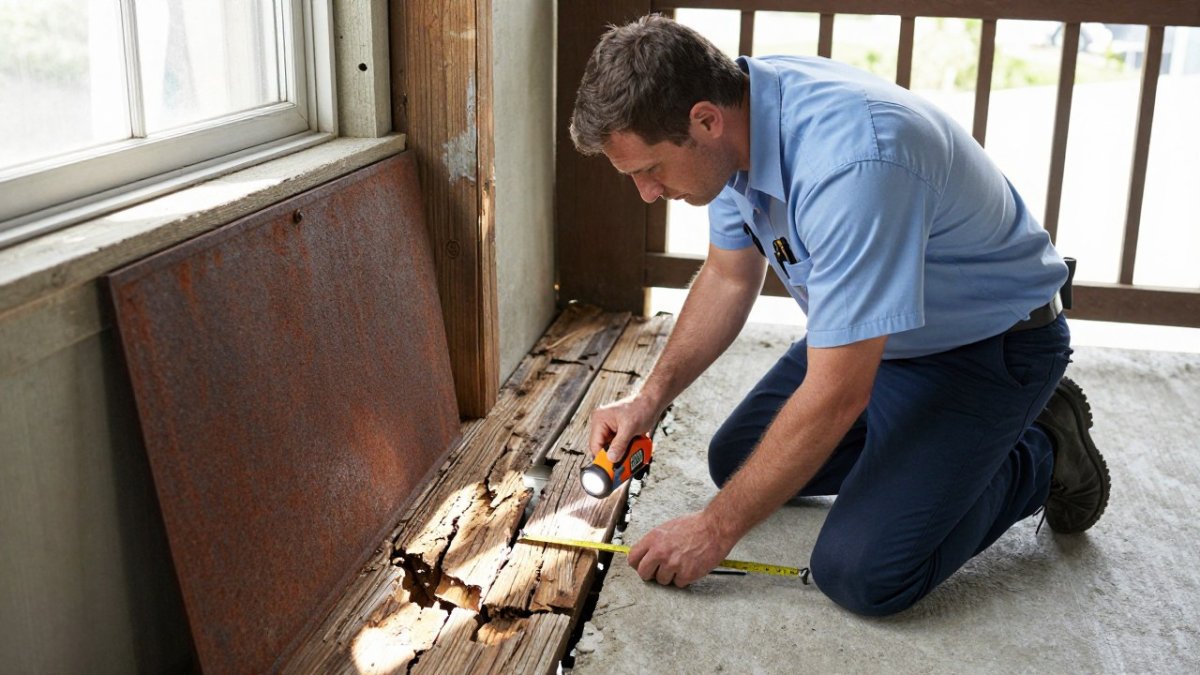
Last Updated: November 7, 2026
Quick Summary
To repair balcony structural damage, restrict access and document the condition, then get a licensed structural inspection before any work begins. Prepare the surface, treat exposed rebar, patch with structural repair material, resurface and seal, and verify drainage with a follow-up inspection at 12 months.
- Close the balcony and photograph every crack, spall, and rust stain before work starts.
- A structural engineer or qualified inspector confirms whether the slab, beams, and connections are sound.
- Clean rust from exposed rebar before patching, since corrosion left in place keeps expanding.
- Allow each repair layer to cure fully, because rushing the cure can trap moisture.
- Water causes most balcony structural damage, so fix the water path and root cause.
Table of Contents
- Start With Safety: When to Restrict Balcony Use
- Spotting Balcony Structural Damage: Signs That Demand Action
- Why Balcony Inspections Come Before Any Repair
- Triage the Damage: Matching Repair Methods to Severity
- Step-by-Step: How to Repair Balcony Structural Damage
- Balcony Repair Without Replacing: What Can Be Saved
- Balcony Waterproofing and Drainage That Prevent Repeat Damage
- What Balcony Structural Damage Repair Cost Really Depends On
- Frequently Asked Questions
Start With Safety: When to Restrict Balcony Use
A balcony with visible structural damage is not a storage area and not a place to test your luck. Close it until a qualified inspector says otherwise. This guide walks you through how to repair balcony structural damage the right way, starting with the step most owners skip: keeping people off the structure while you figure out what is wrong.
Here is the hard truth. Balcony failures are not slow, polite events. The 2015 Berkeley collapse killed six people when a balcony gave way during a party (Water-absorbent material caused fatal balcony collapse, state says). The 2021 Malibu incident showed a similar pattern of hidden decay and sudden failure.
So before you pick up a trowel, ask one question: is this balcony safe to stand on right now?
Restrict use immediately if you see any of these:
- A crack you can slide a coin into
- Concrete that sounds hollow when tapped
- Rust stains bleeding from the concrete
- A railing that moves when you push it
- Any sag or slope that was not there before
Cordon off the area. Post a notice. Tell residents in writing. A closed balcony costs nothing. A collapse costs everything.
Spotting Balcony Structural Damage: Signs That Demand Action
Balcony structural damage often shows warning signs before it fails. The problem is that most people do not know what to look for.
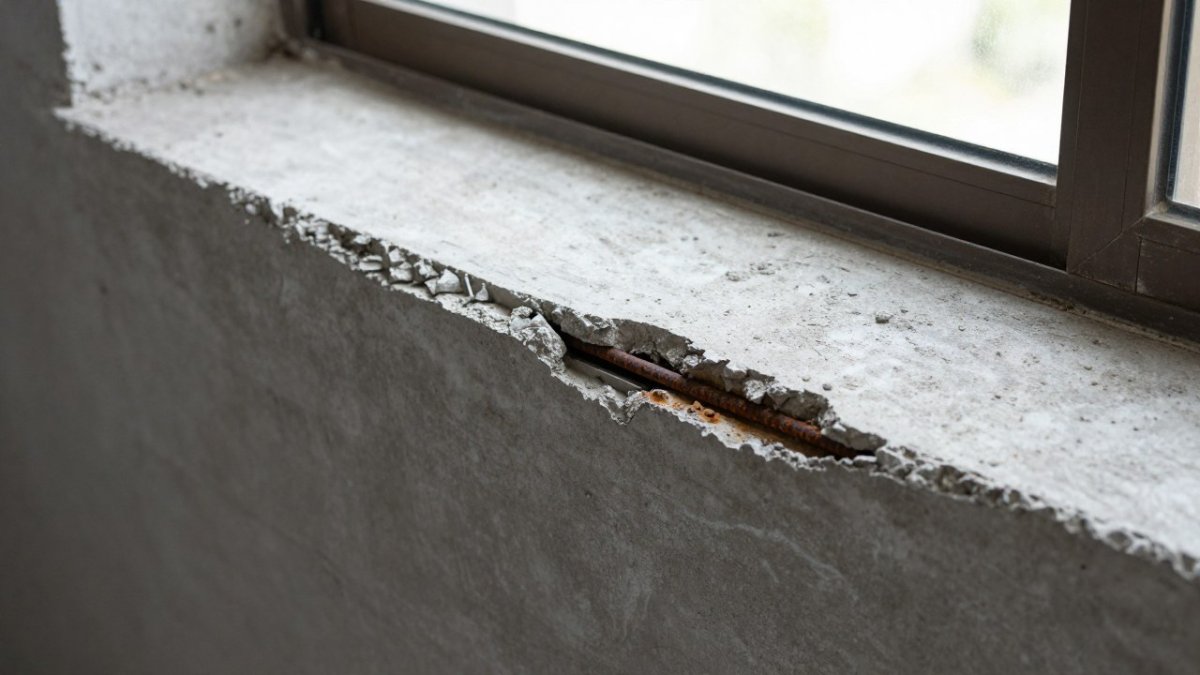
Cracks, Spalling, and Exposed Rebar in Concrete Balconies
Spalling is the breaking away of concrete from the surface of a balcony slab or beam. To understand what this damage means before deciding on repairs, see concrete spalling and why it matters. It usually starts as a small chip and grows into a crater that exposes the steel inside.
Hairline cracks in concrete are often cosmetic. Deep cracks are not. The difference matters:
- Hairline cracks under the width of a credit card are usually surface shrinkage
- Deep cracks that run through the slab or follow the rebar line are structural
- Spalling concrete with exposed rebar means corrosion is already underway
- Delamination shows as a hollow sound when you tap the surface
Once reinforcement bars are exposed, moisture reaches the steel. Corrosion expands the metal, which pushes off more concrete, which exposes more steel. That cycle does not stop on its own.
Rotted Framing, Loose Railings, and Sagging Decks
Wood-framed balconies fail differently. Look for rotted framing, especially where the ledger board meets the building. Pressure-treated lumber resists rot, but it does not last forever.
Check the railing connections first. Loose bolts and wobbly posts are the cheapest problem to fix and the most common cause of falls. A sagging deck or an uneven surface means the framing below has lost strength.
Why Balcony Inspections Come Before Any Repair
An inspection is not paperwork. It is the difference between fixing the right problem and hiding the wrong one.
Repair assessment starts with understanding load-bearing elements, drainage paths, and how far the damage has spread. A cosmetic patch over a corroded slab looks fine for a season and fails the next.
If you are unsure whether you need a licensed structural engineer or a specialized inspector, our guide on hiring a structural engineer for deck safety explains when each one is required.
A proper structural inspection covers:
- The balcony slab, beams, and lintel
- Railing height and anchorage
- Waterproofing and drainage
- Connection points to the building façade
- Any prior patches or repairs
Watch out: skipping the inspection to save time can be a costly shortcut in this process. Repairs are harder to plan well when the damage has not been diagnosed.
Triage the Damage: Matching Repair Methods to Severity
Not every problem needs the same fix. Triage by material and severity before you spend a dollar.
| Severity | Typical Signs | Likely Repair Path |
|---|---|---|
| Minor | Hairline cracks, small chips | Sealant, patching, protective coating |
| Moderate | Spalling, exposed rebar, worn waterproofing | Rebar cleaning, structural mortar, resurfacing |
| Severe | Deep cracks, sagging, failed connections | Engineer assessment, possible replacement |
Severe damage changes the conversation. Sagging decks, failed railing anchorage, and cracks through the slab need an engineer, not a handyman.
Step-by-Step: How to Repair Balcony Structural Damage
Here is a general repair sequence used across the industry. Each step depends on the one before it, and skipping a step is how a repair can fail later.
1. Restrict access and document the condition. Close the balcony, notify occupants in writing, and photograph every crack, spall, and rust stain before anyone touches the surface. Those photos become your baseline for tracking whether the damage is active or dormant.
2. Get a licensed inspection. A structural engineer or a qualified inspector documents severity, maps the extent of corrosion, and confirms whether the slab, beams, and connections are sound. Ask your local building department whether a permit is required for the planned repair.
3. Prepare the surface. Remove all loose concrete, dirt, old sealant, and failed coating. Sound concrete is removed with a chipping hammer or grinder until you reach firm material, and the edges of the repair area are squared so the patch does not feather to nothing.
4. Treat the steel. Exposed rebar should be cleaned of rust before any patch is applied, since corrosion that is left in place can keep expanding under the repair.
5. Patch and rebuild. Apply structural repair material according to the manufacturer’s instructions, allowing each layer to cure fully before the next stage, since rushing the cure can trap moisture.
7. Resurface and seal. Restore the protective coating and waterproofing layer, making sure the waterproofing ties into the wall flashing and drain details so water cannot enter at the wall junction.
8. Verify and document. Confirm drainage works by water-testing the surface, check that no ponding remains, and keep photos, product data sheets, and the engineer’s report. Schedule a follow-up inspection at 12 months to confirm the repair is holding.
For minor cracks that do not need full replacement, our guide on repairing minor balcony cracks walks through the patching method in detail.
Watch out: patching over wet concrete or uncured repair mortar can trap moisture and lead to a repeat failure, so allow each layer to cure before the next.
Balcony Repair Without Replacing: What Can Be Saved
Most damaged balconies can be repaired rather than replaced. The question is whether the repair restores structural integrity or just hides the problem.
Balcony repair without replacing works when the slab and framing are sound and the damage is surface-level. It fails when corrosion has eaten into the reinforcement bars or the connections have lost strength.
If you are weighing repair against replacement, our breakdown of balcony repair alternatives to full replacement covers the cost and compliance trade-offs.
What usually can be saved:
- Cracked but stable slabs
- Spalling edges with intact rebar
- Railings with sound anchorage
- Waterproofing that can be renewed
What usually cannot:
- Slabs with through-cracks
- Framing with rot at the ledger
- Any balcony that has already sagged
Balcony Waterproofing and Drainage That Prevent Repeat Damage
Water causes most balcony structural damage. Fix the water path and you fix the root cause.
Balcony waterproofing is the protective layer that keeps moisture out of the slab and framing. Drainage is how that water leaves the balcony. Both must work together.
- Slope the surface away from the building
- Keep drains and scuppers clear
- Seal joints and penetrations with flexible sealant
- Recoat the protective coating on schedule
- Check caulking every year
If you are comparing systems, our guide to the best waterproofing systems for elevated decks breaks down the options.
What Balcony Structural Damage Repair Cost Really Depends On
Repair costs vary widely, and anyone who quotes a firm number before inspecting is guessing. But refusing to give any range is just as unhelpful. What you can do is understand the cost drivers so you can read a bid intelligently and spot the line items that balloon.
The main drivers that affect repair cost:
- Scope of damage. A cosmetic patch on a hairline crack is generally far less costly than a slab with through-cracks, delamination, and exposed rebar, which is a different project with a much larger scope.
- Access. Ground-floor work is cheap. Upper-floor work needs scaffolding, swing stages, or lift access, and that equipment can rival the repair cost itself on a high-rise. A balcony that cannot be reached safely from inside the unit adds mobilization cost before a single patch is applied.
- Material. Concrete repair carries material and cure-time costs; wood-framed balconies carry demolition and replacement costs when rot reaches the ledger. The two are not comparable line for line.
- Engineering and permits. A licensed structural engineer’s assessment and stamped drawings are a real line item, and permit fees vary by jurisdiction. Skipping this step to save money is the most common false economy in balcony repair, an unpermitted structural repair can complicate a future sale or insurance claim.
- Documentation and warranty. Reports that hold up to audit, photo logs, and a written warranty add cost up front and save cost at resale and at claim time.
How to read a bid. Ask for the bid to separate labor, materials, engineering, permits, and access equipment. A single lump sum hides which of those is driving the price. Ask whether the bid includes rebar treatment and crack repair or only surface patching, since that difference determines whether the work addresses the underlying problem. Ask what cure schedule and inspection interval the contractor assumes.
What you should not do: accept a quote given over the phone without an on-site inspection. No legitimate contractor can price structural repair without seeing the extent of corrosion and the condition of the connections.
For current inspection pricing and a scope-specific estimate, contact Apex Balcony for a quote.
Frequently Asked Questions
How can you tell if a balcony has structural damage?
Look for deep or widening cracks, spalling concrete, rust stains, exposed rebar, sagging slabs, uneven walking surfaces, loose bolts at railing connections, and soft or rotted framing. Water stains and failed sealant around the balcony edge and lintel also point to moisture damage. Hairline cracks alone are often cosmetic, but any crack you can fit a coin into, or one that has grown since last season, needs a professional balcony inspection before the balcony is used again.
Can balcony structural damage be repaired without replacing the balcony?
Often yes. Balcony repair without replacing is realistic when damage is caught early and the repair scope is determined by a qualified inspector. Full replacement becomes the safer option when the balcony slab has lost significant section, reinforcement is extensively corroded, or the framing has failed. A licensed inspector or structural engineer should make that call based on damage severity, not a contractor with a repair quote to sell.
Who should inspect a structurally damaged balcony?
Use a licensed inspector with specific experience in elevated exterior elements, and bring in a structural engineer when damage is moderate to severe or repair scope is unclear. In California, SB 326 and SB 721 are relevant to balcony inspections for many multifamily buildings and HOAs, so the report should document damage severity, load-bearing elements affected, and recommended repair methods. Ask for proof of insurance before work begins.
Is a leaking balcony a structural defect?
Not always, but it is a leading cause of one. Water intrusion through failed sealant, clogged drainage, or worn protective coating reaches the balcony slab and reinforcement bars, driving corrosion and spalling concrete over time. Treat any leak as an early warning: fix the waterproofing and drainage first, then have the structure inspected for moisture damage and delamination. Ignoring a leak is how a cheap caulking job turns into a balcony structural damage repair cost you did not budget for.
