Logo
  • Balcony Law
  • About us
  • Inspection services
  • FAQ
  • Blog
  • Call us ‪+1 818-806-7885
  • Book now

Tag: sb 721 inspection requirements

How to Budget for SB 721 Compliance Inspections

Posted on November 3, 2026November 13, 2026 by Apex Balcony admin
How to Budget for SB 721 Compliance Inspections

Last Updated: November 2, 2026

Quick Summary

The cost of SB 721 inspections is a bundled professional service fee covering document review, a visual examination of every exterior elevated element, and a stamped report. The inspection fee is typically the cheapest part of compliance, so your true budget must also absorb remediation, permits, and contingency.

  • SB 721 requirements apply to buildings with three or more dwelling units and exterior elevated elements more than six feet above ground.
  • Inspectors commonly price work as a base mobilization charge plus a per-EEE rate.
  • Ask every bidder to list the EEE count and per-EEE rate so quotes can be compared.
  • Budget remediation across four categories: structural repair, waterproofing restoration, railing replacement, and permits and professional fees.
  • Approving an inspection without a repair contingency is the most common budgeting error we see.

Table of Contents

  • What the Cost of SB 721 Compliance Inspections Actually Includes
    • The Inspection Fee vs. the True Compliance Budget
  • SB 721 Inspection Requirements Every Owner Should Know
    • What Counts as an Exterior Elevated Element
  • SB 721 Balcony Inspection Timeline and Compliance Deadlines
  • What Drives the Price: Factors That Move Your Quote
    • How Inspectors Actually Price the Work
    • The Per-Balcony Math Boards Should Run
    • What Invasive Testing Adds
  • Hiring a Qualified SB 721 Inspector Without Overpaying
  • Repair Costs After the Report: Planning for Remediation
    • The Four Repair Categories to Budget Against
    • A Planning Sequence That Survives the Report
    • Why Deferred Maintenance Inflates the Repair Bill
    • Getting a Repair Estimate Before You Have a Report
  • Insurance, Liability, and Tax Treatment of Inspection Costs
  • Booking Your SB 721 Inspection with Apex Balcony
  • Frequently Asked Questions

What the Cost of SB 721 Compliance Inspections Actually Includes

SB 721 inspections are not a single line item. The cost is a bundled professional service fee covering document review, a visual examination of every exterior elevated element, and a stamped report that satisfies the statutory requirements.

Most owners discover the hard way that the inspection fee is the cheapest part of the process. The report often triggers repairs, and repairs are where reserve funds go to die.

The Inspection Fee vs. the True Compliance Budget

The fee for an SB 721 inspection typically covers the inspector’s time and the report. For a breakdown of inspection fees versus repair costs, see our cost comparison. The true compliance budget must also absorb remediation, permits, and contingency. A board that approves only the inspection line item and stops there is budgeting for the diagnosis, not the treatment.

Watch out: approving an inspection without setting aside a repair contingency is the single most common budgeting error we see. The report arrives, findings are real, and the board has no authority to act until the next fiscal cycle.

SB 721 Inspection Requirements Every Owner Should Know

SB 721 inspection requirements apply to buildings with three or more dwelling units that have exterior elevated elements more than six feet above ground.

What Counts as an Exterior Elevated Element

A common mistake is assuming a decorative planter ledge counts. It does not, unless it carries people or transfers load.

SB 721 Balcony Inspection Timeline and Compliance Deadlines

Deferred maintenance is the enemy here. Buildings that skipped waterproofing upkeep for a decade tend to produce the longest punch lists and the largest remediation budgets.

What Drives the Price: Factors That Move Your Quote

Pricing depends on quantity, access, and condition. We do not publish fixed figures because a twelve-unit walk-up and a sixty-unit complex with interior-entry balconies are entirely different jobs. What we can do is show how each driver moves the number, so a board can sanity-check a quote instead of guessing whether it is high or low.

The factors that move a quote most are unit count, the number of EEE per unit, site access, and whether invasive testing is required. The table below translates each driver into the mechanism that changes the fee.
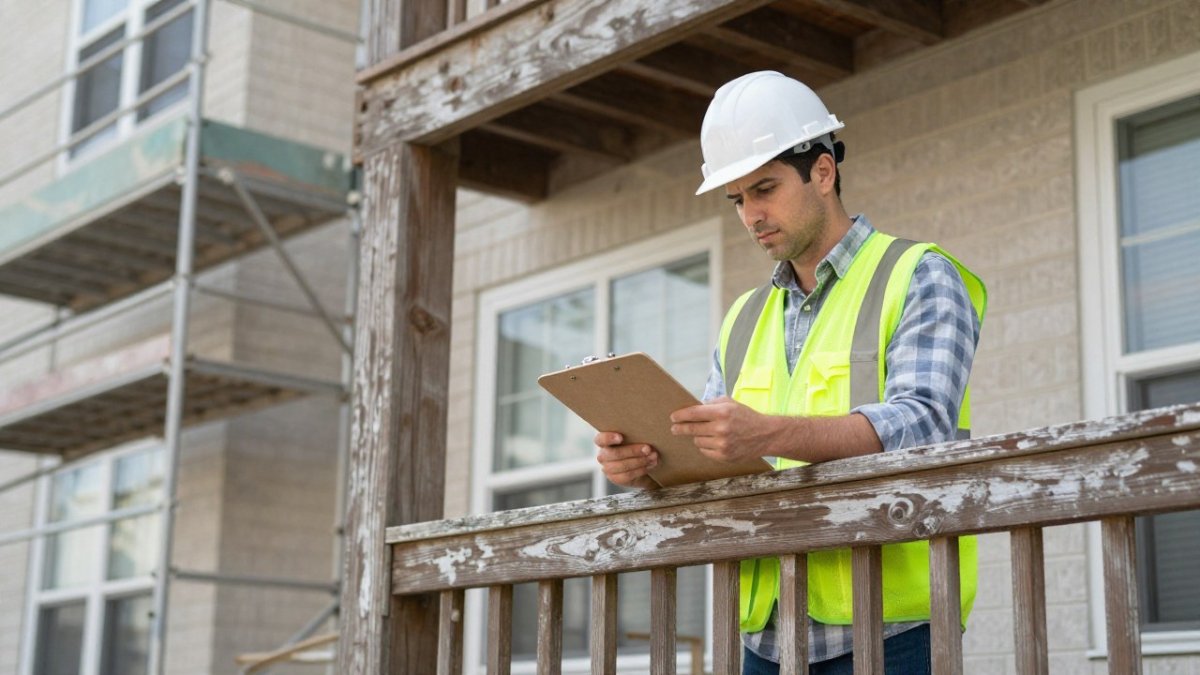
Licensed inspector examining a wooden balcony railing during SB 721 inspections on an apartment building.

Because access, building size, and the scope of structural review can all shift an inspection quote, comparing those cost drivers with commercial building safety inspections can help clarify which expenses are specific to balcony compliance.

Cost DriverWhat It ChangesBudget Impact
Unit count and EEE per unitTotal inspection hours; most quotes scale per EEE, not per buildingHigher
Site access and parkingCrew scheduling, ladder or lift setup, time on siteModerate
Visible deteriorationNeed for invasive testing (probing, moisture readings, limited opening of finishes)Higher
Report turnaroundPriority scheduling and rush reviewModerate
Local jurisdiction requirementsScope, filing format, and whether a stamped report must be submitted to the local building departmentVaries

How Inspectors Actually Price the Work

A common pattern is a base mobilization charge plus a per-EEE rate. The base covers travel, setup, and report preparation; the per-EEE rate covers the field time. Ask for both numbers separately so you can compare bids on the same basis.

The Per-Balcony Math Boards Should Run

Watch out: a quote that does not state the EEE count it is pricing cannot be compared to another quote. Ask every bidder to list the EEE they counted and the per-EEE rate before you sign.

What Invasive Testing Adds

For a fuller explanation of what pushes quotes up or down, our team points boards to this balcony inspection cost guide for HOAs.

Hiring a Qualified SB 721 Inspector Without Overpaying

When hiring an SB 721 inspector, it helps to verify licensure, insurance, and report format before signing. Our guide on how to hire a structural engineer for a balcony assessment walks through vetting and hiring.

Book inspection →

A common mistake is choosing on price alone.

Repair Costs After the Report: Planning for Remediation

Remediation costs are often the largest part of SB 721 compliance budgets, so it can help to plan for them before a report lands. Our guide to balcony structural repair costs in California gives concrete figures to plan against.

The Four Repair Categories to Budget Against

Remediation scopes often fall into several categories, each with different cost behavior:

  • Structural repair. Replacing or sistering framing, repairing ledger connections, and addressing rot at load-bearing points. This is the highest-variance category because the extent is hidden until finishes are opened.
  • Waterproofing restoration. Flashing, sealants, membranes, and drainage corrections. Often the cheapest per unit and the highest-leverage, because waterproofing failures are what drive structural decay in the first place.
  • Railing and guardrail replacement. Guardrails are part of the load path and are frequently cited when they fail height, spacing, or anchorage requirements. Replacement is a defined scope with a defined unit cost, which makes it the easiest category to estimate early.
  • Permits and professional fees. Building permits, plan review, and any required engineering observation during construction. These stack on top of construction cost and are routinely left out of board budgets.

A Planning Sequence That Survives the Report

  1. Triage. Separate findings that are safety-critical (immediate shoring or closure) from findings that are deferred but documented. Safety-critical items get funded first regardless of fiscal cycle.
  2. Bundle. Group waterproofing and structural repairs at the same location into one scope. Opening a balcony once for both is cheaper than two mobilizations.
  3. Phase. Spread non-critical repairs across fiscal years, but put the phase schedule in the reserve study so the money is actually reserved.

Watch out: approving an inspection without a repair contingency is the single most common budgeting error we see. The report arrives, findings are real, and the board has no authority to act until the next fiscal cycle.

Why Deferred Maintenance Inflates the Repair Bill

The Malibu balcony collapse in 2021 and the Berkeley collapse in 2015 both reshaped how seriously boards treat deferred maintenance. Liability exposure after a failure is not theoretical, and the repair cost curve is not linear. A waterproofing failure caught in year one is a sealant and flashing job. The same failure caught in year ten is a framing replacement, because the water has been reaching the load path the whole time. Buildings that inspect early spend less on remediation because problems get caught while they are still small.

Getting a Repair Estimate Before You Have a Report

You do not have to wait for the inspection report to start budgeting.

Insurance, Liability, and Tax Treatment of Inspection Costs

Tax treatment is a question for a qualified tax professional. Owners also ask whether balcony wood decay is covered by insurance.

Booking Your SB 721 Inspection with Apex Balcony

The hardest part of compliance is not the law. It is the fear of what the report will reveal, and that fear is why so many boards delay for years. We have worked with hundreds of building owners.

Apex Balcony provides licensed inspectors with decades of combined construction and design experience. Our team specializes in SB 326 and SB 721 compliance, inspects elevated exterior elements including balconies, decks, and stairways, and aims to identify early signs of structural failure.

Get started with Apex Balcony and turn a compliance deadline into a manageable, budgeted plan.

Frequently Asked Questions

How much does an SB 721 inspection cost?

There is no single statewide price for SB 721 inspections. Pricing depends on quantity, access, and condition. For current pricing or a quote, visit the Apex Balcony website.

Who is legally qualified to perform an SB 721 inspection?

SB 721 requires the inspection to be done by a licensed architect, a licensed civil or structural engineer, or a certified building inspector, among other qualified professionals. General contractors without one of these credentials do not meet the statutory standard. When hiring a qualified SB 721 inspector, ask for the license type and number, and confirm the report will be signed by that individual. A report from an unqualified inspector may not satisfy your local jurisdiction.

What happens if the inspection finds structural issues?

The inspector documents the problem in the report and typically flags it as needing repair, with urgency levels. Minor items like loose fasteners or surface waterproofing failures may be handled by a contractor; serious load-bearing or structural defects may require an engineer’s repair specification and a building permit. Budget for remediation separately from the inspection fee. Deferring repairs raises liability exposure, and in a negligence claim, a documented unresolved defect is hard to defend.

Are there costs beyond the inspection fee itself?

For current pricing on inspection services and any add-ons, visit the Apex Balcony website.

Book inspection

GoogleAdd apexbalcony.com as a preferred source on Google →
Posted in BlogTagged cost of sb 721 compliance inspections, hiring a qualified sb 721 inspector, sb 721 balcony inspection timeline, sb 721 inspection requirements, sb 721 inspections

What Does an SB 721 Inspection Actually Cost Versus Repairs?

Posted on October 30, 2026October 30, 2026 by Apex Balcony admin
What Does an SB 721 Inspection Actually Cost Versus Repairs?

Last Updated: October 29, 2026

Quick Summary

Sb 721 inspections are priced as a scope-based fee that depends on the number of covered elements, the access method needed, building height, and whether invasive testing is required. Repair costs usually run higher, since they depend on how far damage extends and what must be removed to reach it.

  • Request inspection quotes with three line items: mobilization and reporting, per-element inspection, and access/testing.
  • Access equipment such as lifts or scaffolding is often the largest single variable in the inspection fee.
  • Invasive testing expands the inspection scope and fee but can prevent a repair budget built on assumptions.
  • Structural framing repairs are the highest-cost category and typically require engineered details and permits.
  • Bids that omit access, permits, or finish restoration often understate the true repair cost.

Table of Contents

  • How SB 721 Inspections and Repairs Fit Together
  • Which Buildings and Elements SB 721 Covers
  • SB 721 Inspection Requirements and Deadlines
  • SB 721 Inspection Cost: What Drives the Fee
    • Access is usually the largest single variable
    • Invasive testing changes the scope
    • Per-balcony, per-unit, and per-building normalization
  • SB 721 Balcony Repair Cost by Defect and Condition
    • Waterproofing and membrane failure
    • Framing and structural replacement
    • Corrosion of connections and fasteners
    • Finish restoration
    • Access, permits, and temporary protection
    • Normalizing repair cost per element and per unit
  • Side-by-Side Total Cost: Inspection Versus Repair Scenarios
  • Balcony Repair Timeline and Decision Points
  • Scheduling Your Inspection and Next Steps with Apex Balcony
  • Frequently Asked Questions

How SB 721 Inspections and Repairs Fit Together

Most property owners ask one question first: what do sb 721 inspections cost compared to the repairs they uncover? The repair budget that follows is where costs can climb, so it helps to understand both numbers before work begins.

Think of the inspection as the diagnostic step and the repair as the treatment. You cannot budget for treatment until you know the diagnosis. That sequence drives almost every decision in this guide.

Watch out: Delaying the inspection to avoid a repair bill often increases the eventual repair scope, because water intrusion and rot spread over time.

Which Buildings and Elements SB 721 Covers

SB 721 applies to exterior elevated elements in multifamily buildings with three or more units. Balconies, decks, stairways, and walkways are the most common elements covered. Owners should confirm their building’s status against the statute itself, since coverage depends on building type and element configuration.

SB 721 covers all elevated exterior elements, not only balconies. A building with a deck and a separate exterior stairway may need both evaluated in the same visit, which can affect the fee.

SB 721 Inspection Requirements and Deadlines

SB 721 requires a physical inspection of covered elements by a qualified person, followed by a written report. Inspection frequency and deadlines are set by the statute and by local enforcement, so owners should verify current timelines with the official California legislative text and their local building department.

Qualified inspectors generally need relevant licensing or structural expertise. Qualified inspectors with relevant licensing and construction experience help ensure each evaluation holds up when a report may be reviewed by a city, a lender, or a court.

SB 721 Inspection Cost: What Drives the Fee

Inspection pricing is not a single number. It is a scope-based fee built from the number of covered elements, the access method required to reach them, the building height, and whether the inspector needs invasive or destructive testing to see concealed conditions. Two buildings with the same unit count can receive very different quotes because those four variables diverge.

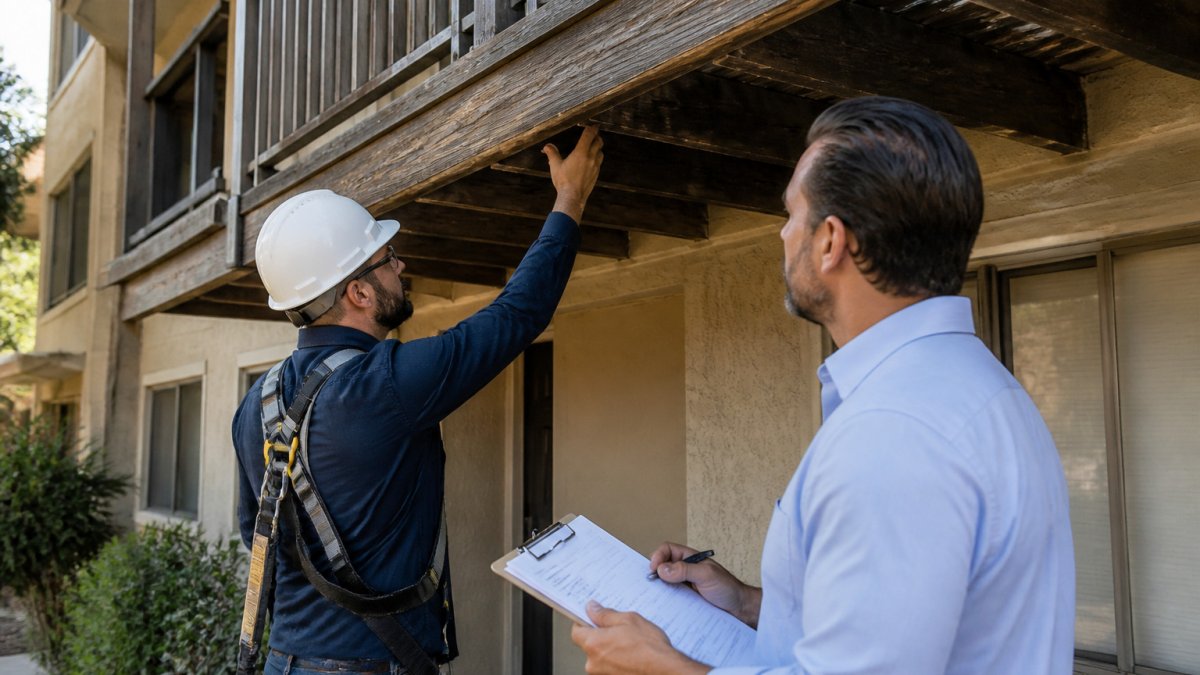
Inspector examining a wood balcony during SB 721 inspections with a property manager nearby

The most useful way to read a quote is to separate it into three buckets:

  • Mobilization and reporting, the base fee for scheduling, site visit, photo documentation, and the written report a qualified person must produce. This portion is relatively fixed per building.
  • Per-element inspection, the marginal cost of examining each balcony, deck, stairway, or walkway. This is where element count and design variety matter most.
  • Access and testing, scaffolding, lifts, ladder reaches, and any destructive opening of finishes to inspect framing or connections. This is the most volatile line and the one most often understated in a low bid.

Access is usually the largest single variable

An element reachable from the ground or a standard ladder costs far less to inspect than one that requires a lift or scaffold. Buildings where balconies stack over occupied units, or where landscaping and parking structures block equipment placement, add setup time and rental cost. A common pattern is for access to account for a meaningful share of the total fee on mid-rise and high-rise properties, which is why quotes that omit access equipment should be treated as incomplete rather than inexpensive.

Invasive testing changes the scope

A visual inspection can confirm deterioration at the surface but cannot always confirm the condition of concealed framing or connections. When the qualified person recommends opening finishes, the inspection scope expands into destructive testing, and the fee rises accordingly. That added cost is often justified because it prevents a repair budget from being built on assumptions.

Per-balcony, per-unit, and per-building normalization

Fees are typically quoted per building or per element group, not per unit, so normalize before comparing bids:

  • Per element, divide the total inspection fee by the number of covered elements to compare a 12-balcony quote against a 40-balcony quote on equal terms.
  • Per unit, divide by unit count to compare across property sizes and to align the inspection cost with reserve contributions.
  • Per building, useful when a portfolio has multiple structures with different heights and access needs.

A 12-unit building with 12 similar balconies is usually priced differently from a 40-unit complex with varied balcony designs, because design variety increases per-element time. Ask every bidder to state the element count, access method, and whether testing is included, so the comparison is apples to apples.

Pro Tip
Request the quote in writing with three line items, mobilization and reporting, per-element inspection, and access/testing, plus the assumed element count. A bid that cannot be broken down this way is hard to compare and easy to under-scope.

Scoping each quote to the actual elements on the property means the fee reflects the work required rather than a flat per-unit estimate. The value of getting the scope right is that the repair budget that follows is built on real findings.

SB 721 Balcony Repair Cost by Defect and Condition

Repair cost is driven less by the label on the defect than by how far the damage extends and what has to be removed to reach it. The same “failed waterproofing” finding can be a coating refresh on one balcony and a full membrane replacement with framing repair on another. The itemization below shows how cost ranges differ by defect category so owners can build a realistic budget instead of a single worst-case number.

All ranges are estimates only. Actual pricing depends on location, access, project size, material availability, and the condition found once finishes are opened. Treat them as planning bands, not quotes.

Book inspection →

Waterproofing and membrane failure

Failed waterproofing is the most common finding and usually the least expensive to correct when caught early. Scope ranges from resealing joints and recoating a walking surface to removing the finish, replacing the membrane, and rebuilding the slope to drain. Cost rises sharply when water has reached the framing beneath, because the repair then overlaps with structural work.

Framing and structural replacement

Deteriorated wood framing, corroded steel connections, and compromised support points are the highest-cost category. These repairs typically require engineered details, permits, and inspection of the work, which adds design and administrative cost on top of labor and materials. The cost driver is not the lumber itself but the extent of removal, the temporary shoring, and the finish restoration required after the structural work is complete.

Corrosion of connections and fasteners

Corroded connections sit between cosmetic and structural in cost. Surface corrosion may be treatable with cleaning and protective coating, while section loss at a connection can require replacement and engineering review. Because connections are often concealed, this category is where destructive testing during the inspection pays for itself by sizing the repair before bids are requested.

Finish restoration

After structural and waterproofing work, finishes must be restored, surfacing, railings, sealants, and coatings. Finish restoration is frequently omitted from contractor bids, which makes the final cost higher than the quoted repair. Owners should require finish restoration as a separate line item so it can be compared across bids.

Access, permits, and temporary protection

Access equipment, permits, and protection of occupied units below the work are real costs that scale with building height and occupancy. A repair on a ground-floor walkway and a repair on a fifth-floor balcony can carry very different access costs for identical defect scope.

Normalizing repair cost per element and per unit

To compare a contractor’s per-balcony quote against a whole-building budget, divide the total repair cost by the number of elements repaired, then by unit count. This lets an owner compare a per-element bid with a reserve study line item and see whether the budget is consistent across property sizes. A common pattern is for per-element repair cost to fall as the number of identical repairs rises, because mobilization and access are spread across more work.

Watch Out
Bids that omit access equipment, permits, finish restoration, or temporary resident protection often understate the true repair cost. Compare bids line by line, not by bottom-line total.

The inspection identifies the defect category; the itemized repair scope is what turns that finding into a fundable number.

Side-by-Side Total Cost: Inspection Versus Repair Scenarios

The total cost of compliance is the inspection fee plus the repair budget. Here is how the two compare in practice:

ScenarioInspection Cost DriverRepair Cost DriverTypical Outcome
Good condition, minor wearStandard access, few elementsCoating or sealant maintenanceLow total spend
Moderate waterproofing failureStandard access, moderate element countMembrane and sealing workMid-range total
Structural framing damageHigher access complexityEngineered repair, permitsHighest total spend

A low-cost inspection that misses structural problems can turn into a larger liability later.

Watch out: Bids that omit access equipment, permits, or temporary resident relocation often understate the true repair cost.

Balcony Repair Timeline and Decision Points

Repair timelines depend on the findings and on permitting. Minor maintenance can often be scheduled within weeks. Structural repairs may take months once engineering review and permits are included.

Owners typically face three decision points: whether to repair immediately, phase the work across budget cycles, or escalate to replacement when repairs no longer make economic sense. Reviewing the inspection report with a qualified contractor helps set those priorities.

Scheduling Your Inspection and Next Steps with Apex Balcony

Start with a clear picture of your building’s covered elements and your current reserve position. Ask for a scoped quote so you know the inspection cost before committing. You can book an SB 721 inspection with Apex Balcony to get started, or review how SB 721 requirements apply to 3-unit buildings first.

For a deeper look at whether the inspection justifies its cost, see whether a balcony inspection is worth the cost. Owners comparing total spend may also find California balcony structural repair costs useful for building a realistic budget.

Frequently Asked Questions

How much does a balcony inspection cost in California?

Inspection pricing depends on the number of balconies, decks and stairways, building height, access requirements and how much documentation the report needs. Pricing depends on your property, so the most accurate figure comes from a quote based on your property. Ask for the fee broken out per building and per element so you can compare scope directly. Request the quote in writing and confirm it covers the full SB 721 visual inspection and the written report.

How long do balcony repairs take?

Repair timelines depend on the defect, the number of affected elements, permit requirements and contractor availability. Minor surface or railing work can often be finished in days, while structural framing or waterproofing replacement across many units can take weeks or longer. Permits and material lead times usually drive the schedule more than the labor itself. Ask your contractor for a written timeline with milestones so the board can track progress.

What is included in an SB 721 inspection?

An SB 721 inspection is a visual inspection of exterior elevated elements such as balconies, decks, stairways and walkways, performed by a qualified person. Inspectors look for dry rot, water intrusion, deterioration and loose connections, and may use limited invasive testing where needed. The inspection results in a written report that identifies hazardous conditions and any corrective work needed. Confirm with your inspector exactly which elements and methods are included in the quote.

Does an SB 721 inspection include repairs?

No. The inspection identifies and documents conditions, but the repair work is a separate scope with its own bids and costs. Owners should expect a separate repair budget once the report is in hand. Comparing the inspection fee against the likely repair scope helps the board plan reserves. Evaluate repair bids against the inspection report so no identified defect is left out.

Book inspection

GoogleAdd apexbalcony.com as a preferred source on Google →
Posted in BlogTagged balcony repair timeline, cost of sb 721 inspections vs. repairs, sb 721 balcony repair cost, sb 721 inspection cost, sb 721 inspection requirements, sb 721 inspectionsLeave a Comment on What Does an SB 721 Inspection Actually Cost Versus Repairs?

Recent Posts

  • Apartment Building Maintenance Budget: A Step-by-Step Guide
  • Is Your Older Balcony Safe? A Structural Assessment Guide
  • 5 SB 326 Inspection Penalty Risks California HOAs Miss
  • What Are the Structural Retrofit Options for Apartment Buildings?
  • Apartment Building Structural Maintenance Plan: A Guide

Recent Comments

No comments to show.

Archives

  • November 2026
  • October 2026
  • September 2026
  • August 2026
  • July 2026
  • June 2026

Categories

  • Blog
Logo
Created by Unilime.Group
  • Balcony Law
  • About us
  • Inspection services
  • FAQ
  • Blog

Call us ‪+1 818-806-7885‬
License: CSLB #1101305

Apex Balcony Inspection
‪+1 818-806-7885‬
[email protected]
4645 Van Nuys Blvd #201
Sherman Oaks CA 91403

Created by Unilime.Group