SB 721 Requirements for 3-Unit Buildings: 2026 Compliance Guide
SB 721 requirements for 3-unit buildings explained. Learn inspection deadlines, qualified inspectors, the 15% rule, and compliance costs. Start your.
Table of Contents
- What Is SB 721 and How It Applies to 3-Unit Buildings
- Exterior Elevated Elements (EEE) Inspection Requirements
- Who Qualifies as a SB 721 Qualified Inspector
- SB 721 Deadlines and Penalties for Non-Compliance
- SB 721 Compliance Checklist for Property Owners
- Inspection and Repair Costs for SB 721 Requirements
- Guidance for Out-of-State Owners and Property Managers
- Conclusion
Last Updated: July 17, 2026
What Is SB 721 and How It Applies to 3-Unit Buildings
California’s Senate Bill 721 requires owners of residential buildings with three or more units to inspect all exterior elevated elements (EEEs) for safety and structural integrity. The law applies to ANY residential building with three or more units, traditional apartments, condos, or three-unit duplexes, regardless of construction date.
SB 721 emerged from a tragic 2015 balcony collapse in Berkeley that killed six people, exposing a critical gap: building owners had no systematic way to identify deteriorating balconies, decks, and stairways before catastrophic failure. The law closed that gap by mandating regular, professional inspections.
Inspections are not one-time events. Property owners must schedule initial inspections by specific deadlines and conduct follow-up inspections on a recurring cycle. Failure to comply results in substantial fines, legal liability if structural failure occurs, and potential loss of insurance coverage.
The most expensive mistake property owners make is discovering structural damage during inspection but delaying repairs. Dry rot, corrosion, and wood-framed deterioration accelerate rapidly once exposed. Early detection and prompt repair can save thousands of dollars compared to emergency structural replacement.
Key Differences Between SB 721 and SB 326
SB 326 (2018) applies to residential buildings with four or more units. SB 721 (2019) lowered the threshold to three or more units, expanding requirements to smaller properties including duplexes and small apartment complexes.
Inspection cycles differ significantly. SB 326 requires inspections every six years (or three years if repairs were needed). SB 721 uses a nine-year cycle for buildings that pass initial inspection, or six years if repairs are required. SB 326 applies only to properties built before January 1, 2008, while SB 721 applies to all residential buildings with three or more units regardless of construction date.
Both laws cover balconies, decks, exterior stairs, and railings, but SB 721 places particular emphasis on identifying early signs of dry rot and moisture damage in wood-framed load-bearing components.
Exterior Elevated Elements (EEE) Inspection Requirements
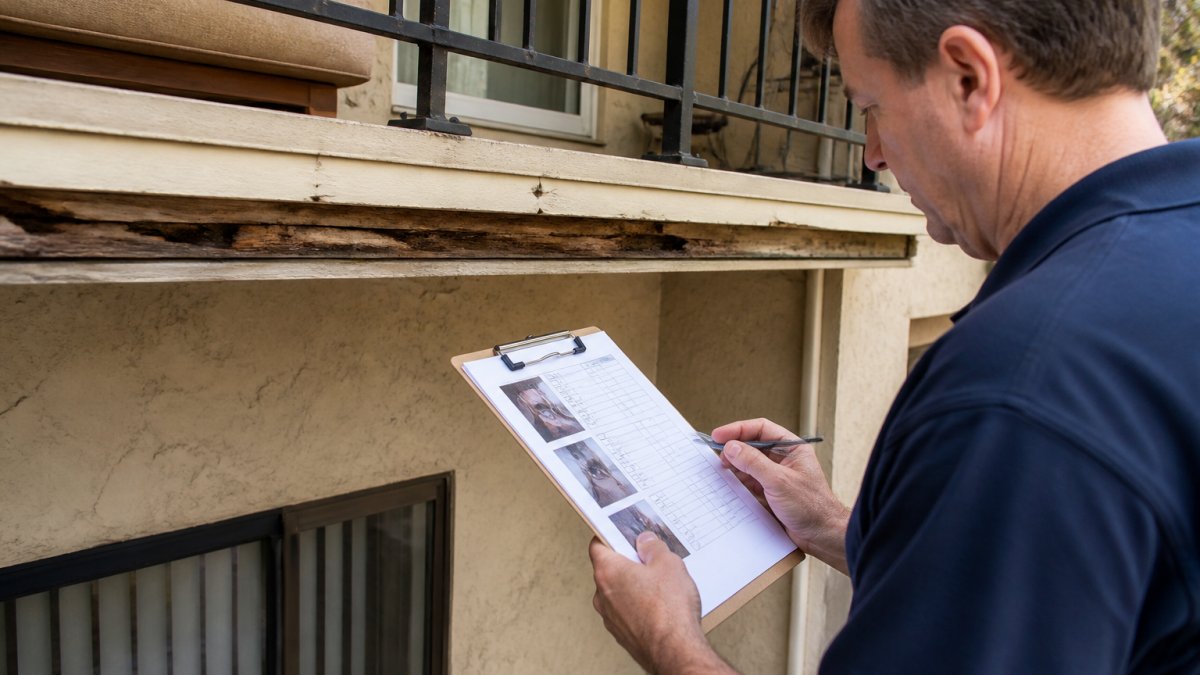
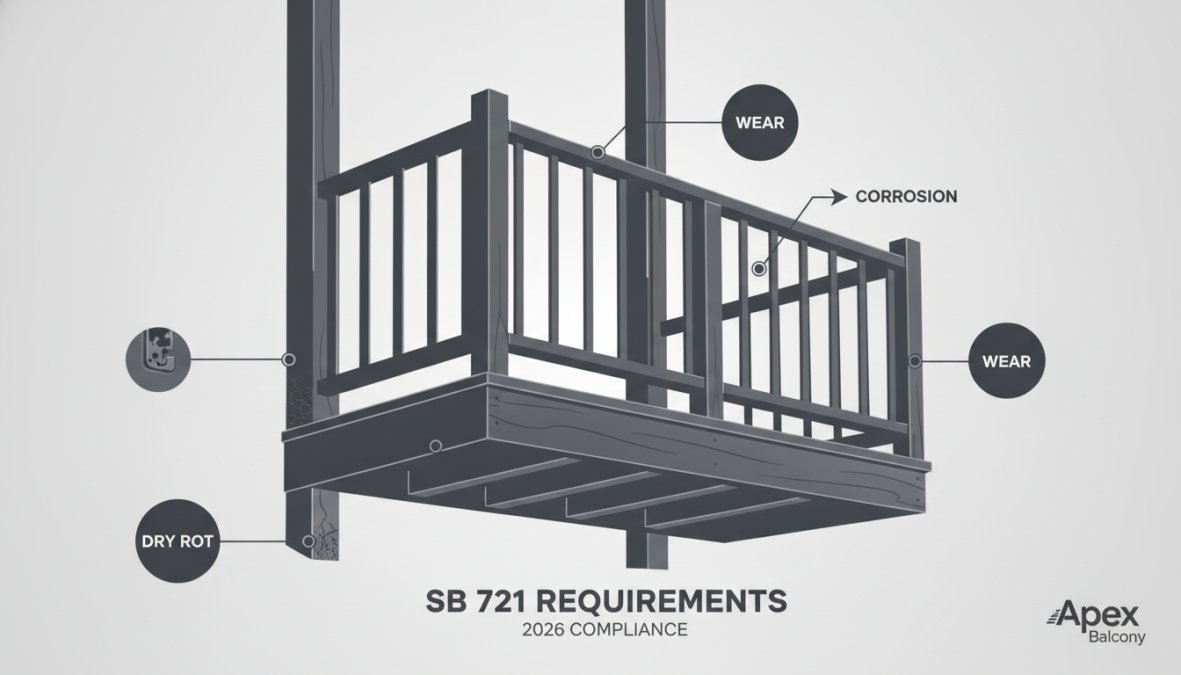
Exterior Elevated Elements are balconies, decks, stairways, landings, or walkways attached to a residential building and elevated above ground level. A qualified inspector examines railings, fasteners, support posts, ledgers, and connection points where elevated elements attach to the main building. Inspectors probe wood for soft spots indicating dry rot, measure corrosion on metal components, and test waterproofing integrity.
The inspection report classifies each exterior elevated element into one of three categories: safe, safe with repairs needed, or unsafe. Unsafe elements cannot remain in service and require immediate repairs or removal. Elements safe with repairs needed typically have a 120-day timeline for completion.
Understanding the 15% Rule
If 15% or more of exterior elevated elements require repairs, the property owner must conduct a comprehensive structural evaluation of the entire building’s support systems. This rule prevents treating balcony problems in isolation and requires assessment of whether deterioration indicates building-wide structural issues.
For example, in a 10-unit building with 20 balconies, if three or more balconies (15%) require repairs, the owner must hire a structural engineer to evaluate whether the deterioration reflects broader structural problems affecting the main support columns, ledger boards, or foundation connections.
Inspection Frequency and Cycles
SB 721 requires initial inspections by January 1, 2026, for most residential buildings with three or more units. After the initial inspection, the recurrence cycle depends on results: nine years if no repairs are needed, or six years if repairs are required.
Buildings with a history of deterioration may face more frequent inspection requirements. Buildings in coastal areas with salt corrosion risk or wood-framed structures in wet climates may also require more aggressive inspection schedules based on local enforcement guidance.
Who Qualifies as a SB 721 Qualified Inspector
California law specifies that inspectors must be licensed architects, licensed engineers, or licensed general contractors with specific qualifications. The inspector must have expertise in identifying structural deficiencies in exterior elevated elements and understanding failure modes of wood-framed structures.
The inspector’s license alone is necessary but not sufficient, they must demonstrate relevant experience inspecting exterior elevated elements. An architect who designs shopping centers but has never inspected residential balconies is not qualified.
How to Select and Vet an Inspector
Start by verifying credentials and requesting references from other property owners. Call references and ask: Did the inspector miss anything that later became a problem? Did the inspection report clearly explain findings?
Experience with your building type matters. An inspector experienced with wood-frame apartment buildings will spot dry rot patterns that an inspector accustomed to steel-frame commercial buildings might miss.
Ask the inspector directly: How many SB 721 and SB 326 inspections have you completed? If the answer is "almost none," that suggests insufficient experience. If the answer is "most of them require repairs," that may suggest unnecessary recommendations.
Ask your inspector for a sample inspection report before hiring. A good report includes clear photographs, specific measurements, detailed condition descriptions for each element, and clear explanation of what repairs are needed and why.
SB 721 Deadlines and Penalties for Non-Compliance
The initial inspection deadline for most 3-unit buildings is January 1, 2026. This date is not flexible. Some buildings may have different deadlines based on construction date or previous inspections; contact your local building department to confirm your specific deadline.
Missing the inspection deadline triggers enforcement action. Local building departments can issue citations and impose fines ranging from hundreds to thousands of dollars per month of non-compliance. Non-compliance creates legal liability, if structural failure occurs and the property owner failed to conduct required inspections, the owner faces potential lawsuits from injured parties.
Consequences of Missing Inspection Deadlines
Insurance companies increasingly require proof of SB 721 compliance before renewing property coverage. A building without current inspection documentation may face policy cancellation or significant premium increases.
Lenders and title companies scrutinize SB 721 compliance. If you’re refinancing or selling, the buyer’s lender will likely require proof of current inspection and compliance. A building without current documentation may not qualify for financing.
For HOA-managed condominiums, SB 721 compliance becomes a fiduciary duty. HOA boards that fail to schedule required inspections expose the association to legal liability and potential personal liability for board members.
SB 721 Compliance Checklist for Property Owners
Initial Assessment:
- Confirm your building’s SB 721 deadline
- Identify all exterior elevated elements on your property
- Verify that you have a qualified inspector
- Request sample inspection reports from potential inspectors
Inspection Scheduling:
- Schedule inspection at least 60 days before your deadline
- Ensure residents have access to all exterior elements during inspection
- Request detailed written report with photographs and condition assessments
- Confirm that the inspector will classify each element as safe, safe with repairs needed, or unsafe
Review and Planning:
- Review the inspection report thoroughly
- If repairs are needed, obtain written repair estimates from licensed contractors
- Apply the 15% rule: if 15% or more of elements need repairs, plan for structural engineer evaluation
Repair Execution:
- Hire licensed contractors for all repair work
- Ensure repairs are completed within the specified timeline (typically 120 days)
- Document all repairs with photographs and contractor certifications
Follow-Up and Records:
- File the inspection report with your local building department if required
- Store inspection report and repair documentation securely for at least 10 years
- Mark your calendar for the next required inspection (nine years if no repairs needed, six years if repairs were completed)
- Notify your insurance company and lender that your building is SB 721 compliant
Step-by-Step Compliance Timeline
Month 1: Planning and Scheduling
Contact potential inspectors, review credentials, and schedule the inspection.
Month 2: Inspection and Initial Report
The inspector conducts the inspection (typically one to two days for a 3-unit building) and delivers a written report within one to two weeks.
Month 3: Repair Planning
If repairs are needed, obtain written estimates from licensed contractors. Prioritize repairs based on safety risk.
Months 4-6: Repair Execution
Licensed contractors complete repairs according to inspection findings. Document all work with photographs and certifications.
Post-Repair Completion
File documentation with your local building department if required and store records securely.
Inspection and Repair Costs for SB 721 Requirements
An inspection for a 3-unit building typically costs a moderate amount, with licensed architects potentially charging more than licensed general contractors. The inspection itself usually takes one to two days. Request a cost estimate before scheduling.
Repair costs depend entirely on inspection findings. A building with well-maintained elements might require minimal repairs (caulking, fastener replacement, minor painting). A building with significant dry rot or corrosion might require structural replacement of entire balconies or decks, which is substantially more expensive.
Cost Factors and Budget Planning
Building age is a primary factor, older buildings with wood-framed structures are more likely to have deterioration. Climate and location matter significantly; coastal properties face salt corrosion risk, while wet inland climates favor dry rot. The number of exterior elements also affects cost.
Material type influences repair costs dramatically. Replacing wood-framed railings is less expensive than replacing structural support posts. Metal corrosion repairs may require sandblasting and recoating. Waterproofing repairs prevent far more expensive structural failure later.
For budget planning, assume inspection will cost a moderate amount, and repairs will likely exceed the inspection cost if deterioration is found. Many property owners set aside a repair reserve of 10-15% of annual budget to cover SB 721-related expenses.
Tax Implications of Inspection and Repair Expenses
Inspection costs are generally deductible as ordinary business expenses in the year incurred. Repair costs may be deductible as maintenance if they restore the property to its previous condition, or capitalized as improvements if they extend useful life or add value.
For buildings held as rental property, SB 721 compliance expenses reduce taxable income. Owners of multi-unit buildings should work with a tax professional familiar with real estate to ensure proper classification.
Guidance for Out-of-State Owners and Property Managers
Out-of-state owners should hire a qualified local property manager or inspector who understands California requirements and can manage the compliance process on their behalf. When hiring a property manager, ensure they have specific experience with California’s balcony inspection laws.
If you manage the property yourself from out of state, establish relationships with a qualified inspector and licensed contractor in your property’s area. These professionals can guide you through the process and ensure compliance.
Out-of-state owners should verify that their property insurance covers SB 721-related liability. Review your policy with your insurance agent and confirm that your building’s SB 721 status is disclosed.
SB 721 compliance is mandatory for California property owners with three or more residential units. The deadline is January 1, 2026, and the consequences of missing it are serious: fines, legal liability, insurance complications, and potential structural failure that puts residents at risk.
The compliance process is straightforward when you work with experienced professionals. A qualified inspector conducts thorough inspections that identify structural problems early, when repairs are most cost-effective. Clear, detailed inspection reports guide your repair decisions and keep your property compliant with California law.
Don’t wait until the deadline crisis hits. Contact a qualified inspector today to schedule your SB 721 inspection and protect your property, your residents, and your investment.
| Compliance Step | Timeline | Key Action |
|---|---|---|
| Initial Planning | Month 1 | Hire qualified inspector, verify credentials |
| Inspection | Month 2 | Inspector evaluates all exterior elevated elements |
| Report Review | Month 2-3 | Analyze findings, obtain repair estimates |
| Repair Execution | Months 3-6 | Licensed contractors complete required work |
| Documentation | Ongoing | Store records, update insurance and lender |
| Next Inspection | 6-9 years | Schedule follow-up based on initial results |
Frequently Asked Questions
What is SB 721 and who does it apply to?
SB 721 is California legislation requiring inspection of Exterior Elevated Elements (EEEs) on multifamily residential buildings with 3 or more units. This includes balconies, decks, stairways, walkways, and landings. The law applies to property owners and HOAs managing these structures. Compliance is mandatory under Health and Safety Code Section 17973, with inspections required every 6 years for wood-framed structures and every 9 years for non-wood structures.
What is the 15% rule in SB 721 inspections?
The 15% rule allows inspectors to sample up to 15% of similar EEE components instead of inspecting every single element. For example, if a building has 20 balconies of identical construction, an inspector can inspect 3 balconies rather than all 20. However, if defects are found in the sample, 100% inspection of that component type becomes mandatory. This rule reduces inspection costs while maintaining safety standards.
What qualifies as a SB 721 qualified inspector?
SB 721 qualified inspectors must be licensed architects, licensed engineers, or licensed general contractors with specific building inspection experience. They must be able to identify structural failures, dry rot, corrosion, and deterioration in wood-based products and load-bearing components. When selecting an inspector, verify current California licensing, request references from similar projects, and confirm familiarity with SB 721 and SB 326 requirements.
What are the penalties for non-compliance with SB 721 requirements?
Non-compliance with SB 721 can result in significant fines, legal liability, and insurance implications. Property owners face enforcement action from local enforcement agencies if inspections are not completed by the January 1, 2026 deadline for initial inspections. Beyond financial penalties, failure to comply exposes owners to lawsuits if structural failures occur. Additionally, non-compliance may affect property insurance coverage and create liability for injuries or property damage resulting from undetected structural defects.