
Table of Contents
- What Is Seismic Retrofitting and Why Older Homes Need It
- How Seismic Retrofitting Protects Against Structural Failure
- Insurance Discounts and Premium Reductions
- Does Seismic Retrofitting Increase Home Value
- Seismic Retrofit Grant Programs and Financial Assistance
- Earthquake Retrofitting Cost and Budget Planning
- Structural Integrity Inspection: DIY Assessment vs. Professional Evaluation
- Getting Started With Your Retrofit
- Frequently Asked Questions
Last Updated: September 26, 2026
What Is Seismic Retrofitting and Why Older Homes Need It
Seismic retrofitting is the process of strengthening a building’s structure to withstand earthquake forces and prevent catastrophic failure during seismic events, and understanding seismic retrofitting benefits is essential for older homeowners. For homes built before modern building codes took effect, this work often becomes the difference between a repairable structure and total loss.
Older homes, particularly those built before the 1980s, lack the foundation connections and lateral bracing that current seismic codes require. Many sit on unreinforced concrete or stone foundations with no bolts anchoring the sill plate to the foundation. When the ground moves, the house can literally slide off its foundation. This vulnerability affects hundreds of thousands of properties across California, where seismic activity remains a constant threat.
The reason retrofitting matters now is simple: building codes have evolved dramatically, but the housing stock hasn’t. A home that passed inspection in 1960 would fail inspection today. The structural gaps in pre-1980 construction are consistent and predictable, which means they’re also preventable with targeted intervention.
How Seismic Retrofitting Protects Against Structural Failure
The core vulnerability in older homes is the disconnect between the house and its foundation. During an earthquake, the ground accelerates, but the house’s inertia causes it to lag behind. Without proper anchoring, the structure separates from its base.
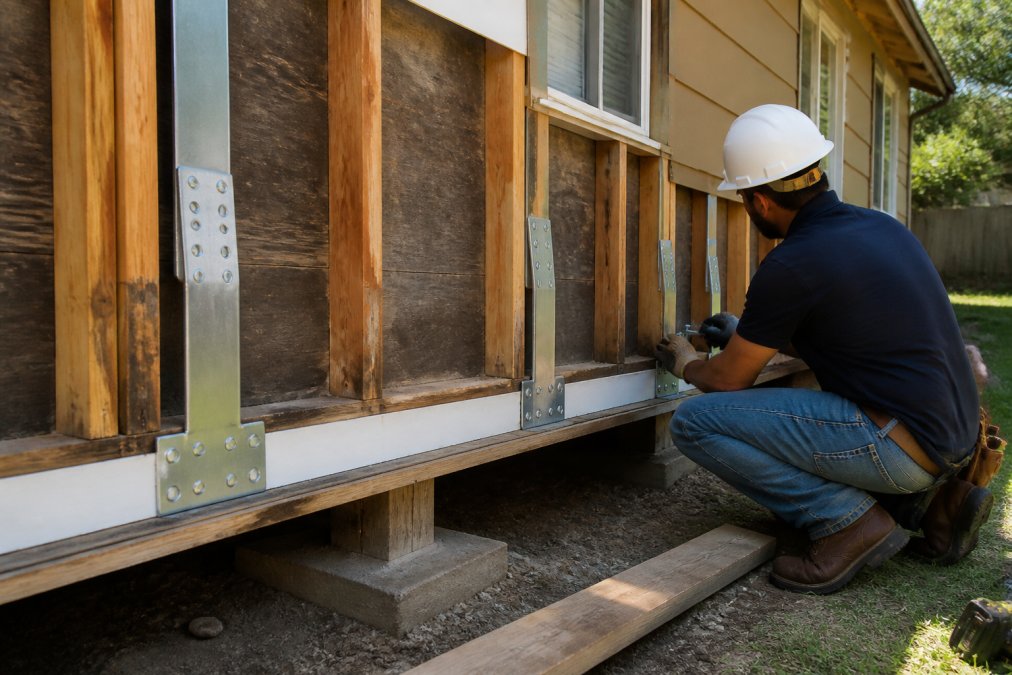
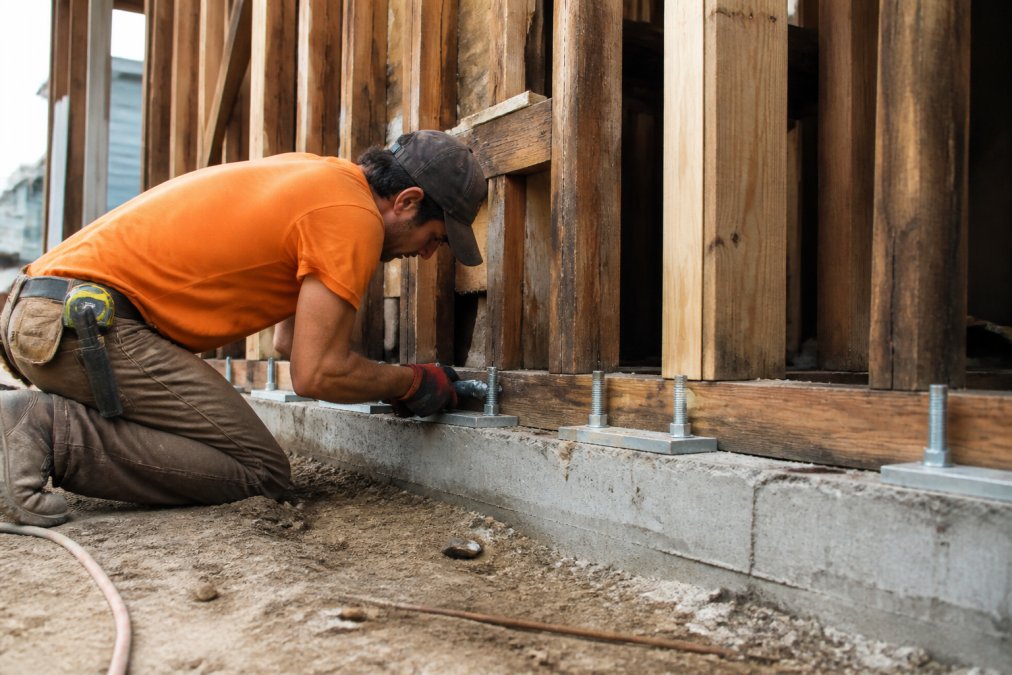
Seismic retrofitting addresses this by creating a continuous load path, a connected chain of structural elements that transfers earthquake forces safely from the roof down through the walls to the foundation. The most common retrofit involves three key components: foundation bolting (anchoring the sill plate to the foundation with anchor bolts), cripple wall bracing (reinforcing the short walls between the foundation and first floor with plywood sheathing), and shear wall construction (adding structural panels to resist lateral movement).
When these elements work together, the house moves as a unified structure rather than separating at the foundation. The lateral forces dissipate through the braced walls instead of tearing the building apart. This is why homes that have undergone proper seismic retrofitting typically sustain far less damage in earthquakes compared to unretrofitted structures of the same age and design, demonstrating the clear seismic retrofitting benefits for property protection.
A common mistake property owners make is assuming that retrofitting is optional or can wait indefinitely. The reality is that every earthquake cycle increases the risk of structural failure in unretrofitted homes. Even moderate seismic activity can cause foundation damage that compounds over time.
Insurance Discounts and Premium Reductions
Insurance companies recognize that retrofitted homes present lower risk. Many major insurers offer discounts for completed seismic retrofits, though the specific discount percentage varies by insurer and policy terms.
The discount typically applies when you provide proof of completion, usually a permit from your local building department and final inspection documentation. Some insurers offer discounts ranging from modest reductions to more substantial savings, depending on the scope of work completed and your property’s risk profile. The key is having official documentation that the retrofit meets current building code standards.
Beyond the annual premium reduction, retrofitting can affect your insurability itself. Some carriers have begun declining to renew policies on older, unretrofitted homes in high-risk seismic zones. Others impose higher deductibles or exclude earthquake coverage entirely unless retrofitting work is completed. This creates a financial incentive that extends beyond simple discount math, retrofitting can mean the difference between having earthquake coverage available and losing it altogether.
To maximize insurance benefits, obtain written confirmation from your insurer about their specific retrofit discount policy before starting work. Different carriers have different requirements, and some may require inspection by their own engineers to verify the retrofit meets their standards.
Does Seismic Retrofitting Increase Home Value
Property value appreciation from seismic retrofitting is real but indirect. The retrofit itself doesn’t automatically add a fixed percentage to your home’s market value, but it removes a major liability that buyers and appraisers view as a defect.
Homes in California that lack seismic retrofitting often carry a stigma in the real estate market. Informed buyers, particularly those with mortgage financing, recognize the structural vulnerability and either negotiate lower prices or pass on the property entirely. A retrofitted home eliminates this negotiation point. Appraisers and lenders view the completed work as evidence that the property meets current safety standards.
The practical effect is that retrofitting protects your home’s value rather than inflating it. You’re removing a barrier to sale and financing rather than adding a premium feature. In competitive markets, this distinction matters: a retrofitted older home can command prices comparable to newer construction with similar features, whereas an unretrofitted home of the same age trades at a discount reflecting buyer and lender uncertainty about structural integrity.
Additionally, if you ever need to sell quickly, whether due to relocation, financial pressure, or market timing, having retrofit documentation eliminates a major inspection contingency. Buyers and their engineers spend less time investigating structural concerns, which accelerates the transaction and reduces the likelihood of deal-killing discoveries during inspection.
Seismic Retrofit Grant Programs and Financial Assistance
Several grant and rebate programs exist to offset retrofit costs, though eligibility and award amounts vary by location and program.
The Earthquake Brace + Bolt program, administered through the Governor’s Office of Emergency Services, provides grants to help offset the cost of seismic retrofitting for eligible single-family homes. This program targets pre-1980 construction and prioritizes properties in high-risk seismic zones. Eligibility depends on factors including property age, location, and household income in some cases.
Beyond state programs, some cities and counties offer local incentives. San Francisco, Los Angeles, and other major California municipalities have implemented their own retrofit incentive programs, sometimes paired with mandatory retrofit timelines for certain building types. These local programs often provide more substantial assistance than state-level offerings, particularly for multi-unit properties and buildings with specific structural vulnerabilities.
To determine what assistance you qualify for, start by checking your city or county building department website for local retrofit programs. Then contact your state representative’s office or visit the Governor’s Office of Emergency Services website for information on state-level grant opportunities. The application process typically requires documentation of your property’s age and current condition, so having a structural engineer‘s assessment completed before applying can simplify approval.
Earthquake Retrofitting Cost and Budget Planning
Retrofit costs vary significantly based on foundation type, home size, structural complexity, and labor availability in your area. A complete retrofit for a single-family home typically ranges from several thousand dollars to substantially more, depending on the scope of work required.
The most cost-effective approach is to prioritize the highest-impact interventions: foundation bolting and cripple wall bracing usually deliver the most structural benefit per dollar spent. Homes with crawl spaces are generally less expensive to retrofit than homes with slab-on-grade foundations, since foundation bolting is more accessible.
When budgeting, factor in the cost of a structural engineer’s assessment before construction begins. This evaluation identifies exactly which retrofit measures your specific home needs, preventing unnecessary work while ensuring you address all critical vulnerabilities. Many property owners find that a professional assessment costs less than guessing at what needs to be done and potentially over-retrofitting or missing essential work.
Getting multiple contractor quotes is standard practice, but compare scope carefully, a lower quote might exclude essential elements that a higher quote includes. Ask each contractor what specific retrofitting measures they’re proposing and why. This helps you understand whether price differences reflect genuine efficiency or simply different levels of completeness.
Structural Integrity Inspection: DIY Assessment vs. Professional Evaluation
A visual inspection can reveal some obvious red flags, visible foundation cracks, separation between the house and foundation, rotted wood, but a comprehensive structural assessment requires professional expertise and specialized knowledge.
A professional structural engineer or licensed inspector can identify subtle indicators of seismic vulnerability that a homeowner would miss: undersized anchor bolts, inadequate plywood sheathing thickness, improper fastening patterns, and load path discontinuities. These details matter because building code compliance isn’t just about having the right components, it’s about having them installed correctly to function as an integrated system.
DIY assessment is reasonable for catching obvious problems and understanding your home’s general vulnerability profile.
Getting Started With Your Retrofit
The first step is determining whether your home actually requires retrofitting. Homes built after 1980 in California typically meet current seismic standards, though some mid-1970s construction may already include partial retrofitting. Homes built before 1970 almost certainly need work.
| Retrofit Component | Primary Function | Typical Benefit |
|---|---|---|
| Foundation Bolting | Anchors sill plate to foundation | Prevents foundation separation |
| Cripple Wall Bracing | Reinforces short walls with plywood | Resists lateral movement |
| Shear Wall Construction | Adds structural panels | Distributes earthquake forces |
| Load Path Completion | Connects roof to foundation | Creates unified load transfer |
Frequently Asked Questions
Is seismic retrofitting worth it for older homes?
Yes. Seismic retrofitting significantly reduces the risk of foundation failure, sliding off the foundation, and structural collapse during earthquakes. For homes built before 1980, the investment protects your family, prevents costly emergency repairs, and qualifies you for insurance premium reductions. The combination of safety protection and financial incentives makes retrofitting a sound investment.
What seismic retrofit grant programs are available?
California offers several grant and financing programs to help homeowners afford retrofits. The Earthquake Brace + Bolt program provides grants up to $3,000 toward foundation bolting and cripple wall bracing. Additional assistance may be available through local utility companies, county programs, and FEMA grants. Eligibility depends on income, property age, and location. Contact your county or visit the state’s official retrofit resources to determine which programs apply to your home.
What is the average cost of seismic retrofitting?
Costs vary based on foundation type, home size, structural condition, and local labor rates. Foundation bolting typically ranges from moderate to substantial investment, while comprehensive retrofits addressing cripple walls and shear walls cost more. Many homeowners offset expenses through grant programs and insurance discounts. A professional assessment provides an accurate quote tailored to your home’s specific needs.
Should I hire a professional for a structural integrity inspection or assess my home myself?
Professional inspection is strongly recommended. Professional structural engineers identify hidden vulnerabilities in foundation connections, sill plates, and load paths that untrained eyes miss. They provide documentation required for permits, insurance claims, and grant applications. DIY assessment can identify obvious issues like visible cracks or water damage, but professional evaluation ensures compliance with building codes and prevents costly oversights.