Structural Engineering Services California: 2026 Guide
Structural engineering services in California explained: top firms, seismic retrofits, costs, and a hiring checklist. Find the right engineer for your.

Table of Contents
- What Structural Engineering Services in California Actually Cover
- Top Structural Engineering Firms Offering Services in California
- Seismic Retrofit Services California: What Property Owners Must Know
- Structural Engineer Cost California: What to Budget in 2026
- Hiring a Structural Engineer Checklist: A Step-by-Step Process
- Balcony and Elevated Element Inspections Under California Law
- Conclusion
Last Updated: June 9, 2026
California property owners face a uniquely demanding environment for structural engineering services california: seismic activity, strict state building codes, and a housing shortage driving unprecedented construction complexity. This guide from Apex Balcony covers which firms to consider, what seismic compliance demands, and how to avoid costly mistakes. The throughline is simple but often ignored: structural engineering in California is not a commodity service. Local expertise is non-negotiable.
What Structural Engineering Services in California Actually Cover
Structural engineering services california encompass far more than stamped blueprints. A licensed PE or SE analyzes loads, materials, and site conditions to ensure structural integrity across a building’s lifespan, while also accounting for seismic forces, geotechnical conditions, and building standards that exceed federal minimums. The scope typically includes structural analysis, schematic design, construction documents, structural calculations, and construction administration, often coordinated with civil engineering teams on site safety, drainage, and foundation inspection.
Residential Structural Engineering
Residential structural engineering covers single-family homes, multi-unit buildings, hillside construction, and ADUs. Common services include load-bearing wall analysis, foundation inspection and rehabilitation, shoring design, and seismic retrofitting. Any work affecting load-bearing walls, foundations, or lateral force-resisting systems requires stamped structural calculations for building permits.
Attempting to pull permits for load-bearing wall removal without licensed structural calculations will trigger a stop-work order in virtually every California jurisdiction. The delay typically costs more than the engineering fee itself.
Commercial Structural Engineering
Commercial projects demand a broader scope: feasibility study, schematic design, full construction documents, steel connection design, and construction administration. California’s commercial building codes require compliance with the current California Building Standards, which incorporate seismic design categories that vary by location. For tenant improvements, structural engineers must assess whether the existing structure can accommodate new loads before renovation begins, especially critical in older buildings where original blueprints may be incomplete.
Building Additions, Renovations, and ADU Design
ADU design has become one of the fastest-growing segments of residential structural engineering in California. State law strongly encourages ADU construction, but each ADU still requires permit-ready structural plans, foundation design, and compliance with local zoning overlays. For additions, engineers must evaluate existing foundation capacity, lateral load path continuity, and connections between old and new framing. Renovation projects often uncover deferred maintenance, substandard materials, or unpermitted work that affects the structural design approach.
According to California Department of Housing and Community Development ADU resources, California has seen a dramatic increase in ADU permit applications statewide, making structural engineering for these projects increasingly specialized.
Top Structural Engineering Firms Offering Services in California
The California structural engineering market ranges from large multi-disciplinary firms handling billion-dollar infrastructure to boutique practices focused on residential remodels. Matching firm size and specialty to your project type matters more than name recognition.

| Firm | Best For | Specialty | Region |
|---|---|---|---|
| Apex Balcony | Balcony/deck inspections, SB 326/721 compliance | Elevated exterior elements | Statewide |
| KPFF Consulting Engineers | Large commercial and urban infrastructure | Seismic design, civil engineering | Statewide |
| Lee & Lee Structural Engineering | Commercial, residential, adaptive reuse | Multi-material systems, permit docs | Statewide |
| Degenkolb Engineers | Healthcare, institutional seismic retrofits | Earthquake engineering | Statewide |
| CYS Structural Engineers | Public sector, education, commercial | Sustainable design, Northern CA codes | Northern CA |
| Forell/Elsesser Engineers | Historic preservation, seismic isolation | Base isolation, BIM modeling | San Francisco |
| Kobe Structural & Civil Engineering | Residential remodels, custom homes | Quick-turnaround permit plans | Statewide |
| Lawson-Burke Structural Engineers | Hillside and complex-site residential | Southern CA terrain, seismic codes | Southern CA |
| Zenith Engineers Inc. | Industrial, infrastructure, commercial | Tanks, bridges, equipment anchorage | Statewide |
1. Apex Balcony
For property owners and HOAs dealing with elevated exterior elements, Apex Balcony is the clear first call. The firm specializes in California SB 326 and SB 721 compliance inspections for balconies, decks, and stairways. Their exclusive focus on elevated exterior elements means they know exactly what building departments and courts look for in inspection reports, and they provide a clear path to necessary repairs rather than just identifying problems.
2. KPFF Consulting Engineers
KPFF is one of the largest multi-disciplinary engineering firms in California, with deep experience in large-scale urban infrastructure and high-profile commercial developments. Their structural practice integrates protective design, surveying, and mapping. The honest limitation: KPFF is built for complexity and scale, making them less accessible and likely more expensive than most residential or small commercial projects warrant.
3. Lee & Lee Structural Engineering Inc.
Over 35 years in the California market gives Lee & Lee a practical advantage: they know what local building departments actually want in permit documentation. The firm works across wood, steel, concrete, and masonry systems using ETABS, SAFE, and SAP2000, making them a strong choice for commercial and adaptive reuse projects.
4. Degenkolb Engineers
Degenkolb has a nationally recognized reputation for seismic engineering, with particular depth in healthcare, higher education, and mission-critical facilities. Their forensic engineering capabilities are exceptional for post-earthquake assessments. The trade-off is that their focus on large institutional work makes them less suited for standard residential or small commercial projects.
5. Forell/Elsesser Engineers, Inc.
San Francisco-based Forell/Elsesser pioneered seismic base isolation technology in California and remains a leader in performance-based seismic design. Their expertise in historic rehabilitation and adaptive reuse is unmatched for landmark structures. Smaller residential projects are outside their core practice.
6. Kobe Structural & Civil Engineering
Kobe is the practical choice for individual homeowners and small developers. They specialize in residential remodels, additions, and custom homes, with quick turnaround times for permit-ready structural plans. Their integrated civil and structural engineering capability simplifies land development projects.
7. Lawson-Burke Structural Engineers, LLC
Orange County-based Lawson-Burke brings specific expertise in hillside construction and challenging soil conditions, directly relevant to large portions of Southern California. Their services span new construction, remodels, historical rehabilitation, structural assessment, and expert witness services for construction disputes.
8. CYS Structural Engineers
With over 60 years of experience, CYS has built a strong portfolio in public works, education, and commercial buildings across Northern California. Their focus on sustainable structural design and deep knowledge of Northern California regulatory landscapes makes them a reliable choice for public sector clients in the Sacramento region.
9. Zenith Engineers Inc.
Zenith covers structural design for non-building structures including tanks, bridges, dams, and water treatment plants, alongside conventional commercial work. Their construction administration support, site visits, RFI management, shop drawing review, is a genuine differentiator for clients who need engineering presence during construction.
Seismic Retrofit Services California: What Property Owners Must Know
Seismic retrofitting is not optional for many California property owners. It’s the part most guides underplay.
California-Specific Seismic Requirements and Building Codes
Older buildings built before the 1980 adoption of modern seismic codes often lack adequate lateral force-resisting systems. Soft-story apartment buildings, unreinforced masonry structures, and cripple-wall wood-frame homes represent the highest-risk categories. Several California cities have enacted mandatory retrofit ordinances, Los Angeles requires soft-story and non-ductile concrete building owners to retrofit or face penalties, and San Francisco has similar programs.
According to California Seismic Safety Commission guidance on retrofit programs, thousands of vulnerable buildings remain unretrofitted despite known seismic risk. The cost of retrofitting is consistently lower than the cost of post-earthquake repair or rebuilding.
Seismic retrofit services california typically involve a structural engineer performing a seismic evaluation, identifying deficiencies, designing a retrofit scheme, preparing construction documents, and providing construction administration. Common approaches include steel moment frames, shear wall additions, foundation bolting, and cripple wall bracing.
Structural Inspections, Assessments, and Permitting Compliance
Every seismic retrofit project in California requires building permits, involving structural calculations, construction documents, and often a geotechnical report. Most major California cities now offer expedited review for seismic retrofit projects. Special inspection requirements, mandated by the California Building Code for certain structural systems, require a third-party inspector to observe and document critical work including concrete placement, welding, and high-strength bolting.
Request a pre-application meeting with the local building department before submitting permit documents for a complex seismic retrofit. Many jurisdictions offer this service, and it can identify plan check issues before they cause costly resubmittal delays.
Structural Engineer Cost California: What to Budget in 2026
Structural engineer cost california varies more than most clients expect, and the range is wide enough that getting multiple proposals is essential.
Factors That Drive Fees Up or Down
Several variables determine where a project lands on the fee spectrum:
- Project type and complexity: A simple residential addition costs far less than a commercial tenant improvement in a seismically deficient building.
- Document deliverables: Permit-ready construction documents with full structural calculations cost more than a preliminary feasibility study or letter report.
- Firm size and reputation: Larger, nationally recognized firms charge premium rates. Smaller regional firms with equivalent local expertise often deliver comparable quality at lower fees.
- Geotechnical requirements: Projects on challenging soils, hillsides, or near fault zones require geotechnical engineer coordination, adding to total cost.
- Construction administration scope: Firms providing active construction-phase support charge more than those providing design documents only.
Many residential projects involve hourly fees for assessments and letter reports, with fixed fees for full permit document sets. Commercial projects more commonly use percentage-of-construction-cost or negotiated fixed fee structures. The thing nobody tells you: the cheapest proposal is rarely the best value. Incomplete structural documents lead to plan check rejections and field changes that cost far more than the fee difference.
Hiring a Structural Engineer Checklist: A Step-by-Step Process
A hiring a structural engineer checklist prevents the most common and expensive mistakes. Use this before signing any agreement.
- Verify the engineer holds a current California PE or SE license through the California Board for Professional Engineers, Land Surveyors, and Geologists license lookup
- Confirm the firm has direct experience with your specific project type (residential, commercial, seismic retrofit, ADU, etc.)
- Request references from similar California projects completed within the last three years
- Clarify exactly what deliverables are included: structural calculations, construction documents, permit support, construction administration
- Confirm the fee structure: hourly, fixed fee, or percentage-based, and what triggers additional charges
- Ask specifically about their experience with your local building department’s plan check process
- Verify professional liability (errors and omissions) insurance coverage
- Confirm the licensed engineer of record will personally oversee the work, not delegate entirely to junior staff
- Get a clear timeline for deliverables, including plan check resubmittal support
- For seismic retrofit projects: confirm the firm is familiar with any applicable local mandatory retrofit ordinance
The real difference between a smooth project and a frustrating one often comes down to that last point about the engineer of record. At smaller firms, the principal engineer handles your project directly. At larger firms, junior engineers may do most of the work with minimal senior oversight. Ask directly.
Balcony and Elevated Element Inspections Under California Law
California law creates a specific and urgent obligation for building owners with elevated exterior elements. This is not a gray area.
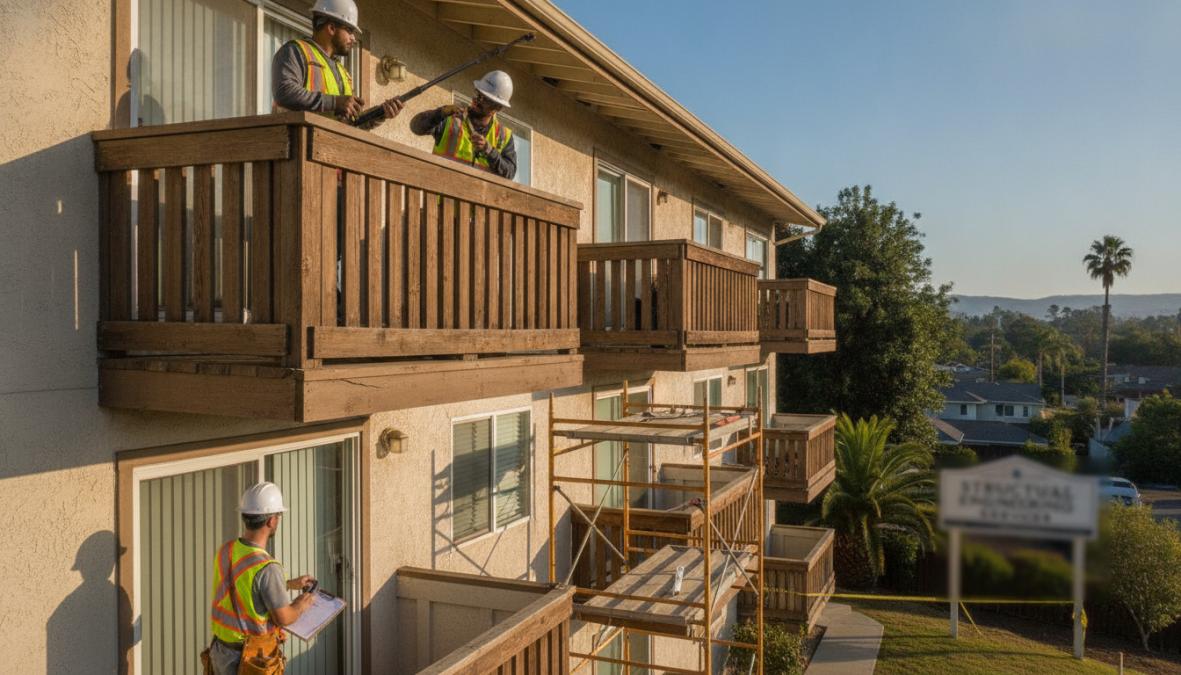
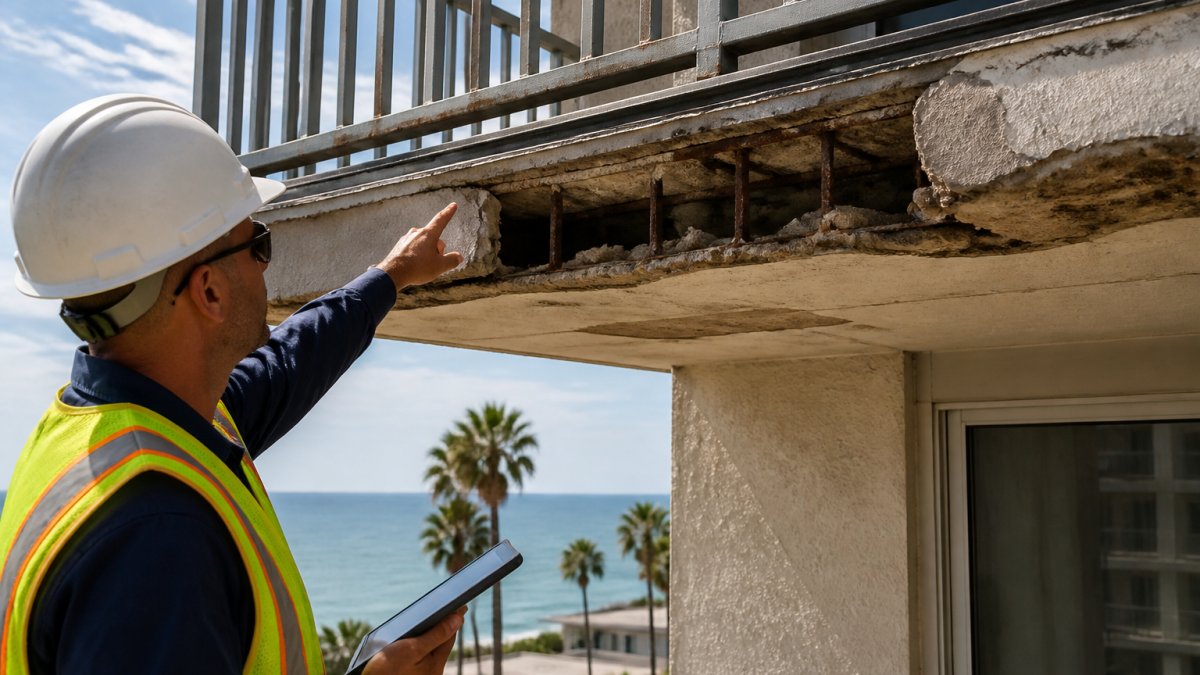
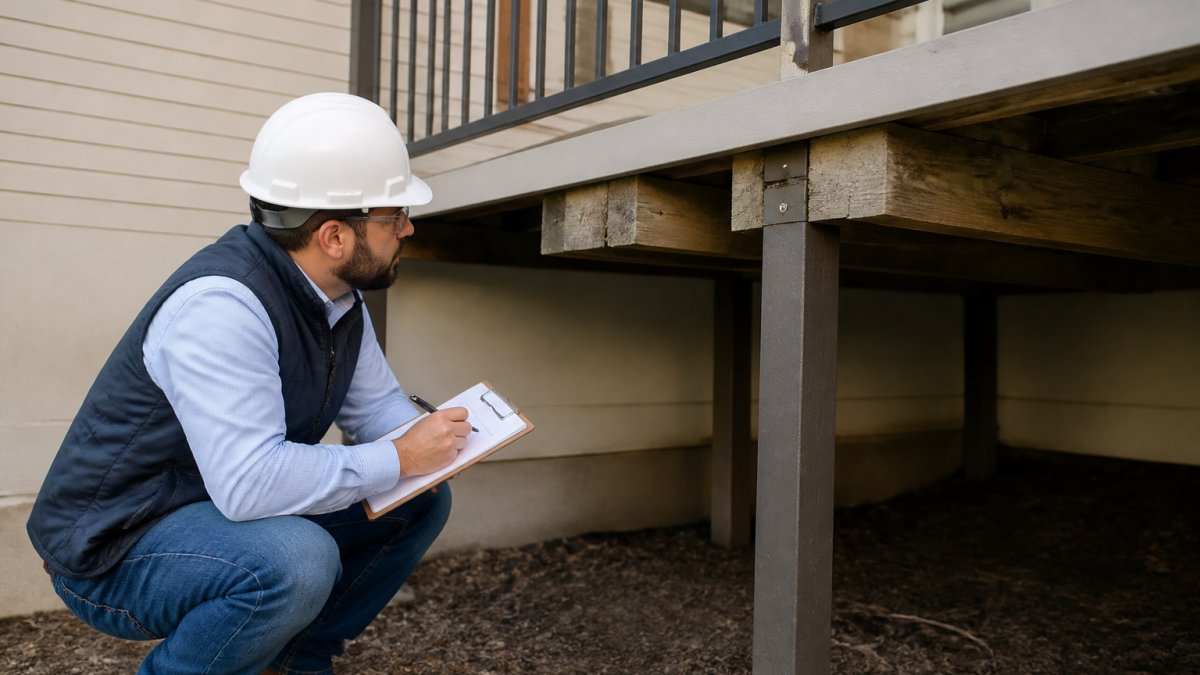
SB 326 and SB 721 require periodic inspections of balconies, decks, stairways, and other elevated exterior elements on multifamily residential buildings. SB 326 applies to condominiums and HOA-governed buildings; SB 721 applies to apartment buildings with three or more units. Both laws mandate inspections by licensed professionals and set deadlines for completing initial inspections and any required repairs. Structural failure of elevated exterior elements has caused deaths and serious injuries in California, the laws exist because deferred maintenance and concealed water intrusion damage are common, and visible inspection from the ground is insufficient to detect deteriorating load-bearing elements.
Apex Balcony specializes exclusively in this compliance space. Their licensed inspectors assess structural integrity of all elevated exterior elements, identify early signs of failure before they become safety emergencies, and provide documentation structured to meet exactly what the law requires. What most building owners get wrong: they wait until the compliance deadline is close, then discover significant repair needs that require additional time to address. Inspections should be scheduled well in advance of statutory deadlines.
According to California Civil Code sections governing balcony inspection requirements, the inspection obligations apply regardless of the apparent condition of the building. Visible good condition does not substitute for a documented professional inspection.
Staying compliant with California’s evolving structural and balcony inspection requirements is genuinely complex, and the consequences of non-compliance range from building department citations to catastrophic liability. Apex Balcony provides professional, affordable inspection services with licensed inspectors who carry decades of construction and design experience, specialized expertise in SB 326 and SB 721, and a track record with hundreds of California building owners. Book an inspection with Apex Balcony and get a clear, legally compliant assessment of your property’s elevated exterior elements before your next compliance deadline.
Frequently Asked Questions
When do I need a structural engineer in California?
You typically need a structural engineer in California when removing or modifying load-bearing walls, adding a room or ADU, performing a seismic retrofit, addressing foundation problems, or constructing a new building. California building codes also require a licensed professional engineer (PE) or structural engineer (SE) to stamp construction documents for most permitted work. If your project involves structural analysis, shoring, or changes to the building’s framing system, hiring a licensed engineer is both legally required and essential for safety.
How much do structural engineering services cost in California?
Structural engineer costs in California vary widely by project type. A basic residential consultation or feasibility study may run a few hundred dollars, while full structural calculations and permit-ready construction documents for a home addition can range from $1,500 to $5,000 or more. Seismic retrofit designs and large commercial projects are priced on a project basis and can reach tens of thousands of dollars. Complexity, location, and the engineer’s experience level are the primary cost drivers. Always request itemized proposals from multiple firms before committing.
What are California’s seismic requirements for structural engineering?
California enforces some of the strictest seismic design standards in the world through the California Building Standards Code (Title 24). Structural engineers must design buildings to resist earthquake forces based on the site’s seismic hazard zone, soil type determined by geotechnical analysis, and the building’s occupancy category. Older soft-story buildings in many California cities are subject to mandatory seismic retrofit ordinances. Seismic retrofitting typically involves adding steel connections, shear walls, or base isolation systems to improve structural integrity and meet current California building standards.
Do I need a structural engineer for a home remodel in California?
Not every remodel requires a structural engineer, but many do. In California, any work involving load-bearing walls, foundation modifications, significant roof changes, or the addition of heavy loads like a rooftop deck typically requires stamped structural calculations from a licensed PE or SE. ADU construction almost always requires structural engineering services. Even if your local building department does not explicitly require it, hiring a structural engineer for a renovation protects you from liability and ensures long-term structural integrity. When in doubt, consult your local building department.
How do I find a licensed structural engineer in California?
Start by searching the California Board for Professional Engineers, Land Surveyors, and Geologists (BPELSG) license verification tool to confirm credentials. The CA SE Directory also lists BPELSG-verified structural engineers filterable by location and specialty. Ask your architect, general contractor, or local building department for referrals. When evaluating candidates, verify their license type (SE vs. PE), review relevant project experience, confirm they carry professional liability insurance, and request references from similar California projects before signing any agreement.