
Last Updated: November 16, 2026
Quick Summary
SB 326 penalties for noncompliance typically begin with a notice of violation, then escalate to citations and accruing fines if the association misses the compliance deadline. The amounts are set by each local ordinance and can vary, so boards should confirm the exact schedule with the issuing department. Acting quickly on the first notice usually gives the association the most leverage.
- Associations must arrange inspections of covered exterior elevated elements on a set schedule.
- Inspections must be documented in a written report describing what was examined.
- Quoted daily penalty figures should be verified against the specific local ordinance that applies.
- Penalties typically begin after a stated cure period, not on the original inspection due date.
- Missing a notice’s appeal deadline generally forecloses the challenge, so track it separately from the cure date.
Table of Contents
- What SB 326 Requires of Condominium Associations
- SB 326 Penalties for Noncompliance: Legal Basis and Authority
- SB 326 Inspection Penalty Scenarios and Realistic Cost Exposure
- SB 326 Inspection Report Requirements and Who Can Perform the Inspection
- SB 326 Inspection Cost and How It Compares to Penalty Exposure
- Notice, Appeal, and Enforcement Process After a Missed Deadline
- SB 721 and SB 326: Which Law Applies to Your Property
- Responsibility and Cost Allocation Within an HOA
- Frequently Asked Questions
What SB 326 Requires of Condominium Associations
Associations that fail to inspect exterior elevated elements on a set schedule can face consequences under the law, and local building officials can enforce it.
California Legislative Information, text of SB 326
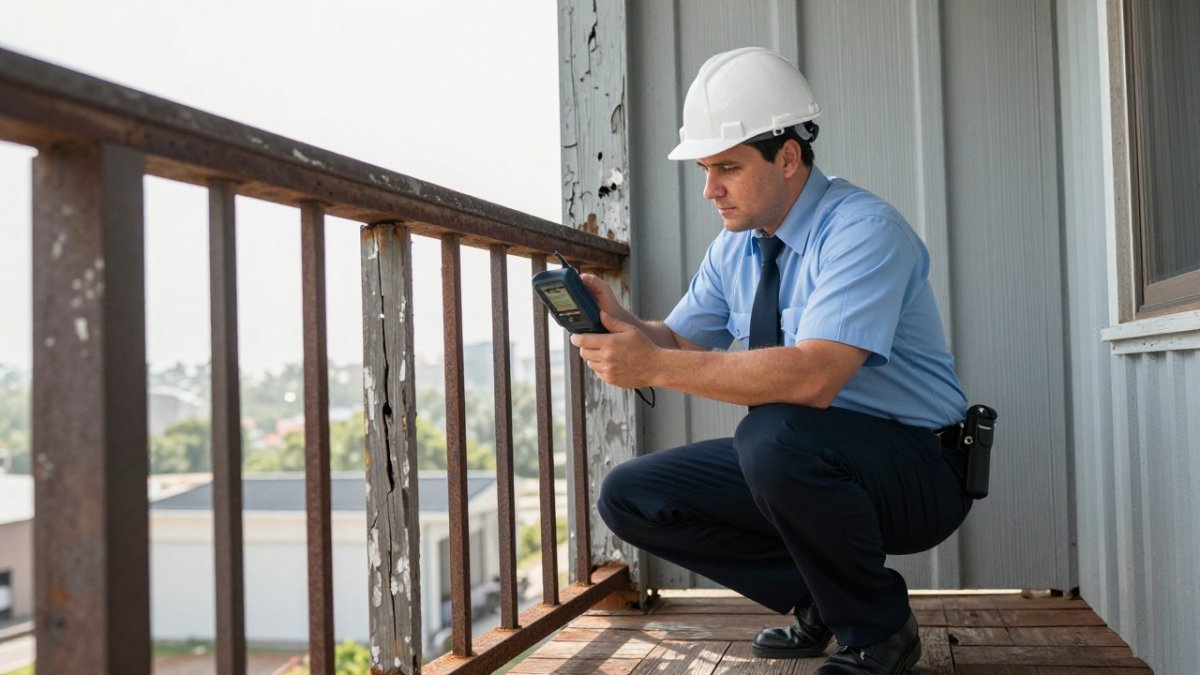
The law targets the parts of a building that residents stand on and walk past every day. Those parts can rot or weaken without any warning sign visible from the ground.
- Associations must arrange inspections of covered elements
- Inspections must be documented in a written report
- Repairs that affect safety must be addressed promptly
Watch out: Some boards assume a recent repair job counts as an inspection. It does not.
Which Buildings and Exterior Elevated Elements Are Covered
SB 326 applies to condominium buildings with exterior elevated elements. These are things like balconies, decks, stairways, and walkways that sit above ground level and support people or weight.
The law focuses on structures where failure could injure residents. A ground-level patio on a single-family home is not the same kind of element. If your property has any raised wood or framed structure serving residents, check whether it falls under the rule.
Inspection Deadlines and Recurring Inspection Intervals
The inspection clock matters more than most boards expect. SB 326 sets deadlines for an initial inspection and then requires repeat inspections on a recurring cycle. Missing the first deadline does not pause the clock.
Boards should put every deadline on a shared calendar with two or three reminders. Many associations use their property manager’s tracking system to avoid surprises.
SB 326 Penalties for Noncompliance: Legal Basis and Authority
Boards often encounter daily fine figures online without a clear source. Understanding where penalty authority comes from is what lets a board plan with confidence.
California Legislative Information, text of SB 326
Where the Penalty Authority Comes From and Who Enforces It
California Department of Housing and Community Development, building standards resources
A common pattern is a three-stage sequence: an initial notice with a compliance deadline, a second notice or administrative citation if the deadline passes, and then accruing penalties or referral for further action. Most practitioners find that the first notice is the point where the association has the most leverage, because the enforcement file is still short and a documented inspection can close it.
Why Commonly Repeated Daily Fine Estimates Need Context
Quoted daily penalty figures should be verified against the specific local ordinance that applies. Several variables can change the real number:
- The local schedule. Each city or county sets its own citation and penalty amounts, and some scale them by violation type or by repeat-offense history.
- The compliance window. Penalties typically begin after a stated cure period, not on the date the inspection was originally due.
- Enforcement discretion. Building officials can often continue a matter, accept a compliance plan, or reduce an assessment when the association demonstrates good-faith corrective action.
A fair way to read any quoted daily figure is as a ceiling under one jurisdiction’s rules. Before a board budgets around it, confirm three things with the issuing department: the ordinance or code section cited, the date penalties start accruing, and whether a compliance plan pauses accrual.
Watch out: treating a quoted maximum as a guaranteed outcome can push a board into either unnecessary spending or, worse, a false sense of safety if the actual local schedule is higher.
The Civil Liability Layer That Sits Alongside Enforcement
Separate from any administrative penalty, boards should review potential liability exposure with coverage counsel and their insurer, since some policies treat known code violations differently from sudden failures.
SB 326 Inspection Penalty Scenarios and Realistic Cost Exposure
Consider a board that receives a notice of violation for a late inspection. Its first step is to schedule the inspection and respond to the notice within the stated deadline.
Now consider a board that ignores the notice. The penalty exposure grows, and the association may also face liability exposure if a resident is hurt on an unchecked balcony. Insurance coverage for that scenario should be reviewed with your broker.
- Respond to any notice within its stated deadline
- Schedule the inspection before enforcement escalates
- Document every communication with the building department
SB 326 Inspection Report Requirements and Who Can Perform the Inspection
The inspection report is the document that proves compliance, so its content matters. A report should describe what was examined, what condition was found, and what repairs are needed.
Under SB 326, the inspection must be performed by a qualified person. Confirm the credential before you hire anyone.
California Board for Professional Engineers, Land Surveyors, and Geologists
Keep a copy of the report in your association records and share the required summary with owners as the law directs.
SB 326 Inspection Cost and How It Compares to Penalty Exposure
Inspection costs depend on building size, the number of elements inspected, and how much documentation the association needs. Pricing depends on your property’s details, so a quote is the right way to get an accurate number.
Boards often compare the inspection cost against the penalty and liability exposure of skipping it. A modest inspection expense is usually easier to justify once the potential costs of noncompliance are on the table.
Notice, Appeal, and Enforcement Process After a Missed Deadline
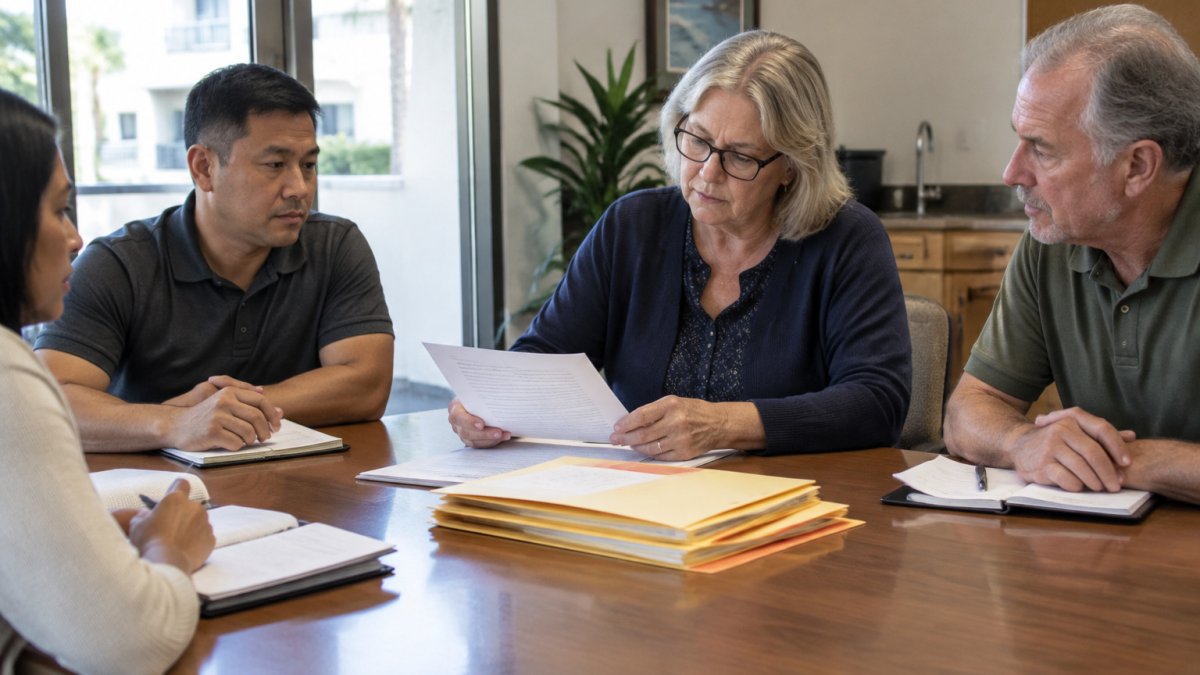
A missed inspection deadline creates a paper trail, and how the association handles that trail determines whether the matter closes or escalates. The sequence below reflects how local code enforcement commonly works; confirm the specifics with the department that issued your notice, because procedures and deadlines are set locally.
What the Notice Usually Contains
A notice of violation or administrative citation typically identifies the property, the code section or ordinance alleged to be violated, the corrective action required, a compliance deadline, the penalty amount or schedule if one applies, and the appeal or hearing rights available. Read for four items in particular: the response date, the named issuing officer or department contact, the cited authority, and the appeal window.
California Department of Housing and Community Development, enforcement information
A Practical Response Sequence
- Log the notice the day it arrives. Record the issue date, response deadline, appeal deadline, and the name and direct line of the contact. Calendar reminders at seven days and two days before each date.
- Contact the issuing department before the deadline. Ask whether a compliance plan or extension is available, what documentation will close the file, and whether penalties are held during a good-faith cure. Get the answer in writing where possible.
- Schedule the qualified inspection immediately. Do not wait for the enforcement question to resolve. The inspection report is the evidence that ends most matters.
- Submit the report and a short cover letter. The letter should reference the notice number, state the inspection date and inspector credentials, summarize findings, and describe the repair plan and timeline for any hazardous conditions.
- Document every communication. Keep emails, call notes, and submission confirmations in the association’s compliance file.
- Preserve appeal rights even if you intend to cure. Filing a timely appeal or requesting a hearing does not usually prevent compliance, and it keeps options open if the assessment is disputed.
How Appeals and Hearings Typically Work
Appeal procedures are local. Appeal procedures vary by jurisdiction and should be confirmed with the issuing department. The grounds that tend to matter are factual (the element was inspected, the report exists, the deadline was met) and procedural (notice was defective, the cited authority does not apply, the penalty was miscalculated).
Watch out: missing an appeal deadline generally forecloses the challenge even if the underlying violation is later resolved, so treat the appeal date as separate from the cure date.
What Usually Closes the File
Confirm with the issuing department what documentation will close the file. A short narrative that maps each finding to a corrective action is more persuasive than a report submitted alone. After closure, retain the notice, the report, the correspondence, and the closure confirmation together, the same records support the next recurring inspection cycle and any insurance or disclosure question that follows.
The sequence below summarises the steps an association typically takes after a missed deadline, with the timing points that matter most.
| Step | What to do | Time or frequency |
|---|---|---|
| Log the notice | Record issue, response, and appeal dates | The day it arrives |
| Contact the issuing department | Ask about compliance plans and penalty holds | Before the response deadline |
| Schedule qualified inspection | Do not wait for enforcement to resolve | Immediately |
| Submit report and cover letter | Reference notice number and summarize findings | By the response deadline |
| Document communications | Keep emails, call notes, and confirmations | Throughout |
| Preserve appeal rights | File a timely appeal or hearing request | Within the appeal window |
SB 721 and SB 326: Which Law Applies to Your Property
Boards often confuse SB 721 and SB 326. Both deal with balcony and elevated element safety, but they apply to different property types and set different duties.
Start by identifying your building type and whether it is a condominium association. That answer usually shows which rule applies.
For a deeper look at how these rules compare, see Balcony Inspection Report Requirements and our guide on SB 326 inspection cost.
Responsibility and Cost Allocation Within an HOA
Responsibility for inspections and repairs is often split between the association and individual owners.
Boards should review their CC&Rs before a repair dispute begins. Clear records of who owns and maintains each element make cost decisions far easier.
If you are weighing who should perform the inspection work, How to Choose a Balcony Inspection Company lays out what to check before you hire.
For help with the legal steps that follow a missed deadline, see Legal Steps for Forcing HOA Balcony Repairs in 2026.
Missing an SB 326 deadline is a risk you can control.
Frequently Asked Questions
What is the deadline for SB 326 inspections?
SB 326, codified in the California Civil Code, requires condominium associations with qualifying exterior elevated elements to have those elements inspected by a qualified person within a set period, and then on a recurring cycle after that first inspection. Associations should confirm the exact dates that apply to their building in the statute and with their local building department, since the schedule depends on the building’s construction and when it was first subject to the requirement. Tracking these dates on a shared calendar and assigning one board member to own the deadline helps prevent a missed inspection.
What penalties can an HOA face for not complying with SB 326?
Enforcement of SB 326 noncompliance involves local building departments, and penalty structures should be confirmed with the issuing agency. The total exposure depends on how long the violation lasts, how many violations exist, and how the local agency chooses to enforce. Fine figures repeated online often differ, so boards should verify the penalty authority in the statute and their local ordinance rather than relying on a single estimate.
How much does an SB 326 inspection cost?
Apex Balcony has not published fixed pricing for SB 326 inspections, and cost depends on the size of the building, the number of exterior elevated elements, the access required, and whether sampling or follow-up work is needed. Board members comparing proposals should ask each provider what is included, such as the inspection report, photographs, and recommended repair notes. For current pricing or a quote, contact Apex Balcony directly through its website.
What is the difference between SB 721 and SB 326?
SB 721 and SB 326 both address balcony and exterior elevated element safety in California, but they apply to different property types and carry different obligations. Because the applicable law depends on the property’s ownership structure and occupancy, an owner should confirm which statute applies before scheduling an inspection.
