Legal Steps for Forcing HOA Balcony Repairs in 2026
Learn the legal steps for forcing HOA balcony repairs, from demand letters to dispute resolution, and protect residents from unsafe conditions.
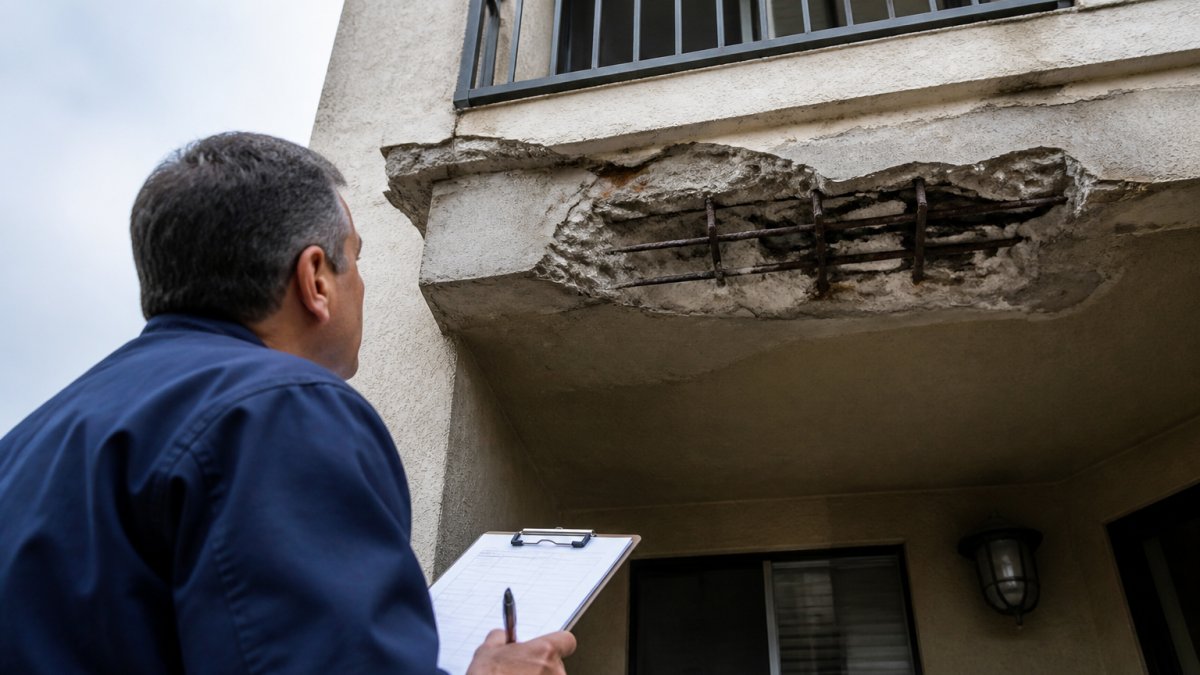
Table of Contents
- When an HOA Delays Balcony Repairs, the Clock Becomes a Safety Risk
- HOA Responsibility for Balcony Repairs: Who Actually Owns the Duty
- SB 326 Balcony Inspection Requirements and What They Trigger
- Step 1: Build Your Evidence File Before You Send Anything
- Step 2: Send a Formal HOA Repair Request Letter Template
- Step 3: Use the HOA Dispute Resolution Process Before Escalating
- Step 4: Escalate to Regulators, Mediation, and Legal Remedies
- Frequently Asked Questions
Last Updated: October 17, 2026
When an HOA Delays Balcony Repairs, the Clock Becomes a Safety Risk
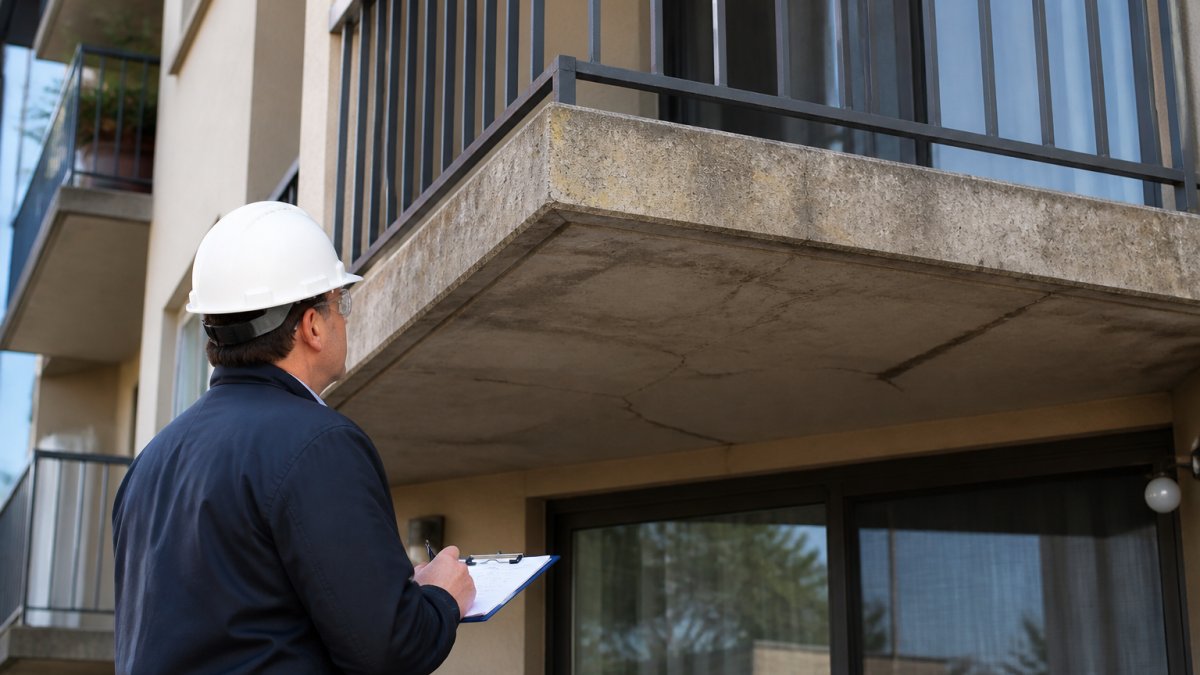
A delayed balcony repair is not a paperwork problem. It is a structural safety problem with a legal deadline attached.
That gap has real consequences. The 2015 Berkeley and 2021 Malibu balcony collapses both turned deferred maintenance into fatalities and pushed lawmakers to tighten inspection rules.
Below, we break down who owns the repair duty, what SB 326 and SB 721 require, and how to build a record that holds up before a mediator, regulator, or judge.
HOA Responsibility for Balcony Repairs: Who Actually Owns the Duty
The HOA usually owns the repair duty for structural elements, but not always. Responsibility depends on what the governing documents say, not on who uses the balcony.
That is the part most owners get wrong. A balcony attached to your unit can still be a common area. Under California law, an exclusive-use common area is reserved for one owner’s use, but the association still owns and maintains it.
Common Areas vs. Exclusive-Use Common Areas
- Common area: the association owns it, maintains it, and funds repairs through reserves or assessments.
- Exclusive-use common area: one owner uses it, but the association typically keeps structural and waterproofing duties.
- Owner-maintained element: some CC&Rs shift limited duties to the owner, usually cosmetic only, rarely structural.
Read three documents before you write a single letter: the declaration, the CC&Rs, and the maintenance responsibility matrix if one exists. If they conflict, the declaration usually controls.
Boards often misread “exclusive use” as “owner pays.” That misreading is the most common cause of a stalled balcony repair, and it can leave the association holding liability for a failure it thought was someone else’s problem.
SB 326 Balcony Inspection Requirements and What They Trigger
SB 326 requires condominium associations to have elevated exterior elements inspected by a licensed structural engineer or architect. It covers balconies, decks, stairways, and walkways, applies to associations rather than individual owners, and sets a compliance window rather than a single fixed date.
SB 721 is the companion law for multifamily rental buildings with three or more units, requiring similar inspections of balconies, decks, and other elevated elements that rely on wood or wood-based materials for structural support.
Inspection and Repair Deadlines Under SB 326 and SB 721
- Inspection: must be completed within the statutory compliance window for your building type.
- Report: the inspector issues a written report flagging unsafe conditions.
- Immediate threat: conditions posing an immediate risk must be addressed right away, not at the next board meeting.
Exact dates and dollar thresholds change, so confirm current requirements with the California Legislature’s SB 326 text and the SB 721 statute before you rely on a deadline. We tell every board the same thing: get the inspection report in writing, then calendar the repair deadline the day you receive it.
Step 1: Build Your Evidence File Before You Send Anything
An evidence file turns a complaint into a case. Build it before your first letter, because a board responds differently to a documented file than to an angry email.
Here is the checklist recommended to owners and boards:
- Copy of the declaration, CC&Rs, and any maintenance responsibility matrix
- The current SB 326 or SB 721 inspection report, if one exists
- Dated photos of cracking, rust, soft wood, sagging, or water staining
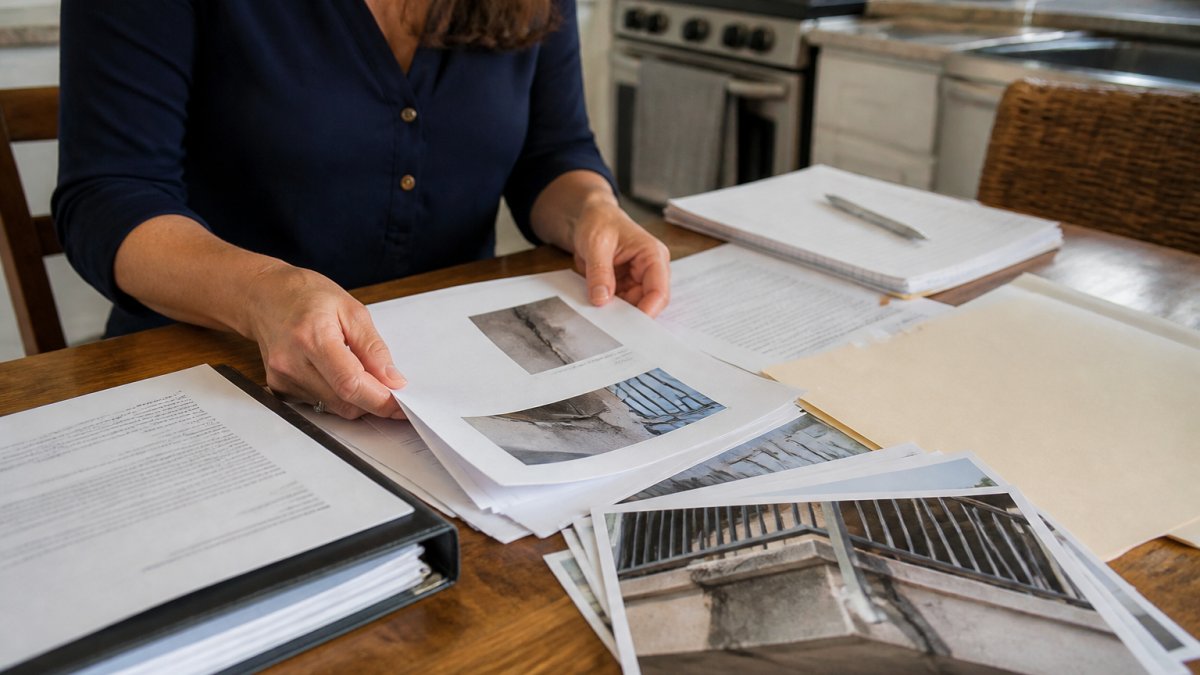
Keep everything in one folder, digital and printed. If the dispute escalates, this file becomes your record of notice, and notice starts the legal clock.
Send your first report by email and by certified mail. A board can claim it never received a verbal complaint. It cannot as easily claim it missed a certified letter with a return receipt.
Step 2: Send a Formal HOA Repair Request Letter Template
A formal request letter creates a paper trail and shifts the burden onto the board. Send it to the board of directors, not the property manager alone, and ask for a written response within a set window.
Use this template:
Subject: Formal Request for Balcony Repair and Inspection Follow-Up
Dear Board of Directors of [Association Name],
I am the owner of Unit [Number] at [Address]. I am writing to formally request that the association address [describe the condition: cracked railing, water intrusion, soft decking, etc.] on the [balcony/deck/stairway] serving my unit.
This condition was first reported on [date]. It appears to involve [structural element / waterproofing / common area component], which the governing documents assign to the association under [cite the relevant CC&R section].
Please confirm in writing within [10/15/30] days: (1) whether the association has inspected the condition, (2) what repairs are planned, and (3) the timeline for completion.
I am requesting this in writing to ensure the association has clear notice of a potential safety issue. Please respond to [email] and [mailing address].
Sincerely,
[Name], Owner, Unit [Number]
Attach your evidence file. Keep a copy. Log the date you sent it.
Step 3: Use the HOA Dispute Resolution Process Before Escalating
Most associations must offer an internal dispute resolution process before an owner files a claim, and using it correctly is the difference between a paper trail that helps you and one that hurts you. A documented attempt at internal resolution strengthens your position and shows a court or regulator you tried to resolve the matter in good faith.
The usual sequence looks like this:
- Written request to the board, which you have already sent.
- Board response or meeting: ask in writing to be placed on the agenda and attend. Under most declarations, owners have a right to attend open board meetings and to speak on items affecting their unit.
- Internal ADR or mediation: many associations must offer this before litigation, and some states require a pre-litigation meet-and-confer or mediation step before an owner can file suit over a governing-document dispute.
- Written outcome: get the result in writing, even if the answer is “no action.”
What the Internal Process Actually Requires
The mechanics vary by state and declaration, but the common pattern is two-stage. First, the owner submits a written request identifying the defect, the governing-document provision at issue, and the remedy sought.
Do not skip the internal step because you think it is futile. Courts and regulators routinely ask whether the owner gave the association a genuine opportunity to cure.
Documents That Trigger the Process
- Written request letter with a specific deadline and a request for a written response.
- Request to be placed on the board agenda, sent to the board secretary, not just the property manager.
- Request for the association’s dispute resolution policy, which many declarations require the board to provide on request.
If the board refuses to schedule the item, send a follow-up asking for a written denial. A written denial is more useful than silence, because it documents the association’s position and starts the clock on any statutory pre-litigation requirement.
Silence from a board is not a dead end. It is a record. Every unanswered letter and skipped meeting strengthens the case that the association had notice and failed to act.
When the Internal Process Is Not Required
Some disputes fall outside the internal process, and some associations are exempt. Emergency conditions posing an immediate safety threat usually do not require waiting for a meeting before demanding interim safety measures. Likewise, a claim that the association violated a statutory inspection or repair mandate may proceed on a different track than a pure governing-document dispute. Confirm your state’s framework with a local attorney before deciding the internal process does not apply.
Step 4: Escalate to Regulators, Mediation, and Legal Remedies
When internal steps fail, escalation options depend on your state and documents. The remedies below are the ones most commonly available to owners, but availability, deadlines, and procedural requirements vary widely, so treat this as a map rather than a menu.
Mediation and Arbitration
Mediation is usually the lowest-cost, fastest path, and many declarations and state statutes require it before litigation. Arbitration may be mandatory if the declaration contains a binding arbitration clause, and courts generally enforce those clauses for governing-document disputes. Before agreeing to either, ask for the association’s dispute resolution policy in writing and confirm who pays.
Regulatory Complaints
A regulatory complaint is appropriate where a statutory inspection or repair duty is being ignored. In states with balcony inspection mandates, the agency overseeing the statute may accept complaints about missed inspections or unrepaired hazards. A complaint creates a public record and can prompt an agency inquiry, but it does not usually order a repair on its own. Pair it with a written demand to the board so the association cannot claim it lacked notice.
Civil Claims
A civil claim for breach of the governing documents, breach of fiduciary duty, or failure to maintain can seek an order requiring the association to repair, plus damages in some cases. The remedy most owners want is an injunction compelling the association to act. Injunctions can be sought on an emergency basis where there is an immediate threat to safety, but courts expect documented notice and a clear record of the defect.
The Risks of Self-Help
Know the risks before you touch anything. Repairing a common area yourself can expose you to liability, violate the governing documents, and complicate cost recovery. Courts generally disfavor owners who act unilaterally on association property, and an owner who arranges unauthorized work may lose the ability to recover the cost. If there is an immediate threat, document it and demand interim safety steps such as blocking access, rather than commissioning the repair yourself.
Do Not Withhold Assessments
Withholding assessments is one of the most common owner responses to a stalled repair, and one of the most damaging. Most declarations and state statutes allow the association to impose late fees, interest, and collection costs, and to record a lien. In many states, an owner who withholds assessments loses the ability to argue the repair dispute in court until the assessments are paid.
Deadlines and Practical Timing
- Emergency conditions: demand interim safety measures immediately and document the demand.
- Statutory inspection or repair deadlines: calendar the date the report was issued and the deadline the statute or report specifies.
- Pre-litigation mediation or meet-and-confer: complete it within the window your state or declaration requires.
State rules differ widely. Some states impose specific inspection mandates; others rely on general negligence and contract law. For a broader read on how associations handle structural duties, the Community Associations Institute’s governance resources are a useful starting point.
If your board needs a defensible inspection report to move a stalled repair forward, California’s Department of Real Estate publishes guidance on association obligations that pairs well with a licensed engineer’s findings.
Frequently Asked Questions
Is an HOA responsible for repairing a condo balcony?
It depends on how the governing documents classify the balcony. Most CC&Rs treat balconies as exclusive-use common areas, which means the association handles structural repairs while the owner handles routine cleaning and surface upkeep. Read your CC&Rs and the maintenance matrix before sending any demand. If the balcony is structural and serves more than one unit, the HOA almost always carries the repair duty, and delaying it exposes the board to liability for injuries or property damage.
What should I do if my HOA ignores a balcony safety concern?
Document the condition with dated photos and any inspection report, then send a written notice to the board by certified mail. If the board does not respond within the deadline stated in your governing documents, request a hearing and file a complaint with your state’s consumer protection or real estate regulator. Forcing HOA balcony repairs often requires a paper trail showing the board knew about the hazard and failed to act.
Can an owner request balcony inspection records under SB 326?
Yes. SB 326 requires associations to complete inspections of exterior elevated elements by January 1, 2025, and repeat them every nine years. Members can request copies of the inspection report and repair plans. If the board refuses, cite your state’s member inspection rights and put the request in writing. Missing records are themselves a compliance problem, so a written request often prompts action faster than a phone call.
How can a homeowner escalate a dispute over balcony repairs?
Follow a staged path: written notice, board hearing, alternative dispute resolution, then a regulatory complaint or civil suit. Most governing documents require mediation before litigation, and courts expect a good-faith attempt. Keep every letter, email, and meeting minute. If the balcony poses an immediate threat, document the hazard and notify the board in writing the same day, because urgency changes both the timeline and the legal exposure.
A stalled balcony repair is a liability that grows every month it sits. If your board is stuck, the fastest way to break the logjam is a clear inspection report and a documented repair plan. Apex Balcony provides licensed inspectors with decades of construction and design experience, specialized SB 326 and SB 721 compliance expertise, and comprehensive inspections of balconies, decks, and stairways. Book an inspection with Apex Balcony and give your board the evidence it needs to act.