
Logo
  • Balcony Law
  • About us
  • Inspection services
  • FAQ
  • Blog
  • Call us ‪+1 818-806-7885
  • Book now

Tag: sb 326 inspection cost

SB 326 Inspection Cost: What California HOAs Pay in 2026

Posted on September 12, 2026 by Apex Balcony admin
SB 326 Inspection Cost: What California HOAs Pay in 2026

Table of Contents

  • What Drives SB 326 Inspection Cost
    • Per-Unit vs. Per-Balcony Pricing Models
  • SB 326 Inspection Requirements: What the Law Mandates
    • Visual vs. Comprehensive Inspection Scope
  • SB 326 Inspection Timeline: Deadlines and Compliance
  • Hiring a Licensed Balcony Inspector: Qualifications That Matter
  • Sampling Protocol and What Inspectors Actually Examine
  • Cost-Saving Strategies for Small HOAs and Tight Budgets
  • Post-Inspection: Budgeting for Repairs and Maintenance
  • Frequently Asked Questions

Last Updated: September 12, 2026

What Drives SB 326 Inspection Cost

There is no single figure for how much an SB 326 inspection costs. Pricing depends on unit count, elevated exterior elements per unit, building age, and how much of the structure is reachable without invasive testing. At Apex Balcony, we’ve walked hundreds of properties, so any quote should be tied to a specific scope of work, not a flat per-building number.

SB 326 inspection cost is driven by two variables: the inspector’s pricing model and your property’s physical characteristics. Most firms charge by unit count, balcony count, or a hybrid.

Several property-specific factors push a quote up or down:

  • Number of elevated exterior elements per unit, including balconies, decks, stairways, and walkways
  • Building age and visible wear, since older structures with dry rot or corrosion take longer to document
  • Accessibility, because balconies blocked by furniture, planters, or locked gates slow the inspection
  • Report complexity, since a condominium association may need documentation formatted for board records and legal review

A 12-unit building with stacked balconies is not the same job as a 60-unit complex with varied elements. Ask any inspector which factors changed your number.

Per-Unit vs. Per-Balcony Pricing Models

Per-unit pricing charges a flat fee per residence regardless of balcony count; per-balcony pricing charges for each elevated exterior element inspected.

Per-unit pricing suits buildings with identical layouts: simpler to budget and explain to members, but a unit with four balconies pays the same as a unit with one.

Per-balcony pricing is more precise and reflects actual work, which matters on irregular or mixed-use properties. Ask which model each inspector uses before comparing totals, since per-unit and per-balcony quotes are not directly comparable.

Pro Tip
When you request bids, ask every inspector to submit a scope of work alongside the price. A quote that lists unit count, element count, and inspection method lets you compare apples to apples. A single number with no scope is not a bid, it’s a guess.

SB 326 Inspection Requirements: What the Law Mandates

SB 326 requires a qualified inspector to examine elevated exterior elements of covered buildings and certify their safety. It applies to condominium associations and common interest developments with three or more units, and sets who may inspect, what must be examined, and how results are documented.

The California Legislature’s text of SB 326 sets out the statutory requirements, and the California Department of Consumer Affairs maintains licensing information for the professionals who perform this work. Boards should read the statute directly rather than relying on summaries.

The core requirements include:

  • Inspection of balconies, decks, stairways, and other elevated exterior elements
  • A report documenting the condition of each element and any safety hazards found
  • Certification by a licensed architect, structural engineer, or other qualified inspector
  • Retention of inspection records for the association’s files

Boards frequently confuse SB 326 with SB 721. SB 721 covers certain multifamily rental properties; SB 326 covers condominium associations and common interest developments. Some buildings fall under one, some the other, some both. Confirm which applies before commissioning anything.

Visual vs. Comprehensive Inspection Scope

A visual inspection examines accessible elevated exterior elements without removing finishes or opening walls. A comprehensive inspection may include invasive testing, such as probing structural members or opening sections for hidden deterioration.

Visual inspection is faster and less disruptive, identifying visible hazards like loose railings, cracked concrete, corrosion, and water damage, but it cannot confirm the condition of elements hidden behind stucco, siding, or waterproofing membranes.

Comprehensive inspection costs more because it takes longer and requires patching afterward. It’s warranted when a visual inspection finds problems, when hidden deterioration is likely, or when the association needs certainty about load-bearing components.

Watch Out
An inspector who only performs visual inspections may miss dry rot or corrosion hidden behind waterproofing. If your building is over 30 years old and has never had an invasive inspection, a visual-only report may give the board false confidence. Ask directly what the scope covers before signing.

SB 326 Inspection Timeline: Deadlines and Compliance

Compliance deadlines for SB 326 have already passed for most covered buildings, and inspections must now recur on a set cycle. Associations that missed the initial deadline are not exempt, they are late. The California Legislative Information portal publishes the statutory timeline, and boards should confirm their specific obligations there.

The statute set an initial inspection deadline of January 1, 2025 for buildings whose elevated exterior elements were constructed before January 1, 2019; newer elements fall on a different track. After the first inspection, re-inspection recurs on a cycle tied to construction and the inspector’s findings. A one-time inspection does not close the file.

The practical timeline breaks down into five phases, and the scheduling phase is where most associations lose time:

PhaseWhat HappensWho’s ResponsibleTypical Duration
BudgetingBoard reserves funds for inspection and anticipated repairsHOA board1-3 board meetings
SchedulingBoard requests bids and selects an inspectorHOA board2-8 weeks
InspectionInspector examines all elevated exterior elementsQualified inspector1 day to several weeks, depending on unit count
ReportingWritten report delivered with findings and photosQualified inspector1-4 weeks after field work
ActionBoard reviews findings and budgets for repairsHOA board1-2 board meetings

Most associations find scheduling takes longest, especially when boards delay out of fear over repair costs. That fear is understandable, but delays compound: a problem found early is almost always cheaper to fix than one found after a structural failure.

The consequences of missing a deadline go beyond legal. A board that skips or delays inspection can face:

  • Statutory penalties and enforcement. The statute authorizes local enforcement and civil penalties for non-compliance, and the amount can escalate with continued delay.
  • Personal liability exposure for board members. Directors who knowingly defer a required safety inspection can face claims that they breached their fiduciary duty to the association.
  • Insurance complications. Carriers increasingly ask for proof of inspection. A lapse can affect coverage or trigger a reservation of rights after a loss.
  • Disclosure problems at sale. A missing or expired inspection report can delay or derail unit sales, since buyers and lenders now ask for it.
  • Accelerated repair costs. Deferred maintenance on elevated exterior elements tends to compound, so the repair bill after a delay is usually larger than the inspection bill would have been.
Watch Out
A missed deadline does not reset the clock. The association still owes the inspection, and the longer it waits, the more likely the report will document advanced deterioration that costs far more to repair. Treat the deadline as a floor, not a target.
Best For
Boards that are already past the initial deadline and need a realistic catch-up plan rather than a compliance lecture.

Hiring a Licensed Balcony Inspector: Qualifications That Matter

Hiring a licensed balcony inspector means verifying credentials before you sign a contract. SB 326 specifies who may perform the inspection, and a general contractor or handyman is not automatically qualified. The California Board for Professional Engineers, Land Surveyors, and Geologists maintains license lookups you can check in minutes.
Book inspection →

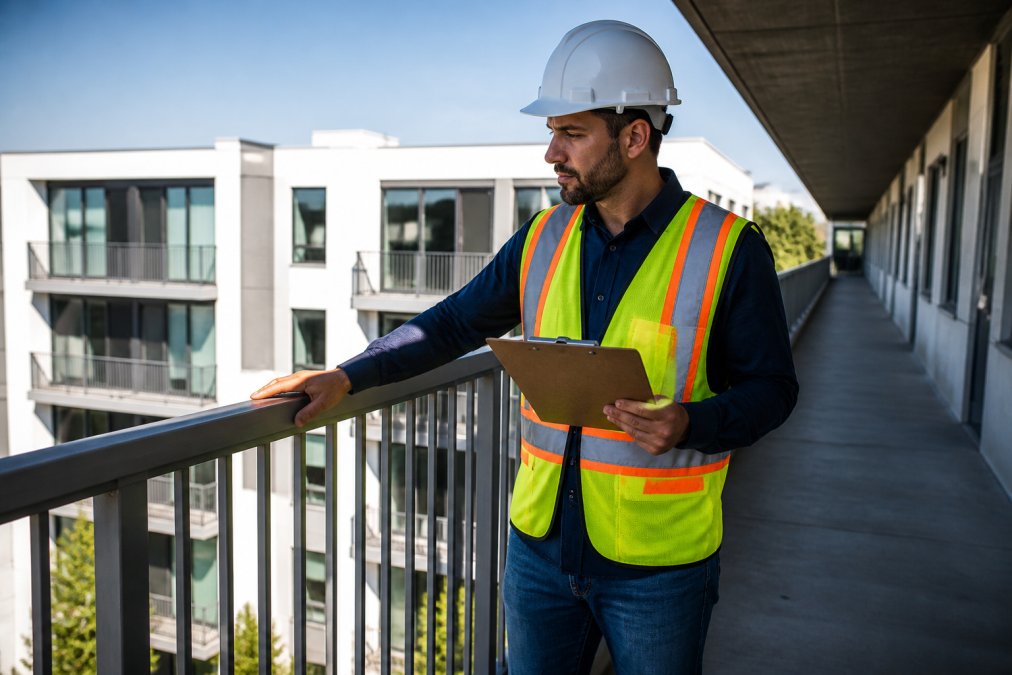
A licensed inspector in a hard hat and safety vest examining a residential balcony railing with a clipboard, standing on an elevated walkway of a multi-story apartment building on a clear day

The statute names no single license type, pointing instead to a “licensed architect, licensed structural engineer, or other licensed professional” who can certify elevated exterior elements. Boards see three common categories, each with a different scope of authority:

  • Licensed architect. Can certify the overall condition of exterior elevated elements and produce a report suitable for board records and legal review. Best fit for buildings with mixed construction types or complex envelopes.
  • Licensed structural engineer. Can certify load-bearing components and evaluate whether a deficiency affects structural capacity. Best fit when a prior report flagged structural concerns or the building is over 30 years old.
  • Certified inspector or specialty firm. May perform the field work, but the certification on the report must still be signed by a licensed architect or structural engineer. Ask who signs.

A common mistake is assuming the person who walks the property certifies the report. On many jobs those are two different people, and the certification signature is what satisfies the statute. Confirm the certifying professional’s name and license number before signing.

Ask every candidate for these four things:

  • License verification. Pull the license number from the state lookup and confirm it is active, not expired or suspended. Match the license type to the scope of work you need.
  • Insurance documentation. Ask for a certificate of insurance showing both general liability and errors and omissions (E&O) coverage. E&O is the policy that responds if the inspection misses a defect. General liability alone does not cover professional errors.
  • Sample report. Request a redacted example. A report that lists findings without photographs, element-by-element condition notes, or repair priorities will not hold up if the association is audited or sued.
  • Scope of work in writing. The bid should state the number of units, the number of elevated exterior elements, the inspection method (visual or comprehensive), and whether any invasive testing is included. A single number with no scope is not a bid.
Pro Tip
When you request bids, ask every inspector to submit a scope of work alongside the price. A quote that lists unit count, element count, and inspection method lets you compare apples to apples. A single number with no scope is not a bid, it’s a guess.

A common mistake is choosing the lowest bid without checking what the inspector can certify; the cheapest report is worthless if it doesn’t meet statutory requirements. Another is accepting a scope that quietly excludes stairways or walkways, which are elevated exterior elements under the statute. Read the scope line by line and confirm every element type is listed.

Key Takeaway
The four qualifications that actually matter are license type, insurance coverage (including E&O), report quality, and a written scope of work. Price is fifth. A board that saves money on an unqualified inspector often pays far more later in re-inspections and legal exposure.

Sampling Protocol and What Inspectors Actually Examine

Sampling protocol determines how many units an inspector must examine for a statistically valid certification. Under the statute, inspectors generally must examine a sufficient sample to achieve a 95 percent confidence level with a 5 percent margin of error, unless conditions warrant examining every unit.

In practice, an inspector rarely examines every balcony in a large complex. They select a representative sample, inspect those elements thoroughly, and extrapolate findings to the whole building. If the sample reveals widespread problems, the scope may expand.

What inspectors actually examine includes:

  • Balcony and deck surfaces, checking for cracking, delamination, and water intrusion
  • Railings and guardrails, testing for stability, height compliance, and corrosion at attachment points
  • Load-bearing components, looking for dry rot, corrosion, and deterioration in structural members
  • Waterproofing and flashing, since failed waterproofing is a leading cause of hidden structural damage
  • Stairways and walkways, which are elevated exterior elements under the statute

The building envelope matters: water entering through failed waterproofing reaches structural elements and starts deterioration long before anything is visible. That’s why sampling and thorough documentation go together.

Cost-Saving Strategies for Small HOAs and Tight Budgets

Small associations face the same compliance obligation as large complexes but with a smaller reserve fund. A 12-unit building in San Diego has fewer units to spread the cost across, and boards often worry the inspection fee alone will strain reserves.

Several strategies reduce total cost without cutting corners:

  • Bundle inspections. If your property needs both SB 326 and SB 721 work, commission them together. One mobilization costs less than two.
  • Prepare the property first. Clear balconies of furniture, planters, and stored items before the inspector arrives. Access delays cost money.
  • Coordinate with neighboring associations. Some inspection firms offer reduced rates when multiple nearby properties book in the same window, since travel and setup are shared.
  • Fix minor issues before inspection. Replacing a loose railing bolt or clearing a blocked drain is cheaper than having it documented as a deficiency requiring follow-up.
  • Request a phased scope. If your budget is tight, ask whether the inspection can be scheduled in phases rather than all at once.
Best For
Small associations under 20 units that need to spread compliance costs across multiple budget cycles without falling behind on statutory deadlines.

Post-Inspection: Budgeting for Repairs and Maintenance

The inspection report begins the financial conversation. Once findings are documented, the board needs a repair plan with realistic cost estimates and a maintenance schedule that prevents recurrence.

Start by sorting findings into three tiers:

PriorityFinding TypeTypical Response
ImmediateSafety hazards, unstable railingsRepair or restrict access now
Near-termActive water intrusion, early dry rotBudget for repair within the year
MonitorMinor surface wear, no structural impactAdd to preventative maintenance plan

A maintenance plan is what keeps a one-time inspection from becoming a recurring emergency. Schedule annual visual checks of waterproofing and drainage, and budget for re-inspection on the statutory cycle. The Federal Emergency Management Agency’s building science resources offer useful guidance on water intrusion and building envelope maintenance that applies to residential structures.

The Berkeley balcony collapse in 2015 and the Malibu balcony collapse in 2021 both followed years of undetected water damage to structural elements. Neither association set out to neglect its buildings. Both lacked a maintenance plan that would have caught the deterioration early.


The hardest part of SB 326 compliance isn’t the inspection itself, it’s the uncertainty about what the report will reveal and what repairs will cost. Apex Balcony helps boards move through that uncertainty with licensed inspectors who have decades of combined construction and design experience, specialized expertise in SB 326 and SB 721 compliance, and a reporting process that gives your board a clear path to necessary repairs. We handle properties of every size, including small associations larger firms overlook. Book an inspection with Apex Balcony and get a compliance report your board can actually act on.

Frequently Asked Questions

What factors influence the cost of an SB 326 inspection?

SB 326 inspection cost depends on several variables: the number of units and balconies, building age, accessibility of elevated elements, whether the inspection is visual or comprehensive, and the qualifications of the inspector. Buildings with complex layouts, limited access points, or visible deterioration typically require more time and may need invasive testing. Pricing also varies by region and inspector availability. Apex Balcony recommends requesting a detailed scope of work before comparing quotes so you understand exactly what is included.

Are there penalties for failing to complete an SB 326 inspection?

Yes. Under California Civil Code, condominium associations that miss the SB 326 inspection timeline face potential legal liability if a balcony failure causes injury or death. While the statute itself does not impose automatic fines, failure to comply can result in lawsuits, increased insurance premiums, and personal liability for HOA board members. The 2015 Berkeley balcony collapse and 2021 Malibu incident underscore the real-world consequences. Compliance protects both residents and the association’s financial standing.

Does the cost of an SB 326 inspection include repairs?

No. Inspection fees cover only the assessment and report. Repairs are separate and can range significantly depending on what inspectors find. Common issues include dry rot, corrosion of load-bearing components, waterproofing failures, and structural degradation. Apex Balcony provides detailed repair estimates in the inspection report so HOA boards can plan budgets and prioritize work. Some associations phase repairs over multiple years to manage reserve fund impact.

Who is qualified to perform an SB 326 inspection?

SB 326 inspection requirements specify that inspectors must be licensed architects, structural engineers, or civil engineers with relevant experience. Hiring a licensed balcony inspector with documented SB 326 experience is critical because the report must hold up under legal scrutiny. Apex Balcony’s team includes licensed professionals with decades of construction and design experience specific to California balcony compliance.
Book inspection

Posted in BlogTagged hiring a licensed balcony inspector, how much does an sb 326 inspection typically cost?, sb 326 inspection cost, sb 326 inspection requirements, sb 326 inspection timeline

SB 326 Compliance Guide 2026: What HOAs Must Do Now

Posted on September 8, 2026 by Apex Balcony admin
SB 326 Compliance Guide 2026: What HOAs Must Do Now

Table of Contents

  • SB 326 Compliance: The 2026 Reality Check for California HOAs
  • SB 326 vs SB 721 Differences: Which Law Applies to Your Building?
  • What SB 326 Inspector Qualifications Actually Mean for Your Report
    • Why the License Classification Matters
    • The ‘Contractor’ Loophole and Its Limits
    • The Board’s Due Diligence: Beyond a License Search
    • The Legal Weight of the Report
  • Understanding SB 326 Inspection Cost and Budgeting for Repairs
    • The Real Cost Drivers
    • The Budgeting Trap: Inspection Fee vs. Total Cost of Compliance
    • The Cost of Non-Compliance vs. The Cost of Inspection
    • A Note on Inspector Bids
  • Your Balcony Inspection Checklist for HOAs: From Visual Review to Report
  • After the Report: Remediation Workflows and Reserve Study Integration
  • Board Fiduciary Duty: Insurance Premiums and Non-Compliance Penalties
  • Conclusion: Your Next Steps for SB 326 Compliance
  • Frequently Asked Questions

Last Updated: September 8, 2026

SB 326 Compliance: The 2026 Reality Check for California HOAs

The missed January 1, 2025 inspection deadline has passed, and many associations now face a more urgent question: what happens next? SB 326 compliance is the statutory requirement under California Civil Code 5551 mandating that common interest developments inspect and report on the condition of exterior elevated elements every nine years. This guide from Apex Balcony walks board members through the current enforcement landscape, remediation expectations, and how to budget for what comes after the report lands.

The law exists because of tragedies. The 2015 Berkeley balcony collapse that killed six people and the 2021 Malibu collapse remain the driving forces behind California’s elevated element safety framework.

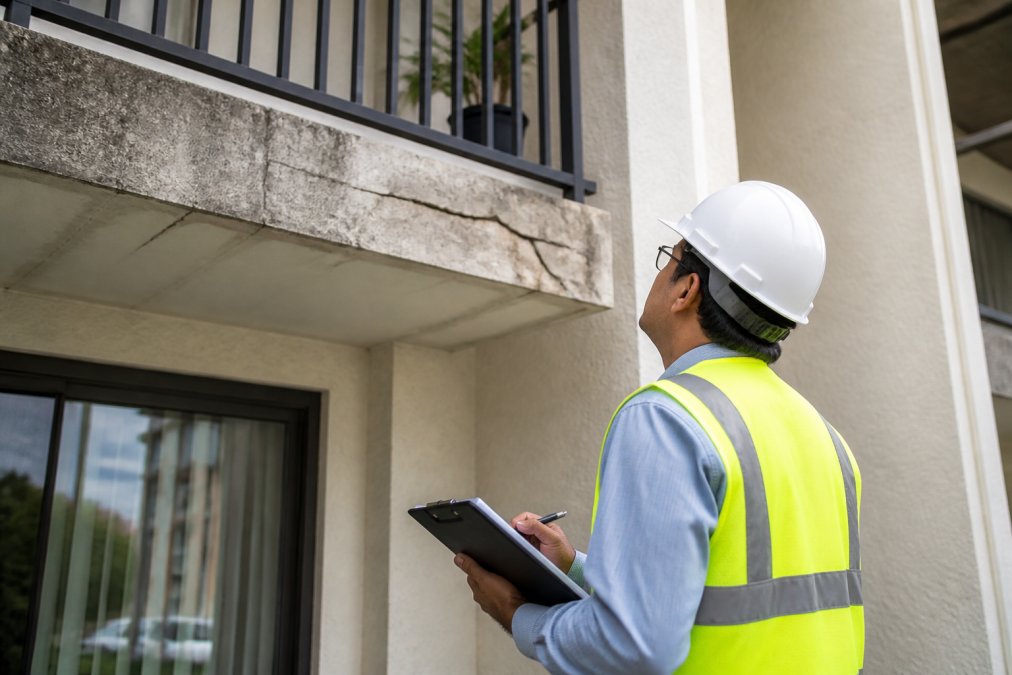
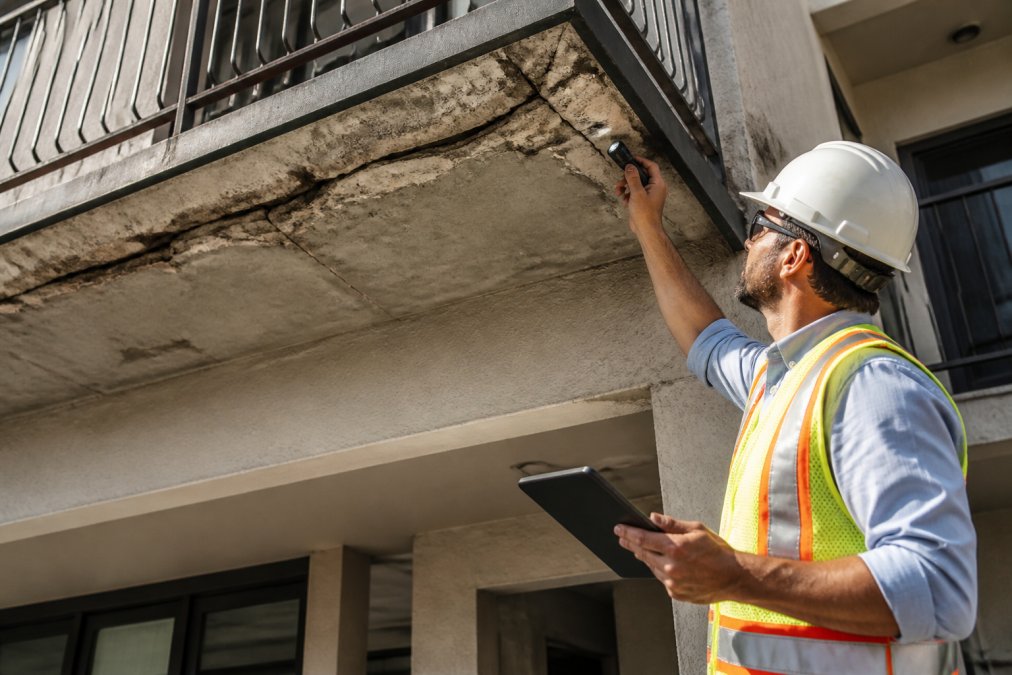
A licensed inspector in a hard hat and safety vest examining the underside of a multi-story apartment building's exterior balcony with a flashlight while documenting findings on a tablet in bright daylight
A licensed inspector in a hard hat and safety vest examining the underside of a multi-story apartment building’s exterior balcony with a flashlight while documenting findings on a tablet in bright daylight

SB 326 vs SB 721 Differences: Which Law Applies to Your Building?

SB 326 and SB 721 are companion laws with different scopes. SB 326 applies to common interest developments governed by the Davis-Stirling Act, which includes most HOAs and condominium associations. SB 721 covers multifamily residential buildings with three or more units, typically rental properties.

The distinction matters because it determines your compliance path. A condominium association falls under SB 326 and must file reports with the association’s board. A rental apartment complex with five units falls under SB 721, which requires reports to be maintained and made available to tenants upon request.

Some properties may even fall under both statutes if they contain a mix of ownership structures. The table below summarizes the key differences:

FactorSB 326SB 721
Governing codeCivil Code 5551Health and Safety Code 17973
Building typeCommon interest developmentsMultifamily rental buildings, 3+ units
Report recipientHOA board of directorsBuilding owner
Reinspection cycleEvery 9 yearsEvery 6 years

What SB 326 Inspector Qualifications Actually Mean for Your Report

The legal definition of a ‘qualified person’ under Civil Code 5551 is narrow and specific, and a report from anyone else provides your association with zero legal protection. The statute requires the inspection to be conducted by a licensed architect, a licensed civil or structural engineer, or a contractor holding a valid license classification A (General Engineering) or B (General Building). This is not a suggestion; it is a statutory requirement.

Why the License Classification Matters

The law deliberately excludes other contractor license classifications. A contractor licensed for ‘C-33 Painting and Decorating’ or ‘C-15 Flooring and Floor Covering’ is not qualified, even if they have experience with waterproofing. The inspection requires an understanding of structural load paths, material degradation, and the building code, knowledge that is core to the A and B license classifications.

The ‘Contractor’ Loophole and Its Limits

A common point of confusion is the inclusion of the ‘General Building Contractor’ (Class B) in the definition. A Class B contractor is qualified to perform the inspection, but they are not a structural engineer. Their report will be based on visual observation and construction expertise. This is acceptable under the law, but boards should understand the difference in depth of analysis, an architect or engineer will typically provide a more detailed analysis of structural conditions.

The Board’s Due Diligence: Beyond a License Search

Verifying a license number is the first step, not the last. The board’s due diligence process should include:

  1. License Verification: Confirm the license is active and in good standing through the California Department of Consumer Affairs license search. Check for any disciplinary actions or pending complaints.
  2. Insurance Verification: Request a certificate of insurance showing both general liability and errors and omissions (E&O) coverage. E&O insurance is critical; it protects the association if the inspector misses a defect that later causes injury or damage.
  3. Experience with SB 326: Ask for examples of prior SB 326 reports they have completed, specifically for buildings with similar construction types (e.g., wood-frame, stucco, tile decks).
  4. Methodology Review: Ask the inspector to explain their process. Will they use moisture meters? Will they perform a hands-on examination of railings and guards? A purely visual inspection from the ground is insufficient.
Pro Tip
A report from an unqualified inspector is worse than no report at all. It creates a false sense of security, provides no defense in a liability claim, and may be deemed a breach of the board’s duty to exercise reasonable care in hiring. The board’s minutes should document that the inspector’s license and insurance were verified before the contract was signed.

The Legal Weight of the Report

The report’s legal weight is directly tied to the inspector’s qualifications. In a lawsuit, the plaintiff’s attorney will scrutinize the inspector’s credentials. If the inspector was not a ‘qualified person’ as defined by the statute, the board’s defense that they ‘had an inspection done’ will fail, and the board will be exposed to the same liability as if no inspection had occurred.

The most defensible reports are those that clearly state the inspector’s license number and classification, describe the methodology used, and provide a clear, itemized list of findings with a distinction between immediate safety hazards and deferred maintenance items. This documentation is the board’s primary evidence of fulfilling its statutory duty.

Understanding SB 326 Inspection Cost and Budgeting for Repairs

SB 326 inspection cost is not a single line item; it is a function of your building’s specific inventory of exterior elevated elements (EEEs), their accessibility, and the complexity of the systems involved. While no universal price exists, boards can build a realistic budget by understanding the cost drivers and, more importantly, by integrating the findings into their reserve study to avoid a future special assessment.

The Real Cost Drivers

A small association with a dozen simple, ground-accessible balconies will face a fundamentally different inspection cost than a high-rise complex with hundreds of walkways requiring aerial lifts or scaffolding. The primary cost drivers are:

  • Number of EEEs: Each balcony, deck, stairway, and walkway is a separate inspection point. The more elements, the more inspector time.
  • Accessibility: Elements that require lift equipment, swing stages, or confined-space protocols add significant labor and equipment costs.
  • Building Complexity: Multi-story buildings with complex waterproofing transitions, built-up roof systems, or concealed flashing details require more thorough visual examination.
  • Inspector’s Scope: A basic visual inspection per Civil Code 5551 is the baseline. If the inspector recommends additional probing or testing (which requires board authorization), that adds cost.

The Budgeting Trap: Inspection Fee vs. Total Cost of Compliance

The most common financial mistake boards make is treating the inspection fee as the total compliance cost. The inspection is the diagnostic; the repair is the treatment. When a report identifies dry rot in load-bearing members, corroded flashing, or failed waterproofing membranes, the remediation cost can dwarf the inspection fee by an order of magnitude.

A concrete budgeting workflow for the full cycle:

  1. Immediate Allocation: Upon receiving the report, the board should immediately set aside funds for any items the inspector flags as an immediate safety hazard. These repairs cannot be deferred.
  2. Reserve Study Integration: For non-immediate, deferred maintenance items, the board must forward the report to their reserve study preparer. The preparer will incorporate the estimated repair costs and remaining useful life of the EEEs into the 30-year reserve funding plan. This is the mechanism that prevents a ‘surprise special assessment’ at year eight of the cycle.
  3. Annual Review: The board should review the reserve study’s funding status annually to ensure the association is on track to cover the projected repair costs before the next 9-year inspection cycle.
Watch Out
A report that identifies a ‘future’ repair need is not a ‘no action’ item. Failing to fund that future repair through the reserve study is a breach of the board’s fiduciary duty to plan for the association’s long-term maintenance. The Civil Code requires the reserve study to be reviewed annually, and the SB 326 findings are critical data for that review.

The Cost of Non-Compliance vs. The Cost of Inspection

When budgeting, boards should weigh the inspection fee against the financial exposure of non-compliance. A single personal injury lawsuit from a balcony failure can result in judgments or settlements that far exceed the cost of a thorough inspection and proactive repair. Furthermore, a lapse in compliance can lead to increased premiums or non-renewal of the association’s master policy.

A practical approach is to treat the inspection fee as an insurance premium against catastrophic liability. The California Association of Community Managers guidance on reserve planning recommends that boards view the inspection not as an expense, but as a capital planning tool that provides the data necessary for accurate reserve funding.

A Note on Inspector Bids

When soliciting bids, be wary of quotes that seem significantly lower than others. A low bid may indicate a less thorough visual examination, a lack of understanding of the specific building systems, or an attempt to win the inspection contract to secure the more lucrative repair work. Select a qualified inspector based on their expertise and the clarity of their proposed methodology, not just the lowest fee.

Your Balcony Inspection Checklist for HOAs: From Visual Review to Report

A proper SB 326 compliance process follows a structured sequence that boards should understand before the inspector arrives. The visual inspection focuses on identifying conditions that indicate potential failure, not on destructive testing.

The core checklist includes:

Book inspection →

  1. Verify the inspector’s license classification and insurance before scheduling
  2. Confirm the building qualifies under SB 326 or SB 721
  3. Review the association’s previous inspection report and maintenance records
  4. Ensure the inspector has access to all elevated elements, including balconies, decks, stairways, and walkways
  5. Document the condition of waterproofing membranes, flashing, and sealants
  6. Examine load-bearing components for dry rot, corrosion, or cracking
  7. Assess balcony railings and guards for loose connections or deteriorated anchors
  8. Require a written report that distinguishes between immediate hazards and deferred maintenance items

The report must describe the condition of each element and state whether the inspector found any conditions requiring repair. Boards must then decide which items constitute a safety hazard requiring immediate action versus items suitable for the regular maintenance plan.

The California Department of Housing and Community Development’s SB 721 fact sheet provides additional clarification on what constitutes an exterior elevated element for inspection purposes.

After the Report: Remediation Workflows and Reserve Study Integration

The inspection report is the starting point, not the finish line. Once the report identifies substandard conditions, the board must establish a remediation workflow that addresses safety hazards promptly while planning longer-term repairs.

For immediate hazards, the workflow should begin with restricting access to the affected element. A balcony with compromised load-bearing components cannot remain in service while the board debates funding options. The next step is obtaining competitive bids from licensed contractors specializing in waterproofing, structural repair, or deck replacement.

For conditions that are not immediate hazards, the board should integrate expected repair costs into the reserve study. This integration ensures that the association sets aside adequate funding over the nine-year inspection cycle rather than facing a special assessment when the next inspection arrives.

The most effective boards treat the inspection cycle as a continuous maintenance loop. Annual visual checks by property management catch minor issues before they escalate, and the full SB 326 inspection every nine years provides the comprehensive structural review.

Board Fiduciary Duty: Insurance Premiums and Non-Compliance Penalties

Board members who ignore SB 326 compliance breach their fiduciary duty to the association. The duty of care requires directors to act in the best interest of the community, and failing to address known structural hazards is a direct violation of that obligation.

Non-compliance penalties extend beyond regulatory fines. If an association fails to complete the inspection and a resident is injured due to an unaddressed defect, board members can face personal liability. Directors and officers insurance may cover some claims, but carriers increasingly exclude coverage for knowing violations of safety statutes.

Insurance premiums represent another hidden cost of non-compliance. When an association has no inspection report on file, underwriters treat the property as higher risk. Premiums rise accordingly, and some carriers may decline to write coverage altogether. A current report demonstrating proactive maintenance is a negotiating tool that can keep premiums manageable.

Conclusion: Your Next Steps for SB 326 Compliance

The path forward requires action, not delay. Schedule your inspection if you have not already, verify your inspector’s qualifications, and prepare your board for the remediation costs that the report will likely reveal.

Apex Balcony provides licensed balcony inspectors with decades of combined construction and design experience. Our team conducts comprehensive inspections of all elevated exterior elements and delivers clear reports that guide your board toward necessary repairs while helping you maintain safe conditions for residents. We have worked with hundreds of building owners across California to achieve compliance with both SB 326 and SB 721.

Get started with Apex Balcony and book your inspection today to protect your residents, your reserve fund, and your board from liability.

Frequently Asked Questions

What happens if an HOA fails to meet the SB 326 deadline?

Failure to meet the SB 326 statutory deadline exposes the association to significant liability. Civil Code 5551 allows local enforcement agencies to pursue penalties, and the association loses a key legal defense if an accident occurs. Non-compliance can also void insurance coverage or lead to increased premiums. Board members risk personal liability for breaching their fiduciary duty. The most serious consequence is the safety hazard to residents. If your building missed the deadline, schedule an inspection immediately to document your good-faith effort and begin the compliance process.

Who is qualified to perform an SB 326 inspection?

SB 326 inspector qualifications require the inspection to be conducted by a licensed architect, a licensed structural engineer, or a general contractor holding a Class B license. The inspector must be independent, meaning they cannot have a financial interest in the repair work they might recommend. This separation ensures the report is objective. Before hiring, verify the license is active and ask for examples of prior SB 326 reports. A qualified inspector understands the specific failure modes of elevated exterior elements, including dry rot, corrosion, and waterproofing failures.

How much does an SB 326 inspection typically cost?

SB 326 inspection cost varies based on the number of buildings, the total count of exterior elevated elements, and the complexity of the architecture. A small 12-unit building will cost less per unit than a sprawling complex with varied balcony designs. The inspection fee is a minor fraction of potential repair costs, which often run into the tens of thousands. When evaluating quotes, confirm what the inspector checks, including waterproofing membranes and load-bearing connections. Contact Apex Balcony through our website for a detailed quote tailored to your property’s specific layout and size.

What is the difference between SB 326 and SB 721?

SB 326 vs SB 721 differences come down to which buildings they cover. SB 326 applies to common interest developments, including condominium associations, and is enforced through Civil Code 5551. SB 721 applies to residential buildings with three or more units, such as apartment complexes, and is enforced through Health and Safety Code 17973. Both laws require visual inspections of exterior elevated elements by qualified inspectors on a nine-year cycle. If your property is an HOA, you must follow SB 326. If you own an apartment building, SB 721 governs your requirements.

What does an SB 326 balcony inspection checklist for HOAs cover?

An SB 326 balcony inspection checklist for HOAs covers all exterior elevated elements, including balconies, decks, porches, stairways, walkways, and railings. The inspector conducts a visual assessment of the waterproofing system, the structural framing, and the load-bearing components. They look for signs of dry rot, corrosion, and water damage that could compromise structural integrity. The inspection is visual and non-destructive, meaning the inspector does not tear into the building. The final report documents the condition of each element and identifies any substandard conditions that need further evaluation or repair.

What are the mandatory reporting requirements for SB 326?

SB 326 mandatory reporting requirements state that the qualified inspector must provide a written report to the HOA board. The board must then review the report at a board meeting. The report must be retained as part of the association’s official records. If the inspection identifies immediate safety hazards, the board must take action to repair or restrict access to the affected areas. The law does not require submitting the report to a state agency, but the association must maintain the documentation to prove compliance. This report becomes critical evidence of due diligence if an accident or legal dispute occurs later.

How often must HOAs conduct SB 326 inspections?

HOAs must conduct SB 326 inspections at least once every nine years. The first inspection cycle began on January 1, 2019, meaning many buildings faced their initial deadline in 2025. After the first inspection, the next one is due no later than nine years from the date of the prior inspection. The association must track this date carefully. The nine-year cycle is a minimum requirement, not a recommendation. If your building has significant deferred maintenance or known water intrusion issues, scheduling inspections more frequently is a prudent risk-management practice that protects residents and preserves property value.

Book inspection

Posted in BlogTagged balcony inspection checklist for hoas, sb 326 compliance, sb 326 inspection compliance guide 2026, sb 326 inspection cost, sb 326 inspector qualifications, sb 326 vs sb 721 differences

Recent Posts

  • 10 Best Practices for Managing Building Safety Audits
  • What to Do If Your HOA Board Ignores Balcony Safety
  • Balcony Structural Integrity vs Surface Wear: 2026 Guide
  • How to Streamline Maintenance Scheduling for Apartments
  • Balcony1 vs EmpireWorks Inspection Services: 2026 Guide

Recent Comments

No comments to show.

Archives

  • September 2026
  • August 2026
  • July 2026
  • June 2026

Categories

  • Blog
Logo
Created by Unilime.Group
  • Balcony Law
  • About us
  • Inspection services
  • FAQ
  • Blog

Call us ‪+1 818-806-7885‬
License: CSLB #1101305

Apex Balcony Inspection
‪+1 818-806-7885‬
[email protected]
4645 Van Nuys Blvd #201
Sherman Oaks CA 91403

Created by Unilime.Group