Logo
  • Balcony Law
  • About us
  • Inspection services
  • FAQ
  • Blog
  • Call us ‪+1 818-806-7885
  • Book now

Tag: sb 326 inspection report requirements

7 Steps to Document Balcony Inspections for SB 326 Compliance

Posted on October 27, 2026 by Apex Balcony admin
7 Steps to Document Balcony Inspections for SB 326 Compliance

Last Updated: October 26, 2026

Quick Summary

Document balcony inspections SB 326 by creating inspection reports that record the inspection date, findings, and recommendations, organizing photos with location and date labels, and maintaining clear records of deficiencies and repairs for compliance and future reference.

  • SB 326 applies to rental properties and multi-unit buildings, while SB 721 applies to condominiums.
  • Inspection reports should include inspection date, findings, recommendations, location-ID scheme, and photo-labeling convention.
  • Photos should be labeled with location and inspection date to improve traceability and organization.
  • Owners may retain inspection reports, photographs, and repair records for future access and board transitions.
  • Specify report structure and photo-labeling conventions in the inspector agreement scope of work.

Table of Contents

  • Why Proper Documentation of Balcony Inspections Matters for SB 326
  • Understanding SB 326 and SB 721 Inspection Requirements
  • SB 326 Balcony Inspection Checklist: What to Document During Your Inspection
  • Creating Complete SB 326 Inspection Report Requirements
    • Minimum contents of a compliant report
    • A reusable report template structure
    • Acceptance criteria before you accept the report
  • Photo and Evidence Standards for SB 326 Compliance Documentation
  • SB 326 Inspection Repair Documentation: Tracking Deficiencies to Resolution
  • SB 326 Inspection Records Retention and Access Procedures
    • What to retain
    • Retention periods and the distinction between required and recommended
    • Storage, version control, and security
    • Access log and request procedure
    • Handoff across boards and managers
  • Scheduling Your First Compliant Inspection
  • Frequently Asked Questions

Why Proper Documentation of Balcony Inspections Matters for SB 326

Properly documenting balcony inspections for SB 326 is more than paperwork. The 2015 Berkeley balcony collapse that killed six people and the 2021 Malibu incident underscore the importance of balcony safety.

At Apex Balcony, we’ve worked with hundreds of building owners. Documentation can help organize findings and repairs.

This guide covers documentation for balcony inspections related to SB 326.

Understanding SB 326 and SB 721 Inspection Requirements

SB 326 and SB 721 address inspections of exterior elevated elements, including balconies, decks, stairways, and walkways.

The key difference: SB 721 applies to condominiums, while SB 326 applies to rental properties and other multi-unit buildings. Both require periodic inspections and both demand detailed documentation. If you’re unsure which applies to your building, California Building Code Balcony Standards guidance clarifies the distinction and helps you confirm your building’s classification.

Check the current requirements and deadlines that apply to your building with an official California source.

The inspection process includes documenting findings in a report.

SB 326 Balcony Inspection Checklist: What to Document During Your Inspection

Document balcony inspections systematically. A checklist can help organize observations about exterior elevated elements.

Clear, specific descriptions can make inspection findings easier to understand.

A checklist can help organize inspection records.

Creating Complete SB 326 Inspection Report Requirements

An inspection report can be part of your documentation and may be useful when planning repairs.

Minimum contents of a compliant report

An inspection report can record the inspection date, findings, and recommendations.

Traceability can help connect written descriptions, photos, and repair records.

A reusable report template structure

Ask your inspector how the report will present its findings and recommendations.

A clear report structure can help readers follow findings and recommendations.

Acceptance criteria before you accept the report

Review the report to understand its findings and recommendations before relying on it for compliance purposes.

Clear, specific findings can help readers understand the reported condition.

Pro Tip
Build the template into your inspector agreement. Specify the report structure, the location-ID scheme, and the photo-labeling convention in the scope of work so the first draft arrives in usable form rather than requiring a rewrite.

SB 326 Inspection Report Best Practices provides state guidance on what complete documentation looks like. Work with your inspector to ensure the report meets that standard before you accept it.

A report can help organize findings for repair planning.

An inspection report should record key information about the inspection and its findings.

Report ElementPurposeNote
Inspection dateTrack when inspection occurredPart of minimum contents
FindingsDocument observed conditionsShould be clear and specific
RecommendationsGuide repair planningHelps readers understand next steps
Location-ID schemeOrganize multiple elementsSpecified in scope of work
Photo-labeling conventionConnect images to findingsImproves traceability

Photo and Evidence Standards for SB 326 Compliance Documentation

Photos can help document observed conditions. Consider labeling them with the location and inspection date.
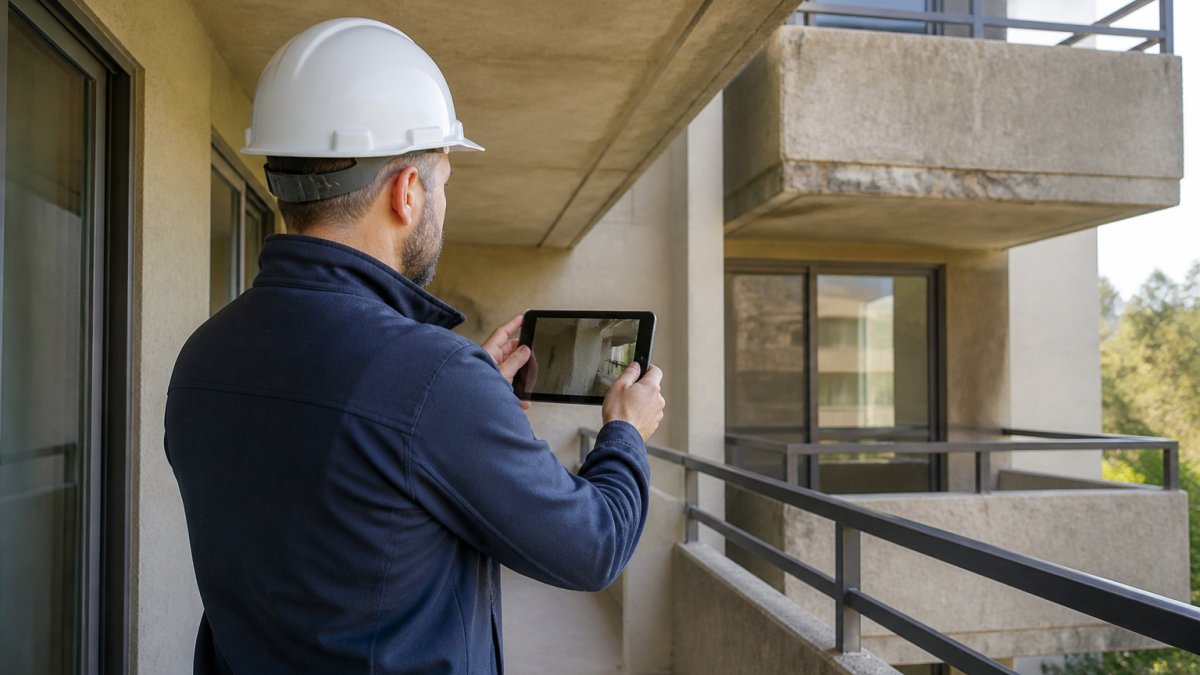
Professional documenting a balcony inspection for SB 326 compliance in a bright office setting

High-quality visual evidence serves as the foundation for audit readiness documentation, ensuring that every structural assessment remains defensible during a formal review.

Photos can show both the condition and its location.

Book inspection →

Organizing photos by property and inspection date can make them easier to retrieve.

SB 326 Inspection Repair Documentation: Tracking Deficiencies to Resolution

Owners may choose to keep a record of deficiencies and any related repair activity. Learn how to document balcony repairs for legal compliance so your records withstand scrutiny.

A log can help track repair follow-up.

Repair records can include photos of the work.

For repair documentation, owners can consult qualified professionals about appropriate verification.

How to Document Balcony Repairs for Legal Compliance provides detailed guidance on structuring your repair documentation so it withstands scrutiny.

SB 326 Inspection Records Retention and Access Procedures

Inspection and repair records may be useful when a board turns over or a file is requested. Consider how to retain and organize them.

What to retain

Records owners may choose to retain include inspection reports, photographs, and related repair records.

Retention periods and the distinction between required and recommended

For current record-retention requirements, consult official California sources and association counsel.

Watch Out
A written retention policy can describe how records are handled.

Storage, version control, and security

Owners may establish procedures for storing, organizing, and controlling access to inspection records.

Access log and request procedure

Owners may establish a procedure for handling requests to access records.

Handoff across boards and managers

A handoff packet can help organize inspection records when boards or managers change.

HOAs can establish policies for retaining and accessing inspection records.

Scheduling Your First Compliant Inspection

Check current inspection requirements and deadlines with an official California source.

Apex Balcony’s licensed inspectors provide inspection services for California balcony laws.

When you contact potential inspectors, explain your building’s size, age, and the number of exterior elevated elements that need inspection. Learn how to communicate safety inspection schedules to tenants before scheduling your first inspection. Get a clear proposal that includes the inspection scope, timeline, and what documentation you’ll receive. Discuss photo standards and report format upfront. How to Communicate Safety Inspection Schedules to Tenants walks you through notifying residents about the upcoming inspection and managing access.

Coordinate with residents and property staff about access for the inspection.

Before the inspection, you can note any concerns or areas that may be difficult to access.

After the inspection, review the report and ask for clarification if you have questions about its findings.


Documenting balcony inspections for SB 326 compliance can help organize inspection findings. Apex Balcony has worked with hundreds of building owners. Our licensed inspectors provide inspection services for California balcony laws. Book inspection to discuss your inspection needs.

Frequently Asked Questions

What documents should an HOA keep for an SB 326 balcony inspection?

HOAs may choose to retain inspection reports, photographs, and related repair records. For current retention requirements and access rules, consult official California sources and association counsel.

How often are balcony inspections required under SB 326?

Inspection deadlines and intervals depend on the applicable requirements. Check current California requirements with an official source, and confirm the schedule for your building.

What should an HOA document if an inspection finds a safety issue?

A record of a safety issue can include its location, description, photographs, and any repair recommendations. Consult official California sources or qualified professionals about applicable documentation requirements.

How should photos and repair records be organized for SB 326 compliance?

Organizing photos and repair records by location and inspection date can help keep them accessible. Consult official California sources for current compliance requirements.

Book inspection

GoogleAdd apexbalcony.com as a preferred source on Google →
Posted in BlogTagged document balcony inspections sb 326, how to document balcony inspections for sb 326 compliance, sb 326 balcony inspection checklist, sb 326 inspection report requirements

SB 326 Balcony Inspection Cost: What to Budget

Posted on October 20, 2026November 13, 2026 by Apex Balcony admin
SB 326 Balcony Inspection Cost: What to Budget

Table of Contents

  • Understanding SB 326 Balcony Inspection Costs
  • SB 326 Inspection Requirements and Scope
  • What Factors Affect Your SB 326 Balcony Inspection Cost
    • Building Size and Number of Elements
    • Normalizing Quotes: Cost per Element and per Unit
    • What a Quote Should Itemize
    • Inspection Methods: Visual vs. Invasive Testing
    • Access Difficulty and Equipment Requirements
  • SB 326 Balcony Inspection Checklist: What Inspectors Evaluate
  • SB 326 Inspection Report Requirements and Documentation
  • SB 326 Balcony Repair Costs and Budget Planning
  • How to Compare Inspection Quotes and Minimize Costs
    • A Quote-Comparison Checklist for HOA Boards
    • Inspection-Only Pricing vs. Bundled Repair Proposals
    • How Findings Change the Total Budget
    • A Step-by-Step HOA Procurement and Budgeting Process
  • Inspection Deadlines and Recurring Inspection Cycles
  • Frequently Asked Questions

Last Updated: October 19, 2026

Understanding SB 326 Balcony Inspection Costs

The cost of SB 326 balcony inspection varies widely by building size, number of elevated elements, and inspection methods. The cost of a complete inspection varies.

SB 326 requires residential buildings with three or more dwelling units to regularly inspect exterior elevated elements, balconies, decks, stairways, and other raised structures.

Apex Balcony has guided hundreds of California property owners through this process.

SB 326 Inspection Requirements and Scope

SB 326 mandates that buildings with three or more units inspect all exterior elevated elements for safety and structural integrity, covering common interest developments, condominiums, and apartment complexes statewide.

The inspection must cover:

  • Balconies and decks
  • Exterior stairs and landings
  • Walkways and railings
  • Load-bearing connections and supports
  • Signs of moisture intrusion or water damage
  • Structural deterioration or wood rot

Licensed professionals must conduct these inspections and document findings in a written report. Scope directly influences the SB 326 balcony inspection cost: a 12-unit building with 24 small balconies costs less than a 50-unit complex with large decks and multiple stairways.

What Factors Affect Your SB 326 Balcony Inspection Cost

Several key variables determine your final bill. Understanding each, and how it appears on a line-item quote, helps you evaluate proposals on equal footing.

Building Size and Number of Elements

The number of dwelling units and elevated elements is the biggest cost driver. A 12-unit building might have 24 balconies; a 100-unit complex could have 150+ elevated structures.

Cost scales with volume, but not linearly. Inspectors typically price in one of three ways:

  • Flat project fee, one number for the whole building, common on smaller properties.
  • Per-element pricing, a rate applied to each balcony, deck, stair flight, or landing.
  • Per-unit pricing, a rate applied to each dwelling unit, with common-area elements folded in.

Ask which method the inspector used. A per-element quote on a 24-balcony building and a per-unit quote on the same building are not directly comparable until you convert them to the same basis.

Normalizing Quotes: Cost per Element and per Unit

Property-level estimates are hard to compare across bids.

Per-element pricing tends to fall as element count rises, because mobilization, report writing, and travel spread across more work.

Use these normalized figures only as a sanity check, not as a substitute for scope review. A low per-element rate on a quote that excludes invasive testing or photo documentation is not a bargain.

What a Quote Should Itemize

A transparent proposal separates work into components. Look for these line items:

  • Field inspection labor, inspector time on site, by element type.
  • Access equipment, lifts, scaffolding, rope access, or staging, often billed separately or as a pass-through.
  • Testing, moisture metering, thermal imaging, or probe testing, if included.
  • Report preparation, photo documentation, written findings, and repair recommendations.
  • Engineering review, sign-off by a licensed professional, if required by the scope.
  • Permits or notifications, where the jurisdiction requires them.
  • Exclusions, what the quote explicitly does not cover, such as destructive testing or repair design.

A lump-sum quote isn’t automatically worse, but it gives the board less to compare and less to document if scope is later disputed.

Inspection Methods: Visual vs. Invasive Testing

The inspection method affects both cost and findings.

Visual inspection examines balconies from outside without removing materials or cutting into structures, the least invasive and typically least expensive approach.

Non-destructive testing uses tools like moisture meters and thermal imaging to assess conditions without damage. Cost increases moderately.

Invasive or destructive testing removes siding, cuts into wood, or opens sealed areas to inspect hidden components.

Many inspectors start visually and recommend invasive testing if concerns arise.

Access Difficulty and Equipment Requirements

Difficult access raises inspection costs: a ground-level complex is cheaper to assess than a high-rise requiring scaffolding or lifts.

Access factors include:

  • Building height and number of stories
  • Availability of safe staging areas
  • Need for lifts, scaffolding, or rope access
  • Weather conditions affecting inspection scheduling

A small building on flat ground costs less than a hillside property requiring heavy equipment.

Professional structural inspector examining wooden balcony railing with moisture meter and inspection clipboard, close-up of hands using diagnostic tools, natural outdoor lighting
Key Takeaway
Before comparing totals, convert every quote to the same basis: cost per element, cost per unit, and a line-item scope. A quote that looks higher may simply include testing, access equipment, and a detailed report that a cheaper quote excludes.

SB 326 Balcony Inspection Checklist: What Inspectors Evaluate

A thorough SB 326 inspection examines specific conditions and components. Knowing what inspectors look for clarifies scope and what your report should contain.

Inspectors assess:

  • Wood rot, decay, or deterioration in framing and decking
  • Moisture damage, water intrusion, or failed waterproofing
  • Rust or corrosion on metal fasteners and connections
  • Structural cracks or settlement issues
  • Loose or failing railings and balusters
  • Separation between elements or connections
  • Proper drainage and slope to prevent water pooling

The checklist drives time and depth of analysis; complex buildings with mixed materials or visible damage take longer to assess.

Book inspection →

SB 326 Inspection Report Requirements and Documentation

Your inspector must provide a written report documenting all findings, critical for compliance and future planning.

The SB 326 inspection report requirements include:

  • Detailed description of each element inspected
  • Photographic documentation of conditions
  • Assessment of structural integrity and safety
  • Identification of deterioration or damage
  • Repair recommendations with priority levels
  • Timeline for necessary repairs or replacements
  • Inspector credentials and qualifications

A thorough report becomes your repair roadmap and budgeting tool. Poor reports lack detail and leave you guessing. Quality documentation protects you legally and guides maintenance planning.

SB 326 Balcony Repair Costs and Budget Planning

Inspections often uncover repairs. Understanding typical findings helps you prepare financially.

Common repair categories include:

  • Waterproofing and flashing repairs: typically moderate cost
  • Wood replacement due to rot: varies by extent
  • Railing or baluster repairs: usually lower cost
  • Structural reinforcement: can be expensive
  • Full deck or balcony replacement: highest cost option

Your report should categorize repairs by urgency: some issues need immediate attention for safety, others can wait.

Key Takeaway
Budget for both the inspection itself AND potential repairs. Many boards underestimate follow-up costs. A thorough inspection report helps you plan repairs systematically rather than facing surprise bills later.
:::

How to Compare Inspection Quotes and Minimize Costs

Getting multiple quotes is smart, but comparing them fairly requires structured review, proposals that look similar on the cover page often differ sharply in scope, exclusions, and deliverables.

A Quote-Comparison Checklist for HOA Boards

Before the board approves any proposal, verify each of the following and record the answer in the meeting minutes:

  • Scope of elements, Does the quote list the number and type of elements inspected (balconies, decks, stairs, landings, railings)? Are common-area elements included?
  • Inspection method, Visual only, non-destructive testing, or invasive testing? Is follow-up testing included or billed separately?
  • Access assumptions, Does the quote assume ground-level access, or does it include lifts, scaffolding, or rope access? Who arranges and pays for equipment?
  • Deliverables, Is a written report included? Does it include photographs, element-by-element findings, and prioritized repair recommendations?
  • Licensing and credentials, Is the inspector a licensed professional qualified to perform the work? Ask for the license type and number.
  • Exclusions, What is explicitly not covered? Destructive testing, repair design, permit filing, and engineering review are common exclusions.
  • Timeline, When will fieldwork be completed, and when will the report be delivered?
  • Insurance, Does the inspector carry liability coverage? Request a certificate.

A cheap quote may exclude important services; an expensive one may include documentation and analysis you need. The checklist turns a subjective comparison into a documented decision.

Inspection-Only Pricing vs. Bundled Repair Proposals

Some firms offer a free or discounted inspection when the same firm performs the resulting repairs. That arrangement can create a conflict of interest: the entity that identifies the work also profits from it.

This does not mean bundled proposals are always wrong, but boards should treat them carefully. Recommended practices:

  • Ask whether the inspection fee changes if repair work is awarded to the same firm.
  • Request the inspection report and the repair proposal as separate documents with separate pricing.
  • Consider an independent review of the findings before committing to a large repair contract.
  • Document the board’s reasoning in the minutes, especially if the inspection was discounted.

A transparent firm will separate inspection pricing from repair pricing and will not condition the inspection fee on winning the repair work.

How Findings Change the Total Budget

The inspection fee is only the first cost. Findings can trigger additional spending that boards should plan for:

  • Further testing, invasive probes or laboratory analysis when visual inspection is inconclusive.
  • Engineering review, structural analysis or repair design by a licensed engineer.
  • Permits, jurisdiction fees for repair work, where required.
  • Repairs, waterproofing, wood replacement, railing repair, structural reinforcement, or full replacement, priced by extent.
  • Temporary measures, shoring, barricades, or closing an element until repairs are complete.

A thorough report categorizes findings by urgency so the board can sequence spending rather than facing a single lump-sum surprise.

A Step-by-Step HOA Procurement and Budgeting Process

Turning cost information into a decision follows a repeatable sequence:

  1. Confirm the obligation. Verify the building’s unit count and element inventory so the scope is defined before quotes are requested.
  2. Request written proposals. Ask at least two or three firms for itemized quotes using the same scope description.
  3. Normalize the quotes. Convert each to cost per element and cost per unit, and compare line items side by side.
  4. Check credentials and insurance. Confirm licensing and request certificates of insurance.
  5. Review exclusions. Identify what each quote leaves out and estimate those costs separately.
  6. Document the decision. Record the comparison and the board’s rationale in the minutes.
  7. Budget for follow-up. Set aside a reserve for testing, engineering, permits, and repairs identified in the report.
  8. Calendar the next cycle. Note the recurring inspection interval specified in the report and build it into the reserve schedule.

Apex Balcony provides transparent, itemized quotes. This approach lets you compare fairly and understand exactly what you’re paying for.

Avoid selecting inspectors solely on price. A thorough, well-documented inspection protects your building and residents. Cutting corners on inspection quality can lead to missed safety issues and larger repair bills later. Also be cautious with free or discounted inspections tied to repair work, separate the inspection decision from the repair decision.

Inspection Deadlines and Recurring Inspection Cycles

SB 326 establishes specific timelines for inspections. Missing deadlines creates legal liability.

Initial inspections must be completed by a deadline set when the law took effect. Recurring inspections follow a cycle based on initial findings:

  • Buildings with no significant issues: six-year cycle
  • Buildings with minor issues: three-year cycle
  • Buildings with significant deterioration: one-year cycle

Your inspection report specifies your building’s cycle. Mark your calendar and plan budgets accordingly. Missing inspection deadlines can result in penalties and loss of liability protection.


Understanding the SB 326 balcony inspection cost is the first step toward compliance and resident safety. The investment in a thorough inspection protects your building, reduces liability, and helps you plan repairs systematically.

Frequently Asked Questions

What is included in an SB 326 balcony inspection?

An SB 326 inspection covers all exterior elevated elements including balconies, decks, stairways, and walkways. Inspectors assess structural deterioration, moisture intrusion, waterproofing conditions, and load-bearing component integrity. The inspection uses visual assessment and may include non-destructive or invasive testing depending on what the inspector observes. A written inspection report documents findings and repair recommendations.

How often are SB 326 balcony inspections required?

Initial SB 326 inspections must be completed by January 1, 2025, for buildings with three or more dwelling units. After the initial inspection, recurring inspection cycles depend on the condition of the elements and local enforcement requirements. Most properties require follow-up inspections every 3-6 years, though severely deteriorated elements may need more frequent assessment.

What factors affect SB 326 balcony inspection cost?

Cost depends on the number of elevated elements, building size, inspection method (visual vs. invasive testing), access difficulty, and whether destructive testing is needed. Wood-framed structures with moisture damage typically cost more to inspect than newer construction. Properties requiring specialized access equipment or extensive moisture intrusion assessment also incur higher fees.

Are repair costs included in an SB 326 inspection quote?

No. Inspection fees cover only the assessment and written report. Repair costs are separate and depend on what the inspector finds. Some inspectors bundle inspection and repair proposals, but you should separate inspection-only pricing from repair estimates so you can compare bids fairly and evaluate repair recommendations independently.

Book inspection

Posted in BlogTagged cost of sb 326 balcony inspection, sb 326 balcony inspection checklist, sb 326 balcony inspection cost, sb 326 inspection report requirements, sb 326 inspection requirements

Recent Posts

  • Are Hidden Balcony Framing Problems Showing Up in Your Building?
  • Apartment Building Maintenance Budget: A Step-by-Step Guide
  • Is Your Older Balcony Safe? A Structural Assessment Guide
  • 5 SB 326 Inspection Penalty Risks California HOAs Miss
  • What Are the Structural Retrofit Options for Apartment Buildings?

Recent Comments

No comments to show.

Archives

  • November 2026
  • October 2026
  • September 2026
  • August 2026
  • July 2026
  • June 2026

Categories

  • Blog
Logo
Created by Unilime.Group
  • Balcony Law
  • About us
  • Inspection services
  • FAQ
  • Blog

Call us ‪+1 818-806-7885‬
License: CSLB #1101305

Apex Balcony Inspection
‪+1 818-806-7885‬
[email protected]
4645 Van Nuys Blvd #201
Sherman Oaks CA 91403

Created by Unilime.Group