
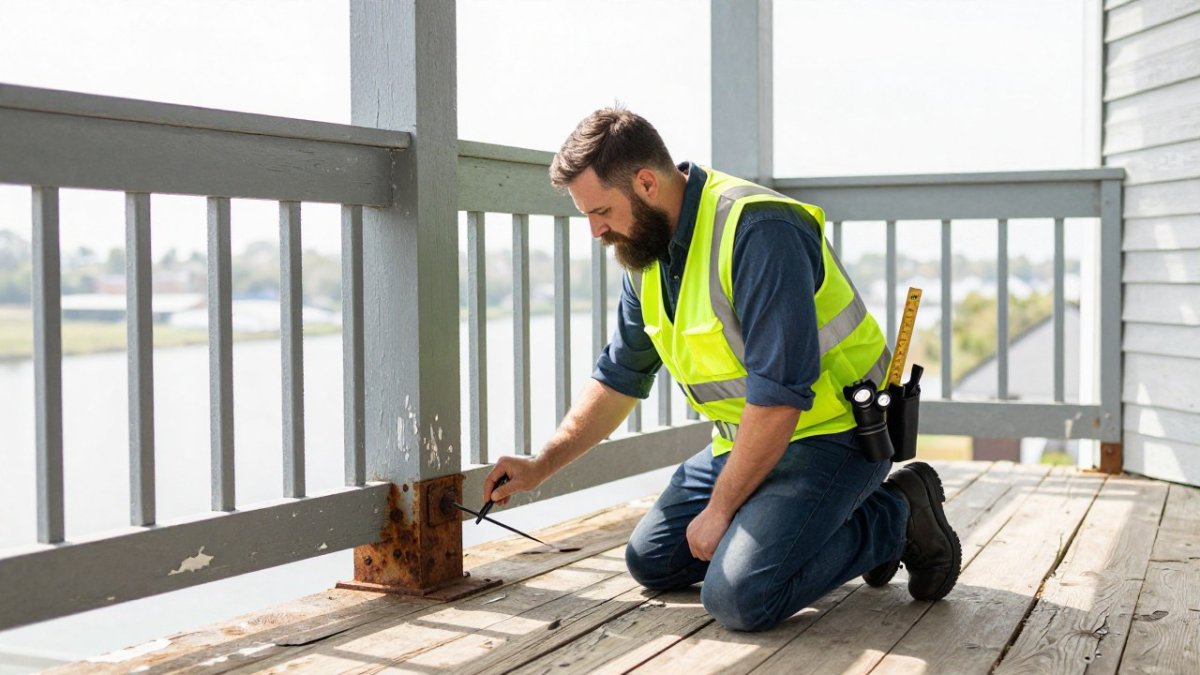
Last Updated: November 6, 2026
Quick Summary
Legal liability for balcony safety in California falls on owners and associations, not tenants. SB 721 requires periodic inspections of balconies and elevated elements in buildings with three or more units, while SB 326 requires condo associations to inspect and report. Liability turns on duty, notice, causation, and comparative fault, and a documented paper trail is the best defense.
- SB 721 covers rental buildings with three or more units; SB 326 covers condos and common interest developments.
- Both laws require inspections of at least 15% of elevated exterior elements.
- A board that defers a flagged repair while leaving the balcony open supports a negligence claim.
- After a balcony injury, courts examine duty, notice, causation, and comparative fault allocation.
- Stop access to an unsafe balcony first, then document, notify, and hire a qualified inspector.
Table of Contents
- How California Balcony Laws Create Legal Exposure for Owners and Associations
- Balcony Inspection Requirements California Owners Must Meet
- HOA Responsibility for Balcony Repairs in California
- Property Manager Liability for Unsafe Balconies
- How Liability Is Determined After a Balcony Injury
- Step One: Was There a Duty of Care?
- Step Two: Was There Notice of a Dangerous Condition?
- Step Three: Did the Breach Cause the Injury?
- Step Four: How Is Fault Allocated?
- Where Negligence Per Se Fits
- Compliance Is Not a Complete Shield
- The Evidence That Decides These Cases
- What This Means for Owners and Boards
- What to Do Immediately After Discovering an Unsafe Balcony
- Balcony Safety Inspection Checklist for Compliance and Risk Reduction
- Book a Compliance Inspection Before a Hazard Becomes a Claim
- Frequently Asked Questions
How California Balcony Laws Create Legal Exposure for Owners and Associations
Legal liability for balcony safety in California starts with one uncomfortable fact: a failed balcony is rarely a surprise.
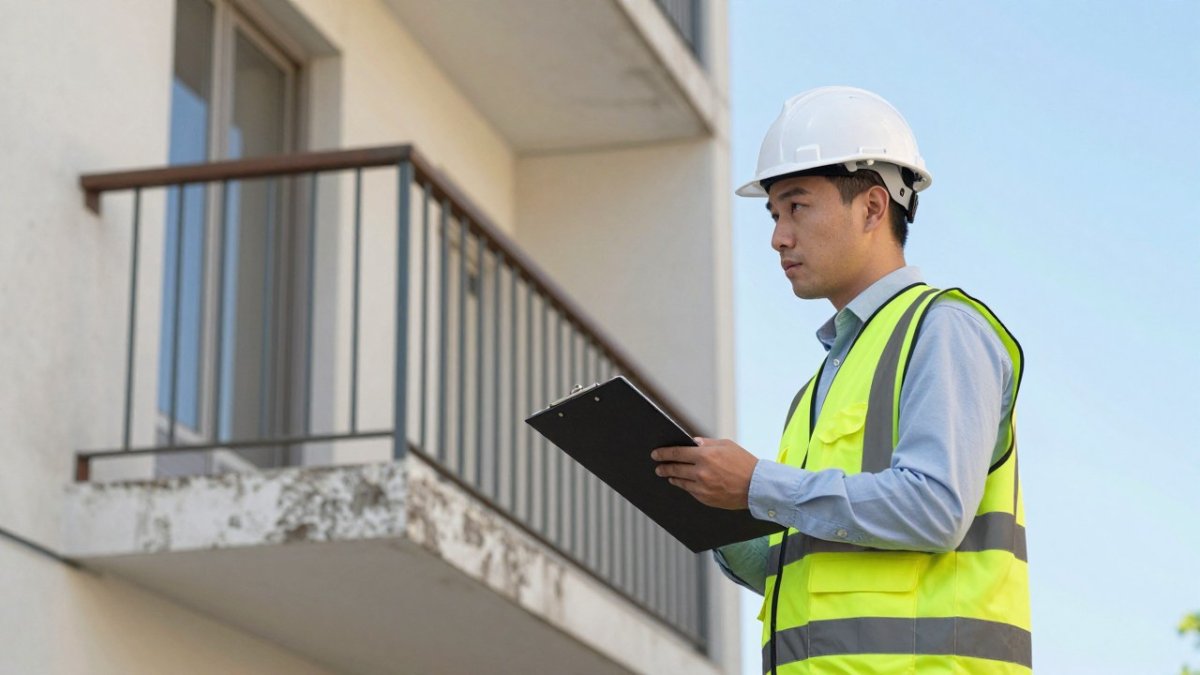
Two incidents shaped the current rules: the 2015 Berkeley balcony collapse that killed six people, and the 2021 Malibu balcony collapse.
Balcony safety is the practice of inspecting, maintaining, and repairing elevated exterior elements so they carry loads safely and meet state standards.
SB 721 and SB 326: What Each Law Requires
SB 721 covers apartment buildings with three or more units.
SB 326 covers condominiums and other common interest developments.
The core difference: SB 721 targets rental properties, SB 326 targets homeowner associations. Both put the duty on the owner or association, not the tenant.
For condo boards, the deeper rules sit in the SB 326 guide for condos. For a full walkthrough of the statutes, see the California balcony laws compliance guide.
Covered Buildings and Elevated Exterior Elements
Covered structures include multifamily residential buildings and common interest developments. The law reaches beyond balconies.
Covered elements typically include:
- Balconies and decks
- Stairways and exterior stairs
- Walkways and landings
- Guardrails and railings
- Any element supported by load-bearing components
If people walk on it and it hangs above ground or another unit, assume it is covered.
Balcony Inspection Requirements California Owners Must Meet
Balcony inspection requirements California owners face are specific: who inspects, when, how much of the structure, and what the report must contain.
A qualified inspector must hold a license as an architect, engineer, or certified building inspector. The inspector documents structural integrity, water intrusion, dry rot, and deterioration, then files a report with repair recommendations.
Deadlines, Inspection Cycles, and Sampling Rules
Sampling rules matter just as much.
The complete breakdown lives in the 15% sampling rule guide.
| Law | Applies To | Who Inspects | Minimum Sample |
|---|---|---|---|
| SB 721 | Buildings with 3+ units | Licensed architect, engineer, or certified inspector | 15% of elevated elements |
| SB 326 | Condos and common interest developments | Licensed structural engineer or architect | 15% of elevated elements |
HOA Responsibility for Balcony Repairs in California
HOA responsibility for balcony repairs in California rarely resolves to a single answer, because three sources of duty stack: the statute, the governing documents, and the association’s own conduct after it learns of a hazard.
The Three Layers of HOA Duty
Start with the statute. SB 326 places the inspection and reporting duty on the association, which cannot contract that duty away to individual owners.
Then read the governing documents. CC&Rs, bylaws, and recorded maintenance agreements allocate repair and replacement costs between the association and owners.
Finally, look at the association’s own conduct.
Exclusive-Use Balconies and the Allocation Trap
Exclusive-use balconies are where most disputes begin. The owner has the only key and may even have repainted the railing, but the structural slab, load-bearing connections, and guardrail anchorage are usually association maintenance obligations.
Watch out: an owner who makes unauthorized structural repairs to an exclusive-use balcony can create a coverage dispute and shift liability back onto the association for failing to supervise the work.
What the Board Should Document
A defensible board record typically includes:
- The inspection report and the date the board received it
- Board minutes showing the repair was discussed, prioritized, and funded
- A written repair scope from a licensed contractor or engineer
- A schedule showing repairs were completed within a reasonable time
- Notice to affected owners when a hazard required restricting access
- A reserve study line item or special assessment showing the repair was funded
If the association cannot fund a repair immediately, the board should restrict access to the unsafe element and document that decision. Deferring a repair while leaving the balcony open is the fact pattern that supports a negligence claim.
When the Association and Owner Disagree
Disputes over who pays usually surface after a report, not before. Most practitioners find that the declaration’s maintenance matrix controls cost allocation while the statute controls the inspection duty, and the two questions should be analyzed separately.
For liability after a collapse, see the HOA balcony collapse liability analysis.
Property Manager Liability for Unsafe Balconies
Property manager liability for unsafe balconies turns on the management agreement. A manager who holds the maintenance duty and ignores a known hazard can face negligence claims alongside the owner.
Managers should keep three things documented:
- Inspection scheduling and completion
- Repair requests sent to the owner
- Owner responses and repair timelines
If the owner refuses a repair, the manager needs a written record. That paper trail is the difference between “we flagged it” and “we let it happen.”
How Liability Is Determined After a Balcony Injury
After a balcony injury, a court does not ask whether the owner filed an inspection report. It asks narrower questions about duty, notice, causation, and fault allocation.
Step One: Was There a Duty of Care?
Premises liability in California imposes a duty on the person who occupies or controls the property to exercise reasonable care for the safety of people lawfully on it. For a balcony, the duty typically attaches to the owner, the association, or the manager who holds maintenance responsibility, sometimes more than one at once.
Step Two: Was There Notice of a Dangerous Condition?
Notice is where most balcony cases turn. A plaintiff can establish notice in three ways:
- Actual notice, the owner or board received a report, complaint, or work order identifying the condition.
- Constructive notice, the condition existed long enough that a reasonable inspection would have discovered it.
- Notice created by statute, the inspection statute required the owner to look, and the failure to look is treated as a failure to discover what a proper inspection would have found.
A dated inspection report flagging water intrusion or dry rot is the strongest actual-notice evidence a plaintiff can obtain.
Step Three: Did the Breach Cause the Injury?
Causation has two parts. Actual cause asks whether the injury would have happened but for the unsafe condition. Proximate cause asks whether the injury was a foreseeable result of the owner’s conduct. A collapsed guardrail that gives way under ordinary leaning pressure is a classic foreseeable harm.
Step Four: How Is Fault Allocated?
California applies comparative fault, meaning a plaintiff’s own negligence reduces recovery rather than barring the claim entirely. If an injured party ignored posted warnings, removed a barricade, or overloaded a balcony beyond its posted capacity, the jury may assign a percentage of fault to that person. The owner’s share of fault is then measured against that percentage.
Where Negligence Per Se Fits
Negligence per se applies when a statute defines the standard of care and the violation caused the injury. Under California Civil Code Section 5551, owners must inspect elevated elements and file reports on schedule. A missed inspection or a report filed after the deadline becomes evidence that the owner fell below the statutory standard. It does not automatically establish liability, but it shifts the burden of explanation onto the owner.
Compliance Is Not a Complete Shield
An owner can file every report on time and still face a premises liability claim if a known hazard went unrepaired. The inspection statute sets a floor for diligence, not a ceiling on responsibility. A report recommending repair followed by inaction is often worse for the defense than no report at all, because it proves the owner knew.
The Evidence That Decides These Cases
Balcony injury litigation usually turns on documents rather than testimony. The records that matter most include:
- Inspection reports and the dates they were received
- Board minutes and repair authorizations
- Work orders, invoices, and contractor scopes
- Maintenance logs showing prior complaints
- Photographs of the condition before and after the incident
- Notices restricting access and the dates they were posted
- Insurance correspondence and claim files
A common pattern is an owner who can produce a timely inspection report but cannot produce a single document showing the recommended repair was scheduled.
What This Means for Owners and Boards
The practical takeaway: liability is managed through a paper trail, not a single filing. An owner or board that inspects on schedule, documents findings, restricts access to hazards, and tracks repairs to completion is in a materially better position than one that treats the report as the finish line.
What to Do Immediately After Discovering an Unsafe Balcony
Stop access first. Restrict access to the balcony, deck, or stairway and post clear notice. Do not wait for a second opinion before blocking the area.
Then move through these steps:
- Document the condition with dated photos and notes
- Notify the owner, board, or insurer in writing
- Hire a qualified inspector to assess the full structure
- Get a written repair scope and timeline
- Keep every record for the claims file
Watch out: patching cosmetic cracks without an engineering assessment can hide active water intrusion and turn a repair into a collapse.
Balcony Safety Inspection Checklist for Compliance and Risk Reduction
A balcony safety inspection checklist keeps boards and owners ahead of both the statute and the claim. Use this one before and after every inspection.
- Confirm building type and which law applies
- Verify inspector license and insurance
- Review prior inspection reports and repair records
- Confirm the 15 percent sample is representative
- Check balconies, decks, stairways, walkways, and guardrails
- Look for water intrusion, dry rot, rust, and cracking
- Photograph every deficiency with location notes
- File the report by the statutory deadline
- Schedule corrective repairs with a written timeline
- Restrict access to any unsafe element immediately
Book a Compliance Inspection Before a Hazard Becomes a Claim
The gap between a compliant building and a lawsuit is usually one missed inspection.
We specialize in SB 326 and SB 721 compliance and inspect every elevated exterior element: balconies, decks, stairways, and guardrails.
Get started with Apex Balcony and turn a legal risk into a documented, defensible maintenance record. Review our California building inspection services to schedule your compliance inspection.
The statute does not care that the board was worried about repair costs. It cares that the inspection happened on time and the hazard was addressed.
Frequently Asked Questions
What is the new balcony law in California?
California has two key balcony laws: SB 721, which applies to multifamily residential buildings with three or more units, and SB 326, which applies to condominiums and common interest developments. Both require periodic inspections of elevated exterior elements like balconies, decks, stairways, and walkways by qualified inspectors. Compliance helps prevent structural failures and reduces legal exposure for owners and associations.
Can a property owner be liable if someone is injured on an unsafe balcony?
Yes. Under premises liability principles, a property owner or association can be held liable for injuries caused by unsafe conditions they knew or should have known about. If the owner failed to conduct required inspections or repair known hazards, negligence per se may apply, especially if statutory violations contributed to the injury. Liability can extend to HOAs, landlords, and property managers depending on their control over the property and maintenance responsibilities.
How often do balconies need to be inspected under California law?
Regular inspections help identify deterioration early and demonstrate compliance with balcony inspection requirements California enforces.
What should a property manager do after discovering an unsafe balcony?
Immediately restrict access to the unsafe balcony and any adjacent areas to prevent injury. Document the condition with photos and notes, then notify the owner or HOA board in writing. Arrange for a qualified inspector or engineer to assess the extent of the damage and recommend corrective repairs. Keep detailed records of all actions taken, as these will be important for insurance claims and legal defense. Following a balcony safety inspection checklist can help ensure no step is missed.
