California Building Inspection Services: A Complete Guide
Learn about California building inspection services, compliance requirements, and how to schedule inspections. Discover residential and commercial options.
Table of Contents
- What Are California Building Inspection Services?
- How Long Does a Building Inspection Take in California?
- Building Code Compliance Checklist for California Properties
- Commercial Building Inspection Requirements in California
- How to Schedule a Building Inspection in California
- Building Permit Applications and Inspection Scheduling
- Inspection Fees and Payment Information
- Post-Inspection Remediation and Next Steps
Last Updated: June 22, 2026
California building inspection services are essential protection for any property owner, buyer, or developer in one of the most regulated real estate markets in the country. The pattern is clear: owners who treat inspections strategically pay far less in remediation costs than those who treat them as a formality. This guide covers everything from scheduling your first inspection to understanding post-inspection remediation, including critical angles most guides skip.
The California Building Standards Code governs construction statewide, but enforcement varies at the municipal level, a gap where property owners get caught off guard.
What Are California Building Inspection Services?
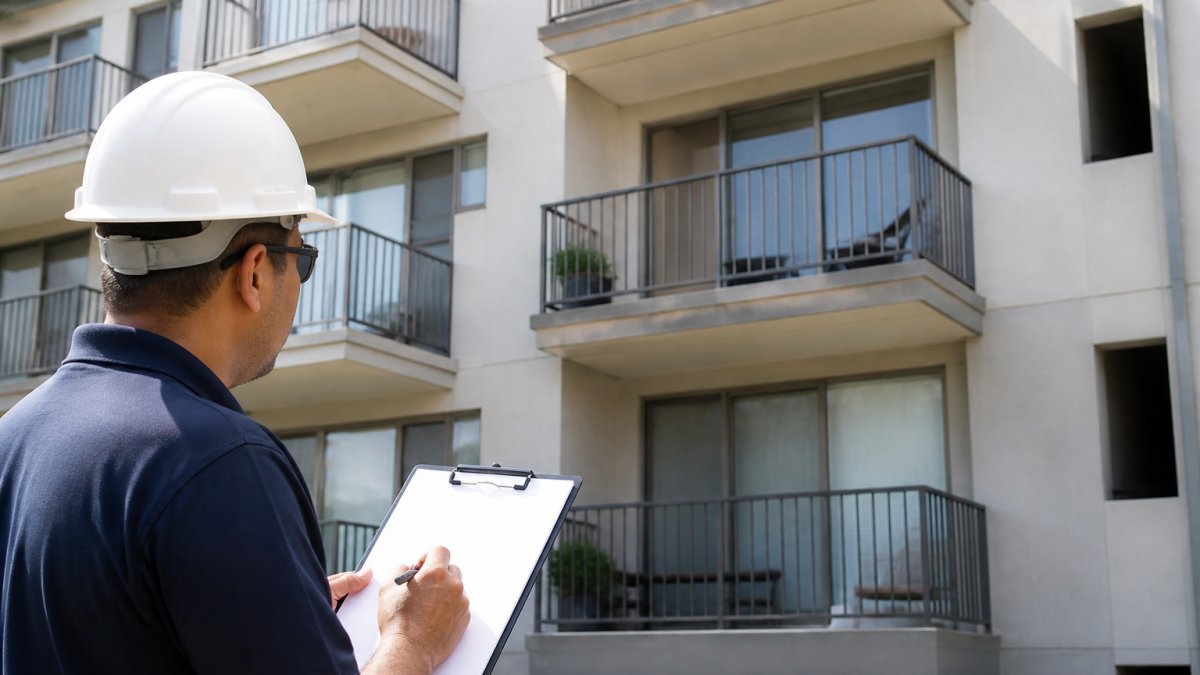
California building inspection services are professional evaluations of residential and commercial properties to verify compliance with state and local building codes, zoning regulations, and safety standards. A certified inspector examines structural integrity, electrical compliance, plumbing systems, HVAC installation, and fire safety measures. The purpose is not bureaucratic compliance alone, a thorough inspection catches deficiencies before they become liabilities.
Residential vs. Commercial Inspection Services
Residential inspections cover single-family homes, condominiums, and smaller multifamily buildings, assessing foundations, roofing, electrical panels, plumbing fixtures, HVAC systems, and exterior elements including balconies and decks. Properties subject to SB 326 or SB 721 require dedicated balcony evaluation by a licensed inspector with structural expertise.
Commercial inspections operate at greater complexity, covering structural systems, ADA compliance, fire suppression systems, electrical load capacity, mechanical systems, and zoning conformance. CCPIA-certified inspectors following ComSOP standards provide the most defensible reports for transactions and code enforcement.
Residential inspections typically take two to four hours, while commercial inspections on larger properties can span multiple days.
Third-Party Inspection Benefits
Municipal inspectors work within building department backlogs that can delay timelines by weeks. Third-party inspections provide faster, more flexible alternatives for pre-purchase due diligence, SB 326 balcony compliance, or identifying issues before city inspection. Third-party inspectors produce reports tailored to property owners rather than building departments, with clearer documentation, prioritized recommendations, and formats suitable for insurance carriers, lenders, and HOA boards. According to California Department of Consumer Affairs licensing guidelines, third-party inspectors must hold valid contractor or engineer licenses depending on scope.
How Long Does a Building Inspection Take in California?
A standard residential building inspection takes two to four hours for a typical single-family home. Larger properties, multifamily buildings, and commercial structures require proportionally more time, with complex commercial inspections sometimes requiring multiple visits over two to three days.
Duration depends on property size and age, scope of inspection, access and preparation, and re-inspection requirements. For SB 326 and SB 721 balcony inspections, a licensed inspector typically needs one to three hours per building depending on the number of elevated exterior elements.
Schedule inspections for weekday mornings when utility systems run normally. HVAC and plumbing issues are easier to detect under active load conditions.
Building Code Compliance Checklist for California Properties
The California Building Standards Code is the baseline, but local jurisdictions often adopt amendments that exceed state minimums. A compliance checklist must account for both layers.
Key Safety Standards and Housing Codes
California’s housing codes address habitability, structural safety, and occupant protection. Core standards every property must meet include:
- Structural integrity of load-bearing walls, foundations, and roof systems
- Electrical compliance with current NEC standards as adopted by California
- Plumbing system function, including water pressure, drainage, and backflow prevention
- HVAC systems sized appropriately and meeting energy efficiency requirements
- Smoke and carbon monoxide detector placement per California Health and Safety Code
- Egress windows and doorways meeting minimum dimension requirements
- Balconies, decks, and stairways meeting load capacity and waterproofing standards under SB 326 and SB 721
- ADA compliance for commercial properties and common areas in multifamily buildings
As documented in California Building Standards Commission official code publications, the state updates its building code on a three-year cycle, with the most recent edition taking effect in January 2025.
Common California Building Code Violations to Watch For
Knowing the most frequent violations in advance lets you address them before formal inspection, saving time and re-inspection fees.
The most common violations include:
- Unpermitted additions or conversions: Garage conversions, room additions, and accessory dwelling units built without permits
- Improper electrical modifications: Aluminum wiring, double-tapped breakers, and missing GFCI protection in wet areas
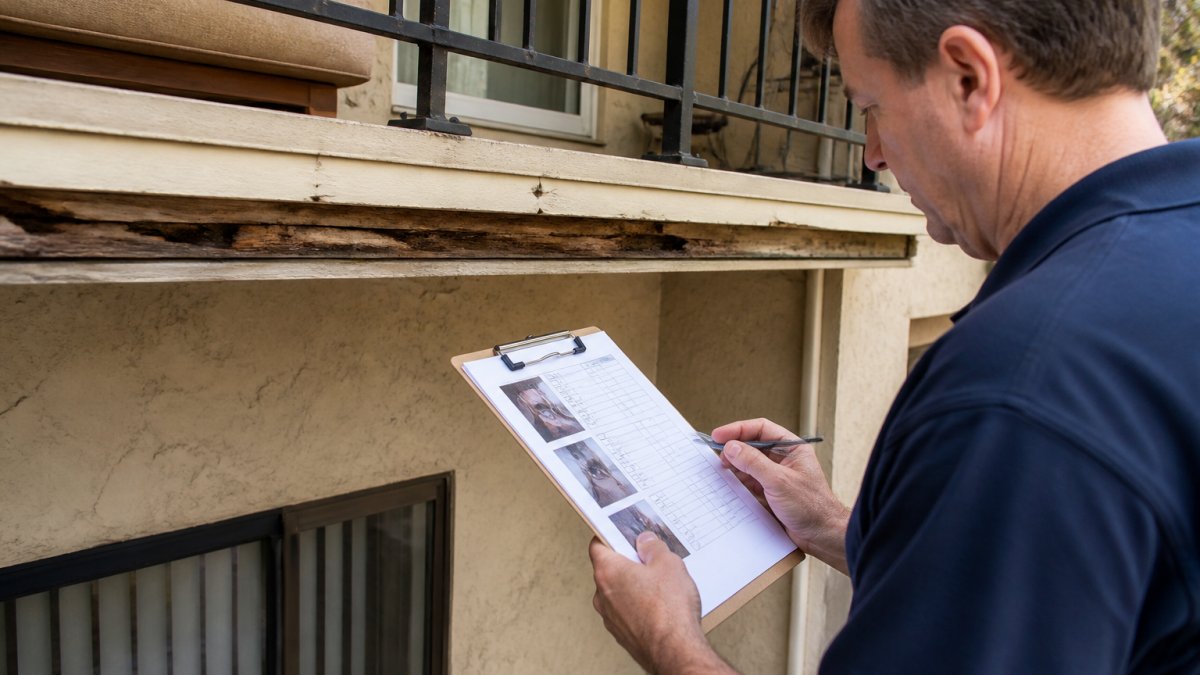
- Deteriorated waterproofing on elevated elements: Balcony and deck failures violating SB 326 and SB 721
- Non-compliant handrails and guardrails: Height, spacing, and load capacity deficiencies
- Inadequate attic and crawl space ventilation: Leading to moisture damage and structural decay
- Zoning violations: Accessory structures placed too close to property lines or exceeding allowable square footage
Unpermitted work discovered during sale can void escrow or require costly retroactive permits. Address permit history before listing, not after inspection.
Commercial Building Inspection Requirements in California
Commercial property inspections follow a more complex regulatory framework than residential inspections. The scope depends on property type, occupancy classification, and inspection purpose, transaction, permit sign-off, or code enforcement.
For investors and property managers, inspections following ASTM E2018 standards (Property Condition Assessment) are most defensible with lenders and cover structural systems, roofing, mechanical systems, and site conditions.
HVAC, Electrical, and Plumbing Compliance
Commercial HVAC inspection verifies Title 24 energy efficiency requirements, refrigerant handling compliance, ductwork insulation, economizer function, and controls calibration. Electrical compliance involves load calculations, panel capacity, emergency lighting, and grounding continuity under the 2022 National Electrical Code as adopted by California. Plumbing inspection covers water supply pressure, low-flow fixture compliance, grease interceptors, and backflow prevention devices.
| Inspection Type | Typical Scope | Applicable Standard | Who Orders It |
|---|---|---|---|
| Residential pre-purchase | Foundation to roof, all systems | California Building Standards Code | Buyer or lender |
| SB 326 / SB 721 balcony | Elevated exterior elements only | California Civil Code | HOA or building owner |
| Commercial PCA | Structure, envelope, MEP systems | ASTM E2018 | Investor or lender |
| Municipal permit inspection | Specific permitted work only | Local building code | Contractor or owner |
| Re-inspection | Previously flagged violations only | Original inspection standard | Property owner |
How to Schedule a Building Inspection in California
Scheduling follows different paths depending on whether you need a municipal permit inspection or private third-party assessment.
For municipal inspections tied to building permits:
- Complete permitted work to the inspection stage
- Log into your local building department portal (LADBS in Los Angeles or your city’s equivalent) and request inspection
- Select your inspection window, typically same-day or next-day availability
- Confirm site access and ensure the permit card is posted
- Meet the inspector or designate a contractor representative
- Receive the inspection result: pass, correction notice, or stop-work order
For private third-party inspections, contact a licensed inspection firm directly, confirm appropriate California licensing, and schedule based on property availability.
Preparing for Your Building Inspection
Preparation reduces failed inspections and eliminates unnecessary re-inspection fees.
Before any inspection, complete this checklist:
- Clear access to all utility spaces: attic, crawl space, electrical panel, water heater, HVAC equipment
- Locate and organize all existing permits and prior inspection reports
- Ensure all utilities are active and systems operational
- Remove stored materials blocking structural elements
- For balcony inspections: clear furniture, planters, and floor coverings
- Have contractor contact information available
Building Permit Applications and Inspection Scheduling
A building permit is the legal authorization to perform construction, alteration, or repair work in California. Without a valid permit, work is unpermitted and subject to code enforcement action, retroactive fees, and potential demolition.
Working with LADBS and Municipal Building Divisions
The Los Angeles Department of Building and Safety (LADBS) is California’s largest municipal building division. LADBS accepts online permit applications through ePlanLA for most project types. Other major jurisdictions including San Francisco’s Department of Building Inspection and San Diego Development Services operate similar portals. The field coordinator assigned to your permit is your primary contact for scheduling inspections and resolving plan check comments.
According to Los Angeles Department of Building and Safety permit information, permit applications for new construction require architectural plans, structural calculations, energy compliance documentation, and soils reports above certain thresholds.
Permit Expiration and Re-Inspection Requirements
A building permit expires if work does not commence within 180 days of issuance or is suspended for 180 consecutive days. Expired permits require renewal and potentially updated plan check review. Re-inspection fees equal or exceed original inspection fees. Thorough preparation before initial inspection is the most direct way to mitigate delays and reduce costs.
Inspection Fees and Payment Information
Building inspection fees vary by jurisdiction, property type, and scope. Municipal fees are set by local building divisions and calculated as a percentage of project valuation or flat fees per inspection type. Private third-party fees depend on property size, scope, and inspector licensing level.
General fee categories:
- Permit application fees: Based on project valuation using local fee schedule
- Plan check fees: Charged separately from permit fees
- Inspection fees: Included in most permit fees but charged additionally for re-inspections
- Third-party inspection fees: Priced per engagement based on scope and property size
- Expedited review fees: Available for additional charge to accelerate timelines
Most municipal building divisions accept payment by credit card, check, or electronic transfer through online portals. Private inspection firms typically require payment at scheduling or upon report delivery.
Re-inspection fees are avoidable. Thorough preparation before initial inspection is always cheaper than paying for a second visit.
Post-Inspection Remediation and Next Steps
A passed inspection is the goal, but a failed inspection is not a crisis. The inspection report is a prioritized roadmap for compliance.
Understanding Your Inspection Report
An inspection report documents observed conditions, identifies code violations, and assigns correction requirements. It distinguishes between mandatory corrections required before certificate of occupancy and advisory items representing best-practice recommendations.
Read the report in this order: identify stop-work or unsafe conditions requiring immediate action; list all corrections tied to specific code sections; review advisory items and evaluate against budget and timeline. Defensible reports include photographic documentation, specific code sections violated, and required corrections.
Addressing Structural Integrity Issues
Structural findings require careful attention. Deficiencies in load-bearing elements, foundations, or elevated exterior structures carry safety and liability implications beyond typical code corrections.
For balcony and deck deficiencies under SB 326 or SB 721, California law requires a licensed structural engineer or architect review findings above certain thresholds and approve repair scope before work begins.
The remediation process typically follows:
- Obtain the inspection report and identify structural deficiencies
- Engage a licensed contractor or structural engineer to review findings
- Obtain repair permits before beginning structural work
- Complete repairs according to approved scope
- Schedule re-inspection to verify corrections
- Obtain final sign-off or certificate of compliance
For HOAs managing multifamily buildings, California Department of Housing and Community Development building standards resources provides guidance on compliance timelines and resident notification under SB 326.
Structural issues left unaddressed do not stabilize. Moisture intrusion accelerates wood decay, and deferred maintenance on elevated elements is the leading cause of catastrophic balcony failures in California. The cost of thorough inspection and timely repair is a fraction of liability exposure from structural failure.
Staying compliant with California’s building codes and balcony laws is a continuous responsibility. Apex Balcony provides licensed inspection services for California property owners navigating SB 326 and SB 721 requirements, with decades of combined construction and design experience identifying structural failure in elevated exterior elements before it becomes a safety crisis. Book an inspection with Apex Balcony and get a clear, actionable report that protects your residents and your asset.
Frequently Asked Questions
What is included in a standard California building inspection?
A standard California building inspection covers structural integrity, electrical compliance, plumbing systems, HVAC functionality, roofing, foundation condition, and safety standards. For properties subject to SB 326 or SB 721, elevated exterior elements like balconies, decks, and stairways receive specialized evaluation. Inspectors assess compliance with California Building Standards Code and identify code violations that require remediation.
How long does a building inspection take in California?
Most residential building inspections in California take 2-4 hours, depending on property size and complexity. Commercial inspections may require 4-8 hours or more. Specialized inspections like balcony assessments can extend timelines. Factors affecting duration include property age, square footage, number of systems to evaluate, and whether re-inspection is needed after previous findings.
What is the difference between municipal and private building inspections in California?
Municipal inspections are conducted by city or county building divisions (like LADBS) and are required for permitted construction work. Private third-party inspections are independent assessments that verify compliance, identify structural issues, and provide detailed reports for property owners. Municipal inspections focus on permit compliance, while private inspections offer comprehensive evaluations and can be conducted anytime, not just during construction phases.
What are common California building code violations found during inspections?
Common violations include improper electrical grounding, inadequate ventilation in HVAC systems, plumbing code non-compliance, structural deficiencies in balconies and decks, missing or damaged safety railings, and zoning regulation violations. For properties under SB 326 and SB 721, balcony structural failures and deterioration are frequent findings. Inspectors document violations in detailed reports to guide remediation and ensure properties meet current California Building Standards Code requirements.