
Last Updated: November 9, 2026
Quick Summary
The balcony railing height code in California requires a 42-inch minimum guardrail height on most residential balconies, measured vertically from the finished floor level to the top of the rail. Handrails on connected stairs are separate and must sit 34 to 38 inches above the stair tread nosing. No opening may allow a 4-inch sphere to pass through.
- Measure guardrail height from the finished floor to the top rail, not the railing itself.
- Handrails on stairs must measure 34 to 38 inches from the stair tread nosing.
- Baluster gaps and openings must block a 4-inch sphere at every point.
- The code edition in force when the permit is issued generally governs your project.
- Wood railings need re-checking after wet-dry cycles because gaps and posts can drift.
Table of Contents
- Balcony Railing Height Code California: The 42-Inch Rule and What It Covers
- Residential Stair Handrail Height Code: What Changes on the Steps
- Baluster Spacing and the 4-Inch Sphere Rule
- Balcony Railing Height Code California 2022: Code Editions and Title 24
- Wood Balcony Railing Height Code California: Material-Specific Rules
- Balcony Railing Height Code California PDF: Where to Find the Official Text
- Retrofitting Older Balconies and Passing Inspection
- Booking a Compliance Inspection for Your Balcony Railings
- Frequently Asked Questions
Balcony Railing Height Code California: The 42-Inch Rule and What It Covers
The balcony railing height code in California sets a 42-inch minimum for guardrails on most residential balconies.
The 42-inch rule is simple to state. Meeting it is harder than it looks.
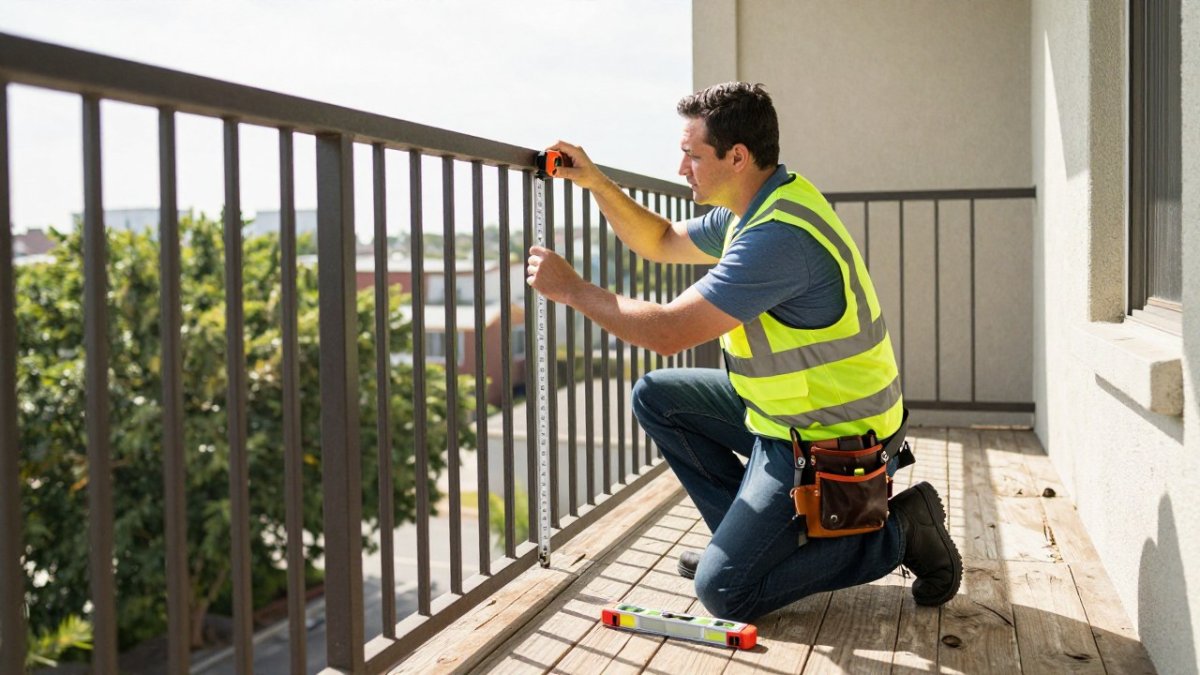
Here is the core issue most owners miss: the code measures the vertical height from the walking surface to the top rail, not the height of the railing itself. A rail built 42 inches tall can still fail if the deck surface sits unevenly or if a repair raised the finished floor level.
Guardrails are safety barriers along the edge of a balcony, deck, or stairwell. Handrails are the graspable rails people hold for balance. California regulates both, and they carry different height requirements.
That distinction trips up owners constantly. So let’s start there.
Guardrail vs. Handrail: Two Different Measurements
A guardrail must reach at least 42 inches. A handrail sits lower, typically between 34 and 38 inches above the stair nosing. These are two separate code items, and a balcony often needs both.
Why the gap? A guardrail stops a fall. A handrail gives a hand something to grip on the stairs. Building them as one unit usually fails inspection because the heights conflict.
For a full breakdown of how these two systems work together, see our complete railing safety guide.
Watch out: owners often lower a guardrail to handrail height to make it “graspable.” That move drops the barrier below 42 inches and fails the guardrail requirement.
Here are the core measurements the code sets for balcony guardrails and stair handrails.
| Item | Value | Note |
|---|---|---|
| Guardrail minimum height | 42 inches | Measured from finished floor level to top of rail |
| Handrail height on stairs | 34 to 38 inches | Measured from stair tread nosing to top of rail |
| Baluster gap limit | 4-inch sphere | No opening may let a 4-inch ball pass through |
| Measurement basis | Vertical height | From walking surface to top rail, not railing height |
| Code cycle | Three-year cycle | Edition in force when permit is issued generally governs |
Residential Stair Handrail Height Code: What Changes on the Steps
The residential stair handrail height code requires a rail between 34 and 38 inches tall, measured from the stair tread nosing to the top of the rail. The measurement follows the ramp slope of the stairs, meaning the height stays uniform as the rail climbs.
A few rules apply here that owners forget:
- The rail must be graspable, so a wide flat top rail may not count
- Height stays uniform from the bottom step to the top
- The rail needs to extend past the top and bottom risers
- Stair tread nosing must be consistent, because uneven steps throw off the height
Stair tread nosing is the edge of each step that sticks out past the riser. If nosing varies, the rail height measured from it varies too. An inspector will check both.
Get the nosing wrong and the handrail fails even when the rail height looks correct.
Baluster Spacing and the 4-Inch Sphere Rule
Baluster spacing must block a 4-inch sphere. The 4-inch sphere rule means no gap between balusters, or under the bottom rail, can let a 4-inch ball pass through. This protects small children from slipping through or getting stuck.
The sphere rule works alongside the height rule. A 42-inch guardrail with gaps wide enough to pass a ball still fails.
What most guides miss: the 4-inch limit applies to the openings, not the baluster width. You can use thin balusters as long as the gaps stay under 4 inches.
Balcony Railing Height Code California 2022: Code Editions and Title 24
Title 24 is California’s set of building standards covering energy, structural, and safety requirements. The railing height rules live within the California Residential Code and the California Building Code, which Title 24 references.
Two things matter for owners:
- The code edition that applied when your building was permitted may differ from the current one
- Repairs and retrofits may need to meet the code in force at the time of the work; confirm with your local building department
For the full legal picture across editions, read our California balcony laws compliance guide. It walks through how the standards stack up.
Wood Balcony Railing Height Code California: Material-Specific Rules
Wood railings follow the same 42-inch guardrail minimum as any other material, but wood is the only common railing material whose dimensions change after installation.
The height rule itself does not bend for wood.
Why wood moves against the code. Wood absorbs and releases moisture, so a top rail can swell in a wet season and shrink in a dry one.
A few wood-specific failure patterns show up again and again:
- Post base rot. The bottom few inches of a wood post sit in the wettest part of the assembly. Rot there softens the connection, and the rail deflects under load even when the height is correct.
- Baluster shrinkage. As balusters dry, the gaps between them widen. A railing built with gaps just under 4 inches can drift over the 4-inch sphere limit after a few seasons.
- Top rail cupping and splitting. A flat wood top rail that cups or splits may no longer count as graspable on a connected stair, which pulls the handrail into question even when the guardrail height is fine.
- Fastener corrosion and pull-out. Galvanized or coated fasteners that corrode lose holding power, and the rail loosens at the posts.
What to check on an existing wood railing. Measure height at the post, at mid-span, and at the end of each run, because sag shows up between posts first.
Where wood differs from glass and cable. Glass and cable railings fail inspection for different reasons: glass for panel thickness and edge clearance, cable for spacing and tension.
Balcony Railing Height Code California PDF: Where to Find the Official Text
The official text lives in the California Building Standards Code published by the state. You can pull the exact code sections as a PDF from the state’s building standards site, and that primary source is what an inspector and a permit reviewer will actually cite.
Reading the PDF yourself matters for one reason above all others: the code edition.
What to pull from the PDF. When you open the code, look for these specific items rather than reading cover to cover:
- The guardrail height section in the residential code, including any exceptions for specific occupancies or conditions
- The handrail height section, including the stair and ramp measurement method
- The baluster spacing and sphere requirement, including how openings are measured
- The structural load requirements for guardrails and handrails
- The definitions of guardrail, handrail, and walking surface, because the height rules are written around those definitions
How to use the edition question in practice. If you are repairing or retrofitting an existing balcony, the code in force at the time of the work generally applies to the work you perform.
Connecting the code text to a permit. The PDF is the standard; the permit is the process.
What an inspection checks against the PDF. A compliance inspection confirms height, spacing, load resistance, and structural condition, then documents the results. Our balcony safety inspection checklist covers what inspectors actually look for, and our California building code balcony standards guide puts the height rules in the broader code context.
Retrofitting Older Balconies and Passing Inspection
Retrofitting an older balcony means bringing the railing up to current height, spacing, and load rules without rebuilding the whole structure. Most older failures come down to three things: rails under 42 inches, baluster gaps over 4 inches, and weakened posts.
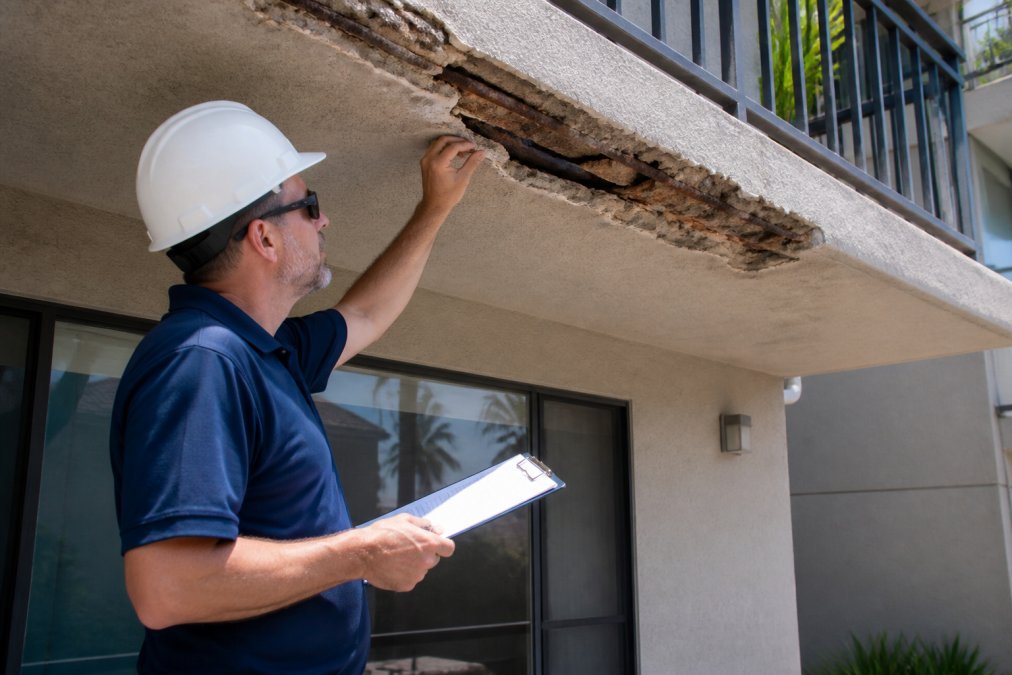
The retrofit path usually follows these steps:
- Measure the current rail height from the finished floor level
- Check every baluster gap against the 4-inch sphere
- Test post and rail stability under load
- Confirm handrail height on any connected stairs
- Document each fix with photos and measurements
A common mistake is patching the height without fixing the structure. A taller rail on a soft post still fails. Our guide on structural compliance steps lays out the full sequence for older buildings.
Booking a Compliance Inspection for Your Balcony Railings
Booking an inspection starts with knowing what the inspector will check. A compliance inspection confirms height, spacing, load strength, and structural condition, then documents the results for your records.
Before you book, run through this checklist:
- Measure guardrail height at several points
- Test the 4-inch sphere at every gap
- Check handrail height on connected stairs
- Look for rot, cracks, or loose posts
- Note the finished floor level at each balcony
- Gather prior inspection reports and permits
Our balcony safety inspection checklist covers what inspectors actually look for. For the broader code context these checks sit within, see our California building code balcony standards guide.
At Apex Balcony, our licensed inspectors check balconies, decks, and stairways against the standards that apply, and we give you a clear path to any repairs. The 2015 Berkeley and 2021 Malibu balcony collapses illustrate what can happen when structural warnings go unaddressed.
Railing height rules are easy to read and easy to get wrong in the field. A single measurement error can fail an inspection or leave a real safety gap.
Frequently Asked Questions
Is railing height 36 or 42 inches in California?
It depends on the building type and the code edition in force. The California Residential Code sets a 42-inch minimum for guardrails on balconies, decks, and other elevated surfaces in most residential occupancies, while handrails along stairways are typically measured to a lower height range. Older buildings may have been permitted under different code requirements. Confirm which code edition your building was permitted under before assuming a 42-inch requirement applies.
What is the 4-inch sphere rule for balcony railing openings?
The 4-inch sphere rule limits the size of openings in a guardrail so a small child cannot pass through. No gap in the railing, including the space between balusters and the space under the bottom rail, may allow a 4-inch sphere to pass through. This is one of the most common failures found during balcony inspections, and it applies to balcony railing height code compliance regardless of the overall railing height.
Do balcony railing requirements differ for stairs versus flat balconies?
Yes. A guardrail on a flat balcony is measured vertically from the finished floor level to the top rail, while a stair handrail follows the slope of the stair and is measured vertically above the stair tread nosing. The residential stair handrail height code uses a different measurement method than the flat-surface guardrail rule, so a railing that passes on the balcony may still fail on the connecting stairway.
How can I check whether an existing balcony railing meets code?
Start with three measurements: vertical height from the finished walking surface to the top rail, the largest gap between balusters, and the height of any intermediate rail. Then compare those numbers against the code edition your building was permitted under. Because measurement method matters as much as the number, a licensed inspector can document the readings and flag retrofitting needs before a building inspector or an HOA audit finds them first.
