What Landlords Need to Know About Balcony Safety Compliance
Balcony safety compliance for landlords means knowing SB 326 and SB 721 rules. Learn inspection deadlines, checklists, and how to document repairs.
Last Updated: November 20, 2026
Quick Summary
Balcony safety compliance for landlords is the legal duty to keep every elevated outdoor structure safe, inspected, and documented, covering railings, walking surfaces, supports, and waterproofing. California SB 721 requires periodic inspections of exterior elevated elements on covered multifamily buildings by a licensed professional, documented in writing.
- A Berkeley balcony collapse in 2015 killed six people and pushed state lawmakers to act.
- Lease clauses generally do not eliminate landlord liability for structural safety.
- Routine visual checks are monthly to quarterly; professional inspections follow the statutory schedule.
- Log findings as Critical, Serious, or Monitor, and escalate critical findings the same day.
- Keep inspection reports, photos, repair invoices, and tenant notices for at least the statutory retention period.
Table of Contents
- Why Balcony Safety Compliance Matters for Landlords
- California SB 721 Balcony Inspection Requirements
- Landlord Balcony Inspection Checklist
- Routine Visual Checks vs. Professional Inspections
- How to Write a Balcony Safety Compliance for Landlords Letter
- Balcony Inspection Report and Documentation for Insurance
- Building Codes, Local Regulations, and Tenant Responsibilities
- Book Your Balcony Safety Inspection with Apex Balcony
- Frequently Asked Questions
Why Balcony Safety Compliance Matters for Landlords
Balcony safety compliance for landlords is the legal duty to keep every elevated outdoor structure safe, inspected, and documented, railings, walking surfaces, supports, and waterproofing. This guide covers what you must do, when, and how to prove it.
The stakes are not abstract. A Berkeley balcony collapse in 2015 killed six people (Berkeley balcony collapse leaves 6 people dead). Incidents like these have pushed state lawmakers to act.
The Human and Financial Cost of Neglect
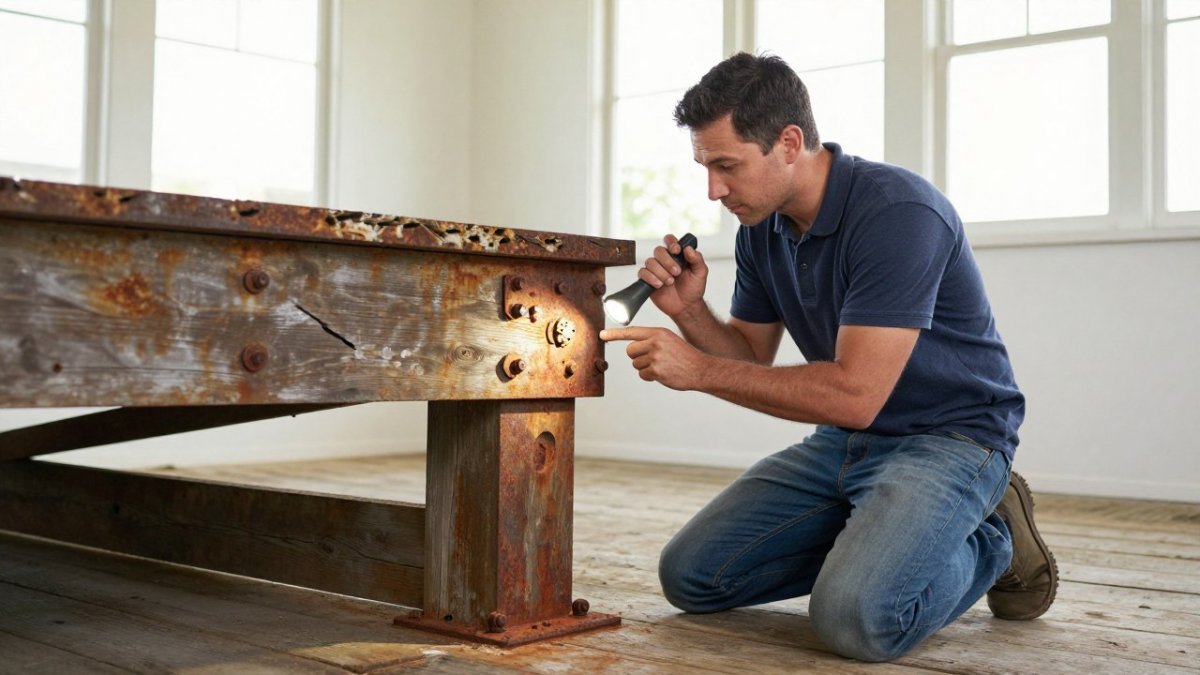
A failed balcony rarely fails without warning. Cracks, rust stains, soft wood, and pooling water show up first. Ignore them and the repair bill grows while the risk grows faster.
A single injury claim can outrun the value of the building, and insurers now ask pointed questions about inspection records before renewing a policy.
Your Duty of Care and Liability Exposure
Duty of care is the legal obligation to protect people who use your property from foreseeable harm, residents, guests, delivery workers, and anyone else who steps onto a balcony.
Liability exposure shows up in three places:
- Civil lawsuits from injured parties
- Fines and enforcement actions from local building departments
- Insurance denial when records show you knew about a hazard and did nothing
A common mistake is assuming a lease clause shifts this risk to the tenant. Landlord liability for structural safety is generally not eliminated by lease terms.
California SB 721 Balcony Inspection Requirements
California SB 721 requires periodic inspections of exterior elevated elements on covered multifamily buildings by a licensed professional, documented in writing. Review the statute itself to confirm which buildings and elements are covered.
Which Buildings Are Covered and When Inspections Are Due
Inspection deadlines are set by the statute and tied to the building’s compliance period. If you own a covered building and have not checked your due date, do it now.
For a detailed breakdown of deadlines and building eligibility, see our guide to SB 721 inspection requirements for landlords.
Landlord Balcony Inspection Checklist
A landlord balcony inspection checklist is a structured list you work through on every walkthrough, covering structure, railings, surfaces, drainage, and connections. Use our California Balcony Safety Inspection Checklist to perform or prepare for the inspection described in this section.
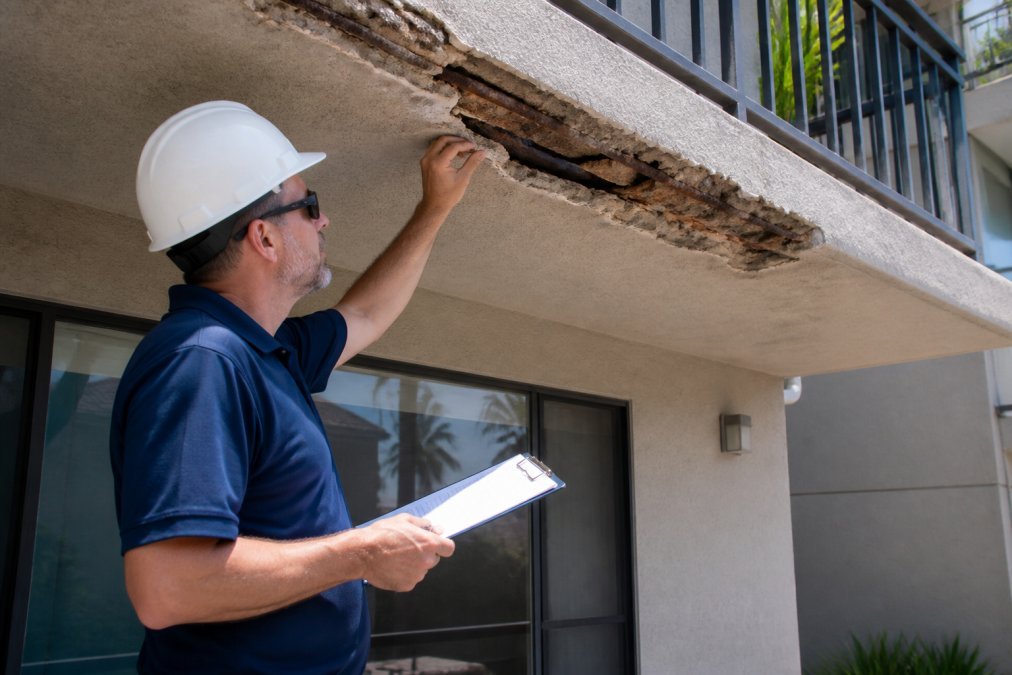
Start with a visual walkthrough from below, then move up top. Note anything that looks different from the last visit.
- Cracks in concrete slabs, columns, or soffits
- Rust stains or exposed rebar
- Soft, spongy, or splintering wood
Structural Integrity and Signs of Deterioration
Structural integrity is the ability of a balcony’s supports and connections to carry the loads placed on them. When it fails, it usually fails at the connections first.
Watch for these warning signs:
- Diagonal cracks that grow over time
- Crumbling concrete at the edges
- Dark streaks that suggest water intrusion
Water intrusion is a common contributor to balcony deterioration. Water gets in, wood rots or steel corrodes, and load capacity can drop without obvious warning.
Railings, Balustrades, and Guardrail Safety
Railings are the last line of defense against a fall. A guardrail must hold firm when someone leans on it, and baluster gaps must be narrow enough to stop a child from slipping through.
Check these points every visit:
- Push hard on each post. Any give means a problem.
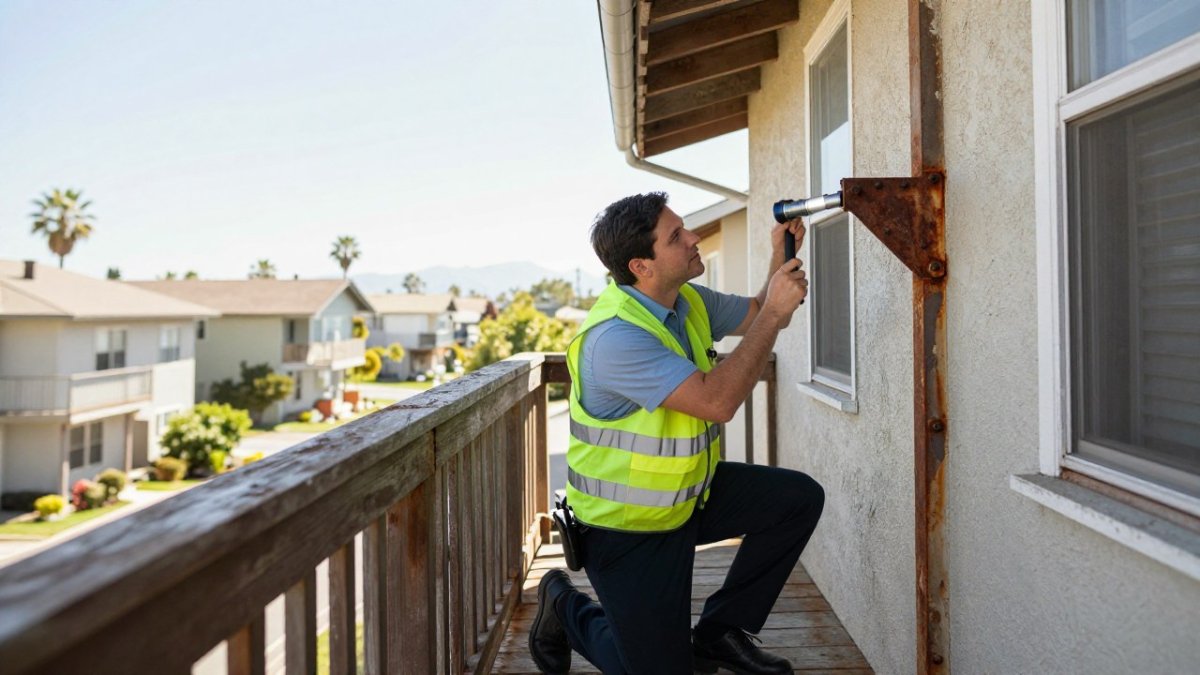
- Look for rust at the base plate and anchors.
- Confirm handrails are secure and continuous.
Routine Visual Checks vs. Professional Inspections
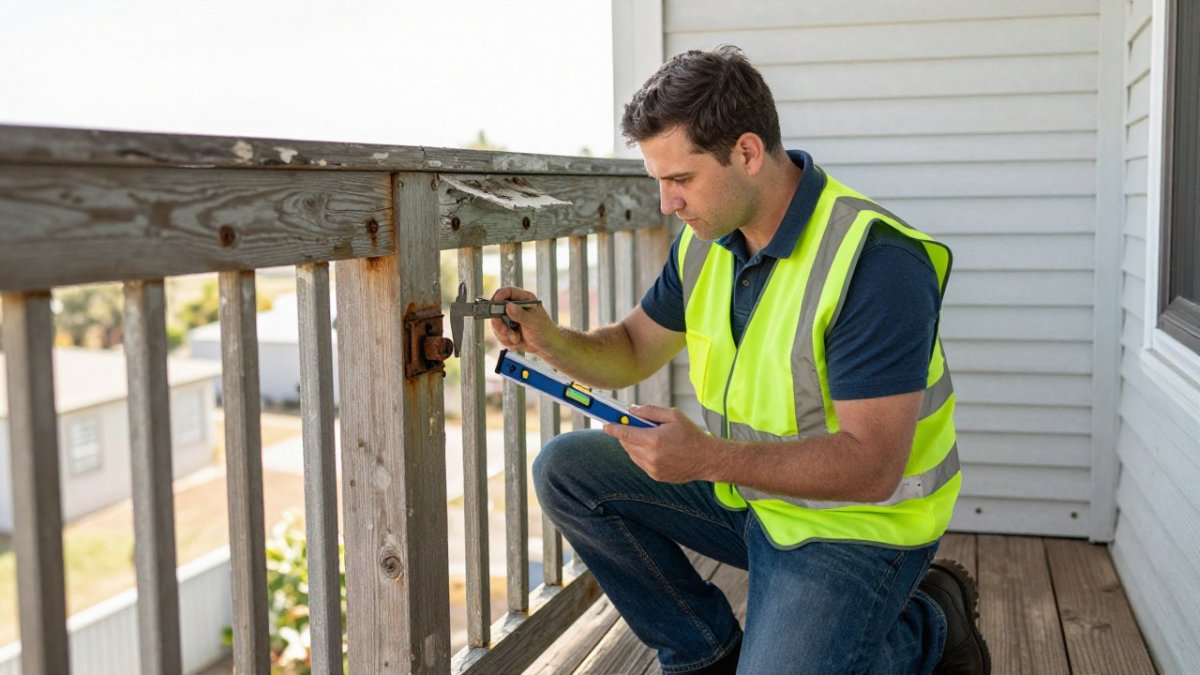
Routine visual checks and professional inspections are not the same thing. A visual check is a quick, frequent look for changes.
Here is how they compare:
| Feature | Routine Visual Check | Professional Inspection |
|---|---|---|
| Who performs it | Owner or property manager | Licensed inspector |
| Frequency | Monthly to quarterly | Per statutory schedule |
| Depth | Surface observations | Structural and material assessment |
| Output | Notes and photos | Signed written report |
| Legal weight | Supports your records | Meets compliance requirements |
A visual check catches problems early. A professional inspection proves compliance and gives you a report that holds up under scrutiny.
Watch out: treating a quick walkthrough as a substitute for a licensed inspection can leave a gap in your compliance record.
How to Write a Balcony Safety Compliance for Landlords Letter
A balcony safety compliance for landlords letter is a written notice to tenants about an upcoming inspection, stating the date, the reason, what access is needed, and what tenants should do to prepare.
Send it early, keep it plain, and include these elements:
- The inspection date and a backup window
- The legal basis for the inspection
- Which areas need access
Keep a copy of every letter. It becomes part of your compliance file.
For help drafting proper notice language and handling tenant questions, see our guide on how to communicate safety inspection schedules to tenants.
Balcony Inspection Report and Documentation for Insurance
A balcony inspection report is the signed written record of what the inspector found and what needs fixing. It is the single most important document in your compliance file, but a report alone is not a compliance system. Insurers and auditors want a closed loop: inspection scheduled, findings logged, hazards escalated, repairs signed off, tenants notified, and records retained.
The Compliance Workflow, Step by Step
- Schedule the inspection before the deadline. Work backward from the statutory due date and book with enough lead time to reschedule if weather or access fails. Put the due date and booked date in a shared calendar with a reminder 60 days out.
- Send tenant notice. Use a written notice stating the date, backup window, legal basis, areas needing access, what to clear from the balcony, a contact name and phone number, and how long the inspection takes. Keep a copy in the compliance file.
- Conduct the inspection and collect the report. Confirm the inspector’s credential matches the statute and that the report is signed and dated.
- Log every finding with a severity rating. Use a three-tier scale: Critical (imminent risk of collapse or fall, restrict access immediately), Serious (deterioration that will become critical without repair, schedule repair on a defined timeline), and Monitor (early-stage wear, re-check at the next visual walkthrough).
- Escalate critical findings the same day. Restrict access, notify tenants in writing, and engage a licensed engineer or contractor for a repair scope. Do not wait for the next scheduled inspection.
- Complete repairs and obtain sign-off. Keep the contractor’s invoice, completion date, and photos of the repaired condition. If the repair changes the structure, confirm whether a re-inspection is required.
- Reopen the balcony only after sign-off. Document the reopening date and the basis for it.
- Retain the file. Keep the inspection report, inspector credentials, photos, repair invoices, tenant notices, acknowledgment records, and visual-check log together for at least the statutory retention period, and longer if your insurer requires it.
Escalation Criteria: What Triggers Immediate Action
Not every finding waits for the next cycle. Treat any of the following as a critical finding that requires same-day access restriction and specialist assessment:
- Visible movement, sagging, or bounce in the walking surface or supports.
- Diagonal or widening cracks in concrete, or exposed, corroded rebar.
- Soft, spongy, or crumbling wood at post bases, ledgers, or connections.
Watch out: leaving a balcony open after documenting a critical finding creates avoidable liability exposure.
Tenant Communication Templates and Timelines
Keep three short templates ready so you are not drafting under pressure:
- Inspection notice, sent at least the period required by your lease or local law before the visit; states date, window, access, and preparation.
- Access restriction notice, sent the same day a critical finding is identified; states that the balcony is closed, the reason, the expected duration, and how tenants will be notified when it reopens. Ask for written acknowledgment and log who responded.
- Reopening notice, sent after repair sign-off; states the reopening date and confirms the balcony is safe for normal use.
Log the date each notice was sent, the method (email, portal, posted notice), and any acknowledgment. If a tenant does not acknowledge, document the follow-up attempt.
The Insurance File
Insurance carriers may ask for records of inspections and repairs. Keeping a clear paper trail supports your position if coverage questions arise. Assemble the file in this order so an underwriter can follow it:
- The inspection report and the inspector’s credentials.
- Photos of every defect found, labeled by location and date.
- The severity log and the escalation record for each critical finding.
To understand how documentation and non-compliance affect your policy, read our breakdown of SB 326 and SB 326 non-compliance insurance implications.
Building Codes, Local Regulations, and Tenant Responsibilities
Building codes set the minimum safety standards for railings, loads, and materials. Local regulations add inspection schedules and reporting rules on top. Both apply at the same time, and neither excuses you from the other.
The Codes That Actually Govern a Balcony
Three layers of rules apply to almost every multifamily balcony in the United States:
- The model building code adopted by your jurisdiction. Many jurisdictions adopt a version of the International Building Code (IBC) or the International Residential Code (IRC), published by the International Code Council. Confirm the edition and numeric requirements (guardrail height, baluster spacing, live loads) that your local building department has adopted, since local amendments may differ.
- State and local inspection statutes. These create a legal duty to inspect on a schedule, not just to build correctly. Examples include California SB 721 and California SB 326. Other states and cities have their own facade-inspection or balcony-inspection ordinances, and the trigger, frequency, and inspector qualifications differ, so confirm the rule for each property address rather than assuming one state’s schedule applies everywhere.
- Occupational and fire rules for shared or commercial balconies. If a balcony is accessible to the public or used by employees, OSHA walking-working-surface and guardrail rules and local fire-code egress requirements can apply in addition to the building code.
A common pattern is for a landlord to read one state’s inspection statute and assume it is universal. It is not. Build a short jurisdiction profile for each property: which code edition is adopted, which inspection statute (if any) applies, who is qualified to inspect, and what the record-retention period is. That jurisdiction-by-jurisdiction approach also matters when evaluating access methods for inspections, since rope descent systems may be subject to requirements distinct from balcony-specific rules.
A Jurisdiction Profile You Can Build in an Afternoon
For each property, record these fields in your compliance file:
- Adopted code edition and local amendments, confirm with the local building department, not a blog.
- Applicable inspection statute or ordinance, name it, cite the section, and note the covered building types and element types.
- Inspector qualification, licensed architect, licensed engineer, certified inspector, or other credential the statute names.
- Inspection interval and first-due date, calculate from the statute’s compliance window, not from the date you bought the building.
- Report contents and filing destination, some jurisdictions require a report to be filed with the local agency, not just kept on site.
- Record-retention period, keep records at least as long as the statute requires, and longer if your insurer asks.
Watch out: treating a neighboring city’s schedule or a generic online summary as your legal requirement can lead to a violation. Confirm the requirement with the local building department.
Tenant Responsibilities That Actually Reduce Your Risk
Tenant duties are not a substitute for landlord duties, but they are a useful early-warning layer. Put these expectations in the lease and reinforce them in writing:
- Report cracks, rust stains, soft wood, wobbly railings, or standing water immediately through a documented channel (a maintenance portal or written notice, not a phone call that leaves no record).
- Do not overload the balcony with grills, planters, furniture, or storage; confirm the posted or lease-stated load limit and keep heavy items near the supported edge, not the cantilevered tip.
- Keep drains and scuppers clear of leaves and debris.
Landlord responsibilities that run alongside them:
- Schedule and pay for required inspections.
- Complete safety-critical repairs within a defined timeframe, and restrict access to any balcony that is not safe.
- Keep records for the required period and make them available to the inspector and insurer.
A shared duty of care works best when both sides know their role and every report leaves a paper trail. Give tenants a simple reporting channel, log every report, and close the loop in writing.
Book Your Balcony Safety Inspection with Apex Balcony
Compliance is a process, not a one-time event.
That is where we come in. Apex Balcony provides professional balcony safety inspections for California property owners.
We have worked with hundreds of building owners. If you are ready to protect your residents and your assets, book a balcony safety inspection with our team.
The real risk is not the inspection fee. It is the repair you never scheduled and the report you never wrote.
Frequently Asked Questions
What are landlords responsible for when it comes to balcony safety?
Landlords must maintain balconies, decks, and stairways in safe condition, which includes regular visual checks and professional inspections required by law. In California, SB 721 requires inspections of balconies and other elevated exterior elements for buildings with three or more units. Landlords also have a duty of care to warn tenants of hazards, restrict access to unsafe areas, and keep records of inspections and repairs. Failing to meet these responsibilities can lead to liability for injuries or property damage.
How often should landlords inspect balconies?
California SB 721 requires periodic professional inspections of balconies, decks, and stairways for covered buildings; confirm the current interval in the statute. Between professional inspections, landlords should perform routine visual checks at least annually and after any extreme weather event. A simple landlord balcony inspection checklist can help you spot cracks, corrosion, loose railings, or water damage early. Document each check and address any issues promptly to maintain balcony safety compliance.
What is California SB 721, and which rental buildings does it cover?
California SB 721 is a law that mandates periodic inspections of balconies, decks, and other elevated exterior elements in rental buildings with three or more dwelling units. Confirm the buildings covered and the qualified inspector types in the current statute. The law aims to prevent balcony collapses by identifying structural issues early. Compliance deadlines vary based on building type and location.
What should landlords do if a balcony inspection finds structural damage?
If an inspection reveals structural damage, landlords must act quickly to protect tenants. First, restrict access to the affected balcony until repairs are completed. Notify tenants in writing about the hazard and the repair timeline. Hire a licensed contractor to perform the necessary repairs, and obtain all required permits. Keep detailed records of the inspection report, repair invoices, and communication with tenants. This documentation demonstrates your commitment to balcony safety compliance and can help with insurance claims or legal defense.