
Table of Contents
- What Is the 15 Percent Sampling Rule for Balconies?
- SB 326 Balcony Inspection Requirements and the Sampling Rule
- How to Calculate Balcony Inspection Sample Size
- Selecting a Statistically Significant Sample for Balcony Inspection
- Balcony Inspection Findings and Follow-Up Actions
- SB 721 vs. SB 326: How the Sampling Rule Differs
- Common Questions About the 15 Percent Rule
- Next Steps: Planning Your Balcony Inspection
- Frequently Asked Questions
Last Updated: October 11, 2026
What Is the 15 Percent Sampling Rule for Balconies?
The 15 percent sampling rule balconies is a statistical inspection requirement that allows property owners to assess the condition of exterior elevated elements without inspecting every single balcony, deck, stairway, or landing on a multifamily building. Instead of a full 100 percent inspection, qualified inspectors examine at least 15 percent of each element type to draw conclusions about the overall structural integrity of the property.
This approach makes compliance more feasible for larger buildings while still identifying safety hazards early. When you understand the 15 percent sampling rule for balconies, you recognize it’s not a loophole, it’s a statistically defensible method that state law recognizes as sufficient for determining whether structural deterioration exists across a property’s exterior elevated elements.
The rule stems from California’s two major balcony safety laws: Senate Bill 326 (SB 326) for condominiums and Senate Bill 721 (SB 721) for multifamily rental properties. Both laws mandate regular inspections of balconies and other exterior elevated elements to catch water damage, wood rot, and structural failure before they become life-safety hazards.
SB 326 Balcony Inspection Requirements and the Sampling Rule
SB 326 applies to condominium associations and requires inspections of all exterior elevated elements at least once every six years. The statute defines exterior elevated elements broadly: balconies, decks, stairs, landings, walkways, and any other load-bearing or weather-exposed component attached to the building.
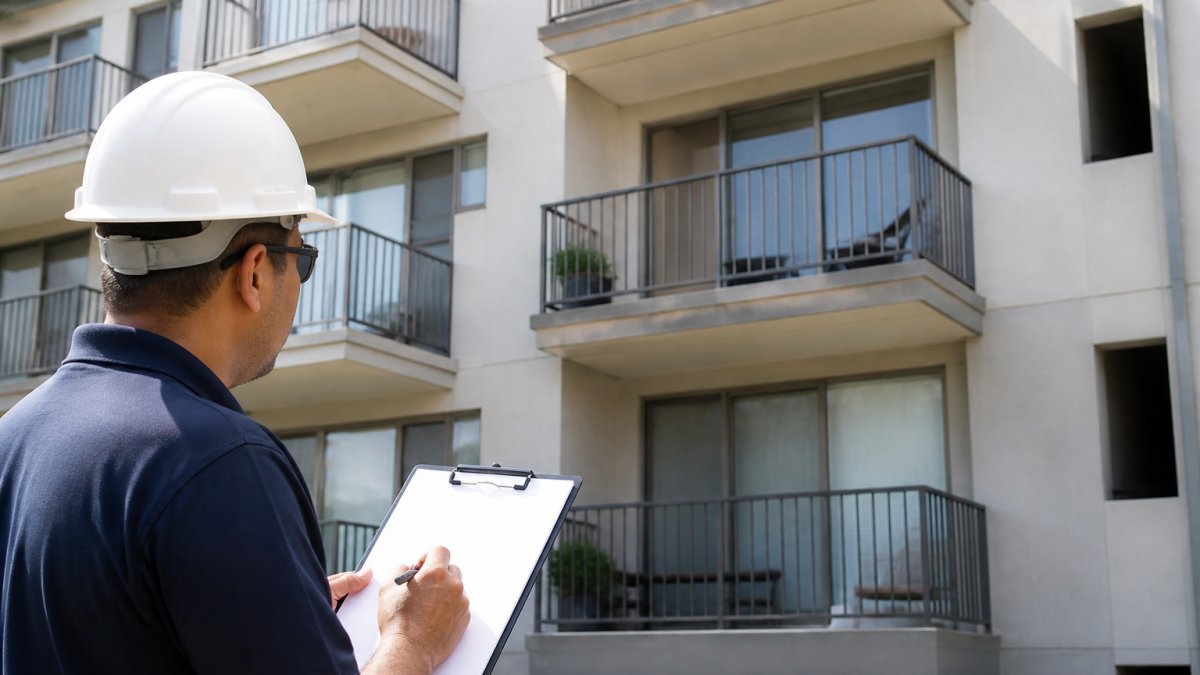
The 15 percent sampling rule for balconies under SB 326 works like this: inspectors must visually assess at least 15 percent of each element type on the property. If a building has 100 balconies, the inspector samples at least 15 of them.
What makes this requirement distinct from casual observation is the definition of “qualified inspector.” California law requires that inspections be performed by a licensed architect, structural engineer, or general contractor with at least ten years of experience in residential building inspection.
The inspection itself is a thorough visual assessment. Inspectors look for water intrusion, wood rot, rust, cracked welds, deteriorated concrete, missing fasteners, and any signs that the element has lost its structural capacity. They document their findings in a written inspection report that becomes part of the building’s permanent record.
How to Calculate Balcony Inspection Sample Size
Calculating the sample size under the 15 percent sampling rule for balconies requires two steps: first, count the total number of each element type on the property; second, multiply by 0.15 and round up to the nearest whole number.
Step-by-Step Calculation Example
Let’s walk through a practical example. Imagine a 60-unit apartment building with the following exterior elevated elements:
- 60 individual unit balconies
- 12 shared deck areas
- 8 exterior stairways
- 4 landings serving common areas
For the unit balconies: 60 × 0.15 = 9 balconies must be inspected.
For shared decks: 12 × 0.15 = 1.8, which rounds up to 2 decks.
For exterior stairways: 8 × 0.15 = 1.2, which rounds up to 2 stairways.
For landings: 4 × 0.15 = 0.6, which rounds up to 1 landing.
In this example, the inspector would examine at least 9 unit balconies, 2 shared decks, 2 stairways, and 1 landing, a total of 14 elements across the property. The inspection report documents the condition of each sampled element and draws conclusions about the overall condition of that element type across the entire building.
Sampling by Element Type
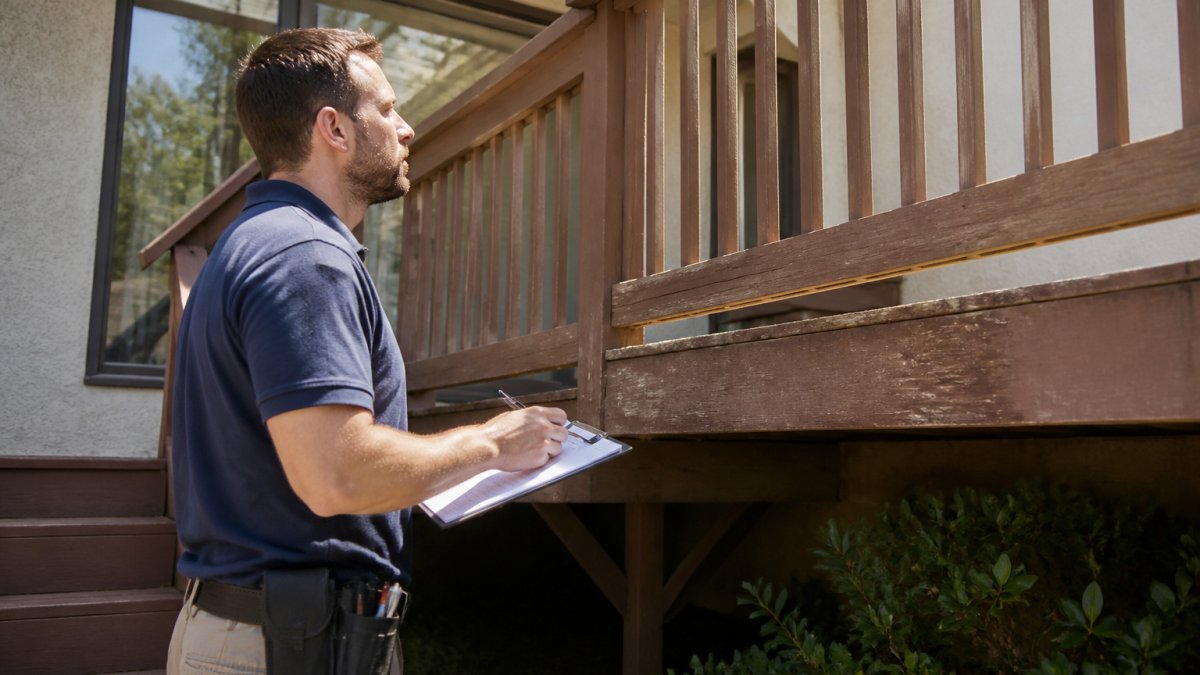
The statute requires that each element type be sampled separately. This distinction matters because a building might have balconies in excellent condition but exterior stairs showing significant deterioration. If inspectors were allowed to lump all exterior elements together, they could sample nine balconies and zero stairs, missing critical damage to the stairways.
Element types that must be sampled separately include:
- Unit balconies or decks
- Shared or common area decks
- Exterior stairways
- Landings
- Walkways
- Any other load-bearing or weather-exposed elevated element
Within each element type, inspectors should distribute the sample across the building to capture variation. A 60-unit building with balconies on the north, south, east, and west sides should have sampled balconies from each exposure. Elements that receive different amounts of sun, rain, or wind may deteriorate at different rates, so representative sampling must account for that variation.
Selecting a Statistically Significant Sample for Balcony Inspection
Statistically significant sampling means the sample is large enough and distributed broadly enough that the inspector’s findings reasonably reflect the condition of the entire element type. The 15 percent threshold was chosen as a practical balance: large enough to catch widespread problems, small enough to keep inspection costs manageable for property owners.
A qualified inspector knows that a random sample drawn from across the building is more reliable than a convenience sample (picking the easiest elements to reach). If all sampled balconies happen to be on the sunny south side, the sample might miss water damage that occurs primarily on the shaded north side.
When the 15 percent sampling rule for balconies reveals damage in the sample, the property owner faces a decision: repair the damaged elements, or conduct a full 100 percent inspection to determine the true scope of the problem. Many property owners choose the full inspection after a sampled element shows significant deterioration, because the cost of repairs is often higher than the cost of a complete inspection.
Balcony Inspection Findings and Follow-Up Actions
Once the inspection is complete, the qualified inspector produces a written report documenting the condition of each sampled element. The report identifies any deterioration, rates its severity, and recommends next steps, repair, replacement, or continued monitoring.
If the sample reveals no significant deterioration, the property owner typically schedules the next inspection for six years later (under SB 326) or as required by local ordinance (under SB 721). If damage is found, the property owner must notify affected residents and usually engage a contractor to assess repair costs and timelines.
California law does not mandate that owners repair damage immediately, but it does require transparency. Once deterioration is documented in an inspection report, the owner cannot ignore it, residents have a right to know about structural hazards, and failure to disclose can expose the owner to liability. Many buildings prioritize repairs based on severity: life-safety hazards like unstable railings or cracked support beams take priority over cosmetic issues like weathering or minor surface rust.
SB 721 vs. SB 326: How the Sampling Rule Differs
SB 721, enacted in 2018, applies to multifamily rental properties (apartments, not condos) and established stricter timelines than SB 326. Under SB 721, the first inspection must occur by January 1, 2025, for buildings constructed before January 1, 2020. After that initial inspection, subsequent inspections occur every six years, mirroring SB 326’s cycle.
The 15 percent sampling rule for balconies applies to both laws, but SB 721 added an important wrinkle: buildings that fail the initial inspection, meaning the sample reveals deterioration requiring repair, must conduct a full 100 percent inspection to determine the true scope of damage.
In practice, the difference means SB 721 buildings are more likely to move to full inspections after the initial sample, while SB 326 condos have more flexibility to address only the damaged elements identified in the 15 percent sample. Both laws require written inspection reports and notification of residents, and both recognize the 15 percent sampling rule as a legitimate starting point for compliance.
Common Questions About the 15 Percent Rule
Does the 15 percent sample have to be the same elements every inspection cycle?
No. The statute does not require inspectors to sample the same balconies or stairs every six years. A new sample can be drawn from the full population of elements each cycle.
What if an element in the sample shows damage but similar elements outside the sample appear fine?
The inspector’s job is to report what they observe in the sample. If one sampled balcony shows significant wood rot but nearby balconies appear intact, the report documents this variation.
Can a property owner choose which elements to sample?
No. The inspector must select the sample, and it must be representative. Allowing property owners to cherry-pick which balconies to inspect would defeat the purpose of the sampling rule.
How long does a 15 percent sample inspection typically take?
The duration depends on the building’s size, complexity, and condition. A small 12-unit building might require a few hours. A large 200-unit complex with multiple element types could take two to three days.
Next Steps: Planning Your Balcony Inspection
If your building is subject to SB 721 or SB 326, the first step is to confirm your compliance deadline.
Next, engage a qualified inspector, a licensed architect, structural engineer, or general contractor with at least ten years of residential building inspection experience. The inspector will conduct the 15 percent sampling rule balconies inspection, document findings, and provide a written report.
After the inspection, review the report with your board or management company. If damage is identified, obtain repair estimates and prioritize work based on severity. If the sample reveals no significant deterioration, document this result and schedule your next inspection accordingly.
Understanding the 15 percent sampling rule for balconies helps property owners to approach compliance strategically. The rule is not a shortcut, it’s a proven statistical method that balances thorough assessment with practical feasibility.
Balcony safety is not a future concern, it’s a present obligation. According to California Building Standards Commission guidance on exterior elevated element inspection, properties that delay inspections face legal liability and potential fines.
Frequently Asked Questions
What does the 15% sampling rule mean for balcony inspections?
The 15 percent sampling rule requires inspectors to examine at least 15% of each type of exterior elevated element (balconies, decks, stairways, landings) in a multifamily building. This statistically significant sample provides reasonable assurance that deterioration or defects are identified across the property. If a building has 100 balconies, inspectors must visually assess at least 15 of them. The rule applies separately to each element type, so 15% of balconies, 15% of decks, and 15% of stairways are inspected independently.
How is the 15% sample size calculated for an SB 326 inspection?
Divide the total number of elements by 100 and multiply by 15. For example: 80 balconies ÷ 100 × 15 = 12 balconies to inspect. Always round up fractional results (8.5 rounds to 9). If a building has multiple element types, say 60 balconies, 40 decks, and 20 stairways, calculate 15% for each separately: 9 balconies, 6 decks, and 3 stairways. This ensures each type receives representative sampling based on its own population.
Does the 15% sampling rule apply to SB 721 inspections?
Yes. Both SB 326 (for condominiums) and SB 721 (for apartment buildings) require the 15 percent sampling rule for exterior elevated elements. The difference lies in who must comply: SB 326 applies to condominium associations, while SB 721 applies to multifamily rental properties with three or more units. In both cases, inspectors must examine at least 15% of each element type and provide written findings within the required inspection cycle.
What happens if an inspection finds a problem in the sampled balconies?
When deterioration or structural damage is found in a sampled element, the inspector documents it in the written report and recommends repair or further investigation. Building owners must then decide whether to repair only the damaged element or conduct a full inspection of all similar elements to assess the extent of the problem. If significant issues are discovered in the sample, a full inspection may be warranted to avoid liability and ensure resident safety. The inspection report guides the property owner’s next steps.
How should balconies be selected for an inspection sample?
Inspectors select a representative sample by choosing elements distributed across different areas of the building, exposure conditions, and construction ages. Rather than inspecting only ground-floor or south-facing balconies, a qualified inspector selects from varied locations to capture potential differences in weather exposure and deterioration patterns. This approach ensures the sample reflects the overall condition of the building’s exterior elevated elements and reduces the risk of missing localized problem areas.
Can an inspector recommend inspecting more than 15% of a building’s balconies?
Yes. The 15 percent sampling rule establishes a minimum threshold. If an inspector identifies signs of widespread deterioration, water damage, or structural concerns in the initial sample, they can recommend a more comprehensive inspection of additional elements or the entire population. A full inspection may also be prudent if the building is older, has a history of maintenance issues, or if the sample reveals unexpected damage patterns that suggest broader problems.