
Table of Contents
- What Liquid Applied Waterproofing Actually Does for Balconies
- Signs of Balcony Water Damage and When You Need Waterproofing
- Liquid Applied Membranes vs. Other Waterproofing Methods
- Balcony Waterproofing Cost Breakdown and ROI
- SB 326 Balcony Inspection Requirements and Waterproofing
- Professional Installation vs. DIY: Risks and Reality
- The Real Durability and Lifespan of Liquid Applied Systems
- Is Liquid Applied Waterproofing Worth the Investment?
- Frequently Asked Questions
Last Updated: September 28, 2026
What Liquid Applied Waterproofing Actually Does for Balconies
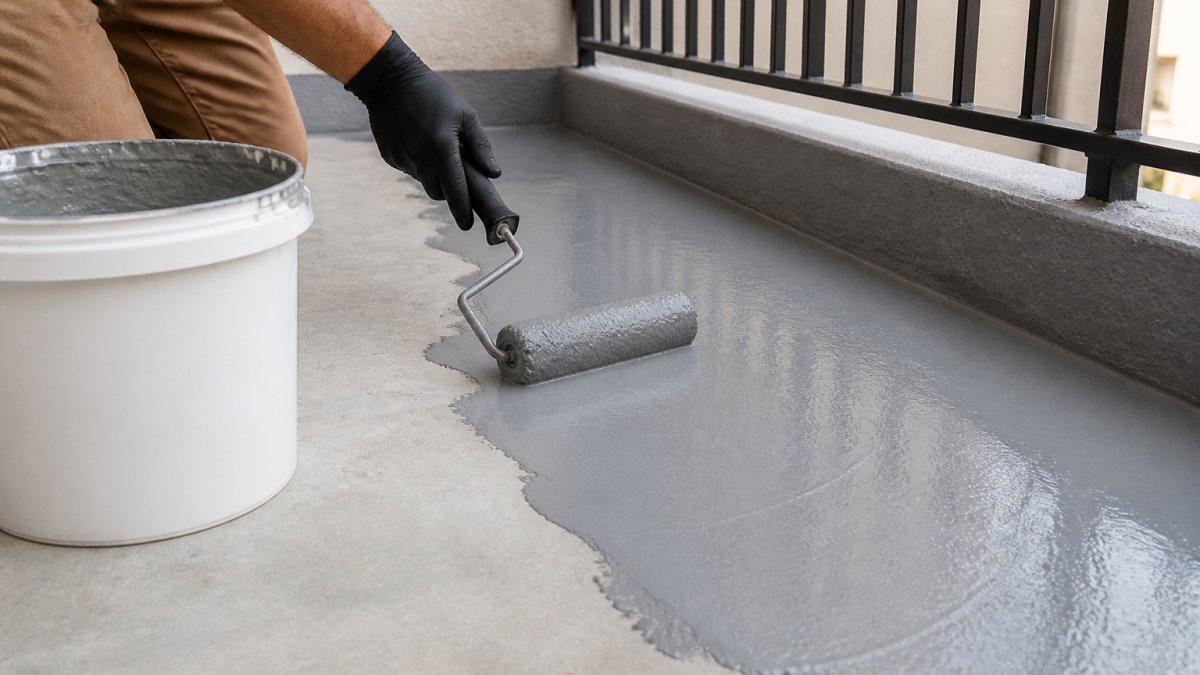
Liquid applied waterproofing creates a seamless, monolithic barrier that prevents water from penetrating concrete and substrate materials. Unlike sheet membranes or traditional sealants, this approach bonds directly to the surface and fills micro-cracks that water exploits. The right waterproofing system can add years to a balcony’s structural life by stopping moisture before it reaches the frame and rebar underneath.
The core function is straightforward: water is the enemy of concrete. Once it seeps past the surface, it triggers corrosion in rebar, freeze-thaw cycles that crack concrete, and wood rot in framing. A liquid applied membrane creates a physical barrier that stops this cycle at the source. The seamless finish eliminates weak points where water can find its way through seams or overlaps.
What makes liquid applied systems different from other waterproofing techniques is their flexibility. They expand and contract with temperature changes, bridge small cracks as they develop, and maintain adhesion even as the underlying substrate moves. This crack bridging capability is critical in climates with significant thermal expansion or where minor settling occurs.
The effectiveness of any liquid applied system depends entirely on substrate preparation. Dirt, algae, old sealant residue, and loose concrete all prevent proper adhesion. This is why professional installation matters, most DIY failures trace back to inadequate surface cleaning.
Signs of Balcony Water Damage and When You Need Waterproofing
Water damage on balconies rarely announces itself loudly until the problem is severe. The early warning signs are subtle, which is why many property owners miss the window for preventive treatment. By the time visible damage appears, water has often been working behind the scenes for months or years.
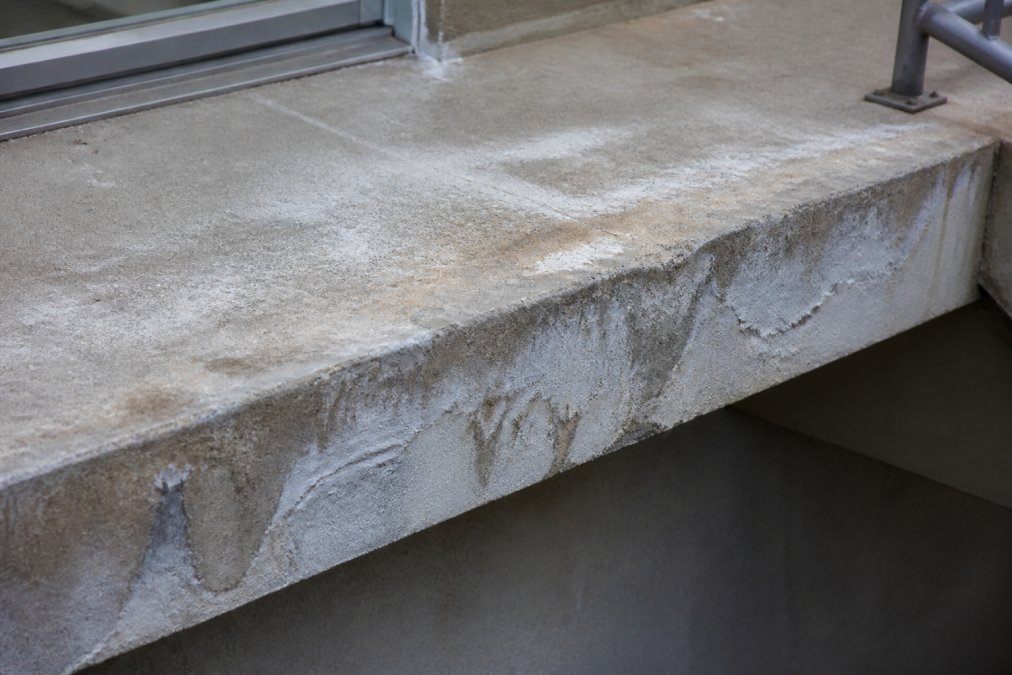
Look for efflorescence first, white, chalky deposits that appear on concrete surfaces. This is a sign that water is moving through the material and depositing mineral salts as it evaporates. Dark stains, discoloration, or areas where the concrete looks darker than surrounding sections indicate active moisture. Spalling (small pieces of concrete flaking away) means water has already frozen inside the material and is breaking it apart from within.
Balcony railings are another telltale area. If the bolts or fasteners show rust staining, or if the railing feels loose or moves more than it should, water intrusion into the structural connections is likely. Check the underside of the balcony from the unit below, water stains on the ceiling, peeling paint, or soft spots in the substrate are critical signs that the balcony above is leaking.
Ponding water (water that sits on the balcony surface rather than draining) is a red flag. This means either the drainage slope is inadequate or the surface has settled. Either way, standing water accelerates damage dramatically. If you see this, waterproofing becomes urgent rather than preventive.
When to act: If your building is over 10 years old and has never been waterproofed, or if you see any of these signs, an inspection should be your next step. Many California properties are now required to address balcony safety under SB 326 and SB 721 regulations, which often trigger waterproofing recommendations during structural inspections (Bill Text).
Ignoring early water damage is expensive. A small leak that costs $5,000 to waterproof now can become a $50,000+ structural repair in 3-5 years. The cost of prevention is always lower than the cost of remediation.
Liquid Applied Membranes vs. Other Waterproofing Methods
Three main waterproofing approaches compete for balcony protection: liquid applied membranes, sheet membranes, and sealants. Each has legitimate applications, but they’re not interchangeable. Understanding the differences helps you match the right solution to your specific situation.
Sheet Membranes and Their Limitations
Sheet membranes (also called roll-on or torch-down membranes) have been the industry standard for decades. They’re installed in layers, overlapped at seams, and sometimes heat-welded together. The appeal is straightforward: they’re a proven technology with a long track record.
The problem is equally straightforward: seams are weak points. Water doesn’t respect overlaps. Over time, seams separate due to thermal expansion, substrate movement, or poor installation. A single failed seam can compromise the entire system. Sheet membranes also struggle with complex geometries, corners, railings, penetrations, and irregular surfaces require custom cuts and additional seams.
Installation is labor-intensive and slow, which drives up costs. Sheet membranes also require more surface preparation and are more sensitive to wet conditions during installation.
Sealants and Coatings: A Temporary Fix
Caulks and sealants are the cheapest option and the most common reason why balcony problems get worse instead of better. These products fill cracks and gaps but don’t create a protective barrier over the entire surface. They’re designed for joints and movement, not for waterproofing the full substrate.
Sealants degrade under UV exposure, thermal cycling, and foot traffic. Most fail within 3-5 years. When they fail, water flows underneath and exploits the cracks they were supposed to seal. This creates a false sense of security, the property owner thinks the balcony is protected when it’s actually more vulnerable than before.
Thin coatings (paint-like products) offer slightly better coverage but the same fundamental problem: they’re not thick enough to bridge cracks or accommodate structural movement. A coating that’s 10-15 mils thick (most thin coatings) cannot match the performance of a liquid applied membrane that’s 40-60 mils thick or thicker.
Sealants and coatings have a role in maintenance, they’re appropriate for annual touch-ups and minor crack filling.
Balcony Waterproofing Cost Breakdown and ROI
Cost is where the real decision happens. Liquid applied waterproofing requires a significant upfront investment, but the return comes from extended structural life and avoided repairs.
| Waterproofing Method | Typical Lifespan | Maintenance Frequency | Best For |
|---|---|---|---|
| Liquid Applied Membrane | 15-25 years | Annual inspection | Long-term protection, complex geometries |
| Sheet Membrane | 10-15 years | Every 3-5 years | Standard flat surfaces, budget-conscious |
| Sealant/Coating | 3-5 years | Annual reapplication | Temporary fixes, maintenance only |
The cheapest option upfront (sealants) becomes the most expensive option over 20 years because you’re reapplying every 3-5 years. Liquid applied systems cost more initially but deliver the lowest total cost of ownership.
SB 326 Balcony Inspection Requirements and Waterproofing
California’s SB 326 and SB 721 regulations have changed the waterproofing conversation entirely. These laws require structural inspections of balconies, decks, and elevated exterior elements on buildings with three or more units. Inspections must identify water damage, structural deterioration, and safety hazards.
Professional Installation vs. DIY: Risks and Reality
The temptation to DIY waterproofing is understandable, labor costs are high, and the work looks straightforward. This is where many balcony projects go wrong.
One failed DIY waterproofing project often costs more to fix than hiring a professional would have cost initially. The membrane must be removed, the substrate re-prepared, and the system reapplied correctly. Budget for this possibility if you’re considering DIY.
The Real Durability and Lifespan of Liquid Applied Systems
A properly installed liquid applied membrane should last 15-25 years, depending on the specific product, climate, and maintenance. This is significantly longer than sheet membranes or sealants, but it’s not permanent.
Is Liquid Applied Waterproofing Worth the Investment?
The answer depends on your specific situation, but for most California property owners, the investment makes financial and legal sense.
Liquid applied waterproofing is worth the investment if you’re protecting a balcony for the long term. The 15-25 year lifespan, superior crack bridging, and seamless finish justify the upfront cost when compared to alternatives that fail sooner or require constant maintenance.
Frequently Asked Questions
What is the best type of waterproofing for a balcony?
Liquid applied waterproofing systems offer seamless protection without seams that can fail, making them superior to sheet membranes for complex balcony shapes. The best choice depends on your substrate, climate, and whether you want a finished walking surface or tile application. Life Specialty Coatings AMAC System and Westcoat MACoat are designed specifically for this purpose, while Laticrete Hydro Ban works best under tile. Professional installation ensures proper mil thickness and adhesion strength, which directly affects long-term durability.
How does liquid applied waterproofing compare to sheet membranes for durability?
Liquid applied membranes create a monolithic, seamless finish with no weak points, while sheet membranes rely on seams that can separate under thermal expansion and freeze-thaw cycles. Liquid systems typically last 15-20 years when properly installed and maintained, compared to 10-15 years for sheet membranes. However, durability depends heavily on substrate preparation, UV resistance of the topcoat, and climate conditions. Freeze-thaw cycles in colder regions can stress both systems, but seamless liquid applications handle crack bridging better than seamed alternatives.
What are the main signs of balcony water damage that indicate I need waterproofing?
Look for water stains, efflorescence (white mineral deposits), spalling concrete, rust stains from rebar, soft or spongy areas, and visible cracks. Ponding water that sits on the surface after rain is a critical warning sign that drainage is failing. If you notice moisture inside the unit below the balcony, wood rot on attached structures, or structural movement, water ingress has already caused damage. An SB 326 inspection will identify these issues, and a professional assessment determines whether liquid applied waterproofing can prevent further deterioration.
How much does liquid applied waterproofing cost compared to the cost of structural repairs?
Waterproofing costs vary based on balcony size, substrate condition, system type, and labor rates in your area. However, preventing water damage through proactive waterproofing is significantly cheaper than addressing structural repairs caused by years of moisture intrusion. Water damage can lead to rebar corrosion, concrete deterioration, and costly structural restoration. Getting a professional assessment through an inspection identifies the scope of needed repairs and helps you understand whether waterproofing alone will solve the problem or if repairs are already necessary.
Does SB 326 require balcony waterproofing?
SB 326 mandates structural inspections of balconies and elevated elements in residential buildings, but it does not explicitly require waterproofing as a solution. However, if an inspection identifies water damage, moisture intrusion, or structural deterioration caused by water, remediation is required. Liquid applied waterproofing is often the recommended solution to prevent future water damage and protect structural integrity. Working with a licensed inspector ensures you understand whether waterproofing is necessary for your specific property and complies with local building codes.