
Table of Contents
- Why HOAs Are Moving Away from Inspectica
- Quick Comparison of Top HOA Software Platforms
- PayHOA: Best All-Around for Self-Managed Communities
- Buildium: Full-Spectrum Operations for Larger Boards
- AppFolio: Automation and Scale for Large Portfolios
- CINC Systems and Vantaca: Enterprise-Grade HOA Tools
- Condo Control and TownSq: Resident Engagement First
- What to Look For in HOA Balcony Inspection Requirements
- Frequently Asked Questions
Last Updated: September 9, 2026
Why HOAs Are Moving Away from Inspectica
Many homeowners associations are realizing that their current platform was built for a specific inspection workflow rather than the full scope of community management. Boards need more than a single-purpose tool; they need software that handles financial reporting, violation tracking, and resident communication alongside inspection data. We work with hundreds of building owners who pair a dedicated management platform with licensed SB 326 and SB 721 balcony inspection services, and the pattern is clear: the software you choose determines how smoothly compliance work flows.
The core challenge is that Inspectica alternatives for HOAs must replace not just one function but an entire operational stack. A platform that only tracks inspections leaves boards juggling spreadsheets for assessments, email threads for architectural reviews, and paper files for documents. That fragmentation creates real risk, especially when a board needs a clean audit trail for compliance monitoring or legal reporting.
What matters most is matching the platform to your community’s size and governance model. A self-managed 12-unit building has different needs than a professionally managed 400-unit portfolio, and the best choice reflects that reality.

Quick Comparison of Top HOA Software Platforms
Most comparison tables rank platforms on generic property management features, which misses the point for an HOA replacing Inspectica. Your evaluation needs to center on how each platform handles the inspection lifecycle and whether it can absorb your historical data. The table below scores platforms against the criteria that actually matter for that transition.
| Platform | Inspection Workflow Depth | Data Migration Ease | Best For | Core Strength for HOAs | Key Migration Limitation |
|---|---|---|---|---|---|
| PayHOA | Basic log and status tracking | CSV import for violations; manual entry for historical logs | Self-managed communities | Simple, resident-friendly interface | No automated import of legacy inspection documents; requires manual file upload |
| Buildium | Structured work order and violation tracking tied to units | Vendor-assisted migration from common legacy formats | Larger boards and professional managers | Full accounting integration with inspection findings | Historical inspection notes may require manual mapping to new fields |
| AppFolio | Automated inspection scheduling and mobile checklists | Dedicated onboarding team handles data transfer for enterprise clients | Large portfolios | AI-driven scheduling reduces administrative load | Migration is a paid service, not a self-serve tool |
| CINC Systems | Violation and work order tracking with bank-integrated accounting | White-glove migration service for management companies | Professional managers | Financial audit trail directly linked to enforcement actions | Setup requires significant configuration before data import begins |
| Vantaca | Configurable workflow engine for inspection approvals | Structured data mapping during implementation | High automation needs | Approval chains mirror your actual inspection sign-off process | Implementation timeline is measured in months, not weeks |
| TownSq | Mobile-first inspection logging for board members | Basic CSV import; limited document migration | Resident engagement focus | Easiest app for volunteer boards to adopt | Historical records often need to be re-uploaded manually |
A critical distinction: no platform on this list will automatically port your Inspectica database in a way that preserves every custom field or attachment. Most offer CSV templates for structured data like violation dates and resolution status, but inspection reports with embedded photos or signed PDFs typically require manual transfer. Before committing to any platform, request a sample data migration from your actual Inspectica export. A vendor that hesitates to run a test import is signaling that your historical audit trail is not their priority.
For inspection-specific workflows, the differentiator is whether the platform lets you define recurring inspection cycles with automated reminders and document storage that is permanently attached to the unit record. PayHOA and TownSq treat inspections as a task list; Buildium and AppFolio attach them to the property ledger; CINC and Vantaca let you build approval chains that mirror your actual sign-off process. Match that capability to how your board currently closes out an inspection finding, or you will lose accountability in the transition.
Before you run a side-by-side trial, export your Inspectica data as a CSV and as a PDF archive. Use the CSV to test structured data import into each candidate platform, and use the PDF archive to verify how easily you can attach historical reports to current unit records. This 30-minute test reveals more about the real migration experience than any sales demo.
PayHOA: Best All-Around for Self-Managed Communities
For boards that handle operations without a professional manager, PayHOA delivers the strongest balance of usability and function. The platform starts at $49 per month and scales with unit count, making it accessible for smaller associations that still need automated accounting and financial reporting (payhoa.com).
PayHOA’s resident portal handles online payments, maintenance requests, and document storage, which covers the daily communication needs of most communities. Its maintenance and inspection tracking tools give boards a structured way to log work orders and recurring assessments without drowning in email. The main trade-off is depth: communities with complex governance requirements may outgrow its feature set.
A common mistake is choosing PayHOA for a portfolio that needs enterprise-grade user permissions or multi-association reporting. For a single self-managed community, it is often the right call. For anything larger, boards should look further up the stack.
Buildium: Full-Spectrum Operations for Larger Boards
Buildium positions itself as property management software that happens to serve HOAs well, and that breadth shows in its feature list. Boards get full-cycle accounting, budgeting tools, resident communication portals, and vendor management in one system. Violation tracking and inspection management are built in, which keeps enforcement workflows documented.
The trade-off is complexity. Buildium’s depth means board members face a steeper learning curve, and smaller associations may find the interface overwhelming for simple tasks. For larger boards or management companies juggling multiple communities, the investment in training pays off through reduced manual work and stronger financial controls.
Connecting inspection findings directly to vendor work orders creates a closed loop that strengthens your audit trail, which matters if a compliance question ever arises.
AppFolio: Automation and Scale for Large Portfolios
AppFolio is a cloud-based platform built for professional management companies and large-scale portfolios, not for volunteer boards. Its AI-driven automation handles leasing workflows, maintenance scheduling, and inspection management at a volume that would overwhelm smaller tools.
The platform’s mobile-responsive resident portal and integrated accounting make it a genuine all-in-one option for operators managing multiple properties. The scalability is real, but so is the price. Small, self-managed associations typically find AppFolio cost-prohibitive, and its feature set goes far beyond what a single community needs.
For professional managers overseeing many associations, AppFolio’s inspection workflows and reporting analytics reduce administrative load considerably. Boards considering it should confirm that their management company already uses the platform rather than adopting it independently.
CINC Systems and Vantaca: Enterprise-Grade HOA Tools
CINC Systems and Vantaca both target the professional management segment with industry-specific design for HOA governance. CINC Systems excels at bank-integrated accounting and automated violation tracking, giving management companies a direct view of financial health across their portfolios.
Vantaca differentiates through its workflow automation engine. Violations, inspections, and architectural reviews move through configurable approval chains, and the platform’s reporting provides operational transparency that boards rarely see from older tools. Both platforms require significant configuration during setup, and neither is appropriate for a self-managed community.
The deciding factor between them often comes down to whether your management company prioritizes financial integration or workflow automation. Both deliver the compliance monitoring and audit trails that large associations need, but the implementation effort is substantial.
Condo Control and TownSq: Resident Engagement First
Communities that struggle with resident participation should examine Condo Control and TownSq. Condo Control pairs inspection and maintenance request tracking with security and visitor management tools, making it a fit for buildings that prioritize controlled access alongside community operations.
TownSq emphasizes the resident mobile app experience, with online payments, community news feeds, and architectural request tracking designed to increase digital interaction. Its inspection and violation management features work well, but the platform’s primary focus is engagement rather than deep accounting.
These platforms suit communities whose pain point is communication, not financial complexity. Boards that need strong budgeting tools or delinquency tracking will find these options lighter than dedicated financial platforms.
What to Look For in HOA Balcony Inspection Requirements
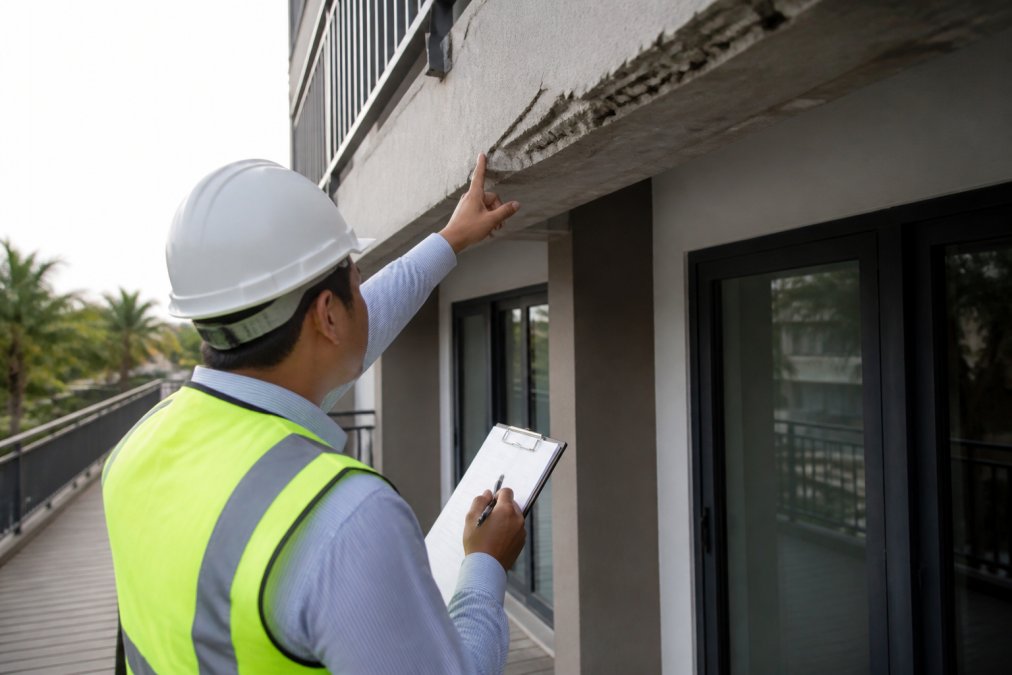
HOA balcony inspection requirements are governed by California law, specifically SB 326 for common interest developments and SB 721 for multifamily buildings with three or more units. These statutes mandate inspection of elevated exterior elements, including balconies, decks, and stairways, to identify failure risks before they cause harm. The tragic 2015 balcony collapse in Berkeley, California, and the May 2021 Malibu balcony collapse underscore why these requirements exist.
But the legal requirement is only half the story. The software you choose must support the full inspection workflow, not just store a PDF when the work is done. Boards switching from Inspectica need to replicate three specific workflow stages in their new platform: scheduling, documentation, and reporting.
Scheduling. SB 326 requires inspections at least every nine years, with the first inspection deadline already passed for many associations (leginfo.legislature.ca.gov). SB 721 requires the same nine-year cycle for multifamily buildings (leginfo.legislature.ca.gov). Your software should let you set a recurring inspection reminder tied to each building or unit, not a generic calendar alert. The best platforms attach the inspection deadline to the physical asset record, so when a board member opens a unit file, they see the next required inspection date without searching through a separate calendar. If your candidate platform only offers a flat task list, you will lose track of staggered deadlines across multiple buildings.
Documentation. The inspection report itself must include the inspector’s findings, photographs of any observed deterioration, and a clear statement of whether immediate repair is needed. Your software needs to store these as permanent attachments on the unit or building record, with version history so you can prove what was on file at any point in time. Most platforms handle PDF uploads, but few preserve the original file metadata or allow you to tag documents with inspection-specific fields like “SB 326” or “SB 721.” That tagging matters when you need to produce a clean audit trail for a regulator or a plaintiff’s attorney.
Reporting. When an inspection identifies a failure risk, the board must act. Your software should track the finding from inspection report through work order to repair completion, with timestamps at each stage. This closed loop is where Inspectica alternatives often fall short. A platform that treats inspections and work orders as separate modules creates a gap where a finding can sit unaddressed. The stronger platforms, Buildium, AppFolio, CINC, and Vantaca, let you link an inspection finding directly to a vendor work order, so the repair status is visible from the original inspection record.
Data portability for compliance records. If you are leaving Inspectica, your historical inspection logs are your compliance defense. Before you migrate, verify that your export includes the original inspection dates, inspector names, findings, and attached reports. A CSV export of violation codes is not sufficient. You need the full document archive. Most platforms will import the structured data but require manual upload of the PDF reports. Budget for that labor, or negotiate migration assistance as part of your contract.
Do not assume your HOA management software generates a compliant inspection report. Most platforms track that an inspection occurred and store the document, but they do not perform the engineering assessment. The physical inspection must come from a qualified provider. Pairing a management platform with a licensed inspection firm ensures both the documentation and the assessment meet legal standards.
A practical evaluation step: ask each software vendor how their platform handles a scenario where an inspection finds a “immediate risk” condition. Does the system force a follow-up action, or does it simply store the report? The platforms that treat the finding as an open item until a repair is logged are the ones that will protect your board when the next inspection cycle comes around. The platforms that treat it as a closed document leave your compliance exposure to the memory of individual board members.
When evaluating platforms, confirm that inspection records can be exported in a format that satisfies your compliance monitoring needs. Data migration matters too: if you are switching from Inspectica, verify that historical inspection logs and violation histories transfer cleanly. A platform that locks your data in or exports poorly will create headaches during your next transition.
The right software keeps your community organized, but it cannot replace the licensed expertise that balcony safety demands. Boards that pair strong management tools with a qualified inspection partner position themselves to meet every compliance deadline with confidence.
Frequently Asked Questions
What features should HOAs look for in Inspectica alternatives?
Prioritize platforms with dedicated inspection workflow automation for elevated exterior elements, violation tracking, and a resident portal for communication. The software should handle document storage for inspection reports and provide an audit trail. If your community has a professional manager, look for vendor management tools. For self-managed boards, ease of use for accounting and maintenance scheduling matters more than a deep feature set.
How do digital inspection tools help with SB 326 and SB 721 compliance?
Digital tools create a clear, documented trail of your inspection cycle. They schedule the required inspections, store the licensed inspector’s report in a central repository, and track the status of any necessary repairs. This organized record is critical if your association is audited or faces a legal claim. It demonstrates the board met its duty to address building safety.
What is the difference between general HOA management software and specialized inspection tools?
General HOA management software like Buildium or CINC Systems handles the full operation: accounting, resident communication, and maintenance. It tracks inspections as part of a broader workflow. Specialized tools focus only on the physical inspection process, from scheduling to report distribution. If your primary need is managing the inspection lifecycle for compliance, a general platform with strong workflow automation usually provides the better long-term value.
Can automated inspection software reduce liability for HOA boards?
It can help manage risk. The software provides an audit trail showing that the board scheduled inspections, recorded findings, and initiated follow-up on repairs. This documentation proves the board acted reasonably. However, software does not replace the licensed inspector’s professional judgment. The platform is a tool for tracking the process and storing the official record.
How do I choose the right vendor for balcony and exterior structural inspections?
Select a firm with licensed inspectors who have direct construction experience, not a general property inspector. Confirm their expertise covers the specific code, such as SB 326 in California. Ask how they document conditions and whether their report provides a clear path for repairs. Clarify their process for minimizing damage during the inspection, as invasive testing can expose framing to the elements.