
Table of Contents
- Why Evaluating Structural Inspection Reports Matters
- Step 1: Verify the Inspector’s Credentials and Scope
- Step 2: Review the Structural Inspection Report Checklist
- How to Read a Structural Engineering Report
- Structural Inspection Report Examples and What They Show
- Balcony Inspection Report Requirements You Must Verify
- Identifying Gaps and Red Flags in Your Report
- When to Seek a Second Opinion and How
- Frequently Asked Questions
Last Updated: October 10, 2026
Why Evaluating Structural Inspection Reports Matters
A structural inspection report is only as valuable as its accuracy. You’re relying on it to protect your residents, manage your liability, and guide repair decisions that could cost tens of thousands of dollars. Yet many property owners and HOA boards accept reports without verification, sometimes because they lack the knowledge to question them, sometimes because they trust the inspector’s credentials without checking the work.
This matters because structural integrity directly affects building safety. A missed defect could mean the difference between a preventable repair and a catastrophic failure.
Evaluating structural inspection reports for accuracy isn’t about second-guessing the inspector. It’s about verifying that the report you’re paying for actually delivers what it promises: a complete, evidence-backed assessment of your property’s condition. This guide walks you through exactly how to do that.
Step 1: Verify the Inspector’s Credentials and Scope
Before you even open the report, confirm who performed the inspection and whether they’re qualified to do so.
Check the inspector’s license. Structural inspections in California require a licensed structural engineer or a qualified building inspector. Verify their license number with the California Department of Consumer Affairs. A valid license is non-negotiable.
Review the scope statement. Every structural inspection report should clearly define what was inspected and what was not. Look for a dedicated “Scope” or “Limitations” section. It should specify:
- Which building components were examined (foundation, columns, beams, balconies, decks, stairways)
- Which were excluded and why
- Whether the inspection was visual only or included invasive testing
- Any areas the inspector couldn’t access
A vague scope is a red flag. If the report says “general structural assessment” without detail, you don’t know what you’re actually paying for.
Confirm compliance requirements apply. If your property is in California and has three or more residential units, SB 326 and SB 721 likely apply. The report should state which standard governs the inspection. If it doesn’t mention either, ask the inspector directly before signing off.
Step 2: Review the Structural Inspection Report Checklist
A complete structural inspection report follows a logical structure. Use this checklist to verify nothing is missing.
Report essentials to verify:
- Inspector name, license number, and firm name
- Property address and inspection date
- Clear statement of scope and limitations
- Summary of findings organized by building component
- Photographs with captions and location references
- Measurements and calculations where relevant
- Recommendations for repair or further investigation
- Statement of professional liability insurance
If any of these elements are missing, the report is incomplete. Incomplete reports leave you exposed, if a defect isn’t documented and later causes injury or damage, you can’t prove you had professional guidance to address it.
Check for internal consistency. Read the summary first, then flip through the detailed sections. Do the findings match? If the summary says “no structural defects found” but the detailed sections describe cracking, efflorescence, or water damage, something is wrong. The report should tell the same story throughout.
Verify that recommendations are supported. Every recommendation should trace back to a specific finding. If the report recommends balcony repairs, it should show photographs and describe the damage that led to that conclusion. Recommendations without supporting evidence are opinions, not professional assessments.
How to Read a Structural Engineering Report
Reading a structural engineering report requires understanding what you’re looking at: findings versus recommendations, evidence versus interpretation, and what measurements actually mean.
Understanding Findings vs. Recommendations
A finding is what the inspector observed. A recommendation is what they suggest you do about it.
Findings are factual: “Concrete spalling observed on the south-facing column, approximately 2 inches deep, covering an area of 18 square inches.” That’s measurable and verifiable.
Recommendations are professional judgment: “Repair concrete spalling with epoxy injection and protective coating.” That’s advice based on the finding.
The distinction matters because recommendations can vary. Two inspectors might see the same spalling and recommend different repair methods. Understanding what was actually found helps you evaluate whether different recommendations make sense.
Checking Evidence and Measurements
Every significant finding should include three things: a photograph, a measurement, and a location reference.
Photographs must be clear and labeled. The photo should show the defect in context, not so close that you can’t see where it is on the building, not so far that you can’t see the damage clearly.
Measurements must be precise. Vague descriptions like “significant cracking” or “minor water damage” aren’t useful. Precise measurements are: “horizontal crack, 0.5 inches wide, 8 feet long, running across the west wall at 6 feet above floor level.” Measurements let you track whether a defect is stable or growing over time.
Location references must be specific. “Damage observed” is useless. “Damage observed on Unit 304 balcony, southeast corner, underside of deck beam” is actionable. You need to know exactly where to look when you verify the finding yourself.
If photographs are blurry, measurements are missing, or locations are vague, you can’t verify the findings. That’s a problem.
Walk the property with the report in hand. Stand in front of each photographed defect and confirm it matches the description. If you can’t find what the report describes, or if it looks different than the photo, that’s a discrepancy worth investigating.
Structural Inspection Report Examples and What They Show
Real examples help you recognize what accurate reporting looks like, and what it doesn’t.
Example 1: Foundation settling. A complete report on foundation movement includes photographs of the foundation from multiple angles, measurements of visible cracks (width, length, angle of propagation), and a note about whether cracks are active (growing) or dormant. It describes whether settling appears uniform or concentrated in one area.
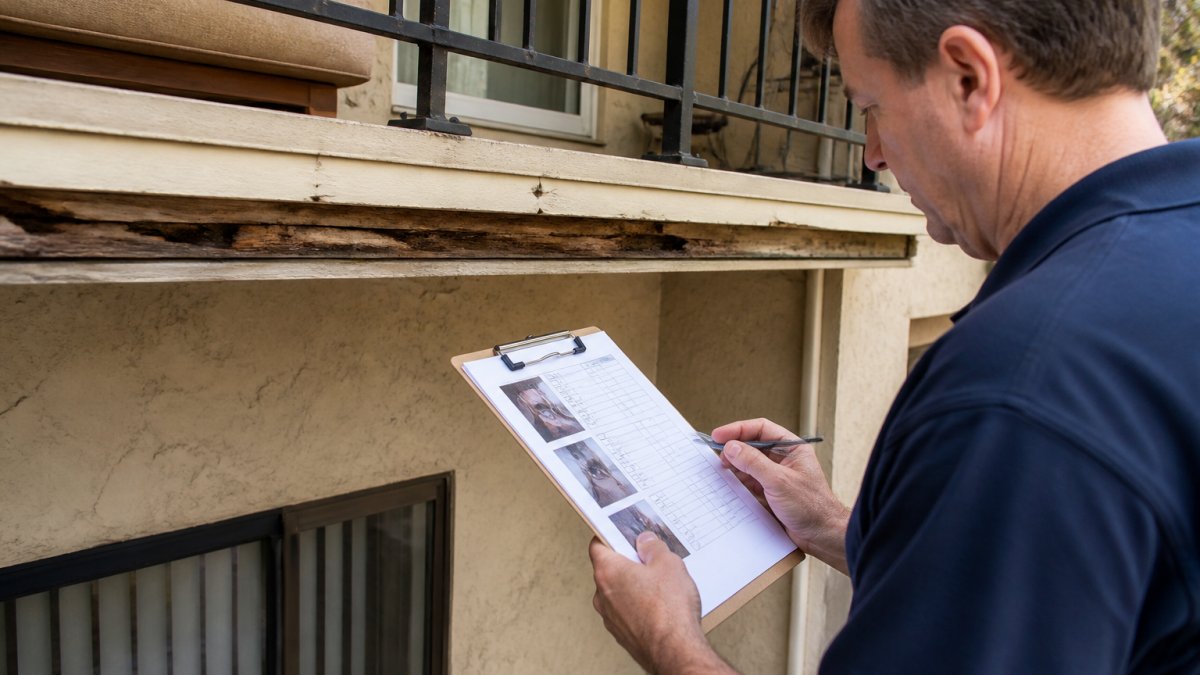
Example 2: Balcony deterioration. A thorough report on balcony condition documents concrete spalling, corrosion of rebar, water damage to ledgers, and wood rot separately. It measures each defect.
Example 3: Structural cracks. The best reports distinguish between settlement cracks (common, often not serious), structural cracks (concerning), and cosmetic cracks (minor). They include measurements and photographs showing crack width, length, and pattern. They explain what the crack pattern suggests about the underlying cause. A poor report treats all cracks the same.
Balcony Inspection Report Requirements You Must Verify
Balconies and decks fall under specific safety requirements in California. Your inspection report should address these directly.
SB 326 and SB 721 compliance. If your property is subject to these laws, the report should explicitly state which standard was applied and whether the inspection met those requirements.
Structural attachment verification. The report must confirm how the balcony connects to the building structure, bolted, welded, or embedded. It should verify that connections are secure and show no signs of movement or corrosion.
Waterproofing assessment. Water intrusion is the leading cause of balcony failure. The report should describe the condition of flashing, sealants, and drainage. It should note any signs of water damage: staining, efflorescence, soft concrete, or rust bleeding from rebar.
Railing and safety features. The report should confirm that railings meet current code (typically 42 inches minimum height, 4-inch sphere rule for balusters). It should note any loose or damaged components.
If your balcony report doesn’t address these elements, it’s incomplete. Ask the inspector why before you accept it.
A balcony inspection that doesn’t verify waterproofing integrity is missing the single most important assessment. Water damage is progressive, it gets worse over time. If the report doesn’t address it, you’re flying blind.
Identifying Gaps and Red Flags in Your Report
Some problems with inspection reports are obvious. Others are subtle but critical.
Red flags to watch for:
- No photographs or only generic photos that could apply to any building
- Measurements missing or vague (“appears to be” instead of specific dimensions)
- Findings listed without supporting evidence or explanation
- Recommendations that don’t match the findings described
- Scope so narrow that major components aren’t covered
- No statement of professional liability insurance or qualifications
- Report dated more than 12 months before you received it (inspections can change quickly)
- Language that’s overly cautious (“may require,” “could potentially need”) without committing to a finding
The most dangerous gap is missing evidence. If the report recommends a $50,000 repair but provides no photographs, measurements, or explanation of why, you can’t verify the recommendation. You’re forced to either trust blindly or hire another inspector, which costs more money and delays the work.
Another critical gap is scope creep, the report claims to assess “structural integrity” but only looks at visible surfaces. Structural integrity requires understanding what’s underneath: rebar condition, concrete strength, connection details. Visual-only inspections miss these.
When to Seek a Second Opinion and How
Sometimes the report raises questions you can’t answer alone. That’s when a second opinion makes sense.
Get a second opinion if:
- The report recommends major repairs but provides minimal evidence
- You find discrepancies between the report’s descriptions and what you see on site
- The scope seems incomplete for your property type
- You’re uncertain whether the inspector understood your specific compliance requirements
- Multiple inspectors have given you conflicting findings
How to request a second opinion professionally:
Contact another licensed structural engineer or qualified inspector. Provide them with the first report and ask them to review it for completeness and accuracy. A second opinion doesn’t require a full re-inspection, it’s a professional review of the first report’s methodology and conclusions.
Be specific about what you’re questioning. Don’t ask for a second opinion on everything; focus on specific findings or recommendations that concern you. This saves money and gets you a faster answer.
Expect to pay for this. A professional review of an existing report typically costs less than a full inspection but more than nothing. It’s worth the investment if it resolves a major discrepancy or confirms that a large repair is necessary.
The goal of evaluating a structural inspection report isn’t to become an engineer. It’s to verify that the professional you hired actually did the work, documented it properly, and reached conclusions supported by evidence. If you can’t trace a recommendation back to a specific, measurable finding, push back and ask why.
A structural inspection report guides some of the most expensive decisions you’ll make as a property owner or HOA board. Accepting a report without verification puts your residents at risk and exposes you to liability.
Frequently Asked Questions
What should a structural inspection report include?
A complete structural inspection report must document the inspection scope, inspector credentials, photographs of all structural elements examined, precise measurements, visible damage assessment, moisture and water-related findings, foundation condition notes, and clear recommendations for remediation or further investigation. The report should include the inspection date, property address, and reference to applicable codes or standards. Missing sections, especially photographs, measurements, or evidence supporting conclusions, indicate an incomplete report that may not hold up under audit or legal review.
How do you know if a structural inspection report is accurate?
Verify accuracy by comparing the report’s findings against the actual property. Walk the building with the report in hand and confirm that documented damage matches what you observe. Check that measurements are realistic and that photographs clearly support each finding. Review whether the inspector examined all required elements per SB 326 or SB 721 standards. Look for internal consistency: do recommendations logically follow from the findings? Red flags include vague language, missing evidence, or conclusions that lack supporting data. When in doubt, request a second opinion from an independent structural engineer.
What happens if a structural inspection report misses something critical?
A missed structural defect can lead to liability exposure, regulatory fines, and safety risks to residents. If damage worsens after inspection and was not documented, property owners may face claims for negligent inspection. This is why verifying report completeness and accuracy upfront is essential. Ensure the inspector’s scope covered all elevated exterior elements, balconies, decks, stairs, railings, and that photographs and measurements support every finding. If you discover gaps after the inspection, contact the inspector immediately and consider obtaining a second opinion from a licensed structural engineer before proceeding with repairs.
Should you get a second opinion on a structural inspection report?
A second opinion is advisable when findings are unclear, recommendations differ significantly from other quotes, or repair costs are unexpectedly high. Multiple inspectors examining the same property may identify different priorities or severity levels, especially if they focus on different elements or use different assessment methods. For properties subject to SB 326 or SB 721 compliance, a second structural engineer review provides confidence that the report will withstand regulatory scrutiny. Independent review also protects you if the original inspector’s conclusions are later challenged or if repair contractors dispute the findings.