
Last Updated: November 22, 2026
Quick Summary
Insurance coverage for hillside foundation damage depends mostly on the cause. Sudden, accidental events like a burst pipe are often covered, while gradual damage and earth movement such as soil creep or settling are usually excluded. Documenting the damage and the cause promptly is essential.
- Standard homeowners policies usually pay for sudden, accidental damage but not gradual damage or earth movement.
- Earth movement exclusions commonly cover landslides, mudslides, soil creep, subsidence, and settling.
- Photograph every crack and record the date you first noticed the damage before anything is repaired.
- Notify your insurer promptly, since late reporting can lead to a denied claim.
- If a claim is denied, request the written basis and check the appeal deadline in your policy.
Table of Contents
- Insurance Coverage for Hillside Foundation Damage: Does Your Policy Pay?
- What Is Foundation Coverage on Homeowners Insurance?
- Sudden Covered Events Versus Gradual Damage and Earth Movement Exclusions
- How to Document Foundation Damage for an Insurance Claim
- Step-by-Step: How to File a Claim for Foundation Damage
- How to Get Insurance to Pay for Foundation Repair on a Slope
- Hillside Foundation Repair Cost and What Your Policy Leaves Out
- Your Next Step: Getting a Foundation Inspection Before You File
- Frequently Asked Questions
Insurance coverage for hillside foundation damage depends mostly on what caused the damage. Homeowners often assume a policy covers any cracked foundation, then learn that the cause decides the claim. Foundation damage on a hillside often comes from soil movement, which many standard policies exclude. Sudden events like a burst pipe or a fire are usually a different story. This guide explains how homeowners insurance typically handles these losses, what to document, and how to move forward if a claim is denied.
Insurance Coverage for Hillside Foundation Damage: Does Your Policy Pay?
Usually, a standard homeowners policy pays for sudden, accidental damage but not for gradual damage or earth movement. Whether your hillside foundation damage is covered depends on the cause, the policy wording, and any endorsements you carry. Read your declarations page and the exclusions section before you assume anything.
Many policies treat foundation problems on sloped land with extra caution. Slope instability, soil creep, and erosion are common reasons claims get denied. A policy may cover water that bursts a pipe under the foundation but not the slow shifting of the hillside that cracks the wall.
What Is Foundation Coverage on Homeowners Insurance?
Foundation coverage is the part of a homeowners policy that pays to repair the structure beneath your home when a covered peril damages it. A covered peril is a named cause of loss, such as fire, windstorm, or a burst pipe. Foundation coverage is not a separate line item on most policies. It falls under the dwelling coverage, which covers the main structure of your home, including the foundation.
Dwelling coverage has a limit, and your deductible applies before the insurer pays. Coverage is also tied to the peril. If the policy does not list the cause as covered, repairs usually fall to the homeowner.
Sudden Covered Events Versus Gradual Damage and Earth Movement Exclusions
Insurers draw a sharp line between sudden and accidental damage and damage that builds over time. A sudden event, like a plumbing failure that floods the soil under your slab, is more likely to be covered. Gradual damage, like a foundation that slowly sinks over years, is more likely to be excluded. Because gradual damage is often excluded, documenting when tree roots damage foundation can help distinguish ongoing pressure from a sudden event.
Common examples help show the difference:
- Often covered: a burst pipe that undermines the foundation, fire damage to the structure, or wind damage from a storm
- Often excluded: settling over time, slow soil creep on a slope, or cracks from long-term erosion
- Depends on the policy: water seepage that happened gradually over many months
Typical Policy Exclusions for Earth Movement
Most homeowners policies exclude earth movement. This phrase covers landslides, mudslides, soil creep, subsidence, and settling. On a hillside, earth movement is the exclusion you are most likely to face.
Read the exclusion language closely. Some policies exclude earth movement only when it happens naturally, while others exclude it no matter the trigger. Some offer an endorsement that adds limited coverage back. Ask your agent to explain exactly how your policy defines earth movement.
How to Document Foundation Damage for an Insurance Claim
Good documentation makes a claim easier to prove. Start as soon as you notice the damage, and keep everything in one place.
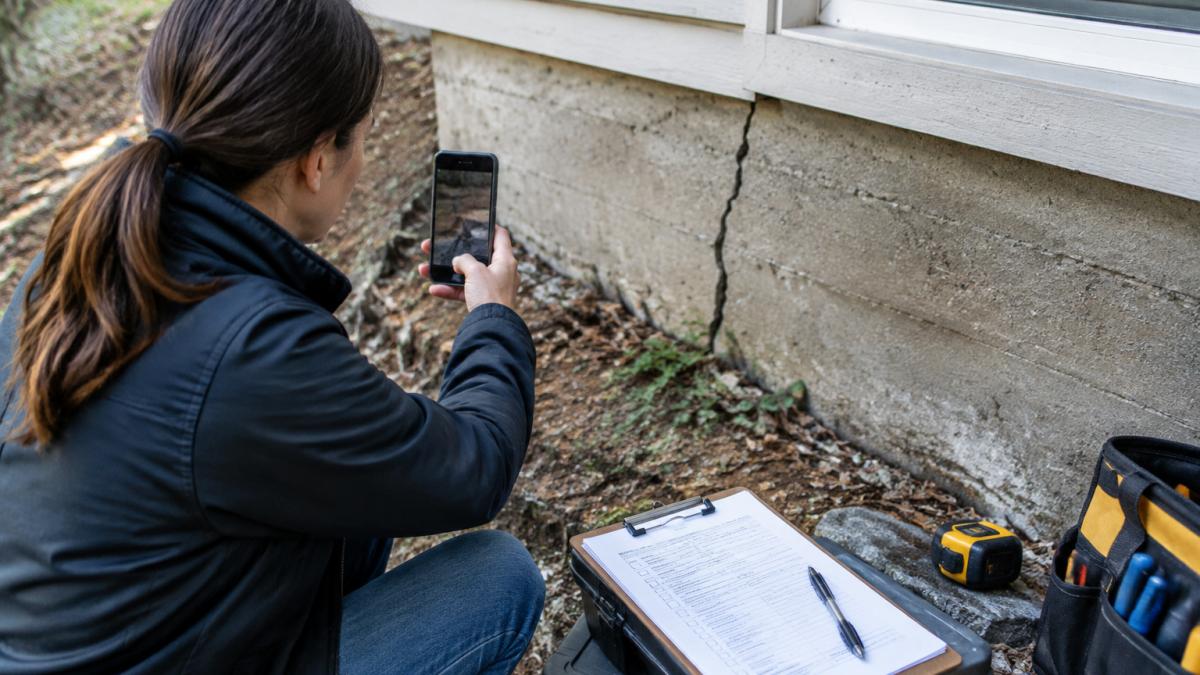
Use this checklist:
- Photograph every crack, gap, and sloped section with a timestamp
- Take wide shots and close-ups, with a coin or ruler for scale
- Record the date you first noticed the damage
- Save receipts for emergency repairs and temporary fixes
- Keep copies of your policy, declarations page, and endorsements
- Write down any recent events, such as storms, plumbing leaks, or construction nearby
- Get a written assessment from a licensed structural engineer
- Note the cause you believe applies, and keep any evidence that supports it
Store these files in a cloud folder and a local backup. Insurers often ask for details months later, so organized records help.
Step-by-Step: How to File a Claim for Foundation Damage
Filing a claim goes faster when you follow a clear order.
- Stop further damage. Make safe temporary repairs, such as shutting off a leaking pipe. Keep receipts.
- Document everything. Use the checklist above before anything is moved or repaired.
- Notify your insurer promptly. Call the claims line and report the loss. Ask for a claim number.
- Get a professional assessment. A structural engineer can identify the likely cause, which shapes how the claim is handled.
- Submit a proof of loss. Your insurer will send a form. Complete it accurately and attach your evidence.
- Meet with the adjuster. Walk them through the damage and point out the cause you documented.
- Review the estimate. Compare the insurer’s repair estimate with your contractor’s bid.
- Keep a record of every call and letter. Note names, dates, and what was said.
If you file late, the insurer may deny the claim for failure to report promptly. Act quickly.
Filing a claim goes faster when you follow a clear order, from stopping further damage through reviewing the insurer’s estimate.
| Step | What to do | Timing |
|---|---|---|
| 1. Stop further damage | Make safe temporary repairs and keep receipts | Immediately |
| 2. Document everything | Photograph damage and record the date first noticed | Before anything is repaired |
| 3. Notify your insurer | Call the claims line and ask for a claim number | Promptly |
| 4. Get an assessment | Hire a structural engineer to identify the likely cause | Before filing proof of loss |
| 5. Submit proof of loss | Complete the insurer’s form and attach evidence | As directed by insurer |
| 6. Meet the adjuster | Walk through the damage and point out the documented cause | After proof of loss |
| 7. Review the estimate | Compare insurer’s estimate with your contractor’s bid | After adjuster visit |
| 8. Keep records | Note names, dates and what was said in every call | Throughout the claim |
How to Get Insurance to Pay for Foundation Repair on a Slope
Getting paid on a slope usually comes down to proving a covered cause. Focus on the event that triggered the damage, not the hillside itself. An adjuster is looking for a chain: a covered peril, damage that followed promptly, and evidence that ties the two together.
For example, if a broken water line washed out soil beneath your foundation, the water line is the covered peril. Your engineer should document that link clearly, including the date the leak was discovered and the condition of the soil around the pipe. If the damage came from slow soil movement, expect a denial and plan your next steps accordingly.
What evidence strengthens a slope claim
- A written report from a licensed structural engineer that identifies the likely cause and rules out gradual movement where possible
- Plumbing records, repair invoices, and photos showing the failed pipe or fixture
- Weather records for the dates in question, such as a storm that caused wind or water damage
- Baseline photos or inspection reports from before the damage, if you have them
- A timeline that shows when symptoms appeared and how quickly they progressed
What to do when a claim is denied
A denial is not always the end of the process. Request the written basis for the denial, including the specific policy language the insurer relied on. Review your policy for appeal deadlines, which are often short, and submit any additional evidence before the deadline passes. You can also ask for an independent inspection or a second opinion from a licensed engineer, and you may seek guidance from a qualified professional or attorney if the amount in dispute justifies it.
Watch out: accepting a small payment or signing a release can limit your options later, so read any settlement offer carefully before you sign.
Endorsements and limits
Ask your agent about endorsements that may cover certain earth movement or water-related losses. Coverage limits and deductibles vary, so compare them against likely repair costs. On a hillside, the cost of shoring, drainage work, and retaining-wall repair can exceed a standard dwelling limit, so confirm how your limit applies before you rely on it.
Hillside Foundation Repair Cost and What Your Policy Leaves Out
Repair costs on hillside properties often run higher than on flat lots. Shoring, retaining walls, drainage work, and engineering reviews all add to the bill. Costs vary widely by site and damage, so get several written estimates from licensed contractors.
Your policy may leave out much of this work. Excluded earth movement repairs, maintenance-related issues, and costs above your dwelling limit usually fall to the homeowner. Budget for out-of-pocket costs before a problem arises. Pricing for specialized inspection and repair services depends on the property, so contact Apex Balcony for a current quote.
Your Next Step: Getting a Foundation Inspection Before You File
Before you file, get a professional inspection. A clear report tells you what happened, what is covered, and what needs fixing first. It also gives your adjuster the cause-and-effect evidence a claim needs.
Book an inspection to find out where your property stands before you talk to your insurance company.
Frequently Asked Questions
Does homeowners insurance cover hillside foundation damage?
It depends on the cause. Most standard homeowners policies cover sudden, accidental events such as a burst pipe, fire, or windstorm that damage the foundation. Gradual damage from soil creep, erosion, settling, or ongoing earth movement is commonly excluded. Because hillside properties face more soil movement, the cause determines the outcome. Review your policy’s dwelling coverage, exclusions, and any endorsements, and ask your insurer or agent to explain in writing how they classify your specific damage before assuming it is covered.
What causes foundation damage on a hillside?
Hillside foundations are commonly affected by soil creep, erosion, slope instability, poor drainage and runoff, and seasonal saturation that causes soil to expand or contract. Plumbing leaks and burst pipes can also undermine a foundation, and these sudden events are more often covered than slow ground movement. A structural engineer or licensed inspector can help identify whether the cause is a sudden event or a long-term condition, which affects how your claim is evaluated.
Can homeowners insurance cover foundation damage caused by a landslide?
Coverage for landslide damage varies by policy. Many standard homeowners policies exclude earth movement, including landslides, mudslides, and soil collapse, unless an endorsement adds it back. Some insurers offer optional earth movement or landslide coverage for an additional premium. Check your declarations page and endorsements, and ask your agent directly whether earth movement is excluded or covered under your policy.
What evidence should I gather before filing a foundation damage claim?
Document the damage with dated photos and video from multiple angles, including close-ups of cracks and wider shots showing the slope and surrounding grade. Keep records of any plumbing repairs, drainage work, or past inspections. Request a written repair estimate from a licensed contractor and a foundation or structural engineer report describing the probable cause. Save all correspondence with your insurer, and note the date you first noticed the damage.
