
Quick Summary
Under California law, balcony inspection requirements for condos depend on whether the building is governed by SB 326 or SB 721, and SB 326 applies to condominium and common-interest developments where owners hold their units. Boards must have qualified inspectors examine exterior elevated elements such as balconies, decks, and stairways, then calendar a recurring cycle from the last inspection’s completion date.
- SB 326 covers condominium and common-interest developments; SB 721 covers apartment buildings and multifamily rentals.
- Qualified inspectors include licensed architects, civil or structural engineers, and licensed contractors with relevant experience.
- The initial deadline is tied to the building’s first close of escrow or certificate of occupancy, not the board’s formation date.
- Calendar the recurring inspection from the completion date of the last inspection, with reminders 18, 9, and 90 days ahead.
- Classify report findings by severity and document board action, including access restrictions for any immediate hazards.
Table of Contents
- SB 326 and SB 721: Which Balcony Law Applies to Your Property
- SB 326 Inspection Requirements: Who Must Be Inspected and Who Can Inspect
- SB 326 Inspection Deadline: Initial Dates and Six-Year Cycle
- SB 326 Balcony Inspection Checklist: What the Inspector Examines
- SB 326 Inspection Report Requirements and How to Act on Findings
- Owner and Resident Responsibilities, Costs, and Budgeting for Repairs
- Scheduling Your Association’s Balcony Inspection Next
- Frequently Asked Questions
California Balcony Inspection Requirements for Condos: SB 326 Guide
Last Updated: November 1, 2026
SB 326 and SB 721: Which Balcony Law Applies to Your Property
Condo boards in California face two balcony laws, and they are not interchangeable. SB 326 governs condominium and common-interest developments, while SB 721 covers apartment buildings and other multifamily rentals. Knowing which one applies is the first step in any compliance plan.
The question usually comes down to how the building is owned and whether units are sold individually.
Key difference:
- SB 326: Condominium and common-interest developments where owners hold their units
- SB 721: Apartment buildings and multifamily rentals where a single owner leases the units
Many boards assume they are covered by SB 721 when their building is actually governed by SB 326. A quick review of your recorded documents and ownership structure will usually settle it.
SB 326 Inspection Requirements: Who Must Be Inspected and Who Can Inspect
SB 326 requires associations to have certain exterior elevated elements inspected by a qualified person. The law targets balconies, decks, and stairways that rely on wood-framed construction and carry load. Associations should confirm the requirements with their attorney before acting.
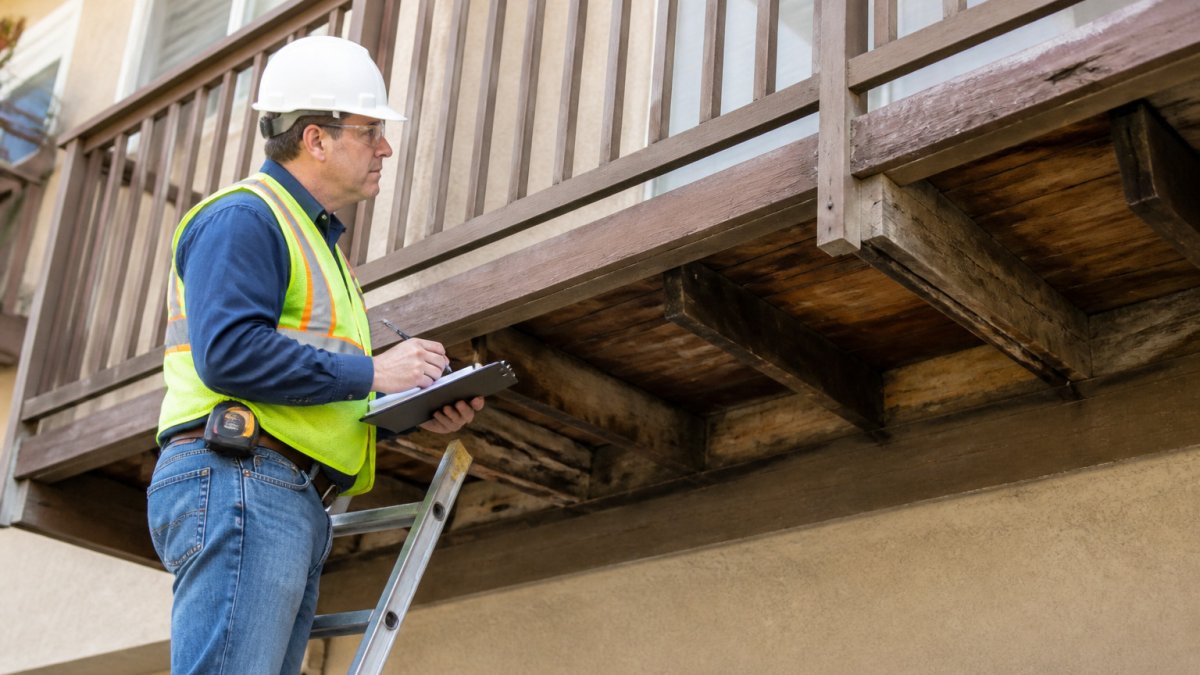
Apex Balcony’s inspection services cover balconies, decks, and stairways, and we can help your board review which components are relevant to California’s balcony laws.
Which Exterior Elevated Elements Are Covered
The law generally covers elements that extend beyond the exterior walls and support people. Common examples include:
- Balconies and decks
- Walkways and stairways
- Guardrails and railings attached to those structures
Elements that are purely decorative or that do not carry weight may fall outside the scope. Your inspector should document which elements were reviewed and why.
Qualified Inspectors and Sampling Rules
SB 326 requires inspections to be performed by a qualified person, such as a licensed architect, civil engineer, structural engineer, or licensed contractor with relevant experience. Many associations use a sampling method rather than inspecting every single unit.
Sampling must be based on a statistically sound approach. Your inspector should explain the sampling plan in writing.
SB 326 Inspection Deadline: Initial Dates and Six-Year Cycle
Deadlines are where most boards get into trouble, and they are also where most online summaries are wrong or out of date. Boards should have association counsel review the current text of the governing statute rather than relying on a blog post, because the requirements can be amended.
How the Initial Deadline Is Calculated
The initial inspection obligation is keyed to the building’s age and its first occupancy, not to the calendar year the board took office. In practice, the calculation works like this:
- Identify the building’s first close of escrow or first certificate of occupancy for the relevant building, not the association’s formation date and not the date the board was elected.
- Determine whether the building is in the statutory initial-inspection window by comparing that date to the deadlines in the current statute.
- Confirm the applicable date with association counsel, because amendments and pending legislation can shift the window and because mixed-use or phased projects can have multiple relevant dates.
- Calendar the recurring inspection that follows the initial one. The statute establishes a recurring cycle measured in years from the prior inspection, so the board’s calendar entry should be tied to the completion date of the last inspection, not to a fixed month.
Do not assume the six-year cycle starts on the date the board receives the report. Practitioners generally treat the completion of the inspection as the trigger, but the safest practice is to document the inspection completion date and confirm the next-due date with counsel in writing.
The Recurring Cycle and Why It Slips
The recurring inspection is the one boards most often miss, for three predictable reasons:
- Board turnover. Directors serve finite terms; the inspection obligation does not. A calendar entry that lives only in one director’s email is a missed inspection waiting to happen.
- Budget cycles. Inspection and any resulting repairs need to be in the reserve study and the annual budget before the due date, not after.
- Report drift. A report that recommends repairs but does not set a follow-up inspection date tends to sit in a file. Tie the follow-up to the report’s recommendations.
A practical pattern many associations use is a standing calendar entry with three reminders: 18 months before the due date (budget), 9 months before (procurement), and 90 days before (scheduling). The association’s managing agent should own the calendar, and the board should review it at least annually.
What Counts as a Completed Inspection
An inspection is not complete when the inspector walks off the roof. For deadline purposes, the association should be able to show:
- The date the inspection was performed
- The identity and qualifications of the inspector
- The elements inspected and the sampling methodology used
Keep these records with the association’s permanent records. Inspection reports and related maintenance records should be treated as formal association records from day one rather than as working files.
Deadlines Versus Other Statutory Obligations
The inspection deadline is not the only date on the board’s calendar. SB 326 sits alongside the association’s reserve study obligation, its annual budget adoption, and its disclosure obligations to prospective buyers. A missed inspection can surface in a seller’s disclosure package, in a lender’s questionnaire, or in litigation after a failure. Building the inspection into the annual calendar alongside the reserve study and budget is the simplest way to keep it from slipping.
Confirm the initial deadline against the current text of Civil Code Sections 5550 and 5551 with association counsel, then calendar the recurring inspection from the completion date of the last inspection, not from the board’s term or the fiscal year.
::: Maintaining this rigorous schedule for exterior elevated elements ensures structural integrity in a manner similar to the proactive oversight required for a commercial roof inspection.
SB 326 Balcony Inspection Checklist: What the Inspector Examines
A thorough inspection looks at both what is visible and what is hidden. Inspectors typically assess the structure from both interior and exterior access where possible. Here is what a strong checklist usually covers:
- Structural deterioration: cracked, sagging, or loose framing
- Water intrusion: staining, soft wood, or signs of leaks
- Dry rot and decay: especially at connections and below deck surfaces
Use this list when reviewing any inspection proposal. A vague scope is a warning sign.
SB 326 Inspection Report Requirements and How to Act on Findings
The inspection report is the document that protects the board, but only if it is written so that a future director, buyer, lender, or auditor can understand what was found and what was done about it. The more useful question is what the report should contain and how the board should convert it into a repair plan with dates and owners.
What a Complete Report Should Contain
A report that will hold up should include, at minimum:
- Inspector identification and qualifications. Name, license or certification number, and the basis on which the person qualifies under the statute.
- Scope and methodology. Which elements were inspected, which were not, and why; whether access was visual only or included physical examination; and the sampling plan, including the confidence level and margin of error if sampling was used.
- Element-by-element findings. For each exterior elevated element, a description, photographs, and a condition rating.
Ask for a sample report before signing a proposal. A report that does not include severity ratings and photographs is difficult to act on and difficult to defend later.
A Severity Model the Board Can Use
Inspectors use different rating scales, so the board should agree on a translation before the report arrives. A workable model:
| Rating | Meaning | Board action |
|---|---|---|
| Immediate hazard | Condition that could fail under normal use | Restrict access or shore up immediately; retain a structural engineer; repair on an expedited basis |
| Urgent | Deterioration likely to become a hazard within the near term | Schedule repair in the current or next budget cycle; re-inspect after repair |
| Routine | Maintenance-level deterioration | Fold into the annual maintenance plan and reserve study |
| Monitor | Condition to watch | Re-inspect at the next scheduled inspection or sooner if conditions change |
This translation matters because the board, not the inspector, decides how to spend association funds. The report informs the decision; the board documents it.
From Findings to a Repair Plan
A report that is filed without a repair plan is a liability, not a defense. The board’s workflow should be:
- Receive and log the report at a duly noticed board meeting. Note the receipt date in the minutes.
- Classify each finding using the severity model above and record the classification in the minutes.
- Restrict access where warranted. If an immediate hazard is identified, the board should act on access restrictions promptly and document the action.
- Obtain scopes of work and bids for urgent and routine repairs. Compare scopes, not just bottom-line prices.
- Schedule the work and, where the report recommends it, a follow-up inspection to confirm the repair was completed correctly.
- Retain everything, the report, the bids, the contracts, the permits, the inspection sign-offs, and the board minutes, as association records.
Ask the inspector to include a follow-up inspection recommendation in the report itself. A report that says “re-inspect after repair” gives the board a documented reason to schedule the follow-up and a record that it did.
Communicating Findings to Owners and Residents
Owners will ask what the report means for their unit and their assessment. The board should be prepared to explain, in plain language:
- Which elements were inspected and which were not
- Whether any access restrictions are in place and for how long
- Whether repairs will affect the annual budget or require a special assessment
A short written summary distributed to owners, paired with the full report available on request under the association’s records policy, reduces speculation and gives the board a documented communication trail.
Record Retention and the Member-Inspection Right
Inspection reports, repair contracts, and related maintenance records are association records. Boards should assume the report will be requested and write it, and file it, accordingly. Retain reports and repair records permanently, or at least for the life of the building, because a future inspection, a sale, or a claim may depend on them.
The report is only as useful as the board’s plan for acting on it. Insist on severity ratings, photographs, and follow-up recommendations, then log the report, classify the findings, restrict access where needed, schedule repairs and follow-up inspections, and retain the whole record.
Owner and Resident Responsibilities, Costs, and Budgeting for Repairs
Responsibility for balcony repairs is shared among the association, owners, and sometimes residents, depending on your governing documents. Read your CC&Rs closely to see who maintains which component.
Costs vary widely based on the extent of damage, the size of the building, and local labor rates. Pricing depends on the size and scope of your property, so request a quote through Apex Balcony’s website for current pricing.
Budgeting well means planning before a problem appears:
- Include balcony inspections and repairs in your reserve study
- Set aside funds on a regular schedule
- Get inspection findings early to avoid emergency assessments
Boards that plan ahead avoid the shock of a large special assessment.
Scheduling Your Association’s Balcony Inspection Next
Start by confirming which law applies, then map out your initial or repeat inspection deadline. Gather your building’s records, including the date of first sale and any prior inspection reports. Request proposals that clearly list the scope, the qualified inspector, and the reporting format.
Apex Balcony can help your board work through these steps. Book an inspection with Apex Balcony to get started.
Frequently Asked Questions
What are the balcony inspection requirements for California condos?
Under California Senate Bill 326, condominium associations with buildings containing exterior elevated elements such as balconies, decks, and stairways must have those elements inspected by a qualified person. The inspection evaluates the structural integrity and safety of the elements, focusing on load-bearing components and signs of dry rot, water intrusion, and corrosion. Associations should confirm the current statutory requirements with the California Civil Code and their attorney, since deadlines and details can change. For current pricing and scheduling, request a quote through Apex Balcony’s website.
Does SB 326 apply to all California condominium buildings?
SB 326 applies to condominium buildings that contain exterior elevated elements and are covered by the statute’s definitions, which generally include multifamily buildings with balconies, decks, or walkways raised above ground level. Single-family homes and buildings without covered elements are outside its scope. Whether a specific building is covered depends on its construction and classification, so a board should review the statute’s definitions or consult counsel before assuming an exemption.
How is SB 326 different from SB 721?
SB 326 governs condominium associations, while SB 721 applies to apartment buildings with three or more units leased to tenants. Both laws require inspection of exterior elevated elements, but they differ in who is responsible, the inspection timelines, and the reporting process. Property owners should identify which statute governs their building type and confirm the deadlines that apply to them.
Who is responsible for arranging an SB 326 inspection for a condo association?
The condominium association, acting through its board of directors, is generally responsible for arranging the SB 326 inspection of common-area exterior elevated elements. The board should document the engagement of a qualified inspector, keep the inspection report on file, and track follow-up work. Individual owners are typically responsible for their own separate interests, but board members should confirm specific responsibilities against the governing documents and current law.
