
Table of Contents
- Why Documentation Matters for Balcony Repairs
- Understanding SB 721 and SB 326 Documentation Requirements
- Creating a Balcony Repair Documentation Checklist
- Balcony Repair Photo Documentation Best Practices
- Preparing Your Balcony Repair Closeout Report
- Balcony Inspection and Repair Record Retention
- Protecting Your Property from Liability
- Frequently Asked Questions
Last Updated: October 20, 2026
Why Documentation Matters for Balcony Repairs
To document balcony repairs properly is critical, balcony failures kill.
When you document balcony repairs properly, you create a legal shield showing inspectors, insurers, and courts that you identified problems and fixed them.
This guide from Apex Balcony covers how to build a documentation system that protects your property and residents. We’ve worked with hundreds of building owners facing SB 721 and SB 326 compliance.
Understanding SB 721 and SB 326 Documentation Requirements
California’s two major balcony laws demand different documentation approaches. SB 326 applies to residential buildings with three or more units built before January 1, 2019.
The law doesn’t just say “fix your balconies.” It says keep permanent records.
Here’s what regulators actually look for:
- Inspection reports signed by a licensed engineer or architect
- Photographic evidence showing the condition before and after repairs
- Maintenance logs that track every inspection and repair over time
Missing even one category creates gaps an auditor or plaintiff’s attorney will exploit, arguing you didn’t really inspect, didn’t really fix the problem, or just covered it up.
A common mistake is treating the inspection report as the only documentation you need. The report is one piece. You also need photos, invoices, permits, and a maintenance log showing you stayed on top of things. Without all of them together, you look like you cut corners.
Creating a Balcony Repair Documentation Checklist
A balcony repair documentation checklist keeps you from missing critical steps. Before, during, and after the repair, each phase needs its own documentation.
Pre-Repair Documentation
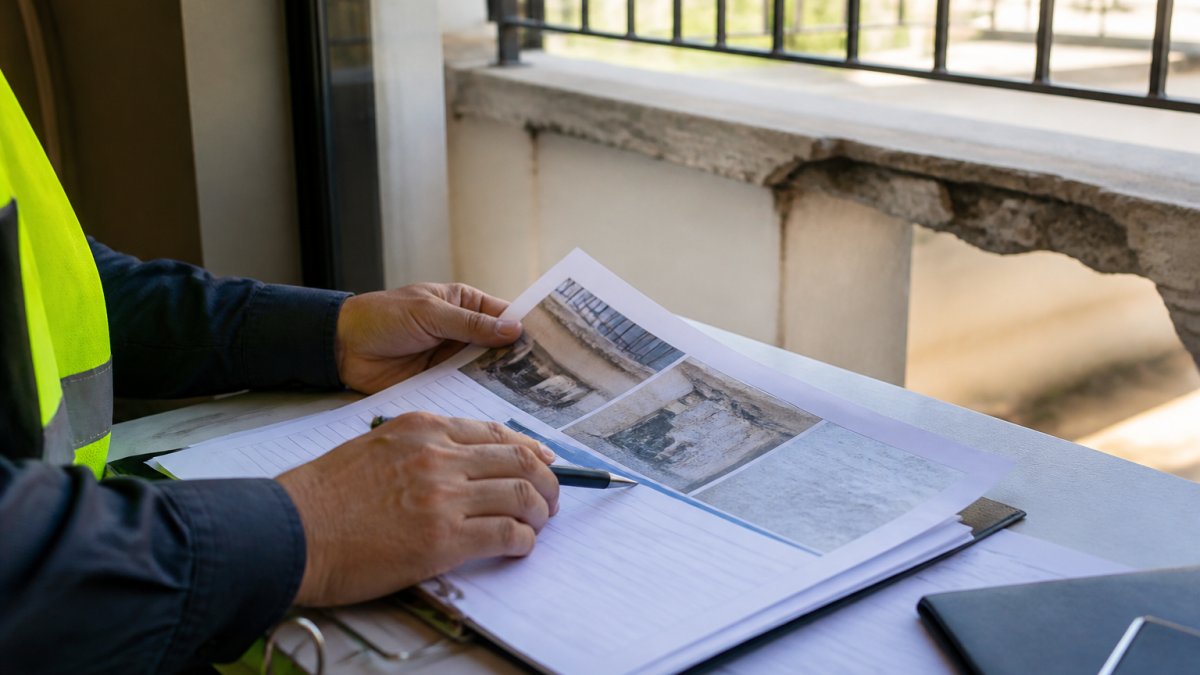
Before any repair begins, document the baseline condition: take photos, get the inspection report in writing, and collect prior maintenance records.
What to document before repairs start:
- Date and time of inspection
- Inspector’s name, license number, and firm
- Property address and specific balcony or deck location
This baseline proves the balcony’s condition before you touched it. If someone claims damage happened during the repair, your photos show it was already there.
During-Repair Documentation
While contractors work, keep a running record to protect you if disputes arise about what was actually done.
What to document during repairs:
- Daily work logs showing who worked, what they did, and for how long
- Photos of the work in progress, exposed framing, removed materials, new components being installed
- Photos showing old materials being removed (proof of scope)
Many property owners skip this step, figuring the final invoice is enough. It’s not. If the repair fails later, photos of work in progress prove the contractor did the job correctly.
Use your phone to take daily photos. Set a specific time each day, 10 a.m., for example, and photograph the same balcony from the same angles. This creates a visual timeline that’s hard to dispute.
Balcony Repair Photo Documentation Best Practices
Photos are your most powerful evidence. A good photo shows exactly what the problem was and what you did about it. A bad photo proves nothing.
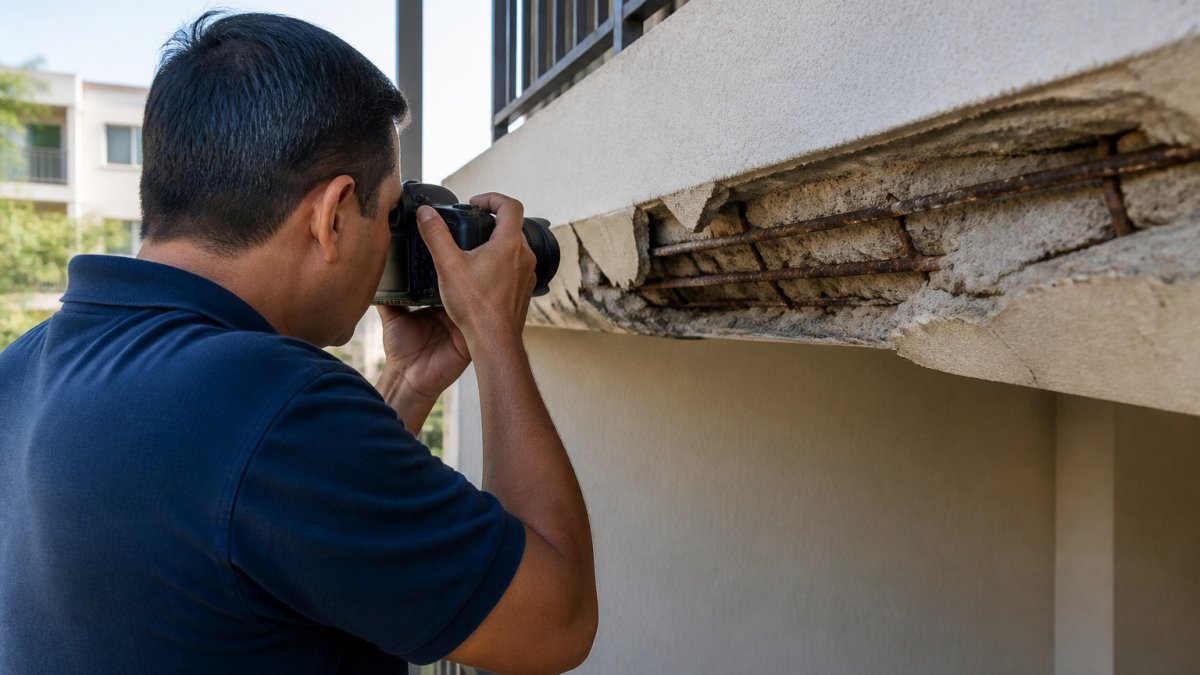
How to take documentation photos that hold up:
- Use natural daylight. Shadows hide problems. Morning or midday light is best.
- Photograph the same balcony from the same position before and after. This shows the transformation clearly.
- Include reference objects for scale. A ruler, a coin, or a hand in the photo shows how big the damage actually is.
Store photos in a folder labeled with the property address and repair date. Back them up to cloud storage. Don’t rely on your phone, phones get lost, data gets deleted.
Photos with date stamps and clear location markers are nearly impossible to dispute. They’re your best defense if someone later claims the repair was done wrong or not at all.
Preparing Your Balcony Repair Closeout Report
A closeout report is your final summary, tying together the inspection, the repairs, and proof everything was completed correctly. It becomes part of your permanent record.
The closeout report should include:
- Project scope: What balconies were repaired and why
- Inspection findings: Reference the original engineer’s report and list every deficiency that was addressed
- Repair work completed: Describe what was done, not in vague terms but specifically
This document becomes your single reference point. An auditor can read it and see the full story. A lawyer can use it to show you took the problem seriously.
Balcony Inspection and Repair Record Retention
California law requires you to keep balcony inspection and repair records. The question is how long, in what format, and organized how.
SB 326 and SB 721 don’t specify an expiration date, so keep records indefinitely, a repair from 10 years ago might become relevant if someone gets hurt today. Most compliance practitioners keep every inspection report, repair record, permit, and sign-off for the life of the building, plus a minimum of seven years after the most recent repair or inspection.
Building a Retention Schedule That Survives an Audit
A retention schedule is a written policy stating what you keep, where, and who is responsible. Without one, records scatter across email inboxes, contractor files, and desk drawers. Here’s a structure that holds up:
- Tier 1, Permanent records (keep for the life of the building): Engineer inspection reports, structural certifications, permit approvals, closeout reports, and engineer sign-offs. These are the documents that prove the building was safe at a point in time.
- Tier 2, Long-term records (keep 10 years minimum): Repair invoices, contractor bids, material specifications, waterproofing product data sheets, and warranty documents. These prove what was installed and who installed it.
- Tier 3, Working records (keep 7 years): Daily work logs, progress photos, internal emails about scheduling, and routine maintenance notes. These support the Tier 1 and Tier 2 documents if a dispute arises.
Write the schedule down, name a responsible person (property manager, HOA secretary, or asset manager), and review it annually. An undocumented policy is almost as bad as none, it shows you thought about records but didn’t commit.
Digital Document Management for Long-Term Audit Readiness
Most guides tell you what to keep but not how to organize it so an auditor can find it in minutes instead of days. That gap matters in practice.
A workable digital system has four components:
- A cloud-based document management platform with version history. Generic file folders work, but a platform that tracks who uploaded what and when gives you an audit trail. Look for automatic backup, searchable text (OCR), and permission controls so contractors can upload without deleting.
- A consistent folder taxonomy. Use: Property Address → Building/Structure → Year → Record Type (Inspection, Permit, Repair, Closeout). Every file goes in the same place every time. When an inspector asks for the 2019 east balcony inspection, you open one path and hand it over.
- A master index or register. One spreadsheet or database listing every document: property, structure, date, record type, file location, and retention tier. The index is what you hand an auditor first. It shows you know what you have.
- A backup and access plan. Cloud storage with automatic backup, plus a local encrypted copy updated quarterly. Name two people who can access the system so records don’t disappear when one employee leaves.
NIST Cybersecurity Framework guidance on data backup and access control
Run a quarterly “audit drill.” Pick a random balcony and try to produce its complete file, inspection report, photos, permits, invoices, closeout, in under 15 minutes. If you can’t, your organization system needs work before a real auditor or attorney tests it.
What to Do When Records Are Missing
Gaps happen: contractors go out of business, files get lost in moves, and older repairs predate your system. If you find a gap, document it, write a memo noting what’s missing, why, and what you did to reconstruct the record (contractor affidavits, bank records showing payment, photos from other sources). A documented gap beats a silent one, and an auditor who sees you addressed it is more likely to trust the records you do have.
Physical vs. Digital: A Practical Split
Keep signed originals of engineer reports, permits, and certifications in a fireproof safe or off-site storage, and digital copies of everything in the cloud system. The originals are your legal backstop; the digital system is your working file.
The Apex Balcony team recommends digital management systems because they’re searchable, backed up automatically, and easy to share with inspectors or legal counsel.
Protecting Your Property from Liability
Complete documentation doesn’t just satisfy regulators. It reduces your legal liability if someone gets hurt and often determines whether an insurance claim is paid or denied, where property owners lose the most money. Establishing a rigorous system for property maintenance documentation ensures that every structural intervention remains transparent and defensible during future audits.
The Liability Mechanism: Why Records Win Cases
If a tenant is injured on a balcony, they’ll sue, and their attorney will demand all your records through discovery. A complete file showing you inspected on schedule, identified problems, and fixed them promptly proves due diligence. Incomplete or missing records let a court infer the worst, that you didn’t inspect, didn’t care, or covered up problems. That inference costs money.
Documentation creates four specific legal protections:
- Proof of inspection: Shows you knew about hazards and monitored them.
- Proof of action: Shows you didn’t ignore problems once identified.
- Proof of compliance: Shows you followed SB 326 and SB 721 requirements.
What Insurance Adjusters Actually Look For
Most property owners learn this too late. When a balcony-related claim comes in, a collapse, water intrusion, or third-party injury, the adjuster checks not just whether you had a policy but whether you maintained the property in a way that keeps the claim covered.
Adjusters typically look for:
- A dated inspection trail showing regular inspections by a licensed professional, consistent with the frequency your policy or state law requires.
- Proof that identified defects were repaired, not just noted. An inspection report that flags a hazard with no follow-up repair record is a red flag.
- Contractor credentials and permits showing the work was done by licensed professionals and passed inspection.
If your policy includes a maintenance or inspection condition (many commercial and HOA policies do), failing to document compliance can give the carrier grounds to deny coverage. The documentation you keep for regulators is the same documentation your insurer will request.
Don’t wait until a claim to assemble your file. Insurance adjusters work on deadlines, and a disorganized response can lead to a denial before you’ve had a chance to explain. Keep your documentation audit-ready at all times so a claim response takes hours, not weeks.
Reducing Liability Before an Incident
The strongest liability protection is documented prevention:
- Inspect on the schedule the law and your insurer expect, and keep the reports.
- Repair defects promptly and keep the invoices, permits, and photos.
- Notify tenants in writing when repairs affect their use of a balcony, and keep copies of those notices. (See the tenant notification guidance elsewhere in this guide.)
A complete file doesn’t just help you win a lawsuit, it helps you avoid one, helps your insurer defend you, and helps your claim get paid when something goes wrong.
Frequently Asked Questions
What documents should you keep after balcony repairs?
Retain all inspection reports, engineer certifications, contractor invoices, permit approval notices, photographic evidence, maintenance logs, and the final closeout report. These documents prove compliance with SB 721 and SB 326 requirements and protect you from liability. Store originals in a secure location and maintain digital copies for at least seven years, as records may be audited by local authorities or reviewed in legal proceedings.
How long should balcony inspection and repair records be kept?
Keep all balcony inspection and repair records for a minimum of seven years. However, consider retaining records for the life of the building, as structural integrity issues may emerge years after repair. Digital document management systems make long-term storage efficient and ensure records remain accessible during HOA board transitions.
What should a balcony repair closeout report include?
A closeout report must document all work completed, contractor certification, engineer sign-off, before-and-after photographs, permit approval confirmation, and any deficiencies corrected. Include a summary of structural components repaired, materials used, and compliance statements referencing SB 721 or SB 326 standards. This report serves as your proof of completion and protects against future liability claims.
Do I need SB 721 or SB 326 documentation for my property?
SB 326 applies to residential buildings with three or more units built before January 1, 2019. SB 721 covers buildings with exterior elevated elements, balconies, decks, stairs, walkways, at least 6 feet above grade. If your property is a multifamily residential building or HOA-governed condo complex in California, you likely fall under one or both statutes. Licensed engineers can confirm which applies to your structure during an inspection, ensuring you meet the correct regulatory requirements.