

Table of Contents
- Why Compliance Tracking Software Matters for Property Managers
- Quick Comparison: 5 Best Property Management Software for Compliance Tracking
- 1. AppFolio: Best for Large Multifamily Portfolios
- 2. Buildium: Best All-in-One for Small and Mid-Sized Portfolios
- 3. Yardi Voyager: Best for Enterprise-Level Compliance and Risk
- 4. Jones: Best for Automated Vendor Insurance Tracking Software
- 5. SmartCompliance: Best for High-Volume COI Management
- SB 326 and SB 721 Inspection Tracking: What to Look For in a Platform
- What to Look For Before You Buy
- Frequently Asked Questions
Last Updated: September 13, 2026
Why Compliance Tracking Software Matters for Property Managers
Compliance tracking is the practice of monitoring, documenting, and renewing every regulatory obligation a property carries, from building safety inspections to vendor insurance certificates. For property managers, it is the difference between a clean audit and a liability claim. This guide from Apex Balcony examines the 5 best property management software for compliance tracking, so you can match a platform to your portfolio instead of guessing. Maintaining these rigorous standards often requires integrating specific operational protocols, such as implementing gas safety best practices to mitigate the most critical risks associated with residential heating systems.
The stakes are highest where structural safety is involved. California’s SB 326 and SB 721 balcony inspection mandates exist because of preventable tragedies, including the 2015 Berkeley balcony collapse and the 2021 Malibu balcony collapse (leginfo.legislature.ca.gov). Those incidents reshaped how HOAs and owners document elevated exterior elements. A platform that stores inspection dates in a spreadsheet will not protect you when an auditor asks for a five-year paper trail.
Below, we break down five platforms by portfolio size and compliance focus, then show you exactly what to demand before you sign a contract.
Quick Comparison: 5 Best Property Management Software for Compliance Tracking
The best compliance tracking software depends on where your risk sits: broad operational compliance, vendor insurance, or inspection documentation. Use this table to shortlist before reading the full reviews.
| Platform | Best For | Standout Compliance Feature | Pricing |
|---|---|---|---|
| AppFolio | Large multifamily portfolios | Automated compliance documentation tracking | Contact for pricing |
| Buildium | Small and mid-sized portfolios | Regulatory reporting and tenant document portal | Contact for pricing |
| Yardi Voyager | Enterprise-level risk | Enterprise COI management and risk assessment | Contact for pricing |
| Jones | Automated vendor insurance | Automated COI verification and monitoring | Contact for pricing |
| SmartCompliance | High-volume COI management | Centralized COI dashboard with automated alerts | Contact for pricing |
A property management compliance checklist built inside any of these tools beats one kept in email threads. The difference is how much manual follow-up each platform still leaves on your desk.
1. AppFolio: Best for Large Multifamily Portfolios
AppFolio is a cloud-based platform built for multifamily managers who need automation across hundreds of units. Its AI-driven leasing assistant and unified accounting modules reduce the manual work that causes compliance gaps, and the mobile-first interface lets site staff log issues from the field.
Where it earns its place: automated compliance documentation tracking keeps inspection records, vendor documents, and audit trails in one searchable system. In practice, that means when a site manager uploads a fire-inspection report or a vendor’s certificate of insurance, the platform timestamps it, ties it to the property and unit, and makes it retrievable by date range, the format auditors and insurers actually request. For portfolio oversight across multiple buildings, that centralization matters more than any single feature.
The honest limitation is transparency. AppFolio does not publish pricing, so small portfolios often cannot predict cost without a sales conversation. Industry convention is that AppFolio quotes on a per-unit, per-month basis with a minimum unit threshold, and the total scales with which value-add modules you enable. If you manage fewer than 50 units, the automation you are paying for may exceed what you actually use.
A second trade-off worth flagging: AppFolio’s compliance strength is operational (leases, inspections, vendor docs), not statutory. It will not interpret SB 326 or SB 721 for you, and it will not tell you which buildings fall under which mandate. You still need a licensed inspector and a manager who knows the statute. Treat AppFolio as the system of record, not the system of judgment.
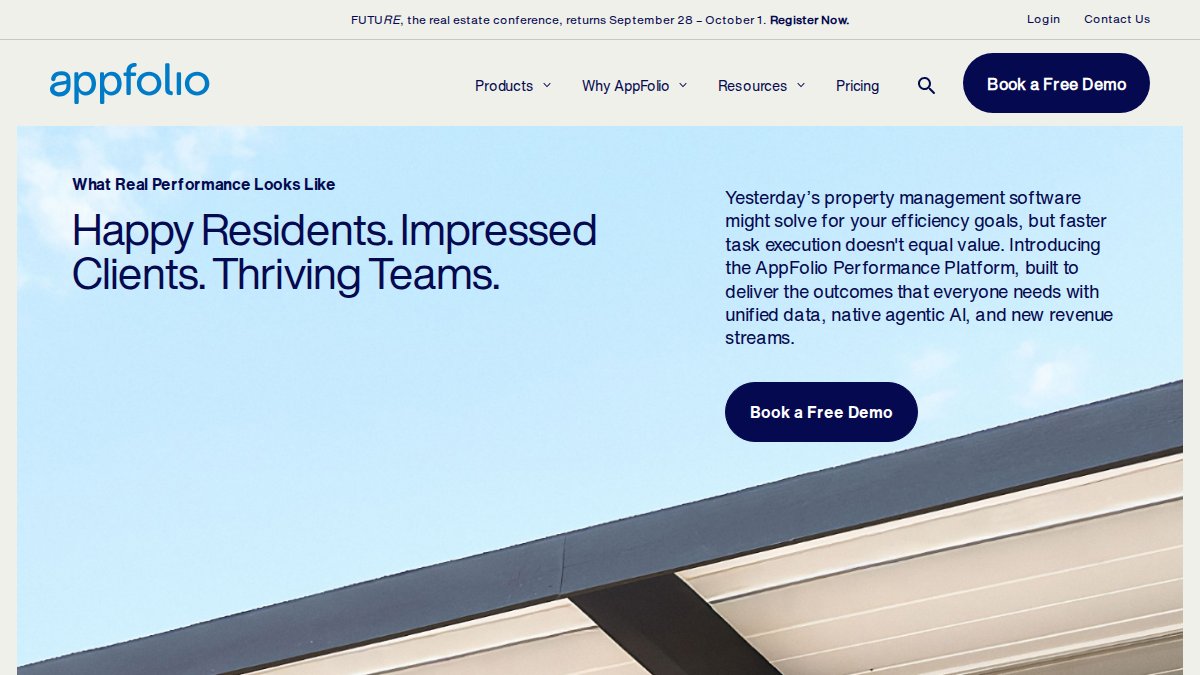
AppFolio fits portfolios large enough to justify per-unit pricing and complex enough to need centralized document retrieval. Below roughly 50 units, the compliance ROI rarely clears the subscription cost.
2. Buildium: Best All-in-One for Small and Mid-Sized Portfolios
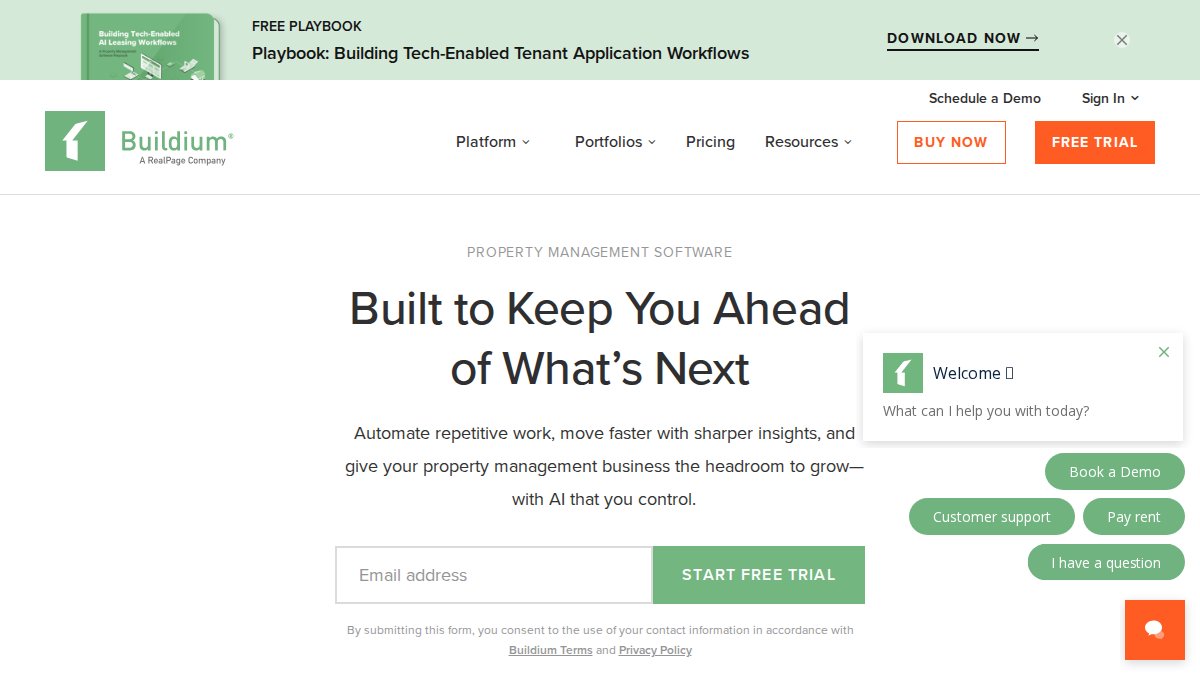
Buildium suits managers who want accounting, maintenance, and compliance in a single subscription. Integrated rent collection and bookkeeping sit alongside maintenance request tracking and vendor management, so a small team does not need three separate logins.
Its tenant portal doubles as a document management hub, which simplifies sharing inspection notices and compliance disclosures. Reporting covers regulatory obligations well enough for most mid-sized portfolios.
The tradeoff: advanced compliance features often sit behind higher-tier plans. Budget for the upgrade if you need deeper audit trail functionality, or you will hit a ceiling in year two.
3. Yardi Voyager: Best for Enterprise-Level Compliance and Risk
Yardi Voyager is enterprise-grade software with modules designed for complex, multi-entity portfolios. Enterprise-level COI management, advanced risk assessment tools, and customizable compliance reporting make it the choice for organizations juggling statutory requirements across dozens of properties.
Scalability is its strength. So is depth: full-cycle accounting integration means compliance data and financial data live in the same system, which simplifies regulatory reporting.
The learning curve is steep. Expect real onboarding time before your team is productive. For a 12-unit building, that overhead is not worth it. For a 2,000-unit enterprise, it is table stakes.
4. Jones: Best for Automated Vendor Insurance Tracking Software
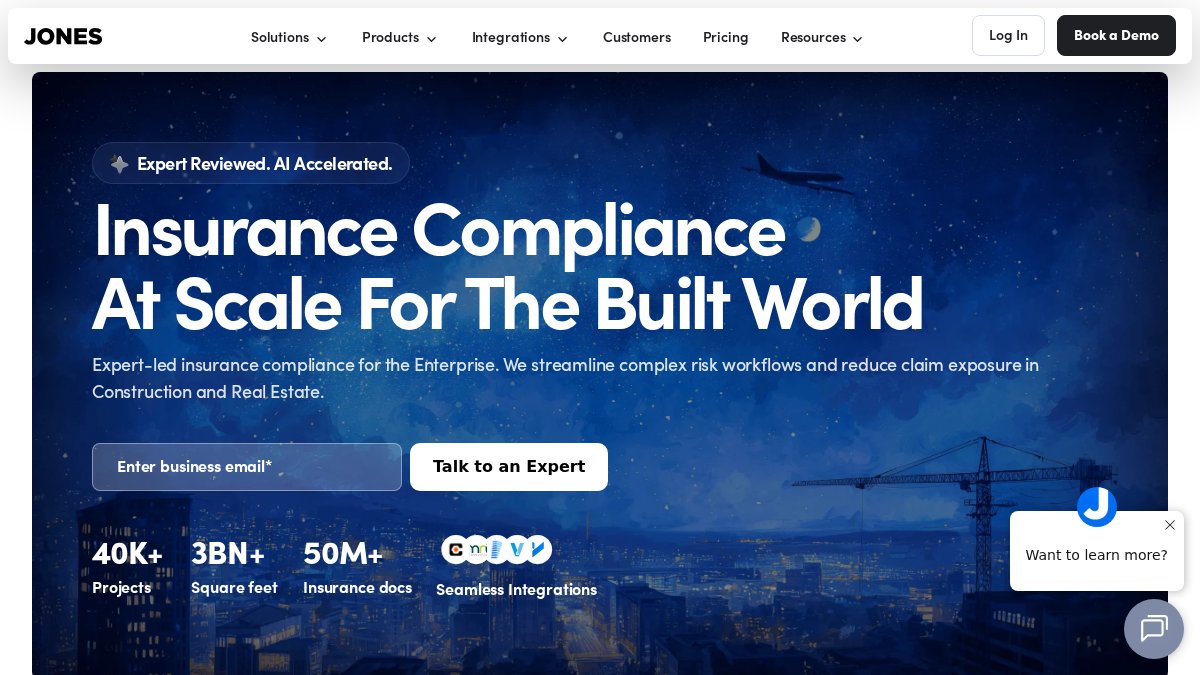
Jones focuses narrowly on vendor insurance tracking software, and that focus is the point. It automates certificate of insurance (COI) verification, monitors vendor compliance continuously, and pushes everything into a centralized document dashboard.
If your biggest exposure is an uninsured contractor working on site, Jones closes that gap faster than a general platform. It integrates with major property management systems, so you keep your existing accounting stack.
The constraint is scope. Jones handles insurance and vendor compliance, not building safety codes or inspection scheduling. You will still need another system for those obligations.
5. SmartCompliance: Best for High-Volume COI Management
SmartCompliance targets managers drowning in vendor insurance documents. Its centralized COI dashboard, automated compliance alerts, and real-time status reporting replace the manual chase that eats hours every month.
For high-volume operations, automated alerts are the feature that matters. A certificate expiring in 30 days triggers a workflow instead of a forgotten calendar reminder, which is how most liability gaps actually happen.
The limitation is integration. SmartCompliance requires pairing with other software for full property management, so treat it as a compliance layer rather than a complete platform.
SB 326 and SB 721 Inspection Tracking: What to Look For in a Platform
Inspection tracking is the one compliance category most general platforms handle poorly, and it carries the highest liability. SB 326 governs balcony inspections for certain HOAs, while SB 721 covers specified residential buildings with three or more units. Confirm which applies to your property with the California Legislature’s SB 721 text and SB 326 statutory language before you buy software.

Your platform should store inspection dates, inspector credentials, report PDFs, and repair timelines in one audit trail. It should trigger escalation workflows when a deadline approaches. And it should export a clean report if a regulator or attorney requests records.
Software tracks the paperwork. It does not inspect the structure. That work requires licensed inspectors with construction and design experience, which is where Apex Balcony operates: hundreds of building owners rely on our team for comprehensive inspection of balconies, decks, and stairways, with a clear path to any necessary repairs.
Storing inspection reports in email folders is the most common compliance failure. When an auditor requests records and you cannot produce a dated, complete trail, the missing documentation itself becomes the violation.
What to Look For Before You Buy
Most buying guides hand you a feature checklist and stop. That is the easy part. The harder question, and the one no competitor answers, is what happens between signing the contract and running your first clean audit. Below is a buying framework plus the two things the SERP ignores: a compliance ROI model and a legacy-data migration roadmap.
The buying checklist, in priority order
- Does it store dated inspection reports with an exportable audit trail?
- Does it send automated alerts before a certificate or inspection deadline?
- Does it support vendor credentialing and COI verification?
- Does it integrate with your accounting or maintenance system via API?
- Does it offer mobile access for field staff?
- Does it produce audit-ready reporting on demand?
For a small portfolio, prioritize automated alerts and document storage. For an enterprise, prioritize integration and customizable reporting. Either way, verify the platform handles the specific statutory requirements that apply to your buildings, not just generic compliance categories.
Compliance ROI: the math most buyers skip
Compliance software is usually sold as a cost center. It is better understood as insurance against a specific, quantifiable downside. Build a simple model before you buy:
- Estimate your annual compliance labor. Count the hours your team spends chasing COIs, logging inspection dates, and assembling audit packets. Multiply by a loaded hourly rate. For many mid-sized portfolios, that number alone approaches or exceeds the software subscription.
- Estimate your exposure per lapse. An uninsured vendor working on site, an expired fire inspection, or a missing balcony report each creates a distinct liability. You do not need a precise figure, you need a defensible order of magnitude from your insurance broker or attorney.
- Compare subscription cost to (labor saved + exposure reduced). If the software costs less than the labor it replaces, the decision is already made. The exposure reduction is the upside.
A common pattern practitioners report: the first audit after implementation is where the ROI becomes obvious, because the platform surfaces gaps that were previously invisible in spreadsheets and email threads.
Implementation roadmap: migrating legacy compliance data
The step competitors skip entirely. Budget four to eight weeks for a mid-sized portfolio:
- Inventory. List every compliance obligation by property: inspection type, renewal cadence, responsible party, and where the current record lives (spreadsheet, shared drive, email, filing cabinet).
- Triage. Separate records into three buckets: current and complete, current but incomplete, and expired or missing. The third bucket is your first work queue, not a data-entry task.
- Standardize. Agree on one naming convention and one date format before you upload anything. Retrofitting consistency after migration is far more expensive than enforcing it during.
- Upload in waves. Migrate one property type or one compliance category at a time, and verify the audit export after each wave. Do not attempt a single bulk import.
- Set the alert cadence. Configure lead times (30, 60, 90 days) to match how long each renewal actually takes. A 30-day alert on a permit that takes 90 days to renew is a false sense of security.
- Run a mock audit. Before your first real one, pull a full compliance report for one property and check it against your source records. Fix discrepancies while they are cheap.
Ask vendors for a sample audit export before you buy. A platform that can produce a clean, dated compliance report in under five minutes will hold up under scrutiny. One that requires manual assembly will not.
The most common migration failure is treating legacy data as a data-entry project. It is a triage project. If you upload expired and missing records without flagging them, you have digitized your liability instead of reducing it.
Frequently Asked Questions
What is property management compliance software?
Property management compliance software centralizes regulatory requirements, inspection records, vendor documents, and audit trails in one platform. Instead of tracking certificates of insurance, building safety codes, and inspection deadlines in spreadsheets, managers get automated alerts when documents expire or inspections come due. Tools like AppFolio, Buildium, and Yardi Voyager handle broad compliance needs, while Jones and SmartCompliance specialize in vendor insurance and COI tracking. The right choice depends on portfolio size and which compliance tasks consume the most staff time.
Why is automated compliance tracking important for HOAs and property owners?
Manual tracking fails when portfolios grow. A missed COI renewal or lapsed inspection can expose an HOA to liability, fines, and in worst cases, injury claims. Automated compliance tracking sends alerts before deadlines pass, stores audit-ready documentation, and creates a clear record of due diligence. For properties subject to SB 326 and SB 721, this means inspection reports, repair timelines, and structural assessments stay organized and accessible if a regulator or attorney requests them.
How does software help with balcony inspection compliance like SB 326 and SB 721?
SB 326 requires HOAs to inspect elevated exterior elements like balconies and stairways, while SB 721 applies to apartment buildings with three or more units. Compliance tracking software helps by scheduling inspection reminders, storing inspector reports and repair documentation, and flagging deadlines for follow-up assessments. Some platforms let you attach photos, structural reports, and contractor invoices directly to the property record, creating a centralized database that supports regulatory reporting and protects the board if questions arise later.
Can property management software track vendor insurance and COI compliance?
Yes, but the depth varies. General platforms like Buildium and AppFolio store vendor documents and send basic expiration reminders. Dedicated vendor insurance tracking software like Jones and SmartCompliance goes further, automating certificate requests, verifying coverage limits, and flagging non-compliant vendors before work begins. If your portfolio relies on contractors for repairs or preventative maintenance, a tool with automated COI verification reduces the risk of uninsured vendors working on your property and strengthens your liability protection.
What features should I look for in compliance management software?
Prioritize automated alerts for document expiration and inspection deadlines, a centralized database for certificates and reports, and audit trail functionality that logs every change. Look for API integration with your existing accounting or maintenance tools, real-time reporting dashboards, and mobile access for field staff. If you manage California properties, confirm the platform can track SB 326 and SB 721 inspection dates and store structural reports. Escalation workflows matter too, so non-compliant vendors or overdue inspections trigger action, not just a notification.