
Table of Contents
- What Property Management Compliance Means for Building Safety
- SB 326 Balcony Inspection Requirements Every HOA Must Know
- SB 721 Inspection Deadlines for Apartment Owners
- Property Management Risk Mitigation Strategies That Prevent Liability
- How Compliance Protects Tenant Safety and Asset Value
- The Real Cost of Non-Compliance: Penalties, Lawsuits, and Reputation
- Conclusion
- Frequently Asked Questions
Last Updated: September 15, 2026
What Property Management Compliance Means for Building Safety
Property management compliance is the practice of meeting every legal, regulatory, and safety standard that applies to a residential building and its shared structures. For owners and HOA boards, that means inspections, documentation, maintenance schedules, and the paper trail that proves all of it happened. This guide from Apex Balcony explains where the real risk sits.
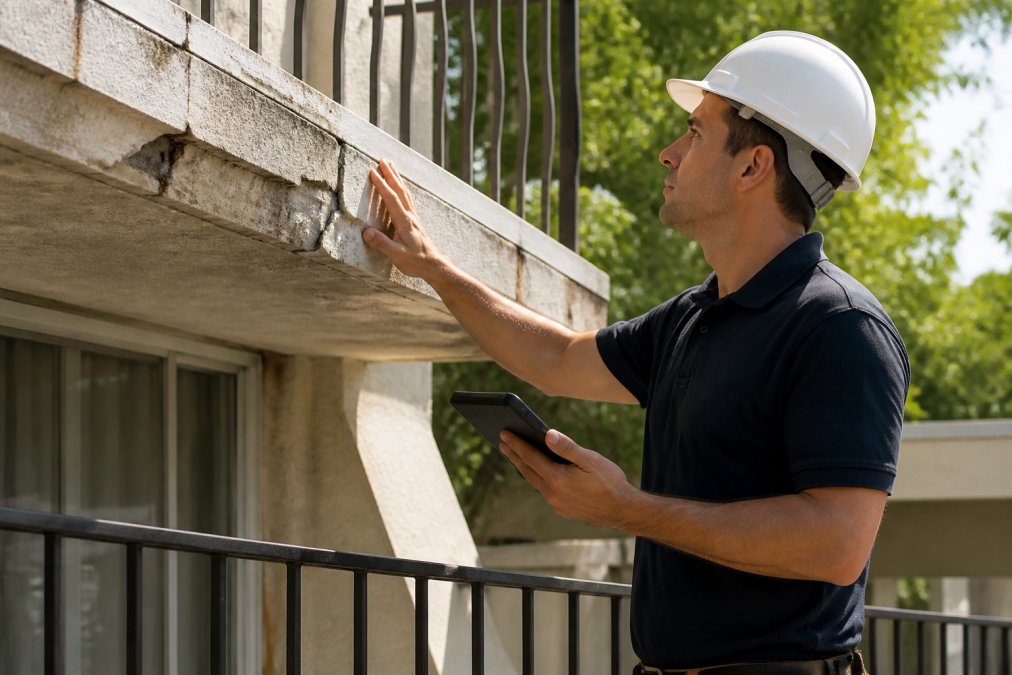
The stakes are not abstract. In June 2015, six people died when a balcony collapsed in Berkeley, California (Exterior Elevated Elements Inspection Program (E3)). In May 2021, a Malibu balcony failure injured multiple people. Both incidents led to lawsuits, emergency inspections, and permanent changes to state law.
That is the throughline here: compliance is not paperwork for its own sake. It is the mechanism that keeps residents alive and keeps boards out of court.
Treating an inspection as a one-time event is the most common and most expensive mistake. A passing report from three years ago proves nothing about the condition of a balcony today, and auditors and plaintiff attorneys both know it.
SB 326 Balcony Inspection Requirements Every HOA Must Know
SB 326 requires HOAs to inspect exterior elevated elements, including balconies, decks, stairways, and walkways, on a recurring cycle (Bill Text). The law covers buildings with three or more dwelling units and targets the structural components that carry people: supports, framing, and waterproofing.
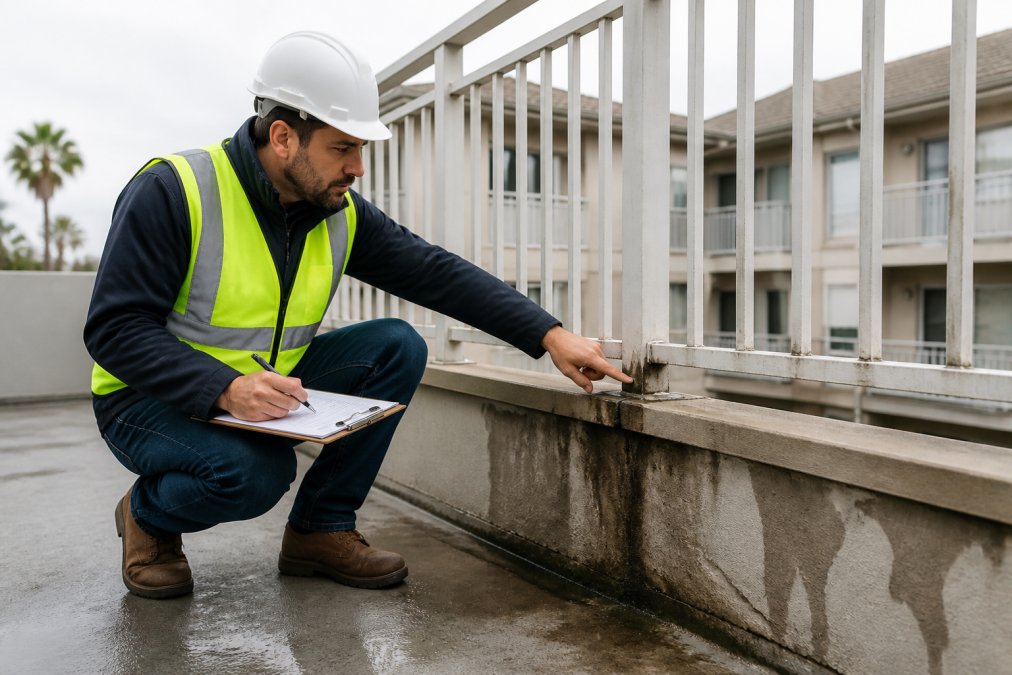
What most board members miss is the scope. SB 326 is not a visual walk-by. Inspectors must assess load-bearing components and watertightness, because water intrusion is what quietly rots the framing behind a sound-looking surface. The official requirements are set out in the California legislature’s SB 326 text.
A common mistake is waiting for the board to agree on a vendor before starting the clock. Deadlines do not pause for internal debate.
SB 721 Inspection Deadlines for Apartment Owners
SB 721 applies to apartment buildings with three or more dwelling units, not just HOAs. It requires inspection of exterior elevated elements, including balconies, decks, and stairways, that are more than six feet above ground and rely on wood or wood-based structural members.
Owners often assume SB 721 and SB 326 are interchangeable. They are not. One governs rental apartment buildings, the other governs common-interest developments. Some properties fall under both, and the inspection obligations stack rather than cancel out.
If you are unsure which statute applies, check the ownership structure of the building, not its size. A 12-unit building can be either, and the wrong assumption is what triggers penalties.
Property Management Risk Mitigation Strategies That Prevent Liability
Risk mitigation starts with a compliance calendar, not a repair budget. Boards and owners that schedule inspections, log every finding, and close out repairs on a documented timeline are the ones that survive litigation intact. But the calendar alone is not the strategy, the strategy is matching the right controls to the right property type, because the obligations stack differently for a common-interest development than they do for a rental apartment building.
Start with a property-type compliance checklist
Generic advice fails because a 12-unit building can be governed by one statute or the other depending on its ownership structure, not its size. Build the checklist around what the property actually is.
Multifamily and common-interest developments (HOAs and condos):
- Confirm governing documents, CC&Rs, and any recorded inspection obligations
- Identify every exterior elevated element: balconies, decks, stairways, walkways, and landings
- Verify which structural statute applies based on ownership structure, not unit count
- Schedule recurring inspections on the statutory cycle rather than a one-time event
- Document load-bearing components and watertightness, not just surface condition
- Track reserve-study funding against the repair schedule
Single-family rentals and small apartment buildings:
- Confirm which inspection statute applies to wood-framed elevated elements above the height threshold
- Verify smoke and carbon monoxide alarm placement and function under state and local codes
- Check habitability items: heating, plumbing, weatherproofing, and pest exclusion
- Confirm fair housing practices in advertising, screening, and reasonable-accommodation handling
- Maintain a written maintenance log with dates, vendors, and receipts
If you are unsure which statute applies, check the ownership structure of the building, not its size. A 12-unit building can be either, and the wrong assumption is what triggers penalties.
The audit trail is the asset
A practical sequence for any property type looks like this:
- Assign one board member or manager as compliance owner
- Confirm which statute applies to each building
- Book inspections before deadlines, not after
- Log every finding with photos and dates
- Track repairs to completion with receipts
- Store the audit trail where it can be produced on request
That audit trail is the single most valuable document a board or owner holds. When a dispute or code enforcement action arrives, the question is rarely “did you know” but “can you prove what you did.”
Post-incident compliance recovery: what to do in the first 72 hours
Most guidance stops at prevention. The gap is what happens after a violation, failed inspection, or safety incident. A common pattern among managers who recover cleanly is a fixed sequence:
- Secure the site. Restrict access to the affected element and any structure that shares its load path. Document the restriction with photos and a written notice to residents.
- Preserve the record. Do not discard inspection reports, repair invoices, or correspondence. Spoliation of evidence turns a defensible position into an indefensible one.
- Notify the right parties. Insurer, counsel, and, where the statute or local ordinance requires it, the enforcing agency. Late notice is a coverage problem, not just a paperwork problem.
- Commission an independent assessment. A second opinion from a licensed professional establishes the scope of the problem and separates a localized defect from a systemic one.
- Remediate on a documented timeline. Every repair gets a date, a vendor, a receipt, and a sign-off. The remediation record becomes the new compliance baseline.
- Close the loop with residents. Written communication about what happened, what was fixed, and what changes going forward reduces turnover and reputational damage.
Where technology changes the math
Compliance monitoring is shifting from calendar-based to condition-based. Predictive maintenance tools that track water intrusion, drainage, and sealant degradation can flag elevated-element risk before it becomes a visible defect, the same way building automation systems flag HVAC and life-safety faults. The practical value is not the software; it is the earlier repair date and the timestamped record that the repair happened. A maintenance ticket generated by a sensor is evidence. A memory of a phone call is not.
The ESG overlap nobody is talking about
Environmental, Social, and Governance reporting is moving from a voluntary exercise to an expectation for institutional owners and larger portfolios. Safety compliance sits squarely inside the “S”, resident health and well-being, and the “G”, documented governance of risk. A board that can produce inspection records, remediation timelines, and resident communication logs has most of the safety narrative an ESG report needs. The reverse is also true: an incident with no paper trail is an ESG disclosure problem, not just a legal one. Treating compliance records as ESG inputs is a low-cost way to get ahead of where reporting requirements are heading. Rigorous attention to smoke alarm compliance serves as a primary indicator of this operational maturity, demonstrating that a property owner prioritizes life safety as a fundamental component of their broader risk management strategy.
Treating an inspection as a one-time event is the most common and most expensive mistake. A passing report from three years ago proves nothing about the condition of a balcony today, and auditors and plaintiff attorneys both know it.
How Compliance Protects Tenant Safety and Asset Value
Compliance protects two things at once: people and property value.
Tenant safety is a set of enforceable standards, not a feeling
Why insurers and lenders price compliance into the deal
The reserve-fund connection
The honest limitation
Safety compliance is not a cost center. It is the input that determines your insurance premium, your financing terms, your reserve accuracy, and your legal exposure, all at once.
The Real Cost of Non-Compliance: Penalties, Lawsuits, and Reputation
The cost of compliance is a scheduled expense. The cost of non-compliance is an unscheduled catastrophe with legal, financial, and human consequences attached.
Conclusion
Frequently Asked Questions
Why is compliance critical for property safety?
Compliance with safety codes prevents structural failures that can injure or kill residents. The 2015 Berkeley balcony collapse killed six people and injured seven, leading to California’s SB 326 and SB 721. These laws require inspections to catch dry rot, corrosion, and other issues before they cause tragedy. Property management compliance also protects owners from lawsuits, fines, and reputational damage. Regular inspections and maintenance keep balconies, decks, and stairways safe for everyone.
What are the legal consequences of non-compliance in property management?
Non-compliance can result in fines, lawsuits, and criminal charges. Local code enforcement may issue citations with daily penalties. If a resident is injured, the property owner faces negligence claims and potentially millions in damages. Insurance premiums can rise or coverage may be denied. HOAs and landlords may also be required to fund emergency repairs under court order. In California, failing to meet SB 326 or SB 721 deadlines can lead to personal liability for board members and owners.
How does SB 326 differ from SB 721 for balcony inspections?
SB 326 applies to HOAs and condominium associations, requiring inspections of exterior elevated elements by January 1, 2025, and every nine years after. SB 721 applies to apartment buildings with three or more units, with deadlines based on certificate of occupancy dates. Both require inspections by licensed professionals and repairs if needed. SB 326 focuses on common-interest developments, while SB 721 covers rental properties. Knowing which law applies is the first step to compliance.
What should property managers look for in a balcony inspection report?
A compliant inspection report must identify each elevated element, describe its condition, and note any unsafe conditions. It should include photos, repair recommendations, and a timeline for action. The inspector must be licensed and experienced with California balcony laws. Reports should also document the inspection date and method. This documentation serves as your audit trail if questions arise. Apex Balcony provides detailed reports that meet SB 326 and SB 721 requirements, helping you prioritize repairs and protect residents.