Proactive Balcony Maintenance Saves HOAs Money
Proactive balcony maintenance prevents costly repairs and liability. Learn how HOAs save money through early inspections and preventative strategies.
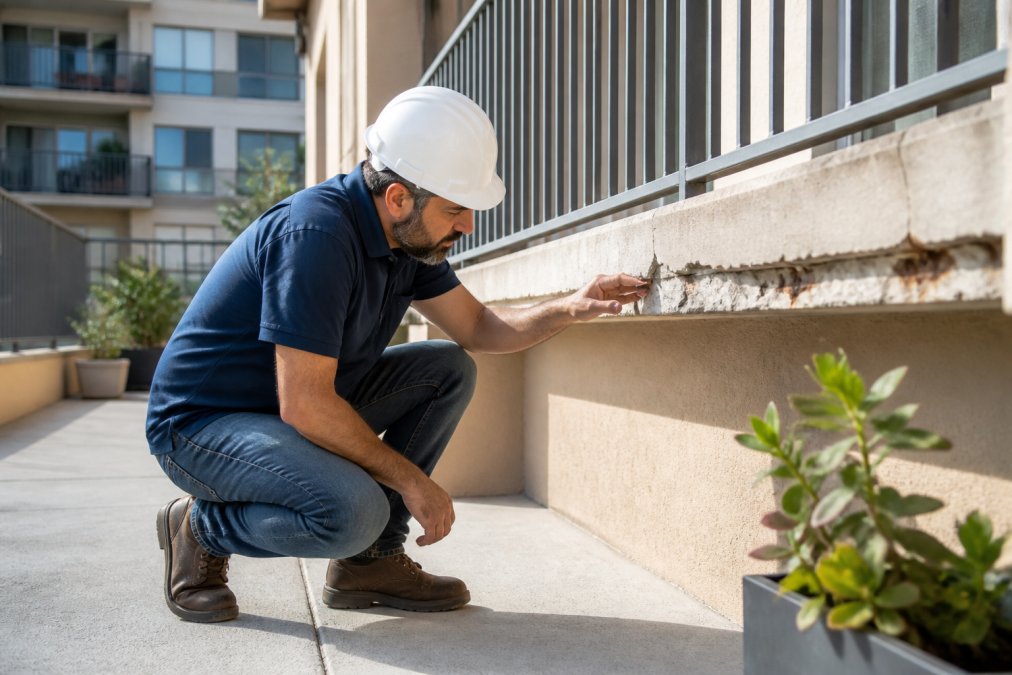
Table of Contents
- The Financial Impact of Deferred Balcony Maintenance
- How Proactive Balcony Maintenance Prevents Structural Failure
- SB 326 Balcony Inspection Requirements and Legal Liability
- Identifying Signs of Dry Rot in Exterior Balconies
- Building a Maintenance Schedule That Reduces Emergency Repair Costs
- HOA Reserve Study and Balcony Repair Cost Planning
- Extending the Lifespan of Balconies Through Preventative Measures
- Conclusion
Last Updated: August 29, 2026
The Financial Impact of Deferred Balcony Maintenance
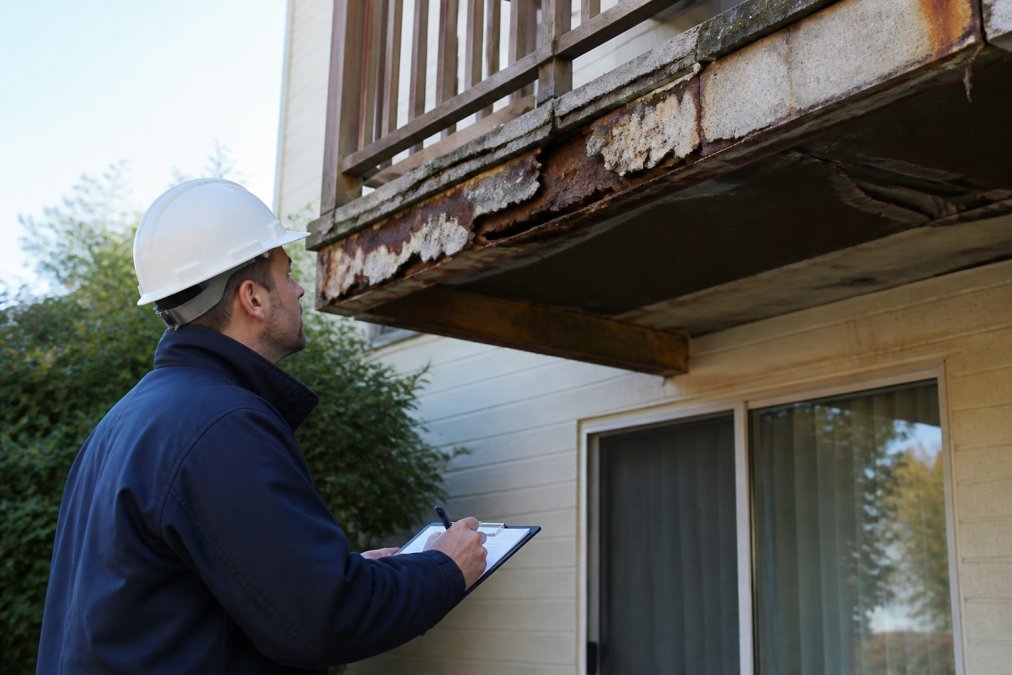
Deferred maintenance on balconies creates a financial cascade that catches most HOAs off guard. What starts as a minor water stain or hairline crack becomes a structural emergency within months. The math is brutal: a $5,000 preventative repair today can become a $50,000 emergency extraction in two years.
Balcony deterioration accelerates nonlinearly. Wood rot, corrosion, and water intrusion compound exponentially rather than progressing steadily. Once structural failure begins, the damage spreads rapidly. A balcony that’s safe in January can be condemned by summer.
This is where proactive balcony maintenance becomes a financial strategy. The difference between a building that invests in preventative measures and one that waits for failure is often the difference between a $15,000 reserve fund impact and a $200,000 special assessment.
Apex Balcony works with HOAs across the state to identify structural problems before they become financial disasters. Licensed inspectors catch early-stage dry rot, water intrusion, and corrosion patterns that homeowners and untrained staff miss entirely.
How Proactive Balcony Maintenance Prevents Structural Failure
Structural failure in balconies follows predictable failure modes. Understanding these patterns is key to stopping them before they accelerate.
The most common failure mechanism is water intrusion at the ledger board, the connection between the balcony structure and the building envelope. Water seeps into this joint, saturates the wood framing, and begins the rot cycle. Within 12-18 months, the structural integrity of the entire balcony is compromised (peer-reviewed research).
Corrosion of steel fasteners and reinforcement is the second major failure mode. Bolts, brackets, and embedded steel corrode from moisture exposure and salt air. A corroded bolt that should hold 10,000 pounds of load might hold 3,000 pounds before catastrophic failure (astm.org).
The third mode is wood decay from dry rot fungus. Dry rot colonizes wood invisibly, breaking down cellulose and reducing structural capacity. A beam that looks intact can be 50% compromised internally. The building envelope’s failure, a crack in the waterproofing membrane, failed sealant, or broken gutter, is always the entry point.
Preventative maintenance interrupts these failure modes at every stage. Regular inspections catch water intrusion before rot establishes. Sealant maintenance prevents water from reaching fasteners. Drainage improvements move moisture away from vulnerable connections. None of these measures are expensive, and all are far cheaper than structural repair.
The financial logic is straightforward: prevention costs a fraction of cure. A $2,000 inspection identifying early-stage rot leads to an $8,000 repair. That same rot left untreated becomes a $60,000 structural replacement.
SB 326 Balcony Inspection Requirements and Legal Liability
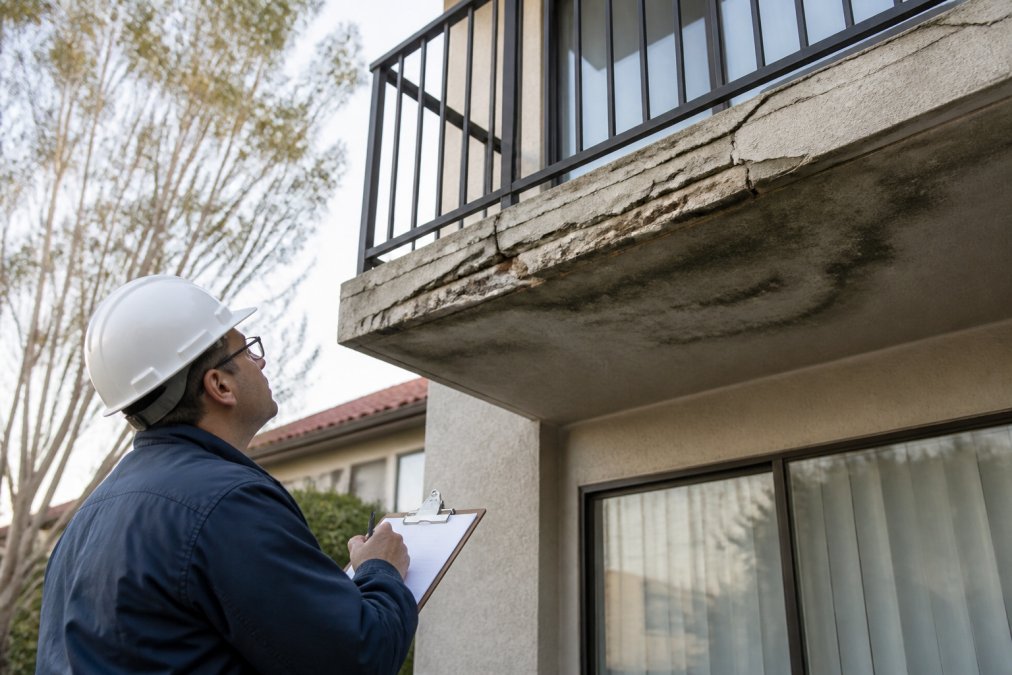
California’s SB 326 (now codified in Civil Code Section 5551-5556) mandates structural inspections of elevated exterior elements on buildings with three or more units (leginfo.legislature.ca.gov). The law was enacted following documented safety failures, including the deadly Berkeley balcony collapse in 2015.
The inspection requirement is non-negotiable. Buildings must have a "structural engineer or other qualified professional" conduct a visual inspection of all balconies and submit a written report to the local building official. If deficiencies are found, the building owner must notify residents and establish a repair timeline.
The duty to inspect is the building owner’s responsibility, not the residents’. An HOA board that delays inspection or ignores findings assumes legal liability for any injuries resulting from structural failure. Courts have held boards personally liable for negligent maintenance and failure to comply with safety statutes.
The legal standard is clear: boards must exercise reasonable care in maintaining common areas. Deferred balcony maintenance that results in injury creates exposure to negligence claims and premises liability suits. Insurance carriers may deny coverage if the board failed to perform required inspections or ignored known defects.
SB 326 compliance is also a transactional issue. Properties with unresolved balcony deficiencies become difficult to sell or refinance. Lenders require proof of compliance before funding. A board that postpones balcony repairs doesn’t just risk injury; it depresses property values.
The practical compliance path is straightforward: conduct the required inspection, document findings in writing, and establish a repair timeline.
Identifying Signs of Dry Rot in Exterior Balconies
Dry rot is the most destructive threat to wooden balcony structures because it advances silently and invisibly. By the time visible damage appears, structural compromise is often advanced.
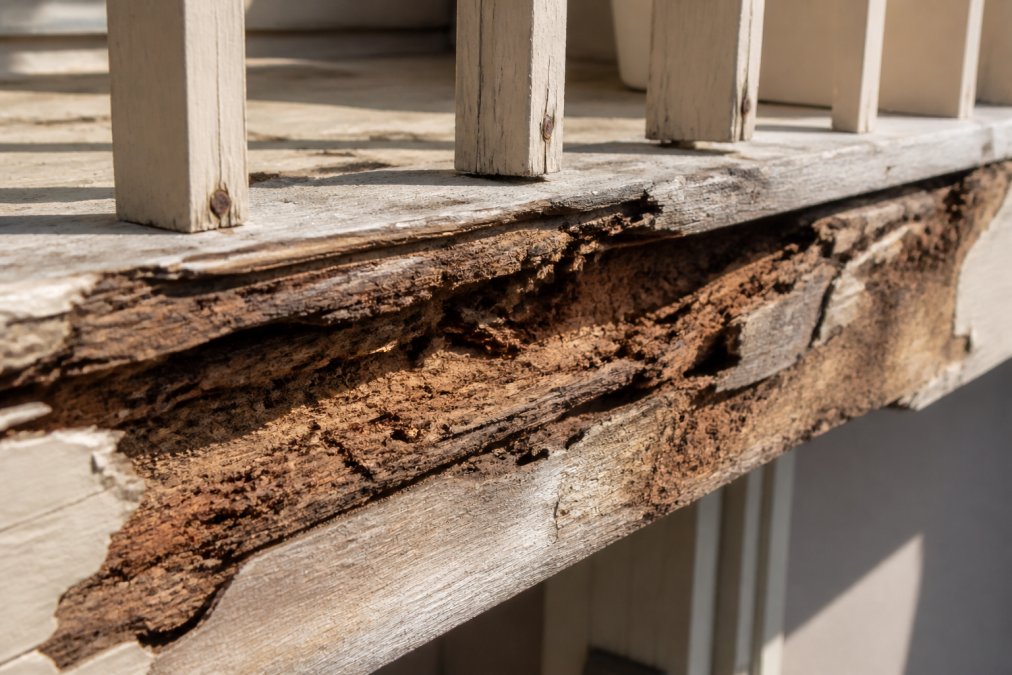
Early warning signs are subtle. Look for soft spots in the wood when you press firmly with a screwdriver; sound wood resists while rotted wood yields. Discoloration appears before visible crumbling, with wood developing a darker, stained appearance. Shrinkage and checking (surface cracks) follow the rot’s progression.
Surface cracking perpendicular to the grain is a hallmark of advanced dry rot. The fungus breaks down cellulose, causing the wood to shrink and split. Once this pattern appears, structural capacity is significantly compromised.
Musty odors near balcony structures often indicate active fungal growth. Water stains on the underside of balconies or on the building facade below indicate moisture is reaching the structure. This is the precondition for rot and signals the need for immediate waterproofing inspection.
Visible fungal growth or fruiting bodies indicate late-stage rot, requiring immediate structural intervention.
Early-stage dry rot is nearly impossible for untrained observers to detect. Professional inspection using moisture meters and sounding techniques is essential. Apex Balcony’s inspectors are trained to identify rot at stages when repair is still feasible and cost-effective.
Building a Maintenance Schedule That Reduces Emergency Repair Costs
A maintenance schedule is the operational framework that prevents crisis management. Without one, balcony maintenance happens reactively, only when visible failure appears.
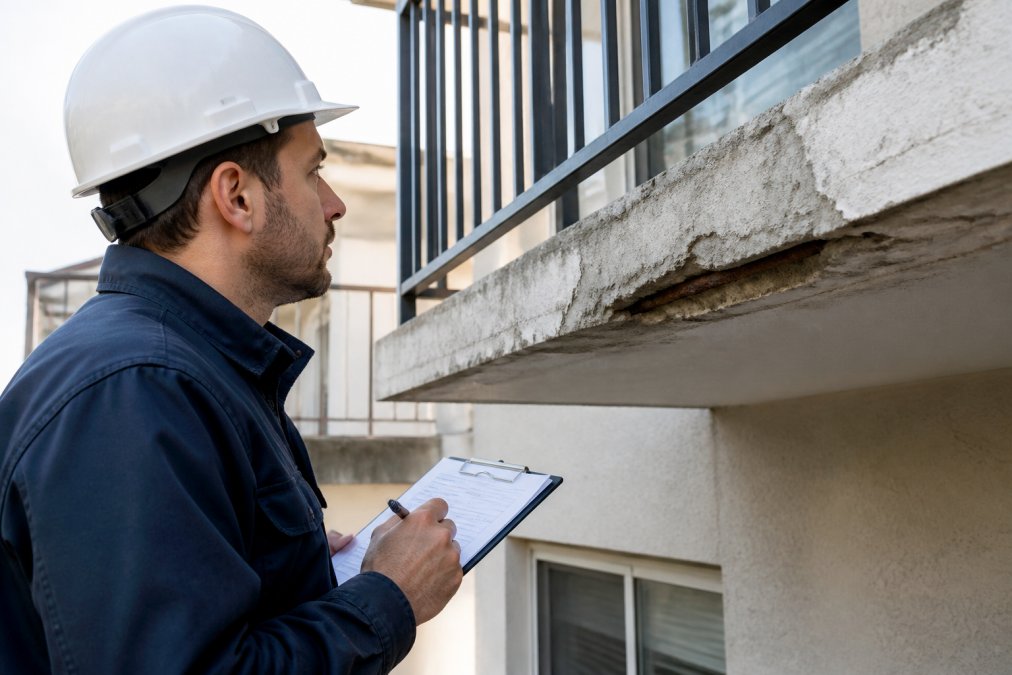
The schedule should include four tiers of activity:
Annual visual inspections are the foundation. A trained observer walks every balcony, documents visible conditions, and identifies anything warranting closer examination.
Biennial sealant maintenance prevents water intrusion. Resealing every two years maintains the waterproofing envelope and stops water before it reaches structural wood.
Triennial detailed inspections involve moisture testing, fastener inspection, and coating assessment. These catch deterioration before it becomes structural failure.
Five-year structural engineering assessment is the comprehensive review. A licensed structural engineer evaluates load-bearing capacity and identifies defects requiring repair.
Compare preventative spending to emergency balcony repair, which often exceeds $50,000. Structural replacement can reach $150,000-$300,000. The schedule also creates predictability for reserve fund planning, eliminating shock special assessments.
HOA Reserve Study and Balcony Repair Cost Planning
An HOA reserve study is the financial planning document that determines whether a building can sustain itself or will face funding crises. Balcony maintenance and repair costs are often the largest component of reserve requirements.
A proper reserve study includes detailed asset inventory and lifecycle analysis. For balconies, this means documenting age, material condition, and expected remaining useful life. A balcony in good condition might have 15-20 years of remaining life; one with advanced deterioration might have 2-3 years before major repair is necessary.
The reserve study calculates funding required to meet these obligations. If a building has $200,000 in anticipated balcony repairs over 10 years, the reserve study determines monthly contributions needed to accumulate that funding. Underfunded reserves force special assessments when repairs come due.
Professional inspection data is critical. A reserve study based on visual inspection alone often underestimates balcony repair costs because hidden damage isn’t accounted for. A reserve study informed by professional inspection is far more accurate.
Boards that conduct regular inspections and update reserve studies annually have far better financial outcomes. A reserve study identifying a $75,000 balcony repair need allows planning funding over 2-3 years. The same problem discovered during an emergency inspection forces an immediate special assessment.
Professional inspection services integrate directly into the reserve study process, giving reserve study engineers the data needed for accurate projections.
Extending the Lifespan of Balconies Through Preventative Measures
Balcony lifespan is determined by material quality and maintenance intensity. A well-maintained balcony can serve 40+ years; a neglected one fails in 10-15 years.
The most effective preventative measure is moisture management. Keeping water away from wood and fasteners is the single most important factor. This requires regular sealant inspection and reapplication every 2-3 years, functional drainage systems, prompt repair of waterproofing cracks, and regular gutter cleaning.
Protective coatings on exposed wood extend lifespan significantly. A quality exterior stain applied every 3-5 years slows fungal colonization and UV degradation. The coating costs $1,000-$3,000 for a typical building and provides tens of thousands in deferred repair value.
Fastener protection is equally important. Applying corrosion-inhibiting coatings or replacing corroded fasteners with stainless steel equivalents prevents strength loss.
Structural reinforcement can extend the functional life of aging balconies. Rather than replacing a 25-year-old balcony, reinforcement can extend its life another 15-20 years at a fraction of replacement cost.
A $5,000 investment in sealant maintenance and protective coating extends balcony life by 10 years. Regular inspection is the prerequisite for all preventative measures.
Balcony maintenance isn’t optional for HOAs managing properties in California. SB 326 compliance is mandatory, and the legal liability for deferred maintenance is substantial. Beyond regulatory obligation, the financial case is overwhelming: proactive balcony maintenance saves money, extends asset life, and prevents the special assessments that drive residents away.
The path forward is clear: conduct a professional inspection, document findings, and establish a maintenance schedule. Apex Balcony’s licensed inspectors bring decades of combined construction and design experience to every assessment. We identify early-stage structural problems, document conditions thoroughly, and provide boards with the information needed to plan repairs strategically. Book an inspection today and transform balcony maintenance from a financial liability into a managed, predictable cost.
Frequently Asked Questions
What are the legal requirements for balcony inspections in California?
California requires compliance with SB 326 and SB 721, which mandate regular inspections of balconies, decks, and exterior stairs in residential buildings. SB 326 applies to buildings with three or more units and requires inspections every six years. SB 721 strengthened these requirements by mandating more frequent inspections and stricter repair timelines. Failure to comply can result in fines and liability if structural failure causes injury or property damage. HOAs must maintain documentation of all inspections and repairs to demonstrate compliance with local building codes and safety standards.
How does proactive balcony maintenance reduce HOA special assessments?
Proactive maintenance identifies problems early, when repair costs are significantly lower than emergency interventions. A small waterproofing issue caught during a preventative inspection might cost $2,000 to repair, but if left unaddressed, the same problem can lead to structural damage requiring $20,000 or more in repairs. By spreading maintenance costs across the operating budget and reserve fund over time, HOAs avoid the need for sudden special assessments that burden residents. Regular maintenance also extends the asset lifecycle, delaying major capital improvements and distributing costs more predictably across multiple years.
What are early warning signs of balcony structural failure?
Common warning signs include visible cracks in concrete or wood, spalling or flaking of concrete surfaces, rust stains indicating corroded rebar, soft or spongy wood suggesting dry rot, water stains or discoloration, loose railings or fasteners, and gaps between the balcony and building structure. Crumbling or deteriorating caulk around joints is also a red flag, as it allows water intrusion that accelerates structural decay. Professional inspections identify these issues before they become safety hazards. Residents should report any visible damage immediately, and boards should schedule inspections at least every six years to catch problems early and maintain structural integrity.
Can HOAs recover inspection and repair costs through reserve studies?
Yes. A comprehensive reserve study calculates the remaining useful life and replacement cost of all major building components, including balconies. This study projects future capital improvement needs and helps HOAs establish appropriate reserve fund contributions. When balcony maintenance is identified in the reserve study, boards can justify regular funding allocations to residents, avoiding the shock of sudden special assessments. Documentation of proactive inspections and maintenance also demonstrates fiduciary responsibility to residents and protects the HOA in liability situations. Reserve studies typically recommend annual reserve contributions of 10-20% of the operating budget for buildings with significant balcony exposure.