5 Common Causes of Balcony Railing Corrosion
Learn the 5 main causes of balcony railing corrosion in coastal areas and how to prevent structural failure. Expert inspection tips inside.
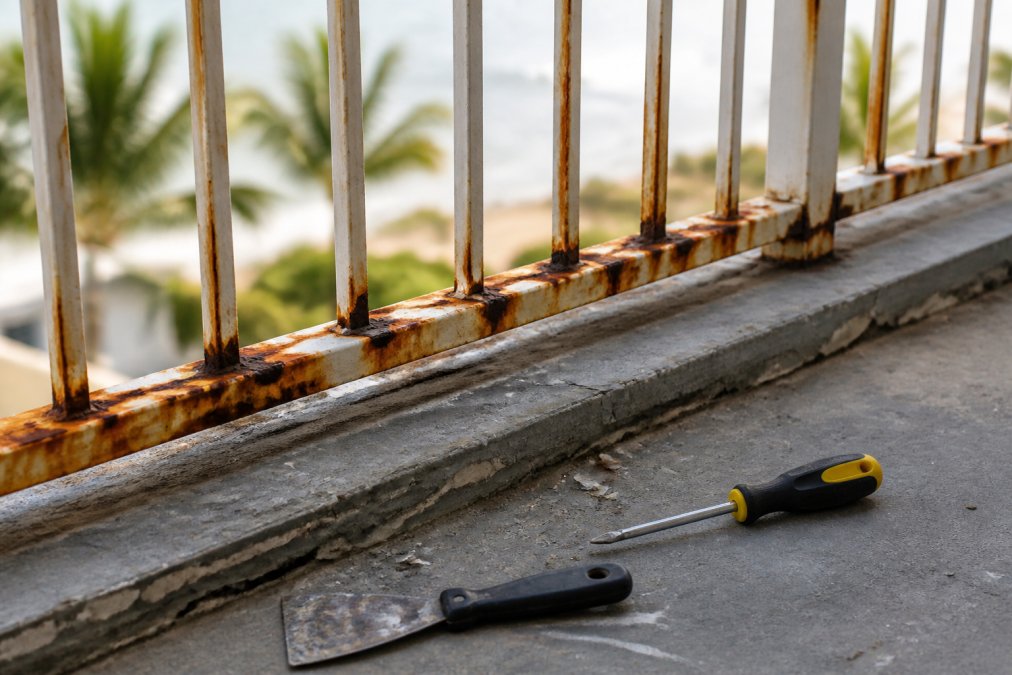
Table of Contents
- Why Balcony Railing Corrosion Matters in Coastal Environments
- 1. Salt-Laden Air and Oxidation
- 2. Moisture Intrusion and Waterproofing Failures
- 3. Galvanic Corrosion Between Dissimilar Metals
- 4. Poor Drainage and Standing Water
- 5. Inadequate Coatings and Sealant Failure
- Signs of Balcony Structural Failure You Cannot Ignore
- SB 326 Balcony Inspection Requirements and Compliance
Last Updated: August 23, 2026
Why Balcony Railing Corrosion Matters in Coastal Environments
Balcony railing corrosion in coastal California is a structural safety crisis. Salt-laden air, moisture, and metal degradation create conditions for catastrophic failure. A 2015 balcony collapse in Berkeley killed six people. A May 2021 incident in Malibu sent shockwaves through the property management industry. These resulted from unchecked corrosion that could have been caught years earlier with proper inspection and maintenance.
California’s SB 326 and SB 721 laws now mandate regular balcony inspections for condominiums and multifamily rentals. Many property owners treat inspections as a compliance checkbox rather than a critical safety measure, missing early warning signs and facing expensive emergency repairs. Below, we’ll walk you through the five primary causes of balcony railing corrosion, what to look for, and how preventative action saves lives and money.
1. Salt-Laden Air and Oxidation
Salt-laden air is the single most aggressive force working against metal railings in coastal environments. Unlike inland properties where moisture is seasonal, coastal properties face year-round exposure to salt spray and corrosive marine atmosphere. Sodium chloride particles settle on metal surfaces and trigger oxidation, breaking down the protective oxide layer on steel and accelerating rust formation.
Salt is hygroscopic: it absorbs moisture from the air and holds it against the metal surface, creating a wet, salty environment that never fully dries. Steel railings exposed to this cycle corrode 10 to 15 times faster than in non-coastal locations (peer-reviewed research). Aluminum fares better naturally, but without proper coating, it develops white powdery corrosion.
Galvanized steel, commonly used in older coastal railings, was designed to resist this scenario. The zinc coating acts as a sacrificial layer that corrodes preferentially to the steel underneath. Once that zinc layer is breached through damage, improper installation, or age, the underlying steel corrodes rapidly. The oxidation process is invisible at first, dramatic rust won’t appear until months or years of exposure have already compromised structural integrity at connection points and welds.
2. Moisture Intrusion and Waterproofing Failures
Moisture intrusion is the second leading cause of balcony railing corrosion and often the hardest to detect until damage is severe. Water penetrates the building envelope at penetration points where railings connect to the structure, where flashing meets decking, and wherever sealants have failed.
When water reaches subsurface areas, it initiates corrosion that happens out of sight. Metal corrodes from the inside out, and by the time rust appears on the surface, structural load capacity has already been compromised. Waterproofing membrane failures are particularly dangerous. Many older California balconies were built with inadequate waterproofing or membranes degraded over 20+ years. Rain and sea spray penetrate these gaps, saturate structural framing, and create conditions for accelerated metal corrosion.
Flashing failures compound the problem. When flashing is improperly installed, rusted, or missing, water runs directly into structural connections where the railing attaches to the building, one of the most common failure points in older coastal properties.
3. Galvanic Corrosion Between Dissimilar Metals
Galvanic corrosion occurs when two different metals contact in the presence of moisture and salt. This critical failure mechanism is often overlooked by property owners and even some inspectors. When steel and aluminum, or steel and stainless steel, are fastened together without proper isolation, an electrochemical reaction accelerates corrosion of the less noble metal.
In coastal California, this problem is rampant. Older railings often mix materials: steel posts with aluminum balusters, or steel fasteners holding stainless steel panels. Each combination creates a galvanic cell where moisture and salt act as the electrolyte, accelerating corrosion at connection points, exactly where structural failure is most dangerous.
Stainless steel railings are often promoted as "corrosion-proof," but this claim breaks down when stainless steel is fastened with regular steel bolts or contacts dissimilar metals. Prevention requires isolating dissimilar metals with gaskets, isolation washers, or coatings that prevent direct contact. A stainless steel railing installed with steel fasteners in a coastal environment is a ticking clock.
4. Poor Drainage and Standing Water
Drainage failures are among the easiest to spot and most preventable causes of balcony railing corrosion. When a balcony deck doesn’t slope toward drains or drains are clogged with debris, water pools on the surface, accelerating corrosion of exposed metal and creating conditions for moisture to penetrate the building envelope.
Coastal California properties face additional drainage challenges from the combination of rain, sea spray, and salt accumulation. Salt-laden water that pools on a deck surface concentrates salt as it evaporates, creating a corrosive paste far more aggressive than fresh water alone.
Many older balconies have inadequate drainage slope, often less than the 1/4 inch per foot recommended by building codes. Blocked drains are another common failure, with leaves, dirt, salt spray residue, and debris accumulating in drain openings. The solution requires regular inspection and maintenance of drainage systems, ensuring adequate slope, and clearing drains at least quarterly in coastal areas. This preventative work costs hundreds, not thousands, but neglecting it leads to repairs costing tens of thousands.
5. Inadequate Coatings and Sealant Failure
Metal railings require protective coatings to survive in coastal environments. Paint, powder coating, sealants, and specialized marine-grade finishes create a barrier between the metal and the corrosive atmosphere. When these coatings fail, the metal is exposed directly to salt-laden air and moisture.
Powder coating is the gold standard for coastal railings, providing a durable, uniform finish that resists UV damage, salt spray, and physical damage far better than spray paint. In harsh coastal environments, powder coatings typically last 5-10 years before degradation becomes visible. Once the coating begins to fail through chalking, cracking, or peeling, corrosion accelerates rapidly.
Many older railings were painted with standard exterior paint, which offers minimal protection in coastal conditions. The problem is compounded by improper surface preparation before coating application. If a railing isn’t properly cleaned, stripped of old paint, and primed before new coating is applied, the new coating won’t adhere properly and will fail prematurely. Specialized coatings designed for extreme coastal conditions, such as marine-grade epoxy or polyurethane systems, offer superior protection at higher cost.
Signs of Balcony Structural Failure You Cannot Ignore
Structural failure in balcony railings progresses through predictable stages, and catching early signs can prevent catastrophic collapse.
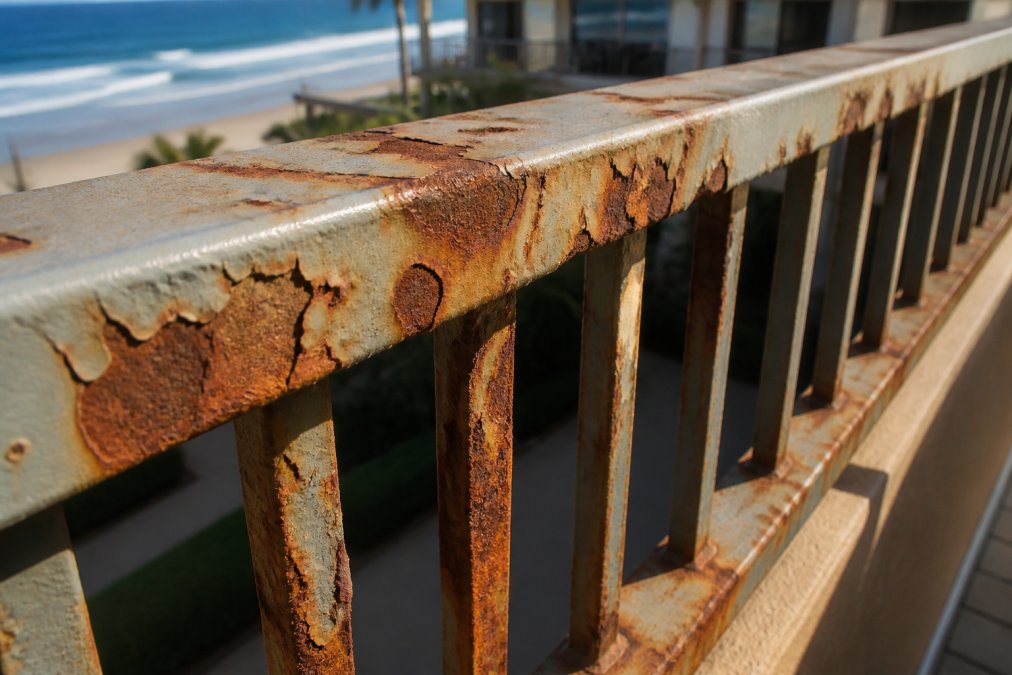
Visible rust and orange oxidation on steel surfaces indicates active corrosion. Rust staining on decking below a railing indicates advanced corrosion. Flaking or peeling paint and coating exposes bare metal to further corrosion. Loose or wobbly railings indicate that connection points have corroded. A railing should be rigid and immovable when tested. White powdery corrosion on aluminum surfaces indicates that the protective oxide layer is breaking down. Water staining or efflorescence on the deck surface below the railing indicates that water is flowing through corroded sections. Spalling or pitting on metal surfaces, visible pits or small craters in the metal, indicate localized corrosion that can progress rapidly. Separation between the railing and the building or visible gaps in flashing indicate that the connection is failing and water infiltrates these gaps.
Any of these signs warrants immediate professional inspection.
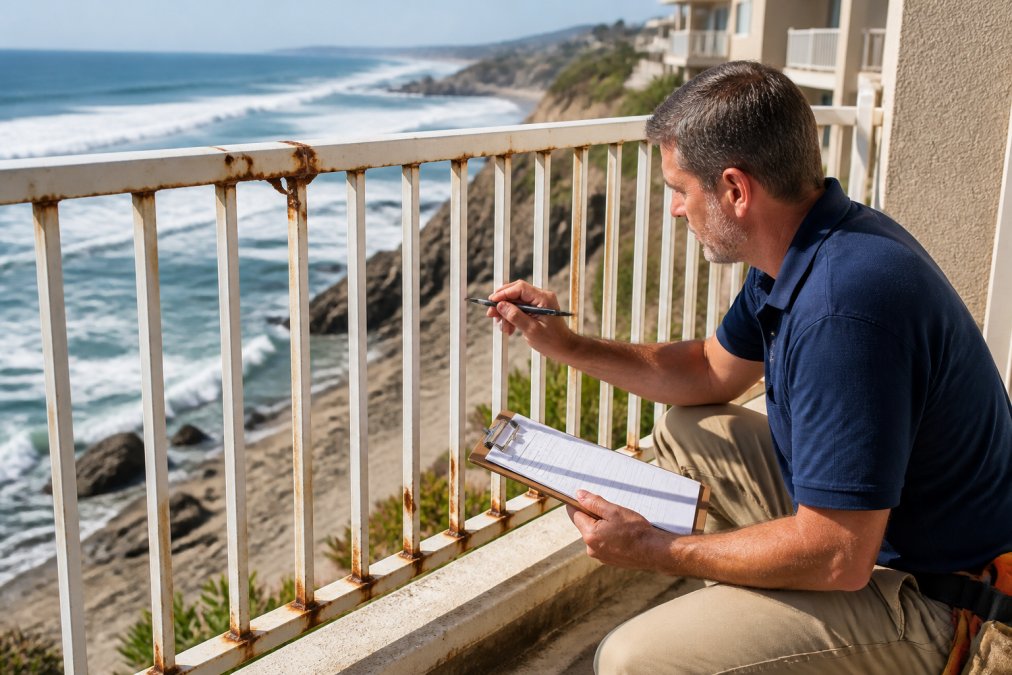
Coastal Corrosion Prevention for Metal Railings
Prevention is far less expensive than repair and is the responsibility of every property owner in coastal California.
Material selection matters. Stainless steel (marine-grade T316) and properly coated aluminum are the most durable options for coastal railings. Isolation of dissimilar metals is non-negotiable. All fasteners should match or be compatible with the primary railing material. Use stainless steel fasteners with stainless steel railings, and use isolation washers or gaskets to prevent direct contact between different metals.
Protective coatings must be maintained. Powder coating is the standard for coastal railings, but it requires inspection and touch-up every 5-7 years in high-salt-exposure areas. Waterproofing and drainage must be designed and maintained properly. Ensure that balcony decks slope adequately toward drains, that flashing is properly installed and sealed, and that drains are cleared quarterly. Sacrificial anodes can be installed on steel railings to provide cathodic protection. Sealants and caulking must be inspected annually and replaced every 3-5 years in coastal environments.
Many property managers treat coating and sealant maintenance as optional. In coastal California, it’s essential. A recoating project done on schedule prevents a structural repair five years later.
SB 326 Balcony Inspection Requirements and Compliance
California’s SB 326 and SB 721 laws mandate regular inspections of balconies and elevated exterior elements in residential buildings.
SB 326 applies to condominiums and planned developments where individual units are separately owned. The law requires inspections of balconies, decks, stairways, and other elevated exterior elements at least once every nine years. SB 721 applies to multifamily residential rental properties with three or more units. Both laws require that defects identified in inspections be repaired or the balcony be closed to public use.
The penalties for non-compliance are severe. Property owners who fail to conduct required inspections or repair identified defects can face fines up to $1,000 per day. More importantly, failing to address known structural defects exposes property owners to massive liability if someone is injured or killed in a balcony collapse. An inspection costs a few thousand dollars. A lawsuit after a balcony collapse costs millions.
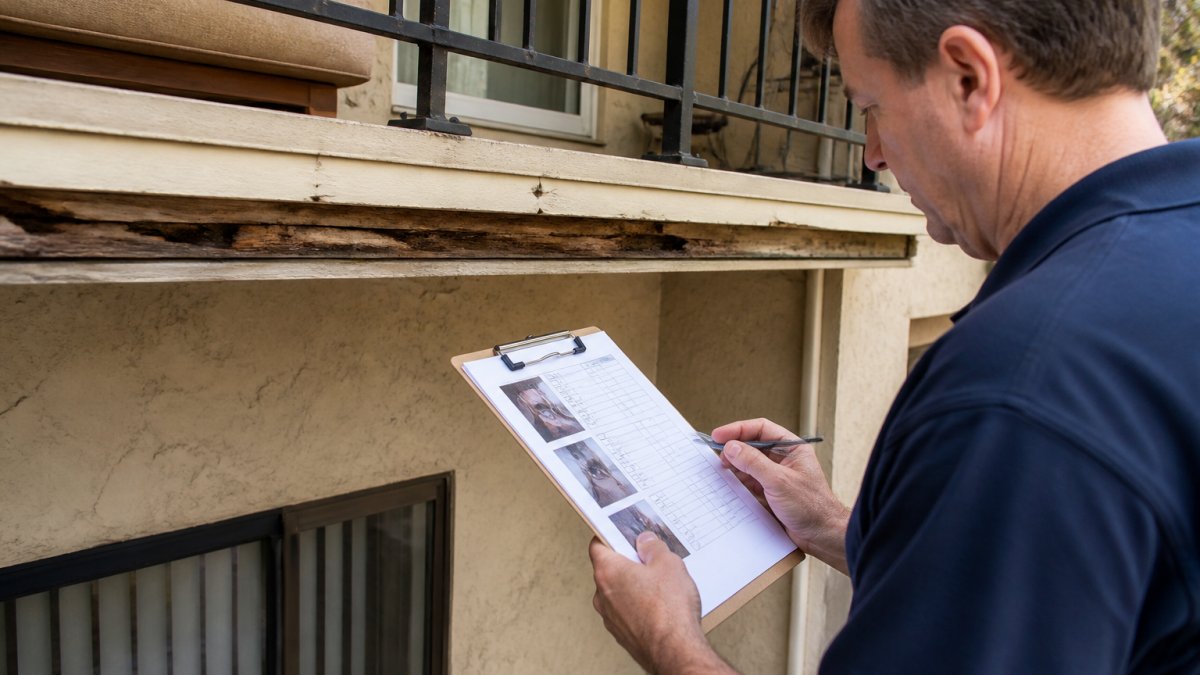
The inspection process uses visual assessment, moisture meters, and sometimes core sampling to evaluate the condition of structural elements. The goal is to identify corrosion, moisture damage, and structural defects before they result in failure.
If your property has not been inspected in the last nine years, you are likely out of compliance with SB 326 or SB 721. Contact a licensed inspector immediately.
Apex Balcony specializes in SB 326 and SB 721 compliance inspections. Our team of licensed inspectors has decades of combined construction and design experience and understands the specific failure mechanisms that occur in coastal California environments. We identify early signs of corrosion, moisture intrusion, and structural defects before they become catastrophic. Our inspection reports provide a clear path to necessary repairs and help you maintain safe conditions for residents while staying compliant with state law.
| Common Corrosion Cause | Primary Risk | Prevention Method | Inspection Frequency |
|---|---|---|---|
| Salt-laden air and oxidation | Rust and metal degradation | Protective coating, material selection | Annual visual inspection |
| Moisture intrusion | Subsurface corrosion, structural failure | Waterproofing, flashing, drainage | Every 2-3 years |
| Galvanic corrosion | Accelerated corrosion at connections | Isolate dissimilar metals | Every 2-3 years |
| Poor drainage | Standing water, localized corrosion | Maintain slope, clear drains | Quarterly drain inspection |
| Inadequate coatings | Exposed metal, rapid corrosion | Recoat every 5-7 years | Annual coating inspection |
Balcony railing corrosion in coastal California is preventable. The five causes outlined here, salt-laden air, moisture intrusion, galvanic corrosion, poor drainage, and inadequate coatings, are all manageable with proper material selection, maintenance, and professional oversight. The real risk isn’t that corrosion will happen; it’s that property owners will ignore early warning signs until structural failure becomes inevitable.
SB 326 and SB 721 mandate regular inspections for good reason. These laws exist because balcony collapses have killed people. Professional inspection identifies corrosion and structural defects before they threaten residents’ safety. Apex Balcony helps California property owners and HOAs stay compliant with state law while protecting their residents and assets. California Building Code requirements for elevated exterior elements outline the standards your railings must meet. SB 326 legislative text and compliance guidance specifies inspection timelines and requirements. Book an inspection with Apex Balcony today and get a clear assessment of your balcony’s structural integrity and a roadmap to necessary repairs.
=== FAQ ANSWERS (audit these too, same rules) ===
[1] Q: How does salt air affect metal balcony railings?
A: Salt-laden air accelerates oxidation in metal railings, especially steel and iron. The corrosive atmosphere breaks down protective coatings and initiates rust formation at connection points and welds. Coastal humidity compounds this effect, creating conditions where metal fatigue and structural degradation occur rapidly. Regular inspection and protective coatings are essential to slow this process.
[2] Q: What are the signs of structural corrosion in balcony railings?
A: Look for visible rust spots, orange or brown discoloration, flaking or peeling paint, white powdery deposits (aluminum oxidation), loose or corroded fasteners, and soft or crumbling metal at connection points. Balcony railings showing these signs of balcony structural failure require immediate professional assessment to determine if the railing can safely support occupant load.
[3] Q: What does SB 326 require for balcony inspections?
A: SB 326 applies to common interest developments (HOAs and condominiums) and requires visual inspections of balconies and elevated exterior elements at least once every nine years. Inspectors must document findings in a detailed report, and property owners must notify residents of any safety issues. Compliance is mandatory to avoid fines and liability.
[4] Q: How can I prevent rust on my coastal balcony railings?
A: Implement coastal corrosion prevention for metal railings by applying marine-grade powder coatings, using stainless steel or aluminum materials, installing proper waterproofing membranes, maintaining drainage slopes to prevent standing water, and scheduling regular inspections and maintenance. Protective sealants and sacrificial anodes also slow oxidation. Annual or bi-annual professional inspections catch early deterioration before it becomes structural.
[5] Q: How often should balcony railings be inspected for corrosion?
A: Coastal properties should inspect balcony railings annually or biannually, depending on salt-air exposure and existing coating condition. SB 326 mandates inspections every nine years, while SB 721 mandates inspections every six years, but coastal environments warrant more frequent checks. Early detection of rust, moisture intrusion, and sealant failure prevents costly structural repairs and keeps residents safe from potential balcony failures.
Frequently Asked Questions
Q: How does salt air affect metal balcony railings?
A: Salt-laden air accelerates oxidation in metal railings, especially steel and iron. The corrosive atmosphere breaks down protective coatings and initiates rust formation at connection points and welds. Coastal humidity compounds this effect, creating conditions where metal fatigue and structural degradation occur rapidly. Regular inspection and protective coatings are essential to slow this process.
Q: What are the signs of structural corrosion in balcony railings?
A: Look for visible rust spots, orange or brown discoloration, flaking or peeling paint, white powdery deposits (aluminum oxidation), loose or corroded fasteners, and soft or crumbling metal at connection points. Balcony railings showing these signs of balcony structural failure require immediate professional assessment to determine if the railing can safely support occupant load.
Q: What does SB 326 require for balcony inspections?
A: SB 326 applies to common interest developments (HOAs and condominiums) and requires visual inspections of balconies and elevated exterior elements at least once every nine years. Inspectors must document findings in a detailed report, and property owners must notify residents of any safety issues. Compliance is mandatory to avoid fines and liability.
Q: How can I prevent rust on my coastal balcony railings?
A: Implement coastal corrosion prevention for metal railings by applying marine-grade powder coatings, using stainless steel or aluminum materials, installing proper waterproofing membranes, maintaining drainage slopes to prevent standing water, and scheduling regular inspections and maintenance. Protective sealants and sacrificial anodes also slow oxidation. Annual or bi-annual professional inspections catch early deterioration before it becomes structural.
Q: How often should balcony railings be inspected for corrosion?
A: Coastal properties should inspect balcony railings annually or biannually, depending on salt-air exposure and existing coating condition. SB 326 mandates inspections every nine years, while SB 721 mandates inspections every six years, but coastal environments warrant more frequent checks. Early detection of rust, moisture intrusion, and sealant failure prevents costly structural repairs and keeps residents safe from potential balcony failures.