Common Structural Issues in Apartment Balconies
Learn to identify common structural issues in apartment balconies, from concrete cracking to rust and water damage. Understand SB 326 and SB 721.
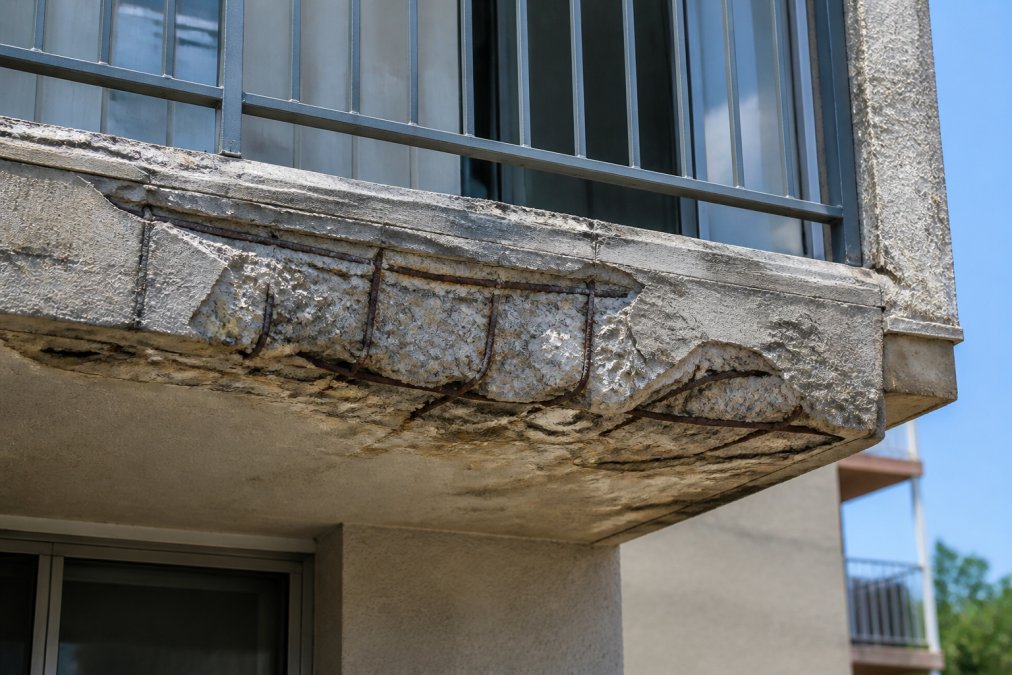
Table of Contents
- Why Balcony Structural Integrity Matters
- Concrete Spalling and Cracking: Early Warning Signs
- Rebar Corrosion and Rust Staining
- Balcony Waterproofing Failure Signs and Water Intrusion
- SB 326 Balcony Inspection Requirements and Compliance
- When to Call Structural Engineering Services
- Legal Liability and Insurance Implications
- Creating a Preventative Maintenance Plan
Last Updated: August 18, 2026
Why Balcony Structural Integrity Matters
Balconies are critical safety systems in residential buildings, yet their structural integrity is often overlooked. The 2015 Berkeley balcony collapse that killed six people and the May 2021 Malibu incident demonstrate that failures result from preventable structural problems accumulating over time, not random accidents.
Most balcony failures announce themselves through visible warning signs months or years before collapse risk becomes acute: spalling concrete, rust stains, water intrusion, and sagging floors. Understanding these issues matters for resident safety, property value preservation, and compliance with California regulations. Buildings that address deterioration early avoid emergency repairs, catastrophic failures, and legal consequences.
Concrete Spalling and Cracking: Early Warning Signs
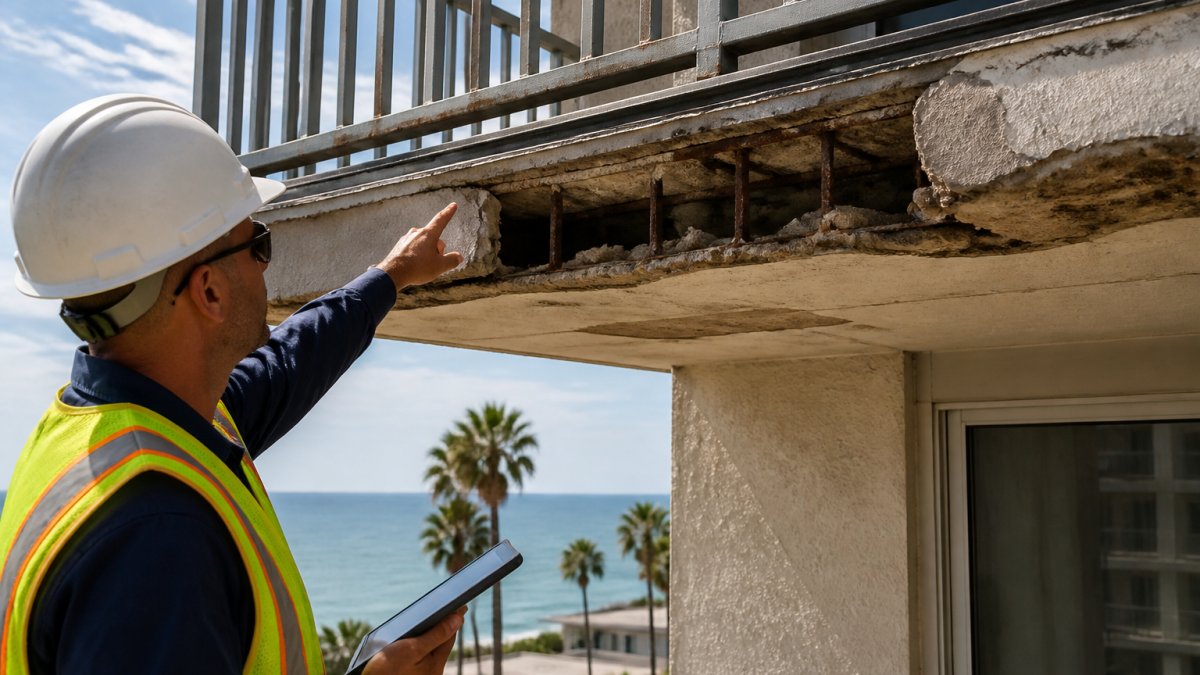
Concrete spalling, when surface material breaks away and exposes reinforcement steel, is an early indicator of compromised structural integrity. What appears as a cosmetic chip is actually the concrete’s protective barrier failing. Once breached, moisture penetrates deeper, accelerating deterioration in a self-reinforcing cycle.
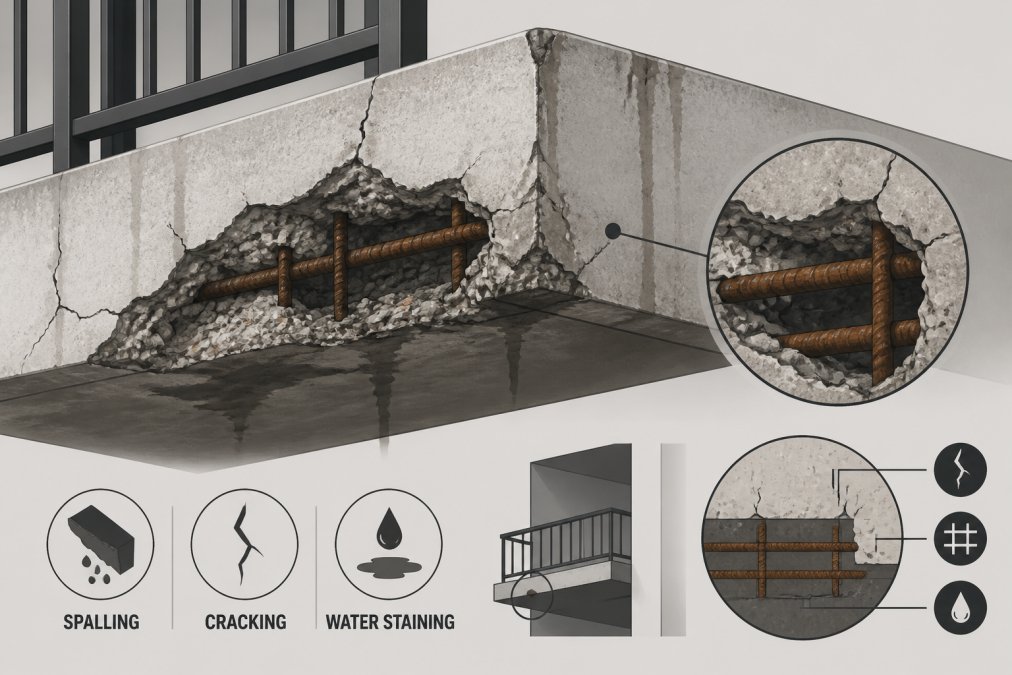
Cracking patterns require equally close attention. Hairline cracks reflecting normal settling differ from diagonal, horizontal, or structurally-aligned cracks that indicate serious problems. Cracks near the connection where a cantilevered balcony meets the main building are particularly concerning, as are cracks running perpendicular to the balcony’s length, which suggest load-bearing capacity issues.
Property managers commonly make the mistake of waiting for cracks to stabilize or applying cosmetic repairs like sealant. These approaches mask the issue while structural damage continues underneath. Professional inspection determines whether cracks are structural (requiring immediate engineering evaluation) or non-structural (worth monitoring).
Rebar Corrosion and Rust Staining
Reinforcement steel is the hidden skeleton of balcony structures. When it corrodes, structural integrity is at risk. Rust staining, orange-brown discoloration on concrete surfaces, indicates corrosion is underway. The visible rust represents only a fraction of internal corrosion; expanding steel creates pressure that forces more concrete to spall away, creating a self-accelerating cycle.
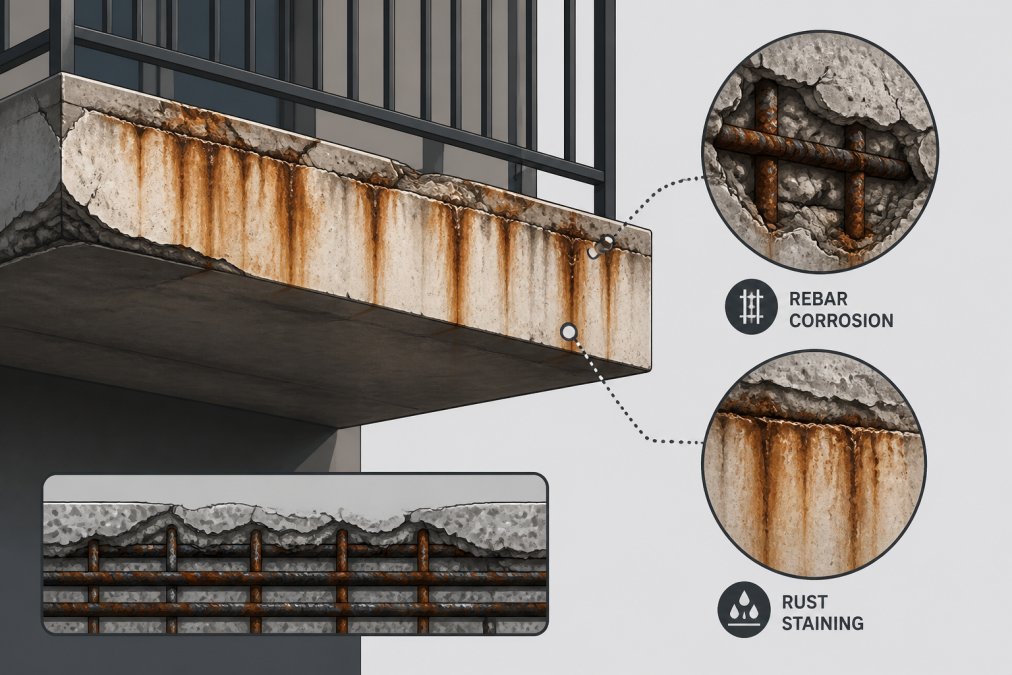
Corrosion rates depend on exposure. Concrete in direct contact with salt (coastal properties or salt-treated roads) corrodes faster than protected concrete. Damaged or poorly sealed concrete allows water and salt penetration, accelerating corrosion. Ocean-facing balconies typically show more advanced corrosion than protected sides.
Rebar corrosion is often more advanced than surface evidence suggests. Light rust staining may indicate significant internal corrosion. Professional inspection using specialized techniques like half-cell potential testing or ground-penetrating radar reveals true corrosion extent beneath the surface. Corroded steel is weaker steel; a balcony designed to safely support a certain load may no longer meet specifications if significant reinforcement has corroded away.
Balcony Waterproofing Failure Signs and Water Intrusion
Water is the primary driver of balcony deterioration. When waterproofing fails through membrane damage, failed sealants, or poor drainage, water penetrates the structure and initiates the cascade of problems leading to structural failure.
Signs of waterproofing failure include visible water stains on balcony undersides, water pooling after rain, efflorescence (white crystalline deposits on concrete), and damp interior walls below balconies. Efflorescence indicates ongoing water movement through concrete, signaling failed waterproofing or alternate water paths through the structure.
Failed drainage is often the culprit. Balconies should slope slightly toward drain points; clogged drains or settled slopes cause water pooling. Standing water gives water unlimited time to penetrate the structure below. Sealant failure around edges and penetrations is another common source; sealants degrade from UV exposure and thermal cycling, requiring replacement every 5-10 years.
The waterproofing membrane protecting structural elements can fail through punctures, improperly sealed seams, or deterioration from foot traffic and UV exposure. Once compromised, water intrusion becomes inevitable. Addressing waterproofing failure promptly prevents water from penetrating deeper, where damage becomes exponentially more expensive to repair.
SB 326 Balcony Inspection Requirements and Compliance
California’s Senate Bill 326 and its successor, Senate Bill 721, established mandatory inspection requirements for balconies and elevated exterior elements in residential buildings with three or more units. Non-compliance carries significant liability and legal consequences.
SB 326 requires licensed structural engineers or architects to inspect all balconies, decks, stairs, and elevated exterior elements, documenting structural condition, identifying deficiencies, and providing repair recommendations. Property owners must provide inspection reports to residents and create repair plans.
The compliance timeline is strict: buildings constructed before January 1, 2008 had until January 1, 2025 to complete initial inspections; those constructed between January 1, 2008 and January 1, 2018 must complete inspections by January 1, 2026. Re-inspections are required every six years. Missing deadlines exposes property owners to penalties and liability.
SB 326 compliance requires responding to findings, not just completing inspections. Ignoring identified deficiencies amplifies liability; if a resident is injured due to a known, unrepaired deficiency, liability exposure increases dramatically. Delaying inspection doesn’t prevent deterioration, it only delays identification of worsening problems. An inspection identifying required repairs is preferable to discovering critical failure when someone is injured.
When to Call Structural Engineering Services
Call a structural engineer immediately if you observe active water intrusion, visible rebar exposure with active corrosion, sagging or deflection of the balcony surface, cracking patterns suggesting structural distress, failed railings, or signs the balcony is pulling away from the main building.
For less urgent conditions, minor spalling, light rust staining, hairline cracks, incorporate evaluation into regular inspection schedules. Professional structural engineering services go beyond visual inspection, using half-cell potential testing, ground-penetrating radar, and load testing to provide complete structural assessment. The cost of professional inspection is modest compared to emergency repair costs or liability exposure from structural failure.
Legal Liability and Insurance Implications
Property owners often underestimate the legal and financial consequences of balcony structural failure. Liability exposure extends far beyond repair costs to personal injury litigation, potential criminal liability, regulatory penalties, and reputational damage.
If an inspection identifies deficiencies and the property owner fails to address them, insurance coverage may be denied. Insurers consider known, unremediied deficiencies as evidence of negligence, making the property owner personally liable for full damage costs. SB 326 compliance creates documented evidence of due diligence; ignoring findings creates evidence of negligence.
HOA boards and property managers can face personal liability for maintenance decisions. Failure to comply with SB 326 inspection requirements results in regulatory penalties and damages property reputation. Mortgage lenders increasingly require SB 326 compliance documentation; properties with known structural deficiencies may become unmortgageable or require higher interest rates.
Creating a Preventative Maintenance Plan
The most cost-effective approach is prevention. A comprehensive preventative maintenance plan identifies problems early and extends the life of exterior elements.
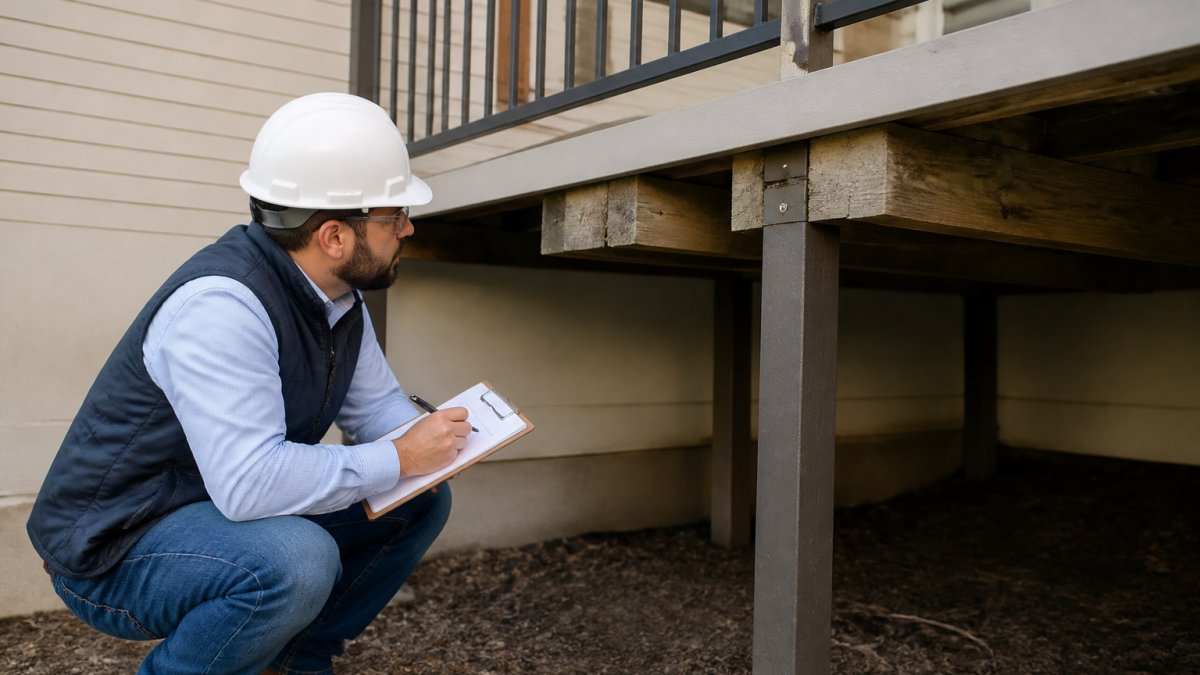
Plans should include regular visual inspections (at least annually, more frequently in harsh climates), prompt repair of identified issues, regular waterproofing maintenance, and professional structural inspection per SB 326 and SB 721 requirements.
Visual inspections should focus on cracking, spalling, rust staining, water intrusion evidence, and drainage function. Document findings with photographs and track changes over time. Growing cracks or spreading rust staining indicate accelerating deterioration requiring professional evaluation.
Waterproofing maintenance is critical: keep drains clear, inspect sealants annually and replace when failing, and address water pooling immediately. Repair deficiencies promptly; small repairs made early are exponentially cheaper than major structural repairs later. Budget for regular maintenance and anticipated repairs through a reserve fund specifically allocated for exterior element maintenance.
| Maintenance Task | Frequency | Purpose | Priority |
|---|---|---|---|
| Visual inspection for cracks, spalling, staining | Annually (twice in coastal areas) | Early detection of deterioration | High |
| Drain cleaning and debris removal | Quarterly or after heavy rain | Prevent water pooling and intrusion | High |
| Sealant inspection and replacement | Every 5-10 years | Maintain waterproofing integrity | High |
| Professional structural inspection | Every 6 years (SB 326/721 requirement) | Comprehensive condition assessment | Mandatory |
| Rust treatment for exposed rebar | As identified during inspections | Slow corrosion progression | High |
| Concrete repair and sealing | As needed when spalling is identified | Protect reinforcement and structure | High |
Balcony structural failure isn’t inevitable, it results from deferred maintenance and ignored warning signs. Property owners who successfully manage this challenge treat balcony inspection and maintenance as ongoing priorities. Apex Balcony specializes in identifying common structural issues in apartment balconies before they become emergencies. Our licensed inspectors provide comprehensive evaluation of building exterior elements, document findings clearly, and guide you through the repair process. Book an inspection with Apex Balcony today to ensure your property remains safe, compliant, and protected.
Frequently Asked Questions
What are the early warning signs of balcony structural failure?
Early warning signs include visible concrete cracking, spalling (surface deterioration), rust staining from corroding rebar, efflorescence (white powder deposits), sagging or uneven surfaces, and water pooling or drainage issues. Cracking patterns that radiate from corners or follow rebar placement often indicate reinforcement steel corrosion. Loose or missing caulking and separation between the balcony and building wall are also red flags. These signs typically develop gradually, making regular visual inspections critical for catching problems before they become safety hazards.
How do SB 326 and SB 721 affect balcony inspection requirements?
SB 326 requires buildings with three or more units to have balcony inspections every six years, while SB 721 mandates more frequent inspections and stricter repair standards. Both laws aim to prevent structural failures and protect residents. Property owners must document all findings, maintain detailed records, and complete necessary repairs within specified timelines. Failure to comply can result in fines, liability exposure, and loss of insurance coverage. These requirements apply regardless of building age or previous inspection history, making compliance essential for all multifamily properties.
When should property owners hire structural engineering services versus attempting repairs themselves?
Property owners should hire structural engineering services when cracks exceed 1/8 inch in width, when water intrusion is present, when rust staining or rebar exposure is visible, or when load-bearing capacity is questionable. Structural engineers assess whether issues are cosmetic or indicative of deeper problems affecting the cantilevered balcony's integrity. DIY repairs are appropriate only for cosmetic caulking or minor surface cleaning. Anything involving concrete deterioration, waterproofing membrane failure, or load-bearing concerns requires professional evaluation to ensure safety and code compliance.
What is the financial and legal impact of ignoring balcony structural problems?
Ignoring balcony issues creates significant liability exposure. Property owners face potential lawsuits if residents are injured due to structural failure, fines for SB 326 and SB 721 non-compliance, insurance policy cancellation or denial of claims, and emergency repair costs that far exceed preventative maintenance. Recent incidents, including the Berkeley balcony collapse that killed six residents in 2015, demonstrate the catastrophic consequences of deferred maintenance. Building owners can be held personally liable for injuries, making proactive inspections and timely repairs essential for protecting residents and assets.