Fix Loose Balcony Railings: Multi-Unit Building Guide
Step-by-step guide to fixing loose balcony railings in multi-unit buildings. Learn repair techniques, tools needed, and SB 326/721 compliance requirements.
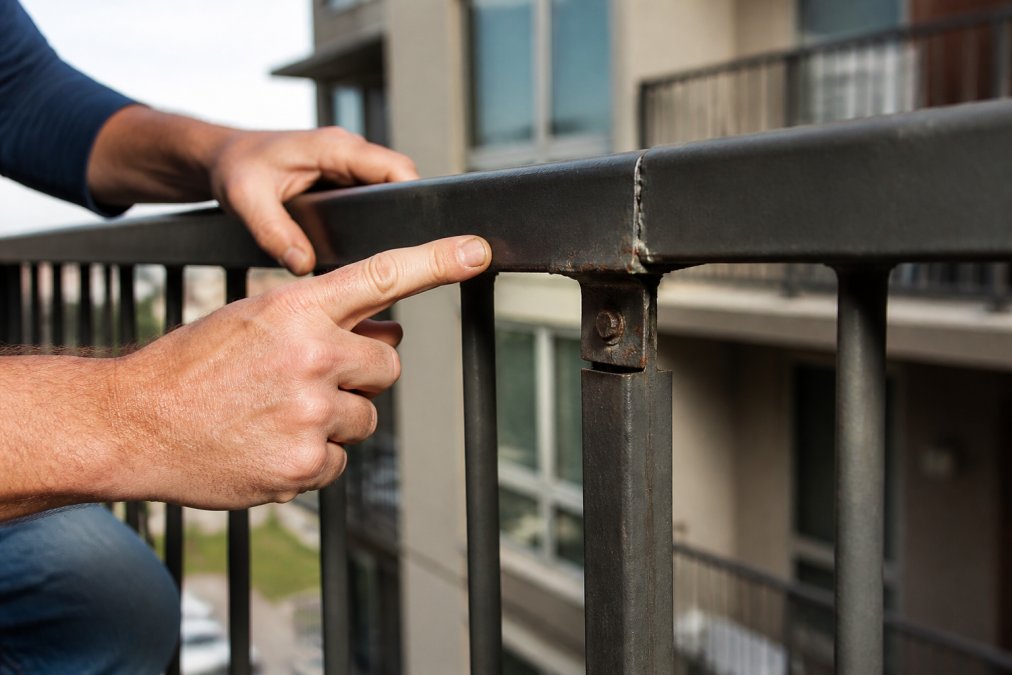
Table of Contents
- Identifying the Cause of Loose Balcony Railings
- Tools and Materials Required for Railing Repair
- Best Tools for Tightening Metal Railings
- Step-by-Step Repair Process for Wobbly Railings
- IBC Railing Load Requirements and Code Compliance
- Balcony Railing Inspection Checklist for Property Managers
- Liability for Balcony Railing Failure in Multi-Unit Buildings
- When to Call a Professional Inspector
Last Updated: August 5, 2026
Identifying the Cause of Loose Balcony Railings
Loose balcony railings in multi-unit buildings represent a serious structural and liability concern, typically resulting from fastener deterioration, material fatigue, and inadequate blocking between structural elements.
Common failure points in multi-unit buildings
The most common failure points include corroded lag bolts and carriage bolts that lose shear strength and cannot transfer lateral loads required by building codes, particularly acute in coastal California where salt spray accelerates corrosion and in freeze-thaw regions.
Deteriorated blocking between rim joists represents another critical weakness. Inadequate or undersized pressure-treated lumber fails due to water intrusion and rot. Without solid blocking, the rim joist cannot properly support the vertical load-bearing posts that anchor the railing system.
Hardware failure at the post-to-rail connection is equally problematic. Bolts loosen over time due to vibration and thermal expansion, causing the entire railing to shift laterally and creating the wobbly sensation that signals danger.
How to perform a visual safety inspection
Apply firm lateral pressure to the railing at multiple points along its length, it should not move. Any movement indicates loose fasteners, failed blocking, or compromised hardware.
Inspect all visible fasteners for corrosion, rust staining, or discoloration. Look for white powder or orange-red rust bloom around bolt heads. Check for gaps between the post and rim joist where blocking should be present. Examine concrete anchors for cracks radiating from anchor holes or broken concrete. Document any visible water damage or moisture intrusion.
Tools and Materials Required for Railing Repair
Essential tools include a socket wrench set with deep sockets for accessing lag bolts in tight spaces, a calibrated torque wrench for proper fastener tightening, and a cordless impact driver for fastener removal. A level, straightedge, drill, and reciprocating saw complete the toolkit.
For materials, stock stainless steel lag bolts and carriage bolts rather than galvanized fasteners, stainless steel resists corrosion far more effectively in coastal and humid environments. Use pressure-treated lumber rated for exterior use for all blocking. Include corrosion-resistant washers and lock washers with every fastener to prevent loosening due to vibration.
Best Tools for Tightening Metal Railings
Proper fastening technique separates a repair that holds from one that fails within months.
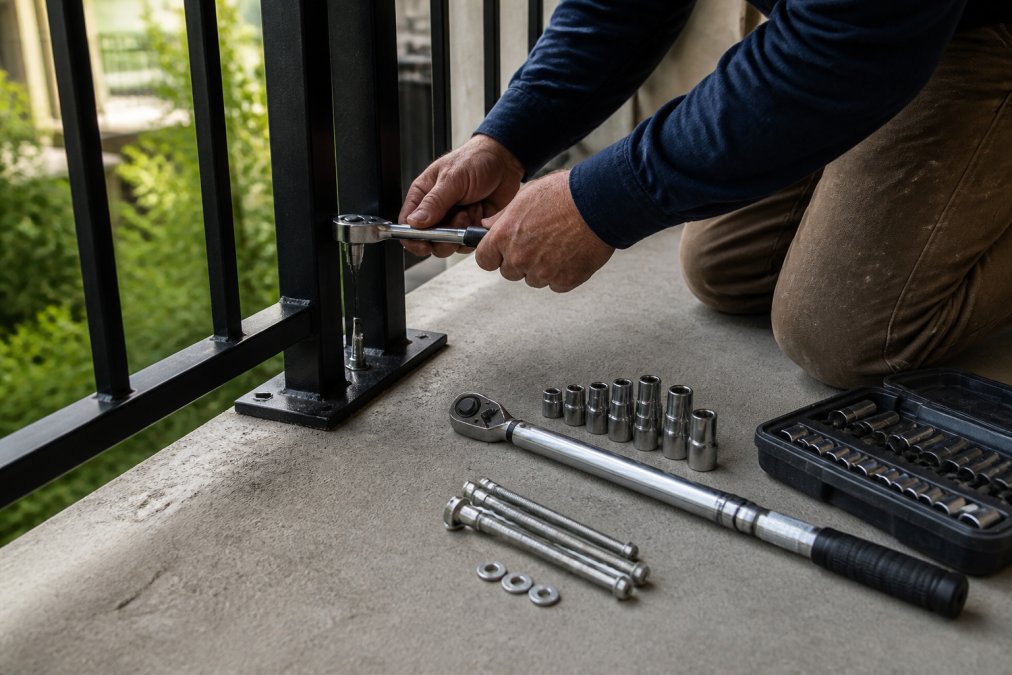
A calibrated torque wrench is non-negotiable for final fastener tightening. Lag bolts connecting posts to rim joists typically require 80-120 foot-pounds of torque, depending on bolt diameter and material specifications. Over-tightening can strip the wood or snap the bolt; under-tightening leaves the connection loose.
Socket wrenches with deep sockets allow access to recessed bolt heads. An impact driver accelerates fastener removal, particularly with corroded bolts, but should never be used for final tightening, as impact action prevents proper clamp load development.
Step-by-Step Repair Process for Wobbly Railings
A systematic repair process addresses root causes rather than applying cosmetic fixes.
Step 1: Tighten loose fasteners and bolts
Identify all fasteners in the railing system, including lag bolts connecting the post to the rim joist, carriage bolts through post-to-rail hardware, and bolts anchoring to concrete. Document location and condition with photographs.
Remove paint, rust, or debris from bolt heads using a wire brush. Apply penetrating oil to corroded fasteners and allow 15-30 minutes to soak. Using your socket wrench, remove the bolt completely and inspect for damage or corrosion. If severely compromised, replace with a new stainless steel fastener of the same diameter and length.
Reinstall the fastener with new lock and flat washers. Hand-tighten first, then use your torque wrench to tighten to manufacturer specification. Work methodically around the railing, tightening all fasteners in a balanced pattern.
Step 2: Install blocking between rim joists
Inspect the space between the post and rim joist. If you see daylight or feel looseness, blocking is missing or has failed. Measure the gap to determine the size and quantity of blocking needed.
Cut pressure-treated lumber to fit snugly between rim joist and post, typically 2×6 or 2×8 depending on span. Install using corrosion-resistant fasteners spaced approximately 16 inches apart. Use your torque wrench to tighten each fastener to appropriate specification.
Verify that blocking is tight with no movement between post and rim joist. If movement remains, the underlying rim joist may be compromised and require professional assessment.
Step 3: Replace post-to-rail hardware
The connection between post and railing must be inspected and tightened or replaced. For bolted connections, remove each bolt, clean thoroughly, and reinstall with new washers and lock washers. Tighten using your torque wrench to manufacturer specification.
For welded connections, look for cracks in the weld or corrosion around the weld perimeter. If cracks are present, the connection has failed and must be replaced by a professional welder.
After tightening or replacing hardware, test railing stability by applying firm lateral pressure at multiple points. The railing should not move perceptibly.
IBC Railing Load Requirements and Code Compliance
Building codes establish minimum load requirements that railings must meet to protect occupants from falls. The International Building Code (IBC) requires that railings resist a concentrated load of 200 pounds applied horizontally at any point along the top rail, plus a distributed load of 50 pounds per linear foot. Vertical members must be spaced so a 4-inch sphere cannot pass between them. The railing system must be designed so no single point of failure causes collapse.
SB 326 and SB 721 compliance for California buildings
California Senate Bills 326 and 721 impose additional requirements beyond the IBC. SB 326 (effective 2018) requires that balconies, decks, and exterior stairs in residential buildings three or more units old be inspected for safety and structural integrity. SB 721 (effective 2019) extends these requirements to buildings built before 1995 and mandates that railings be replaced if they do not meet current code standards.
These laws apply to any residential building with three or more units. The responsibility for compliance falls on the building owner or HOA. Failure to comply results in fines, liability for injuries, and legal action by residents.
Compliance requires a licensed inspector to conduct thorough evaluation of all elevated exterior elements, document railing condition, identify structural defects, and recommend repairs or replacements. Building owners must complete recommended repairs within a specified timeframe.
At Apex Balcony, we specialize in SB 326 and SB 721 compliance inspections for California property owners. Our licensed inspectors have decades of combined construction and design experience and understand the specific requirements that apply to your building type and age. We provide comprehensive documentation that satisfies regulatory requirements and protects you from liability.
Balcony Railing Inspection Checklist for Property Managers
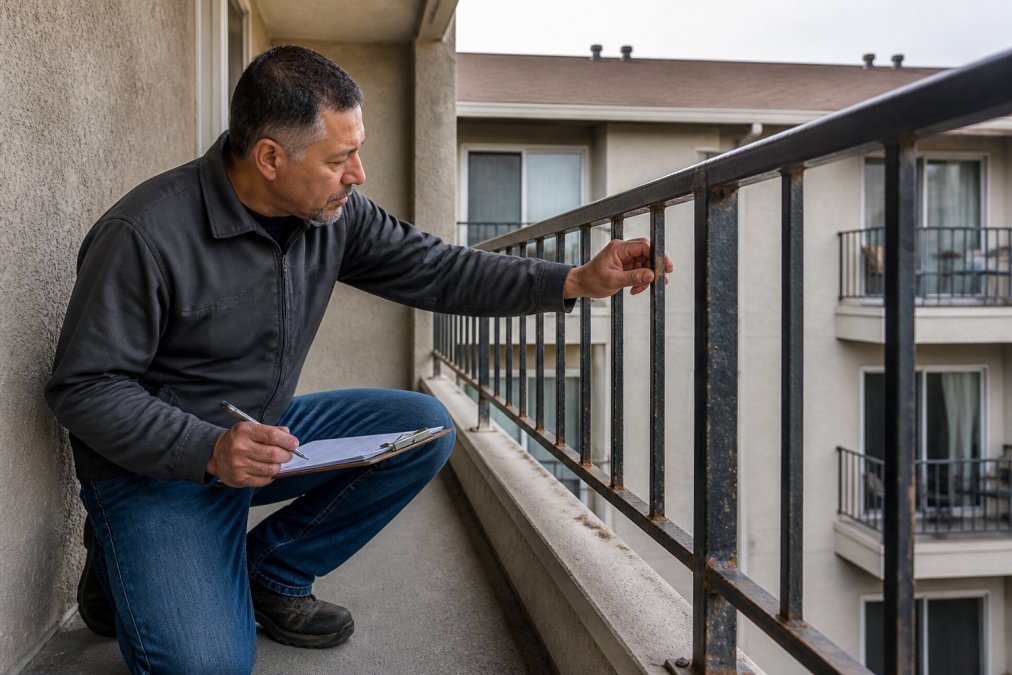
Regular inspections catch problems before they become dangerous. Property managers should conduct visual inspections at least twice annually, spring and fall, and after any severe weather events.
What to look for during routine inspections
Visually scan the entire railing for obvious damage, rust, or paint failure. Rust staining indicates fastener corrosion. Apply lateral pressure to the railing at multiple points, it should not move. Any movement indicates loose fasteners or failed blocking.
Inspect all visible fasteners for corrosion, missing components, or damage. Look for partially backed-out bolts or missing washers. Examine the connection between post and rim joist for gaps, movement, or failed blocking. Check for water staining or moisture damage. Test concrete anchors for cracks or spalling.
Preventative maintenance protocol
Establish a maintenance schedule addressing the most common failure modes before they become critical. Annually inspect and tighten all fasteners. Every two years, apply protective coating to all metal components. Every three to five years, depending on environmental exposure, replace fasteners with new stainless steel components.
Document all maintenance activities in a building maintenance log, recording date, work performed, personnel responsible, and any defects discovered. This documentation protects you if railing failure occurs, demonstrating diligent maintenance and compliance with legal obligations.
Liability for Balcony Railing Failure in Multi-Unit Buildings
Building owners and HOAs bear legal responsibility for resident safety. A balcony railing failure resulting in injury or death creates immediate liability exposure.
Legal responsibility and insurance implications
California law holds property owners to a standard of reasonable care, maintaining properties in a condition safe for occupants and compliant with applicable building codes. For balcony railings, this includes regular inspections, prompt repairs, and replacement of railings not meeting current code standards.
Failure to meet this standard constitutes negligence. If railing failure results in injury, the injured party can pursue claims for damages including medical expenses, lost wages, pain and suffering, and wrongful death claims exceeding millions of dollars.
Insurance policies typically include liability coverage for on-property injuries. However, carriers may deny coverage if the owner failed to maintain safe conditions or comply with building codes.
Documentation and professional assessment
The best protection against liability is comprehensive documentation of inspection and maintenance activities. When a railing is inspected, the inspector should provide a detailed written report documenting component condition, identifying defects, and recommending specific repairs or replacements.
If defects are identified, the building owner must act promptly. Delaying repairs creates liability exposure. Professional inspections provide credibility and protection, when a licensed inspector documents that a railing meets code requirements or identifies specific necessary repairs, this documentation supports your position if disputes arise.
At Apex Balcony, we provide comprehensive inspection reports documenting current railing condition and clearly identifying any defects or code violations. Our reports include specific repair or replacement recommendations with details on what must be done and why. This documentation protects you by demonstrating diligent duty to maintain safe conditions for residents.
When to Call a Professional Inspector
While property managers can perform basic visual inspections and routine maintenance, certain situations require professional assessment. A licensed inspector brings expertise in building codes, structural engineering, and material science beyond visual observation.
Call a professional inspector if you observe visible fastener or hardware corrosion, railing movement under lateral pressure, gaps between posts and rim joists, concrete anchor cracks or spalling, water staining or moisture damage, paint failure or coating deterioration, missing or damaged fasteners, or any uncertainty about code compliance.
Do not attempt repairs if uncertain about the problem or solution. Improper repairs create false confidence that the railing is safe when it remains defective.
California law requires buildings built before 1995 to comply with SB 721 requirements. If your building is in this category, professional inspection is not optional, it is a legal requirement. Professional inspections also satisfy insurance requirements, as most carriers expect periodic professional inspections to verify code compliance and safety standards.
Balcony railing failures in multi-unit buildings are preventable with systematic inspection, timely maintenance, and professional assessment. The cost of proactive maintenance is minimal compared to liability exposure and potential tragedy of railing failure. Building owners and property managers who take maintenance obligations seriously protect their residents and assets. Schedule a professional inspection today to verify that your railings meet current code requirements and that your residents are safe.
Frequently Asked Questions
How do you stabilize a wobbly railing?
Start by tightening all visible fasteners with the appropriate wrench or socket. Check lag bolts, carriage bolts, and post-to-rail hardware for corrosion or deterioration. If tightening doesn't stop the wobble, inspect the rim joist and blocking between joists for decay or gaps. Install pressure-treated blocking where needed to restore structural integrity. For multi-unit buildings, ensure all repairs meet IBC railing load requirements and document your work for liability protection.
What is the difference between SB 326 and SB 721 compliance?
SB 326 (California Building Standards Code) requires inspection of balconies and elevated exterior elements in residential buildings three or more units old. SB 721 extends compliance requirements to all multi-unit residential buildings. Both mandate professional structural assessment to identify deterioration. Determine which applies to your building based on its age and unit count, then schedule a professional inspection to maintain legal compliance and protect residents.
Who is liable if a balcony railing fails and someone is injured?
Building owners and property managers of multi-unit buildings are legally responsible for maintaining safe railings. Liability extends to the HOA, management company, and individual owners depending on your structure. Professional inspections and documented repairs create a liability defense. Without proof of compliance with SB 326 or SB 721, you face significant legal and financial exposure. Maintain detailed records of all inspections, repairs, and professional assessments.
Can I repair loose balcony railings myself, or do I need a professional?
Simple tightening of fasteners can be done in-house with proper tools. However, if inspection reveals structural damage, deteriorated blocking, corrosion-resistant hardware replacement, or load-bearing issues, hire a licensed structural engineer or balcony specialist. Multi-unit buildings require professional assessment to meet SB 326/721 compliance. Professional documentation protects your building legally and ensures repairs meet code requirements.