Balcony Inspection Liability for Property Managers
Understand balcony inspection liability for property managers. Learn SB 326 and SB 721 requirements, compliance obligations, and risk mitigation.
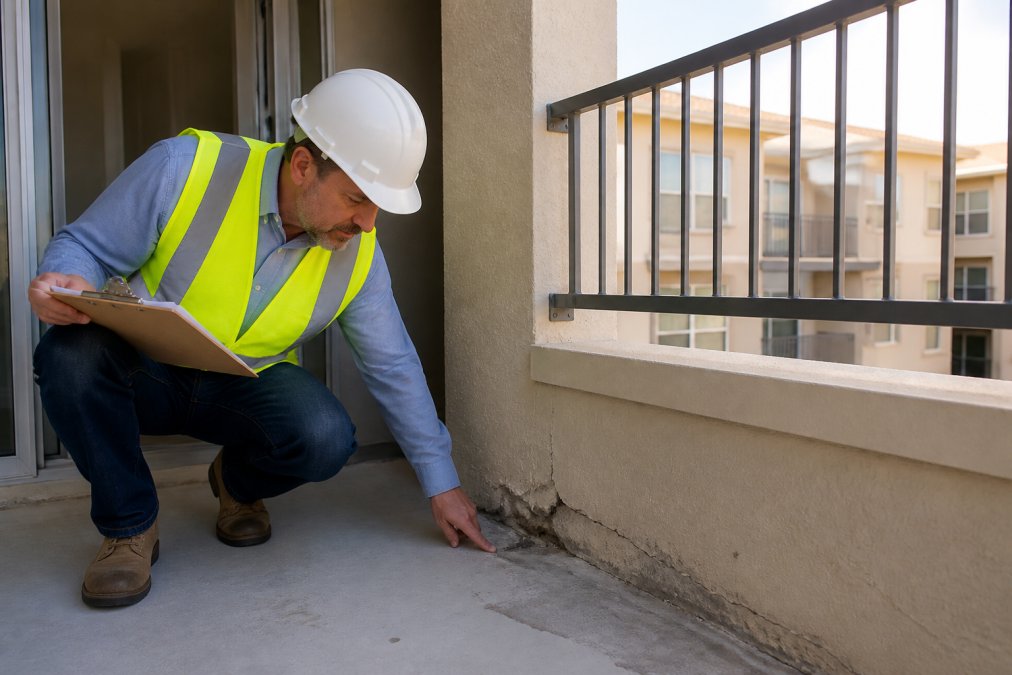
Table of Contents
- Why Balcony Inspection Liability Matters for Property Managers
- SB 326 Compliance Requirements and Your Legal Obligations
- Understanding SB 721 and Exterior Elevated Elements
- Common Signs of Balcony Structural Distress and Water Damage
- Hiring a Licensed Balcony Inspector: What to Expect
- Creating a Balcony Inspection Report Template for Your Records
- Consequences of Non-Compliance and Civil Penalties
- Protecting Your Property and Residents
Last Updated: August 17, 2026
Why Balcony Inspection Liability Matters for Property Managers
Balcony inspection liability for property managers is a legal and safety responsibility that can expose your property, organization, and residents to serious risk. In 2015, a balcony collapse in Berkeley killed six people and sparked regulatory scrutiny across residential properties. A 2021 incident in Malibu reinforced that structural failure in elevated exterior elements is a documented threat that regulators, residents, and courts take seriously.
California’s response was decisive. Two laws now govern balcony safety: SB 326 and SB 721. Both impose mandatory inspection cycles, detailed reporting requirements, and civil liability for non-compliance. As a property manager, you’re responsible for ensuring your building meets these standards. Miss an inspection deadline, overlook structural damage, or fail to document findings, and you face civil penalties, lawsuits, and regulatory enforcement.
Understanding your obligations and executing a structured inspection program requires clarity on what the law demands, a realistic assessment of your building’s condition, and a documented process that protects both residents and your liability exposure.
SB 326 Compliance Requirements and Your Legal Obligations
SB 326 applies to residential buildings with three or more units built before January 1, 2008. The law requires a visual inspection of all balconies and elevated exterior elements by January 1, 2025, and every six years thereafter.
The inspection must be performed by a licensed contractor or structural engineer. A visual inspection is external and non-invasive, assessing visible signs of deterioration: water intrusion, staining, corrosion, dry rot, spalling concrete, and delamination. The goal is identifying defects that could compromise structural integrity or pose safety hazards.
SB 326 creates a documented record. You must file a declaration with the local enforcement agency confirming inspection completion and disclose any identified defects to the HOA board or building owner. If defects are found, you’re required to notify residents within 30 days. This notification requirement is non-negotiable; failure to disclose known defects is a direct path to civil liability.
You must maintain detailed records of the inspection, inspector’s qualifications, and any defects identified. These records are your defense. A documented inspection history demonstrates due diligence. A clean inspection report showing no significant defects provides strong protection against negligence claims.
Keep inspection records organized and accessible. When residents or attorneys request documentation, produce it immediately. Digital copies are acceptable if backed up and searchable by property, date, and inspector name.
Understanding SB 721 and Exterior Elevated Elements
SB 721 is California’s broader structural safety law applying to residential buildings with three or more units. It requires inspection of all exterior elevated elements, balconies, decks, stairways, and any elevated structure that could create a hazard if it failed.
The inspection cycle under SB 721 is stricter than SB 326. You must conduct detailed inspections every three years, and if defects are found that could affect safety, you’re required to take corrective action within a specified timeframe. Any repairs or maintenance must be performed by a licensed contractor.
The key difference is scope and frequency. SB 326 is a one-time baseline inspection with six-year cycles. SB 721 is ongoing with three-year cycles and more rigorous documentation. If your building is subject to both laws, comply with the more stringent SB 721 requirements.
SB 721 creates civil liability for property managers and HOA board members personally. Knowingly failing to conduct required inspections or take corrective action on identified defects exposes you to damages. The statute defines "exterior elevated elements" broadly: balconies, decks, stairways, walkways, railings, and any elevated structure attached to the building.
California Building Code standards for structural safety
If your building was constructed before 2008 and has three or more units, assume SB 721 applies unless you’ve obtained a written opinion from a structural engineer stating otherwise. Do not guess on this; the cost of compliance is far less than liability exposure.
Common Signs of Balcony Structural Distress and Water Damage
Water intrusion is the most common cause of structural distress in balconies. When water penetrates through cracks, failed caulking, or improper slope, it reaches the structural frame and decay accelerates.
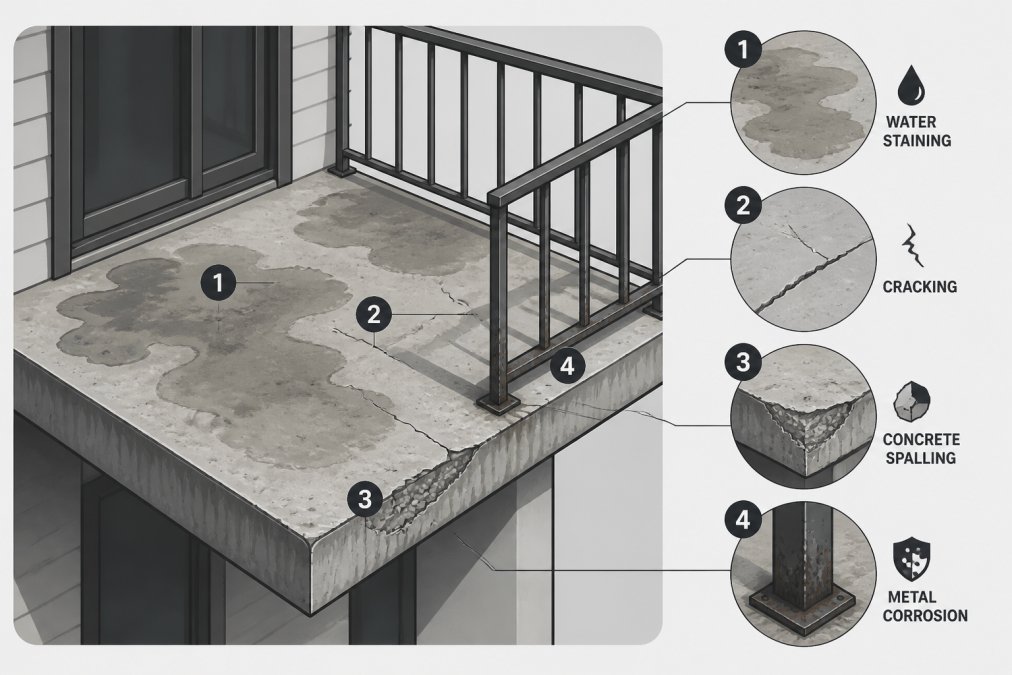
Visible signs are unmistakable: staining on concrete indicates water movement; discoloration on wood or metal suggests moisture exposure; corrosion on steel railings or fasteners signals water reaching structural connections; dry rot in wood framing indicates sustained moisture exposure and structural compromise.
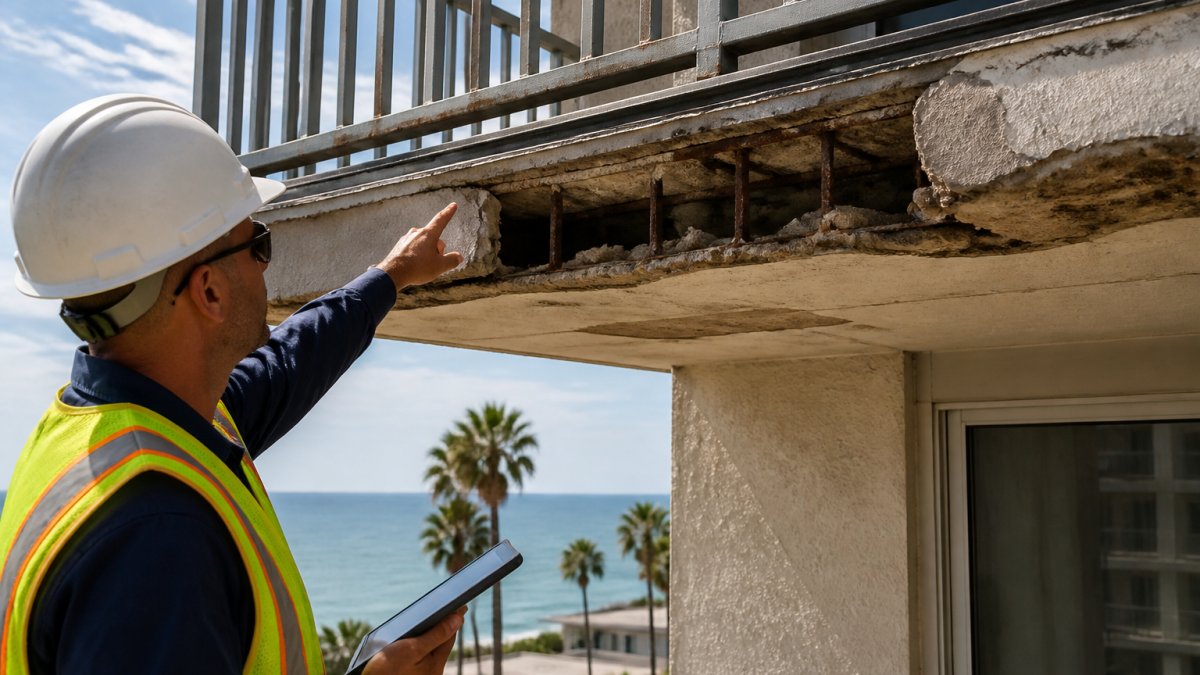
Spalling concrete, where the surface flakes or breaks away, happens when water freezes and thaws inside concrete or when reinforcing steel corrodes and expands. Delamination, where concrete layers separate, indicates deeper structural problems. Both require remediation.
Load-bearing connections where the balcony attaches to the building are critical inspection points. Corrosion at these connection points can weaken the entire structure. A licensed inspector will examine these areas closely and assess whether connections remain capable of supporting intended loads.
The cost of addressing defects early is substantially lower than emergency repairs or replacement. A small area of dry rot caught during inspection might cost a few thousand dollars to remediate. Left unaddressed, it can compromise the entire balcony structure within years, requiring full replacement at tens of thousands of dollars.
Water damage and corrosion are progressive. Early detection and intervention are far more cost-effective than waiting until structural failure is imminent.
Hiring a Licensed Balcony Inspector: What to Expect
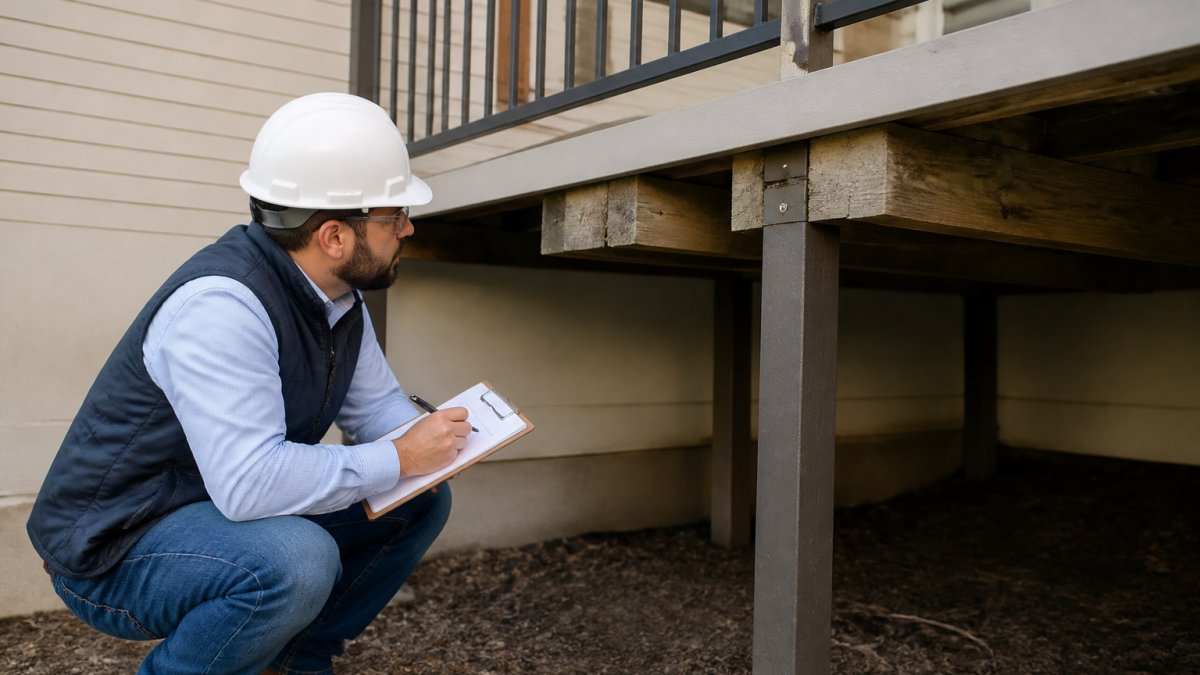
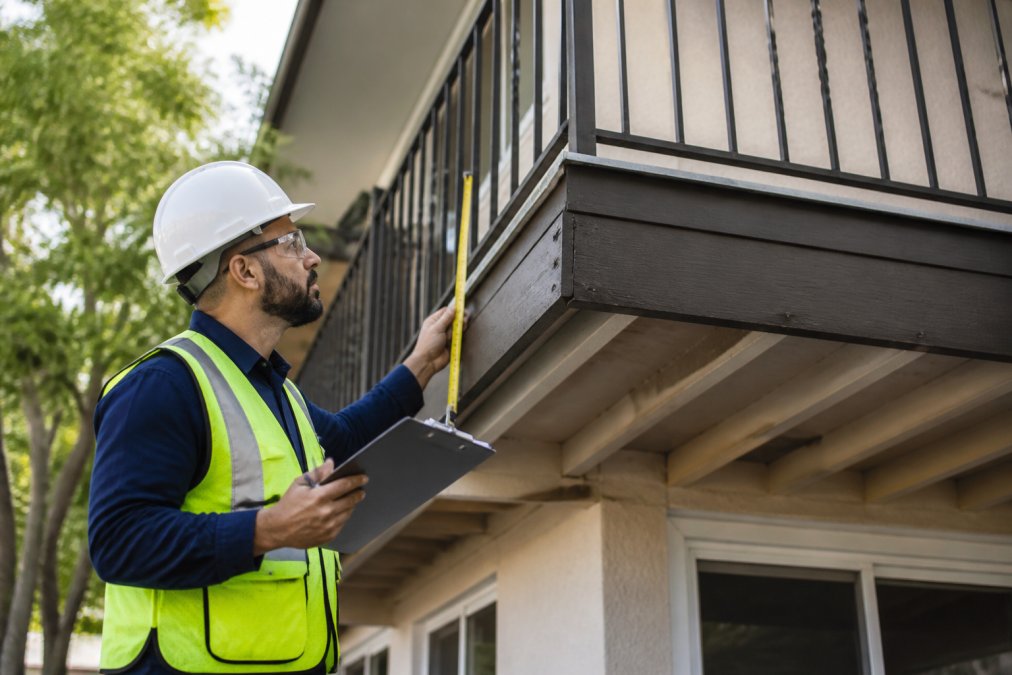
A professional balcony inspection typically takes two to four hours, depending on building size and number of balconies. The inspector conducts a visual assessment of all exterior elevated elements, examining structural components, connections, and surfaces for distress signs.
The inspector should arrive with a detailed checklist, documenting railings, decking, connections, and structural framing condition. They’ll photograph defects, note location and severity, check for water intrusion and corrosion, and may use measurement tools to assess dimensions and slope. If areas of concern are identified, they may recommend invasive testing to assess hidden structural components.
A licensed inspector brings expertise property managers typically lack. They understand building codes, structural principles, and how environmental exposure affects materials. They know what defects are cosmetic versus what indicates underlying structural problems.
When hiring an inspector, verify credentials. They should hold a current California license as a contractor or structural engineer. Ask for references from other property managers or HOA boards. Request a sample report to understand how they document findings.
The inspection report is your key deliverable. It should clearly identify defects, describe location and severity, and recommend corrective action. It should state whether the structure is safe for occupancy or whether repairs are needed before continued use.
For most residential buildings, a comprehensive visual inspection is the starting point. If defects are found requiring further assessment, invasive testing may be necessary, adding time and cost. The inspection process itself is non-destructive; a visual inspection doesn’t damage the balcony or require repairs afterward.
Apex Balcony works with hundreds of building owners and property managers across California. Our licensed inspectors specialize in SB 326 and SB 721 compliance, understanding specific California law requirements and how to document findings that satisfy regulatory scrutiny and protect liability exposure.
Creating a Balcony Inspection Report Template for Your Records
Your inspection report is a legal document that becomes part of your building’s record and may be requested by residents, regulators, or attorneys. The report must be clear, detailed, and professionally formatted.
A strong balcony inspection report template should include:
Property Information: Building address, number of units, year built, property manager name and contact information.
Inspection Details: Date of inspection, inspector name and license number, scope of inspection, weather conditions.
Executive Summary: Overview of findings. Are significant defects present? Is the structure safe for occupancy? Are repairs recommended?
Detailed Findings: For each balcony or exterior element, document railings, decking, connections, fasteners, and surfaces condition. Note water staining, corrosion, dry rot, or other defects. Include photographs and measurements where relevant.
Defect Assessment: For identified defects, describe location, severity, and potential impact on safety or structural integrity. Recommend corrective action and urgency level.
Recommendations: Specific repairs or maintenance actions. For serious defects, recommend structural engineer assessment.
Conclusion: Statement confirming inspection completion in accordance with California Building Code standards and applicable law.
Inspector Certification: Signature and license number confirming licensed contractor or structural engineer status.
| Report Section | Purpose | Key Content |
|---|---|---|
| Property Information | Identify the subject property | Address, units, year built, manager contact |
| Inspection Details | Document inspection scope | Date, inspector credentials, weather |
| Executive Summary | Quick overview of findings | Safe for occupancy? Repairs needed? |
| Detailed Findings | Comprehensive condition assessment | Condition of each element, defects, photos |
| Defect Assessment | Prioritize repairs | Severity, location, recommended action |
| Recommendations | Guide remediation | Specific repairs, estimated timeline |
| Conclusion & Certification | Confirm compliance | Inspector signature, license number |
Many property managers create digital filing systems for inspection reports, making retrieval easy and enabling comparison across inspection cycles to demonstrate due diligence patterns.
Store inspection reports in a secure, backed-up location. If your property is involved in litigation, these records will be requested immediately. Organization demonstrates professionalism and due diligence.
Consequences of Non-Compliance and Civil Penalties
Non-compliance with SB 326 and SB 721 carries serious consequences. Civil penalties under SB 721 can reach $1,000 per day of non-compliance. If your building fails to conduct a required inspection for six months, exposure reaches $180,000 or more.
Beyond statutory penalties, there’s personal liability. If a resident is injured due to balcony failure and you knew or should have known about a structural defect but failed to act, you can be held personally liable for damages. Courts view failure to conduct required inspections as negligence. Established negligence exposes you to compensatory damages and potentially punitive damages.
The legal standard is straightforward: did you perform your duty? Conducted inspections, documented findings, and taken corrective action on defects? You’ve met your obligation. Failed to inspect or disclose known defects? You’ve breached your duty. Breach plus injury equals liability.
Insurance may provide protection only if you’ve acted in good faith and complied with legal requirements. If insurers discover you knowingly failed to conduct required inspections, they may deny coverage.
California Civil Code provisions on property owner liability
Regulatory enforcement is another consequence. Local building departments can inspect properties and issue citations for non-compliance. Citations become part of your building’s record and signal to regulators that closer monitoring is required.
The most serious consequence is structural failure itself. A balcony collapse creates tragedy, liability, criminal investigation, civil litigation, and permanent reputation damage.
Protecting Your Property and Residents
Effective balcony inspection liability management requires a systematic approach. Start with clarity on which laws apply. If your building has three or more units and was built before 2008, both SB 326 and SB 721 likely apply. Confirm with a structural engineer or legal counsel if uncertain.
Establish an inspection schedule. SB 721 requires inspections every three years; SB 326 every six years. Schedule inspections well in advance and set reminders three months before deadlines.
Hire a licensed, experienced inspector. Verify credentials, request references, and review sample reports. A thorough, professional report is your best defense against liability claims.
Document everything. Keep copies of inspection reports, correspondence with inspectors, photographs, and communications about defects or repairs. This creates a clear due diligence record.
Communicate with residents transparently. If structural defects are identified, residents have a right to know. Provide clear information about findings, their significance, and planned repairs.
California Department of Housing and Community Development guidance on balcony safety
Address defects promptly. Water damage and corrosion are progressive; early intervention prevents escalation. Budget for repairs as part of your building’s maintenance reserve.
Consider digital record-keeping software designed for property management. These systems store inspection reports, track maintenance history, set reminders, and generate compliance reports while creating audit trails demonstrating systematic compliance.
Stay informed about regulatory changes. California continues refining balcony safety requirements. Subscribe to local building department updates and consult legal counsel or professional inspectors if uncertain about compliance status.
Balcony inspection liability for property managers is a responsibility protecting residents, property, and organization. Apex Balcony specializes in helping California property managers navigate SB 326 and SB 721 compliance. Our licensed inspectors provide comprehensive assessments of balconies, decks, and stairways, identifying structural defects early and creating documentation demonstrating due diligence. Book an inspection today and ensure your property meets California’s safety standards.
Frequently Asked Questions
Which law applies to my property: SB 326 or SB 721?
SB 326 applies to residential buildings with three or more units. SB 721 covers exterior elevated elements including balconies, decks, and stairways in residential buildings. Both laws require inspections, but SB 326 focuses on balcony decking while SB 721 has broader scope. Your property likely falls under both if it's a multifamily residential building. A licensed inspector can confirm which statutory requirements apply to your specific building based on its construction date and structure type.
What happens if I don't comply with balcony inspection requirements?
Non-compliance with SB 326 and SB 721 carries civil penalties and potential liability exposure. Local enforcement agencies can issue citations and fines. More critically, if a resident is injured due to a structural failure your property failed to inspect or remediate, you face civil liability for negligence. Courts may hold property managers personally liable if they knowingly ignored statutory inspection requirements. Documentation of inspections and maintenance logs is your primary defense against liability claims.
How often must balcony inspections occur under California law?
SB 326 requires initial inspections by January 1, 2025, with follow-up inspections every nine years thereafter. SB 721 mandates inspections at least every nine years as well, though more frequent inspections may be necessary if your initial report identifies structural concerns or water intrusion issues. Properties with known defects may require annual or biennial inspections. Your inspection report will specify the recommended inspection cycle for your building based on the condition of load-bearing components and building envelope integrity.
What should a comprehensive balcony inspection report include?
A thorough balcony inspection report template should document visual inspection findings, invasive testing results where applicable, identification of water intrusion or dry rot, assessment of structural integrity of railings and load-bearing components, photographs of problem areas, and a prioritized remediation plan with cost estimates. The report must include the inspector's credentials, inspection date, property condition assessment, and a clear statement of compliance or non-compliance with building codes. Maintain these records for at least nine years to demonstrate due diligence and satisfy statutory documentation requirements.