How to Find Certified Balcony Inspectors in California
Find certified balcony inspectors for SB 326 and SB 721 compliance. Learn requirements, costs, and a vetting checklist to hire the right inspector today.
Table of Contents
- California Balcony Inspection Requirements: SB 326 and SB 721 Explained
- How to Find Certified Balcony Inspectors: A Step-by-Step Process
- Hiring a Structural Engineer for Balcony Inspection: What You Need to Know
- Vetting Checklist: How to Find Certified Balcony Inspectors You Can Trust
- Balcony Safety Inspection Checklist: What a Qualified Inspector Should Examine
- Cost of Balcony Structural Inspection: What to Expect
- Post-Inspection Workflow: From Certification to Remediation
- Conclusion
Last Updated: June 14, 2026
California’s balcony inspection laws are among the strictest in the country: structural failures in elevated exterior elements have caused serious injuries and fatalities across the state. For property owners and HOAs in 2026, finding certified balcony inspectors is a legal obligation with hard deadlines attached. This guide from Apex Balcony covers understanding which law applies to your property, vetting inspectors, and navigating the post-inspection workflow.
A balcony inspection is a formal assessment of elevated exterior elements, balconies, decks, stairways, and associated waterproofing systems, conducted by a licensed professional to evaluate structural integrity and safety compliance. California law mandates these inspections for most multifamily residential buildings, and non-compliance carries fines and significant liability exposure.
Most guides focus on legal language and skip the practical question of how to vet an inspector. Credentials matter, but so does methodology, a visual inspection alone is often insufficient to detect dry rot or water penetration inside wood framing.
California Balcony Inspection Requirements: SB 326 and SB 721 Explained
Two separate California statutes govern balcony inspections, applying to different property types. Understanding which law covers your building is the first step before searching for a qualified inspector.
SB 326: HOA and Condominium Buildings
SB 326 applies to common interest developments managed by an HOA. Under Civil Code 5551, HOAs must hire a licensed structural engineer or licensed architect to inspect all exterior elevated elements, including balconies, decks, stairways, and associated waterproofing elements. The inspector must examine a statistically significant sample of each element type and assess load-bearing components and waterproofing adequacy. Conditions posing an immediate risk must be reported to the building owner and, in some cases, to the local building official.
SB 721: Multifamily Apartment Buildings
SB 721 covers multifamily apartment buildings with three or more units. Unlike SB 326, it allows a broader range of qualified inspectors, including licensed general contractors with relevant experience, targeting the same elevated exterior elements.
The distinction matters when searching for certified balcony inspectors because credential requirements differ. Hiring a general contractor for a condominium inspection under SB 326 would not satisfy the legal standard.
Deadlines and Periodic Inspection Schedules
Both SB 721 and SB 326 set initial inspection deadlines of January 1, 2025, with SB 326 requiring reinspection every six years thereafter. Property owners who have not completed their initial inspection are already out of compliance. Both laws establish ongoing inspection cycles, meaning building owners need a long-term maintenance plan that includes recurring certified inspections.
Missing the inspection deadline does not pause your liability. If a structural failure occurs on a non-inspected property, the building owner’s exposure increases significantly because non-compliance is itself evidence of negligence.
How to Find Certified Balcony Inspectors: A Step-by-Step Process
Finding a qualified inspector requires more than a Google search. The process involves confirming the applicable law, verifying credentials through official channels, and checking insurance coverage before signing any contract.
Step 1: Confirm Which Law Applies to Your Property
Determine whether your building falls under SB 326 or SB 721 before contacting any inspector. Condominium buildings with an HOA fall under SB 326 and require a licensed structural engineer or architect. Apartment buildings with three or more rental units fall under SB 721, which allows a wider range of qualified inspectors. If you are unsure of your classification, the California Department of Real Estate and your local building official can confirm which statute applies.
Step 2: Search Licensed Professionals Through Official Channels
Verify a structural engineer’s license through the California Board for Professional Engineers, Land Surveyors, and Geologists license lookup. For licensed architects, use the California Architects Board license verification portal. For SB 721 inspections involving licensed general contractors, use the California Contractors State License Board license check. All three tools let you confirm an active license, check for disciplinary actions, and verify license type. Do not rely on an inspector’s website, license numbers can be verified in minutes through these official portals.
Step 3: Verify Credentials and Insurance
A valid license is necessary but not sufficient. Certified balcony inspectors should carry both general liability insurance and errors and omissions (E&O) insurance. General liability covers physical damage during the inspection; E&O covers the inspector if they miss a defect that later causes harm. Request a certificate of insurance before the inspection begins and confirm that policy limits are adequate for your property size.
Hiring a Structural Engineer for Balcony Inspection: What You Need to Know
Hiring a structural engineer for balcony inspection is the most defensible choice for SB 326 compliance, and many SB 721 property owners choose this route as well. Structural engineers bring specific expertise in load-bearing analysis and can make repair recommendations that carry engineering authority, useful when negotiating with contractors or presenting findings to an HOA board.
Structural Engineer vs. Licensed Architect: Who Qualifies?
Both qualify under SB 326. Structural engineers specialize in the mechanical behavior of building systems, including how loads transfer through wood framing and connections. Architects have a broader design background but may have less hands-on experience evaluating structural integrity in deteriorated conditions. For buildings with significant concerns about dry rot, water penetration, or load-bearing connections, a structural engineer is generally the stronger choice.
Non-Destructive vs. Destructive Testing Methods
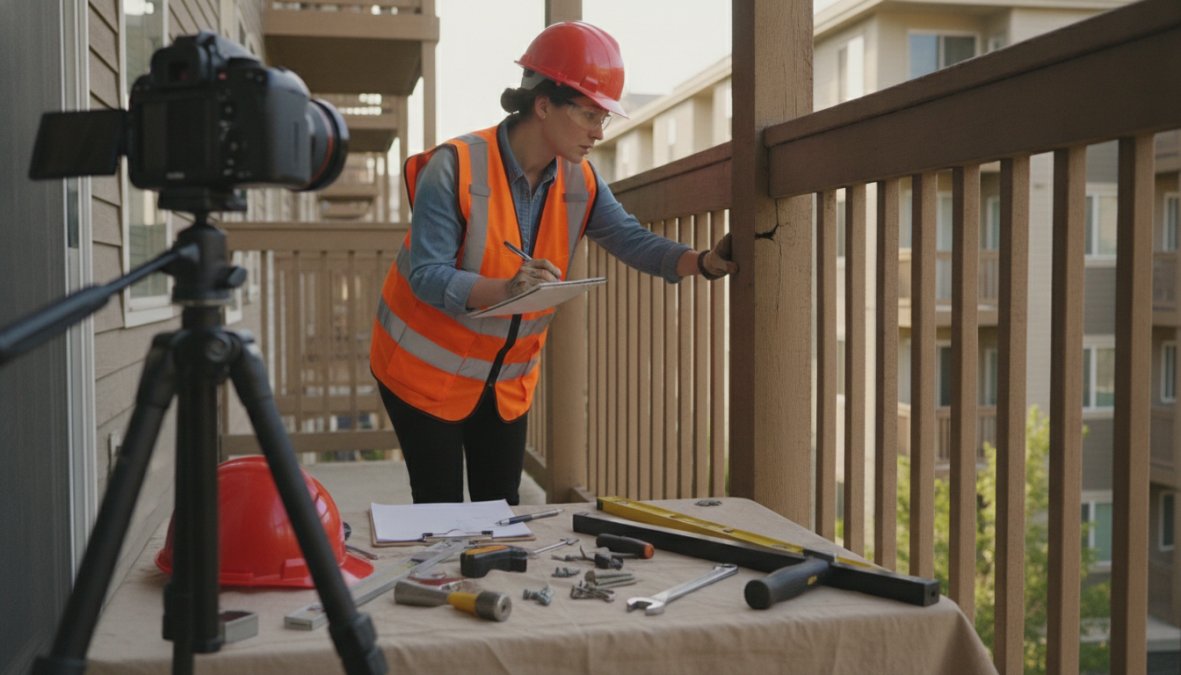
Non-destructive testing methods, visual inspection, moisture meters, and borescope cameras, allow inspectors to assess conditions without opening walls or removing decking. These methods are faster and less disruptive, but hidden dry rot inside a structural member may not be detectable without opening the assembly. Destructive testing involves removing sections of decking, flashing, or cladding to directly inspect wood framing and waterproofing beneath, more invasive, but definitive.
For buildings with visible signs of water penetration, staining, or surface deterioration, a qualified inspector should recommend targeted destructive testing to confirm the extent of damage.
Ask prospective inspectors specifically whether their standard scope includes borescope or moisture meter readings. If the answer is “only if we see something concerning,” push back. Proactive use of these tools significantly increases the reliability of the assessment.
Vetting Checklist: How to Find Certified Balcony Inspectors You Can Trust
The process of finding certified balcony inspectors becomes far more reliable when you work from a structured checklist. Use this before signing any inspection contract:
- Confirm the applicable law (SB 326 or SB 721) for your property type
- Verify the inspector’s license through the BPELSG, CAB, or CSLB official portal
- Confirm the license is active and has no disciplinary history
- Request a certificate of general liability insurance (minimum $1M per occurrence is a reasonable baseline for most properties)
- Request a certificate of errors and omissions (E&O) insurance
- Ask whether the inspection scope includes non-destructive testing tools (moisture meters, borescope)
- Confirm the inspector has experience specifically with SB 326 or SB 721 compliance inspections
- Ask for a sample inspection report to evaluate the level of detail provided
- Confirm the report will include specific remediation recommendations, not just pass/fail findings
- Verify that the inspector will flag any immediate safety hazards to the building official if required by law
- Get a written scope of work before the inspection begins
- Ask whether the firm provides post-inspection support if you have questions about the report
Apex Balcony has worked with hundreds of building owners across California and consistently finds that the most problematic inspections are those where property managers skipped credential verification or accepted a verbal scope of work.
Balcony Safety Inspection Checklist: What a Qualified Inspector Should Examine
A thorough balcony safety inspection checklist covers more than the visible surface of a deck or railing. Qualified inspectors evaluate the full assembly, from the waterproofing membrane down to the structural connections embedded in the building wall.
Waterproofing Elements and Water Penetration
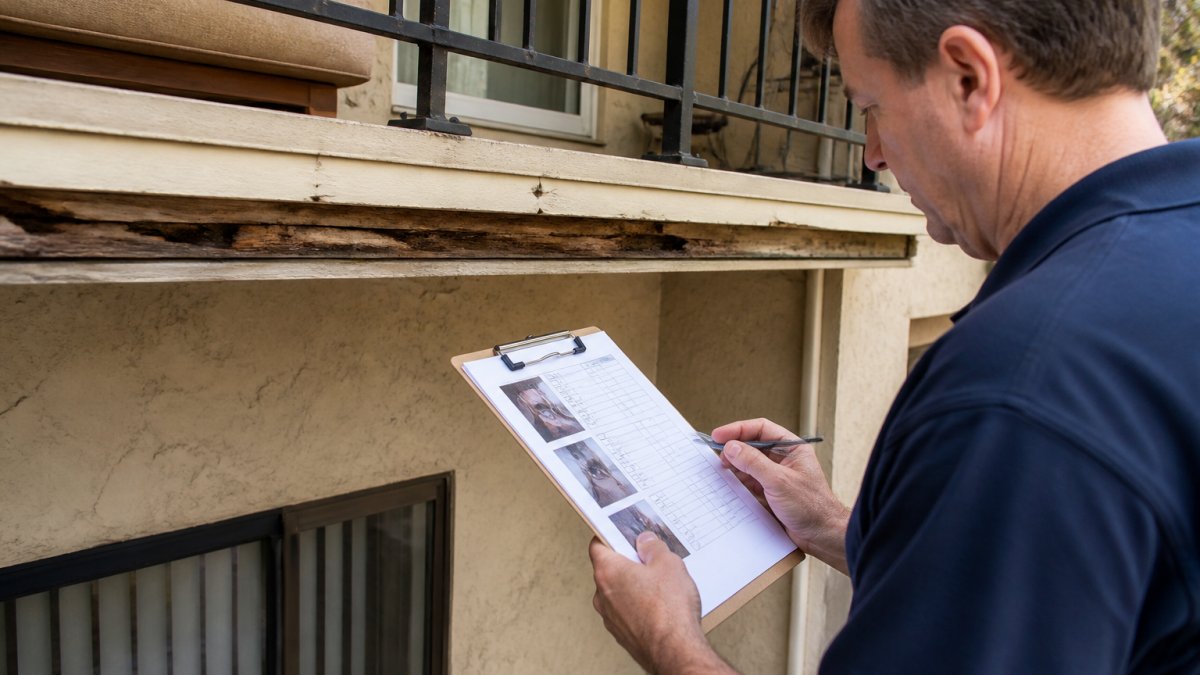
Inspectors should evaluate the condition of the waterproofing membrane, flashing at wall junctions, drainage slope, and any penetrations through the deck surface, water penetration at these points is the primary cause of dry rot in the wood framing below. Signs of compromise include cracking or bubbling in the membrane, staining on the underside of the deck, rust staining from corroding fasteners, and efflorescence on concrete surfaces. An inspector who does not specifically address waterproofing elements in their report is not meeting the standard required under California law.
Load-Bearing Connections and Wood Framing
Load-bearing connections link the balcony assembly to the main building frame and are frequently the site of the most serious deterioration, as they are embedded in the wall where water can accumulate invisibly. Inspectors should assess ledger boards, joist hangers, and any through-bolts or lag screws anchoring the balcony to the building. Wood framing should be probed for softness indicating dry rot and inspected for insect damage. The adequacy of connections to resist both vertical and lateral forces should be documented in the report.
Cost of Balcony Structural Inspection: What to Expect
The cost of balcony structural inspection varies based on building size, number of elevated elements, inspection methodology, and inspector qualifications. Property owners should be cautious of unusually low bids, an inspection priced significantly below market may indicate a limited scope, a less experienced inspector, or a report that will not satisfy statutory requirements. The cost of a deficient inspection that must be repeated almost always exceeds the cost of doing it correctly the first time.
When requesting quotes, ask for a line-item breakdown separating the inspection fee from report preparation or follow-up consultation fees, and clarify whether destructive testing is included. A written proposal with a defined scope is the baseline expectation from any qualified inspector.
The cost of balcony structural inspection is almost always less than the cost of emergency repairs, liability exposure, or regulatory fines that result from deferred compliance. Treat inspection as an investment in risk management, not an overhead expense.
Post-Inspection Workflow: From Certification to Remediation
Receiving an inspection report is not the end of the process. The post-inspection workflow determines whether your building actually becomes safer and whether you maintain ongoing compliance.
Understanding Your Inspection Report
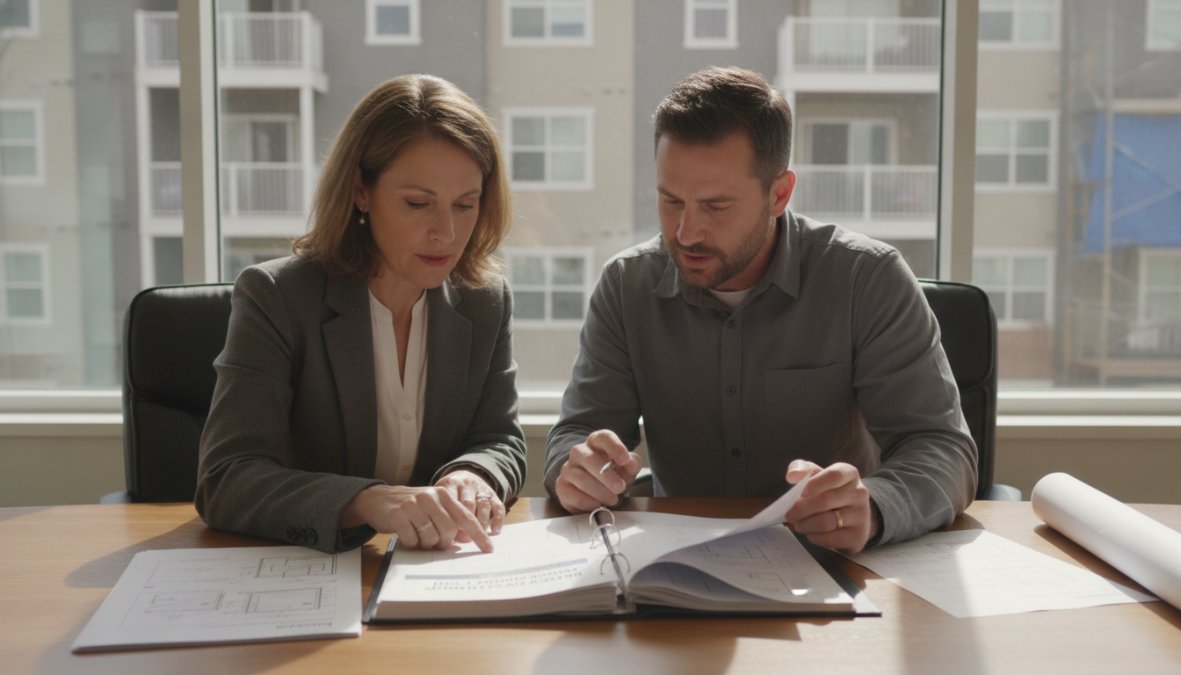
A compliant inspection report under SB 326 or SB 721 should document the condition of each inspected element, identify deficiencies, classify their severity, and provide specific remediation recommendations. Reports offering only a pass/fail verdict are insufficient for compliance and provide little actionable guidance. Pay particular attention to deficiency classifications: conditions posing an immediate safety risk may require the inspector to notify the local building official, while less severe findings may allow a planned remediation timeline.
Prioritizing Repairs and Building a Maintenance Plan
Triage findings by safety risk first, then by likelihood of accelerating deterioration if left unaddressed. Waterproofing failures actively allowing water penetration into structural framing should be addressed before cosmetic issues, even if structural damage is not yet severe.
A maintenance plan is not optional under California’s periodic inspection requirements. Both SB 326 and SB 721 require reinspection on a recurring cycle, so building owners need a documented approach to ongoing maintenance that includes annual visual checks by building staff, prompt repair of waterproofing damage, and a scheduled timeline for the next formal certified inspection.
The inspection report is most valuable when used to negotiate with remediation contractors. A detailed report with specific deficiency descriptions gives you a clear scope of work to put out for competitive bids, rather than relying on a contractor’s self-assessment of what needs to be done.
California’s balcony inspection requirements are not going away, and the deadlines are already past for many property owners. Finding qualified certified balcony inspectors, verifying their credentials, and managing the full inspection-to-remediation cycle is a significant undertaking for any building owner or HOA. Apex Balcony provides licensed inspectors with decades of combined construction and design experience, specializing in SB 326 and SB 721 compliance across California. Our team conducts comprehensive inspections of all elevated exterior elements and delivers detailed reports that give property owners a clear path to necessary repairs. Book your inspection with Apex Balcony and get your property into compliance with confidence.
Frequently Asked Questions
What qualifications should a certified balcony inspector have in California?
Under SB 326, inspections must be performed by a licensed structural engineer or licensed architect. Under SB 721, qualified inspectors also include licensed contractors with specific structural experience. When hiring, always verify their California license number through the CSLB or the California Board for Professional Engineers. They should also carry general liability and errors-and-omissions insurance. A qualified inspector will have documented experience with elevated exterior elements, waterproofing systems, and wood framing assessment.
Are balcony inspections mandatory for all California buildings?
Not all buildings are required to comply. SB 721 applies to multifamily residential buildings with three or more units. SB 326 (Civil Code 5551) applies to common-interest developments such as condominiums managed by an HOA. Single-family homes are generally exempt. If your building falls into either category, inspections of elevated exterior elements including balconies, decks, and stairways are legally required on a periodic basis to maintain safety compliance.
How much does a professional balcony structural inspection typically cost?
The cost of a balcony structural inspection varies based on property size, number of elevated elements, and whether destructive testing is required. Smaller buildings may see costs starting in the low hundreds per unit, while larger multifamily complexes with many balconies can run into several thousands of dollars total. Obtaining at least three quotes from qualified inspectors is advisable. Be cautious of unusually low bids, as thorough SB 326 and SB 721 compliance work requires significant professional time and documentation.
What happens if a balcony fails inspection under SB 326 or SB 721?
If an inspector identifies immediate safety hazards, the building owner must restrict access to the affected element right away and notify the building official. Remediation work must be completed by a licensed contractor, and a follow-up inspection confirms repairs meet code. The inspector issues a certification once the element passes. Failing to act on a failed inspection exposes property managers, HOAs, and building owners to significant liability, including legal action if a resident or guest is injured.
What is the difference between non-destructive and destructive testing in a balcony inspection?
Non-destructive testing uses tools like a borescope or moisture meters to assess structural integrity without damaging surfaces, this is the standard approach for most visual inspections. Destructive testing involves removing sections of decking, siding, or waterproofing membranes to directly examine load-bearing wood framing for dry rot or water penetration damage. Inspectors typically recommend destructive testing only when non-destructive methods reveal signs of hidden deterioration, or when a statistically significant sample is required under SB 326 guidelines.