Ensure Legal Compliance With California Balcony Laws
Ensure legal compliance with California balcony laws. Learn SB 721 vs SB 326 requirements, inspection deadlines, and how to protect your property from.
Table of Contents
- SB 721 and SB 326: Which Law Applies to Your Property
- What Are Exterior Elevated Elements and Why They Matter
- Inspection Deadlines and Compliance Cycles
- Qualified Inspector Requirements for SB 326 Compliance
- The Inspection Process: Step-by-Step Workflow
- SB 326 Compliance Checklist for Architects and Property Managers
- Understanding Balcony Inspection Cost Estimates
- Liability Protection and Non-Compliance Consequences
Last Updated: August 13, 2026
SB 721 and SB 326: Which Law Applies to Your Property
California’s two primary balcony safety laws, SB 721 and SB 326, create a comprehensive regulatory framework that applies to different property types and timelines. Understanding which law governs your building is the first critical step toward compliance. SB 721, enacted in 2018, requires inspection and maintenance of exterior elevated elements in residential buildings with three or more units. SB 326, passed in 2022, extends these requirements and imposes stricter timelines and qualification standards for inspectors.
The distinction matters because it determines your inspection deadlines, inspector qualifications, and reporting obligations. If your building was constructed before January 1, 2022, SB 721 likely applies with a six-year inspection cycle. Buildings completed after that date or those undergoing major renovations fall under SB 326’s more stringent requirements. Many property owners mistakenly believe one law covers all situations, but the rules differ significantly in scope and enforcement.
At Apex Balcony, we help property owners navigate this distinction by analyzing your property’s construction date, unit count, and current compliance status. Most buildings with three or more residential units must comply with at least one of these laws. The consequences of misidentifying which law applies can delay necessary repairs and expose your property to liability claims.
What Are Exterior Elevated Elements and Why They Matter
Exterior Elevated Elements (EEEs) are structural components that extend from a building’s envelope and support human occupancy or passage. These include balconies, decks, exterior stairways, walkways, and similar structures. The definition is broader than most property owners realize, it encompasses any elevated surface where residents or guests might stand, sit, or walk outside the main building footprint.
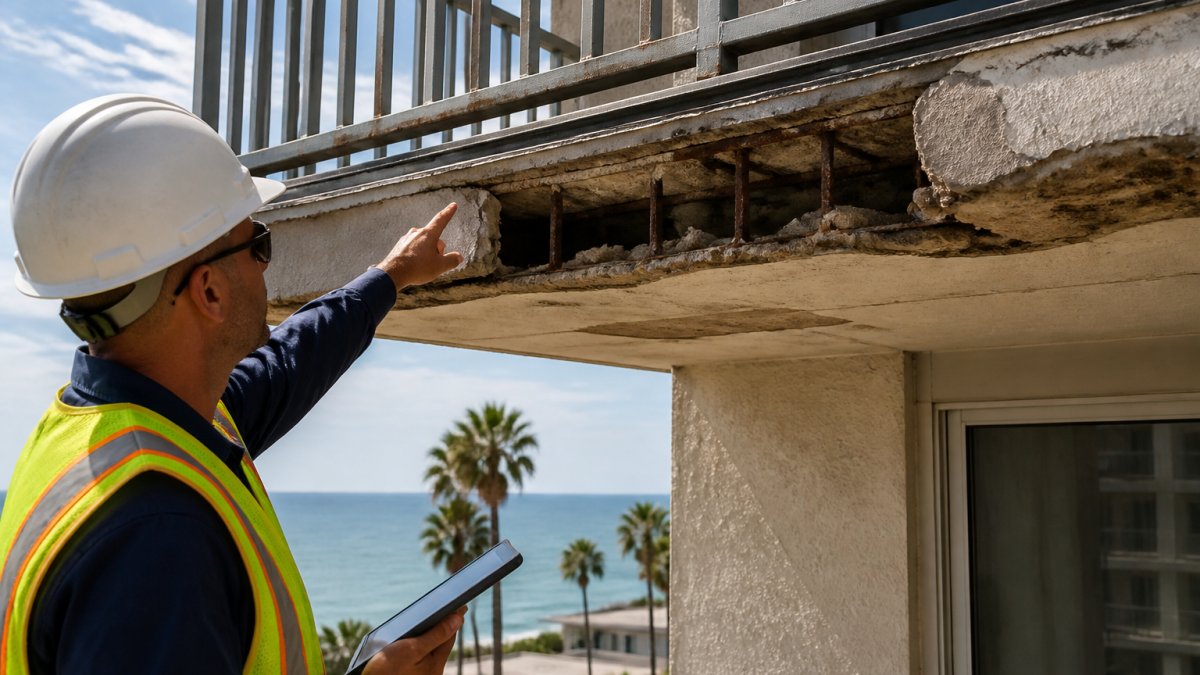
EEEs face constant exposure to weather, temperature cycling, moisture infiltration, and structural stress. Dry rot, termite damage, corrosion, waterproofing failures, and fastener degradation are the most common failure modes. A single compromised connection point or undetected water intrusion can compromise the load-bearing capacity of an entire balcony system. This is why the structural integrity of these elements directly impacts resident safety.
The building envelope, the weathertight boundary between interior and exterior spaces, depends heavily on proper waterproofing and drainage in EEE connections. Water that penetrates these junctures can migrate into framing members, leading to hidden decay that inspection alone might miss without proper documentation protocols. Understanding what constitutes an EEE helps property managers recognize which components fall under inspection requirements and which maintenance strategies prevent costly failures.
Inspection Deadlines and Compliance Cycles
SB 721 establishes a six-year inspection cycle for existing buildings with three or more residential units. Your property’s first inspection deadline depends on when the law became effective for your building type. Most existing multifamily properties faced an initial deadline in 2025, with subsequent inspections due every six years thereafter.
SB 326 accelerated these timelines and added stricter requirements. Buildings subject to SB 326 must complete inspections within narrower windows, often with mandatory remediation deadlines tied to the severity of defects found. If your initial inspection identified safety hazards, follow-up inspections may be required within 90 days rather than waiting for the next six-year cycle.
Missing an inspection deadline creates significant legal exposure. Property owners who fail to conduct timely inspections face notice of violation proceedings, fines, and potential liability if injuries occur on defective elevated elements. Courts have increasingly held property owners accountable for negligent inspection failures, especially when the building code explicitly required inspection. Document your inspection dates and maintain records showing compliance efforts, this documentation protects you if disputes arise later.
Qualified Inspector Requirements for SB 326 Compliance
SB 326 compliance requires that inspections be performed by a qualified inspector, a licensed architect, structural engineer, or building official with specific expertise in exterior elevated element assessment. This is a critical distinction from SB 721, which permitted broader inspector categories. The stricter qualification requirement reflects the law’s intent to ensure thorough, expert-level evaluation of structural conditions.
A qualified inspector must hold a current California license and demonstrate competency in evaluating load-bearing systems, waterproofing integrity, and material degradation. They must understand how moisture migration, thermal movement, and fastener corrosion affect structural safety. Self-taught or informally trained inspectors, regardless of their construction experience, do not meet the legal standard.
Choosing an inspector with decades of construction and design experience matters because complex failure modes often require pattern recognition and deep technical knowledge. An inspector who has seen hundreds of balcony systems can identify early warning signs that less experienced evaluators might overlook. This expertise directly reduces your liability risk by catching problems before they become safety hazards or costly emergency repairs.
The Inspection Process: Step-by-Step Workflow
The inspection process follows a structured methodology that balances thoroughness with minimizing disruption to residents. A complete exterior elevated element inspection involves documentation, physical assessment, and detailed reporting. Understanding each step helps property managers prepare their buildings and set realistic expectations for timelines and findings.
Step 1: Schedule and Prepare Documentation
Begin by gathering existing building records: original construction drawings, previous inspection reports, maintenance logs, and any past repair documentation. This historical context helps inspectors identify patterns and understand what remediation work has already been completed. Schedule inspections during weather windows when outdoor assessment is feasible, avoid rainy periods when water damage assessment becomes difficult.
Notify residents well in advance that inspections will occur. Most inspectors need access to individual balconies, which requires resident cooperation and advance scheduling. Provide inspectors with building plans and any known problem areas so they can prioritize their assessment. Clear communication reduces resident concerns and accelerates the inspection timeline.
Step 2: Conduct the Physical Inspection
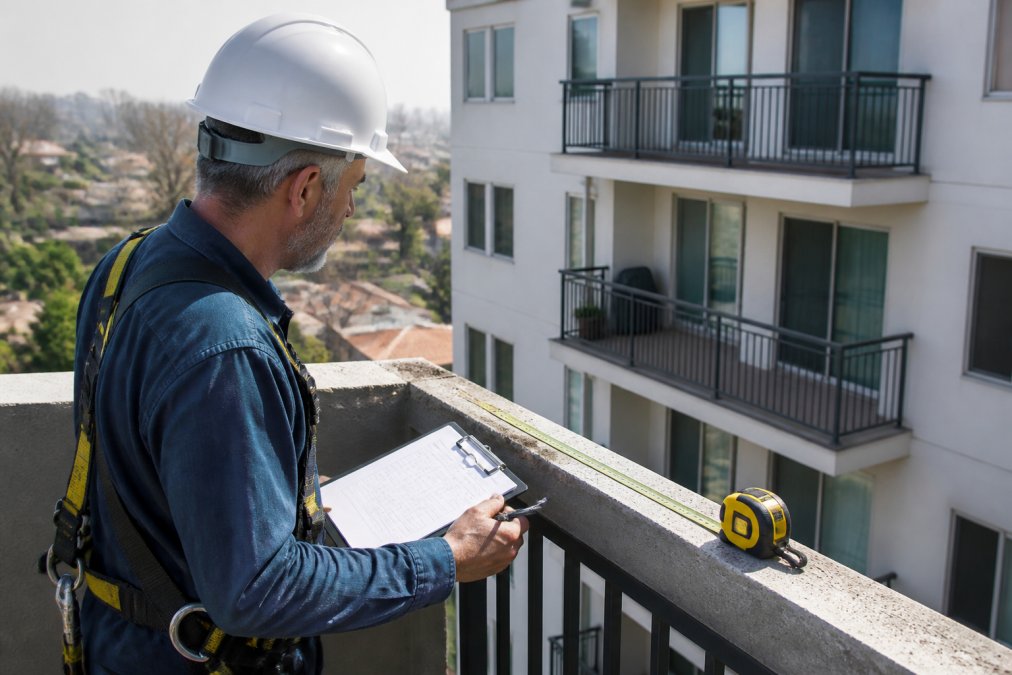
The inspector systematically examines each exterior elevated element, documenting visible conditions, material types, connection details, and signs of deterioration. They measure structural dimensions, assess fastener conditions, probe for hidden decay in wood members, and evaluate waterproofing effectiveness. This hands-on assessment requires access to all sides of balconies and elevated structures, some inspection work may require temporary railings or safety equipment to reach critical areas.
The inspector photographs conditions, takes measurements, and notes specific defect locations. They evaluate whether existing conditions meet current building code standards, even if the building was compliant when constructed. Older balcony systems often fail to meet modern safety requirements, which triggers remediation recommendations.
Step 3: Document Findings in Your Exterior Elevated Element Inspection Report Template
The formal inspection report becomes your primary compliance document and your defense against liability claims. A comprehensive exterior elevated element inspection report template should include:
- Executive summary with overall structural assessment
- Detailed photographs with location identifiers
- Specific defect descriptions, locations, and severity ratings
- Structural engineer’s professional recommendations
- Estimated remediation costs and timelines
- Prioritized repair sequence (immediate safety hazards vs. maintenance items)
- Code citations documenting non-compliance areas
The report must clearly distinguish between immediate safety hazards requiring urgent repair and deferred maintenance items. This prioritization helps property managers allocate budgets and plan remediation schedules realistically. A well-documented report also serves as evidence that you took reasonable steps to identify and address safety concerns, critical protection if litigation arises later.
Step 4: Review Results and Plan Remediation
Once you receive the inspection report, convene your building’s decision-makers, the HOA board, property management team, and potentially your structural engineer, to review findings and plan remediation. Prioritize immediate safety hazards first. If the inspector identified structural instability or imminent failure risk, those elements may require emergency repairs or temporary closure.
Develop a remediation timeline that balances urgency with budget constraints. Some repairs can be phased over multiple years if they don’t pose immediate safety risks. Document your remediation plan and track completed work. This documentation demonstrates good-faith compliance efforts and reduces liability exposure if disputes arise later.
SB 326 Compliance Checklist for Property Managers
Use this checklist to verify your building’s SB 326 compliance status and ensure you’ve completed all required steps:
- Identified whether your building is subject to SB 721, SB 326, or both
- Determined your property’s inspection deadline based on construction date and unit count
- Hired a qualified inspector (licensed architect, structural engineer, or building official)
- Scheduled inspection during appropriate weather window
- Notified residents of inspection dates and access requirements
- Provided inspector with existing building records and maintenance history
- Completed physical inspection of all exterior elevated elements
- Received comprehensive inspection report with detailed findings and photographs
- Reviewed report with building decision-makers and legal counsel
- Prioritized repairs by safety risk level
- Developed remediation timeline with budget allocation
- Initiated repairs on immediate safety hazards
- Documented all completed remediation work
- Scheduled follow-up inspections if initial report identified significant defects
- Maintained compliance records for future audit or litigation defense
This checklist applies equally to small 12-unit buildings and large multifamily complexes. The core compliance requirements remain consistent regardless of property size, what changes is the complexity of coordinating repairs across more units and the financial scale of remediation budgets.
Understanding Balcony Inspection Cost Estimates
Balcony inspection cost estimates vary based on building size, structural complexity, and accessibility. A small residential building with 12 units and simple balcony designs costs less to inspect than a large complex with 200 units, multiple balcony types, and difficult-to-access rooftop elements. Inspectors typically estimate costs based on unit count, number of elevated elements, and expected inspection duration.
Request detailed cost estimates from multiple qualified inspectors before committing. A reputable inspector will provide a written estimate breaking down labor, materials, and any specialized equipment needed. Be wary of estimates that seem significantly lower than competitors, they may indicate the inspector plans to cut corners or lacks experience with complex assessments.
Budget for potential remediation costs once you understand what the inspection might reveal. Buildings with aging balcony systems, wood frame construction, or previous water damage often require substantial repairs. Setting aside contingency reserves before the inspection helps you respond quickly to urgent findings without financial crisis. Many property owners find that early detection through proper inspection costs far less than emergency repairs after catastrophic failure.
Liability Protection and Non-Compliance Consequences
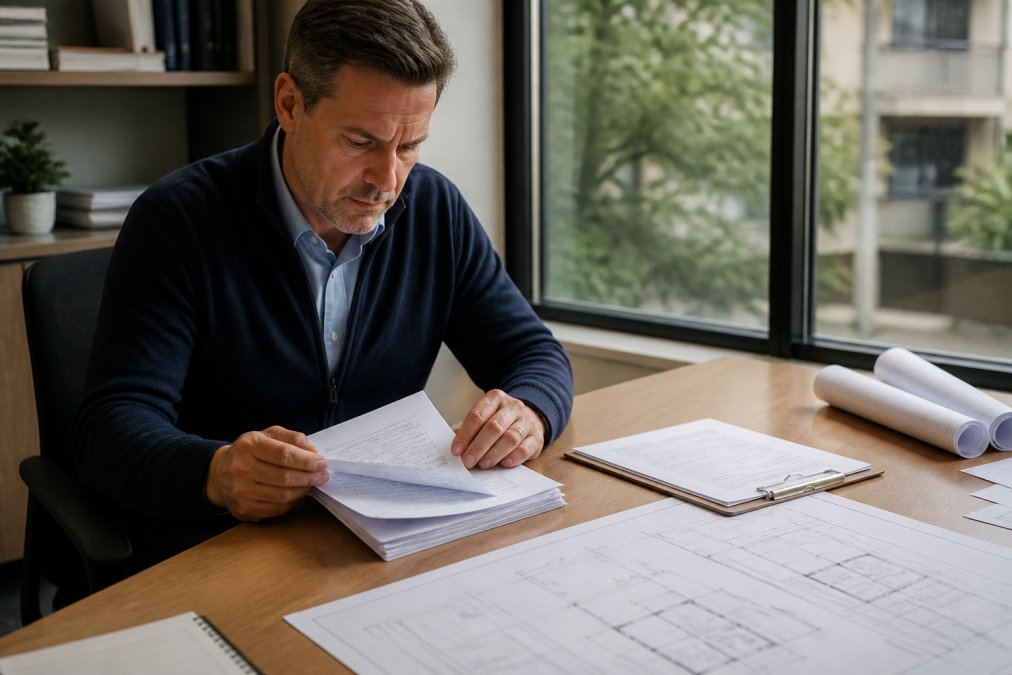
Non-compliance with California balcony laws creates severe liability exposure for property owners and managers. If an injury or death occurs on a defective exterior elevated element and investigation reveals that the property owner failed to conduct required inspections, courts presume negligence. This presumption shifts the burden to you to prove you acted reasonably, a difficult position when inspection records are absent.
The 2015 Berkeley balcony collapse that killed six people and the 2021 Malibu incident demonstrated the catastrophic consequences of deferred maintenance and missed inspections. These high-profile cases established legal precedent that property owners have a duty to inspect and maintain elevated elements. Juries now expect documented compliance efforts, and failure to meet that expectation results in substantial damage awards.
Conducting timely inspections, documented by qualified inspectors, creates your primary defense against liability claims. The inspection report demonstrates that you took reasonable steps to identify hazards. Even if defects exist, the documented inspection and remediation plan show good faith compliance efforts. This documentation becomes invaluable evidence if litigation arises.
Property owners who skip inspections or hire unqualified inspectors face mounting consequences. Building departments issue notices of violation, assess fines, and can mandate emergency inspections at the property owner’s expense. Insurance companies may deny claims if they discover non-compliance with building code requirements. The cumulative financial and legal exposure far exceeds the cost of proper inspection and timely remediation.
Apex Balcony helps property owners mitigate this liability risk by conducting expert inspections that identify problems early. Our licensed inspectors provide detailed documentation that demonstrates compliance with California balcony laws. Early detection prevents the catastrophic failures that create the highest liability exposure. By investing in proper inspection now, you protect your residents, your assets, and your legal standing.
Frequently Asked Questions
What is the difference between SB 721 and SB 326 for California balcony laws?
SB 721 applies to residential buildings with three or more units built before January 1, 2020, requiring balcony inspection within five years of the law's effective date. SB 326 extends requirements to all multifamily residential buildings with exterior elevated elements, including newer construction. Both laws mandate periodic six-year inspection cycles and address structural integrity of balconies, decks, and stairways. Understanding which applies to your property is the first step toward California balcony laws compliance.
How often must balcony inspections occur under California balcony laws?
After the initial inspection, subsequent inspections must occur every six years. The initial inspection deadline depends on your property's construction date and which law applies. SB 721 properties had a specific deadline based on the law's enactment, while SB 326 establishes its own timeline. Missing these periodic inspection deadlines creates liability exposure and potential fines. Your inspection report should document when the next six-year cycle inspection is due.
Who is qualified to perform balcony inspections under SB 326?
California requires inspections to be performed by a licensed architect, structural engineer, or building inspector with specific experience in exterior elevated elements. The qualified inspector must have knowledge of wood construction, waterproofing, corrosion, dry rot, and termite damage assessment. Your inspector's credentials directly impact the validity of findings and your liability protection. Always verify licensing and request references from past property inspections before hiring.
What happens if we don't comply with California balcony laws?
Non-compliance can result in civil liability if injuries occur, fines from local building departments, and potential legal action from residents. Property owners face increased risk if structural failure causes accidents after ignoring inspection requirements. Compliance demonstrates due diligence and significantly reduces liability exposure. Additionally, lenders and insurance providers may deny coverage or impose penalties for non-compliant properties, affecting financing and insurance rates.
Compliance with California balcony laws isn’t optional, it’s a legal requirement that protects residents and your property. The inspection process, while potentially revealing costly repairs, prevents the catastrophic failures that create massive liability exposure. Book an inspection with Apex Balcony today and ensure your property meets all safety requirements while protecting yourself from the consequences of non-compliance.