SB 326 vs SB 721 Requirements: A 2026 Guide
Understand SB 326 vs SB 721 balcony inspection requirements, deadlines, and compliance. Learn which law applies to your property and what inspectors must.
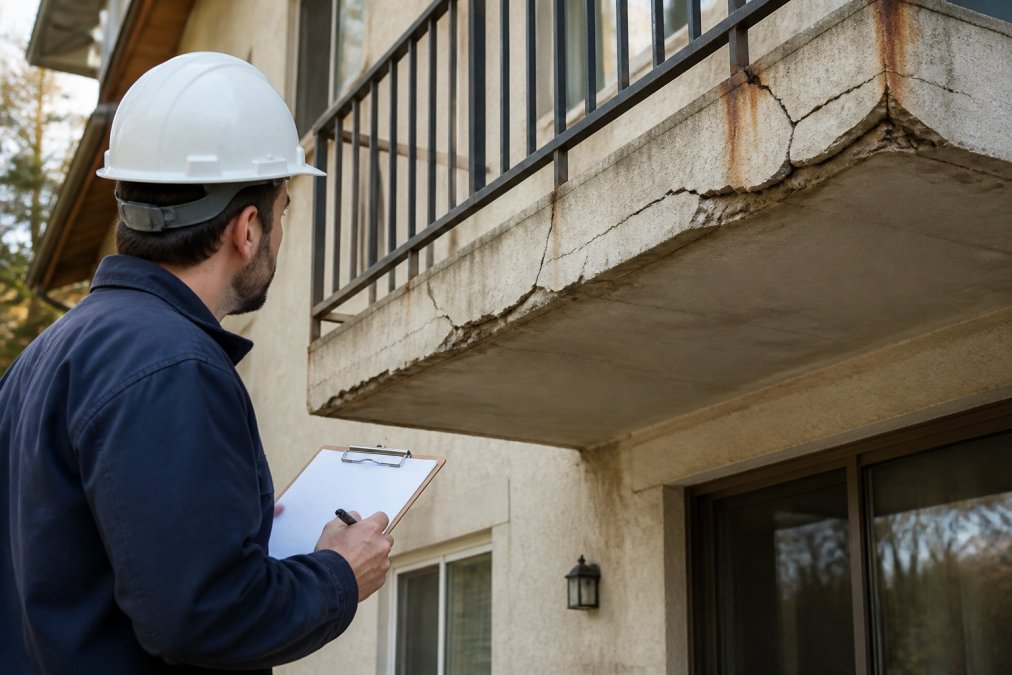
Table of Contents
- SB 326 vs SB 721: Core Differences and Scope
- What Are Exterior Elevated Elements and Why They Matter
- SB 721 Compliance Deadline: When Inspections Must Happen
- SB 326 Inspection Checklist: What Inspectors Must Evaluate
- Who Qualifies as a Qualified Balcony Inspector California
- Cost of SB 326 Balcony Inspection and Budget Planning
- Reporting and Documentation Requirements
- Non-Compliance Penalties and Liability Risks
Last Updated: August 9, 2026
SB 326 vs SB 721: Core Differences and Scope
California’s balcony safety laws address the same underlying concern, structural failure of exterior elevated elements, but target different building types and have different timelines. SB 326 applies to condominiums and homeowners associations. SB 721 applies to rental apartments and multifamily residential buildings. The inspection requirements, deadlines, and consequences of non-compliance differ significantly, making it critical to understand which law governs your property.
Which Buildings Fall Under SB 326
SB 326 applies to common interest developments, including condominiums, planned unit developments, and HOA-governed buildings. It requires inspection of all exterior elevated elements, balconies, decks, stairwells, and walkways, that are part of the common area or attached to individual units where the HOA holds maintenance responsibility.
Initial inspections must occur by January 1, 2025, for buildings constructed before January 1, 2018. Inspections must be performed by a licensed architect, structural engineer, or building inspector. SB 326 requires property management firms to maintain inspection records and repair documentation for 18 years, creating a detailed historical record that protects both the HOA and residents.
Which Buildings Fall Under SB 721
SB 721 applies to multifamily residential buildings with three or more rented units. The owner or property manager bears direct responsibility for compliance, not a board. Buildings constructed before January 1, 2019, must have completed initial inspections by January 1, 2025. The critical difference is enforcement: violations trigger civil penalties assessed directly against the property owner, with no HOA buffer or shared responsibility.
California Department of Housing and Community Development guidance on SB 721 requirements
What Are Exterior Elevated Elements and Why They Matter
Exterior elevated elements (EEEs) are structural components, primarily balconies, decks, stairwells, and walkways, that extend from residential buildings and support occupancy. These elements deteriorate through water intrusion, wood rot, termite damage, and fastener corrosion. California’s coastal climate and seasonal moisture cycles accelerate this deterioration.
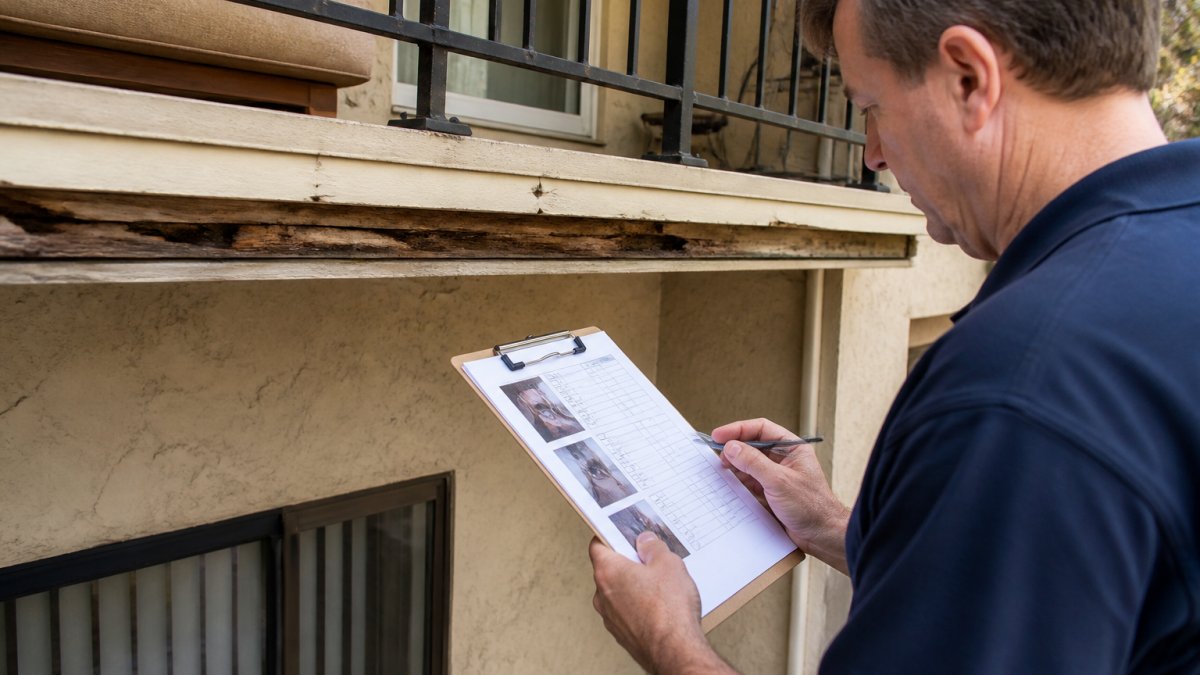
The 2015 Berkeley balcony collapse that killed six residents and the 2021 Malibu incident underscore the stakes. Both involved exterior elevated elements that had deteriorated beyond safe load-bearing capacity. Structural engineers look for visible warning signs: splintering wood, soft spots in decking, discolored surfaces indicating water damage, and gaps between the balcony and building facade. Non-destructive testing like borescoping reveals hidden deterioration inside walls and structural connections.
A failed exterior elevated element can collapse, injuring or killing residents. Property owners face catastrophic liability, and insurance may not cover incidents involving known defects that weren’t repaired. Compliance is both a safety imperative and a liability mitigation strategy.
Delaying inspection creates exponential risk. Deterioration accelerates once water penetration begins. A minor defect identified in year one might become a major structural failure by year three if left unaddressed.
SB 721 Compliance Deadline: When Inspections Must Happen
Initial Inspection Timeline
For buildings constructed before January 1, 2019, the initial inspection deadline was January 1, 2025. If your property hasn’t been inspected, you’re now in violation and exposed to civil penalties. For buildings constructed on or after January 1, 2019, the initial inspection must occur within five years of occupancy.
Re-Inspection Cycles
After the initial inspection, SB 721 requires re-inspection every six years. This creates a rolling compliance schedule. If your initial inspection occurred in 2024, your next inspection is due in 2030. The six-year cycle is fixed regardless of initial findings. Even if the first inspection revealed no defects, re-inspection is mandatory.
[Schedule your re-inspection](/how-to-prepare-for-sb-721-site-visit/) 3-4 months before the deadline. Inspectors book up quickly in late fall and early winter. Waiting until the deadline month almost guarantees you’ll miss it.
SB 326 Inspection Checklist: What Inspectors Must Evaluate
Structural Integrity Assessment
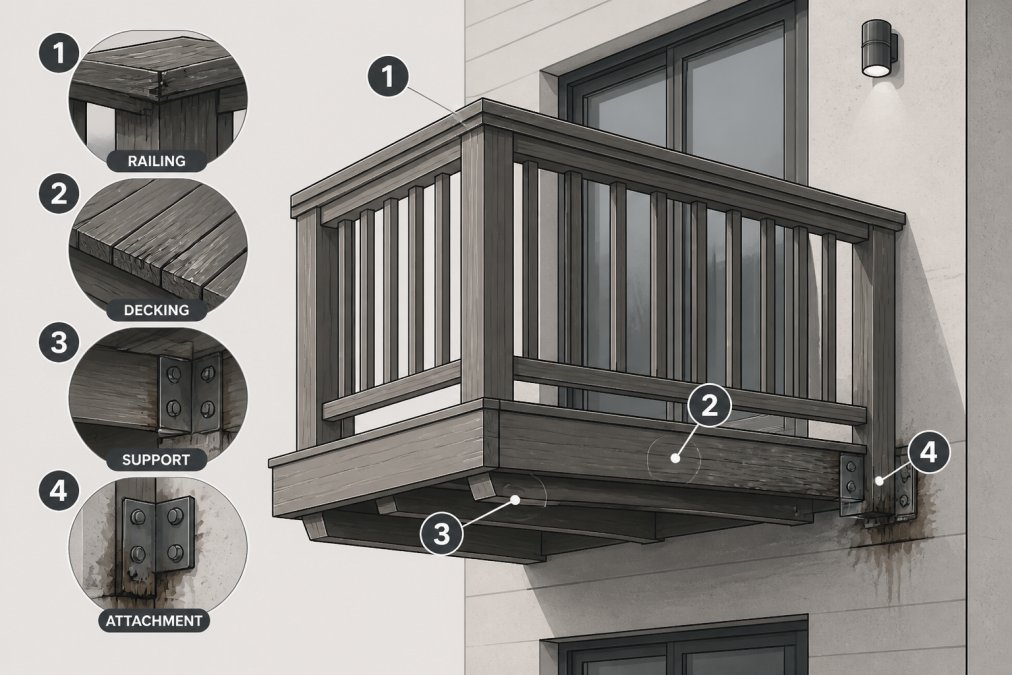
Inspectors evaluate load-bearing capacity of all exterior elevated elements, examining connection points where balconies attach to the main structure, bolts, welds, and fasteners. They assess decking material condition for soft spots, splintering, separation, or movement, and examine railings for structural stability.
Waterproofing receives thorough examination because water intrusion is the leading cause of structural failure. Inspectors look for failed sealants, cracks in concrete, gaps around penetrations, and evidence of previous water damage. Borescoping allows inspection of concealed areas without destructive removal of building materials. Fasteners receive detailed attention, as corroded bolts and loose connections are documented.
Common Defects to Identify
Inspection reports categorize defects by severity. Immediate safety hazards requiring emergency closure are flagged separately. Defects requiring repair within a specific timeframe are prioritized. Each defect includes location, condition observed, likely cause, and recommended repair approach.
A comprehensive SB 326 inspection covers connection integrity, decking material condition, railing stability, waterproofing system condition, fastener corrosion, pest damage, water intrusion evidence, concrete condition, structural member integrity, and sealant condition.
Who Qualifies as a Qualified Balcony Inspector California
A qualified inspector must hold one of these credentials: licensed structural engineer, licensed architect, or certified building inspector with specific training in structural evaluation. The license must be current and in good standing with the California Department of Consumer Affairs.
The inspector’s report carries legal weight. If challenged, the inspector’s qualifications and methodology determine whether the report withstands scrutiny. When selecting an inspector, verify their license directly with the California Department of Consumer Affairs and ask about their experience with SB 326 and SB 721 inspections specifically.
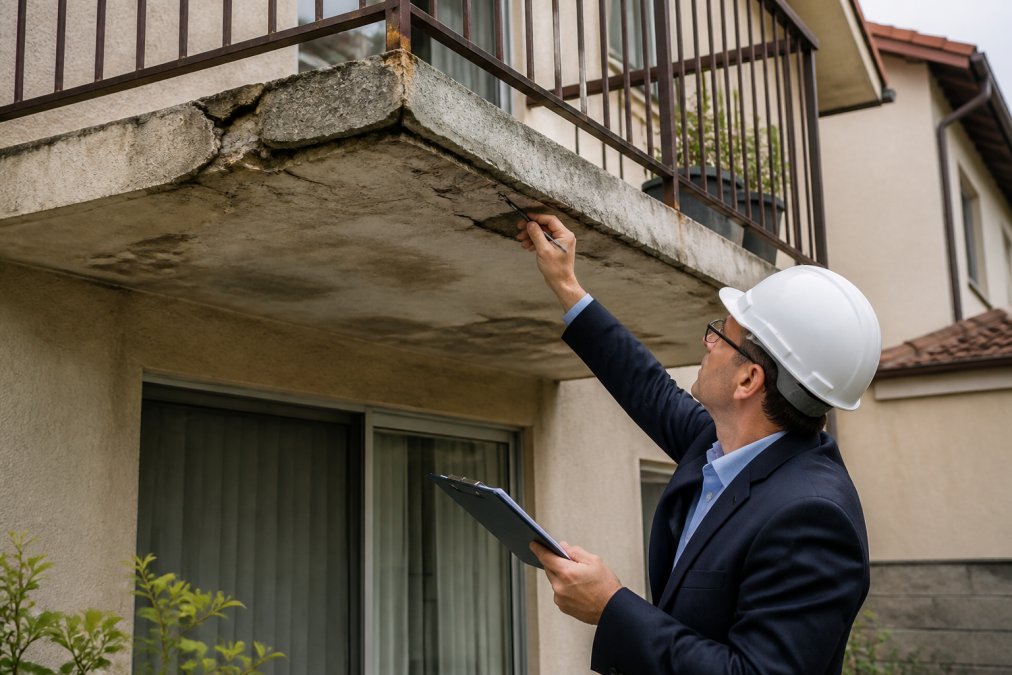
A qualified inspector isn’t just someone with a license, it’s someone with proven experience identifying the specific defects common to your building type and age.
Cost of SB 326 Balcony Inspection and Budget Planning
Factors That Affect Inspection Pricing
Building size is the primary cost factor. Inspectors typically charge based on the number of units or total square footage of exterior elevated elements. Building age affects complexity; older buildings often have more deterioration requiring detailed investigation and borescoping. Accessibility impacts cost, buildings requiring scaffolding or lifts incur additional fees. The type of exterior elevated elements and inspection methodology (basic visual versus comprehensive with borescoping and moisture testing) also affect pricing.
Budgeting for Repairs After Inspection
Most inspections identify defects requiring repair. Minor defects like failed caulking or loose fasteners cost relatively little. Moderate defects like rotted decking or corroded fasteners cost more but are manageable. Major defects like structural member replacement or complete waterproofing overhaul represent significant expenses.
Reserve fund planning should account for both immediate repairs and staged repairs over time. Inspection reports typically prioritize defects by urgency. Immediate safety hazards must be repaired quickly, while other defects can be scheduled within a reasonable timeframe, allowing costs to spread across multiple budget cycles.
California Building Standards Commission guidance on repair cost estimation
Reporting and Documentation Requirements
What Must Be Included in Inspection Reports
The report must clearly identify the building address, inspection date, inspector credentials, and the scope of the inspection. It documents all defects found, including location, description, severity classification, and recommended repair approach. Each defect must be specific enough that a contractor can understand exactly what needs repair.
The report includes the inspector’s professional opinion on structural safety. If any element is deemed unsafe for occupancy, that determination must be clearly stated. Photographs typically document defects and areas of concern. The report states the inspector’s license number and professional credentials.
Record Retention and Compliance Deadlines
SB 326 requires inspection reports and repair documentation be maintained for 18 years. SB 721 requires retention for at least seven years, though longer retention is prudent. Records must be accessible to residents and enforcement authorities. Missing an inspection deadline puts the property in violation; missing a repair deadline compounds the violation. Documentation of timely action is your defense against enforcement.
Incomplete or poorly organized records create problems if your property is audited or if a resident files a claim. Treat documentation as a compliance necessity, not an administrative burden.
Non-Compliance Penalties and Liability Risks
For SB 721 violations, the Department of Housing and Community Development can assess civil penalties that escalate over time. For SB 326 violations, the HOA board and property management company face enforcement action, and residents can file complaints with local agencies.
Beyond regulatory penalties, non-compliance creates catastrophic liability exposure. If an exterior elevated element fails and injures or kills a resident, insurance may deny coverage if the incident involved a known defect that wasn’t repaired. A jury may view non-compliance as gross negligence, opening the door to punitive damages that can exceed the property’s value. The 2015 Berkeley balcony collapse and 2021 Malibu incident both resulted in liability settlements far exceeding the cost of proper inspection and repair.
Compliance is the foundation of resident safety and asset protection.
California Department of Housing and Community Development enforcement guidance
| Aspect | SB 326 (HOAs/Condos) | SB 721 (Rental Apartments) |
|---|---|---|
| Applies To | Common interest developments, condominiums, HOA-governed buildings | Multifamily rental buildings with 3+ units |
| Initial Inspection Deadline | January 1, 2025 (for pre-2018 buildings) | January 1, 2025 (for pre-2019 buildings) |
| Re-Inspection Cycle | Every 6 years | Every 6 years |
| Qualified Inspector | Licensed architect, structural engineer, or building inspector | Licensed architect, structural engineer, or building inspector |
| Record Retention | 18 years | 7+ years (recommended longer) |
| Enforcement Authority | HOA board, local agencies | Department of Housing and Community Development |
| Penalty Type | HOA liability, reserve fund impact | Civil penalties assessed to property owner |
| Responsibility | HOA board manages compliance | Property owner/manager responsible |
Compliance with SB 326 and SB 721 protects residents and shields property owners from liability. The inspection process identifies defects early, when repairs are typically less expensive and disruptive. Apex Balcony specializes in SB 326 and SB 721 inspections for California property owners. Our licensed inspectors bring decades of construction and design experience to every evaluation. We identify defects comprehensively, document findings thoroughly, and provide clear repair recommendations. Book an inspection with Apex Balcony today and take the first step toward full compliance.
Frequently Asked Questions
What is the difference between SB 326 and SB 721?
SB 326 applies to condominiums and common interest developments, requiring initial inspections by January 1, 2025, with re-inspections every 9 years. SB 721 covers multifamily residential buildings with three or more units, mandating initial inspections by January 1, 2025, with re-inspections every 6 years. The main difference lies in building type, inspection frequency, and reporting requirements. Both laws address structural integrity of balconies and elevated exterior elements to prevent accidents.
Does my property fall under SB 326 or SB 721?
If your property is a condominium or common interest development (HOA-governed), it falls under SB 326. If it is a multifamily residential building with three or more rental units, it falls under SB 721. A single property cannot fall under both laws. Review your property's ownership structure and unit count to determine which applies. When in doubt, consult with a qualified balcony inspector California who can verify your building's classification.
What qualifies as a qualified balcony inspector under California law?
Under both SB 326 and SB 721, inspections must be performed by a licensed structural engineer, licensed architect, or building official with expertise in structural evaluation. The inspector must have experience identifying structural defects, waterproofing failures, and safety hazards in elevated exterior elements. California law requires inspectors to carry professional liability insurance and maintain detailed inspection records. Hiring a qualified balcony inspector California ensures your report will withstand regulatory scrutiny and protect your property from liability.
What happens if my building fails a balcony inspection?
If defects are identified, the property owner or HOA must notify affected residents within 15 days and begin repairs within 120 days (SB 721) or as required under SB 326 timelines. Structural defects, dry rot, water intrusion, and load-bearing damage must be addressed by licensed contractors. The inspector's report will prioritize repairs by severity. Failure to complete repairs within statutory deadlines can result in civil penalties, fines, and increased liability if an accident occurs. Professional guidance ensures timely, compliant remediation.
How much does an SB 326 or SB 721 balcony inspection cost?
The cost of SB 326 balcony inspection varies based on building size, number of units, balcony complexity, and accessibility. Factors include inspection depth, whether borescoping or destructive testing is needed, and travel distance. Pricing depends on quantity, dates, and building specifics. For current pricing and a detailed quote tailored to your property, contact Apex Balcony directly. Investing in a thorough inspection now prevents costly emergency repairs and liability exposure later.
What is included in an SB 326 inspection checklist?
An SB 326 inspection checklist evaluates structural integrity, waterproofing, load-bearing components, railings, fasteners, wood rot, termite damage, water intrusion, and concrete deterioration. Inspectors assess balcony connections to the building, decking condition, and safety hazards. The checklist follows California building codes and statutory obligations to ensure comprehensive evaluation. A detailed SB 326 inspection checklist provides property owners with clear documentation of what was examined, what passed, and what requires repair or further investigation.
What is the SB 721 compliance deadline for inspections?
The initial SB 721 compliance deadline for inspections was January 1, 2025. All multifamily residential buildings with three or more units must have completed their first inspection by this date. After the initial inspection, re-inspections are required every 6 years. Missing the SB 721 compliance deadline can result in civil penalties and legal liability. If your building has not yet been inspected, schedule an appointment immediately with a qualified inspector to achieve compliance and protect residents.
Can I use the same inspector for both SB 326 and SB 721 inspections?
Yes, if the inspector is a licensed structural engineer or architect qualified under California law, they can perform inspections for both SB 326 (condominiums) and SB 721 (multifamily buildings). However, the inspection scope, reporting requirements, and re-inspection timelines differ between the two laws. A qualified balcony inspector California experienced in both statutes will tailor their evaluation and documentation to meet the specific requirements of your building type, ensuring full compliance.