Balcony Inspection: The Complete 2026 Guide
Learn how to conduct a balcony inspection, understand SB 326/SB 721 requirements, identify structural issues, and protect your property. Start today.
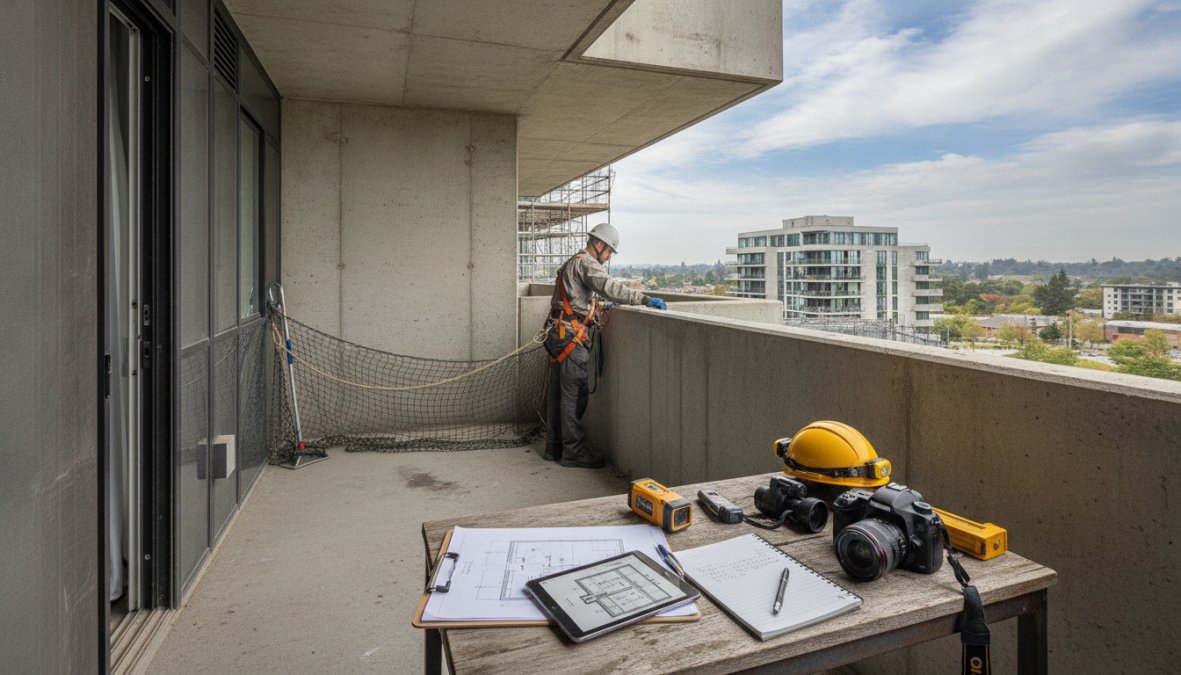
Table of Contents
- What Is a Balcony Inspection and Why It Matters
- SB 326 Balcony Inspection Requirements: Legal Compliance
- The Balcony Inspection Checklist: What Inspectors Look For
- Balcony Structural Integrity: Common Signs of Deterioration
- Cost of Balcony Inspection: Budget Planning and Reserve Funds
- Choosing a Qualified Inspector: What Property Managers Need
- Post-Inspection: Remediation, Permits, and Maintenance Schedules
- Conclusion: Protecting Your Property and Residents
Last Updated: June 21, 2026
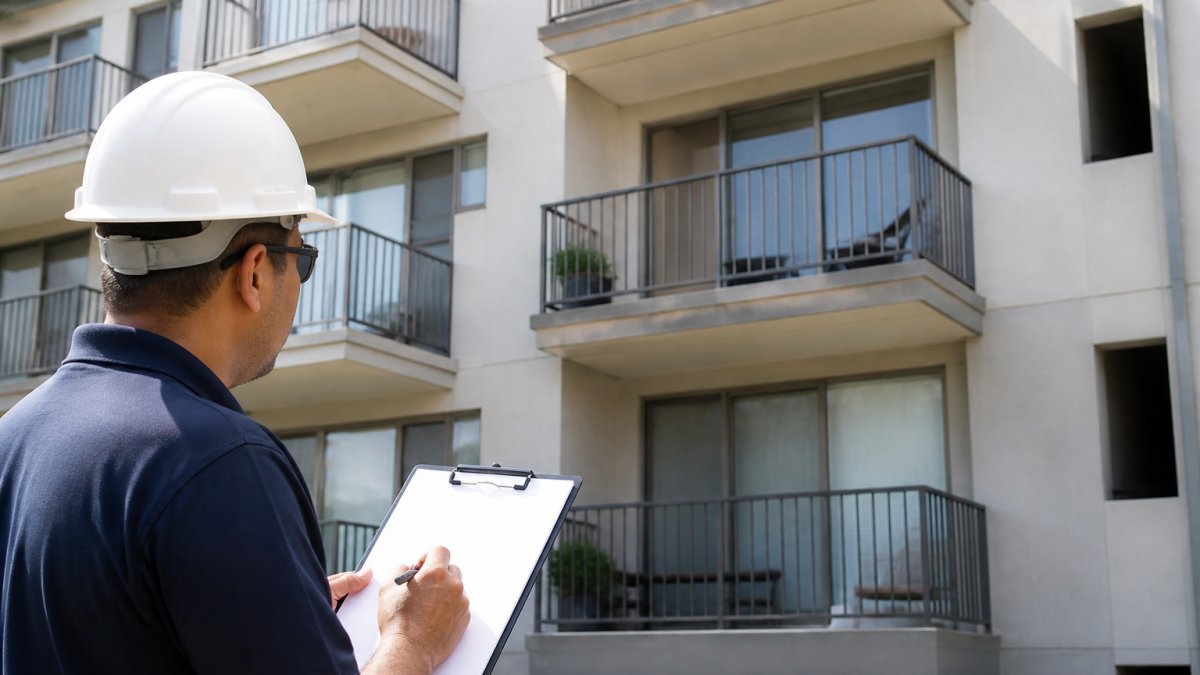
A balcony inspection is one of the most consequential maintenance decisions a California property owner can make, and the legal stakes have never been higher. At Apex Balcony, we’ve worked with hundreds of building owners navigating SB 326 and SB 721 requirements. Properties that avoid costly structural failures treat inspections as proactive systems, not reactive scrambles. Below, we’ll show you exactly how the inspection process works, what California law requires, and how to build a long-term maintenance strategy that protects your residents and your investment.
The primary benefit of inspection is catching dry rot, moisture intrusion, and ledger connection failures before they become catastrophic safety hazards.
What Is a Balcony Inspection and Why It Matters
A balcony inspection is a formal structural assessment of elevated exterior elements, conducted by a licensed professional, to evaluate load-bearing capacity, waterproofing integrity, and overall safety. The inspection covers balconies, decks, stairways, and walkways that extend beyond the building envelope and are supported by wood or wood-based materials.
A thorough inspection examines the full structural system: framing members, ledger connections, waterproofing membranes, drainage systems, and all load-bearing components.
Understanding Exterior Elevated Elements
Exterior Elevated Elements (EEEs) are balconies, decks, porches, stairways, walkways, and entry structures that extend beyond exterior walls, are elevated more than six feet above ground, and have a walking surface made of wood or wood-based materials. This definition triggers mandatory inspection requirements under SB 721 and SB 326. The six-foot threshold matters, structures below that elevation fall outside the statutory mandate, though inspecting them remains best practice.
The Safety and Liability Connection
The connection between deferred balcony inspection and liability exposure is direct. When structural failure results in injury, attorneys first ask whether the building owner had documentation of recent inspections and whether known deficiencies were remediated. A proactive inspection cycle is one of the most straightforward forms of liability mitigation available to building owners.
SB 326 Balcony Inspection Requirements: Legal Compliance
California’s SB 326 and SB 721 form the most comprehensive balcony safety regulatory framework in the United States. According to California Legislative Information on SB 326, SB 326 applies to common interest developments with three or more multifamily dwelling units, while SB 721 covers apartment buildings with three or more units not governed by an HOA.
Both laws mandate inspection of all Exterior Elevated Elements by a licensed structural engineer, architect, or licensed contractor with specific qualifications.
Statutory Deadlines and Inspection Cycles
Under SB 326, HOA-governed properties were required to complete their first inspection by January 1, 2025, with subsequent inspections every nine years. Under SB 721, apartment building owners faced the same deadline, with reinspection every six years thereafter.
Properties that missed the 2025 deadline are now in violation and should prioritize scheduling immediately. The inspection cycle resets from the date of the most recent completed inspection.
Missing the statutory inspection deadline creates compounded liability. If [structural failure](/balcony-structural-failure-warning-signs/) occurs during non-compliance, the absence of a required inspection report signals negligence. Schedule the inspection before any other deferred maintenance item.
Documentation and Compliance Reporting
The compliance report must identify each EEE inspected, describe its condition, note any conditions posing immediate safety hazards, and specify necessary repairs. The report must be stamped and signed by the licensed professional who conducted the inspection.
Building owners must retain these reports and provide copies to the HOA board or governing body. For SB 721 properties, copies must be filed with the local building department upon request.
The Balcony Inspection Checklist: What Inspectors Look For
A professional balcony inspection follows a systematic process moving from visual assessment to invasive testing when warranted.
Visual Inspection Components
The visual inspection phase covers every accessible component of the elevated structure. Inspectors evaluate:
- Decking surface: Checking for warping, splitting, soft spots, and deterioration signaling subsurface moisture damage
- Guardrails and handrails: Testing for structural rigidity and connection integrity
- Ledger connection: Examining where the balcony frame attaches to the building, the most common location for catastrophic failure
- Waterproofing membrane: Assessing flashing, sealants, and drainage systems
- Framing members: Evaluating joists, beams, and posts for corrosion, dry rot, or insect damage
- Drainage: Confirming water can exit without pooling
Invasive Testing and Moisture Detection
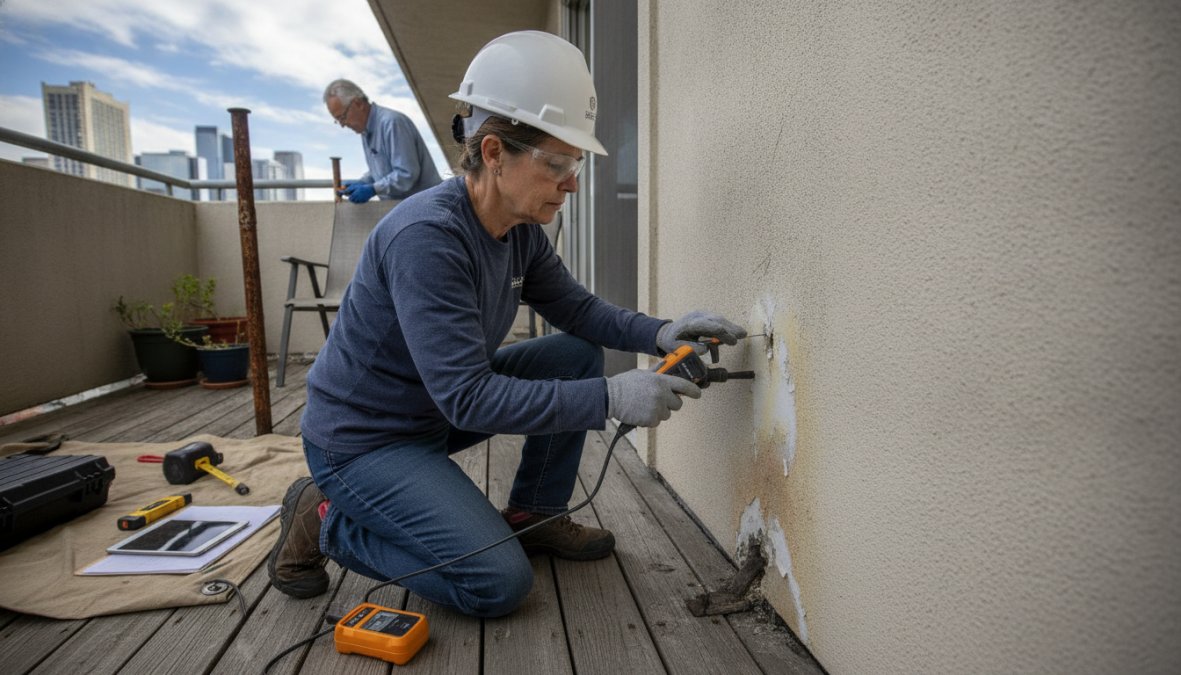
When surface conditions suggest potential subsurface damage, inspectors use invasive testing to assess deterioration extent. This typically involves removing small sections of decking to examine framing directly, using moisture meters to measure water content in wood, and probing soft areas to assess rot depth.
Ask your inspector to document every invasive test location with photographs before and after. This creates a baseline record making future inspections faster and more precise.
Balcony Structural Integrity: Common Signs of Deterioration
Most structural failures develop over years through moisture intrusion, biological decay, and corrosion that incrementally compromise load-bearing capacity.
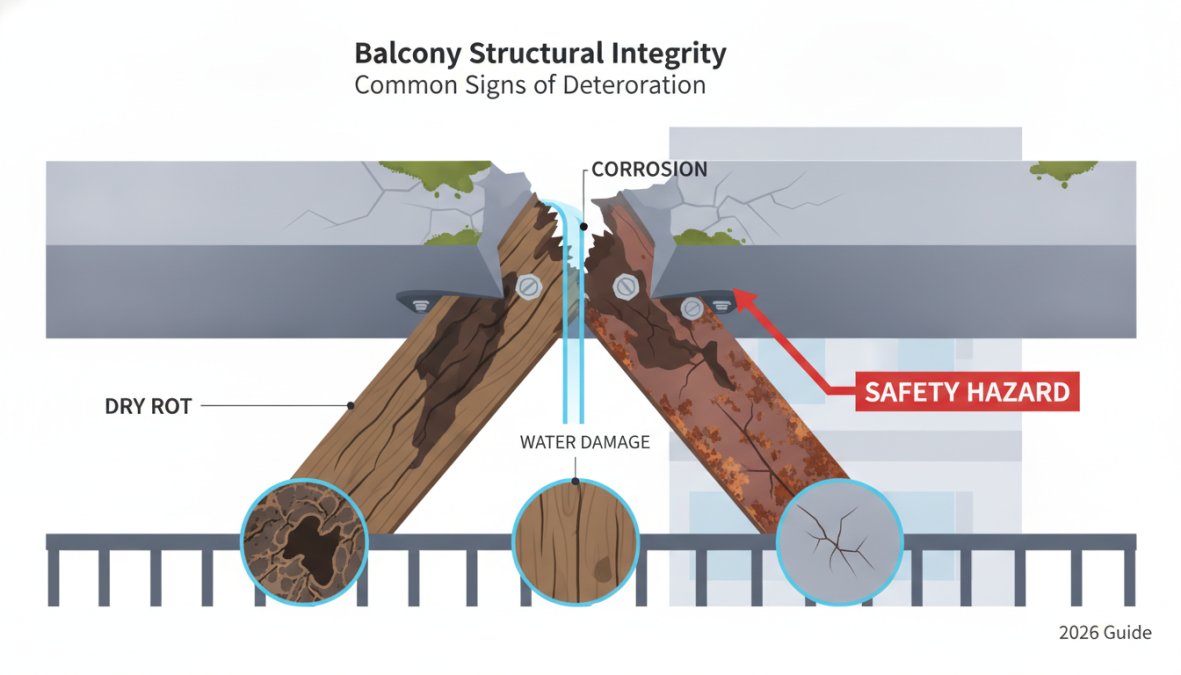
Dry Rot, Corrosion, and Water Damage
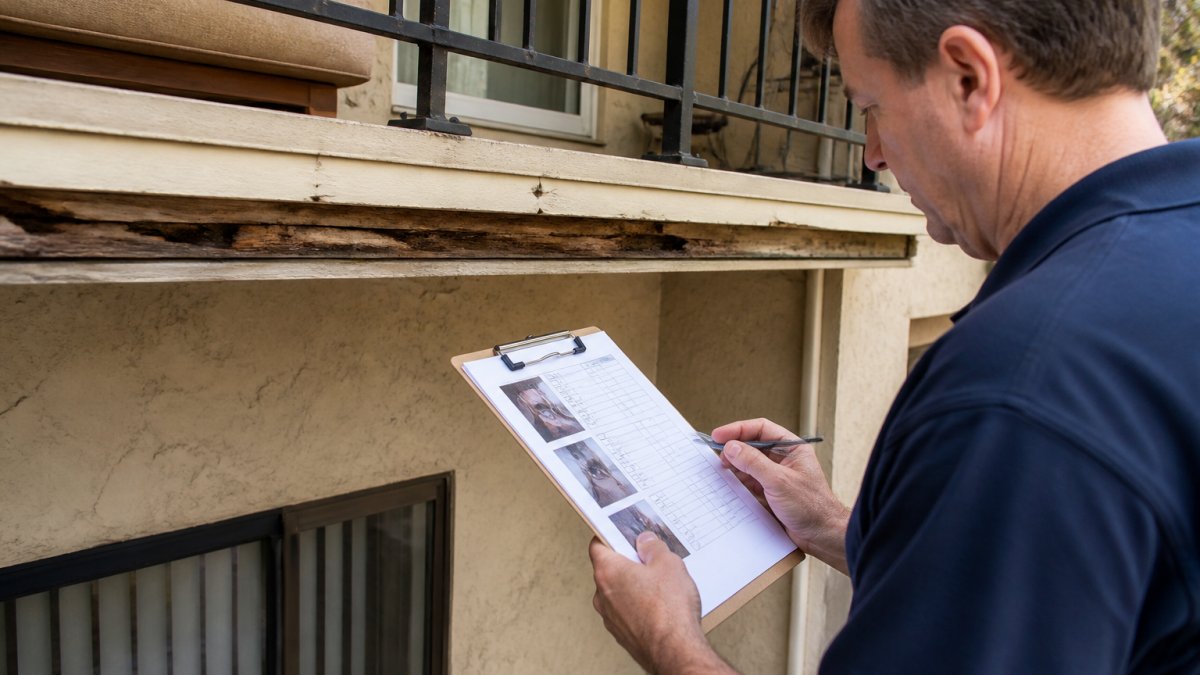
Dry rot is fungal decay that breaks down wood’s cellulose structure, leaving it brittle and unable to carry load. Signs include wood that crumbles under light pressure, cubical cracking patterns on surfaces, and musty odors near structural members.
Corrosion affects metal fasteners, connectors, and hardware. In coastal environments, salt air accelerates this process significantly. Water damage manifests as staining, paint failure, and surface softening, indicating the waterproofing system has been compromised.
Load-Bearing Capacity and Ledger Connection Issues
The ledger connection is the single most critical structural point on any attached balcony. This is where the balcony frame bolts to the building’s rim joist, transferring the full load into the building frame. Failure at the ledger connection is the mechanism behind most catastrophic balcony collapses.
Common failures include inadequate original fastening, fastener corrosion, rot in the rim joist behind the ledger, and improper flashing allowing water infiltration. Current building code requires specific fastener patterns, flashing details, and connection hardware that older buildings often lack.
Cost of Balcony Inspection: Budget Planning and Reserve Funds
The cost of balcony inspection varies based on property size, number of EEEs, inspector qualifications, and invasive testing extent.
Inspection Pricing Factors
Several variables drive inspection pricing:
- Number of EEEs: Inspectors typically price per unit or structure
- Inspector qualifications: Structural engineers generally charge more than licensed contractors
- Property access: Difficult access or specialized equipment requirements increase costs
- Invasive testing scope: Extensive invasive assessment increases costs accordingly
- Geographic location: Urban California markets typically command higher rates
Repair Cost Estimates and Reserve Fund Planning
Reserve fund planning should account for three categories: routine inspections on the statutory cycle, minor maintenance and waterproofing upkeep, and major remediation if structural issues are identified.
| Expense Category | Frequency | Planning Approach |
|---|---|---|
| SB 326 inspection | Every 9 years (HOA) | Reserve contribution per year |
| SB 721 inspection | Every 6 years (apartments) | Reserve contribution per year |
| Waterproofing maintenance | Every 3-5 years | Maintenance budget line |
| Minor repairs (fasteners, sealants) | Annual | Operating budget |
| Major structural remediation | As needed | Reserve fund with contingency |
According to California Department of Real Estate reserve study guidance, HOAs must conduct reserve studies including major components like elevated structures.
Choosing a Qualified Inspector: What Property Managers Need
The qualifications of your inspector directly determine the legal validity of your compliance report.
Licensed Contractors and Structural Engineers
California law specifies who may conduct inspections under SB 326 and SB 721. Qualified inspectors include licensed architects, licensed structural engineers, and licensed contractors with specific experience requirements. For SB 326 specifically, the inspector must be a licensed architect or structural engineer, or a licensed contractor working under direct supervision of one.
A structural engineer brings analytical depth to load-bearing capacity assessments and can make code-specific findings that a general contractor cannot.
Tenant Communication Templates
Clear, professional communication with tenants resolves access complications and unnecessary anxiety. Use this template:
Subject: Upcoming Balcony Safety Inspection – [Date]
Dear Resident of Unit [X],
As part of our ongoing commitment to resident safety and compliance with California SB [326/721], we will be conducting a mandatory inspection of all exterior elevated elements at [Property Name] on [Date(s)].
An inspector from [Company Name] will need access to your balcony/deck between [Time Range]. You do not need to be present, but please ensure the balcony is clear of furniture and personal items.
If you have questions or need to arrange an alternate access time, please contact [Management Contact] at [Phone/Email] by [Date].
Thank you for your cooperation in keeping our community safe.
Send this notice at least two weeks before the inspection date.
Post-Inspection: Remediation, Permits, and Maintenance Schedules
The inspection report is the beginning of the process, not the end. What happens after the inspection determines whether the property achieves genuine safety improvement.
Waterproofing and Remediation Planning
When an inspection identifies deficiencies, the compliance report specifies whether conditions require immediate action or can be addressed on a defined timeline. Imminent hazards typically require posting the structure as unsafe and restricting occupant access until repairs are complete.
Remediation planning should begin with a clear scope of work derived directly from the inspection report. For waterproofing failures, this typically involves removing damaged decking, replacing compromised flashing and membranes, treating or replacing affected framing members, and reinstalling decking with proper drainage. Most structural repairs require a building permit and final inspection by the local building department.
Remediation that brings structures up to current code, rather than just repairing to original condition, reduces the likelihood of repeat findings in the next inspection cycle and may lower long-term maintenance costs significantly.
Long-Term Maintenance Logs and Insurance Implications
A maintenance log is a risk management tool documenting the property owner’s ongoing attention to structural safety. Insurance carriers increasingly review maintenance documentation when evaluating claims related to structural failures.
The maintenance log should include:
- Date and scope of each balcony inspection
- Inspector name, license number, and firm
- Copy of each compliance report
- All repair permits, scopes of work, and completion documentation
- Annual waterproofing maintenance records
- Photographs from each inspection and repair cycle
- Dates of any tenant notices related to structural conditions
Insurance implications extend beyond claims defense. Some carriers offer premium adjustments for properties demonstrating proactive compliance programs.
California’s balcony safety laws exist because structural failures on elevated elements cause serious injuries, and most are preventable with timely inspection and maintenance. The challenge for building owners is managing the full process: scheduling qualified inspectors, interpreting compliance reports, planning remediation, communicating with residents, and maintaining the documentation trail that protects against liability. Apex Balcony provides licensed inspection services specializing in SB 326 and SB 721 compliance for multifamily properties across California. Book your inspection with Apex Balcony and get a clear path to compliance, documented structural assessment, and the confidence that your residents are safe.
Frequently Asked Questions
What is included in a professional balcony inspection?
A comprehensive balcony inspection includes visual examination of the building envelope, ledger connections, and structural elements; invasive testing to detect moisture intrusion and dry rot; assessment of load-bearing capacity; and documentation of any safety hazards. Licensed inspectors evaluate waterproofing, corrosion, and compliance with building code standards. Results are compiled into a formal compliance report for property owners and HOA boards.
What are the SB 326 balcony inspection requirements and deadlines?
California's SB 326 requires buildings with three or more units to conduct balcony inspections on a statutory deadline. Property owners must hire a licensed contractor or structural engineer to perform visual and invasive inspections of all Exterior Elevated Elements. Compliance reports must be filed with the local building department, and any identified safety hazards must be remediated within specified timeframes to avoid liability.
How often should balconies be inspected?
Initial inspections are required by SB 326 statutory deadlines, typically every 9 years depending on your jurisdiction. However, property managers should establish an annual maintenance log and visual inspection cycle to catch early signs of deterioration. After repairs, post-inspection verification ensures remediation was effective. Regular inspection cycles help prevent costly structural failures and maintain insurance coverage.
What are common signs of balcony structural damage I should watch for?
Warning signs include visible dry rot or soft wood, rust or corrosion on metal components, water stains or moisture intrusion around ledger connections, cracked or spalling concrete, loose or missing fasteners, and separation between the balcony and building. These deterioration indicators suggest compromised load-bearing capacity and potential safety hazards. Professional inspection using invasive testing can identify hidden damage not visible during routine visual inspections.