Wood Alternatives for Balcony Repairs in California
Wood alternatives balcony: Explore composite, aluminum, and fire-rated decking alternatives for California balcony repairs. Compare durability, costs, and.
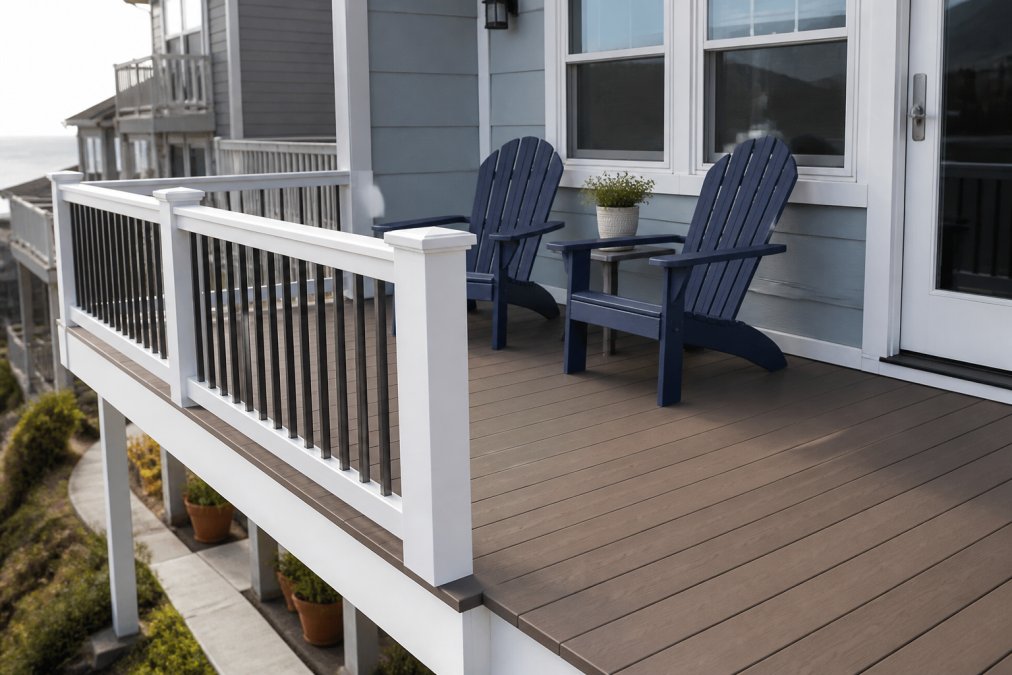
Table of Contents
- Why Wood Alternatives Matter for Balcony Repairs
- Composite Decking vs Aluminum Balcony Decking: Material Comparison
- Fire-Rated Decking Materials for Multi-Family Buildings
- SB 326 Balcony Inspection Requirements and Material Selection
- Structural Considerations for Second-Story Balconies
- Cost Comparison and Long-Term Value
- Repair vs. Replace: When to Choose Each Option
- Conclusion
Last Updated: August 21, 2026
Why Wood Alternatives Matter for Balcony Repairs
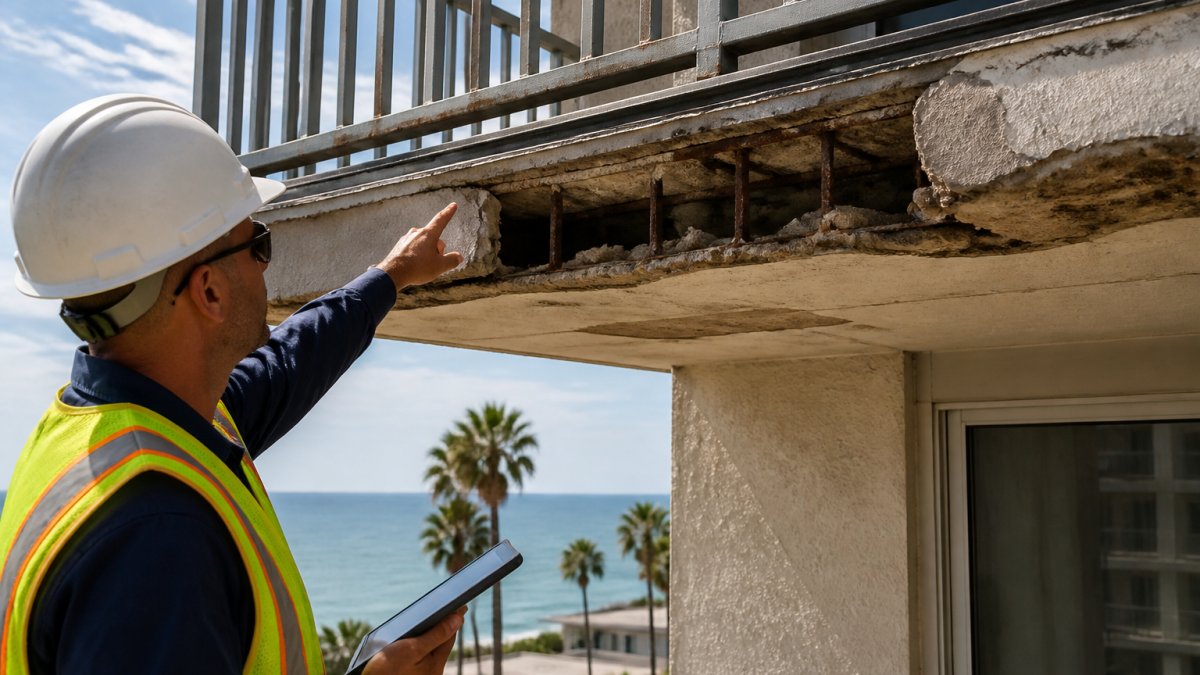
When a balcony fails, it fails catastrophically. In 2015, a Berkeley balcony collapse killed six people. In 2021, a Malibu incident claimed additional lives. These weren’t freak accidents, they were failures of wood that couldn’t handle California’s moisture, UV exposure, and structural demands over time.
Traditional pressure-treated lumber deteriorates from the inside out, rots, splinters, and requires constant maintenance that most property owners skip or perform incorrectly. By the time visible decay appears, structural integrity is already compromised.
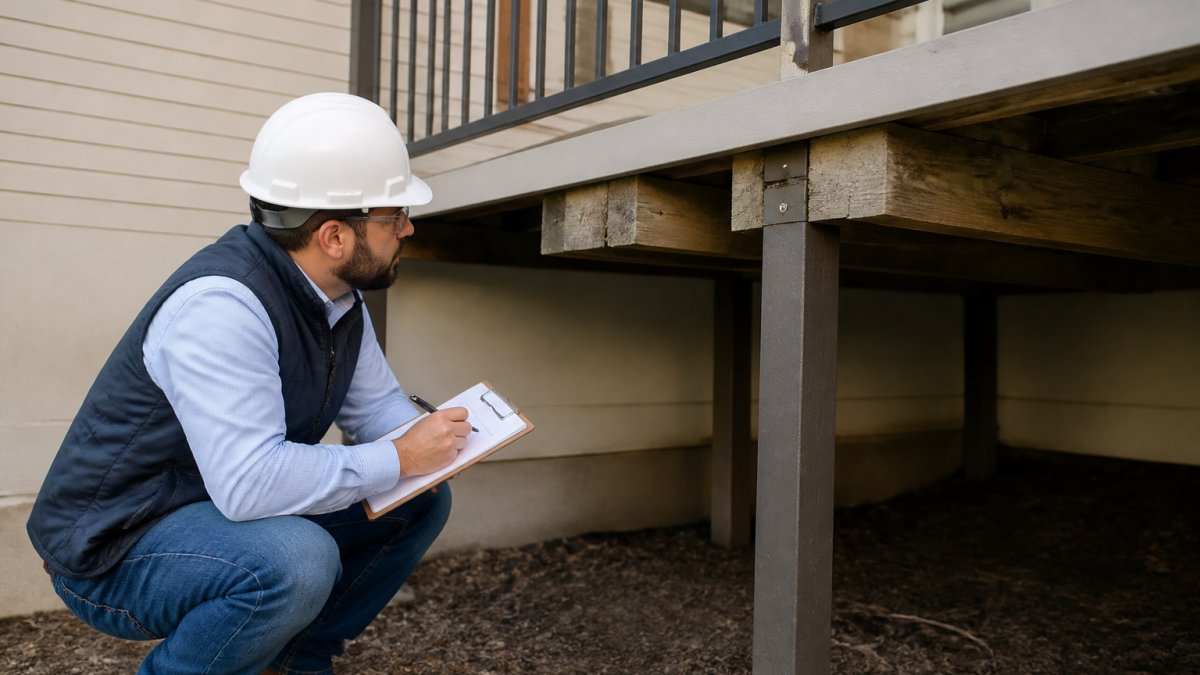
California’s SB 326 and SB 721 mandate that buildings with three or more units inspect balconies every nine years (or every six years for buildings over 30 years old) (leginfo.legislature.ca.gov). These inspections often reveal that wood-based structures have failed far beyond cosmetic repair, requiring full replacement rather than patching.
Modern alternatives eliminate this category of failure entirely. Composite decking, aluminum systems, fire-rated tiles, and engineered materials don’t rot, splinter, or require endless maintenance. They address California’s specific climate challenges: intense UV radiation, coastal moisture that accelerates decay, and wildfire zones where fire resistance is essential.
Below, we’ll walk through the material options that work in California’s environment, the regulatory requirements that govern your choices, and the structural considerations that determine whether repair or replacement makes financial sense.
Composite Decking vs Aluminum Balcony Decking: Material Comparison
Composite Decking: Durability and Maintenance
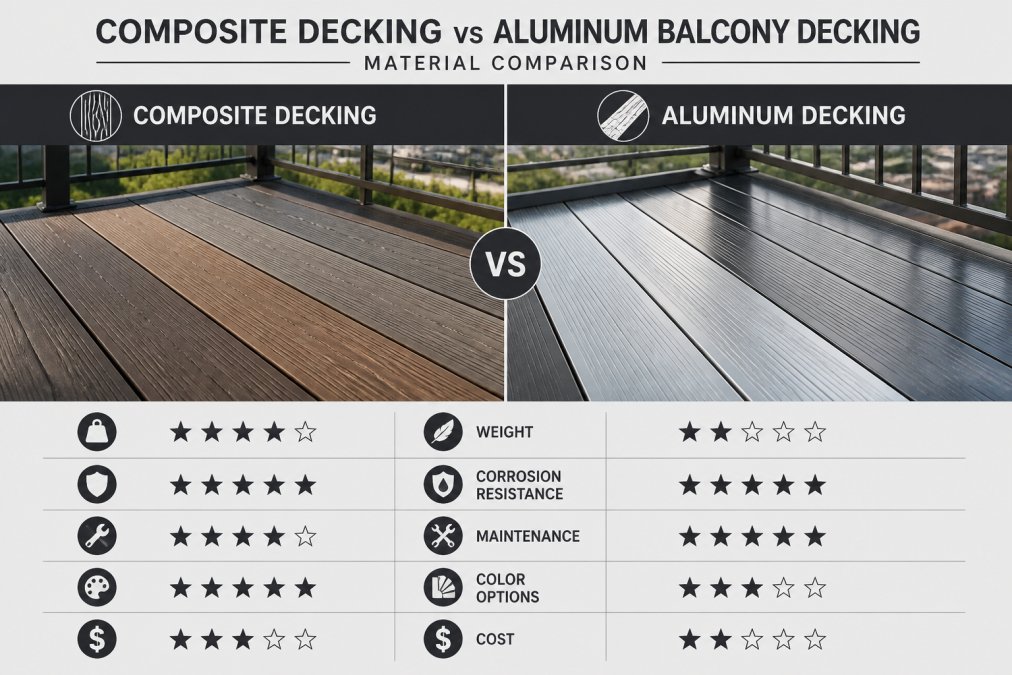
Composite decking is engineered from recycled wood fibers and plastic polymers, creating a material that behaves like wood without wood’s vulnerabilities. It doesn’t rot, splinter, or require sanding and staining.
Trex uses 95% recycled content with a 25-year limited residential warranty (trex.com). DuraLife operates at similar performance levels, constructed from 90% recycled hardwood and polypropylene, also with a 25-year stain and fade warranty. Both resist fading, staining, scratching, and mold growth.
For property managers overseeing multiple units, the low-maintenance profile translates directly to cost savings: no annual maintenance contracts, no seasonal prep work, no emergency repairs from preventable decay. A simple hose rinse removes dirt and debris.
The tradeoff is upfront cost. Composite decking runs 40-60% higher than pressure-treated wood. Trex pricing for materials alone can range from $9-$16 per square foot. DuraLife boards generally run between $3-$4 per linear foot. Installation adds significant labor on top of that. Darker composite colors can also absorb heat in direct California sun, though lighter colors mitigate this issue.
Aluminum Decking: Longevity and Weather Resistance
Aluminum decking, exemplified by AlumaDeck, embraces metal’s inherent properties: rust resistance, structural strength, and impermeability. AlumaDeck planks feature rust-resistant aluminum with a slip-resistant powder coat finish and self-spacing boards with built-in drainage that protects the substructure below.
Aluminum decking is virtually maintenance-free for the life of the structure. It won’t warp, crack, split, rot, or support mold growth. Fire resistance is inherent, aluminum doesn’t burn, making it significant for buildings in wildfire-prone areas.
The drawbacks are cost and thermal properties. Aluminum conducts heat and can get uncomfortably hot in direct sun. Weight is another consideration: aluminum is heavier than wood or composite, requiring the substructure to be engineered for additional load. For second-story or elevated balconies, this may require reinforcement that adds cost.
Over 30-40 years, aluminum’s zero-maintenance profile and structural durability mean far less frequent replacement than wood or composite alternatives.
Fire-Rated Decking Materials for Multi-Family Buildings
California’s fire codes require buildings in high fire-risk areas to use materials meeting specific fire-resistance standards, eliminating pressure-treated wood from many jurisdictions.
DekTek manufactures structural concrete deck tiles, 1 inch thick, engineered to support over 1,000 pounds per tile with 16-inch on-center joist spacing. The tiles are naturally fire-resistant, rot-proof, mold-resistant, and require minimal maintenance. In wildfire-prone areas, a balcony that can’t burn won’t become an ignition source during a wildfire event.
DekTek pricing runs $17-$20 per square foot. The material is heavier than aluminum, often requiring substructure reinforcement. Installation requires precision because the tiles are structural elements, not just surface coverings.
Aluminum systems like AlumaDeck also meet fire-resistance standards, offering non-combustible advantages with lower weight and minimal maintenance.
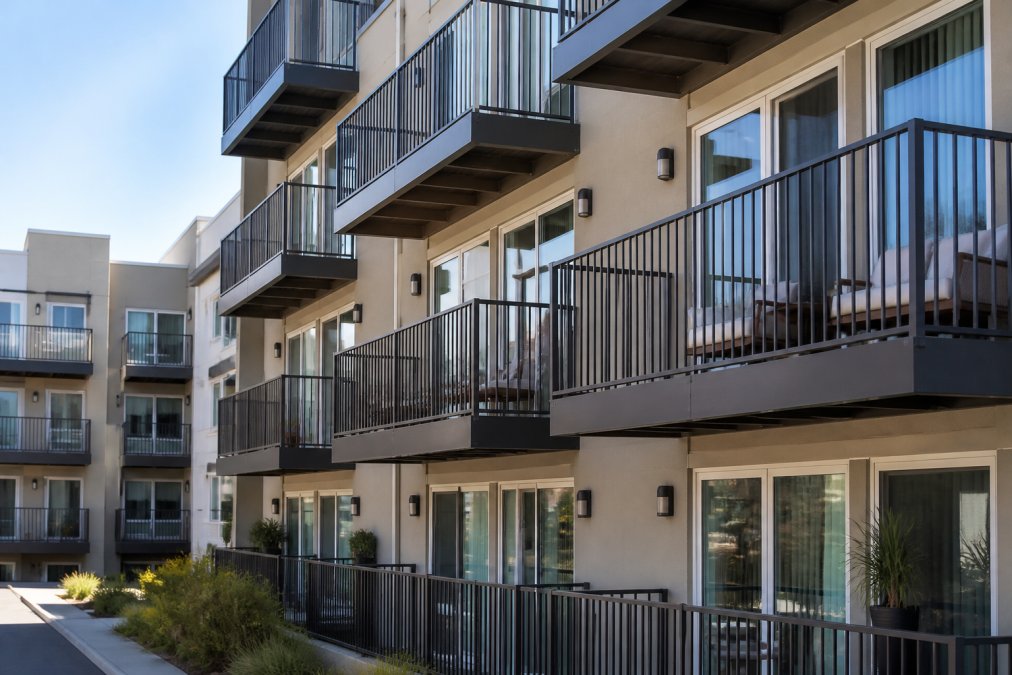
SB 326 Balcony Inspection Requirements and Material Selection
SB 326 requires buildings with three or more residential units to inspect all balconies, decks, and exterior stairs every nine years (every six years for buildings over 30 years old). The law exists because wood-frame balconies fail.
The inspection requirement directly influences material selection. When an inspector examines a wood-frame balcony, they’re looking for rot, decay, structural compromise, and water infiltration. Materials like composite decking and aluminum eliminate entire categories of findings: no rot, no mold, no water damage in the substructure if the decking system includes drainage.
A building with wood balconies might pass inspection, then fail catastrophically months later as decay accelerates. A building with composite or aluminum balconies has far lower risk of structural failure between inspection cycles.
SB 326 inspections often reveal that wood structures have deteriorated beyond economical repair, making replacement mandatory. If you’re replacing anyway, installing a material that will outlast the building’s useful life makes financial sense.
Structural Considerations for Second-Story Balconies
Not all balcony materials are equal from a structural engineering perspective. Second-story balconies must support live loads (people, furniture) and dead loads (the deck itself) without deflection or failure.
Composite decking and aluminum planks are typically lighter than concrete tiles but still require proper joist sizing and fastener specifications. Concrete tiles are heavier and may require substructure reinforcement, additional joists, upgraded fasteners, or structural reinforcement of the building’s rim board.
The fastener system matters enormously. Composite and aluminum decking require stainless steel fasteners (for corrosion resistance) and specific spacing to prevent thermal expansion issues. Aluminum expands and contracts with temperature changes, so fastener placement must accommodate this movement (peer-reviewed research).
Before installing any alternative material, the structural engineer should verify that the substructure is adequate for the new system’s weight and load distribution. A building owner who installs new decking without verifying structural adequacy creates a liability risk.
Cost Comparison and Long-Term Value
Pressure-treated wood is cheapest upfront, but this ignores total cost of ownership. Wood balconies require annual staining or sealing, repairs from rot or decay, and eventual replacement. Over 30 years, a wood balcony might be repaired or partially replaced multiple times.
Composite decking has no maintenance requirements beyond occasional cleaning. There are no annual staining costs or emergency repairs from decay. The material lasts 25+ years with warranty backing.
Aluminum and concrete tiles have similar long-term economics: high upfront cost, zero maintenance, decades of useful life. For long-term property ownership, these materials make financial sense because they eliminate the repair cycle entirely.
Short-term ownership favors cheaper materials because you won’t bear maintenance costs. Long-term ownership favors durable alternatives because maintenance elimination and reliability matter more than upfront savings.
| Material | Upfront Cost | Maintenance | Lifespan | Best For |
|---|---|---|---|---|
| Pressure-treated wood | Low | High (annual staining, repairs) | 15-20 years | Short-term, budget-constrained projects |
| Composite decking | Medium-High | Low (occasional cleaning) | 25+ years | Long-term ownership, low-maintenance preference |
| Aluminum decking | High | Minimal (no maintenance) | 30+ years | Coastal areas, moisture-prone sites, zero-maintenance priority |
| Concrete tiles (fire-rated) | High | Minimal (no maintenance) | 30+ years | Wildfire zones, structural durability priority |
Repair vs. Replace: When to Choose Each Option
The repair-versus-replace decision depends on three factors: structural integrity, remaining useful life, and cost-effectiveness.
If an inspection reveals that the substructure is sound but the decking surface has failed, repair makes sense. You can replace just the decking boards, keeping the existing structure intact. If the substructure shows rot, decay, or structural compromise, repair is often a false economy. Full replacement, including substructure repair, becomes necessary.
The material choice influences this decision. If you’re replacing anyway, installing composite, aluminum, or fire-rated materials makes sense because you’re investing in long-term durability.
Cost-effectiveness depends on the building’s age and condition. A 40-year-old building with extensive structural damage might warrant full replacement with durable materials. A 10-year-old building with localized decking failure might be better served by targeted repair with upgraded materials.
If a building is approaching an SB 326 inspection deadline and the inspector is likely to find significant decay, proactive replacement before inspection avoids emergency repairs. Replacement with durable materials ensures the next inspection cycle finds no issues.
Conclusion
California’s balcony failures aren’t inevitable, they’re the result of using materials that can’t handle the state’s climate and regulatory demands. Wood alternatives eliminate the decay cycle that leads to catastrophic failure. Whether you choose composite decking for its balance of cost and durability, aluminum for its maintenance-free profile, or fire-rated materials for wildfire protection, the decision to move away from wood is the decision to move away from risk.
Apex Balcony’s inspection and consultation services help building owners and HOAs make these decisions with confidence. Our licensed inspectors identify structural issues early, recommend materials suited to your building’s specific conditions, and guide you through the repair or replacement process. Book an inspection today to get a clear picture of your balcony’s condition and the best path forward for compliance and safety.
=== FAQ ANSWERS (audit these too, same rules) ===
[1] Q: What can I use instead of wood for a balcony deck?
A: Composite decking, aluminum systems, structural concrete tiles, and tropical hardwoods are viable wood alternatives for balconies. Composite offers low maintenance and good durability. Aluminum provides superior fire resistance and moisture protection. Concrete tiles deliver exceptional strength for elevated decks. Your choice depends on climate exposure, structural load requirements, fire ratings, and maintenance preferences. Consult your inspector to confirm which materials meet your building’s SB 326 or SB 721 requirements.
[2] Q: Do balcony deck material replacements require a permit?
A: Yes. Any balcony deck repair or replacement in California requires a building permit and must comply with current building codes. SB 326 and SB 721 mandate that property owners obtain professional inspection reports before repair work begins. Failure to obtain permits can result in fines and liability exposure. Contact your local building department and schedule an inspection with a licensed professional to confirm which materials and installation methods are approved for your property.
[3] Q: How do composite materials compare to wood for fire resistance?
A: Composite decking varies in fire rating depending on composition and manufacturing. Many composites meet fire-resistance standards, but aluminum and concrete tiles offer superior performance in high-fire-risk areas. Aluminum is non-combustible and naturally fire-resistant. Concrete tiles are also non-combustible. If your property is in a wildfire urban interface (WUI) zone, fire-rated materials are essential. Verify fire ratings with your inspector and local building authority before selecting materials.
[4] Q: What materials are approved for multi-family balcony repairs under SB 326?
A: SB 326 does not mandate specific materials; it requires structural integrity, moisture resistance, and rot prevention. Approved materials include pressure-treated lumber (if structurally sound), composite decking, aluminum systems, and fire-rated alternatives. The key is that materials must pass inspection and meet load-bearing and weather-resistance standards. Your licensed inspector will verify that your chosen material meets code requirements and protects against future decay and structural failure.
[5] Q: Is it cost-effective to switch from wood to metal or composite for balcony repairs?
A: Long-term cost-effectiveness depends on material lifespan, maintenance, and repair frequency. Composite and aluminum typically cost more upfront than pressure-treated wood but require minimal maintenance and last 20-30+ years. Wood requires regular staining, sealing, and repairs, accumulating costs over time. For multi-family buildings, the reduced maintenance burden and liability protection from durable materials often justify the higher initial investment. Request quotes for your specific project scope to compare total cost of ownership.
Frequently Asked Questions
Q: What can I use instead of wood for a balcony deck?
A: Composite decking, aluminum systems, structural concrete tiles, and tropical hardwoods are viable wood alternatives for balconies. Composite offers low maintenance and good durability. Aluminum provides superior fire resistance and moisture protection. Concrete tiles deliver exceptional strength for elevated decks. Your choice depends on climate exposure, structural load requirements, fire ratings, and maintenance preferences. Consult your inspector to confirm which materials meet your building's SB 326 or SB 721 requirements.
Q: Do balcony deck material replacements require a permit?
A: Yes. Any balcony deck repair or replacement in California requires a building permit and must comply with current building codes. SB 326 and SB 721 mandate that property owners obtain professional inspection reports before repair work begins. Failure to obtain permits can result in fines and liability exposure. Contact your local building department and schedule an inspection with a licensed professional to confirm which materials and installation methods are approved for your property.
Q: How do composite materials compare to wood for fire resistance?
A: Composite decking varies in fire rating depending on composition and manufacturing. Many composites meet fire-resistance standards, but aluminum and concrete tiles offer superior performance in high-fire-risk areas. Aluminum is non-combustible and naturally fire-resistant. Concrete tiles are also non-combustible. If your property is in a wildfire urban interface (WUI) zone, fire-rated materials are essential. Verify fire ratings with your inspector and local building authority before selecting materials.
Q: What materials are approved for multi-family balcony repairs under SB 326?
A: SB 326 does not mandate specific materials; it requires structural integrity, moisture resistance, and rot prevention. Approved materials include pressure-treated lumber (if structurally sound), composite decking, aluminum systems, and fire-rated alternatives. The key is that materials must pass inspection and meet load-bearing and weather-resistance standards. Your licensed inspector will verify that your chosen material meets code requirements and protects against future decay and structural failure.
Q: Is it cost-effective to switch from wood to metal or composite for balcony repairs?
A: Long-term cost-effectiveness depends on material lifespan, maintenance, and repair frequency. Composite and aluminum typically cost more upfront than pressure-treated wood but require minimal maintenance and last 20-30+ years. Wood requires regular staining, sealing, and repairs, accumulating costs over time. For multi-family buildings, the reduced maintenance burden and liability protection from durable materials often justify the higher initial investment. Request quotes for your specific project scope to compare total cost of ownership.