Top 5 Balcony Inspection Requirements for HOAs
Learn the top 5 balcony inspection requirements for HOAs under SB 326 and SB 721. Ensure compliance, protect residents, and avoid liability. Get started.
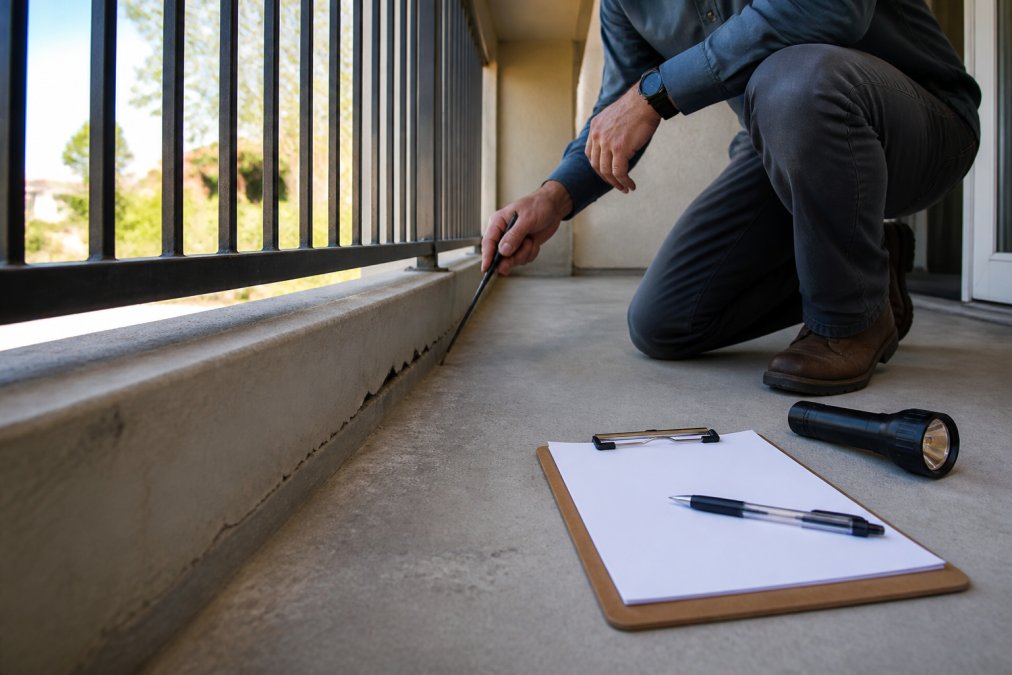
Table of Contents
- 1. Structural Integrity Assessment of Load-Bearing Components
- 2. SB 326 Inspection Timeline and Compliance Deadlines
- 3. Qualified Balcony Inspector Requirements and Credentials
- 4. SB 326 Inspection Report Components and Documentation
- 5. The 15% Sampling Requirement and Visual Testing Protocol
- Budgeting and Reserve Study Integration for Inspection Costs
- Conclusion
Last Updated: August 19, 2026
Top 5 Balcony Inspection Requirements for HOAs
Balcony failures don’t announce themselves. California’s SB 326 and SB 721 laws mandate that common interest developments inspect their exterior elevated elements on a strict timeline. This guide breaks down the five critical balcony inspection requirements your HOA must satisfy to stay compliant and protect your residents.
Quick Overview of Top 5 Requirements:
- Structural integrity assessment of all load-bearing components
- Compliance with SB 326 inspection timelines and deadlines
- Qualified inspector credentials and licensing
- Comprehensive inspection report documentation
- 15% sampling requirement for visual and invasive testing
1. Structural Integrity Assessment of Load-Bearing Components
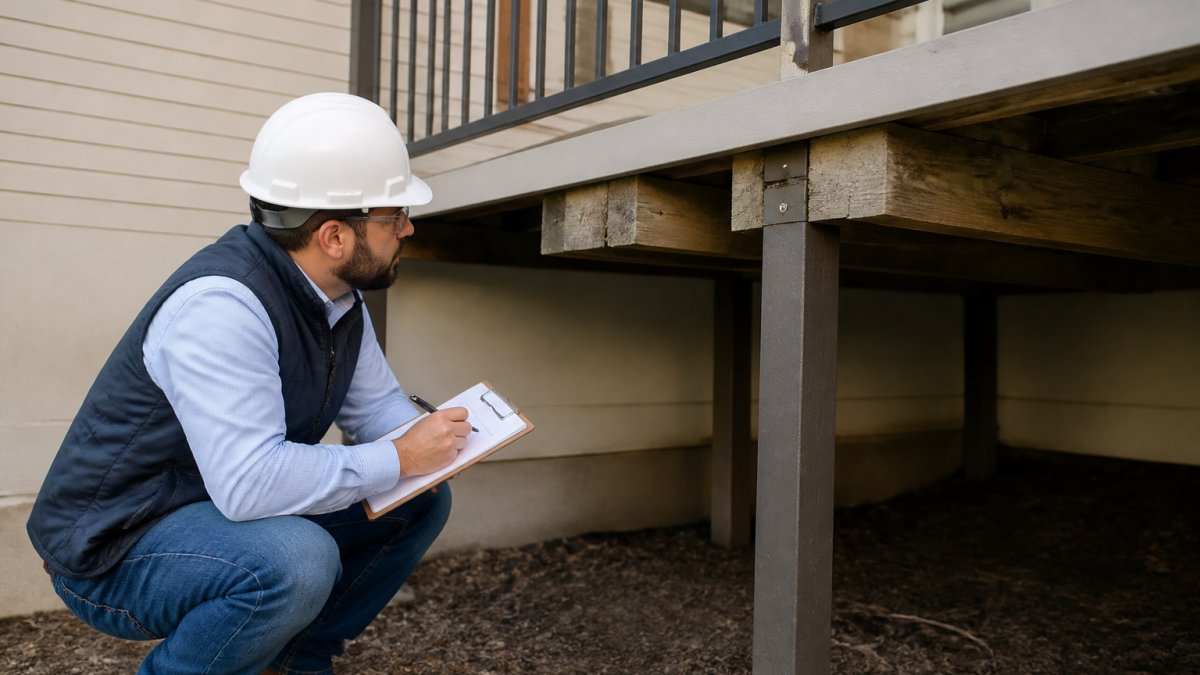
The structural integrity of your balcony depends on five load-bearing components: the ledger connection, the rim joist, the support beams, the decking structure, and the guardrail system.
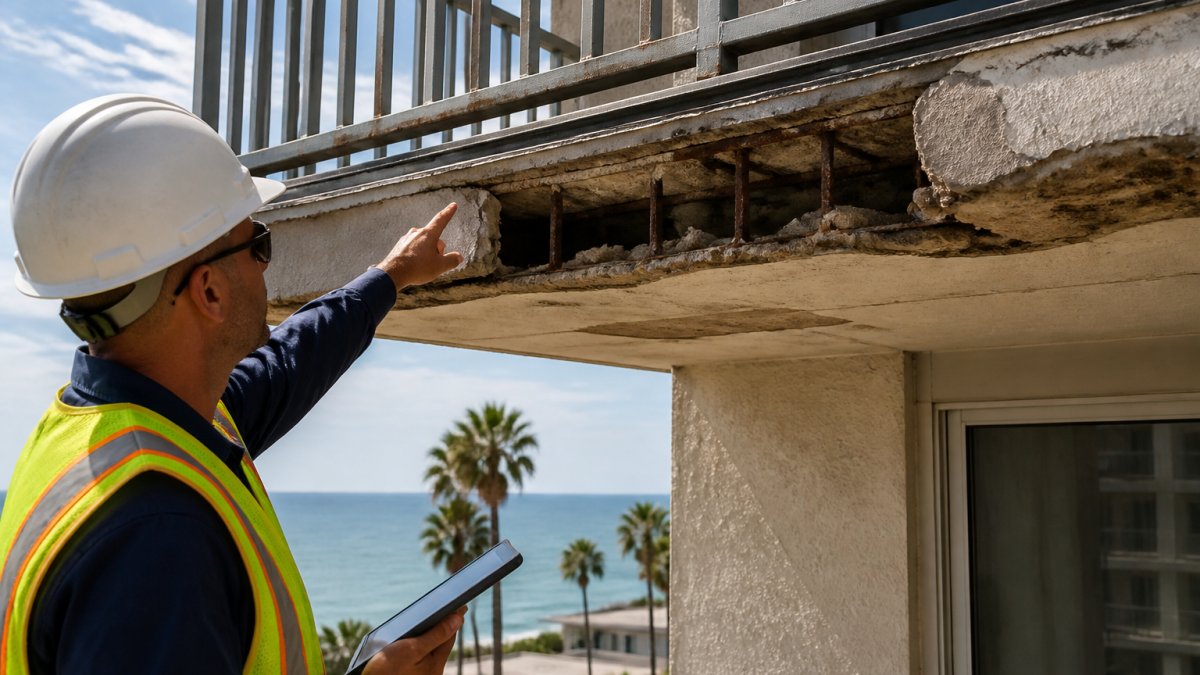
The Ledger Connection is where most problems start. This bolted or nailed connection between the balcony frame and the building’s rim joist is vulnerable to water intrusion, which causes wood rot and compromises the entire support structure. Inspectors look for gaps, missing flashing, caulk failure, and visible rot around fasteners.
The Rim Joist and Support Beams must be checked for dry rot, corrosion, and proper load distribution. Inspectors probe the wood to check for soft spots and examine metal beams for rust and pitting that reduces load-carrying capacity.
Decking Materials, whether wood, composite, or tile, must be sound. Cracked or missing decking exposes the structure below to water intrusion. Wood decking gets checked for rot and splitting; composite decking for delamination.
Guardrails and Handrails must meet current building code requirements, typically a 42-inch minimum height and the ability to resist a 200-pound horizontal load without deflecting more than 1 inch. Loose balusters and corroded fasteners reduce the guardrail’s ability to prevent falls.
Load-bearing components fail silently. A balcony that looks fine from ground level can have serious structural problems hidden in the framing. Inspectors use invasive testing to verify what’s hidden.
2. SB 326 Inspection Timeline and Compliance Deadlines
SB 326 inspection timeline requirements depend on when your building was constructed and when you last completed a full inspection. Missing these deadlines exposes your HOA to fines, liability, and forced remediation orders.
Initial Inspection Deadline: Buildings constructed before January 1, 2012 must have completed their first SB 326 inspection by January 1, 2025. Buildings constructed on or after January 1, 2012 must have an inspection completed within nine years of the original construction date or by January 1, 2025, whichever comes first.
Reinspection Cycle: Once you’ve completed your initial inspection, the next inspection must occur no later than nine years after the previous one. If the inspection report identifies deficiencies requiring repair, you may need to reinspect sooner, sometimes within one year, depending on severity.
Documentation Deadline: Your inspection report must be provided to unit owners within 30 days of completion. Failure to deliver reports on time is a violation that can trigger enforcement action from the Department of Consumer Affairs.
California’s SB 326 statute on building envelope inspections establishes these timelines as legal requirements. Many HOAs have been fined for missing deadlines.
If your building was constructed before 2012 and you haven’t yet completed an SB 326 inspection, you need to schedule one immediately. Delays increase your liability exposure and can result in enforcement action by the state.
3. Qualified Balcony Inspector Requirements and Credentials
Not every contractor who says they can inspect a balcony is qualified to do so under SB 326. California law specifies exactly who can perform these inspections, and using an unqualified inspector puts your HOA at legal and financial risk.
Licensed Structural Engineers are the gold standard for balcony inspection. A structural engineer holds a Professional Engineer (PE) license from the California Department of Consumer Affairs and has specialized training in structural analysis. They can identify load-bearing defects, calculate load capacity, and recommend remediation strategies with engineering precision.
Licensed Architects with five or more years of experience in residential construction can also perform SB 326 inspections. An architect’s training in building systems and construction details makes them qualified to assess exterior elevated elements.
Building Inspectors certified by the International Code Council (ICC) and licensed by the state can perform inspections, though they’re less common for this specialized work.
What Disqualifies an Inspector: A general contractor, even with decades of construction experience, cannot legally perform an SB 326 inspection unless they also hold a PE or architect license. A home inspector is not qualified unless they specifically hold structural engineering credentials.
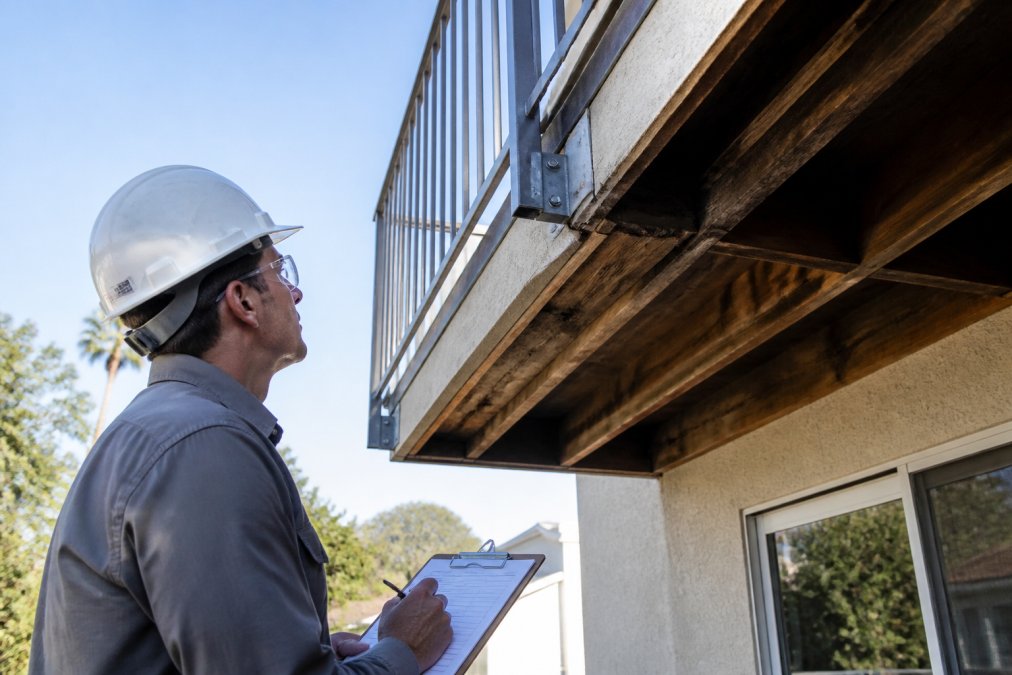
Apex Balcony’s Approach: Our team includes licensed structural engineers with decades of combined construction and design experience. We understand California’s SB 326 and SB 721 compliance requirements and provide inspection reports that hold up under scrutiny.
Hiring an unqualified inspector saves money upfront but creates liability later. Always verify that your inspector holds a current PE license or architect credentials.
4. SB 326 Inspection Report Components and Documentation
Your inspection report is a legal document. It must contain specific components to be compliant with SB 326 and becomes evidence if your HOA faces litigation related to balcony safety.
Required Report Components:
The report must identify each inspected balcony, deck, stairway, and walkway by unit or location. It must document the current condition of load-bearing components, the building envelope, and safety features like guardrails. The report must specify which components were visually inspected and which were subject to invasive testing.
Deficiency Classification: The inspector must categorize findings as either "Significant Deficiency" or "Non-Significant Deficiency." A Significant Deficiency poses a threat to the safety or soundness of the building. Non-Significant Deficiencies are maintenance issues that don’t pose immediate safety risk.
Remediation Recommendations: For each deficiency identified, the report must recommend remediation steps and a timeline. Significant Deficiencies must be addressed within one year.
Photographic Documentation: The report should include photos of problem areas and critical connections. Photos create a visual record invaluable if disputes arise later.
Inspector Certification: The report must be signed and sealed by the licensed structural engineer or architect who performed the inspection, confirming compliance with California Building Code standards.
Distribution and Retention: Copies must be provided to all unit owners within 30 days. The HOA must retain copies for the duration of the nine-year inspection cycle and beyond.
HOAs with clear, detailed inspection reports are far more likely to secure contractor bids for repairs and to defend themselves if disputes arise about what was or wasn’t found.
5. The 15% Sampling Requirement and Visual Testing Protocol
SB 326 doesn’t require that every single balcony be invasively tested. Instead, the law allows for a 15% sampling approach, which balances thoroughness with cost-effectiveness.
How the 15% Sampling Works: If your building has 100 balconies, you must invasively test at least 15 of them. The inspector selects these samples to represent the range of construction types, ages, and exposures in your building. Samples should include balconies facing different directions and from different construction phases.
Visual Inspection Protocol: Every balcony gets a thorough visual inspection. The inspector walks the perimeter, checks for visible signs of water intrusion, examines caulking and flashing, looks for cracks, checks guardrail connections, and documents observations.
Invasive Testing Methods: For sampled balconies, the inspector uses tools to probe beneath the surface, including moisture meters to detect water saturation, probe tools to check for soft rot, removal of small sections of siding or decking to inspect the structure beneath, and thermal imaging to identify moisture patterns.
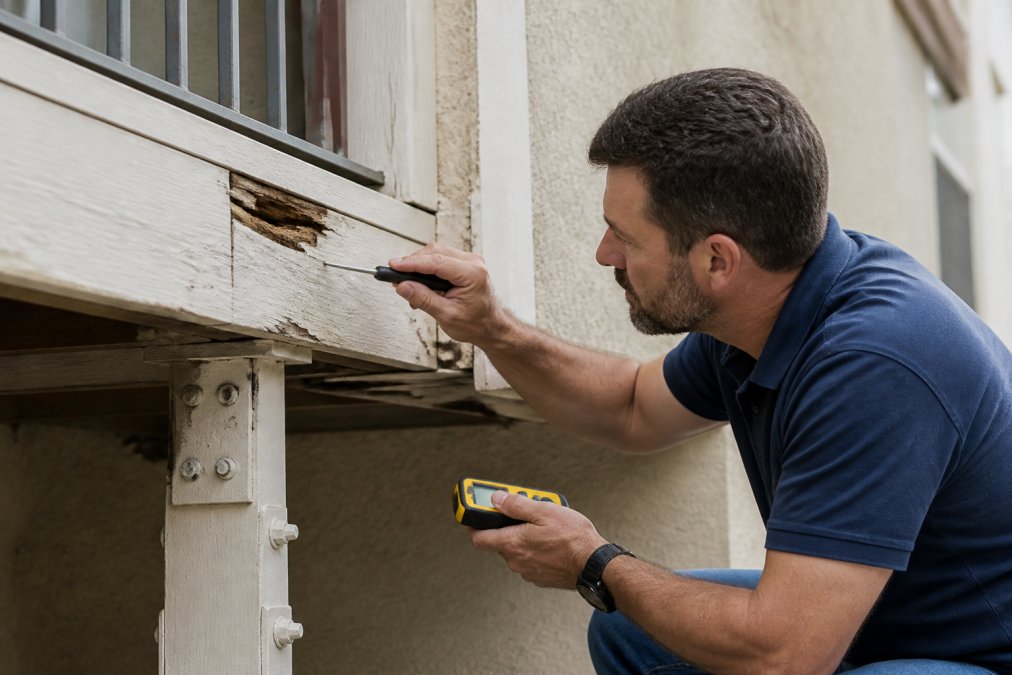
Documentation of Sampling: The report must clearly identify which balconies were sampled and why they were selected. This documentation shows that the sampling was representative and systematic.
Risk of Under-Sampling: While 15% is the legal minimum, buildings with known construction issues or older buildings may benefit from a higher sampling rate. If your building has a history of water intrusion problems, asking your inspector to sample 20-25% of balconies strengthens your liability position.
Budgeting and Reserve Study Integration for Inspection Costs
Many HOAs delay inspections because they fear the cost. Understanding how inspection costs fit into your reserve study helps you plan effectively.
Inspection Costs: Inspection fees depend on building size, complexity, and accessibility. Contact Apex Balcony or another qualified inspector for a complimentary estimate to budget accurately.
Reserve Study Integration: Your HOA’s reserve study should account for both the inspection cost and anticipated remediation costs. If your last reserve study didn’t account for SB 326 inspection costs, update it. Setting aside funds for inspections and repairs is far cheaper than facing emergency repairs or liability claims.
Remediation Budget Planning: Once you have an inspection report, you’ll know what repairs are needed and can prioritize them. Significant Deficiencies must be addressed within one year.
Vendor Vetting for Repairs: After your inspection, you’ll need contractors to perform remediation. Check references, verify licensing, and get multiple bids. Quality workmanship on balcony repairs directly affects resident safety and your liability exposure.
Schedule your inspection during budget planning season so you can incorporate findings into the next fiscal year’s reserve study.
Conclusion
Balcony inspection requirements for HOAs aren’t optional, they’re legal mandates that protect residents and your association’s financial health. The five requirements covered here form the foundation of a legally defensible inspection program. The cost of a professional inspection is modest compared to the cost of missed deadlines, unqualified inspectors, or structural failures. Apex Balcony specializes in SB 326 and SB 721 compliance inspections for California HOAs and multi-family properties. Our licensed inspectors identify early signs of structural failure and provide comprehensive inspection reports that guide your remediation decisions. Book an inspection with Apex Balcony today and ensure your property remains safe and compliant.
Frequently Asked Questions
What is the difference between SB 326 and SB 721 balcony inspection requirements?
SB 326 applies to condominiums and common interest developments (HOAs) with exterior elevated elements built before January 1, 2020. SB 721 covers multifamily residential buildings with three or more units. Both laws mandate structural inspections of balconies, decks, stairways, and similar structures. The inspection timeline, frequency, and documentation requirements are similar, but SB 721 applies to a broader range of properties. Your property manager or HOA board should verify which law governs your building based on its type and construction date.
How often do balcony inspections need to happen under SB 326?
SB 326 requires initial inspections by January 1, 2025, with subsequent inspections every nine years thereafter. However, if an inspection identifies deficiencies, repairs must be completed within one year, and a follow-up inspection is required. If structural failure is imminent, emergency repairs may be mandated immediately. The exact timeline depends on the severity of findings in your inspection report. Contact a qualified inspector to determine your property's specific compliance deadline.
What should a balcony inspection report include to meet SB 326 requirements?
An SB 326 inspection report must document the condition of all exterior elevated elements, including balconies, decks, stairways, and landings. It should identify any deficiencies related to structural integrity, waterproofing, wood-framed construction issues like dry rot, corrosion, and load-bearing components. The report must classify findings by severity and recommend remediation steps. A detailed inspection report serves as your legal documentation of compliance and protects your HOA from liability if structural issues are properly identified and addressed.
Can a general home inspector perform an SB 326 balcony inspection?
No. SB 326 requires that inspections be performed by a licensed structural engineer, licensed architect, or other qualified professional with expertise in structural assessment. A general home inspector does not have the specialized credentials required by law. Using an unqualified inspector puts your HOA at legal risk and may invalidate your compliance claim. Always verify that your inspector holds appropriate California licensure and has specific experience with balcony and elevated element inspections.