Balcony Waterproofing vs Deck Sealing for Multi-Family Homes
Balcony waterproofing vs deck sealing: Compare balcony waterproofing and deck sealing for multi-family homes. Learn which protects your property, meets.
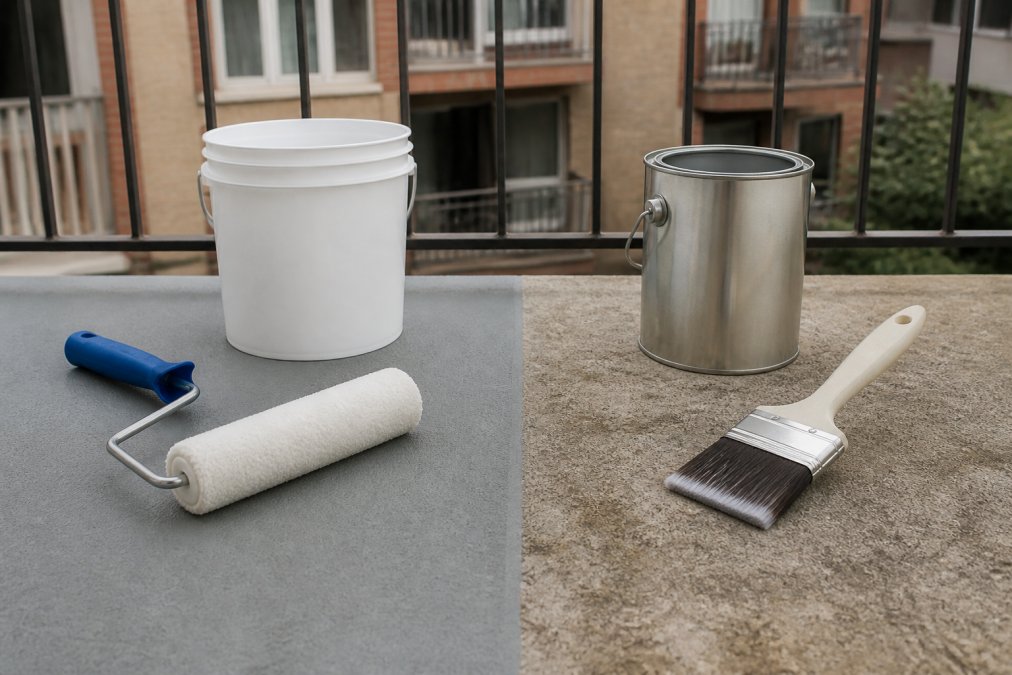
Table of Contents
- Understanding Waterproofing vs Sealing: Key Differences
- Common Causes of Balcony and Deck Leaks in Multi-Family Properties
- SB 326 Balcony Inspection Requirements and Waterproofing Standards
- Waterproofing Membranes and Coatings: Durability and Protection
- Preventive Maintenance for HOA Balconies: Inspection and Drainage
- Elevated Exterior Element Maintenance Costs and ROI
- Liability, Code Compliance, and Insurance Implications
- Which Solution Should You Choose?
Last Updated: August 30, 2026
Understanding Waterproofing vs Sealing: Key Differences
Balcony waterproofing and deck sealing serve fundamentally different purposes, though property managers often treat them as interchangeable. This distinction matters enormously when protecting residents and assets in multi-family buildings.
Waterproofing creates a complete moisture barrier preventing water from penetrating the substrate. It’s a system involving membranes, coatings, or sheet materials designed to handle hydrostatic pressure and standing water, protecting structural framing, concrete, and occupied spaces below. Once installed correctly, it’s essentially permanent until deterioration or damage occurs.
Sealing is a surface treatment making materials water-resistant but not waterproof. Sealers penetrate porous surfaces and slow water absorption but don’t create a continuous barrier. Water can still migrate through, especially under pressure or prolonged exposure. Sealers require reapplication every 2-5 years.
The practical implication is straightforward: if water sits on the surface (which happens constantly on balconies and decks), you need waterproofing. If you’re extending material life and slowing degradation, sealing helps but isn’t sufficient for elevated exterior elements over occupied space.
At Apex Balcony, we’ve inspected hundreds of multi-family properties where owners chose sealing when building code required waterproofing. The result is predictable: water penetrates the substrate, structural framing deteriorates, and repairs become exponentially more expensive.
Common Causes of Balcony and Deck Leaks in Multi-Family Properties
Water intrusion in elevated exterior elements happens through predictable pathways, and most leaks are preventable with proper design and maintenance.
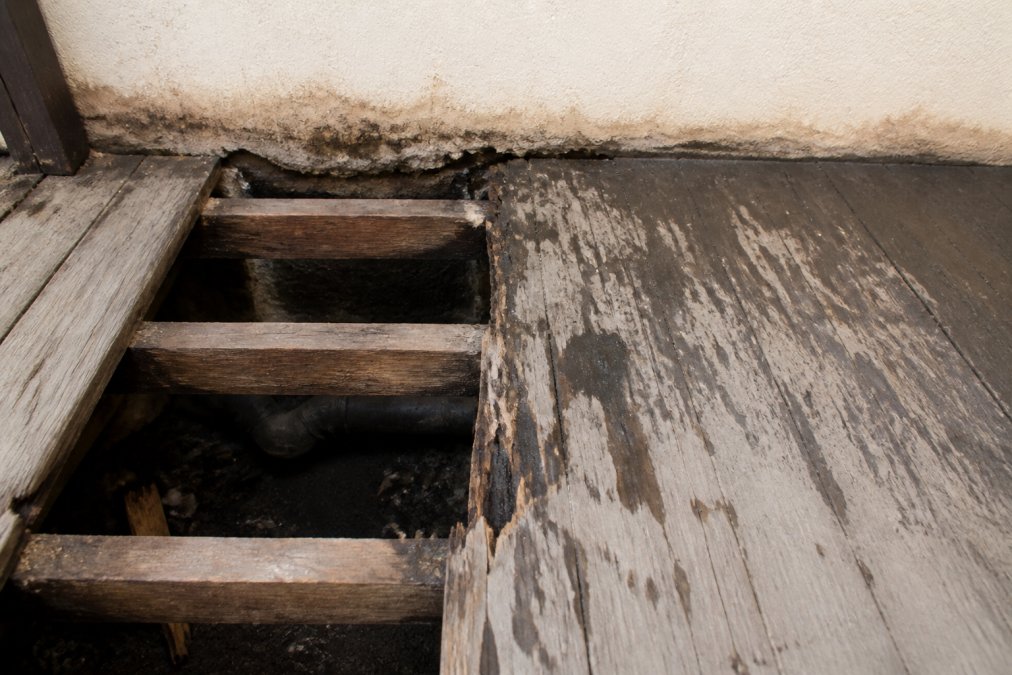
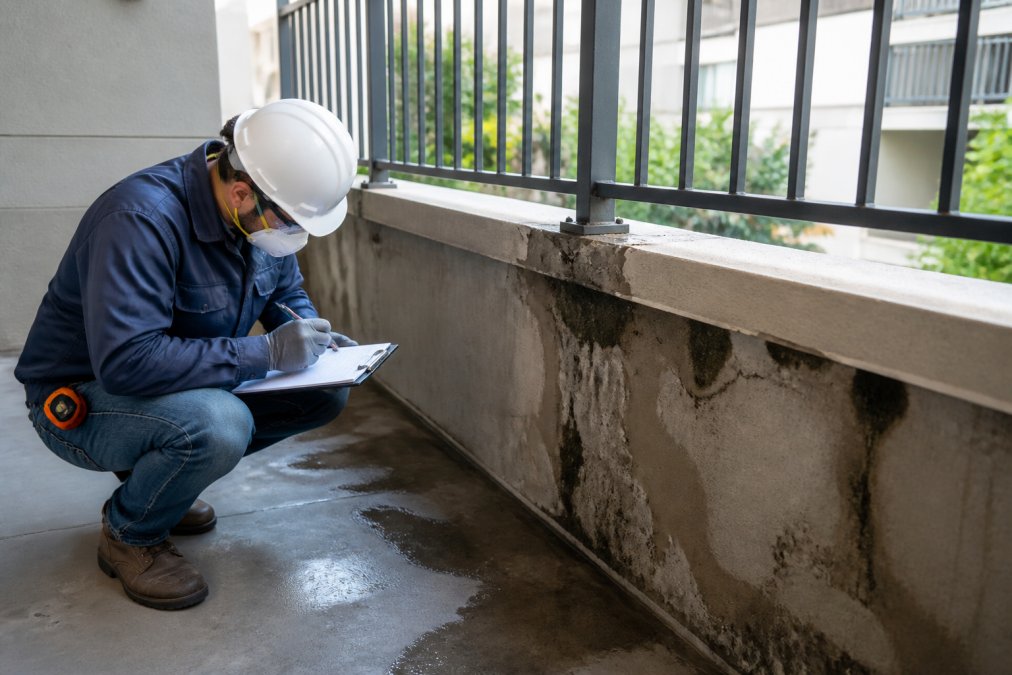
Standing water is the primary culprit. Balconies and decks collect water from rain and snowmelt. Without adequate drainage or slope, water pools and penetrates through joints, seams, fasteners, and substrate imperfections. Hydrostatic pressure forces water through even small gaps over time.
Failed or inadequate waterproofing is the second major cause. Many older buildings were sealed rather than waterproofed, or waterproofing was installed incorrectly with unsealed seams, unprepared substrate, or wrong product selection. Once the protective layer fails, water reaches structural elements beneath.
Drainage system failures accelerate the problem. Clogged drains, missing or damaged drain membranes, and poor slope design prevent water from leaving the deck surface. Vegetation growth and debris accumulation exacerbate drainage failures.
Structural movement and settling create cracks and gaps in both substrate and waterproofing. Wood decks shrink and swell seasonally. Concrete cracks as it cures and settles. Temperature cycling and freezing-thawing accelerate the process by expanding and contracting materials unevenly.
Penetrations and flashings are chronic weak points. Where pipes, electrical conduits, or structural posts pass through decks, water finds its way around them. Flashing often fails because it wasn’t installed correctly, wasn’t maintained, or wasn’t designed for actual water flow patterns.
SB 326 Balcony Inspection Requirements and Waterproofing Standards
California’s SB 326 (and companion SB 721) fundamentally changed how multi-family property owners approach balcony maintenance and inspection. These are mandatory compliance requirements with real consequences for non-compliance.
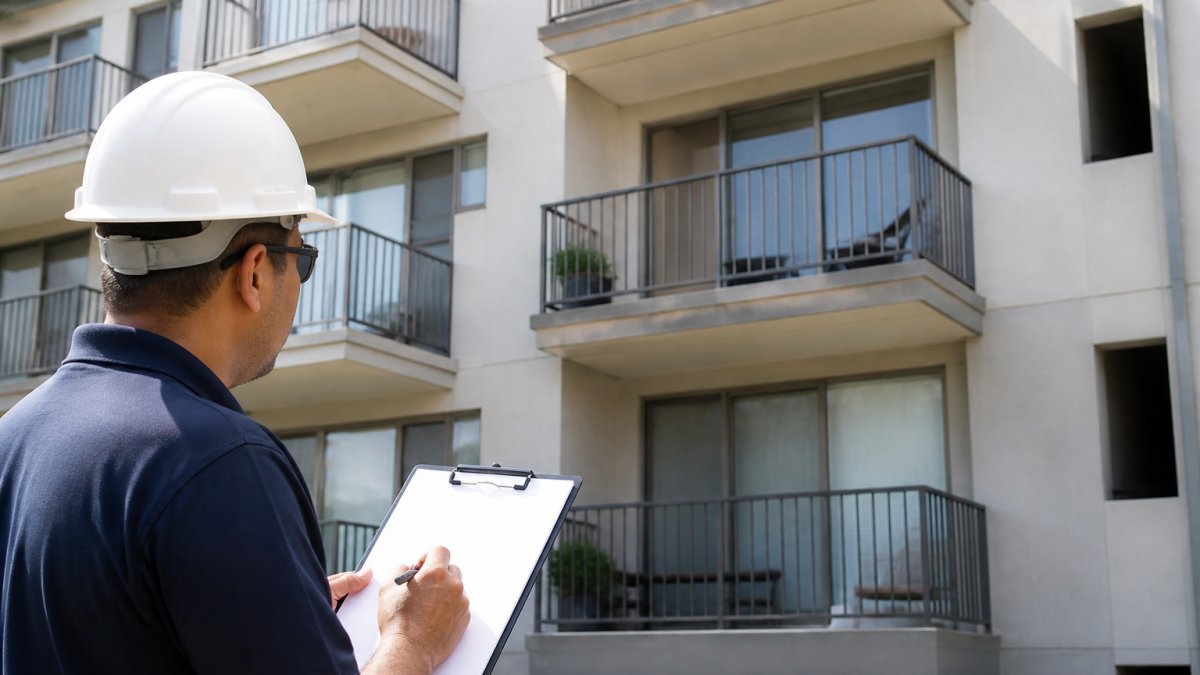
SB 326 requires that balconies, decks, and other elevated exterior elements in multi-family residential buildings be inspected by a licensed structural engineer or architect every six years, starting January 1, 2019 (leginfo.legislature.ca.gov). The inspection assesses whether these elements meet current building standards and pose a safety risk. If defects are identified, the property owner must repair them or restrict access.
The waterproofing standard embedded in SB 326 references the California Building Code, which requires that balconies and decks over occupied space be fully waterproofed to prevent water intrusion (iccsafe.org). Sealing alone doesn’t satisfy the code requirement. The code explicitly requires waterproofing membranes or equivalent systems creating a complete moisture barrier.
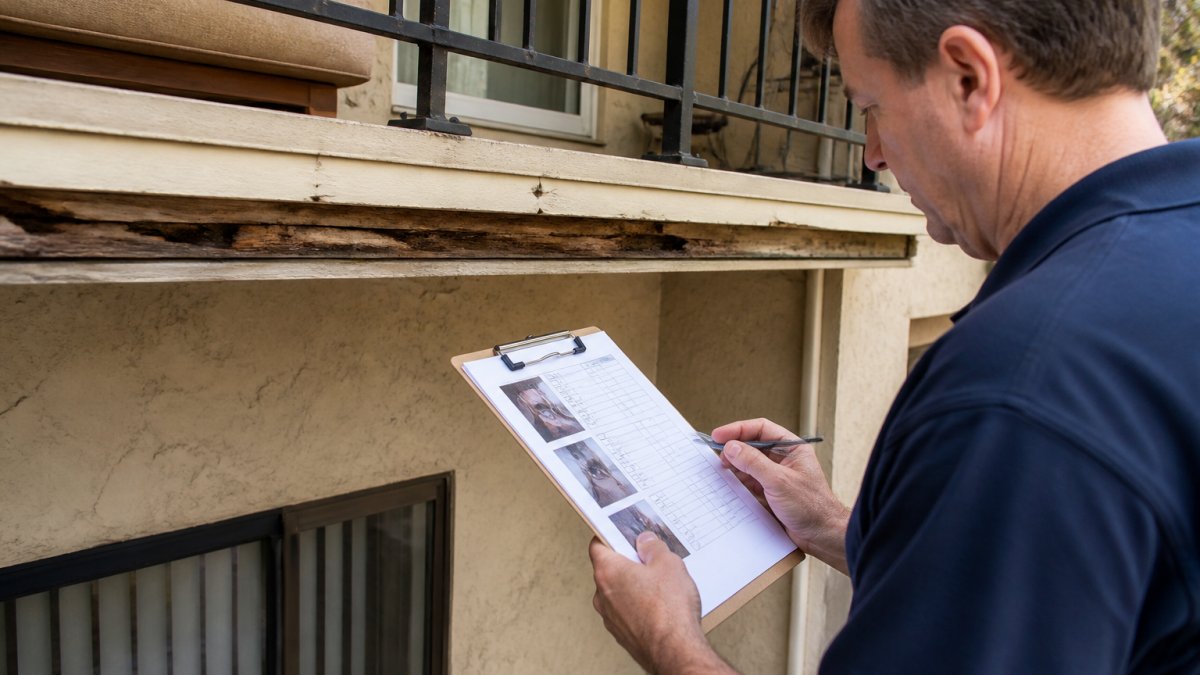
The inspection process is rigorous. Inspectors examine substrate condition, waterproofing integrity, drainage functionality, structural framing, fasteners, and signs of water intrusion or deterioration. They probe suspect areas and sometimes remove finishes to assess the substrate beneath.
Non-compliance carries real penalties. Property owners who fail to conduct required inspections face fines. If an inspection identifies defects and the owner doesn’t repair them, additional fines and potential liability follow. If a balcony collapses and inspection records show known defects were never repaired, liability exposure becomes catastrophic. The 2015 Berkeley balcony collapse that killed six people underscored why these standards exist.
Understanding SB 326 is about protecting residents and managing financial risk. An inspection today costs far less than emergency repairs, lawsuits, or worse. Apex Balcony specializes in SB 326 inspections for multi-family properties, helping building owners understand exactly what their balconies need and creating a clear repair roadmap.
Waterproofing Membranes and Coatings: Durability and Protection
Waterproofing systems for balconies and decks come in several distinct categories, each with different durability profiles, installation requirements, and cost implications. Choosing the right system depends on substrate type, expected service life, and desired finished surface.
Liquid-Applied Membranes and Polyurethane Systems
Liquid-applied membranes are spray-on or roll-on systems that cure to form a seamless, monolithic waterproofing layer. Polyurethane systems are a common subset, flexible, durable, and adhering well to most substrates. They create a continuous protective coating that bridges minor cracks and substrate imperfections.
The primary advantage is flexibility. Polyurethane membranes expand and contract with substrate movement, handling seasonal cycling and settling. They’re fast-curing, reducing project timelines and tenant disruption.
Durability typically ranges from 15-20 years before recoating is needed, depending on UV exposure, traffic, and maintenance (peer-reviewed research). They perform well under normal conditions but require proper surface preparation and application technique. Poor application, insufficient thickness, inadequate overlap, or contamination creates weak points that fail prematurely.
Installation is labor-intensive and requires skilled applicators. This is why manufacturer specifications and installer certification matter. A cheap installer often means expensive repairs later.
Sheet Membranes and Vinyl Deck Systems
Sheet membranes, including self-adhesive products, offer a different approach. These pre-manufactured membranes (typically 40-60 mil thick) are adhered or mechanically fastened to the substrate, creating a durable, consistent waterproofing layer without application variability.
Vinyl deck membranes combine waterproofing with a finished walking surface in a single layer. These systems are heat-welded at seams to create a fully waterproof, monolithic surface. One installation provides both waterproofing and finished deck surface without needing a separate topcoat.
Vinyl systems offer exceptional durability, often 15-25 years or more with proper maintenance. They’re low-maintenance compared to other options; cleaning and occasional inspection are typically sufficient. The finished surface is slip-resistant and aesthetically clean.
The trade-off is that vinyl has a manufactured appearance some property managers find less attractive than natural materials. Installation requires certified contractors with heat-welding equipment. If you want to finish the deck with tile, stone, or concrete, vinyl isn’t the right choice.
Cost considerations matter. Pricing depends on quantity, dates, and delivery, a significant investment for large balcony areas. However, when factoring in durability and low maintenance, the cost-per-year is often competitive with systems requiring more frequent recoating.
Another approach is a multi-layer waterproofing assembly designed for plywood decks receiving tile, stone, or concrete finishes. This system creates a comprehensive moisture barrier while accommodating decorative finishes.
Preventive Maintenance for HOA Balconies: Inspection and Drainage
The most expensive balcony repairs are those that could have been prevented. Preventive maintenance, regular inspection and drainage maintenance, costs a fraction of structural repairs and extends waterproofing system lifespan significantly.
A maintenance schedule should include quarterly visual inspections at minimum. Walk the balconies, look for pooling water, debris accumulation, cracks, or visible deterioration. Check that drains are clear and water flows freely. Look for water staining on the underside of the deck or adjacent structural elements. Many serious problems announce themselves subtly if you’re looking.
Drain maintenance is critical. Leaves, dirt, and debris clog drains quickly, especially in fall and winter. Clear drains at least twice a year, more frequently if surrounded by trees. Ensure drain membranes aren’t clogged or damaged. A clogged drain defeats even the best waterproofing system.
Inspect flashing and penetrations closely. Where pipes or conduits pass through the deck, ensure flashing is intact and sealed. Look for gaps, rust, or separation. These are common failure points where early intervention prevents major water intrusion.
Document everything. Take photos of balcony condition, drainage functionality, and concerns. Maintain maintenance records. This documentation is invaluable during SB 326 inspections and shows you’ve been proactive about maintenance.
Address minor issues immediately. Small cracks in concrete, minor flashing gaps, or early coating failure can be sealed or patched for minimal cost. Ignoring these problems guarantees they’ll become expensive later. A repair today prevents a more expensive repair in the future.
Elevated Exterior Element Maintenance Costs and ROI
Property managers frequently ask about the financial case for waterproofing versus sealing. If you’re only looking at initial material and labor cost, sealing appears cheaper. If you factor in full lifecycle, durability, maintenance, repair costs, and liability, waterproofing delivers better ROI for most multi-family properties.
A quality waterproofing system costs more upfront. Pricing depends on quantity, dates, and delivery. For current prices or a quote, please visit our website.
But consider the alternative. A sealer costs less initially. However, sealers require reapplication every 2-5 years. Over 20 years, that’s 4-10 reapplications. Cumulative labor and material cost approaches or exceeds a single waterproofing system installation. And sealing doesn’t protect structural framing if water penetrates the surface.
The real cost of sealing failure is repair. When water reaches structural framing, plywood, concrete, or steel, deterioration accelerates. Plywood rots, concrete spalls, steel rusts. By the time damage is visible, replacement costs can be substantial. Insurance may not cover this if the property owner knew about waterproofing inadequacy and failed to address it.
Liability exposure is the hidden cost most property managers underestimate. If a balcony fails and causes injury, the building owner faces potential lawsuits, settlements, and criminal liability. If inspection records show you knew about a waterproofing deficiency and didn’t repair it, your legal exposure multiplies.
The ROI calculation should include initial waterproofing cost, maintenance and recoating costs over 20 years, avoided repair costs from water intrusion, avoided liability exposure, and avoided business interruption from emergency repairs. When factoring all of these, waterproofing delivers better ROI than sealing for elevated elements over occupied space.
Liability, Code Compliance, and Insurance Implications
This conversation with insurance carriers and legal counsel before deciding on waterproofing versus sealing is essential. The choice has profound implications for liability exposure and insurance coverage.
Building codes require waterproofing for balconies and decks over occupied space. This is explicit in the California Building Code and reinforced by SB 326. If your property has inadequate waterproofing and water intrusion causes damage or injury, you’re in code violation. This violation becomes evidence of negligence if someone is harmed.
Insurance carriers understand this. Many policies specifically require compliance with current building codes. If your property isn’t compliant and you file a claim related to water damage or structural failure, the insurer may deny coverage based on code violation.
Conversely, if you’ve conducted SB 326 inspections as required, documented results, and made repairs in response to findings, you’ve created a paper trail showing due diligence. This documentation is your defense if something fails despite your efforts.
The liability implications extend beyond insurance. If a balcony collapses and someone is injured, the injured party will sue the building owner. The first question is: "Did you conduct required inspections? What did they find? What repairs did you make?" If your answer is "We haven’t had an inspection in five years," you’re inviting a massive settlement.
Working with Apex Balcony for SB 326 inspections ensures you’re meeting legal requirements, identifies what needs repair, and creates documentation showing responsible property management. This documentation protects you if problems arise despite your efforts.
Which Solution Should You Choose?
The answer depends on your specific situation, but the decision framework is straightforward.
Choose waterproofing if:
- The balcony or deck is over occupied space
- You want to avoid future repairs and liability exposure
- You’re planning to keep the property for 15+ years
- You want a finished surface like tile, stone, or concrete
- You want to comply fully with SB 326 and California Building Code standards
Choose sealing if:
- The deck is over unconditioned space with no occupied units below
- You’re willing to reapply every 2-5 years
- You’re managing short-term property holding with minimal capital investment
- You understand the liability implications and accept them
For multi-family residential properties in California, waterproofing is the practical choice for balconies and decks over living space. The code requires it, liability exposure is too high without it, and lifecycle cost is competitive when factoring in avoided repairs.
If you’re uncertain whether your property meets current standards, an SB 326 inspection is the first step. A licensed inspector will assess your waterproofing system, identify defects, and recommend repairs. This inspection costs far less than repairs you’ll face if you wait until failure occurs.
Balcony and deck failures in multi-family properties are preventable. The difference between a safe, compliant property and one facing catastrophic repair costs comes down to decisions made today about waterproofing versus sealing and commitment to regular inspection and maintenance. Apex Balcony helps building owners and HOAs navigate these decisions with professional SB 326 and SB 721 inspections that identify exactly what your property needs. Book an inspection and get a clear picture of your balcony’s condition and repair requirements.
Frequently Asked Questions
Q: What is the difference between balcony waterproofing and deck sealing?
A: Waterproofing creates a complete moisture barrier that prevents water from penetrating the substrate, protecting structural framing and living spaces below. Sealing applies a protective coating that resists water but may not stop water intrusion under sustained pressure or ponding. For multi-family homes over occupied spaces, waterproofing is the stronger choice because it protects the structural integrity and prevents costly water damage to units below.
Q: How do SB 326 and SB 721 impact balcony maintenance requirements?
A: SB 326 requires structural inspections of balconies in multi-family buildings built before January 1, 2008. SB 721 expands this to all residential buildings with three or more units. Both laws mandate regular inspections to identify water intrusion, deterioration, and structural failure. Property owners must address defects within specific timeframes. Waterproofing systems help meet these compliance requirements by preventing water damage that inspectors will identify as defects.
Q: Does my multi-family property require professional waterproofing or simple sealing?
A: If your balconies or decks are over occupied living spaces, professional waterproofing is essential to protect residents and comply with building codes. Sealing alone is insufficient because it cannot prevent hydrostatic pressure or sustained water exposure from causing structural damage. Properties with ground-level decks or those not over living spaces may use sealing as a maintenance measure, but waterproofing provides superior long-term protection and liability coverage for multi-family buildings.
Q: How often should elevated exterior elements be inspected for structural failure?
A: Annual inspections are recommended as preventive maintenance, with more frequent checks after heavy rain or visible damage. SB 326 requires inspections at least every nine years for qualifying buildings, but property managers should inspect more often to catch early signs of water intrusion, flashing failures, and framing deterioration. Regular inspections reduce repair costs by addressing small issues before they become structural failures that endanger residents.
Q: Can improper deck sealing lead to structural damage in multi-family buildings?
A: Yes. Sealing that fails to create a complete moisture barrier allows water to penetrate wood framing, leading to rot, mold, and structural compromise. In multi-family buildings, this damage affects units below, creating liability for the property owner and potential injury to residents. Waterproofing systems with proper drainage and flashing prevent this scenario by stopping water at the surface and directing it safely away from the structure.