Apartment Safety Standards: Essential Requirements for Renters
Learn apartment safety standards every renter should know. Discover legal requirements, inspection checklists, and tenant rights to stay safe. Start today.
Table of Contents
- Understanding Apartment Safety Standards and Legal Requirements
- Essential Smoke Detectors and Carbon Monoxide Alarms
- Door and Window Security: Deadbolts, Locks, and Peepholes
- Fire Safety and Emergency Exit Standards
- Landlord Safety Responsibilities and Property Management Obligations
- Common Area Security, Lighting, and Access Control Systems
- How to Report Apartment Safety Violations and Know Your Tenant Rights
- Your Apartment Fire Safety Checklist and Move-In Inspection
Apartment Safety Standards: Essential Requirements for Renters
Last Updated: July 15, 2026
Understanding apartment safety standards is essential for protecting yourself and your family. According to the National Multifamily Housing Council, safety violations in residential properties affect millions of renters annually, yet many residents remain unaware of their legal protections. This guide covers the legal requirements, practical safety measures, and your rights as a tenant, so you can confidently identify hazards and take action when needed.
Understanding Apartment Safety Standards and Legal Requirements
Apartment safety standards are the minimum physical and operational requirements that property owners must maintain to ensure resident safety and legal compliance. These standards cover everything from fire detection systems to structural integrity, and most are based on the International Building Code (IBC) and enforced through local housing authorities.
Your landlord bears the primary legal responsibility for maintaining safe living conditions. This is codified in residential tenancy laws across most states. When a property fails to meet apartment safety standards, tenants have legal recourse through housing courts, rent withholding, or repair-and-deduct provisions. The concept of "habitability" is central: a rental unit must be fit for human occupancy, which inherently includes meeting established safety standards.
A safe apartment requires proper structural integrity, functioning utilities, pest-free environments, and protection from environmental hazards like mold or lead paint. Building codes dictate specific measurements for door widths, electrical outlet spacing, and water pressure minimums, these are based on decades of safety data and incident prevention.
Document everything. Take photos of safety hazards with timestamps, and send written requests to your landlord via email or certified mail. This creates a legal record if you need to pursue tenant protections later.
Property managers must conduct regular inspections and maintain detailed records of maintenance activities, including monthly smoke detector testing and annual fire suppression system inspections. Failure to do so can result in fines, loss of operating licenses, or liability claims if injuries occur.
Essential Smoke Detectors and Carbon Monoxide Alarms
Smoke detectors and carbon monoxide alarms are non-negotiable safety features in any residential apartment. Most jurisdictions require at least one smoke detector per bedroom, plus one in common areas like living rooms and hallways. Carbon monoxide detectors must be installed in apartments with fuel-burning appliances, furnaces, water heaters, stoves, or fireplaces.
Detectors must be hardwired with battery backup, or battery-operated with fresh batteries tested monthly. The National Fire Protection Association (NFPA) recommends testing detectors monthly by pressing the test button for three seconds until the alarm sounds. If a detector fails to sound, replace it immediately. A detector older than ten years should be replaced, even if it still functions.
Many landlords install detectors during initial occupancy but fail to maintain them properly. Dust accumulation, dead batteries, and age degradation all reduce effectiveness. If detectors are malfunctioning or missing, document this in writing and request replacement within 5-7 days.
Never cover, paint over, or remove batteries from smoke detectors. If detectors are too sensitive for your cooking habits, request your landlord install photoelectric models, which are less prone to false alarms from cooking.
Door and Window Security: Deadbolts, Locks, and Peepholes
Secure entry points are fundamental to apartment safety standards. Every exterior door must have a functioning deadbolt lock that extends at least one inch into the door frame, installed on solid wood or metal doors, not hollow-core doors that can be kicked through.
A functioning peephole on the front door allows you to see who’s outside before opening. This simple device prevents forced entry and protects against social engineering attacks. If your apartment lacks a peephole, request installation.
Window locks and access points represent a frequently overlooked vulnerability. Ground-floor and fire escape-accessible windows must have functioning locks. Sliding windows should have security bars or pins that prevent sliding from the outside. Many renters add supplemental security measures like door wedges or portable door locks without violating lease agreements.
| Security Feature | Requirement | Inspection Check |
|---|---|---|
| Front door deadbolt | 1-inch throw minimum | Locks securely, doesn’t stick |
| Peephole | Must be present | Provides clear view of hallway |
| Window locks | All accessible windows | Turn/slide smoothly, engage fully |
| Door frame | Solid construction | No gaps, hinges secure |
| Strike plate | Reinforced installation | 3-inch screws into frame |
Fire Safety and Emergency Exit Standards
Fire safety standards in multifamily housing are among the most stringent apartment safety standards. Every apartment must have at least two independent emergency exits, typically the main door and a window that opens to a fire escape, balcony, or ground level.
Fire escape maintenance is the landlord’s responsibility, but renters should inspect them regularly. Fire escapes must be clear of obstacles, rust must not compromise structural integrity, and stairs must support weight without excessive movement. If a fire escape is rusted, broken, or blocked, report it immediately.
Emergency preparedness planning starts with knowing your building’s evacuation routes. Walk through your apartment and identify two ways out of each room. Establish a meeting point with family members outside the building. Keep a flashlight and phone charger in your bedroom so you can signal rescuers and call for help if needed.
Smoke inhalation is the leading cause of fire-related deaths, not burns. Stay low where air is clearer, cover your nose and mouth with a damp cloth if possible, and move toward exits quickly. Close doors behind you to slow fire spread, but never lock doors that block others’ escape.
Never use elevators during a fire; always use stairs. If stairs are blocked, close yourself in a room with a window, signal from the window, and call 911 to report your location.
Landlord Safety Responsibilities and Property Management Obligations
Property managers and landlords have explicit legal duties to maintain apartment safety standards. These responsibilities include regular inspections, prompt repairs, hazard disclosure, and maintaining proper documentation.
Maintenance requests must be addressed within a reasonable timeframe: 24-48 hours for emergency issues like no heat or water, and 7-14 days for non-emergency repairs. Document all requests in writing and keep copies. If your landlord ignores requests, you may have the right to repair-and-deduct, where you hire a contractor and deduct costs from rent (check your state’s specific rules).
Hazard prevention includes regular pest control inspections, mold testing if moisture issues exist, and lead paint disclosure in pre-1978 buildings. Landlords must provide written notice of known hazards and maintain records of inspections and remediation.
Premises liability extends beyond the apartment unit itself. Common areas like hallways, stairwells, parking lots, and lobbies must be maintained safely. Poor lighting in parking areas, broken stairs, or unsecured entry doors create liability exposure that landlords must address.
Common Area Security, Lighting, and Access Control Systems
Common areas, hallways, stairwells, lobbies, parking areas, must be adequately lit and secure. Poor lighting in these spaces creates vulnerability to crime and increases accident risk. Burned-out hallway lights, dark stairwells, and unlit parking lots are code violations and should be reported immediately.
Access control systems vary by building size. Smaller buildings might use deadbolted main doors with tenant-controlled keys. Larger multifamily housing typically uses intercom systems where visitors announce themselves before entry, or electronic key card systems that log access.
Intercom systems allow tenants to verify visitor identity before buzzing them in, adding a critical security layer. Modern systems include video intercoms where you can see the visitor on your phone or apartment screen. If your building’s intercom is broken, request repair.
Smart lockers in building lobbies provide secure package delivery, reducing theft of unattended parcels. If your building lacks secure package delivery, suggest this to management as a low-cost security improvement.
Parking security depends on lot design and lighting. Well-lit parking areas with clear sightlines reduce crime risk. Gated or access-controlled parking is superior to open lots. Check local police department crime maps and neighborhood safety ratings when selecting an apartment.
How to Report Apartment Safety Violations and Know Your Tenant Rights
Reporting safety violations requires understanding your jurisdiction’s specific procedures and your legal protections. Most states prohibit "retaliatory eviction", landlords cannot evict or threaten tenants for reporting code violations or requesting repairs.
Documentation is your strongest tool. Photograph hazards with timestamps, send written requests via email or certified mail, and keep all correspondence. Written communication creates a legal record that proves you reported the issue and when.
Contact your local housing authority or code enforcement office to file formal complaints about serious violations. These agencies have authority to inspect properties and issue citations to non-compliant landlords.
Legal recourse options vary by state but typically include:
- Repair-and-deduct: hire a contractor and deduct costs from rent (within state-defined limits)
- Rent withholding: stop paying rent until violations are corrected (must follow specific procedures)
- Lease termination: break the lease without penalty if conditions are uninhabitable
- Small claims court: sue for damages if violations caused injury or property damage
- Housing court: seek judicial remedies for serious, persistent violations
Tenant rights organizations in your area provide free advice on navigating these options. Many states have legal aid societies that assist low-income renters with housing disputes at no cost.
Never withhold rent without following your state’s specific legal procedures. Improper rent withholding can result in eviction, even if the underlying safety violations are legitimate. Consult a tenant rights organization or attorney before taking this step.
Your Apartment Fire Safety Checklist and Move-In Inspection
A comprehensive move-in inspection protects your security deposit and documents existing conditions before you’re held responsible for damage. Complete this inspection within the first week of occupancy, photograph everything, and provide a copy to your landlord.
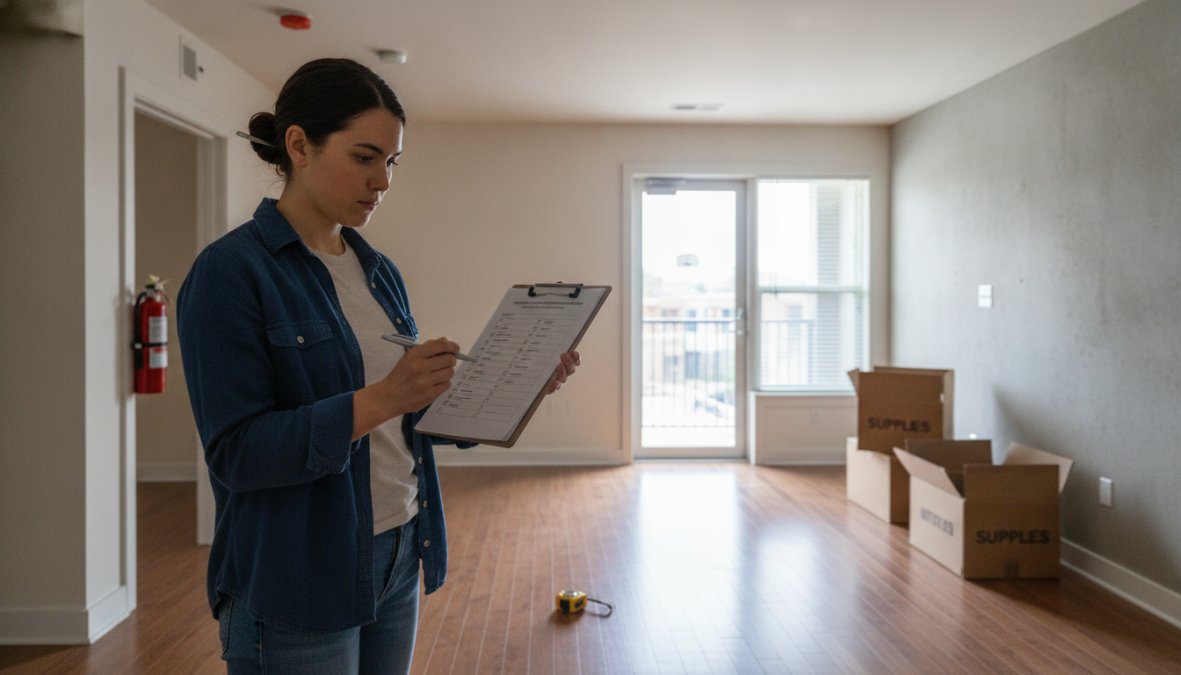
Step-by-Step Safety Assessment:
Smoke and Carbon Monoxide Detectors, Locate all detectors and verify they’re present in required locations. Press test buttons; alarms should sound within 3 seconds. Check installation dates; detectors over 10 years old need replacement. Document any missing or non-functional detectors in writing.
Door Security, Test front door deadbolt; it should extend at least 1 inch into frame. Check peephole for clear visibility of hallway. Inspect door frame for gaps or damage. Test door closure; it should close and latch smoothly.
Window Security and Condition, Test all window locks and verify they engage fully. Check for broken glass, cracks, or missing panes. For ground-floor or fire-escape-accessible windows, confirm locks are present.
Fire Escape Access, Verify fire escape is accessible and not blocked. Check for rust, loose bolts, or structural damage. Ensure stairs are solid and don’t move excessively.
Electrical Safety, Verify outlet covers are present and functioning. Test light switches; all should work without sparking. Check for exposed wiring or damaged outlets.
Plumbing and Water, Test all faucets for water pressure and temperature control. Check under sinks for leaks or water damage. Verify toilet flushes properly.
Heating and Cooling, Test heating system; it should reach comfortable temperature within 30 minutes. Verify air conditioning works (if provided). Check thermostat functionality.
Structural and Environmental, Check for visible mold, water stains, or dampness. Inspect walls and ceilings for cracks or damage. Look for signs of pests.
Common Areas, Evaluate hallway lighting. Check stairwell condition and lighting. Assess lobby security and intercom functionality. Review parking area lighting.
Documentation, Photograph all areas, especially any damage or safety concerns. Create a written inventory noting condition of each item. Provide copies to landlord within 7 days.
This systematic approach takes about 60-90 minutes but provides comprehensive documentation of your apartment’s condition at move-in. If you discover serious safety violations during this inspection, address them before moving in your belongings.
Apartment safety isn’t negotiable, it’s your fundamental right as a tenant. When you identify safety violations, report them promptly and follow up in writing. If your landlord ignores requests or retaliates, tenant rights organizations and legal aid can help you navigate your options. For property owners and managers seeking to ensure comprehensive compliance with California’s elevated exterior safety standards, Apex Balcony’s licensed inspection team specializes in identifying structural failures in balconies, decks, and stairways that could compromise resident safety. Book an inspection with Apex Balcony today and protect your residents while maintaining legal compliance.
Frequently Asked Questions
What are the basic apartment safety standards landlords must meet?
Landlords must ensure apartments meet building codes for fire safety, structural integrity, and habitability. This includes functioning smoke detectors and carbon monoxide alarms, secure deadbolt locks on entry doors, working emergency exits, adequate common area lighting, and maintenance of all safety features. Specific requirements vary by jurisdiction and lease agreement, but premises liability standards require landlords to maintain safe conditions and address hazards promptly.
How do I report apartment safety violations to authorities?
Document the violation with photos and dates, then contact your local building inspection department or housing authority. File a written complaint with your landlord first (keep copies), then escalate to city/county inspectors if not resolved. Many jurisdictions allow anonymous complaints. Know your tenant rights, most areas protect renters from retaliation for reporting safety violations. Keep records of all communications and maintenance requests related to the hazard.
What should be on an apartment fire safety checklist before moving in?
Verify smoke detectors and carbon monoxide alarms are present and functional in all required areas. Check that emergency exits are clearly marked and unobstructed. Test door deadbolts and window locks. Confirm fire extinguishers are accessible in common areas. Review evacuation routes and meeting points. Ensure stairwells are well-lit and free of hazards. Document the condition of all safety features in writing during your move-in inspection to protect your security deposit.
What cybersecurity measures should smart apartments have?
Smart apartment systems should use encrypted connections, strong password requirements, and two-factor authentication for access control and smart locks. Intercom systems and security cameras must comply with privacy laws. Regularly update firmware on all connected devices. Ensure smart lockers and entry systems have secure data storage. Ask your property manager about their cybersecurity protocols and data protection policies before using smart features.