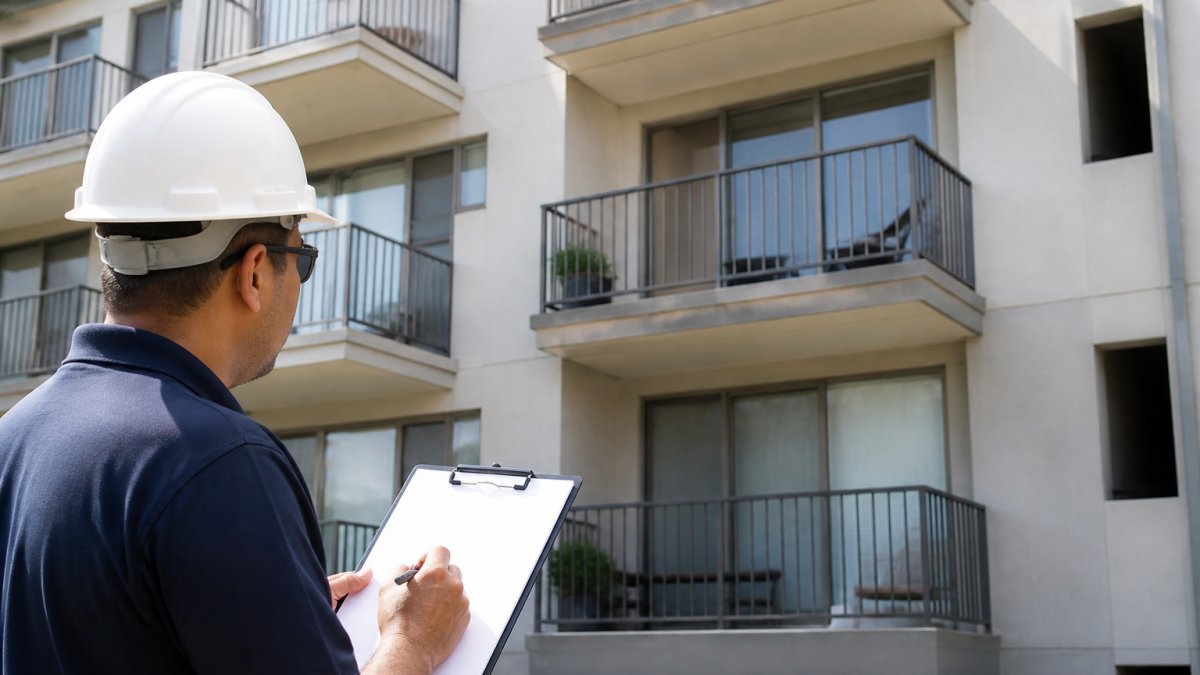
When Are Balcony Inspections Required: California Laws Explained
Learn when balcony inspections are required under California SB 721 and SB 326. Discover deadlines, requirements, and compliance steps for property owners.
Table of Contents
- When Are Balcony Inspections Required: Legislative Overview
- Which Buildings Must Comply: Applicability and Scope
- SB 721 Balcony Inspection Requirements and Deadlines
- SB 326 Condo Balcony Inspection: What Condominium Owners Need to Know
- Licensed Professionals and the Inspection Process
- Balcony Inspection Checklist: What Gets Inspected
- Cost of Balcony Inspection: Budget and Pricing Factors
- Reporting, Certification, and Compliance Enforcement
When Are Balcony Inspections Required: California Laws Explained
Last Updated: June 27, 2026
When are balcony inspections required? This question has become critical for California property owners since the state passed landmark legislation requiring regular structural assessments of elevated exterior elements. Understanding these timelines isn’t optional; it’s a legal mandate that protects residents and shields property owners from significant liability. Below, we’ll break down exactly when inspections are due, who must comply, and what happens if you miss a deadline.
When Are Balcony Inspections Required: Legislative Overview
California’s balcony inspection laws emerged from a tragic pattern of structural failures in multifamily residential buildings. Two major pieces of legislation now govern when inspections must occur: SB 721 and SB 326, each with distinct applicability and timelines. Missing inspection deadlines can result in enforcement action from local building departments, fines, and in worst cases, liability for injuries caused by preventable structural failures.
SB 721 and SB 326: What Property Owners Need to Know
SB 721 applies to multifamily rental properties with five or more units and requires inspection of all balconies, decks, and elevated exterior elements. The law mandates that property owners hire a licensed professional to conduct a visual inspection and document findings in a certificate of compliance. SB 326 addresses condominiums and common interest developments, requiring similar inspections but with different governance structures where the HOA bears responsibility rather than individual unit owners.
The critical distinction between these laws lies in applicability. SB 721 targets rental properties where the owner controls maintenance decisions. SB 326 targets properties with shared ownership structures where the HOA bears responsibility for common area maintenance. Understanding which law applies to your property determines your inspection schedule and who bears the cost.
The inspection deadline is tied to the property’s initial occupancy date, not the date the law was passed. Properties occupied before January 1, 2018, had different deadlines than those occupied after. Check your building’s occupancy records to determine your specific compliance cycle.
AB 2579 and Recent Amendments
AB 2579, which took effect in 2024, amended both SB 721 and SB 326 to clarify inspection requirements and extend certain deadlines. The amendment addresses what constitutes a statistically significant sample when full inspection of all elevated elements isn’t immediately feasible, allowing property owners to inspect a representative portion of their balconies initially while planning for comprehensive inspections. Recent amendments also expanded the definition of elevated load-bearing structures to include stairways, railings, and other components beyond traditional balconies.
Which Buildings Must Comply: Applicability and Scope
Not every residential building in California falls under these inspection laws. The requirements apply specifically to multifamily rental properties and condominiums that meet certain criteria.
Multifamily Rental Properties and Condominium Associations
SB 721 applies to multifamily rental properties with five or more units where the property owner directly controls maintenance and repair decisions. Single-family homes, duplexes, triplexes, and fourplexes are exempt from SB 721 requirements. Condominium associations fall under SB 326, which applies to common interest developments including condominiums, planned developments, and stock cooperatives. In condominiums, the HOA owns and maintains common areas including balconies, so the association bears the inspection responsibility rather than individual unit owners.
Properties with fewer than five units aren’t exempt forever. Local jurisdictions increasingly adopt ordinances requiring inspections even for smaller buildings, and some counties have implemented their own balcony inspection standards that exceed state minimums.
Elevated Load-Bearing Structures and Dwelling Units
The laws specifically target "elevated load-bearing structures," components of the building exterior that support the weight of balconies, decks, stairways, and railings. These elements must be inspected regardless of whether they’re part of individual units or common areas. A dwelling unit with a balcony attached to it falls under inspection requirements even if the building itself has fewer than five units in some jurisdictions.
Many property owners assume their building is exempt because it has fewer than five units. Local amendments and ordinances may override state law. Contact your local building department to verify your property’s actual compliance status.
SB 721 Balcony Inspection Requirements and Deadlines
SB 721 established specific deadlines for initial inspections based on when the building was first occupied. Properties occupied before January 1, 2018, had initial inspections due by January 1, 2020. Properties occupied between January 1, 2018, and December 31, 2024, must complete initial inspections by January 1, 2025.
Initial Inspection Frequency and Compliance Cycles
After completing an initial inspection, property owners must conduct follow-up inspections every six years. This cycle continues indefinitely, creating an ongoing compliance obligation. The six-year timeline applies from the date of the initial inspection, not from the date the law was passed. Properties that completed initial inspections in 2020 face follow-up inspections due in 2026.
Properties that miss their initial inspection deadline face escalating enforcement. Local building departments can issue citations, levy fines, and in severe cases, order the closure of unsafe balconies.
Statistically Significant Sample and Full Inspections
For properties with large numbers of similar balconies, SB 721 allows initial inspections to focus on a statistically significant sample rather than inspecting every single balcony. A statistically significant sample typically includes at least 30% of units or a minimum of 15 units, whichever is greater. However, property owners must complete full inspections of all elevated elements within a defined timeline, typically within the six-year compliance cycle following the initial sample inspection.
Selecting which units to include in the sample matters. Licensed professionals typically recommend stratified sampling, selecting units from different building areas, different construction phases, and different exposure conditions to ensure the sample represents the full range of conditions present across the property.
SB 326 Condo Balcony Inspection: What Condominium Owners Need to Know
Condominium associations face distinct requirements under SB 326, which places inspection responsibility on the HOA board rather than individual unit owners. This structure creates different governance challenges and decision-making processes.
Condominium-Specific Inspection Timelines
SB 326 applies to condominiums and common interest developments where the association owns and maintains common areas. Initial inspections were due by January 1, 2020, for properties occupied before January 1, 2018. After completing initial inspections, condominium associations must conduct follow-up inspections every nine years, a longer cycle than SB 721’s six-year requirement.
The nine-year inspection cycle creates specific planning challenges for associations. A building inspected in 2020 won’t require the next full inspection until 2029. During that nine-year period, the association must maintain records of maintenance activities and potentially conduct targeted inspections if defects become apparent.
Role of HOA and Property Management in Compliance
The condominium association’s board bears legal responsibility for scheduling inspections and ensuring compliance with SB 326. Property management companies typically handle the logistics, coordinating with inspectors and collecting reports. However, the board remains liable for missed deadlines and failure to address identified defects.
Unit owners within condominiums have limited direct involvement in inspection scheduling, but they bear the financial consequences. Special assessments often follow inspection findings when significant remediation is required.
Licensed Professionals and the Inspection Process
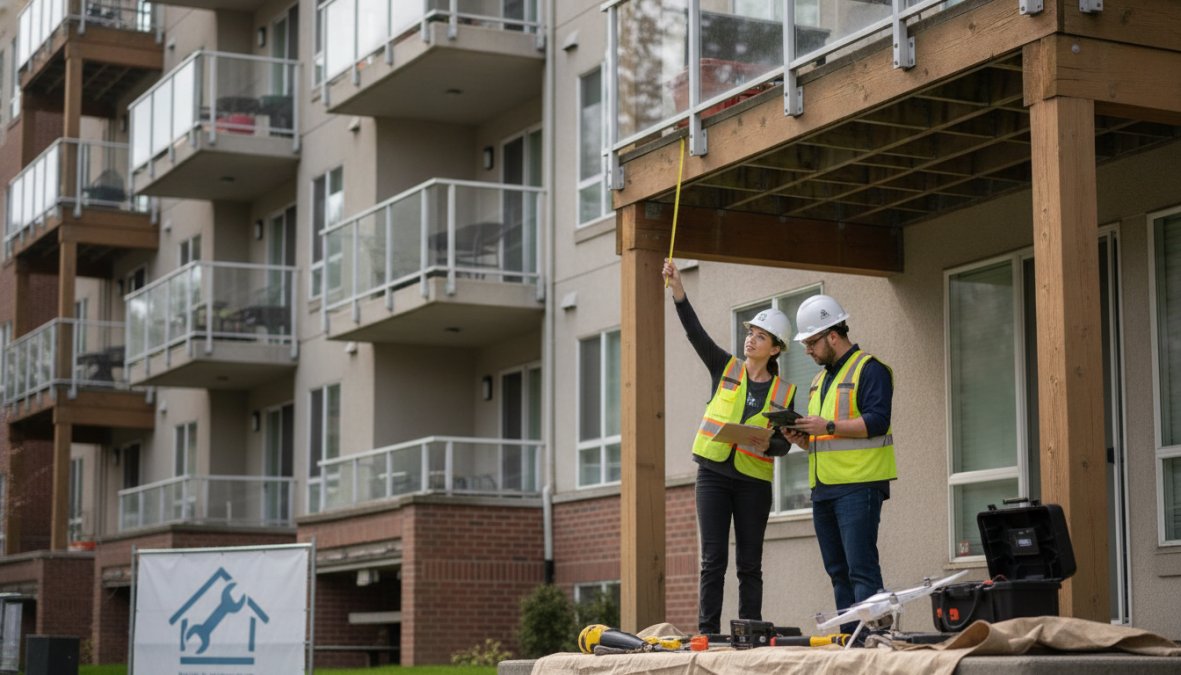
Inspections must be conducted by licensed professionals with specific qualifications. California law requires that inspectors hold a California professional engineer license, architect license, or equivalent credential.
Who Qualifies as a Licensed Professional
A California-licensed structural engineer or architect can conduct balcony inspections under SB 721 and SB 326. The professional must have experience with building structural systems and the ability to identify defects that compromise safety. The licensed professional bears responsibility for the accuracy and completeness of the inspection and must sign the certificate of compliance, creating a legal document that can be reviewed by building officials.
Visual Inspection and Invasive Testing Methods
Inspections typically begin with a comprehensive visual assessment of all balcony components including the deck surface, railings, structural framing, connections, and fasteners. Invasive testing, such as drilling into wood to assess rot depth or removing fasteners to inspect connections, may be necessary when visual inspection reveals potential defects. Modern inspection protocols combine visual assessment with moisture readings, fastener testing, and photographic documentation to create detailed records that support remediation decisions.
Balcony Inspection Checklist: What Gets Inspected
A thorough balcony inspection examines every component that contributes to structural safety and weather resistance.
Structural Integrity and Load-Bearing Assessment
The inspection focuses on whether the balcony can safely support the weight of residents and furnishings. This assessment examines the deck framing, posts, beams, and connections that transfer loads to the building structure. Connection details receive particular attention, as bolts, welds, and fasteners that connect the balcony to the main building structure are critical failure points. Railing systems must support lateral loads, and the inspection verifies that railings are securely fastened.
Common Defects: Dry Rot, Termite Damage, and Waterproofing Issues
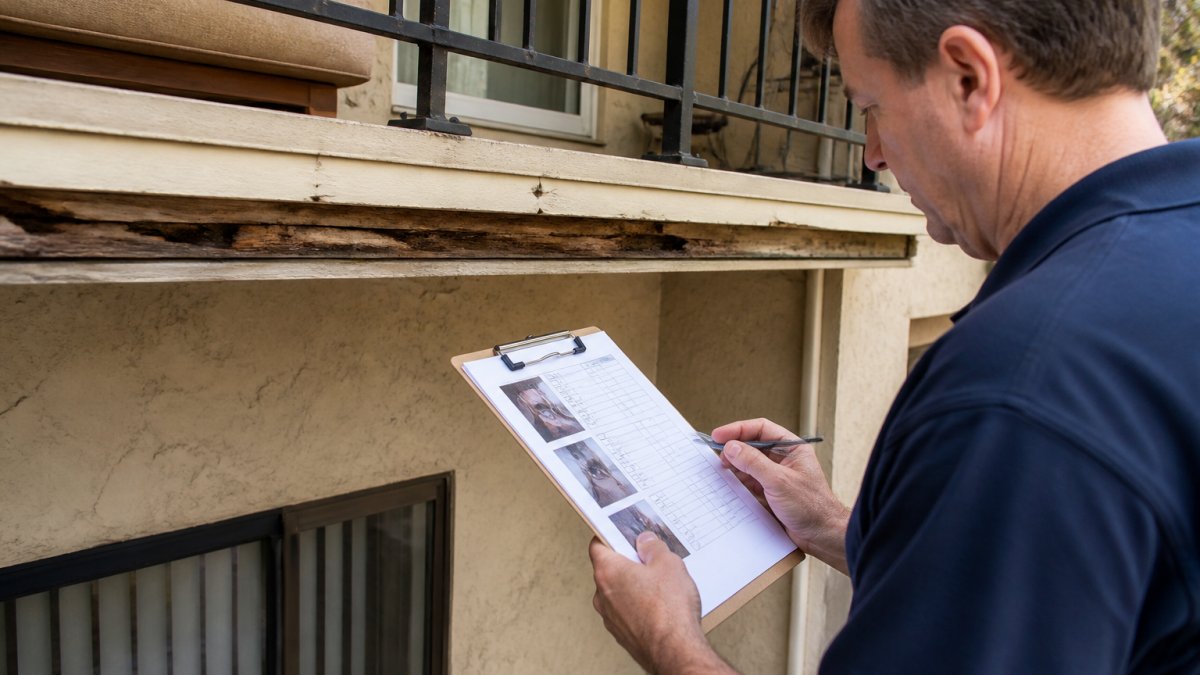
Dry rot, fungal decay of wood, represents the most common defect found during California balcony inspections. Inspectors probe suspect wood with specialized tools to assess rot depth and extent. Termite damage follows similar patterns but with different causes, with inspectors looking for termite tubes, frass, and characteristic tunneling patterns. Waterproofing failures allow water to penetrate behind deck surfaces and into structural framing, and the inspection documents waterproofing conditions and identifies areas where water is likely penetrating the structure.
| Defect Type | Inspection Method | Remediation Timeline | Safety Impact |
|---|---|---|---|
| Dry rot | Visual + probe testing | 30-90 days | Structural weakening |
| Termite damage | Visual + termite inspection | 30-60 days | Structural failure risk |
| Waterproofing failure | Visual + moisture readings | 60-180 days | Ongoing water intrusion |
| Corroded fasteners | Visual + removal testing | 30-60 days | Connection failure |
| Railing defects | Load testing + visual | 15-30 days | Fall hazard |
Cost of Balcony Inspection: Budget and Pricing Factors
The cost of balcony inspections varies based on property size, complexity, and location. A typical inspection for a multifamily building with 20-30 units costs between $2,000 and $5,000 for the initial assessment. Inspection costs scale with the number of units and balconies being assessed, with rates typically ranging from $100-200 per unit but decreasing for larger properties.
Cost Estimation Models and Variables
Complexity increases costs significantly. Buildings with unusual architectural features, difficult-to-access balconies, or mixed construction types require more inspection time. Invasive testing adds to inspection costs, with additional tests costing $500-2,000 depending on how many locations require investigation.
Finding a Qualified Inspector and Avoiding Hidden Costs
Selecting a qualified inspector requires verifying professional licenses and requesting references from other property owners or management companies. Detailed proposals help avoid hidden costs. Request a written estimate that specifies what’s included in the inspection, what additional testing might be recommended, and how those additional services would be priced.
The cheapest inspection isn’t always the best value. An inspector who misses defects creates liability for the property owner. Choose inspectors based on qualifications and experience, not just price.
Reporting, Certification, and Compliance Enforcement
After completing an inspection, the licensed professional prepares a report documenting findings and issues a certificate of compliance. This report becomes the official record of the building’s balcony conditions and the foundation for any remediation decisions.
Certificate of Compliance and Documentation Requirements
The certificate of compliance serves as proof that the property owner has completed a required inspection. It includes the inspection date, the professional’s name and license number, a description of the property, and a summary of findings. Detailed inspection reports accompany the certificate and document every balcony inspected, the condition of each component, photographs of defects, and recommendations for remediation. Property owners must maintain inspection records for the life of the building to demonstrate compliance with inspection cycles.
Consequences of Non-Compliance and Liability Risks
Missing inspection deadlines triggers enforcement action from local building departments. Citations can result in fines ranging from $100 to $1,000 per day of non-compliance. Beyond regulatory consequences, property owners face liability exposure. If a balcony fails and injures a resident, the property owner’s failure to conduct required inspections strengthens claims that the owner was negligent. Failure to address defects identified during inspections creates additional liability, as once a defect is documented, the property owner has a duty to remediate it.
Balcony safety depends on regular structural assessment and timely remediation of identified defects. California’s inspection laws create clear compliance requirements, but navigating deadlines and finding qualified professionals can be challenging. Schedule your inspection today and ensure your residents are protected while keeping your property compliant with California law.
Frequently Asked Questions
When are balcony inspections required under California law?
California requires balcony inspections under SB 721 and SB 326. SB 721 applies to multifamily rental properties with three or more units built before January 1, 2008. Initial inspections must be completed by January 1, 2025, with subsequent inspections every six years. SB 326 applies to condominiums and requires inspections by January 1, 2022, then every nine years. Specific deadlines depend on your building type and when it was constructed.
Which buildings must comply with SB 721 balcony inspection requirements?
SB 721 applies to multifamily rental properties with three or more dwelling units constructed before January 1, 2008. The law covers all elevated load-bearing structures including balconies, decks, stairs, and exterior elements. Buildings with fewer than three units or those built after January 1, 2008 are generally exempt. Condominium associations fall under SB 326 instead, which has different timelines and requirements for inspection cycles.
What is included in a balcony inspection checklist?
A comprehensive balcony inspection checklist evaluates structural integrity, load-bearing capacity, waterproofing, and connections to the building. Inspectors look for dry rot, termite damage, rust, cracks, and deterioration in wood, concrete, and metal components. The inspection includes both visual assessment and invasive testing to identify hidden defects. Licensed professionals document findings in a detailed report and provide a certificate of compliance if the structure meets building code standards.
What are the consequences of not completing required balcony inspections?
Non-compliance with SB 721 and SB 326 can result in significant liability, fines, and legal action. Property owners risk lawsuits if residents are injured due to balcony failures. Buildings may face enforcement actions from local authorities, and insurance claims could be denied if inspections weren't completed. Additionally, failure to maintain compliance can damage property value and create barriers to refinancing or selling the property. Timely inspections protect both residents and the property owner's legal standing.
External Sources Referenced
[EXTERNAL_LINK: California Building Standards Commission SB 721 Requirements | bsc.ca.gov]
[EXTERNAL_LINK: California Department of Housing and Community Development Balcony Safety Guidance | hcd.ca.gov]
[EXTERNAL_LINK: American Society of Civil Engineers Structural Assessment Standards | asce.org]