Balcony Inspection Costs for HOAs: A 2026 Guide
Understand balcony inspection costs for HOAs, SB 326 compliance requirements, and budgeting strategies. Learn what affects pricing and how to hire.
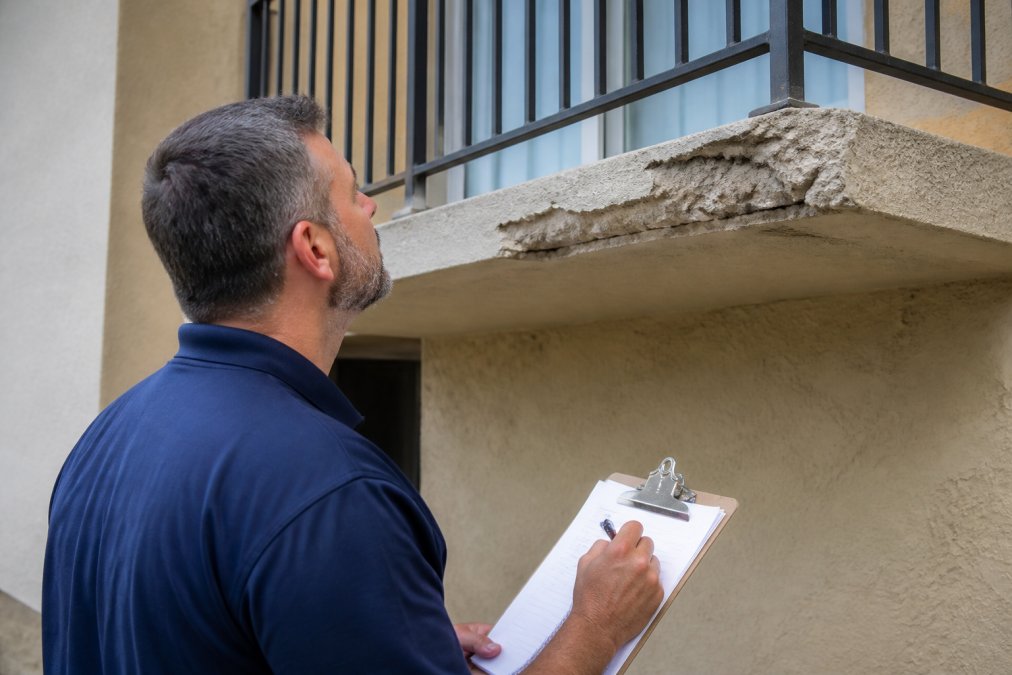
Table of Contents
- What Drives Balcony Inspection Costs for HOAs
- Understanding SB 326 and SB 721 Compliance Requirements
- Exterior Elevated Element Inspection Requirements Explained
- Visual vs. Comprehensive Inspections: What’s the Difference
- HOA Reserve Study Balcony Inspection Budget Planning
- Hiring a Licensed Structural Engineer for HOA Inspections
- Post-Inspection Repair Costs and Remediation Planning
- Legal Consequences and Liability of Skipping Inspections
Last Updated: August 15, 2026
What Drives Balcony Inspection Costs for HOAs
Balcony inspection costs for HOAs vary dramatically depending on property size, structural complexity, and compliance requirements. Building size matters most: a 12-unit complex costs significantly less to inspect than a 200-unit high-rise. The number of elevated exterior elements, balconies, decks, stairways, and walkways, directly correlates with labor hours and inspection duration.
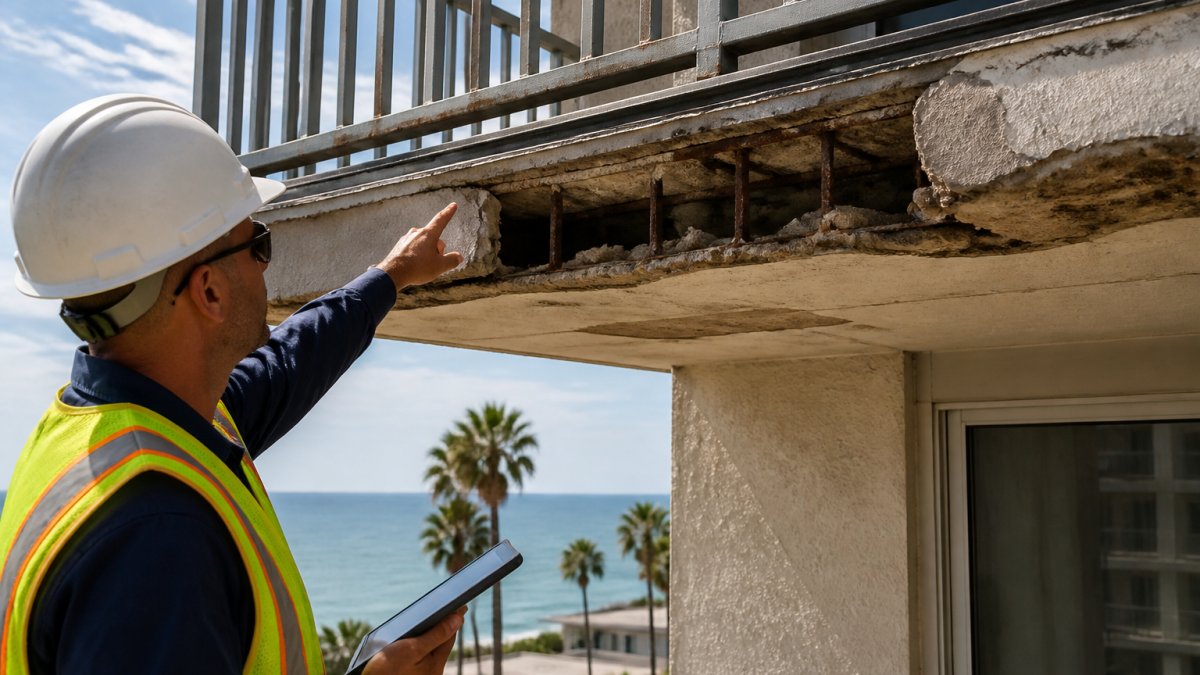
Property condition also shapes costs. Buildings showing visible signs of deterioration, dry rot, corrosion, or water damage require deeper investigation. What begins as a visual inspection often becomes comprehensive when inspectors discover structural concerns demanding closer examination. Geographic location adds another layer: coastal properties with salt-air corrosion challenges require specialized expertise, while urban buildings with tight access present logistical hurdles.
At Apex Balcony, we’ve worked with hundreds of building owners across California. The variation in costs reflects not just the building itself, but the inspector’s credentials and methodology. For HOA boards, this distinction matters enormously.
Understanding SB 326 and SB 721 Compliance Requirements
SB 326 and SB 721 are California statutes mandating structural integrity inspections for elevated exterior elements in residential buildings. Understanding which law applies to your property is essential before budgeting for inspection costs.
SB 326 applies to residential buildings with three or more units where the structure includes balconies, decks, or other elevated exterior elements. Buildings must have their first inspection completed by January 1, 2025, with subsequent inspections every six years thereafter. Non-compliance carries serious penalties, including fines and potential liability if injuries occur.
SB 721 addresses the same safety concerns but applies specifically to residential buildings constructed before January 1, 2008. This law requires inspections every three years instead of six, because older construction methods and materials are more prone to failure. A building subject to SB 721 requires inspections twice as often as one covered only by SB 326, effectively doubling long-term inspection expense.
Both statutes require that inspections be performed by a licensed structural engineer, architect, or other qualified professional. This credential requirement directly impacts cost and provides legal protection. The compliance report becomes a legal document detailing the current condition of all elevated exterior elements, identifying any elements that do not meet current building code, and estimating remediation costs. This documentation protects the HOA board from liability claims.
Exterior Elevated Element Inspection Requirements Explained
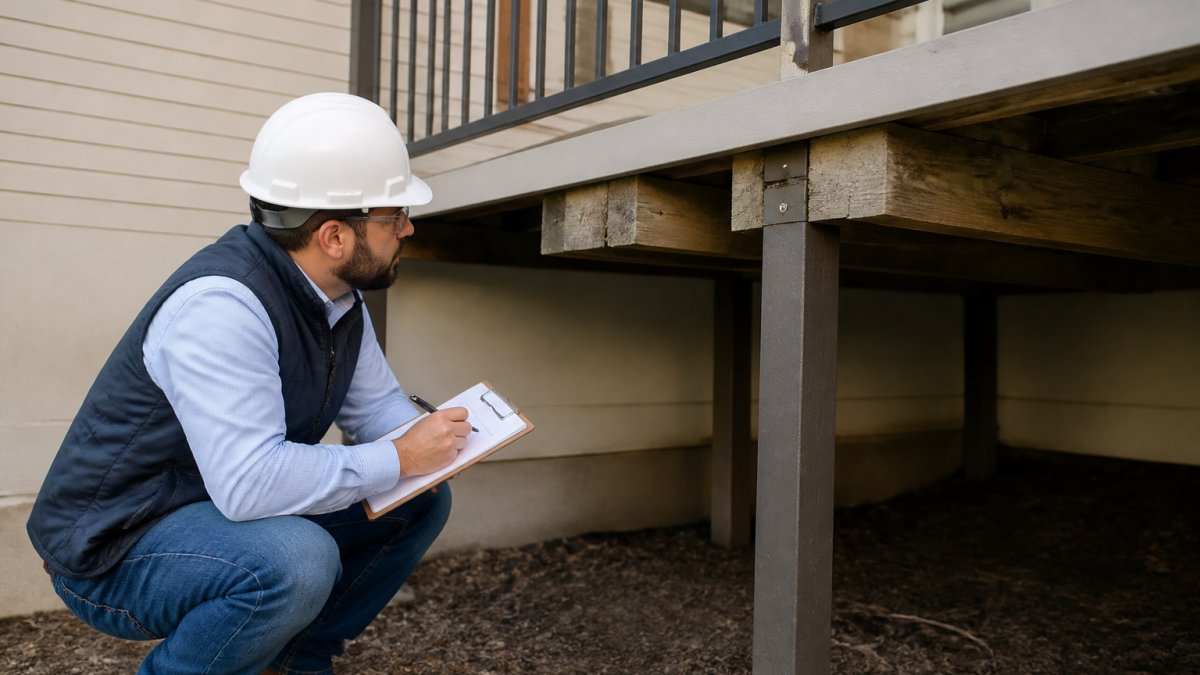
Exterior elevated element inspection requirements under California law specify exactly what inspectors must evaluate. Inspectors must evaluate all balconies, decks, stairways, walkways, and similar structures that extend beyond the building envelope, including structural framing, decking material, railings, attachment points, and waterproofing systems.
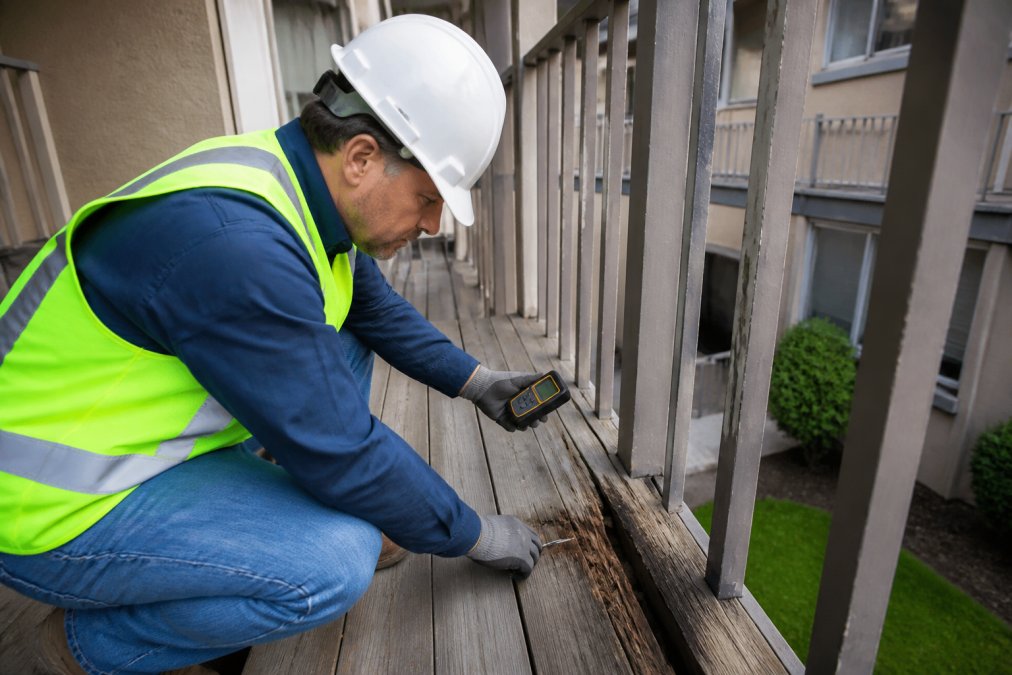
The visual inspection component examines surface conditions and obvious damage. Inspectors look for signs of water intrusion, wood deterioration, fastener corrosion, and material failure. They photograph evidence and document findings in detail.
The comprehensive inspection goes deeper. When visual inspection reveals concerns, inspectors may need to remove decking or railings to examine structural components underneath. They assess attachment integrity, evaluate waterproofing systems and drainage patterns, and examine sealants and flashing. This invasive work takes significantly more time and creates temporary disruption to residents.
Building code compliance is the measuring stick. Current code specifies minimum railing heights, load capacity requirements, attachment standards, and material specifications. Inspectors compare existing conditions to these standards and identify deficiencies. An element that functioned safely for decades may not meet current code.
Documentation is meticulous. Inspectors photograph every element, document measurements, note material types, and record findings systematically. The compliance report categorizes findings by severity and includes cost estimates for remediation.
Visual vs. Comprehensive Inspections: What’s the Difference
Most HOA boards face a choice between visual and comprehensive inspections. Understanding the difference helps explain why costs vary and when each approach makes sense.
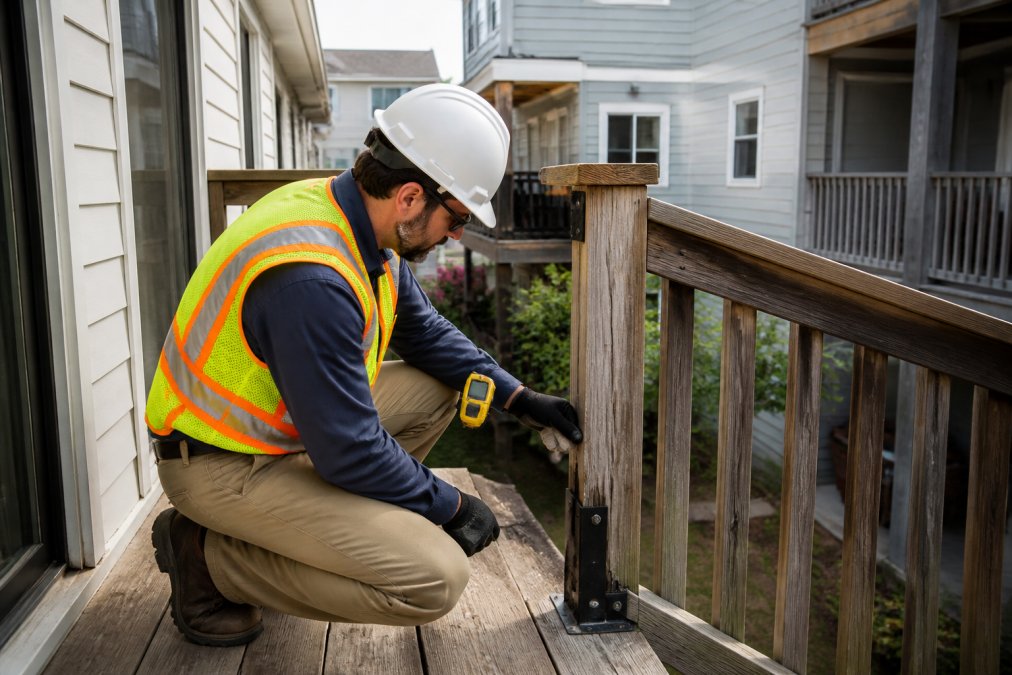
A visual inspection examines all elevated exterior elements from accessible vantage points without invasive investigation. Inspectors walk every balcony, deck, and stairway, documenting conditions they can see directly. They probe obvious soft spots with a moisture meter or screwdriver but do not remove materials. This approach typically costs less and takes one to three days depending on property size. Visual inspection works well for properties in good condition with no obvious problems and provides a baseline assessment to determine whether deeper investigation is needed.
A comprehensive inspection involves invasive investigation of structural components. Inspectors remove decking sections, open walls, and examine framing members directly. They assess waterproofing systems, fastener integrity, and attachment points in detail. This approach requires five to ten days and costs substantially more. Comprehensive inspection is necessary when visual inspection reveals concerns or when properties show signs of deferred maintenance or age-related deterioration.
The choice between approaches depends on building condition and risk tolerance. Conservative boards prefer comprehensive inspection for legal protection and certainty. Boards with limited reserve funds may start with visual inspection, knowing they can escalate to comprehensive if needed.
HOA Reserve Study Balcony Inspection Budget Planning
HOA reserve study balcony inspection budget planning requires understanding both immediate inspection costs and long-term remediation expenses. The inspection itself is only the first financial commitment.
Reserve studies project long-term capital expenses for major building systems. Balcony inspection findings directly inform these projections. If inspections reveal significant deferred maintenance, reserve contributions must increase to fund repairs. The inspection report becomes the basis for reserve study updates.
Boards must budget for three expense categories: the inspection itself, the compliance report preparation, and remediation work identified by the inspection. The inspection cost is fixed; the remediation cost is variable depending on what inspectors find. Many boards are surprised by remediation expenses. A property with widespread dry rot or corrosion may require $50,000 to $500,000 in repairs, depending on severity and scope.
SB 326 and SB 721 deadlines are fixed; inspections must be completed by specific dates regardless of reserve fund status. Planning ahead allows phased remediation rather than emergency expenditures. The HOA reserve study should incorporate a balcony inspection line item for the current year, with remediation costs projected based on building age and condition.
Hiring a Licensed Structural Engineer for HOA Inspections
Selecting the right professional for balcony inspections requires understanding credentials, experience, and liability protection. California law requires that inspections be performed by a licensed structural engineer, architect, or other qualified professional approved by the local authority having jurisdiction.
A licensed structural engineer has completed education in structural design, passed professional exams, and maintains continuing education requirements. Structural engineers understand load paths, material properties, and failure mechanisms at a technical level. Their reports carry significant legal weight because their credentials are verifiable and their liability is insurable.
An architect with appropriate experience can also perform these inspections. Many architects have decades of experience evaluating existing buildings, and their reports are similarly defensible.
The difference between these professionals and general contractors is substantial. A contractor may have practical building experience but lacks the formal training and credentials required by law. Hiring an unlicensed contractor exposes the HOA to liability if the inspection is inadequate.
Experience matters as much as credentials. An engineer who has inspected hundreds of residential buildings understands common failure patterns. Ask potential inspectors about their experience with buildings similar to yours. Insurance is critical: the inspector should carry professional liability insurance that covers inspection errors. Verify that the inspector’s insurance is current and adequate before hiring.
Post-Inspection Repair Costs and Remediation Planning
The inspection report identifies deficiencies, but understanding remediation costs and prioritization is where boards face real financial decisions. Inspectors categorize findings by severity. Imminent safety hazards require immediate repair; deferred maintenance items that don’t pose immediate risk can be scheduled based on reserve fund availability.
Common remediation work includes waterproofing system replacement, dry rot repair, railing replacement, fastener upgrade, and decking replacement. Waterproofing projects often cost $5,000 to $50,000 depending on scope. Structural repairs for rot or corrosion vary widely; minor repairs might cost $2,000, while replacing significant framing could exceed $100,000.
Boards should obtain multiple contractor bids for remediation work. Competitive bidding often reveals significant price variation, with differences of 20-30% between bids common. Phasing repairs strategically protects reserve funds: critical safety issues must be addressed first, followed by deferred maintenance that worsens with time, with cosmetic improvements deferred if reserves are tight.
Vendor vetting is essential. Contractors performing balcony repairs need experience with this specialized work. Ask for references from other HOA projects, verify licensing and insurance, and check whether the contractor has experience with the specific repair type your building needs. Post-inspection communication with residents matters: transparent communication about what was found, what must be fixed, and what is optional reduces anxiety.
Legal Consequences and Liability of Skipping Inspections
Non-compliance with SB 326 and SB 721 carries serious consequences. HOA boards that fail to conduct required inspections face penalties, liability exposure, and potential legal action.
Regulatory penalties begin with fines from the city or county building department. A property that misses the SB 326 deadline faces immediate enforcement action. The building department may issue citations, demand corrective action, and impose escalating penalties.
Liability exposure is more serious than fines. If an elevated element fails and causes injury or death, and the HOA failed to conduct a required inspection, the association faces negligence liability. Insurance implications are significant: many HOA liability policies exclude coverage for injuries resulting from failure to comply with statutory requirements. If an accident occurs and the HOA skipped a required inspection, the insurance company may deny the claim.
Board members can face personal liability if they knowingly fail to comply with inspection requirements. Homeowners have sued board members personally for breach of fiduciary duty when the board failed to maintain safe conditions. Personal liability insurance may not cover actions that violate statutory requirements.
The cost of compliance, inspection and necessary repairs, is far less than the cost of non-compliance. A $10,000 inspection and $50,000 in repairs is manageable. A lawsuit resulting from a collapse that kills or injures residents is not.
Balcony inspection compliance is not optional for California HOAs; it’s a legal mandate that protects residents and the association. The inspection identifies structural problems before they become catastrophic. The compliance report provides the documentation that protects board members from personal liability.
At Apex Balcony, we help HOA boards navigate this process with licensed inspectors who understand California requirements and deliver thorough, defensible reports. Our team has decades of combined experience evaluating elevated exterior elements and identifying early signs of structural failure. We work with boards of all sizes, from small 12-unit buildings to large complexes. Let us guide you through the inspection process and keep your property secure and compliant. Book an inspection with Apex Balcony today and take the first step toward protecting your residents and your reserve fund.
Frequently Asked Questions
What are the legal requirements for HOA balcony inspections?
California SB 326 requires inspections of elevated exterior elements in residential buildings with three or more units. SB 721 expanded these requirements further. Inspections must be conducted by a licensed architect, structural engineer, or qualified inspector. Compliance reports must document structural integrity, waterproofing, and safety of balconies, decks, and stairways. Failure to comply can result in significant liability and fines for the HOA board.
How often must an HOA conduct exterior elevated element inspections?
Initial inspections are typically required within a specific timeframe after the law's effective date. Subsequent inspections depend on the condition findings and building code requirements, generally ranging from 3 to 9 years based on the severity of deferred maintenance and structural issues identified. Your licensed structural engineer will recommend the appropriate inspection frequency for your specific property.
What factors influence the total cost of a balcony inspection?
Balcony inspection costs depend on building size, number of units, complexity of elevated exterior elements, accessibility, extent of damage visible, whether structural analysis is required, and the inspector's qualifications. Per-unit pricing and per-balcony models differ significantly. Geographic location, travel time, and the depth of the inspection (visual versus comprehensive structural assessment) also affect overall cost. Contact Apex Balcony for a quote tailored to your property.
What happens if an HOA fails to perform a required balcony inspection?
Failure to comply with SB 326 or SB 721 inspection mandates can result in civil penalties, loss of liability protection, personal liability for board members, and legal action from residents. In worst-case scenarios, structural failure leading to injury or death could expose the HOA to catastrophic liability. The 2015 Berkeley balcony collapse and 2021 Malibu incident underscore the critical importance of timely, professional inspections to protect residents and the association.